
You’ve found the perfect dress. The shoes are sorted. But the night before a wedding — or a black tie dinner, or a cocktail party — one question keeps coming back: which clutch bag works here? It feels like a small decision. But the wrong choice can throw off an otherwise flawless outfit.
The right evening clutch bag does the opposite. It pulls everything together and shows you dressed with intention, not just effort.
This guide covers every factor that matters — occasion, size, material, color, and style. Whether it’s your first time picking a formal clutch or you’re tired of second-guessing at the last minute, you’ll walk away knowing exactly what to choose.
How To Choose The Perfect Evening Clutch Bag For Different Occasions
Five decisions determine whether your clutch works — or doesn’t. Get these right, and everything else falls into place.
-
Define your dress code — Black tie, cocktail, or semi-formal? Each one points to a different size range.
-
Audit what you’re carrying — Phone, cards, lipstick, keys. Know your essentials before you shop.
-
Match the size category — Mini (4–5 in), Standard (6–7 in), or Large (8–10 in).
-
Check body proportion — Your clutch width should not go beyond ⅓ of your torso width.
-
Consider event duration — A 5-hour night with dancing calls for a strap. A 2-hour seated dinner doesn’t need one.
Work through these five steps in order. The right clutch becomes a clear choice — not a stressful guess.
What Makes an Evening Clutch Bag “Perfect” — And Why Most Women Get It Wrong
Most clutch bag mistakes happen before anyone looks at a single product. The real problem is a flawed decision framework — not bad taste.
A perfect evening clutch meets four standards at once:
-
Occasion formality — Does the bag’s scale and material match the dress code? A minaudière suits white-tie. A satin clutch, just a bit larger, fits cocktail hour.
-
Functional capacity — Can it close flat with your phone, cards, lipstick, and keys inside? A bulging clutch fails on two levels — it looks bad and it’s awkward to carry.
-
Visual proportion — Does it complement your silhouette, or compete with it? Full, voluminous gowns need small, understated bags. Sleek, minimal dresses can carry a textured or embellished style.
-
Material-to-setting fit — Light-colored satin at a red-wine dinner is a risk. Velvet at a tropical beach wedding looks completely out of place.
Most women focus on aesthetics alone and skip the other three. That’s where the mismatch shows up. A beautiful bag that won’t close flat, overpowers the outfit, or clashes with the venue — it pulls attention for the wrong reasons.
Get all four right, and your clutch blends into the outfit the way it should: present, intentional, and quietly doing its job.
Step 1: Read the Dress Code First — Matching Your Clutch to Occasion Formality
Dress codes follow a clear hierarchy. Read them in order: Black Tie → Formal/Evening Formal → Cocktail/Semi-Formal → Smart Casual. The higher the level, the stricter the rules — and the smaller, more structured your clutch should be.
Not sure? Dress up, not down.
Here’s how each occasion matches a specific clutch style:
Black Tie & Gala
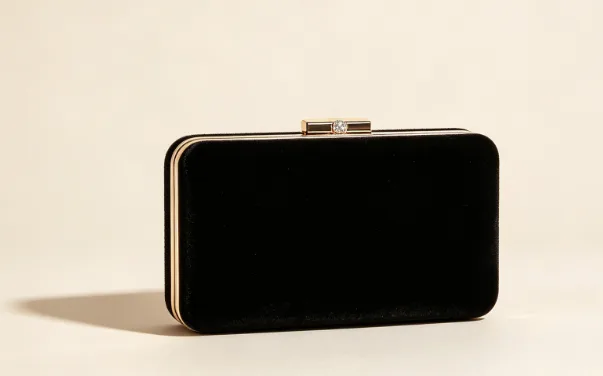
Go small, hard, and structured. A minaudière or box clutch is the standard choice — think satin, crystal, metallic, or velvet. The goal isn’t to stand out. You want to complement the look, not compete with it. Oversized or bold embellished styles break the formality of the setting.

Carry only: lipstick, one card, a compact, and keys. Nothing more.
Cocktail Party & Date Night
You get more flexibility here. An envelope clutch or fold-over clutch works well in smooth leather, metallic, or light sequin. A touch of color or texture is fine — just keep the saturation low so the bag doesn’t fight the dress.
Rule of thumb: the clutch can’t close flat with your essentials inside? It’s already too casual.
Wedding Guest
The venue decides everything.
– Ballroom: structured clutch or minaudière, satin or metallic — keep it formal
– Garden: softer satin or woven styles, lighter colors work well
– Beach: small, lightweight, low-shine — skip the heavy hardware
One rule applies everywhere: don’t outshine the bride. Skip anything oversized, dramatic, or loaded with sparkle.
Prom, Graduation & Theatre
Prom/Graduation: Keep it youthful and practical. Pick a small clutch that fits your phone, cards, and lip gloss. Clean lines, nothing too mature.
Theatre/Opera: Small and quiet. Choose a structured clutch with no visible chain — or one you can tuck away easily. Metal chains that catch light or rattle are out of place in this setting.
The one-line rule: the more formal the occasion, the smaller, quieter, and more structured your clutch needs to be.
Step 2: Get the Size Right — What Should a Clutch Bag for Occasions Hold?
Size is where most clutch bag purchases go wrong. It’s not about picking something too flashy. Most women just never check whether their phone fits before buying.
Here’s the baseline: a standard evening clutch runs about 8 × 4 × 1 inches (20 × 10 × 2.5 cm). That’s the sweet spot for fitting formal essentials without bulging. Everything else scales up or down from there.
What You’re Carrying Depends on the Occasion
Black-tie / minimalist formal — a slim clutch around 7–8 × 4 × 1 inches covers everything:
– 1 lipstick
– 1 slim cardholder (ID + 1 payment card)
– 1–2 keys (no bulky fob)
– 1 small compact mirror
Weddings / cocktail parties / all-evening events — you need more room. Target 8 × 4 × 1–2 inches, or up to 9 inches wide for a large phone:
– Smartphone (modern phones are 5.7–6.4 inches long — you need ≥ 6.5 inches internal length or it won’t close flat)
– Slim cardholder
– Lipstick
– Compact powder
– Keys
– Optional: blotting papers if depth is ≥ 1.5 inches
The 5 Size Traps That Catch Most Shoppers
Knowing the right dimensions isn’t enough. Listings are full of misleading specs.
Trap 1: Internal length is shorter than it looks. A clutch listed at “7 × 5 inches” often has under 6.5 inches of usable internal length. Seams and padding eat into the space. A 6.3-inch phone won’t close flat inside it.
Trap 2: Exterior ≠ interior. Subtract at least 0.5 inch from the listed width. Side walls, lining, and rigid frames all take up room. Treat exterior dimensions as the maximum, not the usable space.
Trap 3: Depth under 1 inch fills up fast. Sleek box clutches look elegant at ≤ 1 inch deep. Add a compact, lipstick, and keys — the snap or hinge starts straining. Go for ≥ 1.5–2 inches depth for any event that runs past two hours.
Trap 4: Curved or tapered designs shrink usable width. A base measuring 8 inches can narrow to under 6.5 inches at the top curve. Your phone clears the base but jams before the bag closes.
Trap 5: Hardware eats into the opening. Thick magnetic bars or oversized clasps can cut internal width by 0.25–0.5 inch right at the closure zone. That’s enough to stop a phone from sitting flush.
How to Verify the Right Size Before You Buy
Online: Lay your essentials flat on a surface. Group them into the most compact rectangle you can. Measure the length and height. Add 0.5–1 inch as a clearance margin. Compare that against the listing’s internal dimensions — not the exterior ones.
In store: Put your phone in first. A phone that only fits at an angle means the bag is too small for an all-evening event. Add your compact and keys, close the bag, and give it a light shake. It pops open or feels forced shut? Move up one size — go from a ~7-inch width to an ~8–9-inch width.
Quick size reference:
|
Occasion |
Target Internal Width |
Minimum Depth |
|---|---|---|
|
Black-tie / formal dinner |
7–8 inches |
1 inch |
|
Cocktail / date night |
7.5–8.5 inches |
1–1.5 inches |
|
Wedding / all-evening event |
8–9 inches |
1.5–2 inches |
One last check on proportion: your clutch width shouldn’t go beyond your shoulder span. Under 5’4″? Stay under 7 inches for a balanced look. Over 5’7″? You can carry up to 9 inches without it looking oversized.
Step 3: Choose the Right Material for the Right Occasion and Season
Material is the detail that separates a polished look from an awkward one. It’s also the factor most shoppers skip.
The wrong fabric at the wrong venue doesn’t just look off. It gets damaged. A white satin clutch at a red-wine dinner is a high-risk choice. Light-colored velvet at a humid outdoor event will absorb water, sweat, and dust well before the reception ends. These aren’t rare edge cases. They’re predictable problems — with predictable solutions.
Here’s how to match material to occasion and season.
Formal & Black-Tie Events
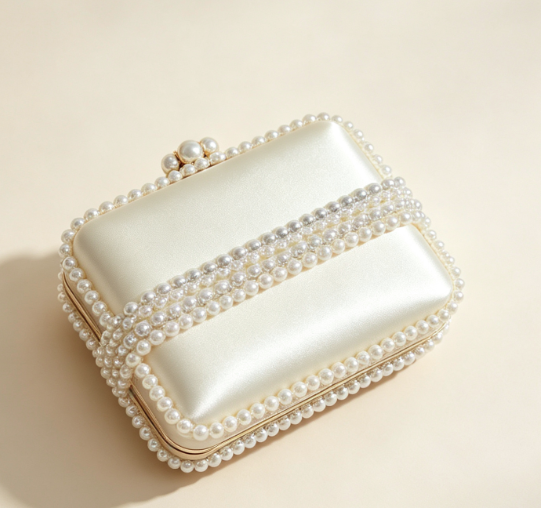
Satin is the default for a reason. Its high-gloss surface catches warm event lighting well, and the structured drape signals formal clearly. The catch: light-colored satin is vulnerable to wine, juice, and foundation transfer. Once a stain sets, even professional dry cleaning often leaves a water shadow. Wearing a satin clutch to a sit-down dinner with wine service? Go with deep tones — black, midnight green, burgundy, or black-gold rather than ivory or champagne.
Velvet suits winter black-tie and indoor formal events well — best in cooler, air-conditioned spaces (around 18–22°C). Its dense pile adds visual weight and richness that fits the season. Skip it for outdoor, tropical, or beach settings. Velvet absorbs humidity, and sand or moisture will mat the surface for good. Stick to black, navy, or deep wine. Avoid cream or light gray velvet anywhere near a buffet or a crowded bar.
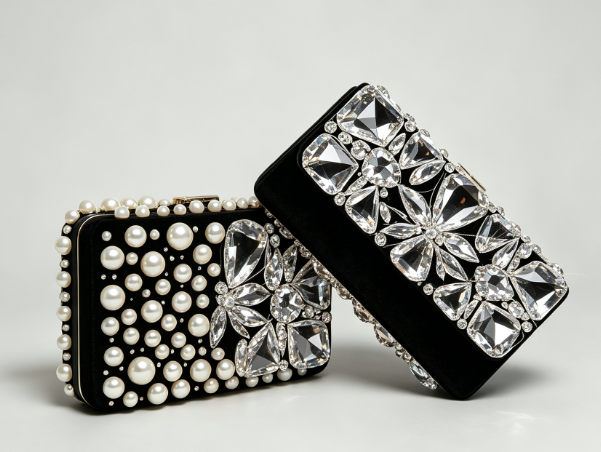
Crystal and bead embellishment takes a minaudière into statement territory. One real risk: dense, hard-edged beading in a crowded venue can snag sheer and chiffon fabrics. Industry data puts the snag rate at 20–30% for sharp-faceted embellishments in close-contact settings like wedding receptions. Got an evening with lots of hugging, dancing, or moving through crowds? Choose pieces with smooth, rounded bead profiles rather than angular crystal cuts.
Structured metallic box clutches are tough and dressier than leather for formal nights. They handle light impact and surface scuffs without showing damage the way fabric clutches do. The tradeoff is weight. Most metal box styles run 400–800g, and you’ll feel that after two or three hours of hand-carrying.
Cocktail & Semi-Formal Events
Smooth leather is the most practical choice at this formality level. Mid-tone grain leather holds its shape through a full evening. It resists minor spills better than fabric, and it outlasts a satin or silk clutch by two to three times in real-world use. It doesn’t carry the same glamour as satin, but it photographs well and handles the unpredictability of a cocktail party without fuss.
Metallic finishes — champagne, rose gold, pale gold — give enough visual lift for a semi-formal occasion without crossing into full black-tie territory. Large areas of dark gunmetal or chrome read more evening-club than cocktail party. Save those for nighttime-only events.
For sequin or beaded clutches at cocktail events, the same snag caution applies. Try wearing it on one arm rather than switching hands. Plus, use the chain strap — it reduces direct contact with delicate dress fabric.
Outdoor & Beach Weddings
Two materials to avoid outright: velvet and light satin. Both fail fast in outdoor conditions. Velvet absorbs sand and moisture. Light satin picks up sunscreen, spray, and grass stains that almost never come out fully.
Stain-resistant coated fabrics and light soft leather are the smart calls here. Leather at 0.8–1.2mm thickness is supple enough for a relaxed outdoor setting and still holds its structure. Coated fabrics with hydrophobic treatments cause liquids to bead and roll off rather than soak in. That’s a real functional advantage at an outdoor reception.
Color choice matters too. Mid-tone neutrals — warm beige, light taupe, sage — hide minor marks far better than pure white or ivory. Something grazes the bag? You’ll barely notice.
Season Matters More Than Most People Realize
|
Season / Setting |
Best Materials |
Avoid |
|---|---|---|
|
Winter / Indoor formal |
Velvet, heavy silk (16–22 momme), structured satin |
Lightweight linen, open weave |
|
Summer / Warm outdoor |
Light silk (12–16 momme), cotton-linen blends, lace |
Dark velvet, heavy metal box clutch |
|
Tropical / Beach wedding |
Coated fabric, light soft leather, linen |
Light satin, velvet, heavy embellishment |
|
Year-round indoor |
Smooth leather, metallic finish, satin (dark tones) |
Patent leather for long events |
One note on silk weight worth knowing: 12–16 momme silk is lighter and more breathable — right for spring and summer. 18–22 momme has more body and drape, better suited to autumn evenings and winter dinners. A product listing that doesn’t specify momme weight? Assume it’s on the lighter end.
The simple rule: the more controlled the environment, the more freedom you have with delicate materials. Outdoor, high-traffic, or long events call for darker tones and tougher surfaces. Save ivory satin and crystal-dense styles for venues where you’re seated, sheltered, and not squeezing past a buffet line.
Step 4: Nail the Color and Texture — Coordination Rules That Work
Color coordination has one non-negotiable rule: keep your total outfit to three colors or fewer — dress, bag, and shoes combined, including any metallic tones. That’s the ceiling. Stay under it, and the look reads polished. Push past it, and the effort starts to show.
The classic proportion breakdown is: 60–70% dress (main color), 25–30% shoes or bag (supporting color), 5–10% accent (a metallic detail on hardware or embellishment). The ratio that fails every time? A 1:1 split between dress color and bag color. Equal blocks of two colors look fractured. Aim for a 3:2 or 5:3 visual ratio instead.
Three Color Strategies That Work
① Echo the dress’s secondary color
Most dresses carry a dominant color plus a secondary accent — a sash, lace trim, or pattern detail. That secondary color tends to cover 20–30% of the dress. Match your clutch to that shade, not the main color. This builds visual cohesion without making the bag compete with the dress.
A few examples:
– Navy dress with a burgundy waist tie → burgundy clutch, navy or black shoes. No new colors added.
– Champagne dress with black lace trim → black satin clutch with minimal decoration. Keep lace detail under 30% of the bag surface.
– Floral dress (cream base 60%, dusty pink 25%, sage 15%) → pick the sage as a solid-color clutch. One color pulled straight from the print.
② Anchor with neutrals
Black, nude, champagne, silver, and gold work with almost any dress color. They let the dress hold 70% or more of the visual weight — which is what you want.
Key notes per neutral:
– Black — pairs with high-saturation dresses (red, cobalt, wine). For a dress with heavy embellishment, choose a black clutch with minimal texture. Keep any embossed area under 20%.
– Nude/Champagne — blends into the background, especially with lace or embroidered gowns. Your shoes are also nude? Mix materials. Try patent leather shoes with a satin clutch. This stops the look from feeling flat and one-note.
– Gold/Silver — keep the metallic surface area to 60% or less of the clutch face. Let the rest stay matte or fabric. Gold reads warmer, pairing better with red, wine, and camel tones. Silver reads cooler, suiting blue, green, and purple.
③ Use contrast as a 10% accent, not a main event
Complementary colors — opposites on the color wheel — create a sharp pop at small scale. Blue and yellow-orange. Green and red-purple. Purple and yellow-green. Contrast belongs on the bag as an accent detail, not as a competing color block.
One example that works: a deep emerald satin dress with a silver or silver-and-green beaded clutch. Keep green details under 30% of the clutch decoration. Shoes in silver or deep green hold the palette cold-toned and unified.
Match Bag Complexity to Dress Complexity
Most people skip this rule. It’s also the one that separates a coordinated look from a visually noisy one.
Heavily embellished dress (beading, sequins, lace, or print covering 40%+ of the visible surface, three or more colors): choose a plain clutch. Stick to the dress’s main color or a neutral. Keep any metallic or decorative detail on the clutch under 25% of its surface area. The goal is keeping at least 70% of visual attention on the dress.
Minimal dress (solid color, decoration under 10%, two colors or fewer): this is where an embellished clutch earns its place. A crystal-encrusted or full-beaded minaudière can cover 60–80% of its surface in decoration. Use it as the single strong focal point of the outfit. The dress stays quiet, so the clutch elevates without competing.
Texture Mixing: How to Layer Without Clashing
Fabric finish matters as much as color. Mixing textures on purpose creates depth. Matching everything to the same finish looks flat — or worse, overdone.
Three surface families to work with:
– High sheen: satin, silk, metallic
– Neutral finish: matte crepe, wool, cotton
– Textured: beaded, sequined, embossed, lace
Satin dress + beaded clutch — both have surface interest, but in different ways. Keep bead colors in the same color range as the dress. Leave at least 30% of the clutch surface smooth as a visual buffer.
Matte dress + metallic clutch — a flat-finish fabric next to a reflective bag creates clean, deliberate layering. Keep the total metallic footprint at 5–15% of the overall look.
What to avoid: satin dress + full-gloss patent leather bag + patent shoes. High-shine across all three pieces pushes total reflective surface past 50%. The look reads cheap rather than polished. The better combination: satin dress + beaded clutch + matte leather shoes. Three distinct surface levels working together, not against each other.
Shoes: Coordinate, Don’t Match Exactly
A common mistake is buying a bag and shoes in the exact same color and material. Identical bag and shoes together can take up 30–40% of the outfit’s visual weight. That turns them into a second color block competing with the dress.
The better approach:
– Same color family, different value — a wine dress with deep red shoes and a black or gold bag works well. Red shoes and dress share the same hue range, but differ slightly in depth. That reads as intentional, not matchy.
– Same sheen level — your dress is matte, so keep shoes matte or close to it. An ultra-matte gown with mirror-finish patent shoes creates a contrast too sharp to look planned.
– Bag and shoes can share a color family, but differ in either shade or material — not both identical at once.
Step 5: Pick the Right Clutch Style — Minaudiere vs. Box Clutch vs. Envelope vs. Soft Pouch
Four clutch styles dominate the formal evening market. Each one sits at a different point on two scales: formality and capacity.
Formality order (highest to lowest): Minaudière → Box Clutch → Envelope Clutch → Soft Pouch
Capacity order (most to least): Soft Pouch ≈ Envelope → Box Clutch → Minaudière
These two scales run in opposite directions. The most formal option carries the least. The most practical option looks the least dressy. Every clutch choice is a trade-off between those two factors.
The Four Styles at a Glance
Minaudière — small, hard-cased, covered in embellishment. Built for galas and black-tie events. Don’t expect to fit much: lipstick, one card, a compact, and keys. That’s the limit. Its job is visual, not functional.
Box clutch — rigid, structured, hard-sided frame. It carries a bit more than a minaudière, yet stays fully in formal territory. Common finishes include satin, beading, and metallic. It’s a solid pick for black-tie events where you need just a touch more room.
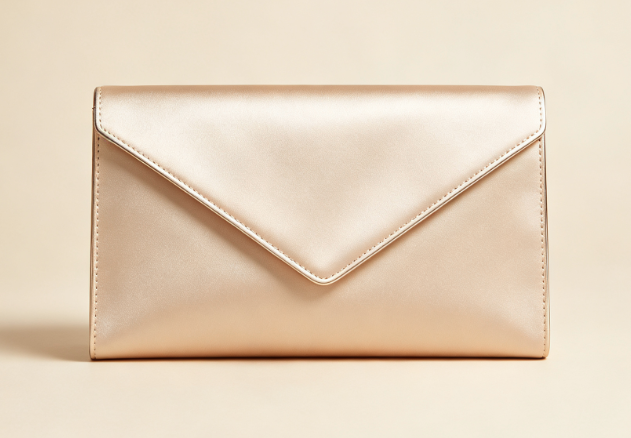
Envelope clutch — flat, rectangular, fold-over flap. The most versatile of the four. It comes in small to oversized. It works in leather or satin. You can take it to weddings, cocktail parties, dinners, and theatre nights without it looking out of place. Building a capsule wardrobe and can only buy one clutch? This is it.
Soft pouch / gathered clutch — unstructured, most often with a top zipper. More relaxed and flexible than the other three. Best for creative, fashion-forward events or casual evenings. Not the right call for strict formalwear.
Match Style to Occasion and Outfit
|
Occasion |
First Choice |
Second Choice |
|---|---|---|
|
Gala / black-tie |
Minaudière |
Box clutch |
|
Cocktail / dinner / theatre |
Envelope clutch |
Box clutch |
|
Creative / fashion-led events |
Soft pouch |
Envelope clutch |
Outfit silhouette matters too:
-
Flowing gown → minaudière or box clutch. The hard, compact shape keeps the formality intact.
-
Fitted dress → box clutch or envelope clutch. Geometric lines match a sleek silhouette well.
-
Short cocktail dress → envelope clutch as the default. Box clutch dresses it up. Soft pouch dresses it down.
The Practical Starter Rule
Want one clutch that works across weddings, dinners, holiday parties, and business evenings? Buy the envelope clutch first. Nothing else in this category handles that range as well.
Your calendar includes strict black-tie events? Add a minaudière or box clutch as your second piece. Those two together cover the full range — from cocktail flexibility to gala formality.
Quick decision filter:
– Formal event → minaudière or box clutch
– One bag for the most outfit combinations → envelope clutch
– Less formal or fashion-led occasion → soft pouch
Step 6: Strap, Closure, and Comfort — The Details That Determine Real-World Wearability
Most clutch bags look identical in product photos. The real differences show up three hours into a wedding reception — bag popping open, chain digging into your wrist. That’s when materials and construction actually get tested.
Strap, closure, and weight are practical decisions. Don’t treat them as afterthoughts.
Strap: Use It or Lose It
A detachable chain strap gives you two bags in one. Pull it off for black-tie dinners or formal events — hand carry is the move there. Clip it back on for cocktail parties, outdoor weddings, or any event that keeps you on your feet for hours.
One hard rule: never wear an evening clutch crossbody at a black-tie event. A shoulder carry is fine at less formal events. Keep the chain short and position the bag high at the hip. That’s the line.
Closure: The Field Test That Matters
Weak magnetic closures and loose drawstrings fail at long events. Skip them for anything running over two hours. A twist lock or a solid frame clasp holds up. Those are your reliable options.
Run this check before buying:
-
Close the bag and lay it flat on your thigh
-
Does it pop open on its own? That’s a fail
-
A good closure stays shut under passive weight — not just sitting upright in your hand
Weight and Hand-Carry Fatigue
Structured metal box clutches often weigh 400–800g. Two hours of hand carry at that weight gets noticeable fast. The product listing doesn’t always include a weight spec. So pick the bag up in-store and hold it in one hand for 30 seconds. Your grip gives you an honest answer on whether it works for a full evening.
Sensitive skin needs extra attention here. Nickel-free hardware and smooth-edged clasps reduce irritation where metal touches bare skin — a real issue on warm evenings.
Pre-Event Checklist: 6 Questions to Ask Before You Leave the House
All the prep work in the previous steps falls apart if you skip this final check. Run through these six yes/no questions before you walk out the door.
1. Does my clutch suit this event type?
Formal and black-tie events need a structured clutch or minaudière in neutral tones. Outdoor weddings? Go for something light and easy to wipe clean. Not sure? That means no.
2. Can it hold everything without bulging?
Pack your essentials, close the bag, and keep at least 10–20% of space free. A strained closure means it’s already failing.
3. Does it pass the shake test?
Close it all the way. Shake it for five seconds. Nothing should shift, slip, or pop the clasp open.
4. Is the strap right for how long I’ll be standing?
Events over two hours? You want a detachable chain strap. Hand-carry works fine for seated dinners. Skip the crossbody at black-tie — it’s not the right look.
5. Does the bag color keep the total look at three colors or fewer?
Count your outfit colors, then add the bag. Total hits four or more? Swap it for a neutral.
6. Will the material hold up in tonight’s environment?
Light satin at an outdoor venue fails. Velvet in humidity fails too. Match the material to the setting — not just the dress.
Six questions. Sixty seconds. Say yes to all six, and you’re good to go.
FAQ: Quick Answers to Common Evening Clutch Bag Questions
These are the questions that come up every time — right before an event, standing in front of a mirror with an outfit that’s almost there.
What can an evening clutch bag hold?
Most evening clutches fit 4–6 essentials: smartphone, slim cardholder, keys, and 1–2 cosmetics. Standard widths run 6–10 inches (15–25 cm), which covers phones up to 6.5 inches. Mini styles and minaudières work differently — treat them as capsule bags. Phone or cardholder, one lipstick, one key. Not all three at once.
Overstuffing an embellished clutch distorts its shape. It can also knock out beading or crystals. Pack light and stick to the essentials.
Do I need a chain or wrist strap?
Not always. For events lasting longer than 3 hours, a detachable chain (100–120 cm) or wristlet becomes a real help. Holding a drink, shaking hands, and managing a strapless clutch all at once gets awkward fast. A wristlet strap solves that without ruining the look.
For black-tie, remove the chain and hand-carry. The strap is there when you need it — out of sight when you don’t.
What size should I buy?
7–8 inches (18–20 cm) wide hits the sweet spot for most people. You can fit a standard smartphone, cardholder, keys, and one or two small beauty items. Keep weight under 12 oz (340 g). Heavier embellished clutches cause real hand fatigue at 3–5 hour events.
How much can I put in a minaudière?
Stay at 70–80% of interior volume. A tightly packed hard-shell minaudière puts stress on the hinges and can warp the frame over time. A practical load looks like this: lip product, cardholder with 2–4 cards, folded cash, and a phone or key bundle — not both.
Are embellished clutches practical?
Yes, if you pick the right one. Look for designs where the embellishment sits on the outer shell, with smooth interiors and protected seams. That cuts down on snagging against delicate dress fabrics. Most well-made embellished styles offer one main compartment and an interior slip pocket — plenty of room for a phone and slim cardholder.
Quick buying checklist before you purchase:
-
Measure your phone — internal width must be ≥ phone length plus ~1 cm clearance
-
Check weight — under 12 oz for events of 3+ hours
-
Target 7–8 inch width for general use; go mini only if you carry very little
-
Match material to dress code — satin clutch for cocktail and wedding; structured minaudière or crystal-embellished style for black-tie
-
Decide on straps — detachable chain for flexibility, strapless for a clean formal look
-
Check interior features — dark or stain-resistant lining, at least one inner pocket, RFID-blocking slots if you carry cards without a separate wallet