
March Amazon Cross-Border E-commerce Data Analysis of Bags focuses on best-selling styles across key segments, including urban casual, business casual, sports & outdoor, and playful kids’ designs. The analysis covers market performance across men’s, women’s, and children’s categories, along with insights into price ranges, seller competitiveness, and overall sales distribution. This report also highlights key trends in Amazon best selling bags and trending bags on Amazon to help brands better understand current demand.
Industry Data – Women’s Handbag Market Sales Analysis
Overall Sales Analysis:
Based on the chart data, in terms of monopoly analysis, Amazon’s self-operated sales account for only 2.33% (200.4K units), which is far below the 60% monopoly threshold. The market is dominated by third-party sellers, who hold a significant 97.67% share (8.41M units), indicating a highly open and competitive environment.

Price Range Analysis:
Sales are highly concentrated in the $20–$40 price range, which generates the highest volume and contains the largest number of products, indicating it is the mainstream and most competitive core segment. The under-$20 range also delivers substantial sales volume, but with an extremely high number of listings, reflecting a typical high-volume, low-margin and intensely competitive market. In contrast, the $40–$60 range shows a sharp decline in the ratio of sales to product count, suggesting that consumer price sensitivity increases significantly beyond this threshold. These dynamics are also reflected in popular Amazon bag deals and affordable bags on Amazon, where price positioning plays a critical role in performance.

Brand Competition Analysis:
From a brand perspective, the market remains relatively fragmented. The combined market share of the top three brands is approximately 16.3%, and no single brand exceeds a 10% share, indicating the absence of a dominant market leader. Notably, there is a clear linkage between top sellers and their respective brands. For example, the leading seller BAGSMART US is closely aligned with its brand BAGSMART, while Montana Blue Boutique is strongly connected to the Montana West brand. This reflects a pattern of deep integration between stores and brands, although it has not significantly increased overall market concentration. This structure is also evident in the Amazon bags market share, where competition remains widely distributed.

Industry Data – Men’s Bag Market Sales Analysis
Overall Sales Analysis:
Amazon’s self-operated sales account for 16.83% (143.3K units), which is well below the 60% monopoly threshold. The market is dominated by third-party sellers, representing over 83% (707.8K units). Based on the chart data, the bag category shows strong seasonal fluctuations in sales, while the number of listings typically contracts before peak seasons. Overall sales begin to rise from the summer period each year and reach an annual peak during the winter shopping season, a pattern that has consistently repeated over the past two years.

Price Range Analysis:
Based on the chart data, the under-$50 price range holds an absolute dominance in sales. This segment features a large number of products and contributes nearly 650K units in sales, representing a typical high-traffic market. Sales drop sharply in the $50–$100 range, although per-product efficiency may be higher, making it a more balanced segment. Above $100, both sales volume and product count decline significantly, indicating a niche, profit-driven market.

Brand Competition Analysis:
From a brand perspective, the top three brands collectively account for approximately 32.62% of total sales, and no single brand holds more than half of the market share. However, a clear pattern can be observed where certain top sellers are highly integrated with their core brands. Brands such as BOGG BAG, Waterfly, and BAGGU are primarily driven by their own or closely affiliated stores, forming a strong brand–seller integration model. Overall, the market has not developed a monopoly structure, indicating a relatively healthy competitive environment. However, the tight linkage between leading brands and sellers suggests relatively high entry barriers for new entrants, who must overcome established brand recognition to compete effectively. This is also reflected in the evolving Amazon bag category competition landscape.

Industry Data – Children’s Backpack Market Sales Analysis
Overall Sales Analysis:
Amazon’s self-operated sales account for only 8.58% (64.1K units), which is far below the 60% monopoly threshold. The market is dominated by third-party sellers, who hold a 91.42% share (682.5K units), indicating no risk of self-operated dominance in this category. The data shows a very clear annual seasonality pattern. Sales peak in July and August each year, followed by a sharp decline in September, and a secondary peak typically appears in December.

Price Range Analysis:
Based on the chart data, the $10–$20 and $20–$30 price ranges together account for nearly 80% of total market sales, making them the dominant consumer price segments. The $20–$30 range has both the highest product count and the highest sales volume, representing a core battleground with both intense competition and strong opportunities. The $30–$40 range is priced about 28% above the average, placing it in the higher-end segment. Although it has fewer products, it still generates considerable sales, indicating the presence of a quality-driven niche market.

Brand Competition Analysis:
The market structure shows a certain level of correlation between top sellers and leading brands. For example, the top-ranked seller Naturally KIDS is fully aligned with its eponymous brand, and some other leading sellers also operate under their own private labels. However, Amazon’s self-operated business and “other” sellers together account for nearly 15% of the market share, while a large number of small and mid-sized sellers and fragmented brands further distribute the remaining market. This structure reduces the risk of dominant monopolization to some extent. These dynamics are also reflected in the Amazon kids backpack market competition, where brand fragmentation remains a key characteristic.

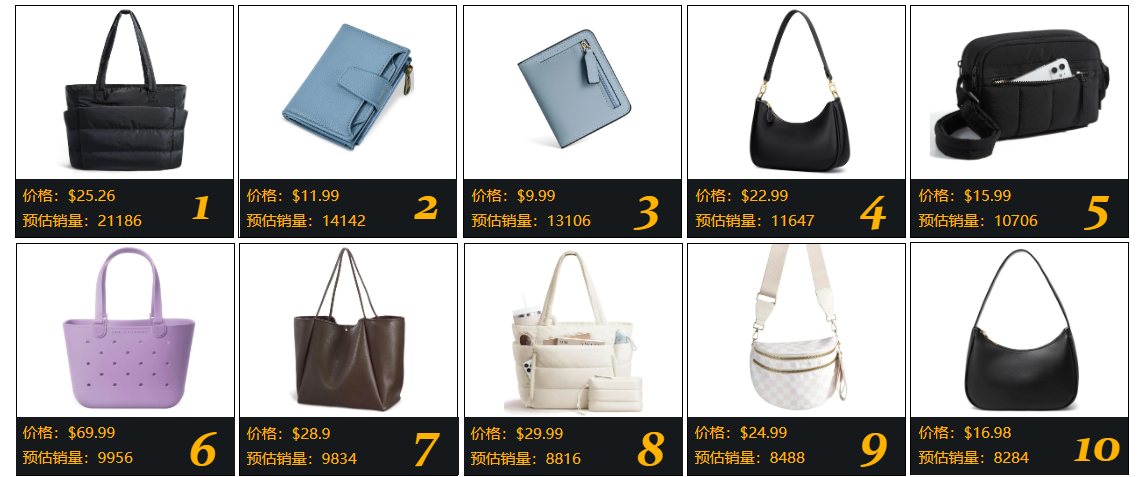
Top 10 Women’s Bag Rankings – March
The March Amazon Women’s Bag TOP 10 rankings demonstrate a clear dual-driven structure of extreme practicality and high cost-effectiveness. The market is primarily built around three key directions: highly practical storage solutions, lightweight commuter bags, and value-for-money small leather goods.
Although higher-priced niche designs (such as perforated “hole bags”) show some market presence, the main growth drivers remain basic, highly cost-efficient products like tote bags and wallets. Overall, the trend continues to shift toward high functionality, lightweight design, and extreme value-for-money positioning.
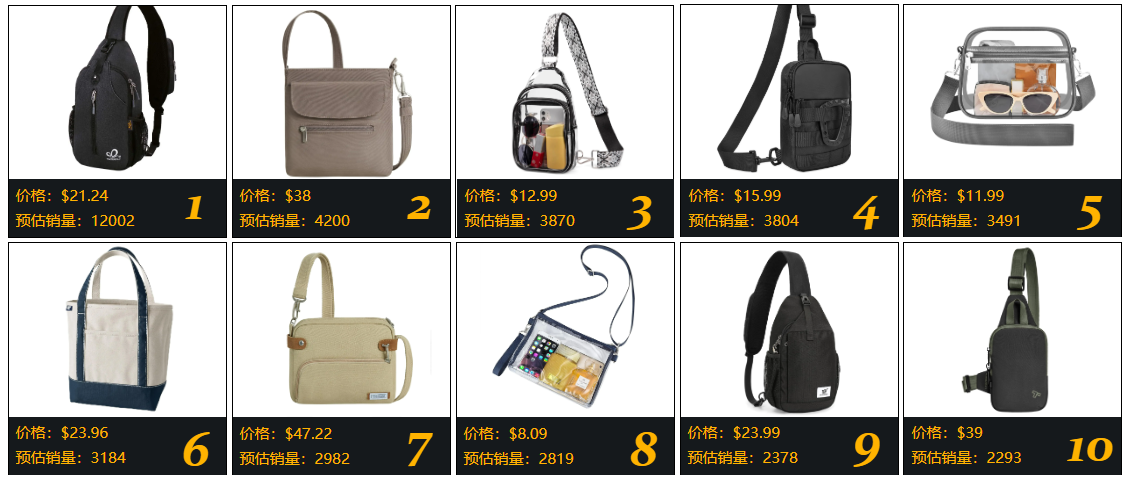
Top 10 Men’s Bag Rankings – March
The March Amazon Men’s Bag TOP 10 rankings are characterized by a strong focus on functionality-first design, clearly defined use-case segmentation, and value-driven positioning. Product development is mainly centered around multiple scenarios such as commuting, travel, and daily activities. High-cost-performance functional items, including chest bags and transparent bags, serve as the primary sales drivers, while mid-to-high-end quality options such as genuine leather bags and canvas tote bags act as complementary offerings, covering different consumer tiers. Overall, the market is trending toward lightweight design, multi-scenario usability, and high practicality.
Top 10 Kids’ Backpacks – March
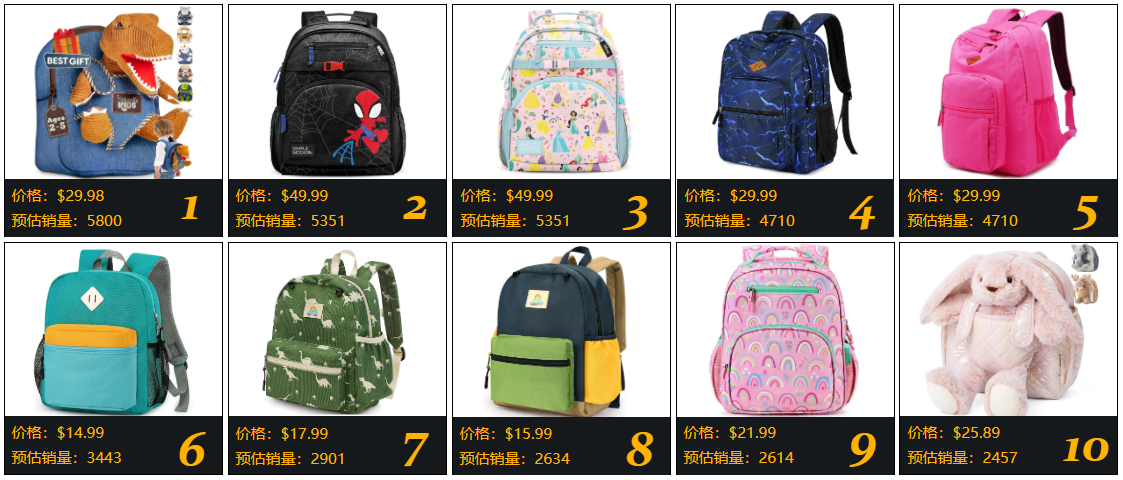
This month’s Amazon kids’ backpack market is driven by a core consumer logic that balances playful design with practical functionality. IP-themed and character-inspired designs, along with novelty-shaped backpacks, generate strong sales due to their high visual recognition, while value-for-money basic styles form the stable foundation of the market, together creating a complete product matrix.
Overall, the market is evolving toward age-segmented design, IP licensing integration, and upgraded aesthetics, precisely meeting the needs of children across different age groups and genders, while also addressing parents’ expectations for durability and safety.
Trending Product Recommendation – Soft Tote Bag
Best-Selling Analysis:
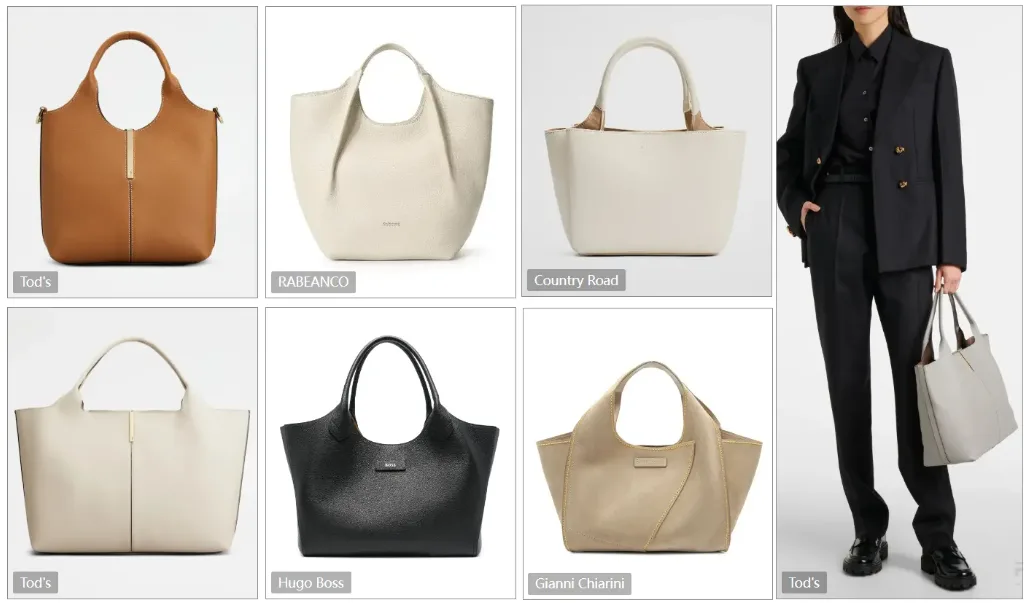
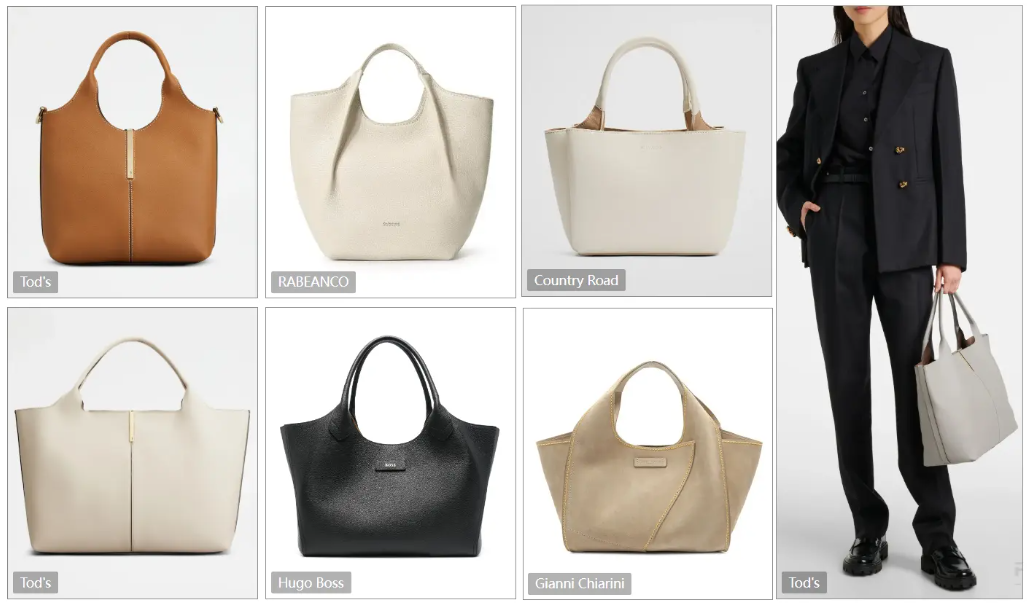
The top-selling soft tote bags on the list are widely favored for their minimalist silhouette, relaxed and comfortable soft materials, and large-capacity design. They have become versatile everyday essentials that perfectly fit commuting and casual lifestyles.
Future Trends:
Based on the current tote bag styles on Amazon, several extended designs show strong growth potential, including mesh vacation totes, bucket-style tote bags, and Longchamp-inspired totes. These variations indicate continued expansion in functional yet stylish tote bag innovations.
Trending Product Recommendation – Dumpling Shoulder Bag
Best-Selling Analysis:
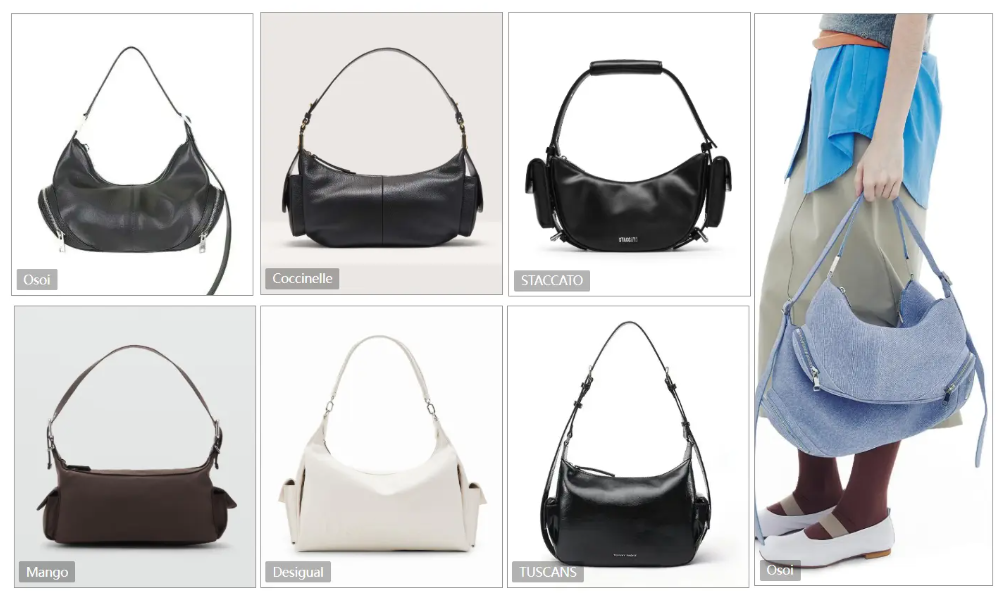
The top-selling underarm dumpling shoulder bags on the list are highly favored for their minimalist and comfortable silhouette, strong practicality, and durable, pleasant-to-touch materials. They have become a versatile and go-to choice for women’s commuting bags.
Future Trends:
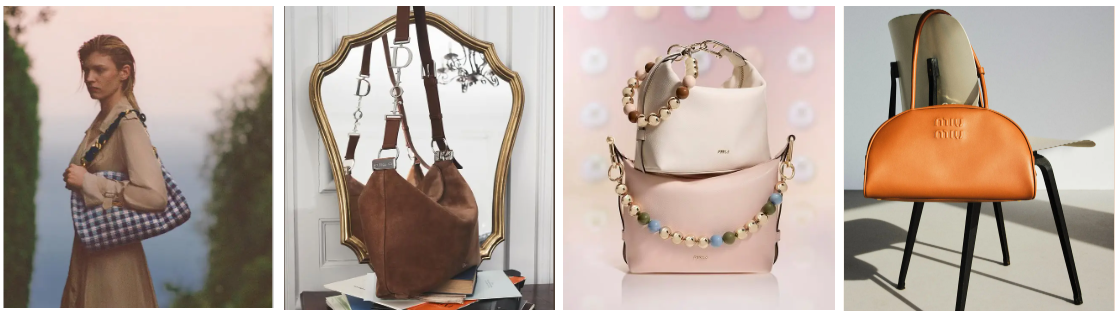
Based on other shoulder bag styles on Amazon, diverse design directions are emerging as key trends, including vintage distressed leather finishes, wrinkled waxed leather textures, and padded quilted craftsmanship, all of which indicate a continued move toward more textured, fashion-forward variations.
Trending Product Recommendation – Kids’ Backpack
Best-Selling Analysis:
The best-selling Spider-Man backpack in the kids’ backpack category combines a highly popular IP graphic with a classic school-style backpack structure, achieving a strong balance between visual appeal and practical usability.
Future Trends:
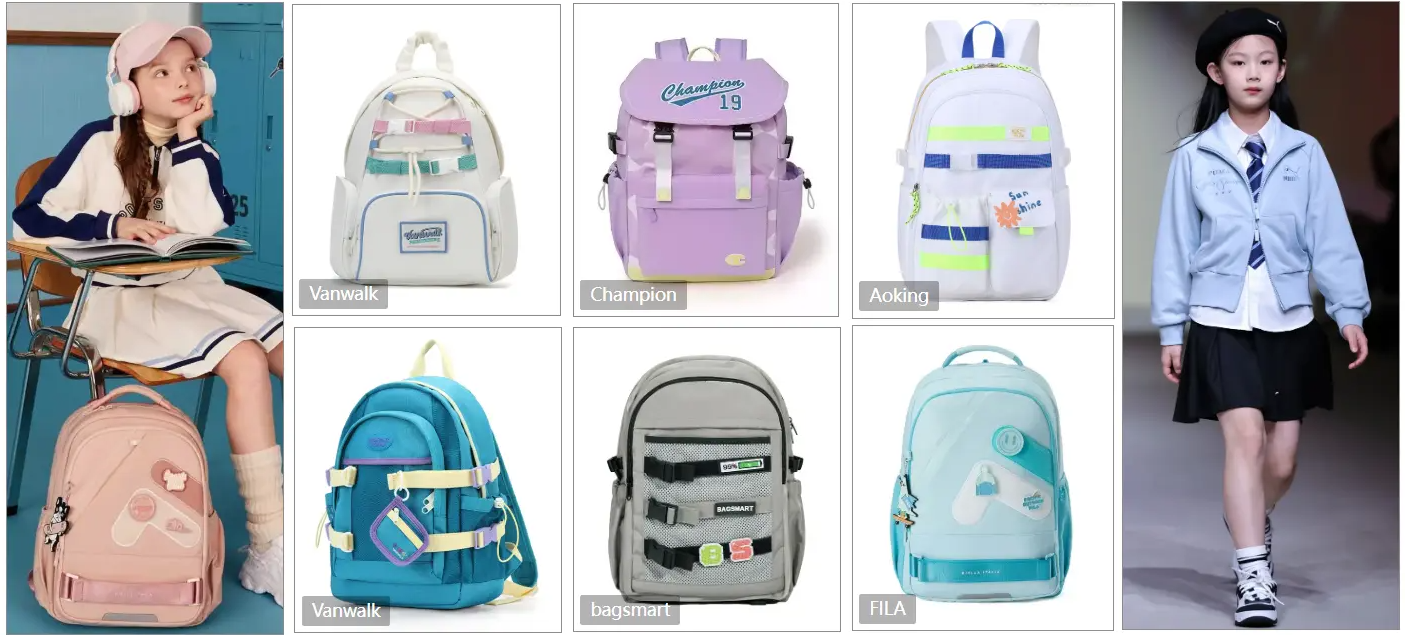
Based on other kids’ backpack styles on Amazon, emerging design directions include cartoon print patterns, strap and buckle detailing, sweet strawberry motifs, and pastel color palettes such as pink and purple tones, reflecting a continued expansion toward more diverse, themed, and visually expressive product development.
Conclusion
Overall, the kids’ backpack market continues to evolve around a dual-driven strategy of IP influence and functional design. While popular character licenses remain key sales drivers, demand for comfort, durability, and age-appropriate design is becoming increasingly important. Looking ahead, brands that can effectively combine strong visual storytelling with practical usability and safety-focused details will be better positioned to capture long-term growth in this category, especially within the custom kids backpack manufacturer and OEM backpack supplier for brands space.