
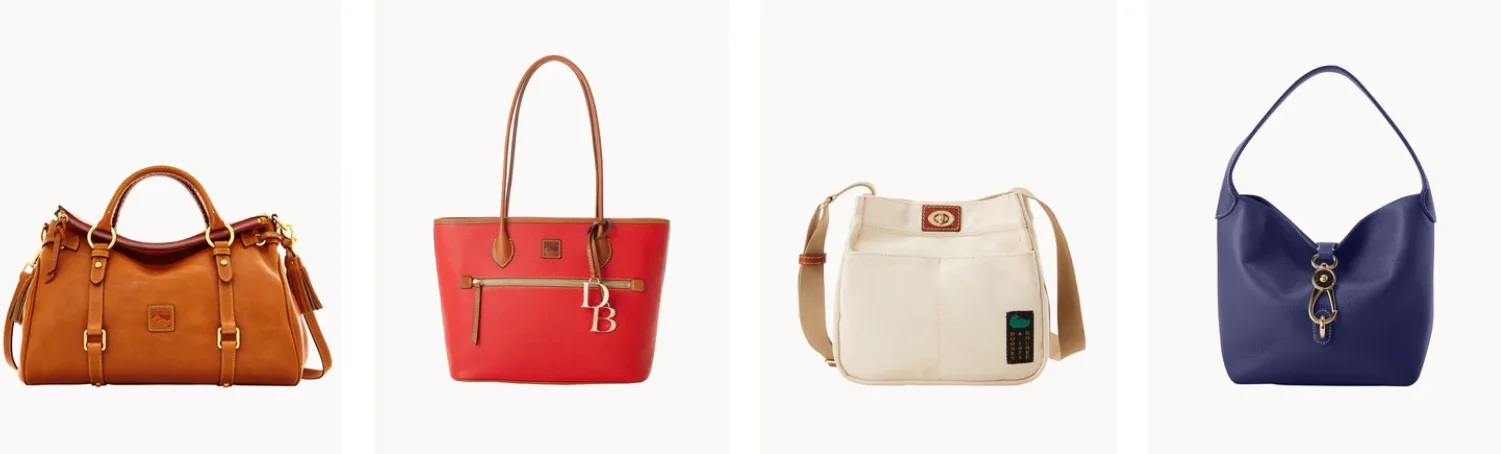
Pick up a Dooney & Bourke bag and you’ll notice something right away — it feels deliberate. The leather has weight. The hardware clicks with intention. The stitching runs with a precision that raises a quiet question: what goes into making one of these?
Sizing up a vintage Duck bag at an estate sale? Deciding if a new Pebble Grain tote is worth the price? Either way, understanding Dooney & Bourke bags production changes how you see the product. From the iconic All-Weather Leather tanning process to the shift away from American manufacturing, every construction detail tells a story. Knowing how to read it puts you in control as a buyer.
What Makes Dooney & Bourke “Accessible Luxury” — Brand Positioning & Production Philosophy
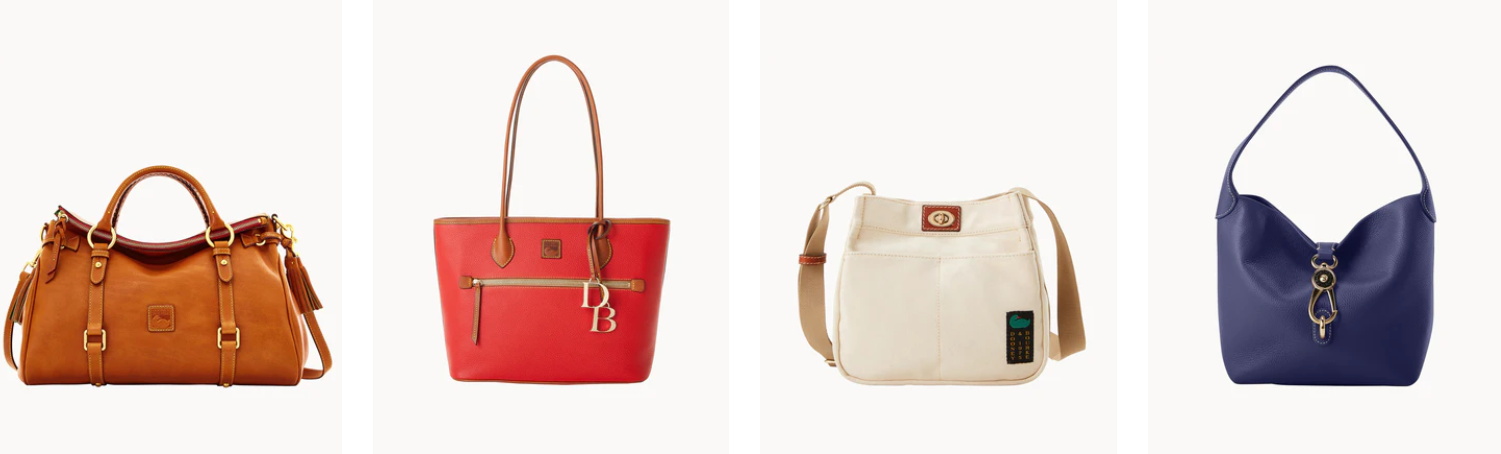
Dooney & Bourke holds a clear position in the market — and it stays there on purpose. Core leather handbags run $250–$450 at full MSRP. Entry nylon styles start around $150, and larger specialty pieces reach $600+. That range puts D&B in the accessible luxury tier, right alongside Coach, Kate Spade, and Michael Kors. It sits well below true luxury houses like Hermès or Chanel, where a basic leather handbag starts at $2,000 and climbs fast.
That price gap isn’t just about brand prestige. It comes from a different production model entirely.
The Production Logic Behind the Price Point
Accessible luxury brands like D&B land a finished bag at 15–25% of MSRP in production cost. Retail gross margins run 60–75%. Hermès spends a higher percentage per unit — but on a $10,000 bag. The math works out very differently at that level.
To stay in the $150–$600 range while keeping quality perception strong, D&B builds around three core approaches:
- Industrial, line-based manufacturing — multiple workers per bag, not single-artisan production
- Strong material specs — thicker cowhide panels (~1.6–2.0 mm), heavy brass hardware, double-stitched stress points
- Long-running core silhouettes — satchels, domes, and totes repeated across seasons. This cuts design costs and supports larger production runs
The Signature All-Weather Leather (AWL): How the Process Works
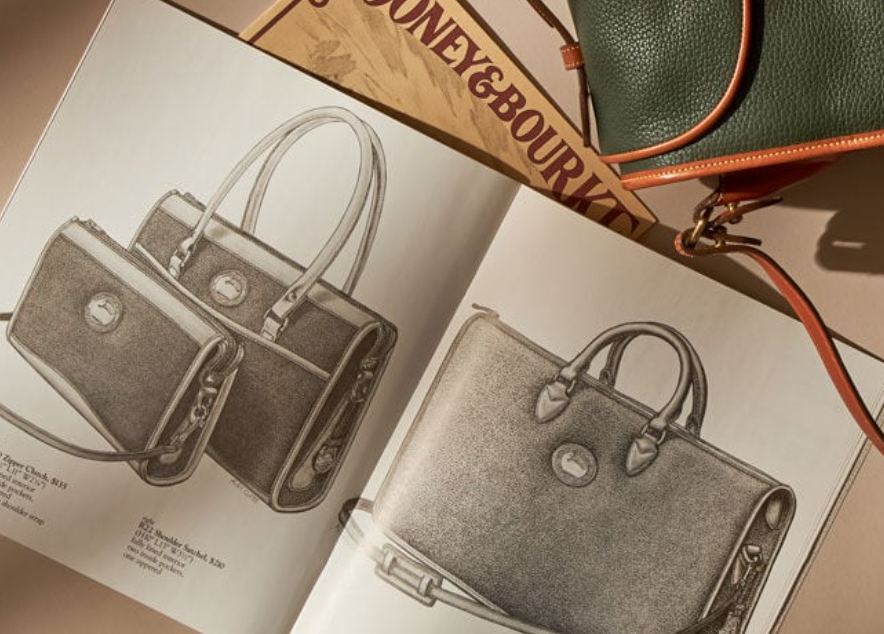
All-Weather Leather is what sets Dooney & Bourke apart from almost every other brand in the accessible luxury tier. It starts with a tanning process most buyers have never heard of.
AWL is 100% full-grain cowhide. No PVC coating. No synthetic film layered over the pebble surface. The water resistance isn’t applied on top — it’s built into the hide itself.
The Shrinkage Process: Where the Water Resistance Comes From
Here’s how it works, pulled straight from Dooney’s own production documentation:
- Hides are soaked in curing tannin oils — a blend of plant-based tannins and oil-fatliquors that soak deep into the collagen fiber network
- The soaked leather is laid flat to dry — as moisture leaves, the hide begins to shrink
- Shrinkage tightens the pores — hair follicle channels compress to a near-closed state, blocking water from entering at the grain level
That last step is the core mechanism. Tannins bond the collagen fibers together. The oils fill the gaps between them. As the leather shrinks during drying, those fiber gaps get tighter. The result is a grain structure that’s denser per square millimeter than standard full-grain handbag leather.
For comparison: conventional vegetable- or chrome-tanned leather absorbs 12–20% of its weight in water after soaking. AWL performs closer to bridle leather or waterproofed boot leather — materials that show under 5% water uptake in 30-minute spray tests. Water doesn’t soak in. It beads and rolls off.
Crosshatch & Saffiano-Style Leather: The Mechanical Pressing Process
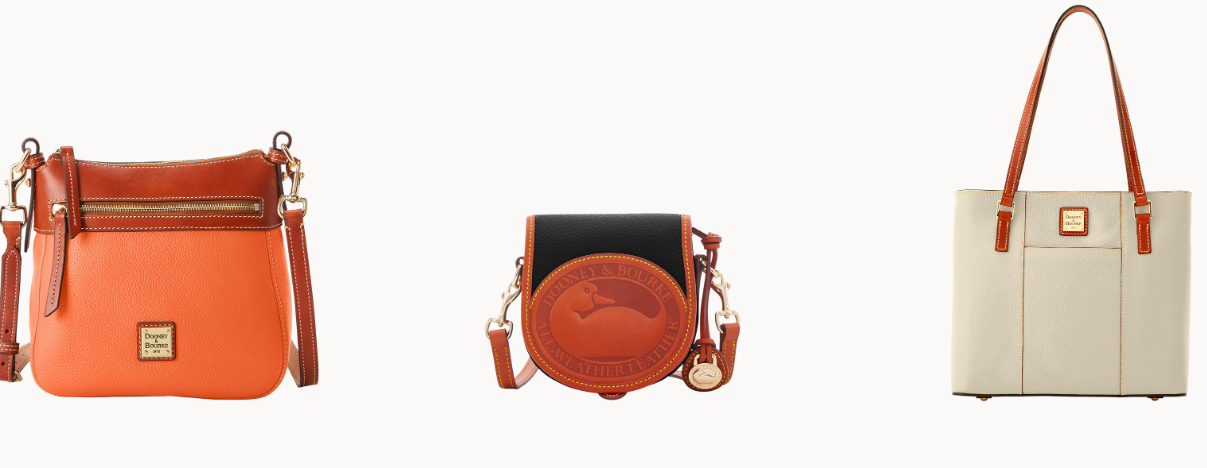
That rigid, geometric surface on Dooney & Bourke’s structured totes and wallets isn’t a natural leather grain. It goes through a two-stage mechanical process that reshapes the hide’s surface from scratch.
How the Pressing Process Works
Stage one is mechanical embossing. The leather hide heats up to around 70°C (165°F) to soften it, then presses against engraved metal plates or rollers carrying a crosshatch pattern. Dwell time runs 10–15 seconds per impression — long enough to lock the diagonal grid deep into the grain. Stage two is the protective finish. On quality pieces, that means a wax coating. Lower-grade versions use a PVC or PU-based resin instead.
Heat and pressure do more than create a visual pattern. They make the surface structurally stiffer — and, just as important, they hide natural variation in the base hide. That’s why this process works across so many different materials. Calfskin, Nappa, vegetable-tanned cowhide, or synthetic-backed materials can all end up with the same finished look. So “Saffiano-style” on a product label describes the surface treatment, not the base material underneath.
What the Wax Finish Actually Does
The wax topcoat pulls real functional weight:
- Scratch resistance — the coated surface deflects visible scuffs that would mark smooth leather right away
- Water repellency — wax sealing cuts down surface penetration without depending on the hide’s fiber structure the way AWL does
- Color flexibility — the pressed grain hides the substrate, so pigments can land consistent color across panels without traditional dye-through methods
- Shape retention — the finish holds the embossed grain in place, keeping the structured look through heavy daily use
The Durability Tradeoff
Crosshatch and Saffiano-style surfaces win on low-maintenance wearability. They wipe clean easily, resist scuffs well, and hold their polished look over time. The tradeoff is hand-feel and patina. Smooth leathers build character with age. Saffiano-style surfaces stay consistent, but they don’t soften or develop that same worn-in quality.
Quality makes a real difference here. Better-grade crosshatch pieces show deeper emboss definition, more even wax coverage, and tighter surface consistency from panel to panel. Cheaper versions often swap real leather for PVC laminates stamped with the same pattern. The look holds up at a glance, but the feel and lifespan don’t.
Hardware, Stitching & Structural Components: What Holds It Together
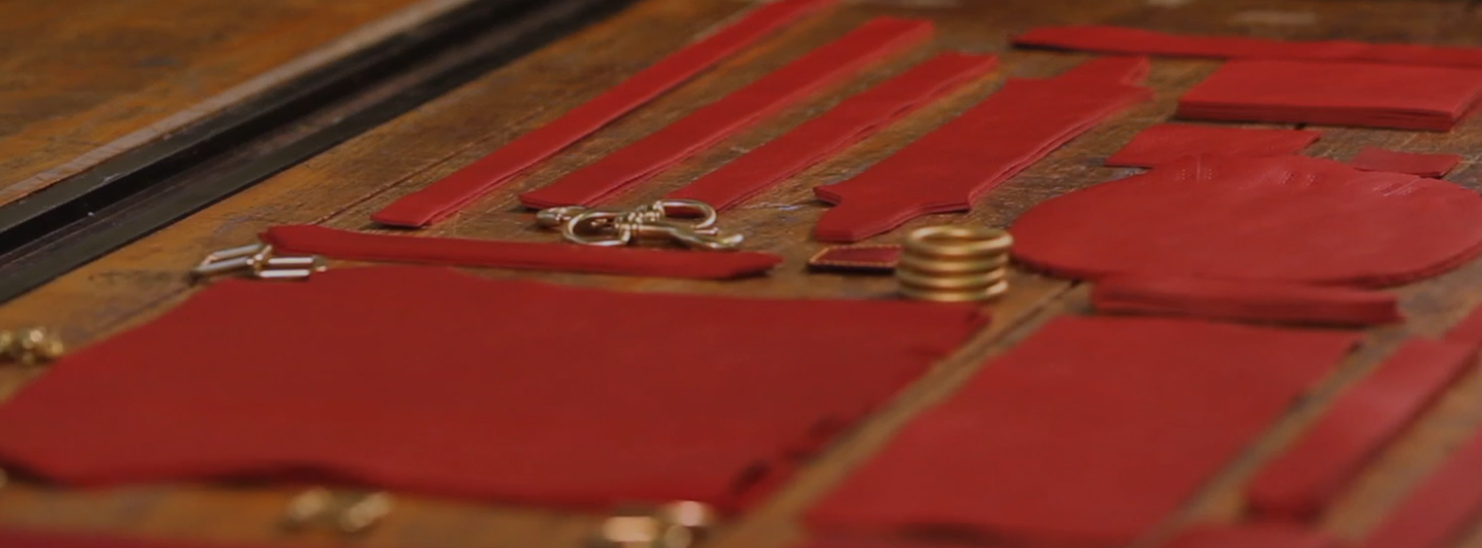
Flip a well-made Dooney & Bourke bag upside down and press a finger against one of the base feet. Solid resistance. No flex. That’s not an accident — specific material choices at every structural level make it happen.
Hardware: Weight Is the Tell
On a genuine premium leather tote, the full hardware package — D-rings, zipper, feet, logo plate, rivets — adds up to 60–120 grams. Cheap fashion bags land under 40–50 grams. Their rings and buckles are hollow zinc alloy. Walls measure as thin as 1.0–1.5 mm. Electroplating sits at just 1–5 µm deep. That’s hardware that bends and tarnishes within 6–18 months of normal use.
Solid brass — the standard on quality D&B pieces — runs walls at 2.0–2.5 mm at stress points. A 25 mm buckle in solid brass weighs 8–12 grams. The hollow alloy version of the same buckle? 3–5 grams. Pick them up back-to-back and the difference is immediate.
Bag feet aren’t decorative. You’ll find them positioned at the base corners with internal backing washers (15–20 mm diameter). They act as compression columns — spreading load, stopping the bottom panel from bowing, and keeping the base off rough surfaces. Solid cone-style feet run 2–3 grams each. Cheap pressed caps come in under 1.2 grams and collapse under sustained weight.
Stitching: Consistency Is the Benchmark
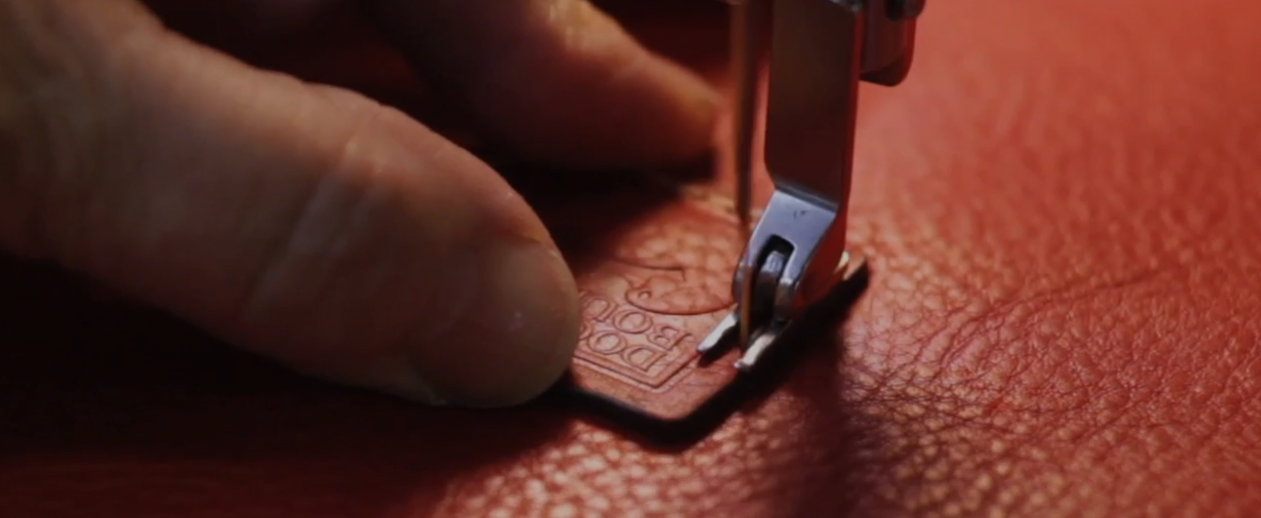
D&B’s structural seams on medium-weight handbag leather (1.2–2.0 mm panels) run at 7–9 SPI — stitch lengths of 2.8–3.5 mm. That spacing is not random. Too tight and the stitching perforates the hide. Too loose and the seams pull apart under load. The range balances thread strength against leather integrity.
At handle roots and strap anchors, look for double rows of stitching spaced 2–4 mm apart. These rows pair with a box-and-X reinforcement pattern across a 20×20 mm area minimum. Those seams also extend 20–30 mm into the bag body — not just at the surface attachment point.
Thread ends at high-stress sections get back-stitched 3–5 holes deep and heat-sealed. Loose loops or visible thread tails at stress points are a clear sign of rushed finishing.
Made in USA Era vs. Global Production: How Manufacturing Origin Affects Quality
The “Made in USA” tag sewn into a vintage Dooney & Bourke bag isn’t just a label. It’s a snapshot of a production model that no longer exists at the brand.
D&B made its bags in the U.S. through the 1980s and into the mid-1990s. That’s the same era collectors go after. Production shifted offshore in the late 1990s and into the 2000s, following the broader industry trend. The change wasn’t just about geography. It brought real material and construction differences — and you can see them in the bags.
What Changed When Manufacturing Moved Overseas
This pattern at D&B matches what researchers and collectors have tracked across the accessible luxury category:
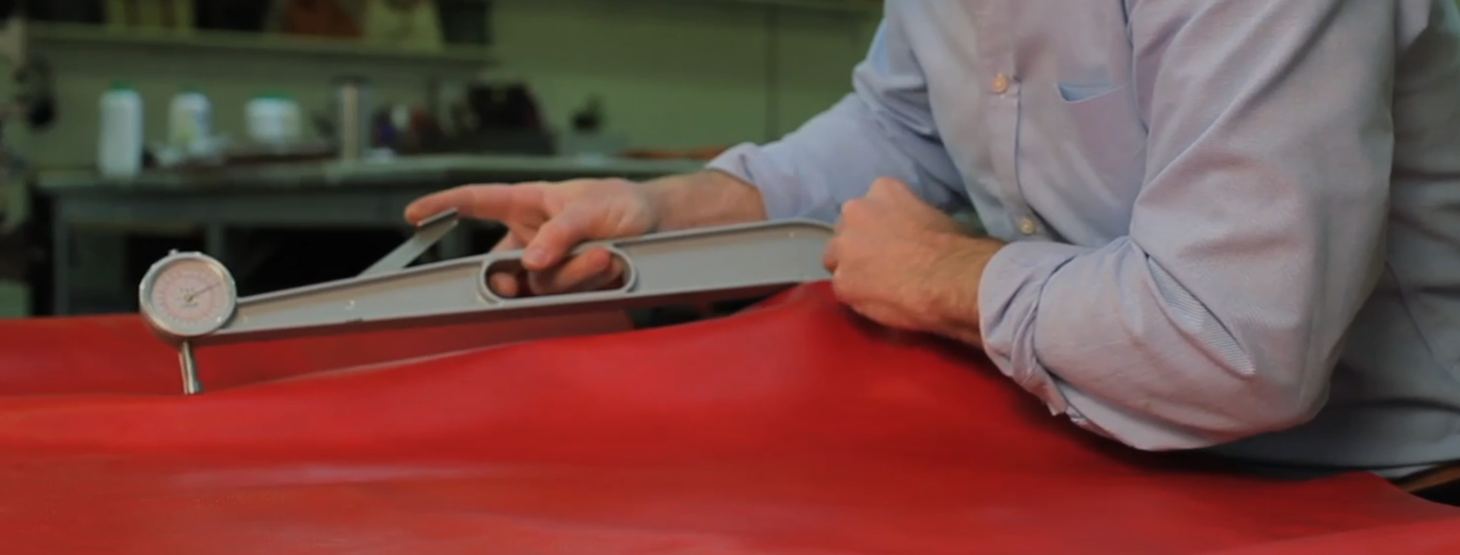
- Leather thickness dropped. U.S.-era D&B panels measured 2.0–2.6 mm. Post-offshoring bags in similar price tiers come in at 1.2–1.6 mm. That’s split or corrected-grain leather instead of full-grain, with heavier surface finishing to cover it up.
- Hardware changed too. Solid brass gave way to plated zinc alloys on cost-cut production runs. Wall thickness on rings and buckles fell from 2.0–2.5 mm down to 1.0–1.5 mm. Pick up both generations side by side — you’ll feel the difference in weight right away.
- Early offshore runs had the most problems. Industry data on apparel and consumer goods shows 2–5× higher rework rates in a factory’s first two to three production seasons, before specs get locked in. D&B’s earliest “Made in China” pieces carry that same transition uncertainty.
D&B wasn’t alone here. “Made in USA” leather goods in good condition sell for 20–50% more than same-brand, same-design pieces from later global production runs. Buyers treat origin as a quality shortcut because checking construction details yourself takes time and a trained eye.
Why Origin Is a Starting Point, Not a Final Answer
Manufacturing location is a good quality predictor at the extremes — but not a perfect one. Pre-offshoring U.S. production lines up with heavier materials, better hardware, and longer structural life. Early offshore transition pieces are the most unpredictable. Top-tier Asian factories today — the ones brands are actually paying for — can match or close the gap with U.S.-era quality.
For D&B, that means the production era matters more than the country alone. A current bag built to strong specs in Vietnam outperforms a rushed mid-2000s transitional piece across most measurable categories.
The practical read: use the “Made in USA” tag to zero in on vintage pieces, then verify with a physical checklist — leather thickness, hardware weight, stitch density, and interior construction. The tag points you in the right direction. The bag itself tells you whether it holds up.
Vintage Authentication Through Construction Details: Reading the Bag’s DNA
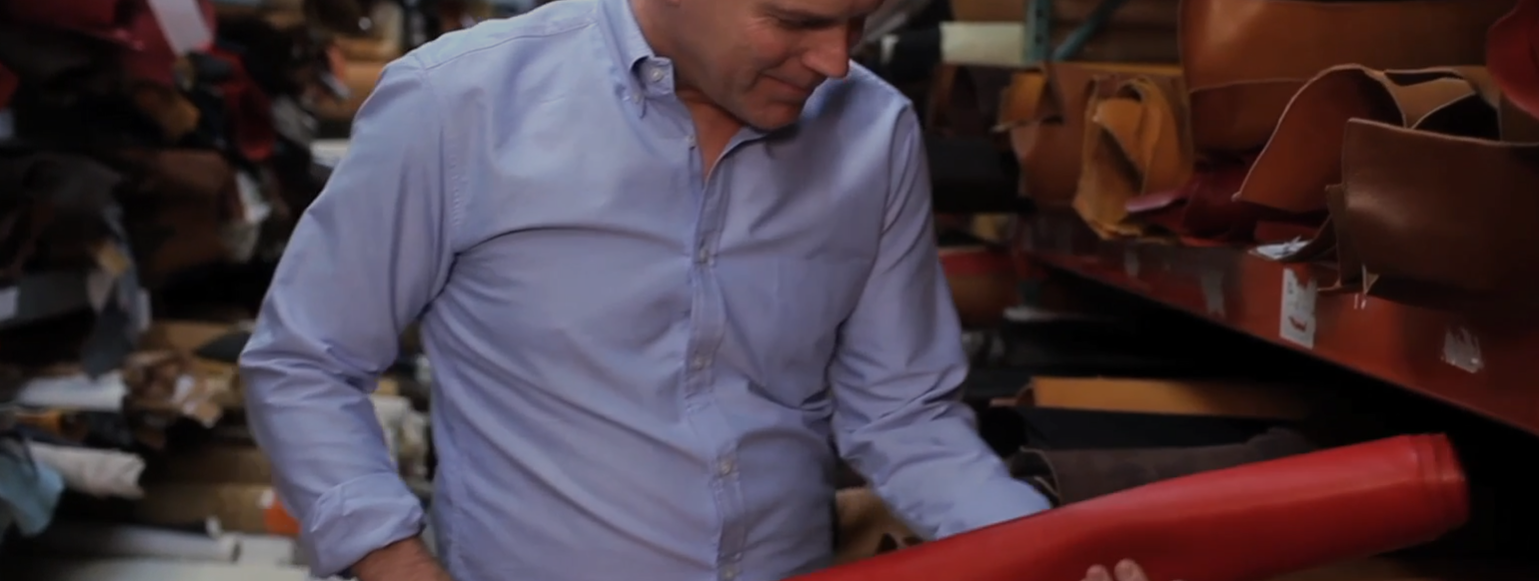
Every Dooney & Bourke bag holds a record of when and how it was made. That record lives in the leather thickness, thread density, hardware weight, and label placement. Read those details and you stop guessing.
Start with the Label
The cloth tag inside is the fastest era filter you have.
Care labels became standard U.S. practice around 1971. By the 1980s, they were nearly universal. By 1985–86, most brands selling into U.S. and EU markets included a woven or printed cloth tag. That tag listed fiber content, country of origin, and an RN or style code.
What that means in practice:
- No cloth tag at all → consistent with pre-1975 production. Not suspicious on its own.
- Full care symbol set + “100% Cotton Lining / Made in USA / RN XXXXX” → mid-1980s onward.
- Claimed 1990s bag with zero interior markings and no sign a tag was removed → higher risk of counterfeit or factory overrun.
- Modern ISO washing symbols on a bag sold as “early 1970s” → out of place. The era claim fails right there.
Run the Physical Checklist
Once the label checks out, move to construction:
- Lining material — Genuine AWL pieces from the 1980s–90s used raw leather reverse, striped cotton twill, or solid cotton canvas. Shiny polyester lining on a model that should have a cotton interior is a direct red flag.
- Base structure — Press the bottom panel. Real D&B construction uses leather and dense sealed board. A crunchy, layered feel with a crackling sound points to chipboard — a common counterfeit shortcut.
- Seam consistency — Authentic seam lines stay within ±1 mm. Look for wandering topstitching, exposed fraying, or multiple overlapping seam lines. Originals show one clean run. Anything else signals poor or replacement construction.
- Hardware tone matching — All metal on a single bag should match in color. Mixed gold tones — one piece bright yellow, another flat brass — point to replacement parts or low-grade casting.
- Stamp depth and centering — Interior brand stamps should show sharp, even letter depth. Fuzzy edges, uneven pressure, or stamps that crowd a seam line are common signs of a fake.
Cross-check everything against three to five confirmed authentic examples from the same model and year. Auction archives and vintage resale platforms with authentication guarantees give you the most reliable reference points for this.
Conclusion
Look at every layer — the AWL tanning process, the brass hardware, the cross-stitched handles. One truth keeps showing up: Dooney & Bourke bags earn their place in the accessible luxury space through genuine craft, not just branding.
Most buyers never read the construction. Learning to read it changes everything. Are you checking a vintage find at a thrift store? Weighing a modern purchase? Trying to decide if the price tag reflects real value? The construction gives you the answers.
Here’s the bottom line: production quality varies across eras and collections. But the brand’s core DNA has stayed intact. Durable leather. Solid hardware. Honest construction. Those three things never went away.
So don’t shop the label. Shop the details instead. Run your fingers along the stitching. Check the hardware weight. Let the bag’s build speak for itself.
Understanding what Dooney & Bourke bags: production explained means puts you in control. No more guessing. You choose with confidence.