
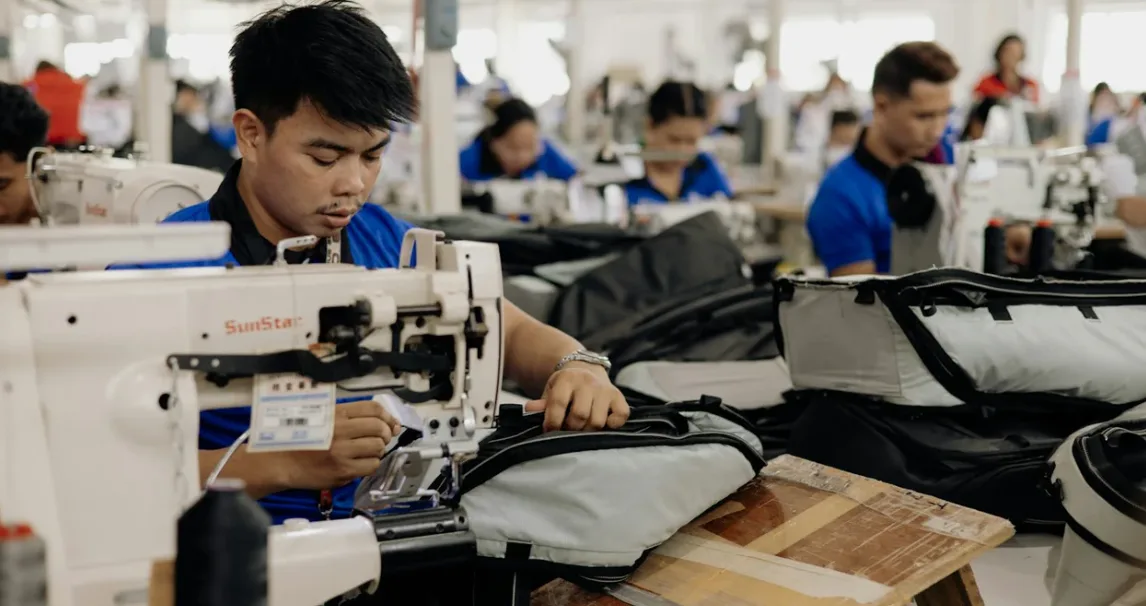
Every premium bag comes with a story. The marketing team shapes that story — but the real one lives on the factory floor.
Peak Design has earned a loyal following. They don’t just sell good gear. They promise responsible production, fair labor, and materials built to last for decades.
So what does that look like in real life? These Peak Design bags production insights show you where the bags are made, who makes them, what materials go into them, and whether that premium price tag reflects real manufacturing integrity — or just smart branding.
Ever wondered what separates a $300 camera bag from a $60 one? You’re about to find out.
Where Peak Design Bags Are Made
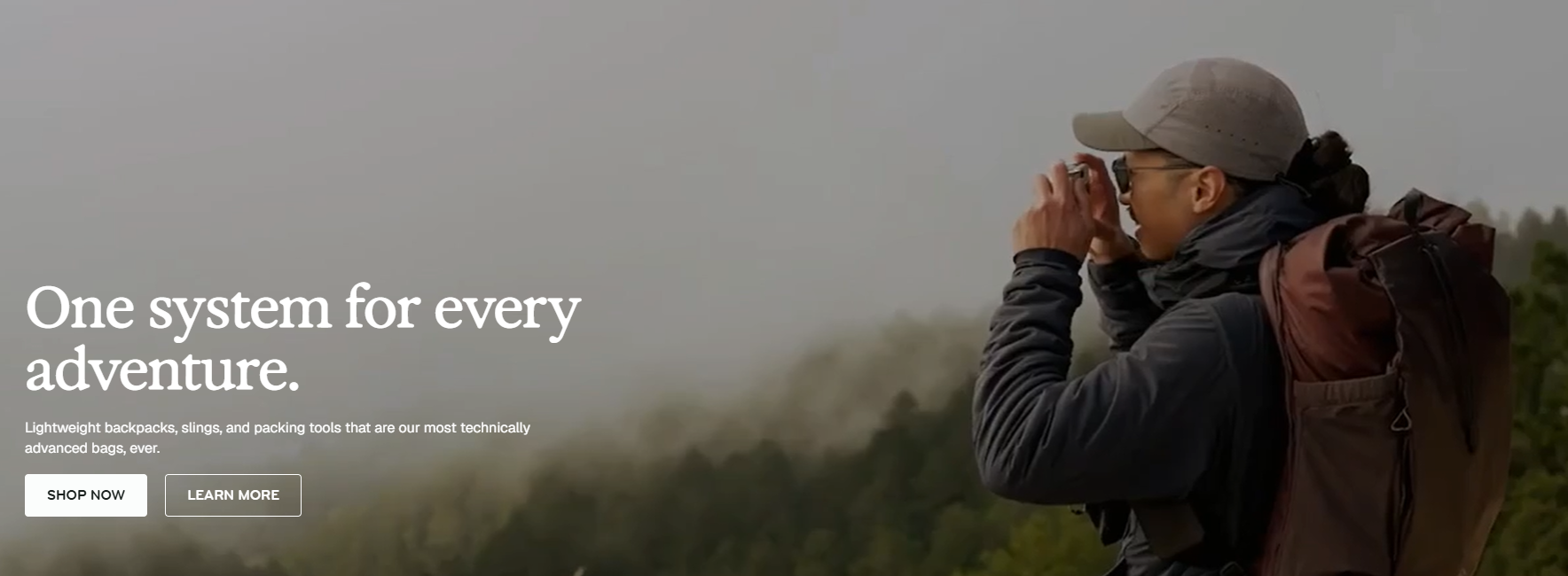
Peak Design makes bags across three countries. Each one covers a different part of the process.
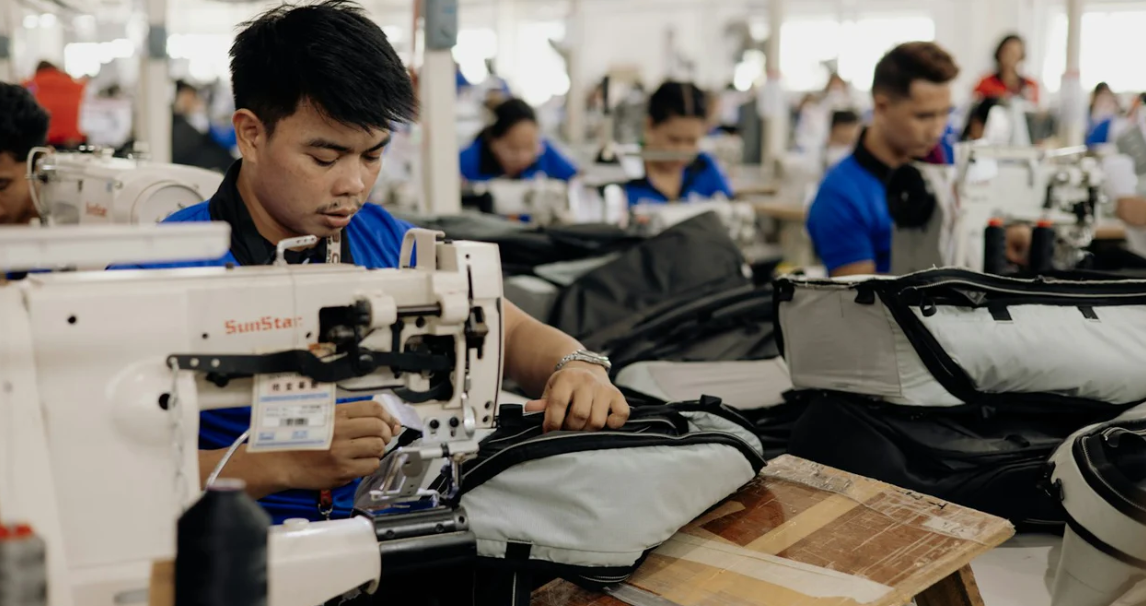
Vietnam does the most work. The Travel Line — including the Travel Backpack 45L and all packing tools — comes out of a soft-goods factory near Ho Chi Minh City. Over 1,200 workers run full-time production there. They handle fabric cutting, sewing, foam lamination, quality checks, and final packing. Peak Design has partnered with this facility for at least three years. It’s the core of their bag production.
The Philippines brings a layer of accountability. Peak Design helped build the first Fair Trade certified factory in the Philippines — and the brand takes clear credit for that. This factory produces part of the bag lineup. Every bag Peak Design sells carries Fair Trade certification, no matter where it’s sewn.
China supplies the hardware. Metal parts — CNC-machined aluminum buckles, Capture clip plates, precision adjusters — come from the Dongguan region. That area is a major hub for metal and plastic manufacturing. Workers ship these components in bulk to Vietnam and the Philippines, where they go into the final bags.
Three countries. One certified supply chain.
Materials Breakdown: What Goes Into a Peak Design Bag
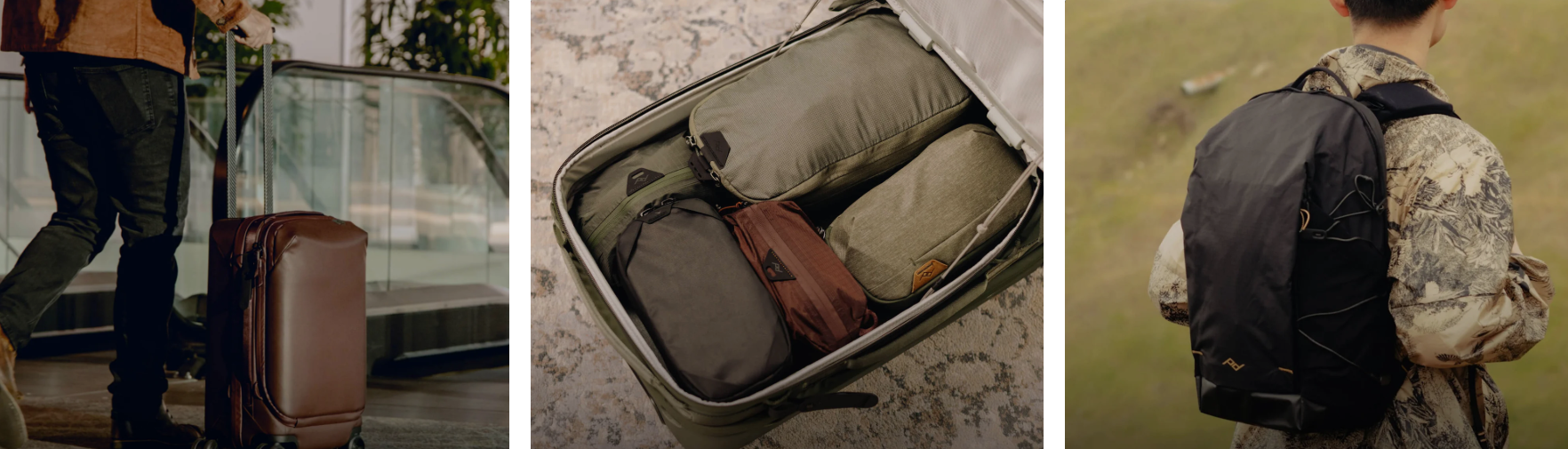
Cut open a Peak Design bag and you’ll find a materials list that looks more like an engineering spec sheet than a typical gear label.
Each bag line runs a different fabric system — and those choices aren’t random. Peak Design matches each material to the specific stress that bag is built to take.
Shell Fabrics: Different Bags, Different Standards
The Everyday Backpack v2 uses 400D recycled ripstop nylon with a DWR coating. Most colorways — charcoal, midnight, and others — come from 100% bluesign-approved recycled material. The black colorway is the one exception.
The Outdoor Backpack takes things further. Its main shell is 210D Terra Shell ripstop nylon — 100% recycled and bluesign-approved. It also carries an internal PU coating for waterproofing. High-contact zones like the front panel and base get an extra TPU overlay on top of that. The whole system is PFAS-free. So no fluorinated chemistry goes into the water repellency treatment.
The Travel Backpack goes in a different direction. Its thick Kodra nylon shell performs close to a 400–900D ballistic fabric. It’s built to handle the beating that checked luggage takes from airport handling.
Hardware and Reinforcement Materials
Peak Design doesn’t just grab off-the-shelf buckles. The Everyday line uses die-cast and stamped anodized aluminum hardware with a sandblasted finish and protective clearcoat. High-wear touchpoints get Hypalon — a synthetic rubber laminate — in charcoal versions. Ash and accent colorways swap that out for nubuck leather.
The Outdoor Backpack pushes further. All hardware is custom-built from glass-reinforced nylon for better impact resistance. The zippers — branded UltraZips — came out of a co-development with Zoom Zippers. You get reinforced tooth profiles and weather-resistant coatings across every zipper on the bag.
One detail you won’t notice right away: the Outdoor line weaves UHMWPE (ultra-high-molecular-weight polyethylene) threads into binding strips and stretch pockets. This fiber sits among the highest abrasion-resistance materials available. You’ll find it used in climbing gear for the same reason.
Internal Structure
Inside every Everyday bag, you’ll find compression-molded high-density EVA foam dividers — the FlexFold origami panels. These fold into adjustable shelving for cameras and lenses, and you can reconfigure them as your kit changes. The bag walls also carry foam layers built straight into the shell. That gives you passive protection without extra bulk.
The Outdoor pack’s back panel uses perforated foam with mesh lining. This keeps airflow moving and pulls moisture away during active carry.
The Design-to-Production Pipeline: From San Francisco to Factory Floor
A Peak Design bag doesn’t start in Vietnam. It starts in San Francisco — on a cutting table, with laser-cut panels and hand-sewn mockups that never leave the building.
The SF design team builds 3–5 physical prototypes in-house before a single tech pack goes to the factory. Each round takes 2–3 weeks. Patterns get adjusted, hardware tolerances get checked, and basic field tests get run. The bag crosses the Pacific only after all that clears.
The first factory sample arrives from Ho Chi Minh City. That’s where the real loop kicks in:
- SF receives Proto 1, measures it, load-tests it, and compiles a change list — often 20–50 line items
- That list ships back to Vietnam as annotated photos, redline PDFs, and measurement sheets
- Vietnam updates the pattern, builds Proto 2, and ships it back
- This cycle repeats 3–5 times until a golden sample gets approved
Each Vietnam round takes 4–6 weeks — shipping time included. Air freight cuts transit to 3–7 days each way. But those days stack up fast across multiple prototype rounds.
For major launches, the full path from concept to mass production runs ~18 months. The original Everyday Messenger went through more than 10 major prototype versions before it shipped. The Everyday Backpack and Travel 45L each went through 8–12 full prototype generations.
Before production locks, the factory runs a pilot batch of 50–200 units. Peak Design puts these in the hands of real users — photographers, commuters, frequent travelers — for 4–8 weeks of structured testing. Those users carry the bags every day. Their feedback shapes the final pre-production adjustments.
The production target on the other side: fewer than 1–2% major defects, with rework capability built into the factory line.
Assembly Process: Step-by-Step Production on the Factory Floor
Raw fabric rolls and a box of aluminum hardware don’t become a $300 bag by accident. At Peak Design’s Ho Chi Minh City facility, production runs through nine stages — each station has one defined job, and nothing skips ahead.
The production order looks like this:
- Receive and inspect incoming fabric, trims, and hardware
- Cut panels — automated die cutting for high-volume runs, manual cutting for lower-volume SKUs
- Bundle and kit cut parts by order and SKU before anything moves to sewing
- Sew primary panels in a fixed sequence: edge alignment → seam formation → stress-point reinforcement → trim and clean-up
- Add bartacks at every load point — zipper ends, strap anchors, and Capture clip mounts
- Fit zippers, aluminum clips, and magnetic FlexFold hardware
- Close final seams, then bind and tape exposed edges for water resistance
- Run end-of-line functional QC
- Pack, label, and log validation records
How the Factory Floor Is Laid Out
The floor splits into physical zones. Cutting, kitting, sewing, and packing each get their own area. That setup groups machinery by task. It also stops one slow station from holding up the whole line.
Cut panels must stay within ±1–2 mm dimensional tolerance. Go outside that range and seam matching breaks down — this hits hardest on structured panels like the Everyday Backpack’s FlexFold divider housings.
Hardware and Seam Standards
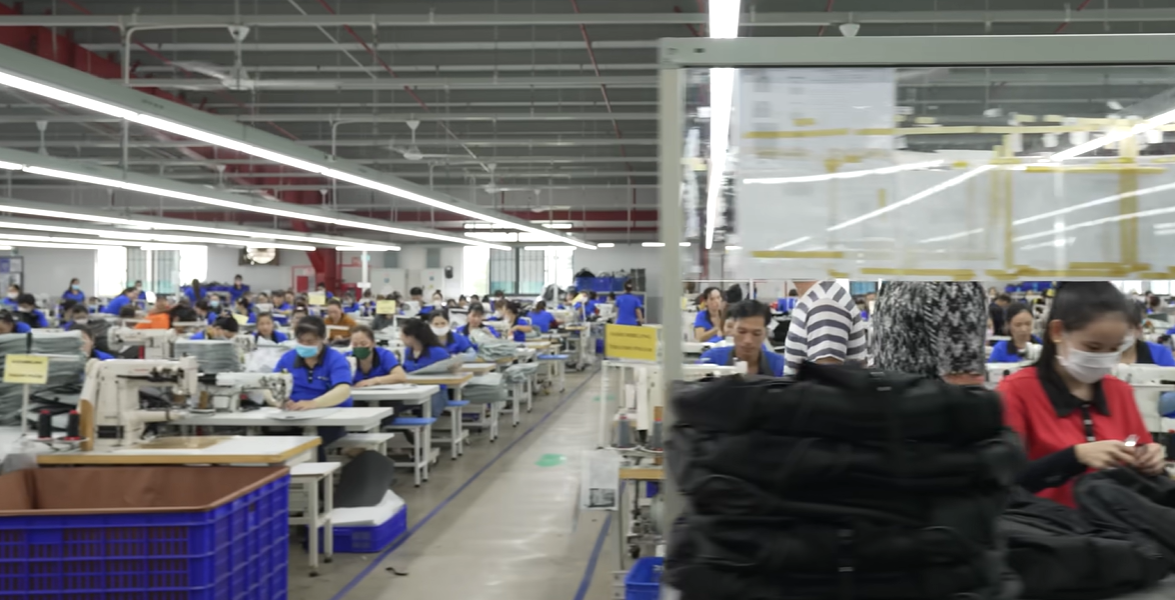
Aluminum clips go in before final closure. That order matters. Inspectors get a clear window to check the reinforced webbing layers before the bag seals shut. Magnetic latches sit between sewn layers during panel joining — they’re built into the structure, not clipped on at the end.
Zipper garages get sewn into end seams in the early build stages. This hides the pull, cuts down snag points, and keeps the finish clean.
QC runs at three checkpoints:
- Incoming — cut parts, hardware counts, and visible defects all get checked before sewing starts
- In-process — inspectors check seam alignment, stitch tension, and consistency at each build stage
- End-of-line — zipper cycles run against a 100–500 cycle pass/fail benchmark, water resistance gets spot-checked on taped constructions, and latch engagement gets confirmed
Every defect and rework action gets logged at the station level. That traceability record is what keeps Peak Design’s major defect rate under 2%.
Conclusion
Peak Design doesn’t build bags to hit a price point. They build them to a standard. Fair Trade certification protects the workers. Aerospace-grade materials define what goes into each bag. A lifetime warranty backs everything that ships out.
These Peak Design bags production insights reveal a brand that treats manufacturing as part of the product itself — not just a cost to cut. You’re not paying a premium for a logo. You’re paying for every decision made between the San Francisco design studio and the factory floor.
So what’s next? Think about what you need from a bag long-term. Buy once, buy right. Peak Design’s production model is built for exactly that kind of thinking.