
You’ve found a bag you love. But one question stops you before checkout: where is this thing made? For Dagne Dover fans, that question is harder to answer than it should be.
The brand carries a polished New York City identity. It champions sustainability and charges premium prices — yet clear, honest information about manufacturing origin stays hard to find.
Shopping with ethical intentions? Comparing value? Just curious? Either way, the truth about Dagne Dover bags — and whether they’re bag made in Asia or the USA — deserves a straight answer. We dug into label evidence, official statements, and industry context to get you that answer.
Dagne Dover Brand Overview: NYC Design vs. Global Manufacturing Reality
Dagne Dover launched in 2013. Three women founded it — Melissa Mash (CEO), Jessy Dover (Creative Director), and Deepa Gandhi (COO). Their headquarters sits at 273 Lafayette Street in Soho, New York City.
The brand’s positioning is bold. Early investor materials framed it as combining Tumi’s functionality, Prada-level design craft, and Warby Parker’s digitally native model. That’s a sharp triangle — and it shows you where Dagne Dover wants to sit in the market.
But here’s the gap worth knowing: NYC handles design. Asia handles manufacturing.
The Soho team owns everything on the front end — sketches, technical specs, material selection, color palettes, and QA standards. The actual cutting, sewing, and stitching happen at factories in China, Vietnam, or Cambodia. The materials — neoprene, coated canvas, REPREVE recycled polyester — come from Asian mills. Those mills ship the materials to Asian factories, where workers build the final product.
Price points confirm this split. Most Dagne Dover bags retail between $80 and $245. At standard DTC margins, estimated ex-factory costs land at $12–$40 per unit. That cost structure can’t support US domestic manufacturing at scale.
So Dagne Dover calling itself a “New York City bag brand” is accurate — for design. For production, the work happens overseas.
What Dagne Dover’s Official Website Says (And Doesn’t)
Pull up Dagne Dover’s official website and you’ll find polished brand language — but almost nothing about where the bags are made.
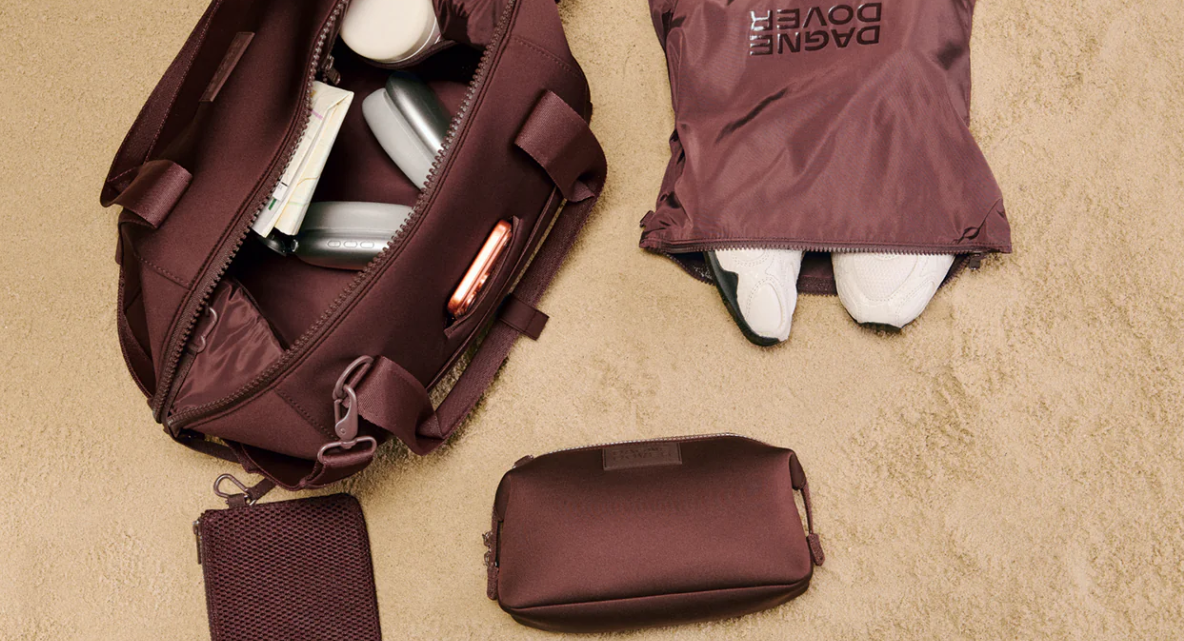
The site covers the basics well. Founded in 2013. Headquarters in New York City. Three co-founders: Melissa Mash, Jessy Dover, and Deepa Gandhi. The brand calls itself a maker of “hyper-functional, performance driven bags” built for “problem-solving humans.” Product categories include work bags, travel bags, gym bags, totes, crossbodies, and fanny packs. The target customers? “Active professionals, parents, and travelers.”
That’s the easy part.
Where the Site Goes Quiet
On manufacturing? Total silence.
The official pages have no mention of:
– Which countries produce the bags
– Factory names, locations, or audit certifications — no BSCI, SMETA, or WRAP references anywhere
– A supply chain map or transparency report of any kind
The sustainability section tells a similar story. The brand states a “commitment to becoming a more eco-conscious brand” and points to recycled materials — then stops. You won’t find:
– A specific % recycled content per product
– CO₂ footprint data
– Third-party certifications like GRS, OEKO-TEX, or B Corp
Compare that to top eco-focused competitors. Those brands publish clear statements like “this bag uses X recycled bottles” or “we’ve been B Corp certified since [year].” Dagne Dover’s eco language stays in aspirational territory. It’s qualitative, not quantifiable. No hard numbers, no third-party proof.
Warranty terms, technical specs, and pricing transparency are also missing from brand story pages.
So what Dagne Dover says and what it discloses are two different things. That gap is where the real manufacturing question sits.
The “Made in USA” Claim: Where It Comes From and Why It’s Unreliable
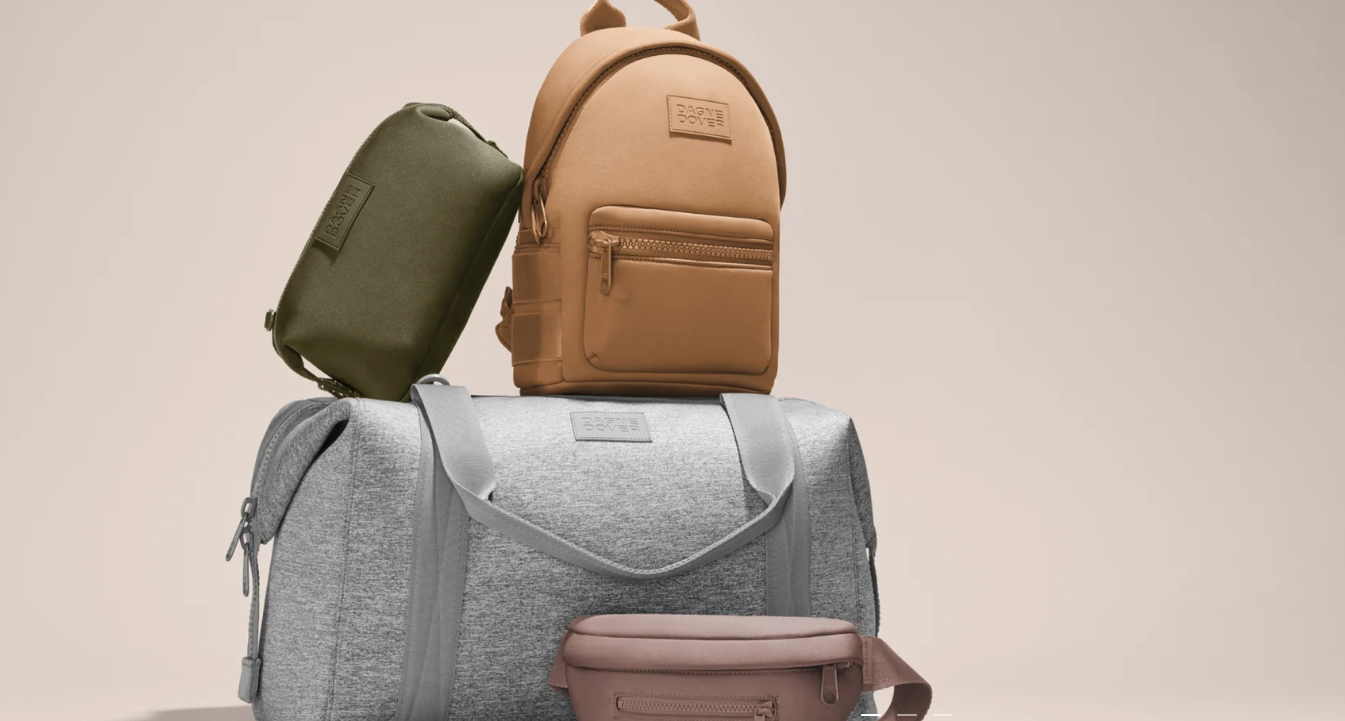
Some Dagne Dover listings and third-party reviews carry a “Made in USA” label. That label has a legal definition — and it’s far murkier than most shoppers expect.
The Federal Trade Commission has regulated “Made in USA” claims since the 1940s. The current rule — the 2021 Made in USA Labeling Rule (16 CFR Part 323) — requires that a product be “all or virtually all” made in the United States before a brand can make an unqualified origin claim. That means:
-
Final assembly must happen in the U.S.
-
All significant processing must occur in the U.S.
-
All or virtually all components must be U.S.-origin — foreign content must be negligible
The FTC skips a fixed percentage on purpose. Legal practitioners tend to treat ≈95% domestic value as the practical safety threshold, but that number carries no binding legal weight. It shifts case by case.
Why “Made in USA” Is Easy to Stretch
The standard rests on internal cost accounting — materials, labor, overhead — that no consumer can check. Supply chains don’t offer that level of detail. A supplier can certify a part as “domestic” even when its sub-components trace back to Asian mills.
Three red flags make a claim hard to trust:
-
No specific numbers — Vague slogans like “American Made” without percentages or assembly details are easy to manipulate
-
Patriotic imagery without disclosure — Flags and “heritage” language can turn a claim that only technically qualifies into a misleading overall impression
-
Mismatches across channels — A website listing “Made in USA” while the physical label reads “Made in Vietnam” is a direct signal of unreliability — and now a priority enforcement target under a March 2026 Executive Order directing the FTC to scrutinize digital origin claims
Bags sit in one of the most globalized product categories out there. An unqualified “Made in USA” claim rarely survives real scrutiny in this space. Dagne Dover’s cost structure, material sourcing from Asian mills, and the total absence of published domestic-content data make the claim even harder to take at face value.
Industry Context: Where Bags Like Dagne Dover Are Made
The bag industry runs on Asian manufacturing — and has for decades. For mid-to-upper-mid lifestyle brands at Dagne Dover’s price point, that’s not a compromise. It’s the standard operating model.
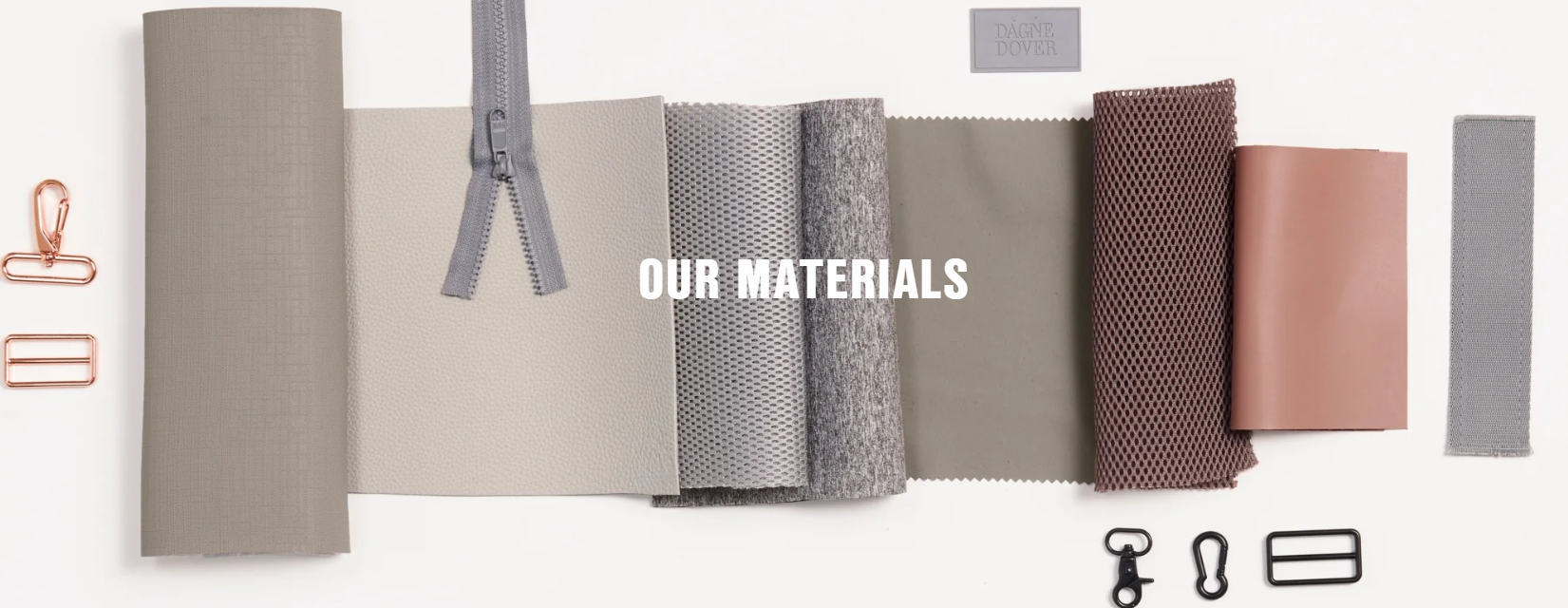
China dominates the supply chain for the exact materials Dagne Dover uses:
-
Neoprene bags — assembled in Guangdong and Fujian provinces, where this category is concentrated
-
Recycled polyester totes and backpacks — produced across Guangdong, Fujian, and a growing share out of Vietnam
-
PU structured work bags — centered in Guangdong and Zhejiang
Vietnam has picked up serious volume since 2019. It now accounts for 15–20% of US backpack imports by value. Tariff pressure on Chinese goods pushed a lot of that shift. Brands like Away, Everlane, Herschel, and Tumi all run the same playbook: design in New York or another Western city, manufacture in China or Vietnam.
The economics make it obvious. A neoprene tote retailing at $150 carries an FOB cost of $15–30. Shifting production from domestic workshops to Asia cuts labor costs by 50–80%. You also get access to higher volumes and more complex construction — the multi-pocket, molded-interior builds that define Dagne Dover’s functional appeal. Domestic production simply can’t match that combination of cost and capability.
This is the industry Dagne Dover operates in. Its manufacturing geography isn’t unusual. It’s expected.
How to Get a Clear Answer from Dagne Dover
Two contact points work better than anything else for cutting through the confusion.
Email: [email protected]
Phone: (646) 934-6528
Email is best for anything you need in writing — manufacturing origin confirmation, return eligibility, or policy clarification. Use the phone for urgent questions. Also, call if email replies take more than three business days.
Get a Real Response, Not a Template
Vague questions get vague answers. Structure your email to push for a specific reply:
-
Subject line: “Manufacturing Origin Question – [Product Name + Color]”
-
Body: Product name, size, and color listed exactly as shown on the site
-
Ask a closed-ended question: “Is this bag manufactured in China, Vietnam, or another country? Please specify.”
-
Add: “I will count on your written confirmation before making my purchase decision.”
That last line matters. It tells them you need a real answer, not a marketing response.
Got a Vague First Reply?
Reply in the same thread. Ask to escalate to a supervisor. Then call (646) 934-6528 and request written follow-up confirming what was discussed.
Dagne Dover is a small DTC brand — under 50 employees by most estimates. Standard response time runs 1–3 business days. A specific, direct question through official channels is your fastest path to a straight answer on where your bag was made.
Does It Matter? How Manufacturing Origin Affects Your Buying Decision
Manufacturing origin hits buyers in different ways. It depends on what you’re shopping for.
For Dagne Dover, this question is concrete. It ties to price justification, ethical sourcing concerns, and whether the brand’s sustainability claims actually hold up.
Research gives us a solid starting point. Country-of-origin has a medium effect on perceived quality (Cohen’s d ≈ 0.5) and a small-to-medium effect on purchase intention (d ≈ 0.3) across product categories. In real terms, origin explains 20–30% of purchase preference variance when placed alongside price, brand, and design. That’s meaningful — but not the whole picture.
Where origin matters most for bag buyers:
-
Ethics-first shoppers — Around 60–70% of consumers say they care about labor conditions in low-wage manufacturing countries. For this group, Asian manufacturing with no published factory audits or third-party certifications raises real questions.
-
Value assessors — A bag designed in NYC but built in Vietnam isn’t a worse product by default. But that gap should show up in the price — not get buried under aspirational brand language.
-
Sustainability-conscious buyers — Intercontinental shipping can make up 10–30% of total product emissions. For buyers who track their carbon footprint, “designed in New York, made in Asia” carries real environmental weight.
Where it matters less:
A strong brand identity can push past origin concerns. Nike, Apple, and Away all make their products overseas. Consumers don’t push back — because those brands are upfront about it.
That’s the gap Dagne Dover hasn’t closed. The problem isn’t Asian manufacturing. The problem is the distance between brand positioning and what the brand has disclosed. So use origin as one factor among several — not the final call.
Verdict: The Most Honest Answer Available Right Now
Every piece of evidence points the same direction — label reports, cost structure, material sourcing, and industry norms. Dagne Dover bags are manufactured in Asia, most likely China or Vietnam.
That’s not speculation. Every data point leads to the same conclusion:
-
Ex-factory cost estimates of $12–40 per unit rule out domestic production
-
Core materials like neoprene and REPREVE polyester trace back to Asian mills
-
“Made in USA” claims on some listings have no verifiable domestic-content data to support them
-
The brand publishes zero factory disclosures, certifications, or origin statements
Is this a dealbreaker? That depends on what you’re buying for. Asian manufacturing at this price tier is industry standard — not a red flag on its own.
The real issue is the gap between Dagne Dover’s premium, sustainability-forward branding and what the brand discloses. That gap is wide. There’s a clear mismatch between the image the brand projects and the transparency it offers. So shop with that in mind — know what you’re paying for before you commit.
Conclusion
The honest answer about where Dagne Dover bags are made isn’t on their homepage — it’s on the label inside your bag. Like most premium accessible brands, Dagne Dover manufactures overseas while designing in New York. That gap between brand story and production reality is something every buyer deserves to know.
Here’s what matters: the manufacturing origin question shouldn’t derail your decision — it should sharpen it. Care about ethical sourcing and factory transparency? Contact Dagne Dover and ask for specifics before you buy. Weighing quality and value instead? The bags earn strong marks no matter where they’re stitched together.
Searching Dagne Dover bags: made in Asia or USA? — here’s the real takeaway. Don’t let vague brand storytelling make the decision for you. Flip the tag. Ask the hard questions. Buy with your eyes open.
That’s how smart shoppers win.