
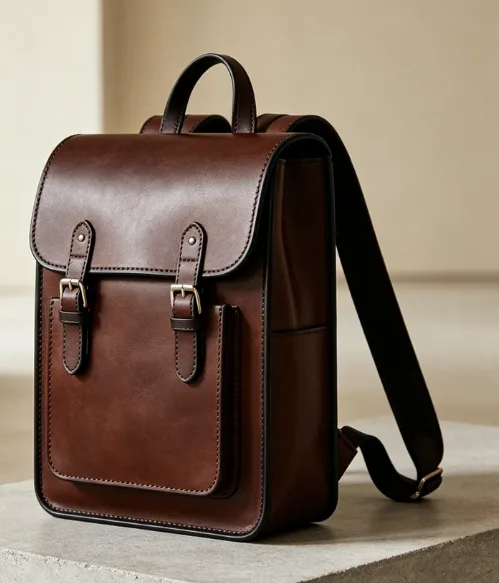
The Top 7 Custom Handbag Manufacturers In Japan
These seven manufacturers cover the full range of Japanese bag-making — from traditional leather workshops to production-ready OEM partners:
-
Sunteam — OEM/ODM leather bags & wallets
-
Tsuchiya Kaban — High-end handcrafted leather bags
-
Hamano Leather Crafts — Luxury women’s handbags, small-series
-
Herz — Handmade artisan bags, semi-order customization
-
Ichizawa Shinzaburo Hanpu — Premium canvas bags, Kyoto workshop
-
FUJITAKA — Quality tote and handbag lines, domestic OEM standards
-
Jolie Joli / Angelina Fiore — Fashion-forward totes and mid-market designs
Each entry below covers core strengths, service model, MOQ benchmarks, and which brand type each supplier fits best.
Why Source Custom Handbags from Japan: Precision Craft Meets Luxury Standards
Japan doesn’t just make bags — it certifies the culture behind them. The Japanese government recognizes 230 traditional craft categories. A 1974 law exists to protect and sustain artisan techniques. That kind of institutional commitment is rare. The craftsmanship you’re sourcing has generational infrastructure behind it — not just factory floor habit.
Here’s why this matters for brand founders and sourcing managers:
Quality that reduces your costs downstream. Japanese manufacturers combine traditional hand-finishing with structured QC systems — 5S, lean production, QC seven tools. The result is first-pass defect rates that push return rates as low as 2–3%. Fast-fashion supply chains average 5–10%. That gap adds up fast.
A price position that makes commercial sense. Factory pricing for mid-complexity leather handbags runs US$150–350/piece. That’s 30–100% above comparable Chinese production. But it sits 10–30% below equivalent Italian workshops. For brands targeting premium retail, that spread is workable — and the margin math holds.
A brand story your buyers will pay for. “Made in Japan” carries real retail leverage. In European and North American premium channels, it can support 10–30% higher price points versus China-made equivalents. That’s enough to recover the unit cost difference — and still come out ahead.
MOQs are more accessible than most people expect. Many Japanese ateliers accept runs from 30–50 pieces per colorway. So even emerging labels testing a luxury line can make Japan work.
How to Evaluate Japanese Custom Handbag Manufacturers: 5 Criteria Before You Contact
Most sourcing mistakes happen before the first order. They happen at the evaluation stage. Run through these five criteria before sending that first email. They’ll help you spot production-ready OEM/ODM partners — and filter out brand-only workshops that can’t build your vision.
1. Real OEM/ODM Capability
Ask them straight: how many original bag styles did they develop in the past 12 months? A genuine ODM partner can show you pattern archives, in-house patternmakers with 10+ years of experience, and a clear process from design brief to export inspection. Check their website too. No mention of 受託製造 or 企画提案 — only their own brand line? That’s a red flag.
2. MOQ and Sampling Terms
Most mid-size Japanese factories start at 50–200 pieces per colorway. Artisan workshops can go as low as 10–30 pieces. Get the sampling costs in writing before you move forward. Expect ¥20,000–¥80,000 per style. Also confirm whether those fees count toward your production order.
3. IP Ownership and NDA
Find out who owns the patterns, molds, and design files. Get it in writing. Do this before sampling starts — not after.
4. Export Experience
Look for factories that ship to the EU or US on a regular basis. They’ll know REACH compliance, origin certificates, and FOB/CIF terms. You won’t need to explain the basics.
5. English Communication
Test this at the start. Send a structured inquiry and see how they respond. A solid partner gives you specific quantities, timelines, and honest constraints — not just “yes, we can do it.”
1. Sunteam — Best OEM/ODM Custom Handbag Manufacturer for Scalable Global Brands
Sunteam runs three factories — including a Bangladesh production facility and a proprietary tannery. That setup gives Sunteam end-to-end control that most OEM bag manufacturers don’t have.
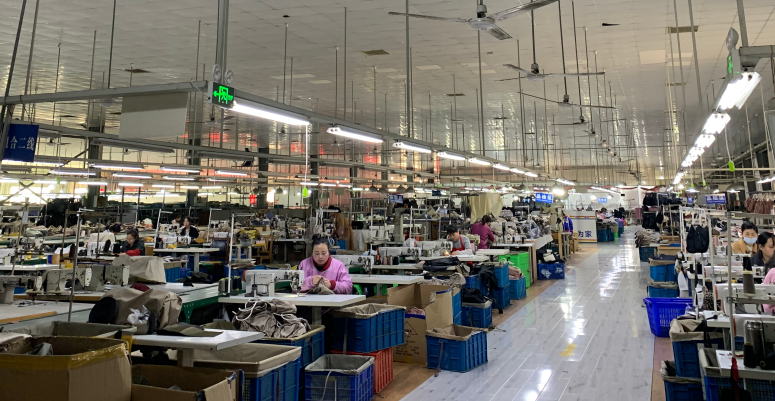
The in-house tannery is worth a closer look. Sunteam controls leather thickness, temper, color matching, and finish quality before cutting a single pattern. For brands building consistent product lines across multiple SKUs, that upstream control removes one of the most common causes of batch variation.
What Sunteam produces:
– Women’s handbags, shoulder bags, totes, and clutches
– Travel bags, backpacks, and sports bags
– Wallets, cardholders, belts, and small leather goods
– Full private-label customization: embossed logos, custom hardware, woven labels, hot stamping
Production specs quality-conscious buyers care about:
– Genuine leather thickness: 1.2–1.6 mm standard
– Stitching density: 3–4 stitches/cm for durability and a clean finish
– Hardware plating: salt spray tested 24–72 hours (mid-market standard and above)
MOQ benchmarks:
– Genuine leather handbags: 300–500 pcs/style/color
– PU or vegan leather bags: 500–800 pcs/style/color
– Wallets and small leather goods: 300–1,000 pcs/style/color
Sampling takes 10–25 days. Standard production after sample approval runs 45–75 days.
FOB pricing for mid-complexity genuine leather handbags sits at $18–45/piece. Sunteam’s tannery integration cuts material costs by 5–15% compared to buying leather from outside suppliers. That saving passes directly to brands placing volume orders.
Contact: [email protected] | +86-189-7154-8510
2. FUJITAKA — Premium Leather Handbag Manufacturer for Luxury-Grade Production
FUJITAKA was founded in 1941. Over eight decades, they’ve built a clear identity: a Japanese factory brand where skilled craftsmanship meets strong design thinking. Their official positioning — “Timeless Quality” — isn’t just a slogan. It reflects a real production approach built on precise construction, top-grade materials, and design-driven output.
What sets FUJITAKA apart at the materials level:
– The SLG series uses LWG Gold-certified Italian leather — a supply chain standard most mid-market factories can’t reach
– Hides come from Germany and Italy, with Japanese Eco Leather used in select lines
– The lineup covers business bags, casual bags, and small leather goods — not limited to one category
FUJITAKA also shows up at Pitti Uomo. That puts them in the international fashion-luxury trade circuit, which few factory brands can claim.
Best fit for: Upper-premium brands that need Made-in-Japan credibility, tight color control, and coverage across business-luxury or smart-casual bag categories.
Key points to check before reaching out: Ask about OEM/ODM acceptance — they have no public intake policy, so you’ll need to confirm this yourself. Get MOQ details by category. Also check whether LWG Gold leather is available across the full product range, not just a handful of SKUs.
3. Tsuchiya Kaban — Tokyo’s Artisanal Leather Workshop Since 1965
Two craftsmen. One sewing machine. That’s how Tsuchiya Kaban started in 1965 — and that origin story still drives everything they make today.
Kunio Tsuchiya started learning leather craft at age 15 in Tokyo. By 27, he ran his own workshop. His first product was the Randoseru — a structured leather school backpack. Japanese children carry it every day for six years straight. That “six-year durability standard” wasn’t a marketing line. It became the core engineering benchmark. Every bag Tsuchiya Kaban has built since is held to that same bar.
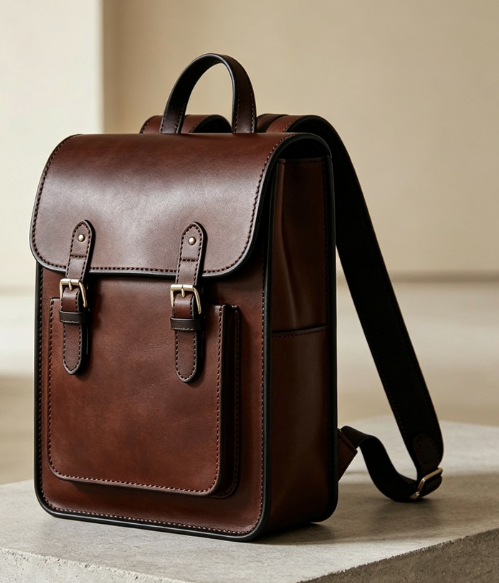
In 2022, Tsuchiya earned two of Japan’s top craft honors. First, the “Contemporary Master Craftsman” (現代の名工) designation, awarded by Japan’s Ministry of Health, Labour and Welfare. Second, the Japan Leather Goods Meister certification. These aren’t just titles. They’re documented proof that this workshop sits at the top of Japan’s leather industry.
Today the brand reaches customers in 70+ countries. You’ll find 14 domestic stores across Japan, plus retail points in Taiwan and the UK.
Best fit for: Brands building small-batch luxury capsule collections. You need a “Made in Japan” craft story backed by real, documented artisan credentials — not just factory claims.
Key consideration: Tsuchiya Kaban runs as a workshop brand, not a standard OEM facility. Collaboration options do exist — including shop-in-shop setups based on their Frances May partnership in the US. To confirm custom production terms and minimum quantities, you’ll need to reach out to them directly.
4. Hamano Leather Crafts — Heritage Japanese Leather Bags with Luxury Collaboration Potential
Hamano Leather Crafts started in 1880 in Tokyo’s Nihonbashi district. That’s over 145 years of family workshop tradition — one of the longest unbroken runs in Japanese leather goods. Today, production runs out of a facility in Nagano Prefecture’s Miyota Town.
The brand holds Purveyor to the Imperial Household status. That’s not a marketing claim. It’s a formal recognition — one that almost no other bag maker in Japan can match.
Their Grace Delight Tote retails at ¥136,400. That price signals quiet luxury, not streetwear. Japanese politician Sanae Takaichi was photographed carrying one, and the tote sold out. That kind of organic, credibility-driven demand doesn’t happen often.
Best fit for:
– Luxury hotel groups
– High-end corporate gifting programs
– International fashion brands building a Japan-anchored heritage story
Collaboration formats worth exploring:
– Co-branded capsule runs (50–300 pieces)
– Anniversary edition commissions
Outreach note: Contact through the Made in Japan.JP platform, or reach their Nagano factory and Tokyo office by email. Use Japanese or bilingual inquiry letters — subject line: ビジネス提携のご相談.
5. Herz — Handcrafted Japanese Leather Bags for Small-Batch Custom Collaborations
Herz has been cutting and stitching leather by hand in Tokyo’s Shibuya district since 1973. No conveyor belts. No batch automation. Every piece — from pattern cutting to final seam — one craftsman handles it all, start to finish.
The flagship store in Jingumae puts the workshop right behind the retail floor. You can watch the bags being made. That’s not a showroom trick — it’s the actual production setup.
What defines Herz’s craft:
– Primary material: vegetable-tanned full-grain cowhide, cut thick, built to develop patina with use
– Design language: functional and no-nonsense — structured totes, briefcases, commuter bags built for longevity, not trend cycles
– Each piece has hand-finishing variation built in — no two are identical
Small-batch collaboration fit:
Herz runs 8+ workshop-retail locations across Tokyo, Osaka, Sendai, Fukuoka, and more. Production spreads across regional ateliers. The made-to-order setup handles 10–50 piece runs without friction. That’s the kind of volume that stalls industrial factories — but fits artisan scheduling well.
Customization options cover leather color (natural, dark brown, black), hardware finish, strap dimensions, and interior pocket layout. You can add co-branding through embossed logo placement. It works without cutting into the Herz craft identity.
Best fit for: Brands building a “functional luxury” or “lifetime carry” story — those targeting urban professionals, EDC enthusiasts, or stationery-adjacent lifestyle customers will find this a strong match.
Plan for a 4–8 week sampling cycle and 2–3 months of production lead time per batch. This isn’t a fast-turnaround supplier. It’s a craft partner — and the story behind the product is worth building your timeline around.
6. Ichizawa Shinzaburo Hanpu — Kyoto’s Premium Canvas Bag Workshop for Authentic Craft Stories
One workshop. One address. Since 1905, the Higashiyama district location has made the same product: heavy cotton canvas bags, sewn on-site, by their own hands. That’s 120 years of non-stop production without moving, splitting, or subcontracting.
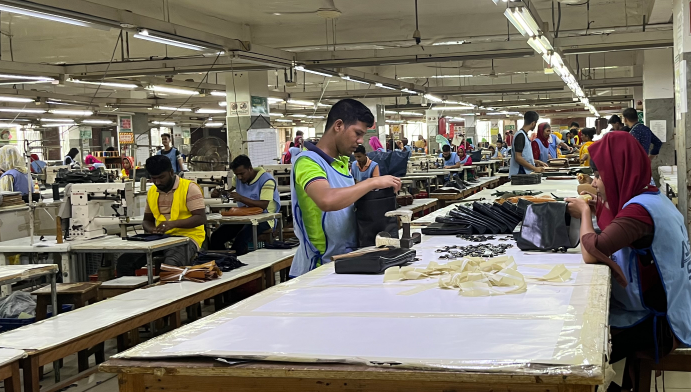
Ichizawa Shinzaburo Hanpu runs three product lines — Shinzaburo Hanpu (pure cotton canvas, everyday totes), Shinzaburo Kaban (linen and original-pattern canvas, lifestyle-oriented), and Ichizawa Hanpu (functional workmen bags rooted in the brand’s founding purpose). All three come out of the same Kyoto workshop. No outsourcing. No satellite factories. Just one place, making everything.
What makes this useful for brand collaborations:
– MOQ for co-branded canvas runs: 50–200 pieces per colorway
– Production lead time: 3–6 months, covering design alignment and sampling
– Customization scope: fabric color, original patterns, and application — not full structural redesign
Best fit for: Specialty food brands, cultural institutions, boutique hotels, or lifestyle labels that want a real “Kyoto craft origin” story built into the product itself. The 2015 New York pop-up (110th anniversary) shows the brand holds up well in international lifestyle settings — no awkward translation needed.
Contact their Kyoto flagship store to get started. Bilingual or Japanese inquiry letters get faster responses.
7. Jolie Joli & Angelina Fiore — Japanese Fashion Bag Brands for Co-Branding and Distribution Partnerships
These two brands operate on a different model than every other entry on this list. Jolie Joli and Angelina Fiore are not OEM factories. They are established Japanese consumer brands. Each has retail presence, a clear visual identity, and a loyal customer base. So the opportunity is not contract manufacturing. You’re looking at co-branding, licensing, or distribution partnerships.
Jolie Joli (founded 2016) owns the “French casual” lane in Japan’s mid-market. Think soft colors, relaxed totes, and everyday shoulder bags priced at ¥3,000–¥8,000. Angelina Fiore sits one tier up at ¥5,000–¥10,000. It targets women who want glamorous, decorative designs for weekend outings and social events.
Best fit for:
– Overseas lifestyle brands entering Japan without starting a new brand from zero
– Beauty or accessories labels targeting women aged 20–35
– Foreign brands open to reverse distribution — you carry their brand abroad, and they co-brand your products in Japan
Co-branding entry strategy:
– Pair with Jolie Joli for “French casual × [your brand]” capsule collections at ¥4,000–6,000
– Pair with Angelina Fiore for glam-focused collections at ¥6,000–9,000
– Start with 500–2,000 units per SKU. Run online-only (FASBEE + your EC) for 3–6 months first. Then consider retail expansion.
How to reach them: Angelina Fiore has a listing on FASBEE — reach out to their buyer liaison there. For Jolie Joli, go through Japanese accessories trade shows or a local trading company that handles mid-tier fashion labels.
Japan OEM vs ODM Custom Handbag Manufacturing: Which Model Fits Your Brand?
Two models dominate Japan’s custom handbag production. Pick the wrong one and you burn time, money, and sample rounds.
OEM (Original Equipment Manufacturing): Your brand drives the design. You bring the spec sheet, pattern files, hardware specs, and QC standards. The Japanese factory handles sampling and production. You own the IP. Full stop.
ODM (Original Design Manufacturing): The factory takes on the heavy work — pattern development, material selection, cost engineering, sampling. You give them a target customer, price range, and style direction. They come back with 3–10 proposals. Base patterns stay with the factory by default. To transfer ownership, you pay a buyout fee.
Which model fits where you are right now:
-
Early-stage brands (0–2 years): Start with ODM. MOQs run low — 10–30 pcs per style is realistic. Upfront development cost stays minimal. No in-house design team needed. Then use OEM for one or two signature styles that carry your brand identity.
-
Growing brands (2–5 years): Run both side by side. OEM covers your core repeat sellers. ODM handles seasonal or trend-driven styles — speed matters more than differentiation there.
-
Mature brands (5+ years): OEM leads. Your design DNA is established — protect it. Bring in ODM for new categories where the factory’s technical depth fills gaps your team doesn’t cover.
On IP protection: In OEM contracts, lock in exclusivity language — 専用品 or 独占仕様 — so the factory can’t copy your structure for another brand. In ODM arrangements, negotiate exclusivity rights upfront if the design sits at the center of your line. Buyout fees are negotiable. Japanese factories price them to cover future lost opportunity, so build that into your budget from the start.
Comparison Table: Top 7 Japanese Custom Handbag Manufacturers at a Glance
Seven manufacturers. Three quality tiers. One table to cut your screening time in half.
|
Manufacturer |
Est. |
Quality Tier |
Core Specialty |
Cooperation Mode |
MOQ Benchmark |
Best Fit |
|---|---|---|---|---|---|---|
|
Sunteam |
— |
🥇 Luxury-grade |
Full-range OEM/ODM leather goods + in-house tannery |
OEM / ODM |
300–500 pcs |
Scalable private label brands |
|
Tsuchiya Kaban |
1965 |
🥇 Luxury-grade |
Handcrafted heritage leather, Tokyo atelier |
OEM / Collab |
30–100 pcs |
Luxury capsule collections |
|
Hamano Leather Crafts |
1880 |
🥇 Luxury-grade |
Imperial Household-grade leather handbags |
Collab / Co-brand |
50–300 pcs |
Corporate gifting, heritage brands |
|
FUJITAKA |
1941 |
🥇 Luxury-grade |
LWG Gold leather, business-luxury bags |
OEM (confirm with them) |
Contact to confirm |
Upper-premium brand lines |
|
Herz |
1973 |
🔵 Mid-high-end |
Veg-tanned artisan carry, made-to-order |
OEM / Collab |
10–50 pcs |
Functional luxury, small-batch |
|
Ichizawa Shinzaburo Hanpu |
1905 |
🔵 Mid-high-end |
Heavy canvas, Kyoto workshop craft |
Collab / Co-brand |
50–200 pcs |
Lifestyle brands, cultural orgs |
|
Jolie Joli / Angelina Fiore |
2016 |
⚪ Fashion/Utility |
Mid-market fashion totes, French-casual aesthetic |
Collab / Distribution |
500–2,000 pcs |
Market-entry co-branding, Japan retail |
How to use this table: Start by filtering on quality tier. That alone cuts out most bad matches. Next, check the cooperation mode against your sourcing model — OEM, co-brand, or distribution. The MOQ figures are starting points for screening. Confirm the exact numbers with each manufacturer before you move to sampling.
How to Contact Japanese Handbag Manufacturers: A Step-by-Step Inquiry Guide
Most inquiries to Japanese factories fail at the first email. Not because of price, MOQ, or location — but because of how the message was written.
Here’s a structure that works:
Subject line: Lead with product category, sourcing model, and volume — e.g., “Inquiry for OEM leather handbags – [Brand Name] (1,000–3,000 pcs per month)”. Japanese manufacturers screen emails fast. A vague subject kills your response rate before they read a single word.
Opening: State your company name, country, and years in business. Japanese firms expect formality. Skip first-name-only sign-offs.
Body: Your first paragraph needs three things: your retail price range, current order volume per month, and sales channels. Those three numbers tell a Japanese factory whether you’re a real partner — before they invest time in a quote.
Product specs: Use a list format. Cover material grade, dimensions, hardware finish, and any compliance requirements (REACH, Prop 65, JIS). Missing details here push quote timelines back by 2–4 weeks.
Timeline: Give exact milestones — sample approval date, target bulk delivery window. Drop “as soon as possible.” Use “within 60 days after PO confirmation” instead.
Follow-up rhythm: No reply after 3–5 business days? Send one follow-up. Wait another 5–7 days before a second. Open with “We understand your busy schedule” — pressure language reads as disrespectful in Japanese business culture. It stalls negotiations fast.
One line worth adding to every first inquiry: “We are willing to sign an NDA to protect both parties’ design information.” Japanese manufacturers take IP protection seriously. That single sentence builds trust faster than three rounds of back-and-forth.
FAQ: Custom Handbag Manufacturing in Japan
These are the questions sourcing managers ask most — answered straight, no runaround.
What’s the typical MOQ for Japanese handbag manufacturers?
Sample production starts at 1–20 pieces. Verification samples run 20–100 pieces across 2–3 rounds. Bulk production MOQ sits at 300–1,000 pieces per style for most leather goods OEM factories. That’s about one-tenth the MOQ you’d see from a comparable Chinese manufacturer.
What does the OEM development process look like?
There are five stages:
– Design confirmation
– Sample production
– Review and revision (2–3 rounds is standard)
– Price negotiation based on confirmed specs
– Final sample sign-off, then bulk production
Plan for ¥100,000–200,000 in upfront tooling and sampling costs before bulk production starts.
How much does Japanese OEM production cost versus China?
FOB pricing for a simple leather handbag (300–500 pcs): ¥8,000–15,000/piece in Japan versus ¥2,000–6,000/piece in China. The price gap is real. But “Made in Japan” lets you charge 20–50% retail price premiums. That shift changes the margin math in your favor.
Can small brands work with Japanese factories?
Yes — here’s what you need to qualify:
– Initial order of 300–500 pieces per style
– 50% upfront payment covering sampling and partial production
– A clear spec sheet with target pricing and sales projections
Start with 1–3 SKUs on your first order. Build volume from there.
What does “Made in Japan” legally require?
The core manufacturing steps — cutting, stitching, and final assembly — must take place in Japan. Using imported leather or hardware is fine. The label holds as long as Japan handles the primary production work.