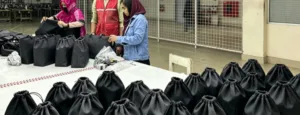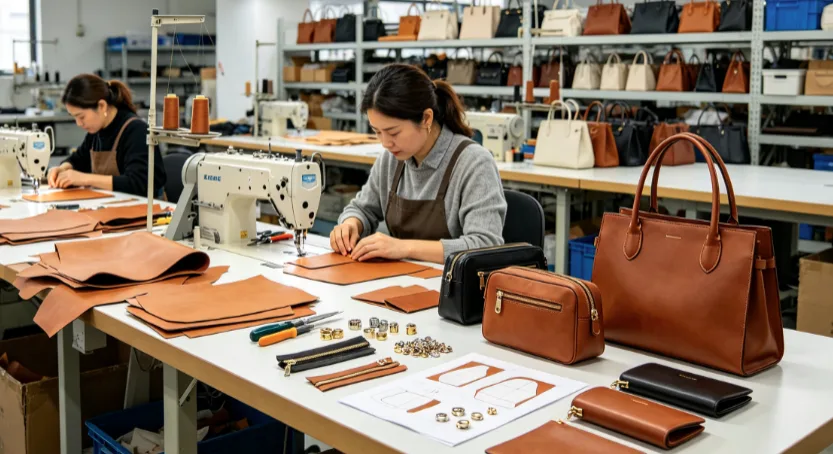
Why Source Custom Handbags from South Korea Manufacturers
Korean handbag manufacturer Simone holds 10% of the global luxury handbag market — producing for names like Michael Kors and Coach. That one data point tells you where South Korea stands in global manufacturing.
This isn’t a low-cost, high-volume production hub. Korea competes on a different axis.
Where Korea stands out against China and Vietnam:
-
Price positioning: Korean OEM leather bags run US$35–120+ per piece (FOB, 300–500 pcs). That’s premium territory — priced that way because the output earns it.
-
MOQ flexibility: Many Korean factories accept 50–100 pcs per style. So emerging brands get access that China/Vietnam factories often deny them.
-
ODM depth: Full concept-to-sample development — including 3D digital mockups — comes standard. Not an add-on. This cuts physical sample rounds from 3–4 down to 1–2, saving you weeks of back-and-forth.
-
Trade advantage: Under the Korea–EU FTA, 99% of tariff lines are tariff-free. European buyers deal with far less customs friction as a result.
The bottom line: your brand targets US$180–600 retail leather bags and needs consistent quality with real design support. Korean manufacturers are built for that segment — structurally, not by accident.
1. Simone Acc Collection Ltd. — Global Luxury OEM Leader (Uiwang, Korea)
Founded in 1987, Simone Acc Collection Ltd. holds 10% of the global luxury handbag ODM/OEM market — and 30% of the US luxury handbag segment alone. Those numbers are not marketing language. They show a production system built to serve Coach, Michael Kors, and Tory Burch at industrial scale, season after season.
Simone is based in Uiwang-si, Gyeonggi-do, and runs factories across multiple countries. The Korea HQ drives product development, quality system design, and complex sampling work. Volume production runs through plants in Vietnam and Indonesia. This gives Simone the capacity to handle large seasonal programs across many styles at once.
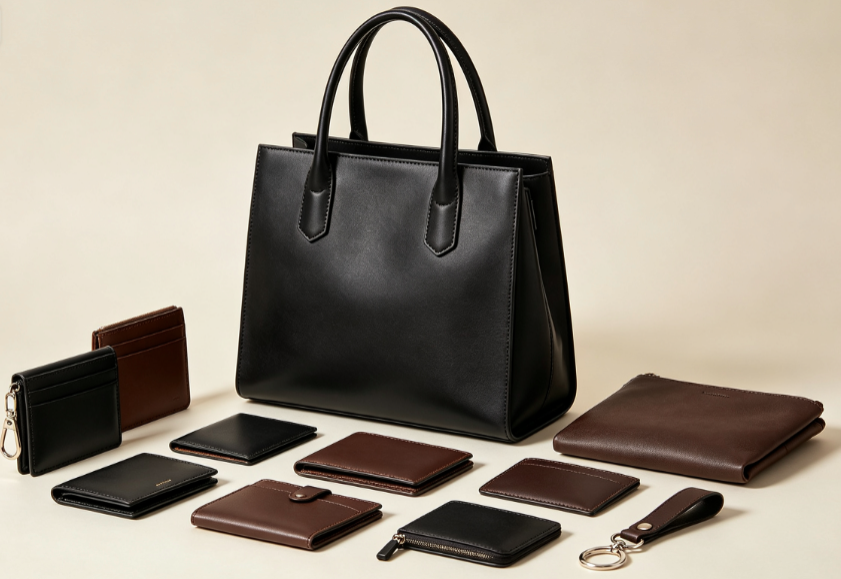
What Simone produces: women’s leather handbags, luxury totes, structured business bags, travel goods, wallets, and small leather accessories.
Who this factory is built for:
– Established fashion brands placing ≥1,000–3,000 units per style
– Buyers needing full-service OEM/ODM — from design through mass production
– Labels that need multi-factory capacity for global order allocation
Key limitation: Simone’s systems are built for industrial-scale programs. Startups or brands testing small batches of a few hundred units will hit MOQ thresholds fast. Capacity goes to large accounts first. So it’s a poor fit for early-stage or low-volume buyers.
|
Detail |
Info |
|---|---|
|
Location |
Uiwang-si, Gyeonggi-do, Korea |
|
Founded |
1987 |
|
Website |
simone.co.kr |
|
Best For |
Large-volume luxury & premium brands |
2. Lovely Heart (LHCOMPANY) — Custom OEM/ODM with Design Support (Seoul)
Lovely Heart has been producing leather handbags, wallets, and fashion accessories from its Seoul base in Dobong-gu since 1989. That’s over 35 years of domestic Korean craftsmanship behind every order.
Annual output exceeds 200,000 units. Yet their MOQ starts at just 50 pieces per style. That combination is rare. A new brand can run a real test order without committing to warehouse-filling quantities. Then scale reorders through the same factory, no disruption needed.
What makes Lovely Heart a practical fit for emerging brands:
-
OEM/ODM + custom design development — submit sketches or reference images. The factory takes care of pattern drafting and spec sheets.
-
Sample prototyping is a standard service. Expect 1–2 refinement rounds before final approval.
-
Production lead time: 30–45 days after order confirmation
-
Materials: Italian leather (Black Label premium line) and quality Korean leather. Synthetics are available on request.
-
Export markets: China, Japan, Malaysia, Mongolia — English communication supported via TradeKorea presence
Launching 3 styles at 50 pcs each? That’s 150 units total. It’s a manageable first inventory. Plus, you’re working with a Seoul-based factory ranked among Korea’s top 5 leather handbag manufacturers.
|
Detail |
Info |
|---|---|
|
Location |
Dobong-gu, Seoul, Korea |
|
Founded |
1989 |
|
MOQ |
50 pcs/style |
|
Best For |
Startups, DTC brands, private label newcomers |
3. Arthur & Grace Atelier — Premium Custom Leather Bags (Seoul)
Arthur & Grace Atelier isn’t a factory. It’s a custom leather studio — and that difference matters before you reach out to them.
They started their premium custom-made service in 2018. Since then, they’ve completed over 1,000 finished pieces. That’s 140–160 pieces per year — in line with a 2–5 person precision workshop, not an OEM production floor.
What they offer:
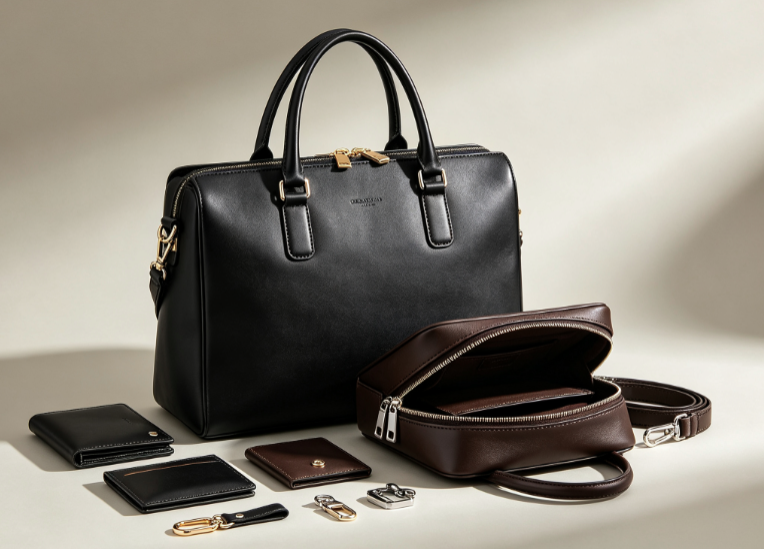
– Full custom leather goods — handbags, totes, crossbody bags, backpacks, and small leather accessories
– Work with Korea’s top leather artisans, with a goal to “create what would become tradition a century later”
– In-studio visits at their Jongno-gu, Seoul studio — you pick the materials, hardware, and dimensions in person
– English-language website with support for international buyers
Who this fits:
– Luxury brands looking for capsule collections or limited editions (10–100 pieces per style)
– Designer projects or VIP-only commissions
– Individual clients who want one-of-a-kind pieces
Set aside 2–6 months for the full development cycle — this covers sampling, detail sign-off, and production.
|
Detail |
Info |
|---|---|
|
Location |
Jongno-gu, Seoul, Korea |
|
Launched |
2018 |
|
Output |
~140–160 pcs/year |
|
Best For |
Luxury limited editions, designer collabs, custom VIP orders |
4. Osoi — Contemporary Fashion Bag Producer (Seoul)
Osoi is a Seoul-based brand with one clear design focus: structured, sculptural handbags that don’t follow seasonal trends.
Their bags reflect contemporary Korean minimalism. You get clean silhouettes, soft Italian leather, and Korean nappa leather sourced through established Korean ateliers. Retail listings describe the leather as vegetable-tanned cowhide with a premium finish. Bags retail around 258,000 KRW. That puts Osoi in the accessible premium fashion segment — above mass market, but without the heavy logo branding of luxury labels.
Who this fits:
– Buyers building collections around minimalist, fashion-forward aesthetics
– Brands targeting US/EU mid-to-high-end retail with clean, structured silhouettes
Important sourcing note: Osoi runs as a self-owned brand. No public OEM/ODM confirmation, MOQ data, or factory capacity figures exist. Before adding Osoi to any shortlist, reach out to them. You need to confirm private label openness, minimum order requirements, and export readiness.
|
Detail |
Info |
|---|---|
|
Location |
Seoul, Korea |
|
Positioning |
Contemporary premium fashion |
|
Best For |
Minimalist aesthetic buyers, design-led collections |
|
OEM Status |
Unconfirmed — verify directly |
5. Stand Oil — High-Volume Fashion Bag Manufacturer (Seoul)
Stand Oil is a Seoul-based women’s fashion bag brand — not a confirmed contract manufacturer. Know that difference before adding them to your sourcing shortlist.
Their bags focus on daily-use styles with a clean, minimalist look, made from vegan, non-animal leather. You’ll find a flagship store in Seongsu and shelf space at Hongdae’s Musinsa store. A Stand Oil × Collina Strada collaboration shows some exposure to international brands.
What public data does not confirm:
– Annual output volume or OEM capacity
– MOQ by style
– BSCI, ISO, or factory audit credentials
– Named EU/US manufacturing clients
Contact Stand Oil and verify these points:
– Available OEM/ODM capacity and MOQ
– Vegan leather material options and hardware specs
– Export experience across EU, US, and Japan
– Packaging and private label services
|
Detail |
Info |
|---|---|
|
Location |
Seoul, Korea |
|
Material Focus |
Vegan leather |
|
OEM Status |
Unconfirmed — confirm with them |
|
Best For |
Vegan-focused brands exploring Korean sourcing |
6. Couronne — Established Bag Manufacturer Since 2009 (Seoul)
Couronne’s growth numbers stand out. Sales jumped from 1.7 billion KRW in 2010 to 12 billion KRW the following year. The brand also expanded from a single Cheongdam-dong flagship to 23 outlets by 2011. That kind of growth shows real market demand — not just clever brand positioning.
Founded in 2009, Couronne focuses on simplicity, timelessness, and bold color. This design approach works well in premium retail spaces. The brand holds best-selling local accessory brand status at Hyundai Department Store. It also exports to Southeast Asia, the US, and Europe.
What sourcing buyers should know:
-
Materials: Premium Korean leather sourced from established domestic suppliers
-
Quality control: In-house process that meets Korean and international standards
-
Product focus: Totes, handbags, shoes, and accessories
One thing to flag: Couronne has no public MOQ, sample lead time, or confirmed OEM/ODM program. The brand leans toward design-led luxury retail — not contract manufacturing. Confirm OEM availability with them before adding Couronne to your shortlist.
|
Detail |
Info |
|---|---|
|
Location |
Seoul, Korea |
|
Founded |
2009 |
|
Export Markets |
SE Asia, US, Europe |
|
Best For |
Premium fashion buyers aligned with Korean luxury aesthetics |
|
OEM Status |
Unconfirmed — contact them to verify |
7. Monorow — Contemporary Korean Bag Brand & Potential OEM Partner (Seoul)
Monorow has built quiet recognition as one of Seoul’s top contemporary bag labels. Fashion reviewers and K-style followers tag it as a “Korean It-bag” and hidden gem. The brand focuses on minimalist, sustainable design — lightweight everyday bags made for real use, not just looks.
Their flagship SKU, the Blanc Medium Bag, says a lot about production quality. Buyers use it day after day — carrying a laptop and iPad — for over a month with no problems. That’s a solid mid-price durability benchmark.
What sourcing buyers should know upfront: Monorow runs as a B2C retail brand. No OEM/ODM program appears on any public listing. No MOQ, lead time, or private label terms are confirmed.
Even so, the distribution footprint is telling. Monorow ships from Korea via W Concept and several multi-brand platforms. They also run a structured Indonesia showroom (PIK Avenue Mall). That kind of reach points to a stable manufacturing base with mid-volume capacity.
To explore OEM potential, take these steps:
-
Email [email protected] — ask for Seoul HQ production contacts and raise the question of OEM/ODM availability
-
Search KOTRA’s directory using the Korean brand name (모노로우) — this lets you verify factory registration and export status
-
Check LinkedIn for roles titled Production Manager or Merchandiser at Monorow Korea
No OEM option from Monorow? Ask them to introduce their manufacturing partner. Then pursue OEM with that factory, using Monorow’s quality as your spec baseline.
|
Detail |
Info |
|---|---|
|
Location |
Seoul, Korea |
|
Material Focus |
Eco-friendly / sustainable materials |
|
Design Aesthetic |
Minimalist, timeless, everyday-use |
|
OEM Status |
Unconfirmed — direct outreach required |
|
Best For |
Sustainable bag buyers, K-fashion aesthetic brands |
8–12. Additional South Korea Handbag OEM Factories: Verified Sourcing Targets
Here are five more factories — each covering a different niche in Korea’s handbag manufacturing space. You’ll find options ranging from Gangnam-based multi-category OEM operations to Bucheon’s casual bag specialists. These verified targets give you more choices beyond the top names.
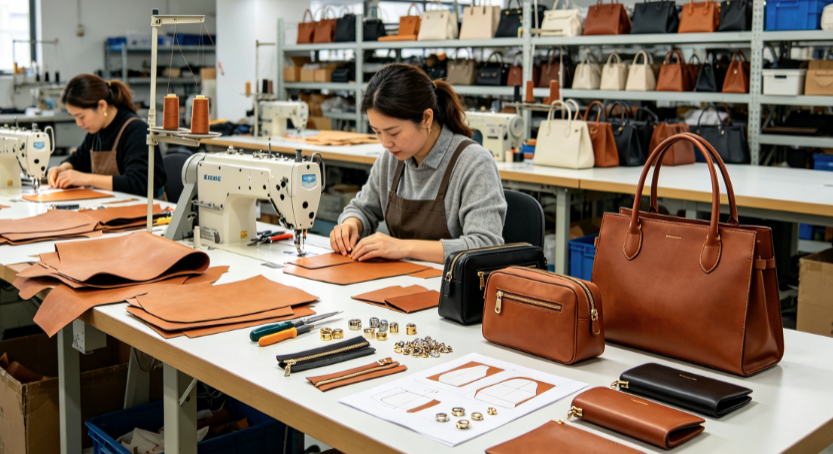
8. WKS Global — Multi-Category Bag OEM (Gangnam-gu, Seoul)
WKS Global has been operating from Gangnam-gu since 2005. They handle a wide product mix: handbags, fashion bags, school bags, wallets, and belts. That range makes them a practical fit for brands managing multiple accessory lines with one supplier.
Materials: Genuine leather for premium lines. PU leather and polyester/nylon cover casual and entry-level ranges. PU and fabric make up 60–80% of output on casual product lines.
Services: OEM and ODM, with private label capability for smaller brand orders.
|
Detail |
Info |
|---|---|
|
Location |
Gangnam-gu, Seoul |
|
Founded |
2005 |
|
Est. MOQ |
150–300 pcs (PU/fabric); 200–400 pcs (genuine leather) |
|
Certifications |
ISO 9001; BSCI (export-standard) |
|
Best For |
Brand sub-lines, gift bags, campus and casual collections |
9. Min Kyung Corporation — Casual & Fashion Bag OEM (Bucheon, Gyeonggi-do)
Min Kyung has been running since 1987 out of Bucheon — part of Seoul’s western industrial belt. Their focus stays on fashion and casual bags: totes, shoulder bags, and backpacks built for everyday retail.
Materials lean toward PU, PVC, polyester, and canvas. Genuine leather sits below 30% of output. They also work with vegan PU and recycled fabric — a solid option for brands targeting EU or US sustainability-conscious retail.
MOQ is accessible. PU and fabric styles start at 100–200 pcs per style per color. That’s one of the lower thresholds among Korean OEM factories. So Min Kyung works well as a test-order partner for e-commerce brands and promotional product lines.
|
Detail |
Info |
|---|---|
|
Location |
Bucheon-si, Gyeonggi-do |
|
Founded |
1987 |
|
Est. MOQ |
100–200 pcs/style/color |
|
Materials |
PU, canvas, polyester; vegan/recycled options available |
|
Best For |
E-commerce brands, mid-price casual lines, promo gift bags |
10. JS Corporation — Women’s & Business Bag OEM Specialist (Gangnam-gu, Seoul)
JS Corporation has run from a dedicated building in Gangnam-gu since 1985. Four decades of production gives them a stable, well-tested workflow for women’s handbags and business bag lines. Department store buyers and mid-tier brand buyers tend to look for exactly that kind of consistent output.
Genuine leather is the main material. PU and synthetic linings serve as support materials. JS runs an OEM-led service model. Design cooperation is available for buyers who bring reference sketches or detailed specs.
MOQ for leather business and women’s bags runs 200–500 pcs per style per color — standard for Korean premium OEM.
|
Detail |
Info |
|---|---|
|
Location |
Gangnam-gu, Seoul |
|
Founded |
1985 |
|
Est. MOQ |
200–500 pcs/style/color |
|
Materials |
Genuine leather (primary), PU/synthetic lining |
|
Best For |
Department store buyers, urban women’s bag lines, business bag programs |
11. Simone Acc Collection — Luxury OEM at Industrial Scale (Uiwang, Gyeonggi-do)
Simone was already covered in full as Factory #1. It appears here again as a confirmed anchor reference for this tier. No other Korean manufacturer holds 10% of the global luxury handbag ODM market. For buyers setting quality benchmarks or negotiating with Korean suppliers, Simone defines the top of the technical range.
How to use Simone as a reference at this stage:
– A factory on your shortlist claims luxury-grade production? Ask which brands they supply. Request third-party audit results.
– Use Simone’s credentials — ISO 9001, BSCI, multi-country production infrastructure — as your minimum verification bar for any premium Korean OEM claim.
12. Lovely Heart (LHCOMPANY) — Leather Goods + Accessories OEM Bundle (Seoul)
Lovely Heart was also covered earlier as Factory #2. It earns a second mention for one clear reason: they produce wallets, phone cases, and small leather goods alongside handbags. That makes them a genuine bundle partner for brands that want matching accessories made in the same facility.
Your line includes a bag + wallet + card holder set? Consolidating production at Lovely Heart cuts out coordination across multiple vendors. Lead times stay predictable. Quality stays consistent across the full accessory range — much easier to manage under one roof.
MOQ reference: 100–200 pcs for wallets and small leather goods; 150–300 pcs for PU and leather bags.
How to Verify and Contact These Factories
Public listings don’t always confirm MOQ, certifications, or OEM availability. Before adding any factory to your final shortlist, run these steps:
-
Platform search: Filter GlobalSources and Alibaba by
country = South Korea+Manufacturertype. Cross-check the listed address against an actual Korean factory location — not a trading office. -
Key questions to ask every factory:
-
MOQ per style per color (split by material: genuine leather vs. PU/fabric)
-
Sample development timeline and cost (industry standard: 7–15 days, US$50–150 per style, refundable on bulk order)
-
Certifications on hand — request scanned copies of ISO 9001, BSCI/SEDEX, or any LWG leather or GRS recycled fabric credentials
-
OEM vs. ODM vs. private label — confirm which service model they run
-
-
KOTRA directory check: Search the Korean Trade-Investment Promotion Agency database using the Korean brand name plus city filters (Busan, Daegu, Incheon). This surfaces port-city factories that don’t appear on global B2B platforms.
-
LinkedIn verification: Search for Production Manager or Merchandiser roles at each factory. This confirms active manufacturing operations before you commit to a sample order.
How to Choose the Right Korean OEM Handbag Manufacturer for Your Brand
Five criteria separate a reliable Korean OEM partner from a bad decision: product specialization, MOQ flexibility, sample consistency, English communication, and international compliance experience. Run every factory on your shortlist through all five before you commit to a sample order.
The 5 Core Selection Criteria
-
Product specialization match — Pick factories that already make your target category. A factory that builds women’s leather totes every day will outperform a generalist on your first order. WKS Global focuses on handbags, fashion bags, school bags, wallets, and belts. Simone builds leather handbags for men and women. Matched specialization cuts development friction from day one.
-
MOQ flexibility — New brands should target factories in the 50–300 pcs range for test orders. Korean factories go as low as 50 pcs per style. That range lets you validate silhouette, hardware, and color before scaling up.
-
Sample consistency — Require at least two sample rounds. Check stitching density, hardware plating, zipper pull, strap load-bearing, and lining flatness on each round. A factory that can’t hold spec across two samples won’t hold it across 300 units.
-
English communication — Look for factories with dedicated export project managers. Clear timelines and English-language sampling control cut weeks of back-and-forth on cross-border orders.
-
International compliance — Confirm familiarity with REACH and CPSIA before you talk pricing. Ask for material safety documentation up front. Korean factories exporting to the EU and US often carry these credentials — but you still need to verify each one yourself.
Large Factory vs. Small Atelier vs. Brand OEM: Which Fits Your Stage?
|
Type |
Order Size |
Best Brand Stage |
Key Advantage |
Key Risk |
|---|---|---|---|---|
|
Large factory |
500+ pcs |
Growth to mature |
Stable capacity, full certifications |
High MOQ, slower design iteration |
|
Small atelier |
50–200 pcs |
Early-stage, market testing |
Low MOQ, fast sampling, flexible revisions |
Quality consistency needs close oversight |
|
Brand OEM factory |
300–1,000 pcs |
Validated design and sales |
Deep OEM/ODM collaboration, full development support |
Confirm design ownership and exclusivity terms up front |
First Order Strategy: Reduce Risk Before You Scale
Start with one primary style and one backup style, 50–100 pcs each. This tests fit, hardware, color accuracy, packaging, and rework rate without locking up too much inventory. Once your sample holds spec across both rounds, scale the winner.
Lock these quality checkpoints into your sample approval:
-
Dimensions
-
Stitch density
-
Hardware electroplating
-
Zipper smoothness
-
Handle load strength
-
Lining flatness
A factory’s sample fails two of these? Drop them from your list.
Put lead time, reorder cycle, AQL inspection standard, and rework responsibility in writing before production starts. Verbal agreements fall apart across time zone differences.
Watch Out: “Korean Style” Is Not Korean Manufacturing
Alibaba listings that push “Korean design” or “K-fashion inspired” are often style marketing — not Korean production. Before you trust any supplier’s origin claim, request:
-
Korean company registration documents and a verifiable factory address
-
A live workshop video call or recent production floor footage
-
Export records with Korean-origin documentation (commercial invoice, packing list)
-
Korean-language company materials that match the claimed entity
A supplier pushes back on any of these? That’s a red flag.
Protect Your Design IP Before Signing Anything
Your contract must spell out four things:
-
Who owns the original design
-
Who owns the pattern and grading files
-
Who owns hardware tooling and surface graphics
-
Whether the factory can show or resell your sample to other buyers
You supply the design — the contract should state exclusive client ownership. The factory develops the concept — clarify development fees, buyout terms, and whether they can replicate the design for other clients.
List tooling fees, pattern fees, and sample fees as separate line items. This keeps IP and cost disputes off the table later — a common issue on first-time Korean OEM projects.
Step-by-Step Process: Placing a Custom Handbag Order with Korean Factories
From first inquiry to goods on your loading dock, a typical first order with a Korean handbag factory takes at least 9 weeks. That timeline holds only if you move through each stage without delays. Here’s how the process runs, step by step.
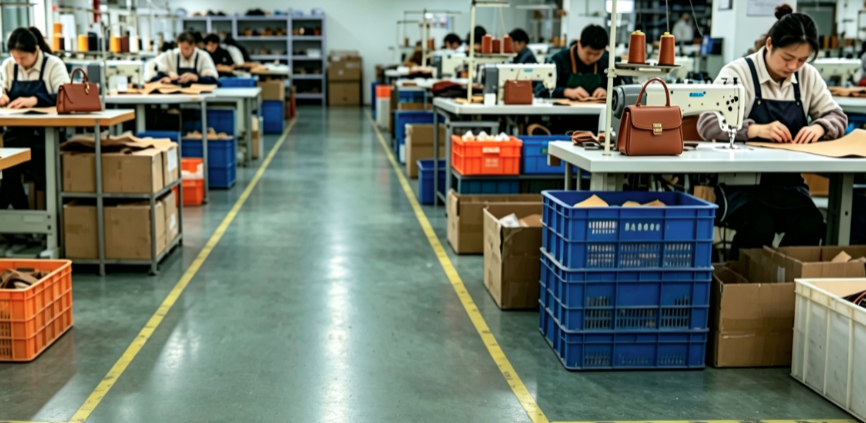
1. Inquiry — Send everything the factory needs in one message. Include style reference images, target quantity, price range, material, dimensions, colorway, logo method, and required delivery date. The factory comes back with a reference quote. It covers MOQ, unit price, sample cost, sample lead time, and bulk lead time.
2. Tech Pack Submission — Submit complete specs in one go: structure, dimensions, materials, hardware, color codes, logo placement, finishing, and packaging. Incomplete specs stall the process. The factory will ask for missing details before quoting or moving to sampling.
3. Sampling — Sample fees are paid 100% upfront. Standard sample lead time starts at 7 days. Complex structures or special materials take longer. The factory runs an internal QC check, photographs the sample, and ships it to you with a final production quote attached.
4. Revision & Approval — After reviewing the sample, you have three options: approve for production, request minor revisions, or restart development. Put all revision notes into one consolidated message. Fragmented, back-and-forth rounds add days to your timeline fast.
5. Order Placement & Payment — Standard payment structure is 30% deposit / 70% balance before shipment. Before confirming, lock down these details:
– Final sample sign-off
– Pantone color references
– Material batch numbers
– Packaging specs and barcodes
– Delivery date
– AQL inspection standard
6. Production — Bulk production starts after sample approval. Standard lead time runs 30–45 days. Orders with custom hardware, multi-material construction, or special coatings stretch to 60–90 days.
7. Quality Control — Set three inspection checkpoints:
– Incoming materials — check leather grade, lining, hardware color, and batch consistency
– Mid-production — check dimensions, stitching, hardware fitting, and logo position on the first semi-finished units off the line
– Pre-shipment — check appearance, function, packaging, quantity, labels, and packing list
For third-party inspection, use SGS, Intertek, Bureau Veritas, or TÜV.
8. Shipment & Customs Documents — Prepare these documents before shipping: commercial invoice, packing list, bill of lading, material declaration, and certificate of origin. Shipping to the EU? Confirm with the factory upfront that they can issue a valid Certificate of Origin and that raw materials meet origin rules — this gets you Korea–EU FTA tariff benefits. Samples ship via DHL or FedEx. Bulk orders go by air or sea freight.
MOQ & Capabilities Comparison: Which Factory Fits Your Order Scale
Order size determines everything — not just unit price, but which factory will take your call.
The 12 factories in this guide split into three practical tiers. Each tier carries a different MOQ range, technology stack, and brand-stage fit. Picking the wrong tier for your order scale is the most common sourcing mistake early-stage buyers make.
|
Factory Tier |
MOQ Range |
Unit Price vs. 300+ pcs |
Best Brand Stage |
|---|---|---|---|
|
Micro-atelier (Arthur & Grace) |
1–50 pcs/style |
+30–100% higher |
Concept testing, capsule, VIP |
|
Small-batch ODM (Lovely Heart, Min Kyung) |
50–200 pcs/style |
+10–30% higher |
Growth-stage, rolling seasonal tests |
|
Large-scale OEM (Simone, WKS Global) |
300–1,000+ pcs/style |
Lowest cost baseline |
Mature brands, core repeating SKUs |
What changes at each tier isn’t just price — it’s capability depth.
Micro-ateliers use hand-cut patterns and offer limited 3D sampling. Small-batch ODM factories run full CAD grading and partial automation. That cuts material waste by 3–8% and trims physical sample rounds by 20–30%. Large OEM plants run automated cutting lines and industrial hanging systems. Material utilization goes up another 5–10%, and unit labor costs stay low at scale.
Sustainable materials follow the same pattern. Eco-certified fabrics like GRS recycled polyester carry mill-level MOQs of 500–1,000 meters per color. Small-batch ODM factories handle this by pooling orders across multiple brands. Large OEM plants buy at annual tonnage levels and produce full carbon traceability reports. Ateliers can’t offer that.
Match your order structure to the right tier before you shortlist factories:
-
Testing 1–3 styles at 20–50 pcs each? Go atelier or low-MOQ ODM. Keep inventory risk low — unit cost comes second.
-
Scaling proven SKUs at 300–1,000 pcs and testing new styles at 50–100 pcs? Split production. Use large OEM for core lines and small ODM for new styles.
-
Running standardized repeat programs at 3,000+ units per season? Simone-tier factories are built for this volume. Anything smaller will hit their minimum thresholds fast.