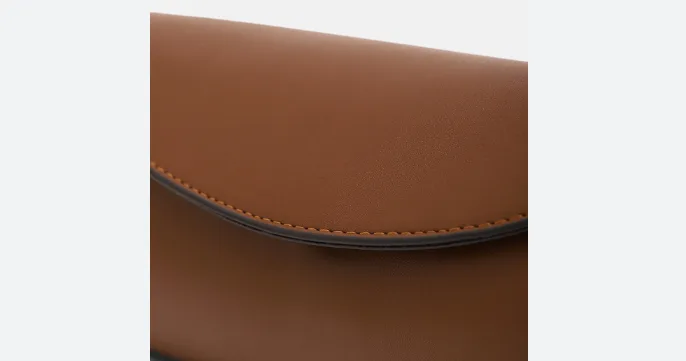
Every edge finish decision shapes how a buyer sees your bag — before they even touch the zipper.
Yet most manufacturers default to edge paint out of habit. Others fold edges because a client asked for it once. Neither approach comes from a clear understanding of the cost, durability, and aesthetic trade-offs behind each choice.
Quoting a new collection? Troubleshooting cracking seams? Justifying a price point to a skeptical buyer? The leather edge paint vs folded edges debate needs a sharper answer than gut instinct.
This guide breaks down both methods across four key areas:
- Production cost
- Material compatibility
- Longevity
- Visual outcome
You’ll walk away with a clear, practical framework to make the right call — for every product, every time.
What Is Leather Edge Paint
Leather edge paint is a liquid coating made from polymers, pigments, binders, and water. It seals the raw cut edge of leather. A thin, flexible film forms over the exposed fibers, protecting them from wear and fraying.
Three main formula types are used in production:
- Water-based: Low toxicity, easy to clean up, and absorbs well with minimal prep — best choice for veg-tan and oil-tanned leathers
- Solvent-based: Creates a stronger initial bond, but it’s less flexible on thin leather and releases toxic fumes
- Acrylic-based: Needs proper edge prep — beveling and burnishing — before application. Skip that prep and surface defects become visible fast
How It’s Applied on the Factory Floor
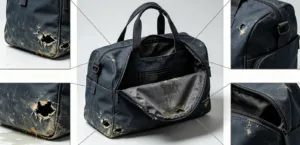
The process itself isn’t complicated. Cracking and peeling start when steps get skipped.
- Light sanding — Use fine-grit sandpaper to remove surface hairs and impurities
- First coat — Apply a thin, even layer. Use a roller for speed, a brush for precision, or a machine applicator for high volume
- Dry completely — Each coat needs full drying time. That can mean a few hours or leaving it overnight
- Repeat — Build up 3–4 coats total. Sand between each coat to keep the surface clean
- Heat seal — Run a heated creaser over the final coat. This bonds the paint into the leather fiber. Then add paraffin wax and re-heat to lock everything in place
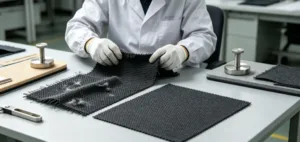
Heat treatment produces a clear, measurable difference. Peel test results show a consistent ranking: heat-treated > sanded only > untreated. Angelus depends on the heat creaser step — skip it and adhesion drops fast. Giardini holds up well even with minimal prep work. Fiebing’s builds thickness coat by coat, which makes it a solid pick for edges that don’t respond well to burnishing.
For leather thickness, 1.2–3mm top-grain is the sweet spot. Stay away from anything under 1mm. Also avoid surfaces with heavy oil buildup — sand them down before applying any paint.
What Are Folded Edges
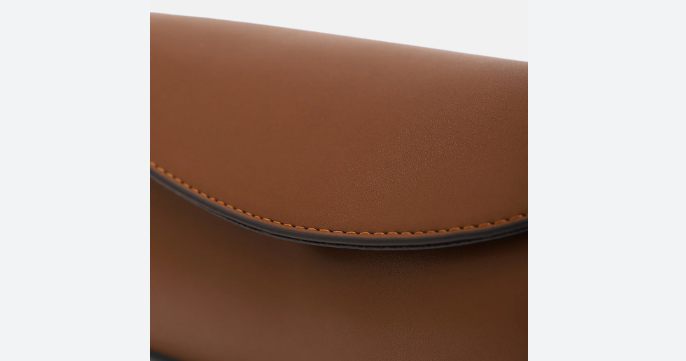
Blind tests don’t lie: consumers estimate 20% higher retail value from folded edges based on tactile feel alone — before seeing a price tag.
A folded edge (also called a turned edge) takes 10–15mm of skived leather and wraps it back over the raw cut edge. Then it gets glued, hammered, and stitched flat against the substrate. No exposed fiber. No coating film. Just continuous leather grain — all the way around.
The process runs in five steps:
- Wetting — Moisten the edge to make the leather pliable
- Folding — Turn the skived strip over the edge
- Securing — Glue and hammer flat
- Stitching — Sew the fold to the substrate for reinforcement
- Polishing — Burnish to a seamless, soft finish
Three fold types exist, each with a different visual result:
- Inner fold — Clean interior finish, minimal bulk, sleek silhouette
- Outer/turned fold — Wraps the visible edge in one clean pass, exposes leather grain, signals heritage
- Wrapped — Full perimeter turn, conceals the substrate from all sides, maximum durability
That grain exposure is the same detail Hermès uses on Birkin and Kelly bags. Coach applies the same logic across their legacy leather tote lines. Both brands rely on folded edges to send one clear message: handmade heritage over painted mass production.
Durability backs that up. Folded edges hold through 50,000 rub cycles without failure. They also stay stable in 40°C+ humidity — the same conditions that make edge paint turn tacky and peel.
The trade-off is precision. Skiving must hit 0.1mm tolerance. Too thin and the leather tears during folding. Too thick and corners turn lumpy. That QC failure shows up right away and ruins the entire panel.
Bag Production Cost & Labor Efficiency: A Real Numbers Breakdown
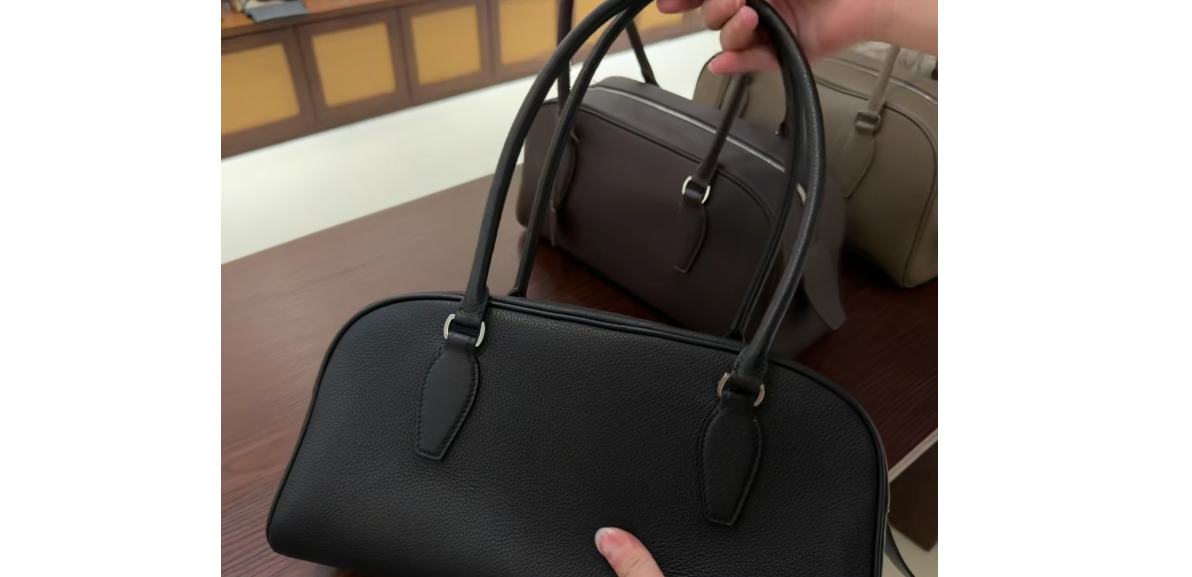
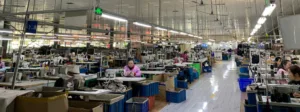
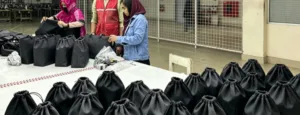
To make a more data-driven decision, our bag factory and leather goods manufacturer team decided to run an internal test comparing edge paint and folded edge construction under real production conditions.
At first glance, edge paint appeared to be the more economical option for many OEM bag manufacturers. A container typically costs between $6 and $80 depending on the brand and formulation. However, once we moved into actual bag manufacturing processes, the hidden costs became clear. The full process involves sanding, applying 3–4 layers of paint, allowing drying time between each coat, and finishing with heat sealing. In our test, a single panel required approximately 15–25 minutes of active labor. For bulk bag production and private label bag suppliers, this time investment quickly added up and began to impact overall production efficiency.
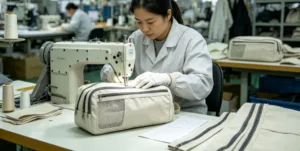
Folded edges, on the other hand, eliminated material costs like edge paint, which is attractive for some custom bag manufacturers. But the cost shifted toward skilled labor and precision handling. Processes such as skiving require experienced workers, and even a 0.1mm deviation can result in material waste — a key concern in leather bag production. During our trial, we also observed a higher initial rework rate for folded edges, particularly among newer staff. For many bag suppliers scaling their teams, this learning curve is critical. On average, it took about 4–8 weeks of training before workers could consistently meet production standards.
This test made one thing clear for any B2B bag manufacturer or OEM leather goods supplier: the choice between edge paint and folded edges is not just about aesthetics — it directly impacts labor structure, training investment, and scalability in modern bag manufacturing operations.
Where the Real Cost Gap Lives
| Cost Factor | Edge Paint | Folded Edges |
|---|---|---|
| Material cost per unit | Low ($6–$80/container, shared across units) | Near zero — uses existing leather |
| Labor time per panel | 15–25 min (multi-coat process) | 20–35 min (skiving + folding + stitching) |
| Skill level required | Semi-skilled | Skilled — high precision demand |
| Rework/waste rate | Low-moderate | Moderate-high (tolerance-sensitive) |
| Equipment investment | Applicator tools, heat creaser | Skiving knife, bone folder, hammer, stitching setup |
Edge paint fits mid-volume production well. It runs on semi-skilled labor and holds up with consistent machine-assisted application. Folded edges cost more per unit — but that cost works as a margin lever. Your buyers pay more for visible craft, so the spend justifies itself.
The honest equation: edge paint lowers your floor cost; folded edges raise your ceiling price.
Product Application Matrix: Edge Paint vs Folded Edges
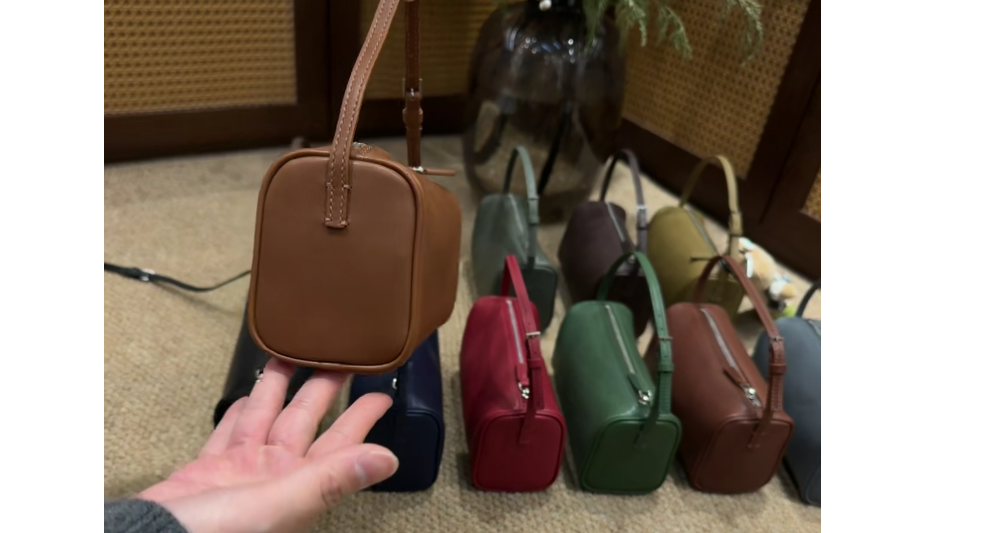
After running real production tests, our factory didn’t just compare processes — we identified which types of bags each method is truly best suited for.
“Let’s not decide this in theory,” our production manager said during the trial kickoff. “Run both on the line and see what actually holds up.”
Edge Paint bags quickly proved to be the better fit for products that prioritize efficiency and scalability. In our test runs, Edge Paint leather bags performed especially well for structured designs, mid-range collections, and large-volume orders where speed and consistency matter most.
“On these panels, Edge Paint bag production keeps the line moving,” one line leader noted. “We can control output much better.”
For brands focused on bulk bag production, OEM bag manufacturing, and fast turnaround, Edge Paint bags offer a more stable and repeatable solution.
Folded Edges bags, on the other hand, showed clear advantages in premium product lines. During our trial, Folded Edges leather bags performed best on high-end designs where craftsmanship, durability, and a clean, seamless look are critical.
“But look at this finish,” one of our senior craftsmen pointed out while inspecting a sample. “This is what Folded Edges bags should feel like.”
For custom leather bag manufacturers and private label bag suppliers targeting luxury positioning, Folded Edges bag construction delivered a stronger perceived value despite the higher skill requirement.
By the end of the test, the conclusion inside our bag factory was clear.
“We don’t need to pick one,” the team agreed. “We need to use both — in the right place.”
This testing phase helped our leather goods manufacturer team match each technique to the right product category. Rather than choosing one over the other, we now apply both Edge Paint bags and Folded Edges bags strategically — ensuring every bag is produced with the most suitable construction for its design, price point, and market positioning.
By Product Type
| Product | Preferred Method | Why |
|---|---|---|
| Wallets | Folded edges or edge paint | Folded edges hold well on flexible, high-flex panels. Edge paint works when color variety matters — mixable formulas like Edge Paint 2000 deliver clean matte finishes. |
| Handbags / Backpacks | Folded edges | Stress points on curves need durability. Edge paint on 3mm veg-tan peels fast under load. |
| Belts / Small leather goods | Edge paint | Straight, narrow edges don’t need folding. Paint covers evenly in 1–2 coats with no extra steps. |
By Price Positioning
- Entry-level: Edge paint — low material cost, fast application, scalable
- Mid-range: Burnish plus edge paint combo — 400-grit sand, one coat, solid finish without heavy labor investment
- Luxury / light luxury: Folded edges — better longevity on full-grain leather, signals handcraft at retail
By Production Scale
Small batch and custom work: Folded edges roll by hand on curves. The PVA glue technique is straightforward: roughen the surface, glue a 0.4mm goat skin strip, trim and bevel with a #4 tool, then burnish with tokonole. The bond ends up stronger than the leather itself. Dry time runs around 20 minutes.
High volume: Edge paint is built for scale. Apply by machine or by hand. No extra steps after drying. Color stays consistent across large runs.
By Market
- Premium EU/US: Folded edges — buyers in these markets recognize traditional construction. They pay for long-term stability.
- Mass e-commerce: Edge paint — fast turnaround, color-consistent across SKUs, and forgiving on minor surface imperfections
A Step-by-Step Guide for Bag Manufacturers to Choose
Four questions will cut through every edge finish decision. They work better than gut instinct.
Work through them in order. By the end, the right method becomes clear.
Step 1: What is the leather?
Thickness and tanning method set your hard limits. Under 1.2mm or chrome-tanned? Go with edge paint. Full-grain veg-tan above 3mm? Folded edges become a real option — and often the stronger one.
Step 2: What is the price point?
Entry-level products run on edge paint. Luxury goods are different. Buyers at that tier pay for what they can feel. Folded edges take skilled labor — and that cost makes sense at a higher price point.
Step 3: What is your production volume?
High-volume lines work well with edge paint. It’s fast and consistent. Small-batch and custom work is different. You can absorb the extra folding time without hurting your margins.
Step 4: Where will the stress land?
High-flex zones — handles, corners, zipper pulls — do better with folded edges. Structured, low-flex panels are a different story. Painted finishes hold up fine there. Cracking is not a concern on parts that don’t bend.
Three or four answers pointing the same way? That’s your method. Split answers — say, chrome-tanned leather at a luxury price point — call for a hybrid approach. Use edge paint with a burnished prep coat. It closes the quality gap without switching methods entirely.
Conclusion
The debate around leather edge paint vs folded edges isn’t really about which method wins. It’s about which method fits your product, your customer, and your margin.
Edge paint gives you speed, consistency, and lower costs across high-volume lines. Folded edges show craftsmanship, support premium pricing, and build the kind of brand loyalty that brings buyers back. The best bag manufacturers don’t choose one over the other — they know when to use each method and plan around that.
Start with the product application matrix and decision guide in this article. Then test your choice against three key factors:
- Your leather type
- Your target retail price
- Your production capacity
Do that before locking in a finish at scale.
In bag manufacturing, the edge is never just a small detail. It’s the last thing a customer touches — and the first thing that tells them whether your quality promise is real.