
Top 7 Custom Handbag Factories In Vietnam
Vietnam’s bag and handbag export industry brings in US$8–10 billion each year. That puts it in the top 3 manufacturing hubs worldwide, right alongside China and Bangladesh. This kind of scale comes from real infrastructure — not just low labor costs.
Each of the 7 factories below has a clear strength. They cover different price ranges, materials, and order sizes:
|
# |
Factory |
Best For |
MOQ (Handbags) |
|---|---|---|---|
|
1 |
Bk-Bags |
Overall OEM capability |
300–500 pcs |
|
2 |
Vietnam Bag Factory |
Leather handbags |
50–150 pcs |
|
3 |
BagVietnam (HCMC) |
Custom purses |
300–500 pcs |
|
4 |
LECAS Leather |
Private label |
50–200 pcs |
|
5 |
KimTa Bags |
Contract OEM |
300–800 pcs |
|
6 |
Hop Phat / GreenBags |
Low MOQ + eco |
100–300 pcs |
|
7 |
Vietnam Hecheng |
Fashion purses |
300–600 pcs |
FOB unit prices start at US$0.60 for simple eco totes and go up to US$35 for genuine leather handbags. So no matter your budget, you’ll find a workable entry point here. All seven factories ship to US, EU, and Japanese markets. Most carry ISO 9001 certification, and the majority also meet BSCI/SA8000 social compliance standards.
Why Vietnam Is a Rising Hub for Custom Handbag Manufacturing
Vietnam’s leather goods and footwear sector hit $14 billion in export value in just the first half of 2024. The industry target is $29 billion by 2025. This isn’t emerging market potential. It’s an established manufacturing powerhouse in full expansion.
Several structural advantages explain why global brands keep moving handbag production here:
Labor costs that change the math. Factory floor wages in Vietnam average $200/month. That’s 80% lower than China, and 20–30% below India. For OEM handbag production, that gap means lower FOB pricing — without giving up stitch quality.
Free trade agreements that cut export costs. Vietnam has signed 15+ FTAs, including EVFTA and CPTPP. Handbags shipped to the EU get tariffs dropping toward 0% over the transition period. That’s an 8–12 percentage point edge over competitors without the same deals.
Raw materials cross borders at minimal cost. Vietnam is an RCEP member. It imports PU, synthetic leather, and hardware from China at near-zero tariffs. Guangdong suppliers sit just days away by road or sea. Material costs stay competitive. Lead times stay tight.
Two distinct production clusters — each serving different needs:
-
Ho Chi Minh City & South Vietnam — large-scale OEM factories built for bulk handbag orders (3,000+ pcs), with mature export infrastructure
-
Hanoi & North Vietnam — smaller, more flexible operations close to Chinese material suppliers, better suited for low-MOQ custom runs and fast sampling
So what does that mean for buyers? Vietnam handles both 100-piece boutique orders and 30,000-piece commercial runs within the same supply chain. That kind of flexibility is rare in Asian manufacturing today.
How We Evaluated These 7 Vietnam Handbag Factories
Not every factory that claims “OEM/ODM capability” can back it up. So we built a structured scoring framework before putting this list together.
Each factory was scored across 8 core dimensions:
-
OEM/ODM capability — full-cycle coverage from sampling to QC
-
Design support — sketches, pattern development, hardware and color options
-
Export track record — proven history serving US, EU, and Japanese buyers
-
Certifications — ISO 9001, BSCI, SA8000, plus market-specific compliance (REACH, CPSIA)
-
MOQ flexibility — ranges run from 50 pieces to 10,000+
-
Lead times — sampling speed, production rhythm, peak-season capacity
-
Quality control — AQL inspection records, stitch consistency, hardware durability
-
Communication transparency — English fluency, cost breakdowns, response speed
Weighted scoring breakdown:
– 40% — Production capacity and sampling speed
– 25% — Quality management systems
– 20% — Compliance and export readiness
– 15% — Commercial terms and communication
We pulled data from factory websites, third-party audit reports, B2B platform reviews, and direct buyer feedback. Where we could, we also used pre-production sample evaluations as a final check. Samples cost US$50–200 each.
One distinction worth flagging: design-capable factories vs. pure OEM operations.
A design partner does more than quote your spec sheet. They suggest structural changes, offer material alternatives, and lay out a sampling roadmap before pricing starts. A production executor takes your spec sheet and target price — then gets to work. Both serve real needs. The right fit depends on where your product development stands right now.
1. Sunteam Bag – Full-Service Custom Handbag OEM/ODM Factory in Vietnam
Sunteam Bag has been making leather goods since 2011. They handle everything in-house — from early design sketches all the way to bulk shipment.
What they do well: Range is Sunteam’s biggest strength. They work with genuine leather, PU, canvas, nylon, and eco-friendly materials. So you can build a full product line — leather tote, PU crossbody, canvas shopper — with one supplier. No need to split orders across multiple factories.
Product categories:
– Leather handbags & clutches
– Wallets and small leather goods
– Briefcases and structured bags
– Leather belts
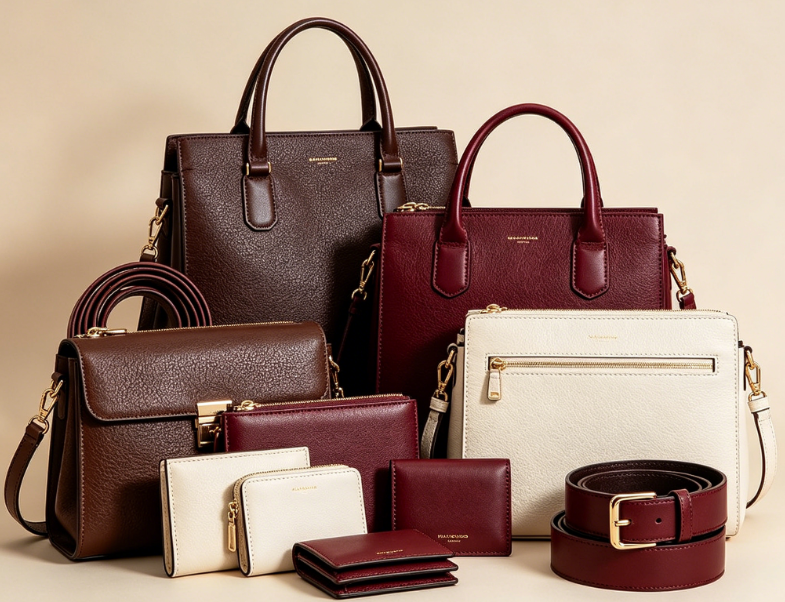
MOQ: Genuine leather styles start at 100–300 pcs per style/color. PU and canvas bags need 200–500 pcs. New brands can negotiate small trial runs of 50–100 pcs, often with a sampling fee offset to lower upfront costs.
Sampling timeline: Standard styles take 2–4 weeks from concept to first sample. Multi-compartment or more complex designs can push that to 5–6 weeks.
Their website is in English, and they offer a 24/7 contact line. The team is set up to work directly with US and EU buyers — no middleman involved.
2. LECAS Leather – Private Label Leather Handbag Specialist
LECAS Leather built its whole business around one goal: helping brands put their name on quality leather goods without running a factory.
They work as a full OEM/ODM private label partner — covering bags, wallets, belts, and accessories. You submit specs, drawings, or reference images through their customization page. LECAS takes it from there, handling everything from pattern development to bulk shipment.
Private label capabilities:
– Logo application via deboss/emboss stamp, printed labels, or metal logo plaques
– 30+ standard colors with Pantone-matching available
– Multiple leather types: full-grain, top-grain, and vegetable-tanned options (chrome-free)
– Custom dust bags, swing tags, and FBA-compatible carton labeling
Who fits best:
– E-commerce sellers: MOQ from 50–100 pcs/style; EXW pricing from US$15–30 for real leather handbags
– Boutique brands: smaller runs (30–50 pcs/style) with higher-grade leather and hardware
– Wholesale retailers: 100–300 pcs/style, built around keystone margins
MOQ & lead time: Sample development takes 15–25 days. Full production runs 45–60 days after sample approval. New style development fees run US$100–300 per style.
Their focus on sustainable leather — chrome-free and vegetable-tanned options — sets them apart. For brands selling to EU eco-conscious consumers, this is a real advantage worth noting.
3. Senrong Bag Vietnam – High-Volume OEM Bag Manufacturer with Brand Certifications
Nike. Adidas. IKEA. Coca-Cola. Disney. These names don’t end up on a factory’s client list by chance. They show that Senrong has cleared some of the strictest supply chain audits on the planet.
Senrong has run operations for close to 20 years across two Vietnam facilities — Nam Dinh and Ninh Binh provinces. The factory is built for scale. Their core strength is mid-to-large volume OEM handbag production. That covers backpacks, travel bags, cooler bags, tote and promo bags, and pouches.
Certifications that carry real weight:
– BSCI / Sedex social compliance audits (labor, safety, working conditions)
– REACH / OEKO-TEX / RoHS material and chemical compliance
– ISO-level quality management systems — a standard requirement for Nike/Adidas supply chains
This certification stack cuts compliance risk for brands entering EU or US retail channels. You spend less time worrying about audits and more time growing your product line.
Where Senrong fits best:
|
Order Size |
Fit |
|---|---|
|
1,000+ pcs/style |
Strong match — competitive pricing, priority scheduling |
|
500–999 pcs |
Possible, expect +20–40% unit price premium |
|
Under 500 pcs |
Not recommended — better handled elsewhere first |
Planning to order 5,000+ pieces per year? Senrong’s clean compliance record and stable production capacity make them a solid long-term partner. Startups not yet at that volume should build order history with a smaller factory first. Come back to Senrong once you have a framework agreement ready.
4. Pungkook Saigon II – Multinational Bag & Luggage Manufacturer
Pungkook Saigon II is not a local Vietnamese factory. It’s a Korean-owned plant inside Song Than 1 Industrial Park, Binh Duong. The facility has been running since 2001 as part of Pungkook Corporation’s global network — 9 factories spread across Vietnam, Myanmar, and Indonesia.
The client list says it all: Adidas, The North Face, Coach, Michael Kors, Eastpak, Osprey. Passing those supply chain audits takes systems most local factories don’t have. Pungkook has them.
What sets Pungkook apart:
– Structured QC gates — incoming materials → in-line checks → final AQL inspection
– Smart factory infrastructure: automated cutting, digital pattern systems, semi-auto packing lines
– Over 100,000 export shipments on record, with the bulk going to the US, Canada, and Philippines
Product scope: backpacks, fashion handbags, travel luggage, soft cases, and yoga accessories. That range makes it a rare multi-category supplier under one corporate group — you don’t often find that combination in a single partner.
Best fit for: brands that want to consolidate handbags, backpacks, and luggage under one audit-ready supplier. MOQs run 800–1,500 pcs per style. Unit pricing sits 5–15% above local factories — but that gap buys you compliance reliability and engineering-grade customization support.
5. ASG International Corp – Multi-Category Bag Sourcing Under One Roof
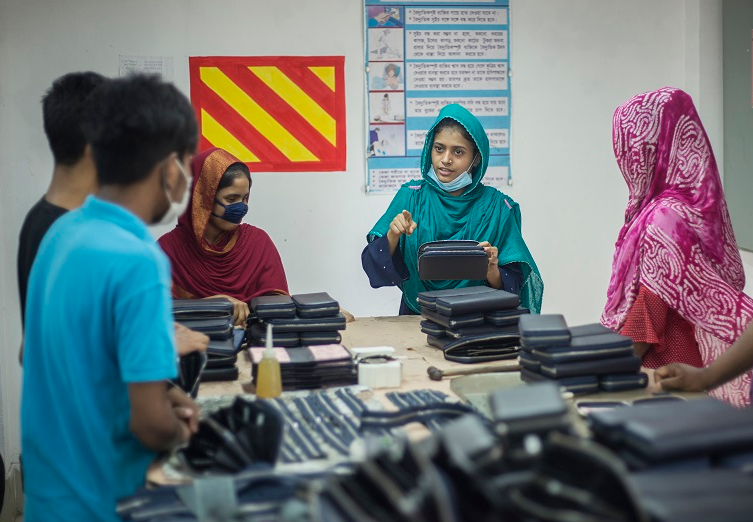
ASG International Corp runs a Korean-owned factory in Vietnam. Their core strength is simple: high-volume output across multiple bag categories. Their stated capacity hits 500,000+ bags per month — that puts them firmly in mid-to-large production territory, not a small workshop.
Product categories under one roof:
– School backpacks
– Laptop bags
– Fishing bags
– Briefcases
– Specialty functional bags
The in-house QC lab is worth noting. It shows tighter process control compared to factories that send testing out. That gap matters most when you’re running mixed SKUs at the same time.
Best fit: brands that want to consolidate multiple functional bag categories under one supplier. You cut down on approval loops, MOQ negotiations, and lead time coordination all at once.
One tradeoff to plan around: don’t assume one QC standard covers all categories. Fashion bags and fishing bags require different test specs. Ask for category-specific QC process flows and lab test reports before placing a bulk order.
Start with a mixed-category pilot order first. That’s the fastest way to check whether spec consistency holds across product lines.
6. Newway Bag – Eco-Friendly & Sustainable Custom Bag Factory
Newway Bag has made eco-friendly custom bags since 2004, based in Shandong, China. That’s 20+ years of OEM handbag export experience. Their monthly output hits 600,000 pieces. Big-name clients include Disney, Mango, Crocodile, and Balu — and that client roster shows they can handle serious compliance demands.
Their product range covers the full eco-bag spectrum:
– Cotton and canvas totes
– Non-woven and polyester bags
– Paper bags and retail shopping bags
Unit pricing runs US$0.78–$3.00, based on material and order volume. MOQs vary by product type:
– Brand promo totes: 500–3,000 pcs
– Retail shopping bags: 1,000–5,000 pcs
– Non-woven/paper packaging bags: 3,000–10,000 pcs
One gap worth flagging: Newway holds a Disney factory audit certificate. That’s a solid sign. But their public pages don’t confirm GOTS, GRS, or OEKO-TEX numbers. So before you place bulk eco orders, ask them for material certificates. Request GOTS for organic cotton and GRS for recycled polyester — get those documents in hand before committing.
Best fit: mid-to-large volume buyers sourcing promotional or retail eco bags for US, EU, or Japanese markets.
7. KimTa Bags – Versatile OEM Bag & Backpack Manufacturer in Ho Chi Minh City
KimTa Bags is about 30 minutes from Tan Son Nhat International Airport. That means overseas buyers can land in Ho Chi Minh City and walk the factory floor the same afternoon.
That location is more useful than it sounds. Samples ship fast via air courier. Buyers who want in-person development sessions skip the overnight stay entirely. Plus, Cat Lai port is close enough for same-day FOB loading once production wraps on schedule.
What KimTa produces:
– Daypacks and travel backpacks (18–40L) with laptop sleeves and padded back panels
– Soft accessories: packing cubes, pouches, and organizer goods
– Promotional and corporate backpacks at low-to-medium build complexity
MOQ & lead times: 500 pcs per style is the standard starting point. Simple promotional styles ship in 20–30 days after pre-production approval. More technical backpacks take 45–60 days for orders of 1,000–3,000 pcs.
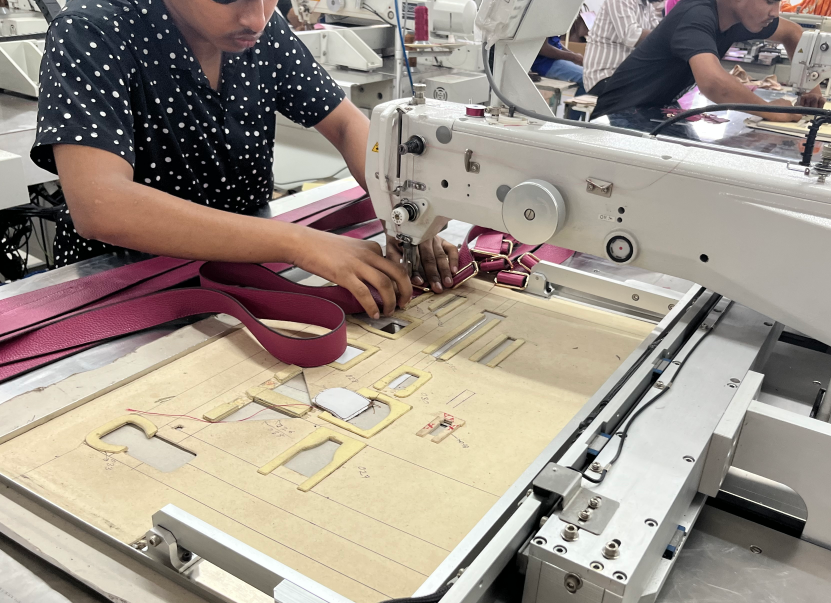
Best fit: Small-to-mid-size brands ordering 5,000–50,000 units per year. Also a solid match for DTC e-commerce labels scaling up, and corporate importers running repeat promotional campaigns. KimTa works with incomplete tech packs too — mood boards, sketches, and reference images are enough to kick off pattern development.
Side-by-Side Comparison: 7 Vietnam Handbag Factories at a Glance
Seven factories. Very different strengths. Here’s how they compare across the key dimensions that matter for sourcing decisions.
|
Factory |
Model |
Core Category |
MOQ |
Design Support |
Certifications |
Best Fit |
|---|---|---|---|---|---|---|
|
Sunteam Bag |
OEM / ODM |
Leather, PU, canvas handbags |
100–500 pcs |
Full-cycle (sketch to bulk) |
ISO 9001 |
Brands needing multi-material range |
|
LECAS Leather |
OEM / ODM / Private Label |
Genuine leather bags & wallets |
50–300 pcs |
Pattern dev + Pantone matching |
LWG / BSCI |
E-commerce & boutique private label |
|
Senrong Bag |
OEM |
Totes, backpacks, promo bags |
1,000+ pcs |
Standard catalog adaptation |
BSCI / REACH / OEKO-TEX |
Large-volume retail & brand compliance |
|
Pungkook Saigon II |
OEM |
Fashion bags, luggage, backpacks |
800–1,500 pcs |
Detail-level customization |
Full audit stack (Adidas/Coach-tier) |
Multi-category consolidated sourcing |
|
ASG International |
OEM |
Functional & specialty bags |
500+ pcs |
In-house QC lab support |
ISO-level systems |
Multi-SKU bulk consolidation |
|
Newway Bag |
OEM |
Eco totes, canvas, non-woven |
500–10,000 pcs |
Promo & retail standard development |
Disney audit cert |
Mid-to-large eco promotional orders |
|
KimTa Bags |
OEM / ODM |
Backpacks, daypacks, pouches |
500 pcs |
Works from mood boards & sketches |
Export-compliant |
DTC brands & corporate importers |
Quick read on factory type:
– OEM — bring your own tech pack; factory executes
– ODM — factory provides base silhouettes; you customize and brand
– Private label — your logo on existing factory models with moderate changes
Starting a new brand? LECAS starts at just 50 pcs MOQ, and KimTa accepts incomplete tech packs. Both keep your entry costs low. Ordering above 1,000 pcs? Senrong and Pungkook both carry strong compliance setups — solid picks for large-volume retail and multi-category orders.
How to Choose the Right Vietnam Handbag Factory: 8-Point Sourcing Checklist
Seven factories reviewed. Now the harder question: which one fits your business?
Run through these eight checkpoints before locking in any supplier.
1. Design capability — Ask how many steps sit between receiving your tech pack and delivering a first sample. A factory with real development capacity walks you through each stage. Standard leather or PU handbags should hit first sample in 4–8 weeks. Beyond 8 weeks with a vague process? That’s a warning sign.
2. MOQ flexibility — Most Vietnam OEM handbag factories start at 300–500 pcs per style/color. Need a trial run? Negotiate a small first order (50–200 pcs) by offering a 5–15% unit price premium in exchange.
3. Sample fee offset — Get it in writing. Sample costs run around US$50–200/style. Confirm whether those costs apply toward your first bulk order. Write the trigger quantity into the contract.
4. Phased delivery terms — On orders above 1,000 pcs, push for a split. Take the first 30–40% as a quality-check batch. Release the rest only after it passes.
5. Certifications — ISO 9001 is the baseline. Selling into EU or US retail? Also request third-party test reports for REACH (chemical restrictions on leather and PU) and CPSIA/Prop 65 compliance. Check that documents are dated within the last 24 months.
6. NDA before sampling — Most export-ready Vietnam factories will sign your NDA before development starts. Make sure it clearly blocks the factory from showing, quoting, or adapting your design for other clients.
7. Exclusive style terms — Protecting a key silhouette? Negotiate exclusivity by region or channel for 2–3 years. Back it with a minimum annual volume commitment of 3,000–5,000 pcs/style/year.
8. Communication transparency — English fluency, itemized cost breakdowns, and response times under 24 hours separate strong partners from slow ones. Test this during sampling. Don’t wait until after a bulk order to find out.
Common Mistakes Brands Make Sourcing Handbags in Vietnam
Even experienced buyers make expensive errors sourcing from Vietnam. These three mistakes show up again and again — and every one of them is avoidable.
Mistake 1: Chasing the Lowest Unit Price
A factory quoting $7.80/pc isn’t always cheaper than one quoting $8.30/pc. The math works only if you count everything.
Here’s what “cheapest” costs on a 2,000-piece order:
-
Rework at 10% defect rate: 200 pcs × $2.00 rework cost = $400
-
Late delivery penalty at 3%: $15,600 order value × 3% = $468
-
Peak-season freight surcharges + additional QC visits: $300–400
Total hidden cost: $1,168–$1,268 — that’s an extra $0.60/pc on your real landed cost. The “cheaper” factory ends up costing more.
Vietnam’s freight costs shift by season. Port congestion and fuel surcharges push shipping costs 10–20% higher during peak periods. A static FOB quote won’t tell you what you’ll pay at the dock.
Bottom line: Calculate total acquisition cost — not just unit price.
Mistake 2: Skipping Samples and Going Straight to Bulk
This mistake causes the most expensive damage. Cutting prototype and pre-production (PP) samples to save $1,000–$1,500 in development fees leads to outcomes like this:
A mid-range handbag brand (retail price: $150, 65% margin) ships 1,000 pieces without PP sample sign-off. Strap breakage and edge paint cracking push retail returns to 12% — triple the normal 3–5% rate. That’s 120 pieces returned. Each one loses $97.50 in margin = $11,700 in gross profit gone. Add $2,000–$3,000 in return freight and clearance discounts on top.
The $1,200 they saved on samples cost them $13,000+.
Run at least three sample stages before bulk:
1. Design/function sample — confirm structure, dimensions, and zipper placement
2. Material confirmation sample — test production-grade leather, PU, or fabric for abrasion, colorfastness, and hardware strength
3. PP sample — produced on the actual factory line, signed off as the QC benchmark
For first-time Vietnam suppliers, place a 100–300 pc trial order after PP sample approval. Check real defect rates before you scale.
Mistake 3: Ignoring Communication Capability
One buyer visited 20+ Vietnam bag factories and saw the same pattern every time. Factories execute production well but struggle to explain capacity, timelines, and process details in writing.
That gap creates real financial risk. Take a 3,000-piece PU handbag order with a 60-day ex-factory deadline. One terminology mix-up — the factory reads “60 days ready to ship from port” instead of “60 days ex-factory” — delays shipment 10–14 days. Miss a key retail window on a $100 retail/60% margin order. A 5–7 point margin drop translates to $4,500–$8,800 in lost gross profit.
Before signing any supplier, check these three things:
– A dedicated English-speaking account manager who replies to tech pack questions in writing within 24 hours
– Standard documentation on file: PO confirmation, BOM, AQL defect classification sheet, production Gantt chart
– Written answers to capacity questions with specific examples — not just headline figures like “10,000 pcs/month”
Process changes — stitch density, edge paint steps, hardware swaps — go into the spec sheet. Verbal confirmations on WeChat or Zalo protect neither side when disputes come up.
Start Your Custom Handbag Project in Vietnam: Next Steps
The fastest way to get a usable quote from any Vietnam factory — send complete information the first time.
Before reaching out, prepare:
-
3–5 reference images (front, side, back, interior, hardware details)
-
Materials: main fabric, lining, zippers, hardware, and target weight or texture
-
Dimensions: L × W × H, compartment count, pocket layout
-
Quantity: first order volume, estimated annual units, colorways
-
Target price range: EXW or FOB — factories need this to confirm production is realistic from the start
Ready to move forward? Send Sunteam Bag your reference images, dimensions, materials, and target quantity. We’ll check the structure and confirm whether production is doable. From there, you’ll get a clear sampling plan and a solid, actionable quote.