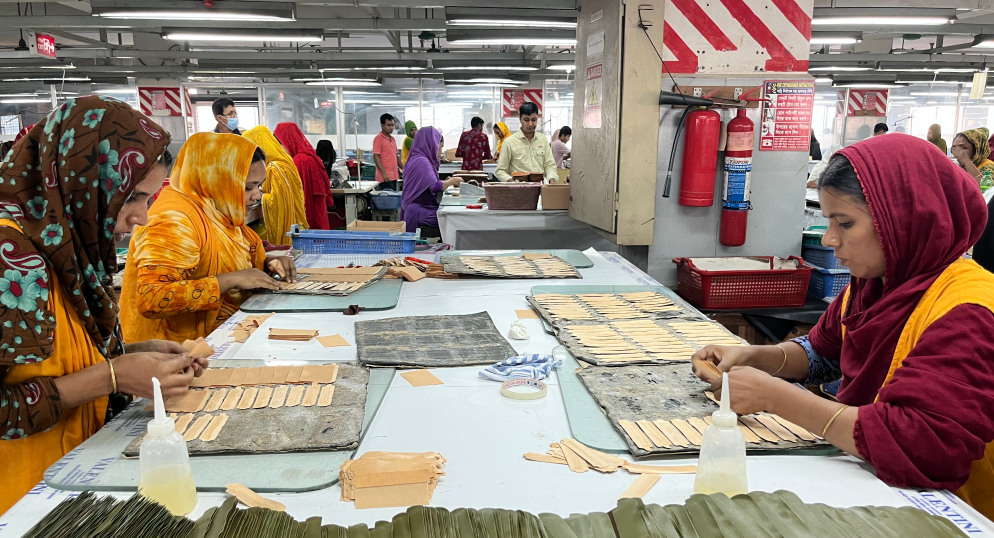
Ask any experienced buyer why their custom travel bags failed early, and the answer rarely points to the outer shell. It points to the lining. A cheap interior fabric tears at the seams, traps moisture, or peels apart after a few months of real-world use, and no amount of premium exterior material can save the product from bad reviews.
Choosing between nylon lining fabric, polyester lining material, or a waterproof TPU-coated option affects durability, cost structure, and how your brand gets perceived by end users. This guide breaks down the real performance differences between common lining materials, how to match them to specific travel bag types, and what questions you should be asking your manufacturer before production even starts.
What Is Bag Lining Material And Why It Matters For Custom Travel Bags
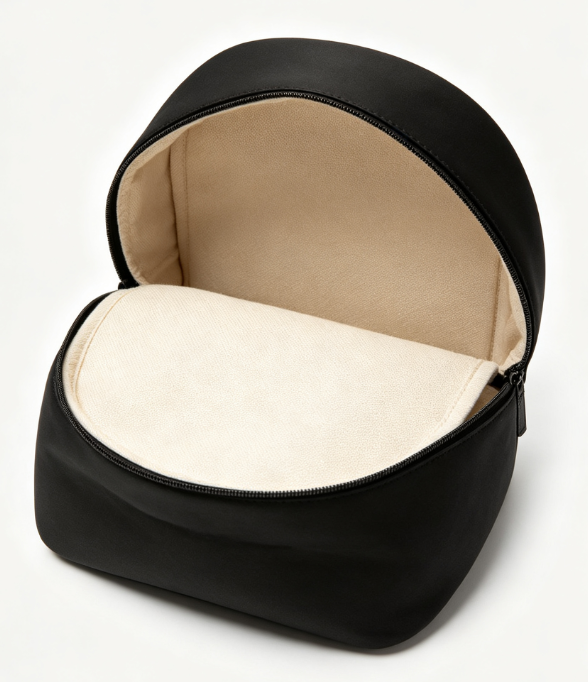
Bag lining material is the inner textile layer inside a travel bag. It’s usually a 150–420D synthetic fabric or 150–250 gsm woven material that protects your contents, reinforces structure, and determines how long the bag lasts.
Most B2B luggage specs fall into a few common ranges:
-
Denier: 210D, 230D, 300D, or 420D polyester/nylon
-
Fabric weight: 180–250 gsm (e.g., 200 gsm polyester twill or 420D pack cloth)
-
Coating: PU or PVC back-coating at 0.3–0.8 thickness, which provides a moisture barrier and stabilizes the weave
The lining does a few things:
-
Protects items from snagging and scratching, with water-resistant nylon handling light spills
-
Reinforces structure, hiding raw seams and supporting pockets and dividers
-
Absorbs abrasion; lining often takes over 60% of interior wear (corners, pocket edges) before the outer shell shows any damage
-
Resists deformation under heavy loads when properly coated
-
Withstands cleaning; quality synthetic linings survive 30–50+ cleaning cycles without visible fiber breakdown
Get the lining spec wrong, and everything downstream suffers: durability, brand perception, return rates.
7 Common Types of Travel Bag Lining Fabric You Should Know
Seven materials cover 90% of custom travel bag production. Each one forces a trade-off between cost, durability, and feel. Here’s how they compare.
1. Polyester Lining Material
Polyester taffeta (150D, 190T) is the default lining you’ll find in briefcases, suitcases, and organizers. Grammage runs 60–120 g/m², moisture regain is below 0.5%, it dries fast, and it resists abrasion well. Add a PU or TPU coating, and hydrostatic head jumps to 1,000–3,000 mm, hitting true waterproof bag lining territory. Raw polyester taffeta 150D runs about US$2.50–4.20/yard. Without a coating, it feels plasticky and builds static.
2. Ripstop Nylon Lining
Ripstop nylon lining (70D–210D for interior use) uses a grid weave that stops rips from spreading. It’s the go-to for camera bags, tech organizers, and packing cubes where puncture resistance matters most. DWR or PU-coated versions push hydrostatic head above 1,500 mm, a common waterproof benchmark. You’ll pay US$5.20–8.00/yard, higher than polyester but with a better strength-to-weight ratio.
3. Oxford & Ballistic Nylon Lining
Oxford nylon (210D–420D) shows up in backpack interiors and travel bag pocketing. Ballistic nylon (840D–1680D) is heavier – usually used as shell fabric, but sometimes lines high-wear zones like bag bottoms or laptop compartment walls. Both have excellent tear strength and low stretch, but the hand feel is technical, not luxury.
4. Cotton Lining (Poplin, Tricoline, Quilting)
Cotton poplin (120–160 g/m², 180–220 TC) and quilting cotton bring breathability synthetics can’t match. Moisture regain around 7–8% gives genuine moisture-wicking performance. It’s the natural choice for casual totes and inner zipper pockets where soft hand feel outweighs raw strength. Tear resistance lags behind nylon and polyester, and it wrinkles, shrinks, and stains more. Price: US$4.80–7.50/yard.
5. Canvas / Twill Lining
Cotton duck canvas (230–320 g/m²) and polyester twill (120–200 g/m²) deliver structural stiffness for briefcases, weekenders, and tool totes. Polyester twill is a common choice for everyday bags because it balances durability and printability. The trade-off: canvas adds weight and can collect lint, making it less ideal for ultralight luggage lines.
6. Satin / Taffeta Lining
Polyester satin, recycled PET satin, and acetate twill (40D–75D, 60–100 g/m²) give a premium, low-friction interior suited to fashion luggage and luxury packing cubes. Recycled PET versions carry GRS or LEED sustainability credentials. But acetate twill degrades with heat and humidity and runs US$12–18.50/yard – expensive for a lining with lower tear resistance.
7. TPU / PU-Laminated Fabrics
Base fabrics (cotton, polyester, or nylon 70D–210D) laminated with PU film or TPU membrane hit 150–260 g/m² combined and deliver wipe-clean, spill-proof performance. They are ideal for cosmetic bags, diaper bags, and wet-gear pockets. At US$7.80–11.00/yard, they cost more and can crack with repeated flexing, but nothing beats them for hygiene-sensitive travel gear.
Nylon vs Polyester Lining: Which Performs Better For Your Bag
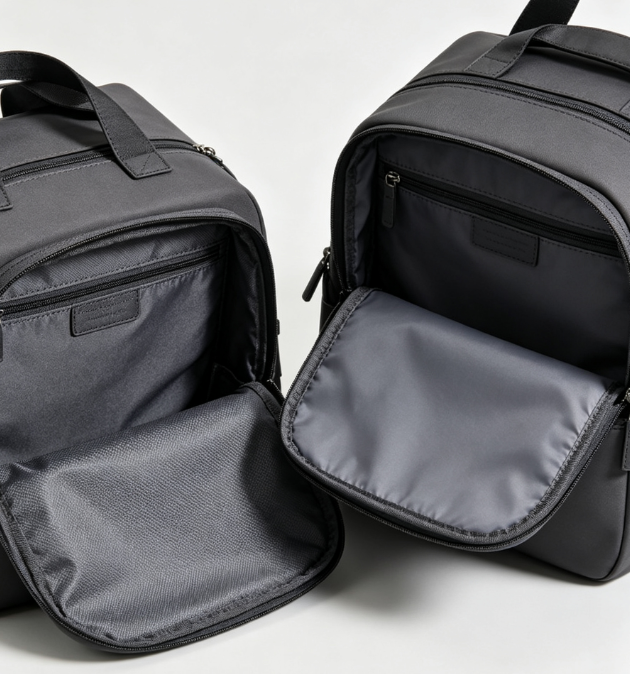
Fiber chemistry decides more than most buyers realize. Nylon 6,6 tolerates over 50,000 Martindale abrasion cycles, while polyester at similar denier typically caps out around 30,000–45,000. On Wyzenbeek testing, ballistic-grade nylon weaves push past 80,000 double rubs — roughly 2–3× the lifespan of polyester in high-friction zones like laptop sleeve edges or camera cube interiors.
Water behavior flips the advantage. Polyester’s moisture regain sits near 0.4%, versus nylon’s 4.0–4.5%. An uncoated nylon lining will soak and hold noticeably more moisture, feeling clammy after contact with damp clothes or leaking toiletries. Polyester lining, especially PU-coated at 800–1,500mm hydrostatic head, stays drier and keeps pockets dimensionally stable — a real advantage for gym bags, shoe compartments, or any waterproof bag lining application.
Weight tells a different story. Nylon’s density (1.14 g/cm³) runs about 17–20% lighter than polyester (1.38 g/cm³) at equal denier. A 210D nylon oxford can match or beat 210D polyester on toughness while shaving grams — which explains why ultralight hiking packs default to 30D–70D ripstop nylon lining.
Quick Comparison
|
Factor |
Nylon Lining |
Polyester Lining |
|---|---|---|
|
Abrasion resistance |
50,000+ Martindale cycles |
30,000–45,000 cycles |
|
Moisture regain |
~4.0–4.5% |
~0.4% |
|
Weight (same denier) |
17–20% lighter |
Heavier |
|
UV stability |
Weaker |
Stronger |
|
Cost vs 210D PU polyester |
1.3–2× higher |
Baseline |
Cost seals the decision for most OEM travel bag production runs. Nylon typically costs 30–100% more than PU-coated polyester at comparable denier, so switching specs isn’t trivial for large-volume orders.
Choose nylon lining for heavy-load, high-abrasion gear where weight matters. Choose polyester lining when moisture control, UV stability, and cost efficiency drive your bag fabric selection.
How To Choose The Best Lining Material Based On Travel Bag Type
Different travel bags need different lining specs. A laptop briefcase and an expedition backpack solve very different problems, so match the material to how you’ll use the bag instead of chasing specs on paper.
Business Briefcases & Rolling Carry-Ons
For commuter bags and carry-on luggage, look for 210D to 300D polyester or nylon oxford (190T to 300T density, 90 to 130 gsm). Check for Martindale ratings above 20,000 cycles on main compartments. Add a PU or PA coating rated at least 1,000mm hydrostatic head to handle spilled coffee or leaking toiletries. Keep interiors dark (black, navy, charcoal) to prevent show-through, and stick to 190T or higher density to reduce fuzzing.
Build laptop compartments with a hybrid setup. Use 210D to 300D oxford (90 to 120 gsm, 30,000-plus abrasion cycles) paired with microfiber suede lining (150 to 250 gsm, 0.5 to 1.0mm pile) against the device. Reinforce zipper bases with 420D nylon where repeated flexing happens.
Outdoor & Adventure Packs
Ripstop nylon works best here. Use 210D to 420D ripstop for main compartments (90 to 160 gsm), and step up to 630D to 1050D ballistic nylon at high-wear zones like bag bottoms, wheel housings, and frame contact points. Ballistic-grade linings survive 50,000 to 70,000-plus Martindale cycles, roughly double standard ripstop. Pair with a TPU coating rated 1,500 to 3,000mm for water-resistant use, and push past 5,000mm for wading conditions.
Luxury & Premium Travel Bags
Cupro (Bemberg) lining separates premium OEM travel bag production from mass-market output. Its moisture regain sits at 12 to 13 percent, nearly four times that of polyester, and it gives a silky, low-friction hand feel at 60 to 90 gsm. It handles 170 to 180°C steam pressing without yellowing, which makes it ideal for garment-bag construction. A hidden 210D to 300D nylon backing at stress points adds durability without losing the luxury surface.
Waterproof Lining vs Standard Lining: When Do You Really Need TPU/PU Coating
Hydrostatic head numbers separate marketing claims from real waterproof bag lining performance. Standard non-coated polyester or nylon lining sits below 500–800mm — water-repellent at best, and it leaks under pressure or sustained contact. PU coating pushes that to 1,000–5,000mm depending on thickness. TPU coating or lamination goes further, hitting 5,000–20,000mm in technical outdoor fabrics.
Match the coating to actual exposure, not worst-case fantasy:
-
Under 1,000mm — splash-resistant only. Fine for packing cubes stored inside another bag.
-
1,000–3,000mm (PU) — adequate for urban travel bags, office backpacks, carry-on toiletry pockets, short rain exposure.
-
3,000–8,000mm (high-PU/thin TPU) — needed for cycling commutes, outdoor daypacks, bags exposed to steady rain.
-
10,000–20,000mm (TPU) — built for adventure travel, motorcycle touring, bikepacking, or bags that sit on wet ground.
TPU also outlasts PU. PU coatings typically last 2–3 years before hydrolysis causes peeling or tackiness. TPU laminates run 5+ years, with better cold-flex performance down to -40°C and stronger abrasion resistance.
Cost matters here. TPU-laminated fabric runs 2.0–3.0× the price of uncoated lining, roughly 1.5–2× PU on the same base fabric. That’s why most durable bag interior fabric strategies use zonal TPU — bottom panels and wet pockets get 10,000–15,000mm TPU, while the rest stays PU-coated at 1,000–3,000mm. This selective approach adds just 5–10% to finished bag cost versus 15–25% for full TPU lining.
Eco-Friendly Bag Lining Materials: Sustainable Options for Modern Brands
Sustainability now shapes purchase decisions as much as price does. Brands sourcing custom bag manufacturing partners increasingly ask for recycled or bio-based lining options as a core spec requirement.
Recycled Polyester (rPET) leads this shift. Made from post-consumer PET bottles, rPET retains the same abrasion resistance and moisture-repelling properties as virgin polyester lining material while cutting carbon output and landfill waste. Expect a 5–20% price premium over standard polyester, depending on recycled content (50–100%) and GRS certification. Look for 190T, 210T, or 300D rPET when sourcing.
Recycled Nylon (like ECONYL®) is made from reclaimed fishing nets and industrial nylon waste and matches virgin nylon’s strength. It fits high-wear zones that need durable bag interior fabric without the fossil-fuel footprint.
TENCEL™/Lyocell gives a silky, breathable feel for premium lines. It’s sourced from sustainable wood pulp through closed-loop processing. Expect a 20–50% price jump over standard polyester.
Organic cotton (GOTS-certified) suits casual, lifestyle-positioned travel bags, though it costs 10–40% more than conventional cotton and lacks waterproofing.
Bio-based films (food-grade PEVA/EVA or PLA+PBAT) replace PVC in wet pockets and toiletry compartments. They carry a 10–30% premium but are compostable and chlorine-free, which matters to eco-conscious buyers.
Cost vs Quality: Lining Material Positioning For Different Price Tiers
Custom bag manufacturing breaks into four price tiers, and each one needs its own lining approach. Match your interior fabric cost to your target retail price, and you protect margins without making the bag feel cheap.
Entry-Level (Budget-Focused)
A 150–210D polyester lining at 70–120 gsm runs $3–6/yard in OEM sourcing. Keep lining and interlining combined under 8–12% of the factory price. Use recycled nonwoven for hidden panels and save the slightly better fabric for visible openings. Orders over 1,000 yards usually unlock a 5–10% discount.
Mid-Tier (Everyday/Business)
210–300D polyester or nylon oxford at 110–160 gsm balances durability and cost. Budget 12–18% of the factory price for lining. Keep shrinkage under 3% so the bag holds its shape.
Performance Outdoor
Waterproofing, anti-mold, and UV resistance each add 10–30% to the lining cost. Push the lining budget to 18–25% of the factory price. Sell the specs — a 5,000–10,000mm waterproof rating, 20,000+ Martindale cycles — and the premium price makes sense.
Luxury Tier
Premium Bemberg-style or silk-blend linings cost more, often 30%+ above domestic alternatives when imported. Focus on hand feel, drape, and hypoallergenic properties instead of raw strength numbers.
How Professional Custom Bag Manufacturers Select And Source Lining Materials
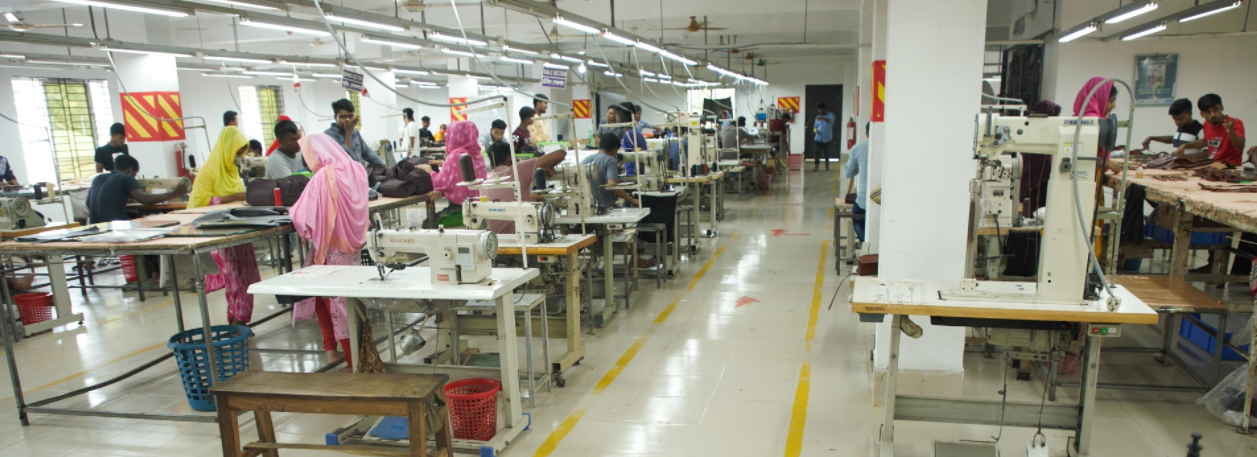
A factory’s quote sheet shows whether they understand lining engineering or just guess. Any serious OEM travel bag production partner asks for four data points before pricing lining: material type plus gsm (e.g., “200 gsm polyester twill” or “420D nylon pack cloth”), Pantone color code, construction method (bagged-out, drop-in, or bonded), and interior functional layout: pocket count, dividers, key fobs, label placement. Skip any of these, and you’re guessing on cost.
The Sourcing Workflow Manufacturers Actually Follow
-
Map stress zones first. Abrasion areas (bottom, sides, zipper corners) get 210D+ nylon or oxford. Load-bearing points (strap attachments, main compartment tops) need reinforced backing. Water-contact zones require 1,500mm+ coated lining.
-
Match COGs to retail tier. Bags retailing above $150 use suede or microfiber lining, running $40–80+ per unit in lining COGs. The $70–150 range uses cotton twill or microfiber at $20–40. Under $70, taffeta or oxford polyester keeps lining costs at $8–15.
-
Write test standards into the tech pack. Reference ASTM D3884 for abrasion (10,000+ cycles), AATCC 16 for colorfastness, ASTM D5034 for tensile strength.
-
Validate with a working prototype. Load real contents, cycle the zippers 100+ times, and check for puckering, pocket sagging, or seam failure.
Reputable custom bag manufacturing partners then present 3–5 lining “recipe” options, each specifying fabric, gsm tolerance (±5 gsm), and cost per yard: $0.6–1.2/yard for taffeta, $1.8–3.0/yard for microfiber suede, mapped to COGs tiers of $10–15, $20–30, and $40–60.
Zonal Reinforcement in Practice
Stress-area engineering separates durable bag interior fabric results from generic sourcing. A typical reinforced route looks like this:
-
Bottom/corners: 420D nylon or 600D oxford patch, plus 0.3–0.5mm resin board, sewn with triangle reinforcement stitching at 3–3.5mm pitch
-
Strap attachment zones: woven tape backing rated ≥600N tensile strength, sewn with box-and-cross stitching plus two backstitch passes
-
Zipper ends and main openings: anti-slip lining weave with patch reinforcement and double stitching to prevent seam slippage
-
Laptop compartments: 2–4mm foam bonded to nonwoven or knit lining, with seam strength targeting ≥100N per ASTM D1683
A real production route might combine a 600D oxford shell with PU coating, 210D nylon main lining rated at 1,500mm hydrostatic head, and a 420D/PVC bottom panel pushing to 3,000mm, delivering a finished bag that survives 20,000+ Martindale cycles. This is the level of granularity buyers should expect when evaluating a manufacturer’s material sourcing capability.
Practical Checklist: How To Communicate Lining Requirements With Your Manufacturer
Most quote delays come from vague specs. Fabric shortages are rarely the cause. Lock these parameters down before your first email:
-
Fiber content — nylon, polyester, cotton blend, plus compliance labeling needs
-
GSM and denier — exact target with tolerance range (e.g., “210D ±5%”)
-
Coating type — PU, PA, PVC, or uncoated, with intended function (waterproof, hand feel, abrasion)
-
Color — Pantone code, acceptable color variance, whether a lab dip is required
-
Fabric width and shrinkage tolerance
-
Quantity, MOQ, and per-color breakdown
-
Sample deadline and bulk delivery window
-
Packaging, labels, and fiber-content tagging requirements
Avoid these common missteps:
-
Saying “premium feel” instead of quoting gsm, denier, and coating specs
-
Approving changes verbally instead of in writing (use V1/V2/V3 version tracking)
-
Sending the same vague inquiry to five factories and comparing mismatched quotes
One SPIN-style opener that works: “We’re sourcing lining for [bag type/use case]. What GSM, denier, and coating combinations do you run most consistently for that application?” That one question separates the factories that guess at your bag’s fabric from the ones that actually engineer it.