Two brands. No legacy. No iconic monogram. Charles & Keith and JW Pei reshaped how millions of consumers think about what a handbag should cost — and what it can look like. Traditional manufacturers were busy chasing private label handbags contracts and trimming bag production costs. These two brands built cult followings, dominated social feeds, and carved out one of the most profitable price points in fashion. Their playbook isn’t locked behind a luxury conglomerate’s boardroom. It’s visible, repeatable, and easy to learn from.
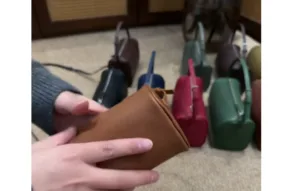
Handbag manufacturers can take a lot from Charles & Keith and JW Pei — and it goes way beyond aesthetics. Think brand architecture, consumer psychology, and speed-to-market thinking. Any factory-floor operation can start applying these lessons today. Last year, during a key trade fair, our sales representative Belinda and master craftsman Li personally experienced these insights firsthand, observing how design, quality, and consumer appeal intersect in a real retail environment.
What Handbag Manufacturers Can Learn from Charles & Keith and JW Pei
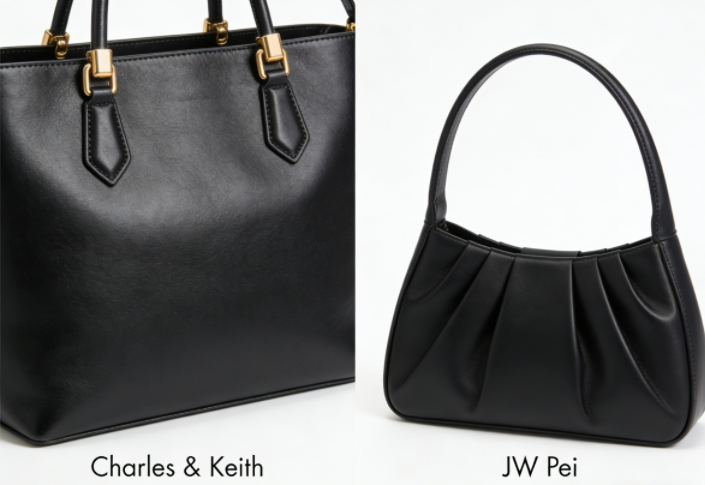
Here’s what this article covers — and why each point matters for manufacturers paying attention:
-
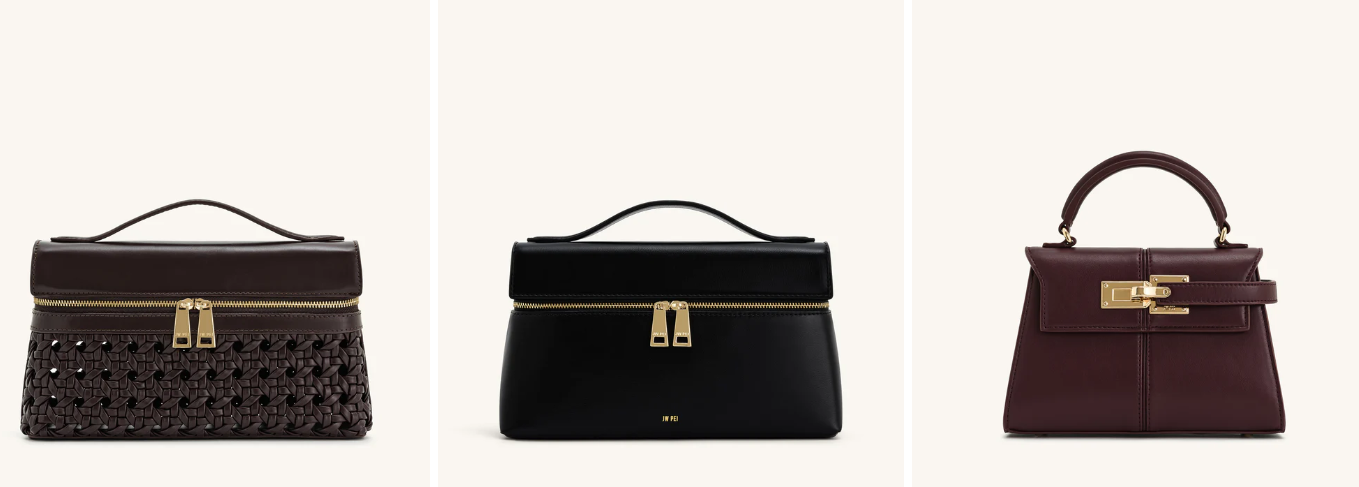
Pricing architecture that triggers purchase: JW Pei keeps most bags between $89 and $149. That’s not accidental. The $89 Ashlie crossbody sits at an easy yes. The $99 Leia Pleated Clutch and the $118 Joy Bag follow the same logic. Each price point feels affordable but still signals real value.
-
Design that references without copying: JW Pei doesn’t knock off luxury. The Ashlie takes cues from Dior’s saddle shape. The Abacus bag builds its own signature silhouette. Runway-inspired. Not runway-replicated.
-
Celebrity leverage on a non-luxury budget: Gigi Hadid, Hailey Bieber, Megan Fox — the brand landed those placements without a luxury marketing budget. That kind of visibility is earned through smart positioning, not big spend.
-
Materials as a positioning tool: Recycled vegan leather isn’t a fallback here. It’s a feature. It speaks directly to buyers who care about what their bag is made of.
Each of these decisions is a teachable framework — not a trade secret.
Why Charles & Keith and JW Pei Disrupted the $80–$150 Handbag Market
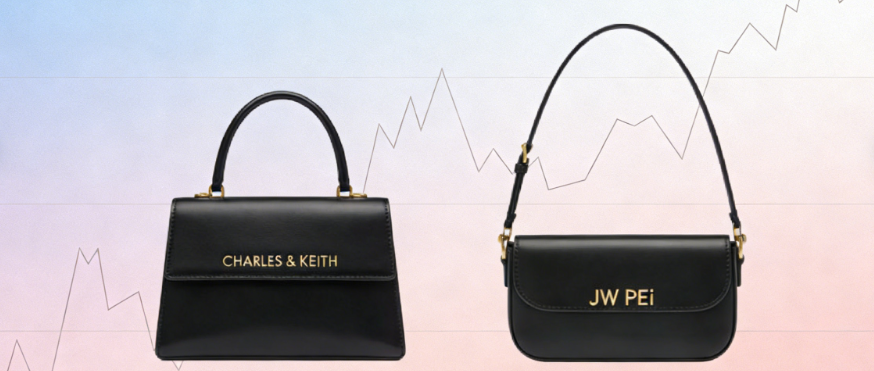
The $80–$150 handbag segment wasn’t broken. It was just ignored — until these two brands decided it was worth owning.
Charles & Keith holds a 37% sales advantage over competitors in this price range. That gap didn’t come from cutting quality. It came from combining sharp pricing with functional design that buyers didn’t expect at this price point. The Cesia Croc-Effect bag at $76 moves 410 units a day. Here’s what you get at that price:
-
Self-cleaning nylon with photocatalytic coatings
-
Collapsible frames that cut storage space by 70%
-
RFID-blocking compartments built in as standard
None of these are premium add-ons. They come with the base price.
JW Pei takes a different angle. The Elise Top Handle at $89 sells 320 units a day. That’s behind Charles & Keith in volume — but durability shifts the math. JW Pei’s vegan leather keeps its shape for 18+ months. Charles & Keith averages 9 months. So if you’re calculating cost-per-wear, JW Pei pulls ahead over time.
Both brands price 22–35% below European leather specialists on pieces that match in function. Price-sensitive buyers get a real alternative — no compromise required.
The market these brands are competing in is massive. Affordable luxury bags make up a $5 billion segment in 2025, growing at 8% CAGR through 2033. Longchamp’s Le Pliage Original S at $130 moves 290 units a day — behind both brands, even with stronger brand recognition.
What disrupted this segment wasn’t a lower price tag. It was delivering more product per dollar than anything else on the shelf.
Lesson 1: Optimizing Handbag Lines for the Accessible Luxury Market
The $89–$149 range isn’t a compromise. It’s a strategy.
Charles & Keith and JW Pei both built their pricing around one simple truth: buyers don’t want cheap. They want justified value. That distinction shapes everything about how you structure a product line.
The accessible luxury market is worth $275–378 billion in 2025 — and it’s still growing. Entry-price items under mid-tier thresholds make up 47% of all first-time luxury purchases. That’s not a niche. That’s a pipeline.
Who’s buying in this segment?
-
Aspiring consumers drive 56% of market activity
-
First-time luxury purchasers represent 39% of annual unit sales
-
Buyers aged 25–34 account for 33% of total volume
-
Urban consumers make up 69% of consumption
These buyers aren’t shopping for a bargain. They’re shopping for a story they can tell about the purchase.
What this means for bag manufacturers: your price point needs to feel considered, not random. Capsule collections drive 22% higher sell-through than permanent lines. Limited-edition drops boost engagement by 27%. A tight, focused product mix beats a sprawling catalog every time.
One more lever worth building out: loyalty structures. 68% of buyers prefer cashback over points. Rewards framed as financial benefits carry none of the discount stigma. So your pricing stays clean, and repeat purchase rates — which already sit at 44% in this segment — keep climbing.
Price low enough to convert. Position high enough to retain.
Lesson 2: Creating Distinctive Handbag Silhouettes for Brand Recognition
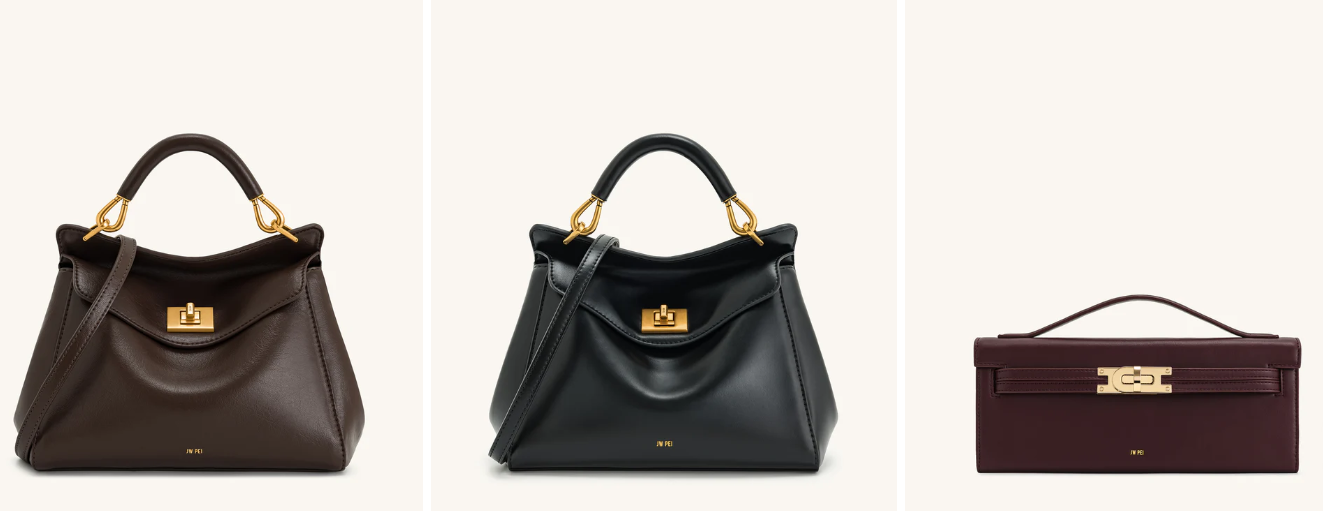
Shape is the first thing a buyer sees. Before the logo. Before the label. Before the price tag.
Charles & Keith and JW Pei figured out what most bag manufacturers miss: in the $80–$150 price range, you can’t compete on brand heritage — you don’t have any. But you can build a silhouette so distinct that buyers recognize the bag before reading a single word on it.
That’s how the world’s most lasting brands work. Nike’s Swoosh. Apple’s bitten fruit. The WWF panda built from negative space alone. Strip away color, remove the wordmark, reduce it to a black outline — the identity still holds. That’s the silhouette test. Handbag manufacturers need to apply this same thinking to their own designs.
What this means in practice:
-
Design shapes that survive reduction — your bag’s profile should be recognizable as a thumbnail or a flat icon
-
Use negative space with purpose — a structured opening, a distinctive cutout, an asymmetric flap can each become a signature detail
-
Don’t over-rely on hardware logos — embossed initials and branded clasps are easy to overlook. A strong, original silhouette is not.
JW Pei’s Gabbi Bag makes this clear. The ruched shoulder strap and cloud-like body shape built instant visual recall — no monogram needed. That silhouette became the brand signal.
Innovate the form. The logo follows.
Lesson 3: Engineering Perceived Quality in Handbag Manufacturing
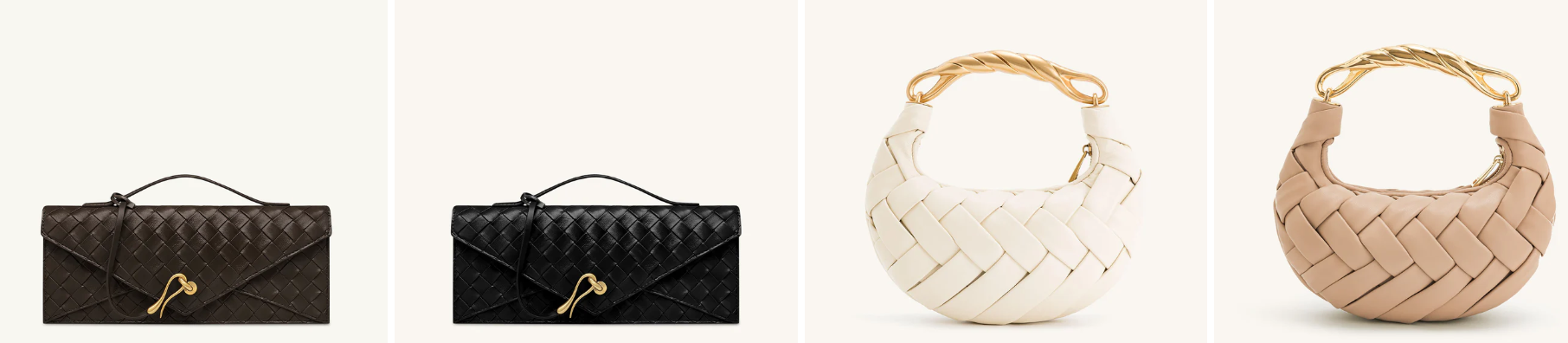
After attending the Canton Fair, our sales representative Belinda visited a Charles & Keith store to inspect their products firsthand. Our master craftsman, Li, also came along to examine the bags in detail. We noticed that these handbags used a fine lockstitch technique, which makes the surface of the custom leather handbags smoother and seamless, enhancing both the tactile and visual quality.
This made us realize that a high-quality bag isn’t just about looking good — every detail matters. In the production of custom leather handbags, elements like edge stitching, zipper resistance, and hardware feel directly influence a buyer’s perceived value. Similarly, in private label handbags projects, we also adopt these precise techniques to ensure that each bag communicates premium quality the moment it’s touched.
This is what the automotive industry calls “Perceived Quality Engineering.” The core idea is simple: map, score, and optimize every sensory signal a customer experiences — the weight of a zipper, the resistance of a clasp, the way leather bends under pressure. Not against a manufacturing checklist, but against how a customer perceives it. For handbag manufacturers, this mindset transforms the way products are developed and customized.
Engineer the Experience, Not Just the Object
Quality perception measures three types of signals:
-
Visual cues: Stitching uniformity, edge finish consistency, hardware alignment
-
Tactile cues: Surface texture, material flex, handle grip weight
-
Auditory cues: The click of a magnetic closure, the zip tone, the snap of a buckle
Each signal feeds a buyer’s instant, gut verdict: cheap or worth it.
JW Pei’s vegan leather holds its structure for 18+ months. That’s not a material spec — it’s a perception investment. A buyer carries the bag three months in and feels zero degradation. So they raise their value judgment. The bag keeps earning its price.
Lesson 4: Versatility as a Product Specification, Not an Afterthought
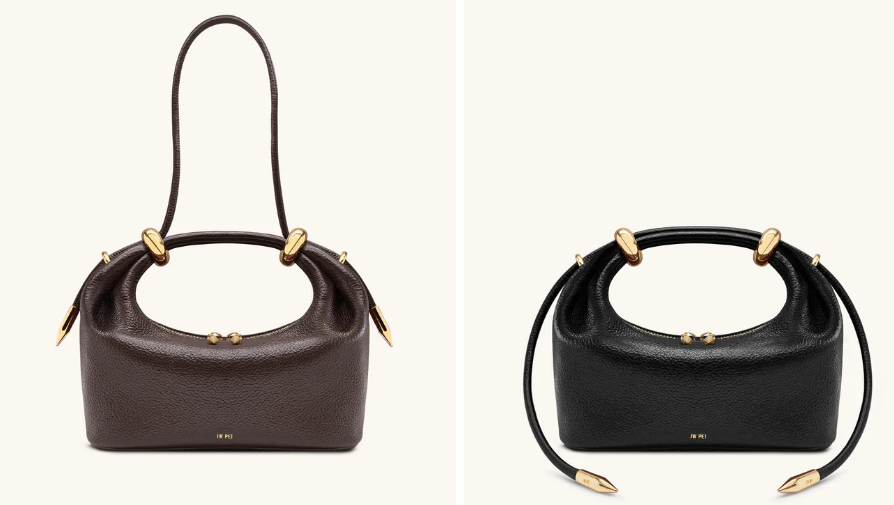
Most manufacturers treat versatility as a selling point. Charles & Keith and JW Pei treat it as an engineering requirement. That one shift changes everything that gets built.
A bag that converts from crossbody to clutch isn’t versatile because marketing says so. It’s versatile because someone defined that function at the start, built tolerances around it, and tested it under stress before production ramped up. That’s the gap between a real feature and an empty promise.
What versatility as a spec looks like:
-
Define the use cases first — how many carry modes, what weight loads, what strap adjustments must hold under real stress
-
Set functional limits by use case — a convertible strap needs different hardware tolerances than a fixed one
-
Test at the edges — a bag that claims three configurations needs prototypes targeting the stress points of all three
During the Canton Fair visit, our sales representative Belinda noticed that one crossbody bag was especially popular — people were even lining up on the streets of Shenzhen to buy it. She and our master craftsman Li examined it closely and found that this bag could convert from a crossbody to a handheld clutch, delivering true multi-functionality. We took this bag as an example for our clients, combined with our market research and sales data. One Japanese client was particularly impressed and immediately placed an order for custom convertible handbags.
This demonstrates the B2B principle: versatility without a spec gets cut in production. Versatility with a spec gets delivered — at scale, across every unit, without variation. By embedding these requirements at the design stage, including hardware tolerances, strap durability, and material choices, we ensure that our OEM handbags live up to their promise for every client.
Build it into the brief. Not the brochure.
Lesson 5: Celebrity and Influencer Marketing

JW Pei landed Gigi Hadid, Hailey Bieber, and Megan Fox — without a luxury marketing budget. That’s not luck. It’s a system.
The influencer marketing industry hit $34.1 billion in 2026, up from $21.1 billion just three years earlier. Brands now spend $30.8 billion per year on influencer campaigns — growing at 17% year over year. This isn’t a side channel. It’s the main stage.
For handbag manufacturers, the return is what matters: $6.50 back for every $1 spent, on average. Celebrity endorsements alone lift sales by 4% and brand trust by 20–40%. The math works. The real challenge is executing without wasting budget on the wrong placements.
Platform and Partner Selection

Not all influencers deliver equal results. The data is clear:
-
TikTok drives 3.70% engagement versus Instagram’s 0.48% — close to 8x the interaction per post
-
Nano-influencers on TikTok hit 15.2% engagement rates — beating macro accounts on almost every metric
-
69% of endorsement platforms are TikTok, followed by Instagram at 47%
Smaller, niche-focused creators often beat celebrity placements on conversion. 88% of Gen Z and Millennials rank authenticity as their top trust signal. A micro-influencer who actually uses the bag outperforms a celebrity holding it for a paycheck.
What Manufacturers Should Track
Reach and likes are vanity metrics. The numbers that matter:
-
Conversion rate from influencer-referred traffic
-
Average deal size from influencer-sourced customers
-
Retention and LTV — influencer-referred buyers bring higher lifetime value. Trust is already built before the first purchase, so they stick around longer and spend more.
75% of marketers say UGC from influencers outperforms brand-produced content. Video testimonials alone drive an 80% uplift in conversions. That content doesn’t disappear after a campaign ends — it keeps working.
Treat the influencer relationship like a product spec. Define the objective. Pick the right tier. Measure what converts.
The Manufacturer’s Action Checklist: From Factory Thinking to Brand Thinking
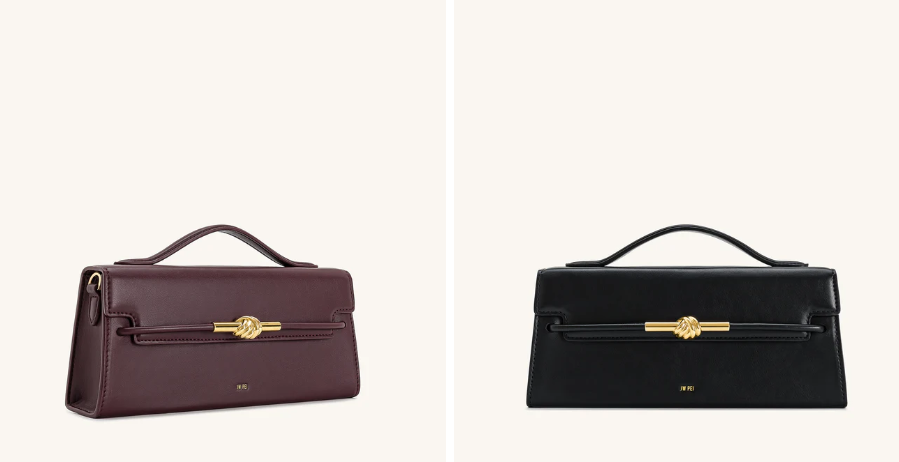
Knowing the playbook is one thing. Executing it is another. Here’s how to turn every lesson from Charles & Keith and JW Pei into real operational moves — starting with the area that needs the most work.
Brand Foundation
-
Sit down as a leadership team and answer four questions: What do we do? How do we do it? Who do we do it for? Why does it matter? Each person writes their answers on their own. Then compare. The gaps tell you where your brand thinking falls apart.
-
Write down your brand rules. No written rules means every campaign and every department rebuilds your identity from zero.
-
McKinsey data is clear: B2B companies with strong brands outperform weaker ones by 20%. That gap is real. And you can close it.
Product Development
-
Build a Product Requirement Document before any sample gets cut. Put aesthetics, durability targets, target demographic, and how the bag should look, feel, and function — all in one place.
-
Your prototype is your most important sales tool. A strong prototype does more than a thousand spec sheets ever will.
Go-to-Market Readiness
-
Audit your digital presence: website, social channels, email. Do they still read like a bag factory catalog? That’s costing you buyers before the first conversation even starts.
-
Build your influencer and social strategy before the product launches. Not after the inventory is already sitting in a warehouse.
Factory thinking asks: can we make it? Brand thinking asks: will they want it? Start with the second question.
Conclusion
Charles & Keith and JW Pei didn’t stumble into dominance — they built it, one decision at a time. From price architecture to silhouette strategy, the blueprint is right in front of you.
Winning in the $80–$150 segment isn’t about having the fastest machines or the lowest cost per unit. It’s about thinking like a brand, not a bag factory. That means controlling perception, mastering versatility, and building social proof before the product even ships.
The core lesson from Charles & Keith and JW Pei comes down to one shift: treat every design decision as a brand statement, not just a production variable.
Your next step? Run your current line through the seven-lesson framework in this article. Spot the gaps. That’s where your competition is gaining ground — right now, while you’re reading this.
The accessible luxury market is wide open. But it belongs to bag manufacturers who are ready to claim it — on purpose, with a clear strategy.