
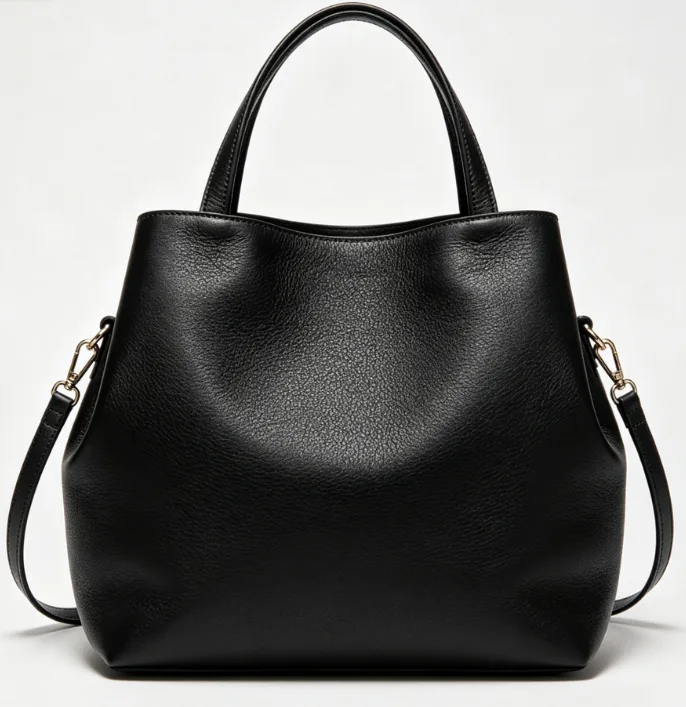
Why Source Custom Handbags from South Asia in 2025?
The numbers tell a clear story. Manufacturing wages in Bangladesh run USD 75–100/month. China pays USD 350–400+ for the same factory roles. That gap hits your unit cost hard.
For labor-intensive products like handbags, moving production from China to South Asia cuts direct labor costs by 20–40%. But cost is only part of it.
Three factors make South Asia a strong choice for custom handbag programs in 2025:
-
Flexibility: India ranks second to China in sourcing agility. Vendors can adjust volume, delivery schedules, and product specs mid-season — fast.
-
Low MOQ access: Entry-level factories in Bangladesh accept 300–500 units per SKU. Indian leather workshops go as low as 100–300 units per style.
-
Trade advantages: India’s duty-drawback programs and Bangladesh’s preferential trade status both cut your total landed cost in real terms.
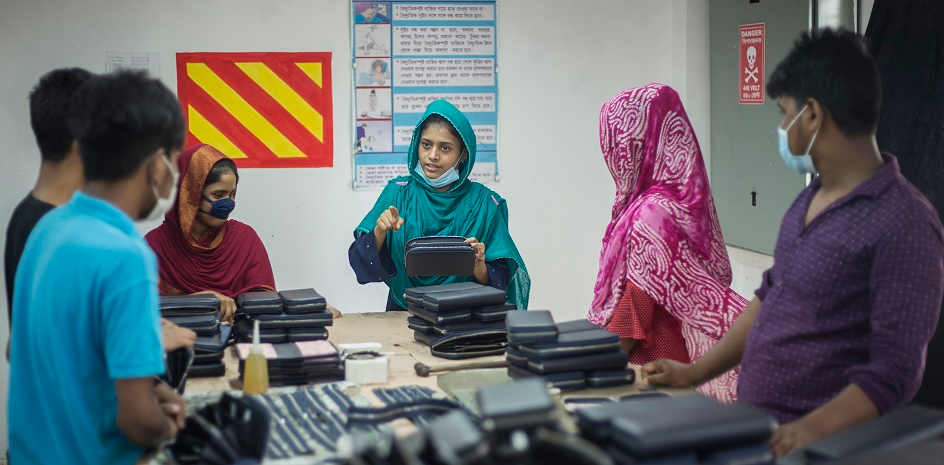
China still leads global handbag output at 60% of production. Yet Western brands are shifting volume fast — Bangladesh’s share as a sourcing base climbed from 86% to 88% in 2025. Cambodia jumped from 75% to 94%.
South Asia isn’t replacing China. It’s becoming the essential second layer of a resilient supply chain.
India: The Premium Leather Powerhouse for Custom Handbag Manufacturing
India holds 13% of global leather production — and that raw material strength shows up in finished handbag quality. The country has over 3,000 organized leather goods manufacturing units. Annual bag exports hit USD 1.4–1.6 billion. This isn’t just a sourcing option. It’s a mature, export-proven industry.
Where Production Happens
India’s handbag manufacturing clusters each serve a distinct buyer profile:
-
Kolkata – the historic leather heartland; strong in structured handbags and small leather goods with European finishing standards
-
Delhi-NCR – fashion-forward private-label production, close to international design offices
-
Mumbai – premium designer handbags, fast sampling turnaround
-
Chennai – fully integrated factories running from tannery to finished bag
-
Kanpur – high-volume production for business and travel bags
What Indian Factories Deliver
FOB pricing for genuine leather handbags starts at USD 18–28 for simple totes. Structured styles with complex hardware run USD 30–60+. MOQ flexibility is a real advantage. Export factories accept 100–300 pcs per style. Boutique-scale runs are possible at 50–100 pcs — just expect a 5–15% unit price surcharge.
Sample development takes 7–21 days. Bulk production runs 45–75 days for 500–3,000 pieces. Most export-ready factories hold ISO 9001, BSCI/Sedex, and REACH-compliant materials. These certifications are critical for EU and US market entry.
Bangladesh: The Cost-Competitive Hub for Wholesale Handbag Production
Bangladesh’s leather handbag exports grew at 18% per year between 2010–2014. That beat the 17% world average. This wasn’t luck. Factories here spent years building export-grade capacity while keeping prices tight and competitive.
The numbers speak for themselves. Basic PU and synthetic handbags from Bangladeshi factories run USD 3–6 FOB at 1,000+ pieces. Cotton totes start as low as USD 0.35–0.80 per piece. Jute shopping bags land around USD 0.70–1.20 FOB at MOQ 1,000–2,000 pcs. These aren’t throwaway prices. They match Chinese inland factories and often beat India and Vietnam at the same specs.
There’s also a trade advantage worth knowing. Under the EU’s Everything But Arms (EBA) scheme, Bangladesh leather handbags enter markets like Italy at 0% tariff. Non-LDC suppliers pay 3–6.5% MFN duties on the same products. For EU-focused brands, that gap cuts your landed cost by a real margin — not a small one.
Material Range and MOQ Flexibility
Bangladesh covers more product categories than most buyers expect:
-
Genuine cow/buffalo leather handbags — sample runs from 10–50 pcs; bulk from 300–1,000+ pcs per style
-
PU fashion handbags — MOQ 500–1,000 pcs, lead time 45–60 days
-
Canvas and cotton totes — 500–1,000 pcs MOQ, GSM range 120–220
-
Jute bags — MOQ from 1,000 pcs, with a strong domestic raw material supply chain behind them
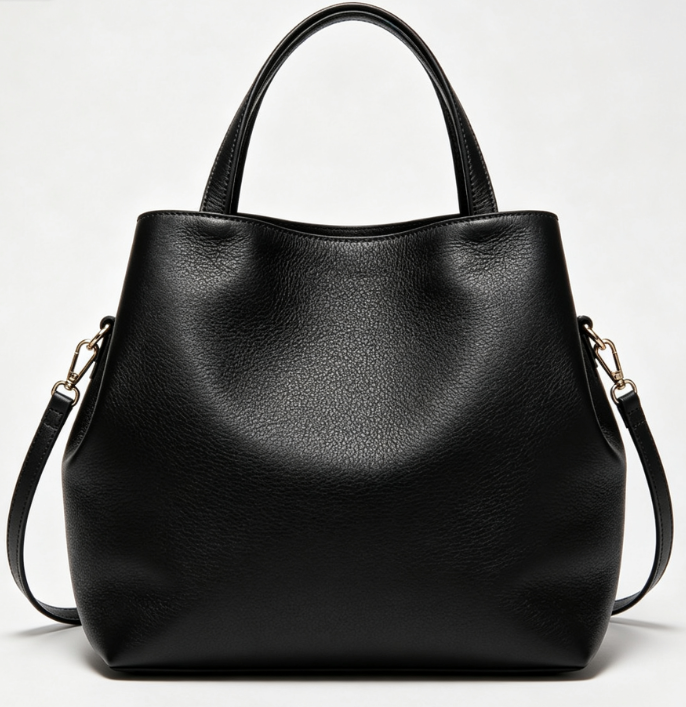
The main production clusters sit in Dhaka, Chittagong, and Narayanganj. Each area has its own factory profile. You’ll find leather specialists, textile-bag exporters, and full OEM branding operations — all within the same sourcing region.
Myanmar: The Emerging Frontier for Handbag OEM Sourcing
Myanmar’s bag manufacturing sector is small — but it’s moving. Trade databases list around 120 Myanmar handbag-related exporters. Active players include Golden Tri Light Myanmar (53 shipments), Evergreen Sports Myanmar (51 shipments), and EMC Manufacturing (13 shipments). All three ship to international buyers on a regular basis. These aren’t massive volumes. But they point to a real, export-active OEM base — not just potential on paper.
The cost case is straightforward. Labor in Myanmar runs 20–40% below coastal China. FOB pricing on basic PU or polyester handbags comes in at USD 3–5/pc. That’s competitive with Cambodia and Vietnam — and noticeably cheaper than Guangzhou OEMs quoting USD 4–8 for similar specs. MOQ benchmarks sit at 300–500 pcs per style, with bulk lead times of 45–75 days.
Myanmar fits best with synthetic fabric bags — polyester totes, casual handbags, school backpacks, promotional bags. High-end leather handbag programs aren’t the right match here. The real strength is mid-to-low price OEM. Luxury craftsmanship is a different story.
The Strongest Myanmar OEM Candidates
-
Orient Myanmar Bag Factory — part of a multi-country group running operations across China, Cambodia, and Myanmar. This is the best fit for buyers who want pattern development in China with lower-cost assembly in Myanmar.
-
Golden Tri Light Myanmar — 53 recorded shipments. This is the most experienced local export operator for bags and handbags.
-
Evergreen Sports Myanmar — focuses on sports and travel bags. You can adapt their setup for casual handbag styles that share similar construction.
-
EMC Manufacturing — smaller output, but better suited for mid-size brand programs that need closer attention on each style.
What to Watch Before You Order
Certification coverage in Myanmar is uneven. Focus on factories with ISO 9001, BSCI, or Sedex SMETA audits. Group-owned plants like Orient are the safer anchor — they tend to hold valid compliance documentation more reliably than standalone local factories. Also, verify REACH-compliant materials upfront for any EU-bound products.
A practical way to start: run a pilot of 500–3,000 pcs on simple synthetic styles. Use Myanmar as a cost-testing layer alongside your existing China or Vietnam suppliers. Keep critical components — zippers, branded hardware, high-grade PU — sourced from outside Myanmar. This avoids local material variability and keeps quality consistent.
Top 10 Custom Handbag Manufacturers in South Asia: Detailed Profiles
Ten manufacturers. Three countries. One ranked list built for buyers who need real supplier data — not recycled directory names.
Each profile below covers what procurement teams need before shortlisting: factory type (OEM/ODM/CMT), material range, MOQ, sample lead time, output per month, compliance status, and primary export markets. Pricing benchmarks are included where available.
#1 — Sunteam Bag (India | Premium OEM/ODM)
Country: India (Delhi-NCR)
Sourcing Model: OEM + ODM
Specialization: Structured leather handbags, private-label fashion bags, small leather goods
Sunteam Bag is a full-service custom handbag manufacturer. They focus on mid-to-premium brand clients in the EU and US. Custom pattern work, material sourcing, and hardware specification are all handled in-house. Sample lead time runs 10–15 days. Bulk production for a 500-piece order completes in 45–60 days.
-
MOQ: 100–200 pcs per style (OEM); 50 pcs for repeat styles
-
Materials: Genuine cow leather, PU, canvas, nylon
-
Certifications: ISO 9001, BSCI
-
Export Markets: US, EU, Japan, Australia
-
Price Range: USD 22–55 FOB (genuine leather totes and structured bags)
Best For: Brand founders and private-label buyers sourcing structured leather handbags with design flexibility and low entry MOQ.
#2 — Apex Leather Bags (Bangladesh | High-Volume OEM)
Country: Bangladesh (Dhaka)
Sourcing Model: OEM
Specialization: Genuine leather handbags, fashion PU bags, canvas totes
Apex runs one of Dhaka’s larger leather bag facilities. The site has over 500 workers and pushes out more than 50,000 units per month across product categories. They’ve held BSCI certification for over a decade and maintain a compliant vendor program for European retail clients.
-
MOQ: 300 pcs (leather); 500 pcs (PU/canvas)
-
Materials: Cow leather, buffalo leather, PU, coated canvas
-
Certifications: BSCI, ISO 9001, REACH-compliant materials
-
Export Markets: Germany, UK, France, Netherlands
-
Price Range: USD 8–18 FOB (leather); USD 4–7 FOB (PU)
Best For: Mid-size retail buyers placing volume orders with strong EU compliance requirements.
#3 — Artisan Leather Works (India | Premium Craft OEM)
Country: India (Kolkata)
Sourcing Model: OEM + CMT
Specialization: Handcrafted structured handbags, small leather goods, artisan-finish styles
Kolkata’s leather craft tradition is real — and Artisan Leather Works is one of its export-facing names. They sit squarely in the premium handcrafted segment: hand-stitched edges, European-style hardware, and structured silhouettes built for boutique retail and department store buyers.
-
MOQ: 50–100 pcs per style
-
Materials: Full-grain and top-grain cow leather, vegetable-tanned leather
-
Certifications: Sedex SMETA, REACH
-
Export Markets: Italy, France, US boutique retail
-
Price Range: USD 35–80 FOB
Best For: Designer labels and boutique brands sourcing handcrafted leather bags with artisan finishing. Not the right fit for high-volume promotional programs.
#4 — Delta Fashion Bags (Bangladesh | Fast-Turn Fashion OEM)
Country: Bangladesh (Narayanganj)
Sourcing Model: OEM
Specialization: PU fashion handbags, synthetic totes, promotional bags
Delta runs a lean operation built for short lead times and competitive FOB pricing on synthetic and PU styles. The factory floor handles rapid style changeovers — a real plus for fashion-forward buyers working on seasonal collections with tight windows.
-
MOQ: 500 pcs per style
-
Materials: PU, polyester, nylon, coated fabric
-
Certifications: ISO 9001, Oeko-Tex (fabric components)
-
Export Markets: US, UK, Southeast Asia
-
Price Range: USD 3.50–7 FOB
Best For: E-commerce brands and fast-fashion buyers who need quick turnaround on PU handbag styles at volume pricing.
#5 — Orient Myanmar Bag Factory (Myanmar | Multi-Country OEM Group)
Country: Myanmar (Yangon)
Sourcing Model: CMT + OEM
Specialization: Synthetic fabric bags, polyester totes, casual handbags
Already referenced in the Myanmar section — Orient deserves a full profile here. They’re part of a multi-country manufacturing group with operations across China, Cambodia, and Myanmar. That structure gives you something most standalone Myanmar factories can’t offer: pattern development in China with lower-cost CMT production in Myanmar. It’s a clean hybrid model for accessing Myanmar’s labor cost advantage without giving up development quality.
-
MOQ: 300–500 pcs per style
-
Materials: Polyester, nylon, PU, canvas
-
Certifications: ISO 9001, BSCI
-
Export Markets: US, EU, Japan
-
Price Range: USD 3–5.50 FOB
Best For: Buyers already sourcing from China who want a cost-testing layer for mid-range synthetic bag styles.
#6 — Kanpur Leather Exports (India | Integrated Volume OEM)
Country: India (Kanpur)
Sourcing Model: OEM
Specialization: Business bags, travel bags, structured totes, men’s leather goods
Kanpur’s tannery infrastructure gives factories here a direct raw material edge. Kanpur Leather Exports runs an integrated operation from tanning through finished product. That setup shortens lead times and cuts material sourcing risk on genuine leather programs.
-
MOQ: 200–500 pcs per style
-
Materials: Genuine cow leather, split leather, PU lining
-
Certifications: ISO 9001, LWG (Leather Working Group)
-
Export Markets: US, EU, Middle East
-
Price Range: USD 18–42 FOB
Best For: Procurement managers sourcing business or travel bags who need end-to-end production with traceable leather sourcing.
#7 — Golden Tri Light Myanmar (Myanmar | Export-Active Local OEM)
Country: Myanmar (Yangon)
Sourcing Model: OEM
Specialization: Casual handbags, fabric bags, promotional styles
53 recorded export shipments makes Golden Tri Light Myanmar’s most export-active local bag manufacturer in available trade data. They don’t have the multi-country group structure of Orient Myanmar. But their export track record puts them ahead of newer local entrants.
-
MOQ: 500 pcs per style
-
Materials: Polyester, nylon, canvas, basic PU
-
Certifications: ISO 9001 (verify current status before ordering)
-
Export Markets: US, Europe, Australia
-
Price Range: USD 3–5 FOB
Best For: Buyers running pilot orders on promotional or casual synthetic bag styles at low entry cost.
#8 — Dhaka Bag Manufacturing Co. (Bangladesh | Jute & Eco Bag Specialist)
Country: Bangladesh (Dhaka)
Sourcing Model: OEM + ODM
Specialization: Jute handbags, canvas totes, eco-friendly shopping bags
Bangladesh’s domestic jute supply chain ranks among the strongest in the world — and this factory puts it to work. Jute and cotton bag styles here carry zero EU tariff under the EBA scheme. That makes the landed cost math work well for European retail buyers.
-
MOQ: 1,000 pcs (jute); 500 pcs (canvas)
-
Materials: Natural jute, organic cotton, recycled canvas
-
Certifications: GOTS (cotton styles), BSCI
-
Export Markets: Germany, Netherlands, Scandinavia, UK
-
Price Range: USD 0.70–2.50 FOB (jute/canvas)
Best For: Sustainable retail brands and eco-focused buyers sourcing natural material bags for European markets.
#9 — Chennai Leather Bags (India | Integrated South India OEM)
Country: India (Chennai)
Sourcing Model: OEM + ODM
Specialization: Genuine leather handbags, ladies’ fashion bags, small leather goods
Chennai factories sit beside one of India’s largest tannery clusters. The raw material advantage is similar to Kanpur, but the focus here leans toward ladies’ fashion and structured handbag styles rather than business or travel. The factory runs its own design team for ODM programs. So you can pick from ready-developed styles without paying for full custom development.
-
MOQ: 100–300 pcs (OEM); 50–100 pcs (ODM ready styles)
-
Materials: Full-grain leather, top-grain leather, PU, suede
-
Certifications: BSCI, Sedex SMETA, REACH
-
Export Markets: EU, US, Japan
-
Price Range: USD 20–50 FOB
Best For: Startup brands and small buyers who need ODM flexibility on leather handbags without high custom development minimums.
#10 — Evergreen Sports Myanmar (Myanmar | Sports & Casual Bag OEM)
Country: Myanmar (Yangon)
Sourcing Model: OEM
Specialization: Sports bags, travel bags, casual handbags with crossover construction
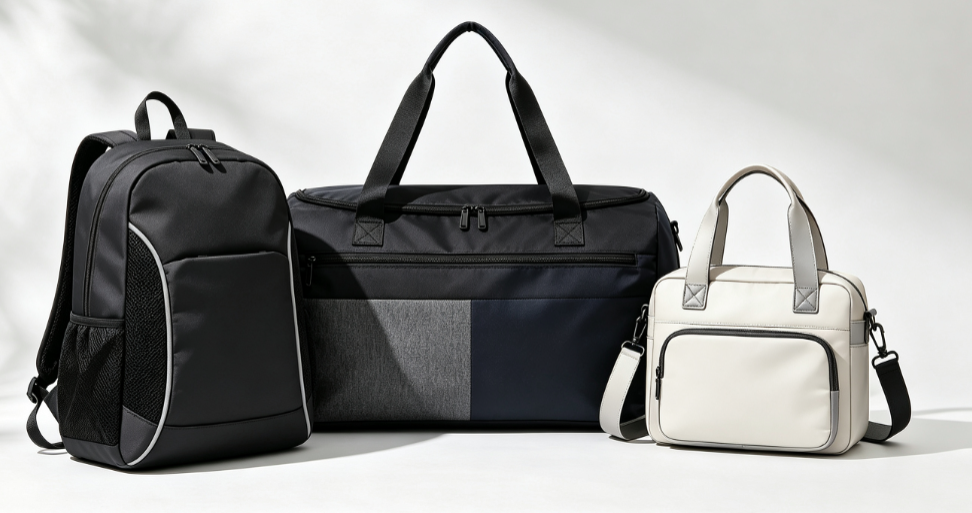
51 recorded export shipments puts Evergreen at Myanmar’s second most active documented bag exporter. Their core strength is sports and travel bag construction. That same factory setup translates well to casual shoulder bags, crossbody styles, and structured nylon handbags.
-
MOQ: 300–500 pcs per style
-
Materials: Nylon, polyester, ripstop fabric, basic PU trim
-
Certifications: ISO 9001
-
Export Markets: US, EU, Australia
-
Price Range: USD 3.50–6 FOB
Best For: Buyers sourcing casual or functional handbag styles — crossbody bags, nylon totes, lightweight shoulder bags — where sports-grade construction adds durability and product value.
Quick Reference: Top 10 at a Glance
|
Rank |
Manufacturer |
Country |
Model |
MOQ |
Price Range (FOB) |
Best For |
|---|---|---|---|---|---|---|
|
1 |
Sunteam Bag |
India |
OEM/ODM |
100 pcs |
$22–55 |
Private label leather, low MOQ |
|
2 |
Apex Leather Bags |
Bangladesh |
OEM |
300 pcs |
$4–18 |
EU compliance, volume leather |
|
3 |
Artisan Leather Works |
India |
OEM/CMT |
50 pcs |
$35–80 |
Premium craft, boutique brands |
|
4 |
Delta Fashion Bags |
Bangladesh |
OEM |
500 pcs |
$3.50–7 |
Fast-turn PU/fashion styles |
|
5 |
Orient Myanmar Bag |
Myanmar |
CMT/OEM |
300 pcs |
$3–5.50 |
China-Myanmar hybrid programs |
|
6 |
Kanpur Leather Exports |
India |
OEM |
200 pcs |
$18–42 |
Business/travel, traceable leather |
|
7 |
Golden Tri Light |
Myanmar |
OEM |
500 pcs |
$3–5 |
Pilot orders, promotional bags |
|
8 |
Dhaka Bag Mfg. Co. |
Bangladesh |
OEM/ODM |
500 pcs |
$0.70–2.50 |
Eco/jute, EU retail |
|
9 |
Chennai Leather Bags |
India |
OEM/ODM |
50 pcs |
$20–50 |
Startup brands, ODM leather |
|
10 |
Evergreen Sports |
Myanmar |
OEM |
300 pcs |
$3.50–6 |
Casual/functional handbags |
Head-to-Head Comparison: India vs Bangladesh vs Myanmar
Three countries. Each one brings a different risk profile, cost structure, and production strength. Here’s what actually drives sourcing decisions across these markets.
|
Factor |
India |
Bangladesh |
Myanmar |
|---|---|---|---|
|
FOB Price (leather bags) |
$18–55 |
$8–18 |
Not recommended |
|
FOB Price (synthetic/PU) |
$12–25 |
$3.50–7 |
$3–5.50 |
|
MOQ Entry Point |
50–100 pcs |
300–500 pcs |
300–500 pcs |
|
U.S. Tariff Rate |
18% |
20% |
40% |
|
Manufacturing Output |
$220B |
$22B |
~$5–10B |
|
Political Stability Index |
~52 |
47 |
19 |
|
Inflation Rate |
~5–6% |
8.48% |
30% |
India wins on: leather quality, design capability, MOQ flexibility, and tariff competitiveness. Manufacturing output runs 10x Bangladesh. That industrial depth is real and hard to match.
Bangladesh wins on: unit cost for synthetic and mid-range leather bags. You also get EU zero-tariff access under EBA, plus a proven high-volume OEM setup built for large orders.
Myanmar wins on: raw labor cost. That’s about where the advantages stop. A 40% U.S. tariff rate paired with a political stability index of just 19 creates serious supply chain exposure. Low prices alone don’t cover that risk.
Bottom line: Myanmar fits as a small pilot layer for simple synthetic styles — not a primary sourcing base. For leather programs, go with India. For volume cost efficiency with EU market access, Bangladesh is the stronger default.
How to Evaluate and Shortlist a South Asia Handbag Manufacturer: 7-Point Checklist
Price gets you in the door. These seven criteria decide whether you walk out with a reliable supplier — or a bad mistake.
Run every South Asia candidate through this checklist before you commit to a sample order.
✅ 1. Factory Capacity & MOQ Reality
Check that the factory’s output matches your forecast. Mid-size South Asia handbag factories run 15,000–80,000 pcs/month. High-volume plants exceed 150,000 pcs/month. Ask for line-wise data — not just a headline number.
MOQ benchmarks to know:
– PU bags: 300–1,000 pcs/style
– Genuine leather: 100–300 pcs
Lead times to expect:
– Sample lead time: 7–21 days (PU), 14–30 days (leather)
– Bulk production after deposit: 30–60 days for 500–5,000 pcs
✅ 2. Compliance & Certifications
The minimum you should accept: ISO 9001 + one social audit (Sedex/SMETA, BSCI, SA8000, or WRAP).
For EU/US-bound products, verify REACH, CPSIA, and CA Prop 65 on PU and textile bags. Leather orders need Cr(VI) < 3 mg/kg and azo dye test records from accredited labs — SGS, Intertek, or Bureau Veritas.
No documentation? No shortlist. Simple as that.
✅ 3. Material Specs
For PU bags, confirm three things: thickness, backing type, and Martindale abrasion score. Fashion bags need >20,000 cycles. Travel and tote bags need >40,000 cycles.
For leather, spell out the grade, thickness (1.2–1.6 mm), and max defect rate per panel batch.
Color consistency should stay at ΔE ≤ 1.0–2.0 across batches. On hardware, demand a 24–48 hour salt-spray test on all plated handles and buckles.
✅ 4. Workmanship KPIs
Here’s what to look for:
-
Stitch density: 3–4 stitches/cm on visible seams
-
Seam allowance variance: ≤1–2 mm from spec
-
Handle attachment: bar-tack or box-stitch reinforcement with at least 3 passes
-
Tote bags rated for >5 kg load need extra tape or a leather patch at the corners
Target a defect rate of AQL 2.5 (major) / 4.0 (minor). Aim for ≤1–2% rejection at final inspection.
✅ 5. Functional & Durability Testing
Test your samples hands-on before you shortlist anyone. Don’t skip this step.
Run each sample through these checks:
-
Strap/handle load test: static load at 1.5–2× rated capacity for 1 hour — zero visible tearing allowed
-
Zippers and closures: must complete >50 open/close cycles without jamming
-
Dimensions: samples must land within ±0.5–1.0 cm of spec; bulk within ±1.5 cm
-
Color fastness to rubbing: grade 4–5 (dry), ≥3–4 (wet)
✅ 6. QC System Discipline
A factory worth shortlisting runs a three-stage inspection:
1. Incoming materials check
2. In-line check at critical operations
3. Final AQL random check
Their QC checklist should cover ≥30–40 specific points. Before bulk production starts, ask for 1–2 pre-production samples per style per color.
Also check this: the factory must keep a signed “golden sample” at the production line — not sitting in a drawer.
✅ 7. Total Landed Cost — Not Just FOB
South Asia PU handbag FOB runs USD 4–12 for mid-range. Genuine leather runs USD 18–45+.
Ask for a full cost breakdown:
– Material: 55–70%
– Labor: 15–25%
– Overhead and margin: 15–20%
Then build your full number: FOB + freight + duty + QC/audit fees. Compare that total against China alternatives — not just the FOB price.
South Asia can offer 5–15% lower labor costs. But logistics gaps can shrink that advantage fast. Model the full number before you decide.
How to Shortlist: 5 Steps
-
Pre-filter — Drop any factory missing minimum capacity, ISO 9001, one social audit, or export compliance documents.
-
Technical screen — Ask for QC checklists (≥30 points), recent lab test reports, and photos or video of the sample room.
-
Sample scoring — Send the same design to 3–5 factories. Score each one on: materials (30%), workmanship (30%), functional tests (20%), communication/documentation (20%).
-
Cost & packaging audit — Compare itemized costing, carton specs (5-ply, ≤15–20 kg), and barcode accuracy (≤0.5% misprint tolerance).
-
Final validation — Narrow down to 2–3 factories. Run a third-party factory audit + pre-shipment inspection before you pick a vendor.
Shortlisting isn’t about finding the cheapest price. You’re looking for the factory where quality, compliance, and communication hold up under real production pressure — not just on a sample.
Common Sourcing Mistakes to Avoid When Buying Custom Handbags from South Asia
Bad sourcing decisions don’t announce themselves. They show up three months later as a container of defective bags.
Here are the mistakes that cost buyers the most — and how to avoid each one.
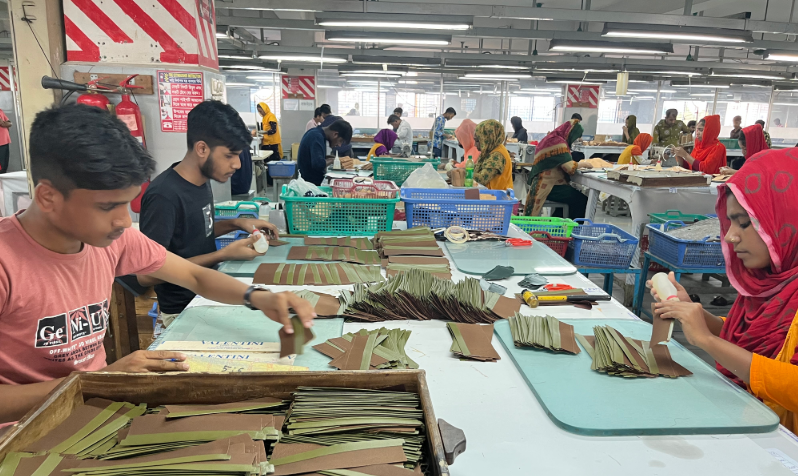
Sourcing blind without a factory audit. Up to 70–80% of small brands source only via Alibaba or email — no factory visit, no third-party audit. Set aside USD 300–600 per audit. Ask for photo and video evidence of cutting, stitching, QA, and packing lines. A mid-size South Asia handbag factory should run 800–1,500 units per day. Check if the legal entity name matches the invoice and certificates. A mismatch means you’re dealing with a middleman.
Choosing the cheapest quote over specs. Look at this comparison: Supplier A offers PU bags at USD 8.50/pc — 1.2 mm thickness, YKK zippers, edge painting. Supplier B quotes USD 5.90/pc with 0.8 mm PVC, generic zippers, no edge paint. Supplier B’s defect rate runs 10–15% versus Supplier A’s 2–3%. Every RFQ needs a locked spec sheet. That means body material grade, Martindale abrasion (>20,000 cycles), stitching density (6–8 stitches/cm on stress areas), hardware pull strength (>150 N), and zipper brand. Skip the spec sheet and factories quote what they already make — not what you ordered.
Skipping a golden sample and quality agreement. A purchase order alone won’t protect you. Factories make quiet swaps: PU drops from 1.2 mm to 0.9 mm, edge paint goes from 2 coats to 1, stitch density falls from 8 to 5 per cm. Sign a Quality Agreement. Keep one sealed golden sample at your HQ and one at the factory. Use both during inspection — not just the one the factory holds.
Misreading MOQ on custom elements. Custom metal logos need 1,000–3,000 pcs MOQ from hardware vendors alone. Dye-lot minimums for leather and PU often run 100–200 meters per color. Order below those thresholds and you get mixed materials, color variance above ΔE >1.5, and QC rejects. Confirm style, color, material, and hardware MOQs one by one — in writing — before sampling starts.
Over-customizing the first order. First-time brands pile on requests all at once: new patterns, custom hardware, lining prints, and branded packaging in a single order. That kind of heavy customization pushes sampling from 10–15 days out to 30–45 days. Custom metal logo tooling runs USD 150–300 per design. Custom plastic buckle moulds cost USD 500–1,200. On your first South Asia order, keep customization tight — stick to one or two core elements like shape and logo. Use standard zippers and buckles everywhere else.
Ignoring total landed cost. FOB is the starting number, not the real one. HS 4202 handbag imports carry 10–15% duty in EU and US markets. Ocean freight from South Asia runs USD 1,500–2,500 per 20-foot container — that covers around 8,000–12,000 pcs. Air freight adds USD 3–8 per unit. Build in a 2–5% defect allowance. Put every line item on your cost sheet before you compare South Asia pricing against any other option.
Misreading “yes” as confirmation. South Asian factories almost never say they can’t do something — even when they can’t. A factory that agrees to complex gusset pockets or integrated metal frames, but lacks the machines or technicians to do the work, will hand you two to three weeks of sampling delays and structural defects. Ask direct, number-based questions instead: “Can you hold strap length tolerance within ±3 mm? What is your rejection rate on similar styles?” Also ask for photos or videos showing at least 500–1,000 pcs of comparable construction already finished.
Single-supplier dependence. Political disruption, power cuts, or raw material shortages in one South Asia country can wipe out your stock for one to three months. Keep at least two qualified suppliers per key material category — PU and leather as separate categories. Start with a 70/30 order split. Shift the balance based on OTIF performance. A reliable factory should hit >95% OTIF on repeat purchase orders.