Why the Right Material Makes or Breaks Your Evening Look
Material isn’t just texture — it’s light, movement, and perception all at once.
Under warm ballroom lighting (2700–3000K), a polished metallic clutch reflects up to 60–70% of incoming light. That creates the unmistakable “expensive” glow. A matte lambskin bag works the opposite way. It pulls in the same light and spreads it across the surface in a low-key, elegant finish. Neither choice is wrong. They just send different signals about your look.
Photos are where material choices get exposed. Mirror-finish bags under direct flash can lose 40–70% of their visible surface to pure highlight. That wipes out texture and shape in one shot. At weddings and formal dinners — where someone always has a camera — this single detail decides whether your clutch stands out or gets blown out.
Wrong material choices go beyond how something looks in person:
-
Velvet and suede absorb light — in a large venue, a bag under 18cm in dark fabric can disappear from view
-
Satin and silk break down outdoors — wind and friction cause surface wear within a single evening
-
High-gloss PU or synthetic coatings read as cheap under flash, and that undercuts even a high-end gown
Your material choice sets the formality tone before anyone clocks the bag’s shape or color. Getting it right isn’t about being fussy — it’s about being precise.
Quick Decision Matrix: Match Your Material to Your Occasion
Occasion formality is your most reliable filter for narrowing down material choice. Think of it this way — formality level sets the framework first. Color, price, and personal preference come after.
|
Occasion |
Dress Code |
Best Clutch Material |
|---|---|---|
|
Wedding / State Banquet |
White Tie |
Satin, silk evening clutch |
|
Black Tie Gala / Red Carpet |
Black Tie |
Beaded clutch bag, metallic clutch bag |
|
Cocktail Party / Casual Dinner |
Smart Casual |
Sequin clutch bag, velvet evening bag |
|
Business Social / Day-to-Night |
Business Casual |
Suede clutch bag, leather clutch purse |
Three filtering rules, applied in order:
-
Formality first — the more formal the event, the subtler the sheen. A bridal clutch should feel polished and refined. It should stand out for its quality, not its sparkle.
-
Match your outfit’s texture — got a matte gown? Go with a polished bag. Wearing a glossy dress? Pick a velvet or embroidered clutch to balance the look.
-
Practicality comes last — but don’t ignore it. Dancing, outdoor venues, or heavy photography push you toward tougher, camera-friendly materials like leather or structured metallic. These hold up and photograph well.
The fastest decision shortcut: formal → satin or silk; relaxed → suede, velvet, or textured fabric.
Satin & Silk: The Classic Choice for Formal Elegance
Satin and silk dominate formal dress codes for a reason — both materials perform the way evening lighting demands.
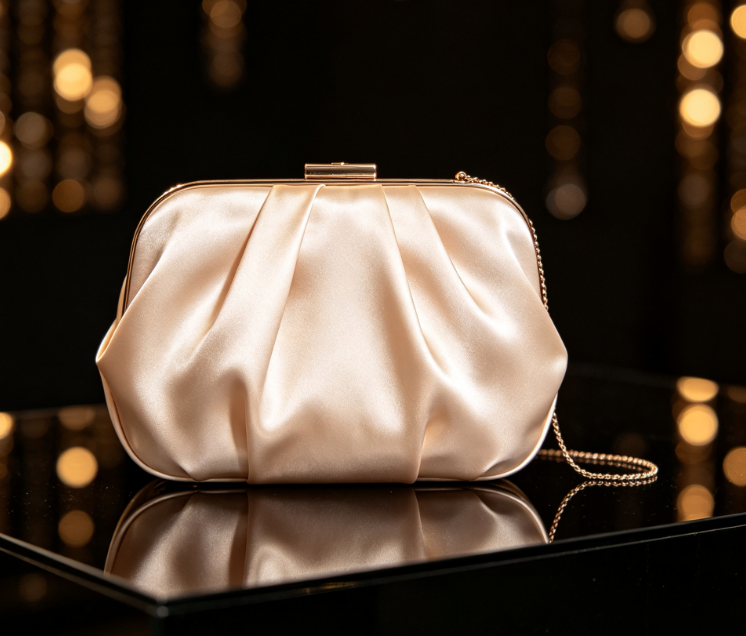
The key difference is how each one handles light. Satin (silk-based or high-quality polyester) produces a sharp, mirror-like reflection with defined highlight bands. Under hotel spotlights or stage lighting, those highlights trace the contours of a dress — shoulder lines, waist curves, a fishtail hem. The result is a structured, camera-ready silhouette. Silk charmeuse works differently. It diffuses light rather than bouncing it. Under candlelight or warm ambient lighting, it looks creamy and refined. It’s the go-to material for a look that’s meant to be understated.
That difference matters for occasion matching:
-
Satin → black tie galas, red carpet events, formal dinners where photography is expected
-
Silk evening clutch → indoor weddings, candlelit receptions, “quiet luxury” aesthetics where high gloss would feel excessive
Colour Choices That Work Under Event Lighting
Not all colours hold up the same way under ballroom or reception lighting. A few practical rules:
-
Champagne and nude tones work best with a fabric lightness value (L*) between 65–80. Too dark and the colour looks muddy. Too light and flash photography blows it out. Champagne satin is the safest bridal clutch bag material choice for this reason — it coordinates without competing with the bride.
-
Deep jewel tones — sapphire, burgundy, emerald, deep purple — create strong highlight-to-shadow contrast on satin. They photograph with definition and signal the right formality level for black tie events.
-
Avoid pure white or ivory as a wedding guest. Under the same lighting, those colours pull focus away from the bride.
Durability: What Goes Wrong
The main vulnerabilities are snags and water marks. Both are predictable. Both are manageable.
Silk snags against metal bag chains, rough chair backs, or decorative ironwork at outdoor venues. Polyester satin holds up better against this. That’s why most bridesmaid and repeat-wear formal collections use high-grade polyester over pure silk.
Water is the other issue. A small splash on silk dries with a visible ring mark. The fix: wet a larger area and let it air-dry flat. Synthetic satin handles minor liquid contact better. Blot with a clean cloth right away and most splashes disappear.
For a satin clutch bag or silk evening clutch used more than five times a year, silk will show gloss fade and minor surface wear within one to two years without professional care. Polyester satin holds its structure and colour stability much longer under the same conditions.
Care in practice:
– Silk: dry clean only, wide wooden hanger, breathable garment bag, store away from light and humidity
– Polyester satin: gentle cold wash or dry clean, low-heat iron from the reverse side with a pressing cloth
Choosing Satin or Silk Over Everything Else
Both materials appear on nearly every formal dress code list — alongside velvet and chiffon — as acceptable for black tie and white tie occasions. Cotton, denim, and knitwear are the ones being ruled out. Satin and silk are the standard.
The current “quiet luxury” direction makes this even clearer. High-quality satin in a simple cut with minimal embellishment now reads as more sophisticated than heavy decoration or all-over sequins at upscale events.
Picking a bridal clutch bag material? A structured satin or silk option in champagne, ivory, or a coordinating jewel tone is the safe default. It’s refined enough for the occasion, photogenic under any lighting condition, and won’t overshadow the overall look.
Velvet: Rich Texture for Autumn/Winter Events
Velvet has a seasonal personality — and it belongs to autumn and winter.
That’s not a style opinion. Real ordering data backs it up. In the North American and European wedding and formal event market, velvet fabric accounts for 35–45% of premium venue orders between September and February. Drop to summer months, and that number falls to 10–15%. The fabric performs better in cooler temperatures and dimmer lighting. That’s just how the material works.
Here’s why it suits autumn/winter events so well:
-
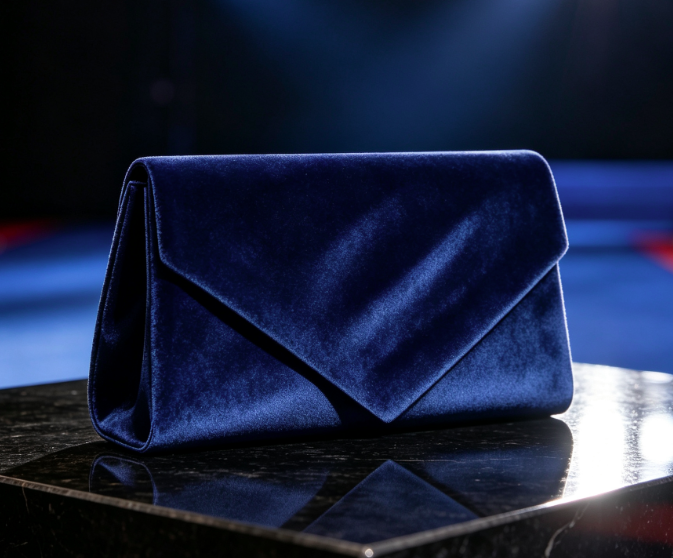
It handles low-light venues well. Autumn/winter formal dinners run at 200–300 lux with focused accent lighting. Velvet’s matte pile surface softens strong reflections into a gentle, diffused sheen. No harsh glare in photos. No blown-out highlights.
-
It balances your overall look. A velvet evening bag acts as a visual anchor. It tones down the brightness of satin gowns or metallic accessories — without competing with them. Each element holds its own.
The Colours That Work Best
For a velvet evening bag, deep jewel tones are the top performers this season: sapphire blue, emerald green, and burgundy red. These colours carry high saturation and low brightness. Under warm event lighting, they look rich and deliberate — not flat or muddy.
A useful colour-balancing rule: pair a jewel-toned velvet clutch with one or two neutral matte pieces (cream, deep grey, caramel) in your outfit. The neutral tones steady the look. Add a small touch of gold — earrings or a bracelet clasp — and you get clean contrast without overcrowding the overall style.
One Practical Caveat
Velvet attracts lint. Dark jewel tones make every fleck of dust visible up close. Before any event, run a wide lint roller along the grain direction — never against it. Going against the grain disrupts the pile. A quick pass at the mid-point of a long evening keeps the surface looking clean.
For a bridal clutch bag material at a winter wedding, deep emerald or burgundy velvet in a structured frame style is a strong choice. It’s refined enough for the occasion and photographs well in candlelit reception settings.
Leather & Vegan Leather: The Versatile Workhorse
Leather is the one evening clutch material that handles a business dinner and a cocktail party with equal ease. That crossover ability is what makes it worth knowing well.
The most important variable with a leather clutch purse isn’t color or brand. It’s surface finish.
Three finishes, three formality levels:
-
Matte leather — minimal reflection, soft diffused surface. Formality score: 3–6/10. Best for business casual and low-key social settings
-
High-polish leather — visible gloss, structured highlight. Formality score: 7–9/10. Reads well at formal dinners and corporate events
-
Patent leather — mirror-level shine from a multi-layer lacquer coating. Formality score: 8–10/10. The right call for cocktail parties, galas, and evening dress codes
There’s a simple rule borrowed from footwear: the higher the gloss, the more formal the read. The same logic applies to clutch bags.
Vegan Leather: Closing the Gap
High-quality vegan leather has come a long way. PU-coated constructions with water-based matte topcoats now perform close to mid-range genuine leather in durability tests — abrasion resistance, flex cycling, water resistance. The gap in everyday use is real, but smaller than most buyers expect.
Where vegan leather has a clear edge: color and finish range. At the same price point, you’ll find more surface options — metallic effects, structured matte, high-gloss finishes — than genuine leather at equivalent cost.
Price reference:
– Mid-range genuine leather small clutch: US$150–400
– Quality vegan leather options: US$80–250
The ROI Case for Leather
One well-chosen leather clutch can cover cocktail parties, business dinners, and date nights — 22–46 uses per year across all three settings. Take a US$300 polished leather clutch used 15 times a year over three years. The per-use cost drops to US$6.70. That’s hard to argue with.
For a bridal clutch bag material, patent leather in ivory or champagne is an underrated pick. It photographs with crisp clarity, handles minor liquid contact better than satin, and holds its shape through a full reception.
Beads, Crystals & Sequins: Statement Sparkle for Special Occasions
Not all sparkle works the same way. That difference matters more than most people think — especially when picking a beaded clutch bag or sequin clutch bag for a specific event.
Three materials, three types of shine:
-
Rhinestones and crystals refract light through cut facets. This creates sharp, concentrated flash points. Under spotlights or camera flash, they deliver the strongest single-point brilliance — the “far away, bright” effect you see on red carpets.
-
Sequins reflect light like tiny mirrors. They shine best in motion — turning, walking, dancing. You get a continuous surface shimmer rather than concentrated bursts.
-
Beaded clutch bags (shimmer crystal beads in particular) scatter light with a softer, iridescent quality. Up close, they look more refined. They work great for video or near-camera settings without pulling focus from your face.
Match Your Sparkle to the Moment
-
Photography-focused events (red carpet, awards dinners): Go with rhinestone or crystal. They create stronger highlight separation under flash.
-
Evening parties with movement: Sequin is the right call. It holds a shimmer throughout the night.
-
Bridal or formal close-up settings: Shimmer crystal beads keep things polished without competing with your face.
Weight and Wear — A Practical Reality Check
Glass rhinestones are heavier. Sequins are the lightest option. For a bridal clutch bag used across a full reception — toasts, photos, dancing — keep the structure lightweight even with high visual impact. Avoid placing heavy glass pieces near the clasp or handle. That’s where the most strain builds up.
Snagging risk is the other practical concern. Raised crystals and high-profile beads can catch delicate fabrics like chiffon or silk charmeuse. Your gown is lightweight or embellished? Choose flat-set sequins or low-profile crystal detailing on a rigid frame. Less surface contact means lower risk.
Let the Clutch Do the Talking
A sequin clutch bag or a bag with heavy beading works best as the focal point — but the outfit has to support it. Plain gowns in black, white, champagne, or deep red make the ideal backdrop. The simpler the dress, the more deliberate the sparkle looks.
Skip high-flash bags if the gown is already covered in embellishment, the fabric is fragile, or you want attention on your face rather than the accessories.
Metallic Fabric, Metal Minaudières & Acrylic: Structure Takes Center Stage
A metal minaudière isn’t a bag. It’s wearable sculpture.
Van Cleef & Arpels registered the term “minaudière” in 1930. The definition hasn’t shifted much since: a small, hard-sided, rectangular evening case built to carry cosmetics — not a full day’s worth of essentials. Sotheby’s puts it as decorative first, functional second. That framing is spot on.
Three materials, three visual personalities:
-
Metallic fabric — maximum reflectivity, sharp edges, the strongest “focal point” effect under event lighting. Vogue calls it the go-to choice for adding a futuristic edge to party looks.
-
Acrylic — transparent or color-blocked, lighter-looking than metal, and still rigid throughout. Great for structured graphic shapes.
-
Resin — sculptural, layered color, craft-object quality. It carries less than soft bags, but nothing beats it for visual character.
What Fits Inside (and What Doesn’t)
The capacity is simple: lipstick, a card, a small mirror, one key. That’s your realistic load. Hard-shell construction allows zero compression — something either fits or it doesn’t.
Shoulder strap comfort is limited too. Most minaudières come with an optional strap, but the design favors hand-carrying, not extended movement.
Choose This or Skip It
|
Right fit |
Wrong fit |
|---|---|
|
Red carpet, awards ceremonies, wedding receptions |
All-night dancing, outdoor venues |
|
Photography-heavy events |
Frequent bag access needed |
|
Short, low-movement occasions |
Long wallets, full makeup kits |
Camera presence and visual impact are your top priorities? A metallic clutch bag or acrylic frame clutch beats every soft material. Need to carry more than five items? Pick something else.
Lace & Embroidery: Romantic Detail for Bridal & Vintage Styles
No other clutch material carries what lace and embroidery do — heritage, romance, and a clear reference to another era.
For bridal clutch bag material choices, this pairing hits differently. Lace feels ceremonial without going overboard. Embroidery adds visual depth without adding bulk. Together, they lift vintage silhouettes — A-line gowns, mermaid cuts, princess ballgowns — in ways that metallic or sequin fabrics just can’t match.
Lace Types and What They Signal
Not all lace carries the same tone:
-
Chantilly lace — delicate, sheer, with fine floral detail. The go-to for soft, romantic bridal looks
-
Alençon lace — known as the “Queen of Lace.” Bold opaque floral motifs sit on sheer mesh. It brings strong vintage presence
-
Beaded lace — ivory tulle base with pearl or sequin embellishment. It adds dimension while staying firmly in the romantic zone
For an embroidered clutch bag, floral motifs work better than geometric ones in bridal and vintage settings. Florals are the signature pattern in classic bridal design. Geometric reads as modern, not timeless.
The One Rule That Holds Everything Together
Pick one or two standout details — then stop there. Lace or embroidery takes the lead. Everything else keeps it simple. Heavy embellishment? Keep the silhouette clean. An ornate silhouette? Go lighter on the embroidery.
Storage note: Store lace and embroidered fabrics flat, or hang them with tissue paper in between the layers. Tight folding warps the motifs and snags the surface — this is a real risk with beaded or embroidered lace, where raised elements catch and pull without much effort.
Step-by-Step: How to Choose the Right Material for Your Evening Clutch Bag
Every material in this guide has a right context — and a wrong one. These five steps give you a clear decision process that works for any occasion, any budget, and any outfit.
Step 1: Read the Dress Code First
Your invitation tells you more than you think. The wording sets the formality level for every accessory choice — including your clutch material.
-
Black tie / floor-length gown → Silk, satin, beaded fabric, or delicate embellished styles. Skip reptile skins (crocodile, python, lizard) — they come across as aggressive, not elegant, at formal dinners.
-
Cocktail / knee-length → Silk, sequin, beaded, or fine leather. Still dressy, but with more room to play.
-
Smart casual / suiting → Clean leather or low-key metallic. Drop heavy embellishment — it looks out of place.
The rule is simple: the more formal the code, the softer and more refined the material should feel.
Step 2: Match the Material to Your Gown’s Texture
Formality is settled. Now look at your dress.
-
High-sheen gown (satin, velvet, metallic fabric) → Pick a matte or medium-gloss clutch. Too much shine from both directions creates visual overload.
-
Embellished gown (sequins, beading all over) → Go plain. A solid matte fabric or fine-grain leather lets the dress stay the focal point.
-
Matte or minimal gown → This is your chance to let the clutch do some work. A quilted leather, structured satin, or metallic weave bag adds visual interest where the outfit leaves room for it.
Step 3: Run a Capacity Check Before You Buy
“Evening bag” is a broad term. Some hold a phone and four cards. Others fit little more than a lipstick.
Measure the interior dimensions first. Then test your actual carry list against them:
-
Phone (~15 × 7 × 0.8 cm) + card holder (~10 × 7 × 1 cm) + lipstick + tissues + one key = your realistic minimum
-
Interior length under 16 cm means a large-screen phone will sit at an angle — or stop the zip from closing
-
Interior depth under 4 cm means phone + compact + card holder will cause visible bulging. That strains the material and ruins the formal look.
Formality also shrinks expected capacity. At the most formal events — black tie, white tie — the clutch can be palm-sized. At that level, consider moving your phone to a partner’s pocket or jacket. You’ll open up a wider range of smaller, more refined material choices.
Step 4: Test the Weight Before the Event
Material choice has a direct impact on how comfortable the bag feels after two to three hours. A quick weight check saves you a painful evening.
-
Total loaded weight under 700 g is the practical limit for a full evening of hand-carrying or shoulder wear
-
General rule: genuine leather > vegan leather > fabric in base weight. The more structured the bag, the heavier the internal framing
-
At the store or at home, use a kitchen scale. Weigh the empty bag. Then weigh it again with your items loaded.
Empty bag already over 500 g? Look for something else. Fabric-based styles — satin, embroidered, sequin — have a clear weight advantage here.
Chain and strap check:
– Strap width under 0.5 cm tends to cut into skin during longer events
– Check metal clasps and chain edges for sharpness — they can snag silk and chiffon gowns on contact
– Wear the strap for five minutes in-store. Shoulder pressure or skin marking means you need a wider strap or a lighter material.
Step 5: Factor in Long-Term Use Before Setting Your Budget
One-time occasion or regular rotation? Your answer changes the right material choice.
|
Use Case |
Best Material Options |
Why |
|---|---|---|
|
One-off event (wedding, prom) |
Satin, sequin, beaded fabric |
Maximum visual impact per use; lower durability is acceptable |
|
4–6+ uses per year |
Full-grain leather, Epsom-grain leather |
High scratch resistance, stable structure, low maintenance |
|
Moderate use, mixed occasions |
Vegan leather, structured metallic fabric |
Good durability range, wider finish options at mid-price |
Satin and beaded fabrics are high-risk for frequent use. They snag, stain, and lose surface quality faster than leather under repeated wear. Building a go-to evening bag for the whole season? Leather in a polished or patent finish gives you better cost-per-use, every time.
A US$300 leather clutch used 15 times over three years costs US$6.70 per use. A US$120 satin bag that develops surface wear after five outings costs more than double that per use — and it shows.
Caring for Your Evening Clutch Bag: Material-Specific Maintenance Guide
The wrong cleaning method causes more damage than the original stain. Think about that before you reach for a wet cloth.
Each material in this guide has a different breaking point. What fixes a leather clutch purse can ruin a satin one. Here’s what to do — and what to avoid — for each material type.
Satin & Silk Evening Clutch
Water marks are the main enemy. The fix is counterintuitive: don’t rub, don’t soak — press and dry fast.
For light surface dirt:
– Use a white damp cotton cloth. The moisture level should leave a faint sheen on the cloth surface — no drips (≤10% of the cloth’s own weight in water)
– Press for under 2 seconds per spot. Move positions each time. Never drag back and forth — that’s what causes rings
For foundation or drink stains:
1. Press a dry cloth or tissue hard on the stain for at least 30 seconds until no more liquid transfers
2. Dip a cotton swab in diluted neutral detergent (1 part detergent : 20 parts water). Work within a diameter under 1.5 cm to keep the cleaning zone tight
3. Air-dry in shade for 30–60 minutes. Skip the hairdryer — heat leaves white residue or stiffening
Prevention: Hold a fabric-specific waterproof spray 20–30 cm from the surface. Apply one even pass until you see a faint sheen — no visible wet patches. Wait at least 24 hours before use. That’s the standard interval most luxury retailers follow.
Velvet Evening Bag
Velvet pile is directional. Clean against it and the surface knots and flattens — for good.
Daily dust removal:
– Use an ultra-soft clothing brush or a new soft-bristle paintbrush (bristle hardness under 60 — the standard used in footwear care)
– Brush in one direction only, following the nap. Each stroke: 5–8 cm. No back-and-forth sawing motion
For small stains:
– Press dry — no soaking, no submerging
– Wet cleaning is sometimes unavoidable. Keep the cloth at ≤10% water weight. Touch the stain area only, follow the nap, and stay under 2 seconds per contact
Minor scuffs or pressure marks: Use a small suede brush or soft toothbrush. Stroke along the nap 5–10 times — firm enough to lift the pile, not enough to reach the base fabric.
Protective spray: Use a suede and nap-specific protector spray. Hold it 20–25 cm away. Apply one even layer across the full surface. Wait at least 2 hours before use.
Leather Clutch Purse
Leather is the most forgiving material here — but it still needs a consistent routine.
Baseline wipe-down: Every 3–7 days of active use, wipe the full surface with a dry microfibre cloth. Give the handle area one to two extra passes. This stops sweat and oil buildup before it sets in.
Standard cleaning steps:
1. Patch test first. Put a pea-sized amount of leather cleaner (~0.3–0.5 ml) on a hidden spot — the inside lining or back panel. Wait 15–20 minutes. No colour shift? Go ahead.
2. Apply the cleaner to a soft cloth — not straight onto the bag
3. Work in small circles (~3–4 cm diameter). Keep contact per spot under 5 seconds
4. Air-dry for 15–30 minutes, then buff with a clean dry cloth
Conditioning schedule: In normal urban conditions, apply leather conditioner every 3–6 months. Indoor humidity below 40% — dry climates or heated rooms in winter — means you shorten that to every 3 months. For a small evening clutch (20–25 cm wide), 1–2 ml per application is enough. Too much conditioner attracts dust.
Seasonal protection:
– Waterproof spray before first use: hold 20–30 cm away, one even coat, dry for ≥24 hours
– During rainy season: store 1–2 silica gel packets (2–5 g each) inside the bag. Swap them out each month
– After winter outings: wipe off snow or road salt right away and air-dry at room temperature (18–25°C)
Beaded Clutch Bag & Crystal Embellishments
Thread integrity is the priority. A broken thread loses multiple beads — and home repair is rarely an option.
Dusting:
– Use a soft-bristle makeup brush or fine paintbrush. Keep the stroke pressure light — bristles should flex no more than one-third of their length
– Work in 3–5 cm passes across dense bead areas. Use a magnifying glass if needed to spot any loose thread ends
Cleaning crystal or glass beads:
– Press each bead one at a time with a dry microfibre cloth. No sideways dragging
– Wet cleaning needed? Dampen the cloth just enough — no drip — using a small amount of glass cleaner or neutral detergent. Wipe bead surfaces only. Keep the cloth away from the thread base
Three rules that prevent thread damage:
– Never grip the bead strands to carry or move the bag. Hold the main body only
– Check for loose beads before each use. One wobbly bead is easier — and cheaper — to fix than a full repair
– Store away from metal hardware — chains, key rings. A soft cloth between them stops friction cuts on the thread
Storage: What You Do Between Events Matters More Than You Think
Poor storage breaks down material quality faster than actual use. A few simple habits keep all clutch types in shape longer.
Dust bags:
– Use a soft, breathable cotton dust bag — no plastic, no sealed containers. Airtight storage traps moisture. This is a real risk inside leather and velvet evening bags
– No original bag? A clean cotton pillowcase works. Ideal size: interior dimensions 2–3 cm larger than the clutch on each side
Shape maintenance:
– Stuff with acid-free tissue paper or clean soft fabric — not newspaper. Newsprint ink transfers onto pale linings and light-coloured leather. Fill to a soft round shape, not drum-tight
– Small to mid-sized evening clutches usually need 2–4 tissue balls, each around 5–8 cm in diameter
Positioning and environment:
– Store upright or flat — never stacked under weight
– Chain straps: tuck them all the way inside the bag before storage, or wrap in soft cloth. Loose chains leave dents in leather and scratch satin
– Target storage conditions: 15–25°C, 40–60% relative humidity, away from direct sunlight and heating or air conditioning vents
Immediate Response: When a Spill Happens at the Event
You have 30 seconds before a liquid stain sets. Use them.
For any material — satin, velvet, leather, beaded — the first move is the same:
Press, don’t wipe. Use a dry tissue or cloth. Repeat 10–15 firm presses until the wet mark is close to gone.
Back home, run the material-specific cleaning steps above on any leftover residue. The spot-press at the event buys you time. The proper clean-up finishes the job.
FAQ: Your Most Common Questions About Evening Clutch Bag Materials, Answered
Real decisions come down to specific questions. Here are the ones that come up most.
Q: Which material lasts the longest?
Metal frames (brass, aluminium, stainless steel) top the durability chart. You get a structural lifespan of 5–10+ years with intact plating. Full-grain leather follows at 3–7 years under normal evening use. Hard acrylic holds up close to metal shells, but it picks up fine surface scratches over time. Satin starts showing edge wear within 1–2 years. Velvet looks its best for around 20–40 wears. After that, the pile softens and the texture loses its sharpness.
Q: What’s the best material for a wedding guest?
It depends on timing.
-
Evening weddings: Go for satin, velvet, metallic frames, or crystal-embellished clutches.
-
Daytime or church ceremonies: Smooth leather, low-sheen satin, or fine suede in neutral tones all work well.
-
Beach or outdoor weddings: Raffia or woven materials fit here. Even so, they read as casual — not formal.
Q: Which materials work across multiple occasions?
High-quality polished leather in black, nude, or navy is your best all-rounder. Pair it with minimal hardware and it covers cocktail parties, business dinners, semi-formal weddings, and theatre evenings. One bag, 10+ uses.
Crystal minaudières and sculptural metal clutches look spectacular. But they’re narrow in use — black-tie evenings are really the place for them.
Q: What are the typical price ranges?
|
Material |
Typical Price Range |
|---|---|
|
Basic genuine leather |
US$50–200 |
|
Satin with moderate embellishment |
US$30–150 |
|
Full crystal / Swarovski-embellished |
US$300–600+ |
|
Metal frame / brass sculptural |
US$200–800 |
|
Raffia / woven casual |
US$30–100 |
Q: Three common material myths — corrected
-
“More sparkle means more formal.” Not accurate. Plenty of low-cost bags use sequins and faux crystals to fake high formality. True quality shows in the metallic structure, how embellishments are set, and the base fabric — not shine alone.
-
“Leather doesn’t belong at formal events.” Wrong. High-quality calfskin or patent leather fits formal dinners and evening weddings. It works best in darker tones with clean lines.
-
“Raffia works for any wedding.” No — stick to outdoor daytime or beach settings. It’s a poor fit for formal evening receptions.
How to Find the Best Evening Clutch Bag by Material (Buying Recommendations Framework)
Knowing your materials is half the job. The other half is knowing what to check once you’re holding one in your hands.
Use this framework to evaluate any evening clutch before you buy. It works for both online shopping and in-store visits.
Quick-Check by Material
Satin & Silk
– The surface should show an even, mirror-like sheen. No streaks or pilling.
– Pinch the fabric and release it. Wrinkles should flatten within 1–2 minutes.
– Magnetic closures should hold ≥0.5 kg without popping open from light movement.
Velvet
– Brush the pile with your hand. The color shift should look uniform, with no bald patches.
– Check the edges for clean binding. Exposed raw edges mean the bag will fray within months.
Leather & Vegan Leather
– Look for leather thickness between 1.2–1.6 mm. Thinner leather collapses under its own weight. Thicker leather looks bulky and stiff.
– Stand the empty bag upright for 30 seconds. A well-made bag holds its shape. No sagging.
Beaded & Crystal Styles
– Sweep your fingertip across the surface. Loose rattling means the thread work is weak.
– Good-quality settings use claw or bezel mounts. Adhesive-only attachment won’t last.
Price Tier Reality Check
|
Budget |
What You Get |
|---|---|
|
US$30–80 |
PU leather, synthetic satin, basic sequin — fine for one-off events |
|
US$80–300 |
Real silk, quality velvet, genuine leather, denser bead setting |
|
US$300–1,500+ |
Full-grain leather, hand-stitched beading, Swarovski crystals, minaudière frames — built to last 5–10 years |
One practical note: at the mid-range and above, look for a detachable chain strap. It turns a single clutch into a crossbody or shoulder bag. That one feature expands your use from a single occasion to many different ones.