A wallet that’s too thick is a design failure. Cram six cards, cash, and a few receipts into a traditional bifold, and you’ll feel every millimeter of that bulk pressing against your leg by lunchtime. Yet the best slim wallets hold just as much while sitting nearly flat in your pocket. That’s the result of deliberate engineering. Designers skive the leather down at the seams, replace bulky reinforcements with carbon fiber or composite layers, angle card slots to prevent stacking bulge, and integrate RFID-blocking material without adding thickness. Manufacturers engineer wallet thickness reduction from the inside out, using specific materials, stitching techniques, and precision tolerances that separate an ultra-slim EDC wallet from one that only looks thin in product photos.
Why Slim Wallets Get Thick: The Root Causes
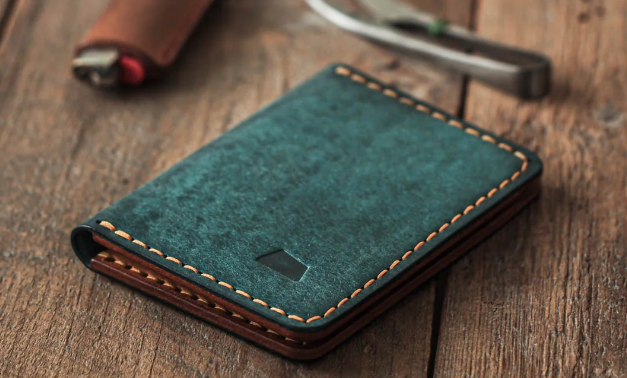
Numbers tell the real story here. An empty slim wallet measures 3–5 mm, but load it with everyday items and that figure jumps to 7–10 mm or more. Traditional leather bifolds fare far worse, ballooning to 15–25 mm once loaded. Five factors drive this gap.
Content Volume Is the Biggest Variable
Cards alone reshape a wallet’s profile. Six cards add 4.5 mm of stack height—about 0.75 mm per card. Add cash and receipts, and a slim bifold can swell from a lean 10–15 mm into bulky 20–30 mm territory. Front-pocket comfort breaks down past 13 mm loaded, which is why under 8 mm is the benchmark serious EDC designs chase.
Material Choice Sets the Baseline
Material selection matters as much as design. Tyvek constructions run 2–3 mm empty and 6–9 mm loaded. Full-grain leather bifolds sit at 8–12 mm empty, ballooning to 18–25 mm loaded. Top-grain leather slim wallets land at 5–8 mm empty and 12–18 mm loaded, while carbon fiber wallets stay tighter at 5–8 mm empty and 10–14 mm loaded. These numbers show that material innovation sets a hard cap on how thin a wallet can get.
Layers, Seams, and Edge Construction Hide Bulk
Every extra pocket adds stack height at the fold. Multi-slot card slot designs can reach 10–15 mm loaded before a single bill goes in. Stitching technique compounds this: cross-stitched seams and properly thinned edges keep the side profile smooth, while sloppy construction creates hard, uncomfortable ridges at every fold.
Core Engineering Methods for Reducing Wallet Thickness
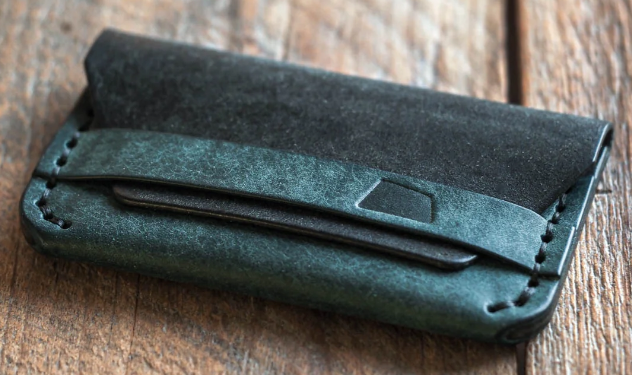
Engineers don’t guess their way to a slim profile. They follow a repeatable formula. Six specific techniques separate a genuinely thin wallet from a bulky one wearing a slim label.
Cut Non-Essential Layers First
The fastest way to shave thickness is to remove components entirely. Converting a “dual card layer + ID slot + bill compartment” structure into a “single card layer + main compartment” drops the stack from 3–4 layers down to 1–2. Each eliminated pocket or divider cuts 0.5–1.5 mm from the finished wallet, depending on stitching, adhesive layers, and card capacity. That’s structural minimalism.
Choose Thinner Material From the Start
Material innovation sets the ceiling on how thin a wallet can get. Standard outer leather runs 1.2–1.6 mm, which feels sturdy but adds bulk. Slim-focused builds push that down to 0.8–1.0 mm for the exterior and 0.4–0.8 mm for lining—sometimes as low as 0.4–0.6 mm on card slots. Carbon fiber wallets take a different path, using rigid composite panels instead of thick leather stacking.
Limit Layers at Every Fold Line
No fold should stack more than 2 layers. If three layers are unavoidable, at least one gets skived or overlapped at an angle instead of stacked flat.
Eliminate Unnecessary Stitching
Every decorative seam adds a step at the edge from needle holes, thread channels, and backstitch zones. Replacing a non-structural horizontal seam with a seamless folded edge or hidden bonding removes 0.3–0.8 mm—especially noticeable near card slot edges.
Reposition Seams Away From Card Slots
Card slot design matters more than most people assume. Seams should never sit on the card-facing side or slot base. Moving them to the side, back, or fold exterior reduces local bulging and card friction—often dropping the visible thickness tier, particularly on ultra-slim card holders.
Skiving: The Core Thinning Technique
Skiving—localized thinning at folds, overlaps, and seams rather than shaving the whole panel—is the single most effective method. A 1.4 mm outer layer paired with a 1.0 mm inner layer can be skived down to roughly 2.0–2.4 mm at the fold, about 70% thinner than unprocessed overlap. Card edges often start skiving at 0.5 mm, tapering across a 5–10 mm gradient zone.
The Engineering Recipe
-
Outer leather: 0.8–1.0 mm
-
Lining/card slots: 0.4–0.6 mm
-
Layers per card slot: 1
-
Fold and overlap zones: skived
-
Seam placement: away from card slot faces
Applied this way, total thickness drops from the common 8–12 mm range down to 5–8 mm, or 4–6 mm for card-only EDC wallets with RFID blocking built in without added bulk.
Material Comparison: Thickness vs Durability Tradeoffs
No single material wins on every metric. Manufacturers pick between full-grain leather and nylon/canvas based on what tradeoff a specific EDC wallet needs to make—and each one pulls thickness, weight, and lifespan in different directions.
Full-Grain Leather: The Longevity Standard
Full-grain leather runs 0.8–1.6 mm at the panel level, with outer layers at 1.2–1.6 mm (3–4 oz) and card slot linings closer to 0.8–1.2 mm (2–3 oz). Loaded thickness lands at 18–25 mm versus 8–12 mm empty. Industry material guides put leather lifespan at 10–30+ years, with plenty of real-world cases hitting 15–25 years. It doesn’t wear out—it develops patina instead.
Nylon/Canvas: Light but Less Durable
Nylon and canvas wallets sit at 4–7 mm empty, jumping to 10–15 mm once loaded with six cards and cash. Weight stays low at 30–60 g. Water resistance is inconsistent—rated “sometimes” rather than fully waterproof—and long-term durability trails leather and carbon fiber.
Manufacturing Precision: How Factories Achieve Ultra-Thin Construction
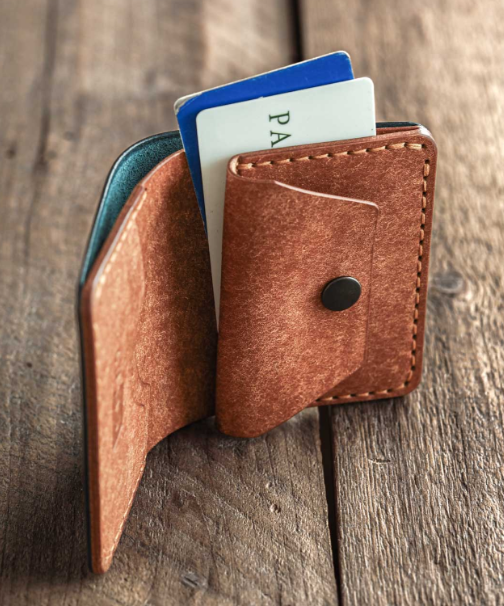
Walk onto a real production floor and you won’t see scissors trimming leather by eye. You’ll see a bell skiver, a dedicated skiving machine that removes material from exact zones: fold points, edges, corners, and seam overlaps. Controlled subtraction is the difference between a wallet that photographs thin and one that actually performs thin in daily carry.
The Bell Skiver’s Precision Job
A bell skiver takes a 1.2 mm edge and brings it down to roughly 0.5 mm before folding, binding, or splicing happens. That thinned edge then gets folded over cleanly instead of stacking bulk on bulk. High-end wallet workshops push this further with a technique called “skived-to-zero,” tapering edges so aggressively that the finished border measures just 1.5–2.0 mm, thin enough to disappear against the fingertip and sturdy enough to survive years of pocket friction.
Precision Patterning Removes Hidden Overlap
Precision patterning does the other half of the work. Factories cut individual die molds for every card slot, pocket, and edge strip, holding each length, fold line, and seam allowance to tight tolerance. Inconsistent die-cutting creates the invisible “extra layer” problem: when one panel is 0.3 mm longer than its neighbor, it overlaps where it shouldn’t, and thickness creeps in at exactly the spot designers tried to eliminate.
Thickness Banding: The Manufacturing Standard
Serious manufacturers work within strict thickness bands:
-
Exterior leather: 1.4–1.6 mm (roughly 3–4 oz)
-
Interior lining/card slots: ≤0.9 mm (roughly 2–3 oz)
-
Finished seam zones: 1.5–2.4 mm after skiving and lamination
This tiered approach—thick where structure is needed, thin where it isn’t—combined with die-cut consistency, is what separates a factory capable of genuine wallet material innovation from one simply cutting leather thinner and hoping it holds together.
Case Study: Anatomy of a 5mm Ultra-Slim Wallet
Overlapping Layers
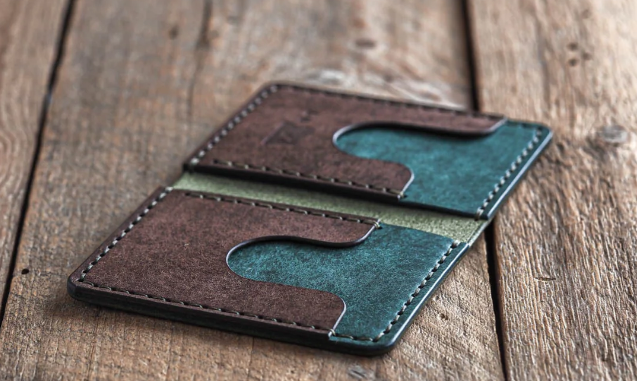
The design brief describes the construction as 5 layers of overlapping leather. The wallet folds thin leather panels over each other so the geometry carries the load. Industry benchmarks for the ultra-slim class show builds under 5mm empty, with the thinnest examples between 3–5mm, and loaded profiles typically around 0.25–0.35 in (6.35–8.9mm) depending on card count.
Where Rigidity Replaces Bulk
Ultra-slim wallets in this tier often swap soft leather reinforcement for rigid materials—aluminum, polycarbonate, carbon fiber, or reinforced composites—that resist collapse without adding thickness. RFID protection follows the same logic. A standard RFID shield typically adds 0.5–1.0mm to a leather wallet, enough to push a 5mm build past 5.5–6mm before a single card goes in. The workaround integrates the shielding into an existing structural layer, sometimes described as “thin as a foil,” blocking 13.56 MHz signals without a separate insert.
How to Choose the Right Slim Wallet: A Practical Selection Guide
Buying a slim wallet without checking thickness data is like buying shoes without knowing your size. Match the wallet type to how you carry cards and cash.
Match Wallet Type to Your Carry Habits
-
Cards only, no cash: Tyvek or microfiber wallets fit best. Empty thickness runs 2–3mm, loaded stays at 6–9mm, and weight can drop to 10–15g. Best for 2–3 card commuters.
-
Cards plus light cash: Top-grain leather or canvas balances comfort and durability. Empty sits at 5–8mm, loaded reaches 12–18mm, weighing 50–80g. Suits 4–8 card carriers.
Set Your Thickness Threshold Before Buying
-
Cards-only carriers: target under 7.6mm (0.3 in) empty.
-
Cash-and-card users: target under 15.2mm (0.6 in) loaded.
-
Comfortable daily capacity tops out around 4–8 cards. Beyond that, most wallets start bulging.
Red Flags That Signal Hidden Bulk
-
Too many card slots you’ll never use
-
Thick, padded lining
-
Coin pockets (a top thickness culprit)
-
Heavy topstitching or oversized edge binding
-
Oversized ID windows that add rigidity and thickness
-
Listings that advertise “holds 12+ cards” but skip thickness specs
The Practical Checklist
Before ordering, confirm the seller lists both empty and loaded thickness, not just card capacity. Prioritize 4–8 slots, skip coin pockets, and add RFID blocking if security matters.