That worn-out zipper pull, the frayed corner, the mysterious hole that appeared after just one trip through baggage claim — if you’ve owned a travel bag that failed you at the worst possible moment, you already know that not all fabrics are created equal. Choosing among ballistic nylon, Cordura fabric, or a budget-friendly polyester blend isn’t about aesthetics. It’s about whether your bag survives ten trips or fails after two. Military-grade weaves resist tears and scuffs. Coated finishes shrug off rain and grit. The right material is the difference between a bag that ages well and one that falls apart at the seams. We break down which abrasion-resistant materials deliver real durability, and which ones quietly cut corners.
What Makes a Fabric or Material “Abrasion-Resistant” for Travel Bags
Abrasion resistance is a measurable engineering property. The industry standard is the Martindale test, which rubs fabric against a textured surface in repeated cycles until visible wear or a hole appears. The cycle count determines the fabric’s resistance:
-
6,000–12,000 cycles: light home use, not suited for travel bag bottoms
-
12,000–20,000+ cycles: moderate wear, fine for bag sides
-
20,000–40,000+ cycles: heavy-duty, ideal for high-friction zones like corners and bases
-
40,000+ cycles: commercial-grade, typical of ballistic nylon and high denier fabric used in tactical gear
Denier matters just as much. It measures fiber thickness. Higher denier means thicker strands that resist fraying. A 500D nylon already outperforms most 600D polyester because nylon resists abrasion better fiber for fiber. Weave tightness counts too. For example, a tightly woven 500D fabric can outlast a loosely woven 1000D one.
Don’t confuse abrasion resistance with waterproofing or tear resistance. TPU coated fabric and PU backing improve water resistance, while ripstop nylon stops tears from spreading. Neither directly boosts surface wear resistance, though thicker coatings can add marginal durability.
Ballistic Nylon & Cordura Fabric: The Gold Standard of Rugged Soft Fabrics
DuPont built ballistic nylon during World War II to stop shrapnel, not bullets — a high-tenacity nylon 6,6 multi-filament designed for shock resistance rather than fashion. That military DNA still defines the fabric today. Most travel bags use 840D or 1050D ballistic nylon, woven in a tight 2×2 basket pattern. CORDURA Ballistic requires a minimum of 420D. A typical 1050D version weighs 12.5 oz/yd² (≈420 gsm), with a grab strength around 1,550 N, tear strength near 280 N, and roughly 3,200 Taber abrasion cycles. CORDURA says this construction lasts about 2x longer than standard 1680D nylon.
Cordura fabric takes a different approach. It uses air-jet textured nylon 6,6, which gives it a slightly rougher surface that grips friction instead of sliding through it. Industry data puts Cordura’s abrasion resistance at 2–10x standard nylon, and roughly 10x cotton canvas. The 1000D Cordura Classic — 330 gsm, 1,245 N grab strength, ≥5,000 abrasion cycles — hits the sweet spot for backpacks and luggage shells.
|
Property |
1000D Cordura |
1050D Ballistic |
|---|---|---|
|
Weight |
330 gsm |
420 gsm |
|
Abrasion cycles |
≥5,000 |
~3,200 |
|
Grab strength |
1,245 N |
1,550 N |
|
Tear strength |
200 N |
280 N |
|
Surface |
Matte, textured |
Glossy, smooth |
B2B pricing runs $5–8/m for 500D Cordura, $8–12/m for 1000D, with Ballistic variants costing 20–40% more. For travel bags: use Cordura on high-friction shells, and stick with ballistic nylon for corners, wheel wells, and handle zones where impact matters more than grinding wear.
600D+ Oxford PU-Coated Nylon: A Cost-Effective, Durable Solution
Not every traveler needs ballistic-grade toughness. For most budget and mid-range travel bags, 600D Oxford with PU coating hits the sweet spot between cost and durability, and it’s the fabric behind most cross-border e-commerce luggage lines.
The PU coating seals the gaps between yarns with a thin polyurethane layer that forms a continuous film. This boosts water resistance and absorbs part of the surface friction, so the fibers underneath don’t take the full hit. The base fabric runs 240–280 g/m². Finished products land around 180–230 gsm for single-PU, or up to 300 gsm for reinforced double-PU builds.
Water resistance depends on the coating. Single PU (12g/m²) gives about 1,200mm hydrostatic head. Standard PU coating runs 1,000–3,000mm, fine for daily rain. Double PU plus a DWR finish reaches 3,000–5,000mm, which matches mid-tier luggage needs. PVC backpack material or TPU coated fabric can push past 5,000mm, but both add stiffness and cost.
Abrasion resistance is more modest. Single PU Oxford manages about 1,800 Martindale cycles; double-PU construction reaches 2,500+. Compare that to 500D Cordura’s 80,000+ cycles, roughly 4x more abrasion-resistant. That gap keeps 600D PU Oxford in the budget-to-mid category rather than premium territory.
600D vs 900D/1200D: Where the Value Sits
|
Spec |
420D |
600D |
900D/1200D |
|---|---|---|---|
|
Weight |
160–200 gsm |
240–280 gsm (base) |
300–420 gsm |
|
Tensile strength |
Lower |
600–700N (warp) |
+30–60% vs 600D |
|
Typical lifespan* |
2–4 yrs |
4–6 yrs |
5–8 yrs |
|
Retail price band |
Budget |
US$15–30 |
US$25–40 |
*Assuming 1–2 trips/month, double-PU coating ≥2,500 Martindale cycles.
600D delivers a 1.5–2x durability jump over 420D at only a 20–40% cost premium. Against 900D/1200D, it’s 15–30% cheaper and 10–25% lighter, which matters for shipping costs on cross-border listings, while still covering the 4–6 year lifespan most casual travelers need.
Supply Chain & Sourcing Notes
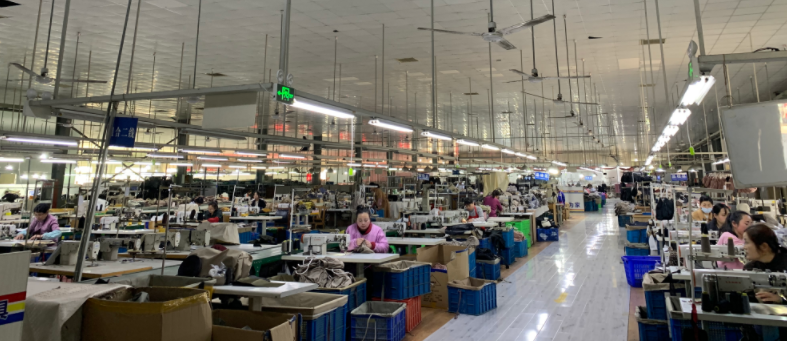
Most 600D Oxford comes from Chinese weaving mills in Jiangsu/Zhejiang/Fujian. Separate finishing lines then apply the PU/PVC/TPU coating, offering 1–2 layer PU application plus optional DWR treatment. Standard fabric width is 57″ (145cm), and the MOQ is typically 500–3,000m per color. Finished-goods factories across South/East China and Vietnam use 600D PU Oxford as the default fabric for entry-level backpacks and check-in luggage, often offering 600D/900D/1200D variants of the same design to cover different price tiers.
Practical Selection Checklist
If you’re sourcing or buying, ask for:
– Base fabric: 600D x 600D polyester or nylon 6/6.6, 240–280 gsm
– Coating: minimum single PU 12–15 g/m² (≥1,500mm hydrostatic head). For 4–6 year durability, request double PU (12+8 g/m²) with DWR finish, targeting ≥3,000mm and ≥2,500 Martindale cycles
– Snap test: fold a 3″x3″ sample 10 times rapidly. Cracking or flaking means the coating won’t hold up
– Water bead test: drop 5 water beads on the coated face. Good double-PU holds beads for 90+ seconds; poor coatings spread within 15 seconds
– Documentation: gsm report, hydrostatic pressure results, Martindale cycle count
At Sunteambag, we run double-coating as standard on our 600D PU Oxford lines because it keeps mid-range travel bags looking new for years.
Applicability Boundaries of Economical Wear-Resistant Fabrics Like Polyester and Canvas
Nylon has better numbers on paper, but it doesn’t win every use case. Standard polyester holds up fine for daily wear and tear, just not for extreme friction. In standard abrasion ratings, nylon scores “excellent” (~8,000 cycles) while polyester lands at “good” (~5,000 cycles), roughly a 1.6x gap. Under ASTM D3884 Taber testing, nylon monofilament survives 2,000–3,000 cycles versus polyester’s 1,500–2,000. Tensile strength tells a similar story: nylon runs 4.5–5.5 GPa against polyester’s 2.5–3.5 GPa, a 30–80% edge. Nylon’s elastic recovery (98%) also beats polyester (90%) — it snaps back better after repeated stretching.
But polyester isn’t weak; it’s just positioned differently. At 3,000–5,000 Martindale cycles, standard polyester travel bag fabric handles occasional outdoor, daily carry use. And it costs roughly half of what nylon does, which is exactly why polyester vs nylon luggage debates always circle back to budget.
Canvas: Tough Surface, Slow-Drying Downside
Canvas travel bag durability comes from tight, thick-yarn weaves. Heavy canvas often clears 5,000+ Martindale cycles, matching or beating standard polyester and sometimes rivaling low-denier nylon. That surface toughness makes canvas a solid pick for desk-side, floor-friction, everyday carry.
The tradeoff is moisture. Polyester absorbs about 0.4% water (fast-drying), nylon around 4%, but cotton/poly-cotton canvas often exceeds 7–10% — drying 2–3x slower, sometimes needing a full night to air out. That’s a dealbreaker for rain-heavy travel or humid climates, but a non-issue for dry, indoor-dominant use.
Recycled Canvas & Lifespan Expectations
Recycled polyester or poly-cotton canvas retains 80–100% of virgin-material strength. Under moderate use (city commuting, a few times weekly), expect 3–4 years of service; daily heavy loads shorten that to 2–3 years. Compare that to nylon tactical or hiking packs under similar frequency, which routinely last 5+ years — the gap that defines “economical but shorter-lived” versus “premium and long-term.”
Who Should Choose Polyester or Canvas
-
Polyester fits: 1–4 trips/month, daily loads under 5–8 kg, budget-conscious buyers prioritizing quick-dry and UV resistance over maximum abrasion resistance
-
Canvas fits: daily commuters, students, tool-bag users on flat, dry, indoor-heavy surfaces carrying 5–10 kg, comfortable with slower drying and a heavier, “rugged” aesthetic
-
Skip both if: annual long-haul trekking or tactical use exceeds 4–6 trips, loads run past 10 kg, or terrain involves rock, brush, or rough abrasive surfaces — nylon or Cordura fabric becomes the safer investment
Quick rule: if you’re willing to trade 30–50% budget savings for a lifespan drop from 5+ years to 3–4 years, polyester or canvas is the economical call.
Polycarbonate (PC) vs Polypropylene (PP): The Hard-Shell Durability Showdown
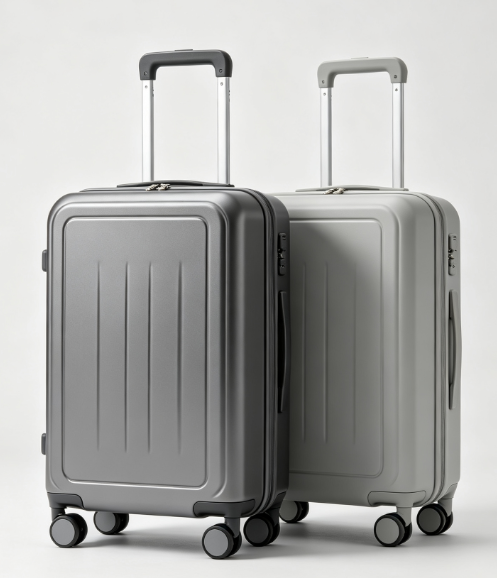
With hard-shell luggage, you’re comparing molecular structures, and the numbers tell a clear story.
PC weighs in at 1.20 g/cm³ versus PP’s 0.90–0.91 g/cm³, so PC shells run 30–35% heavier. That extra weight buys serious protection. PC’s tensile strength hits 60–70 MPa against PP’s 25–40 MPa, roughly double. ASTM D256 testing shows PC absorbs impact at over 10x PP’s rate, and compared to glass, PC handles nearly 200x the force.
Thickness matters. Shells at 2.5mm+ PC, paired with hard-coat treatment, survive 100+ drop cycles, common in riot-shield grade testing. For business travelers checking bags 30–50 times a year, that means a realistic 5–8 year structural lifespan, even though surface scuffs typically show up within 2–3 years.
PP counters with lighter builds and self-lubricating wear resistance. It resists scuffing well, though dents show more than PC’s fine scratches. Cold weather is PP’s weak spot. Impact strength drops sharply below freezing, making winter drops riskier.
PP resin runs 30–50% cheaper than PC, and finished PP luggage typically retails 15–30% lower.
PC protects laptops, cameras, and fragile gear better. PP saves weight and money for clothes-and-essentials travel.
Aluminum vs. ABS: Two Extremes in Abrasion-Resistant Materials
Raw metal strength and engineered plastic economy are the two poles of hard-shell luggage. Aluminum 6061 and ABS sit at opposite ends of the abrasion-resistant materials spectrum, and the gap in the numbers is stark.
Mechanical Data at a Glance
|
Property |
Aluminum 6061 |
ABS |
|---|---|---|
|
Tensile strength |
310 MPa |
40–50 MPa |
|
Density |
2.70 g/cm³ |
1.04–1.06 g/cm³ |
|
Max working temp |
150°C |
85–100°C (warps at 40–43°C) |
|
Impact toughness |
Dents, doesn’t crack |
10–15 kJ/m² |
|
Typical lifespan |
15–20+ years |
5–10 years |
|
Hardness |
— |
Rockwell R105–R110 |
Aluminum’s tensile strength is 7.8x higher than ABS, and its strength-to-weight ratio (~115 kN·m/kg) makes it a preferred structural material. Under stacking or impact, aluminum shells deform locally into dents rather than failing outright. ABS is more prone to cracking or corner damage once it exceeds its heat threshold.
The Weight Trade-Off
A 24″ ABS shell weighs 3.0 kg bare. The same design in aluminum jumps to 7.5–8.0 kg with hardware — about 2.6x heavier. That’s the real cost of “metal quality feel.”
ABS+PC Blends Close the Gap
Blending ABS with polycarbonate lifts tensile strength to 55–70 MPa (+30–50%), pushes heat resistance to 110–130°C, and improves scratch resistance by 1–2 grades. This makes it the go-to for mid-tier travel bags that face frequent drag-and-impact use without aluminum’s weight penalty.
Aluminum suits frequent flyers and equipment cases prioritizing 10+ year durability over weight. ABS or ABS+PC fits budget-conscious, indoor-dominant users who need adequate abrasion resistance at a lower cost and weight.
Comparative Chart of Wear-Resistant Materials: One-Stop Decision-Making Across 8 Key Dimensions
Nine materials, eight decision factors, one table. That’s the fastest way to cut through spec-sheet noise when you’re comparing ballistic nylon against Cordura fabric, or weighing a PC hard shell against aluminum. The table below pulls together weight, Martindale cycles, wear grade, price tier, lifespan, and best-fit use case — the criteria sourcing teams and serious buyers check before committing.
|
Material |
Weight |
Martindale Cycles |
Wear Grade |
Price Level |
Lifespan |
Best Use Case |
|---|---|---|---|---|---|---|
|
Cordura 1000D |
350–430 g/m² |
100,000+ |
A+ |
High–Very High |
5–10 yrs |
Technical backpacks |
|
Ballistic Nylon 1680D |
400–500 g/m² |
100,000–150,000+ |
A+ |
Very High |
5–10 yrs |
Tactical/premium business bags |
|
600D Oxford PU |
180–240 g/m² |
15,000–30,000 |
B |
Mid |
3–5 yrs |
Family travel bags |
|
300–600D Polyester |
120–230 g/m² |
10,000–30,000 |
C–D |
Low–Mid |
2–4 yrs |
Budget luggage |
|
Heavy Canvas |
300–450 g/m² |
20,000–40,000 |
B |
Mid |
3–6 yrs |
Lifestyle/commuter packs |
|
PC hard shell |
2.4–3.6 kg/m² |
N/A (Taber 20–30mg) |
A |
High |
5–8 yrs |
Premium hard-case luggage |
|
ABS hard shell |
2.1–3.2 kg/m² |
N/A |
C–D |
Mid |
3–5 yrs |
Budget hard-shell cases |
|
PP hard shell |
1.8–2.7 kg/m² |
N/A |
C |
Mid–Low |
4–6 yrs |
Drop-resistant family luggage |
|
Aluminum shell |
3.2–4.1 kg/m² |
N/A (60–120 HB) |
A+ |
Very High |
8–10 yrs |
High-end structural cases |
Cordura and ballistic nylon dominate abrasion resistance but cost 2–5x more than standard polyester. For hard shells, PC’s Taber loss (20–30mg/1000 cycles) beats ABS on scratch resistance, while aluminum wins on structural longevity, not surface wear. Match your budget line and trip frequency to the “Price Level” and “Lifespan” columns first. That narrows the shortlist before you even look at gsm or cycle counts.
A Practical Guide to Choosing Wear-Resistant Materials by Use Case
Frequent flyers, weekend hikers, and budget-conscious families face different wear patterns. That’s why one “best” fabric doesn’t exist. Matching material to use case matters more than chasing the highest Martindale number on paper.
Business Travelers: PC Hard Shell + Ballistic Nylon Carry-On
Checked luggage absorbs drops, stacking, and corner impacts. Carry-ons take constant hand-strap friction and overhead-bin scraping. Two different wear mechanisms, so smart travelers split the load.
A PC hard shell handles the impact side. Vicat hardness runs 15–18 HV, lower than ABS, but Charpy impact strength exceeds 70 kJ/m², 150–250% higher than standard ABS. Tensile strength sits at 60–70 MPa with 80–150% elongation before failure, so the shell flexes instead of cracking. Rated for -40°C to 120°C, it won’t go brittle on winter flights. A 1.8–2.5mm shell with reinforced rib zones handles 100+ kg stacking loads without permanent deformation.
For the carry-on, 1680D ballistic nylon takes over. At 12 kPa load, it survives 40,000–50,000+ Martindale cycles, 2–3x standard polyester, with tear strength above 80–120 N in both directions. A 0.02–0.05mm PU coating adds a sacrificial wear layer plus light rain protection. Pair a 20–24″ PC boarding case (≥2.0mm wall, PU wheels rated 80–90A Shore hardness, 20km+ rolling life) with a 15–17″ ballistic nylon tote reinforced with double-layer Cordura at the base. This combo lasts 50–100% longer than single-material setups for travelers checking bags 20+ times a year.
Outdoor & Long-Haul Trekking: Cordura/Oxford + PU Reinforcement
Rock dragging and pavement scraping create combined particle-cutting and sliding wear. Conditions that shred unreinforced 300D polyester within a few hundred meters. Upgrading the base to 500D Cordura or 600D Oxford with 0.1mm PU coating extends usable drag distance 2–3x. For 15–25kg loads over multi-day treks, that difference determines whether the bottom seam holds or blows out.
-
High-abrasion builds: 500D Cordura body + 1000D Cordura base (70,000+ Martindale cycles) for rock climbing, stream crossings
-
Budget builds: 420–600D Oxford body + double-layer base with 0.1mm PU coating (Shore A 80–90) for occasional rough-terrain hikes
Family Travel on a Budget: PP Hard Shell vs. ABS/Polyester
Families averaging 4–12 checked-bag trips a year don’t need commercial-grade cycling numbers. PP resin costs 40–60% of PC, with tensile strength around 30–35 MPa. Lower on paper, but sufficient for standard stacking and conveyor-belt sliding. Rubber-modified PP absorbs drops from 0.5–1m without shattering, and ribbed panels at 2.2–2.8mm thickness resist scuffs well enough for 3+ years of low-frequency use. At roughly 0.9 g/cm³ versus PC’s 1.2 g/cm³, PP shells are also easier for older travelers or kids to lift, a practical win when durability needs stay modest.
B2B Sourcing Essentials: Fabric Technical Specs and Factory Audit Points
Sourcing teams buy fabric based on spec sheets, not trust. A proper spec sheet for travel bag materials needs denier, GSM, cuttable width, and coating data locked in before the first sample ships.
Core Spec Fields to Lock Into Your RFQ
-
Denier & construction: 600D Oxford, plain weave, PU coated one side. Treat 600D as the minimum threshold for mid-to-high strength backpacks and luggage shells; 420D suits lightweight liners only.
-
GSM: 180–260 g/m² for backpack fabric; 300 g/m²+ for reinforced luggage layers.
-
Cuttable width: confirm 58/60″ (≈147–152 cm), not just nominal loom width.
-
Coating: PU coating at 10–30 g/m², hydrostatic head ≥1,500 mm (rain-ready builds need ≥3,000 mm), verified against ISO 811 or AATCC 127.
-
PC shell thickness: ≥2.5 mm as the high-durability benchmark. Anything thinner dents or cracks under 1.2 m drop tests.
The 12,000-Cycle Martindale Rule
Set ≥12,000 Martindale cycles (ISO 12947) as your non-negotiable floor in every RFQ. Fabric below that threshold belongs in linings. Ask suppliers for the full test curve and endpoint photos, not just a headline number. Quality mills routinely test at 20,000+ cycles.
Factory Audit Checklist
-
ISO 9001 certification with complete incoming inspection, in-process, and final QC logs.
-
AQL sampling on incoming fabric (5–10% of rolls per batch) for GSM and visual defects.
-
Zipper cycle tests (5,000+ cycles), load tests (10–15 kg hang test).
-
PU coating fold test: 5,000+ folds without cracking or whitening.
Sunteambag builds every OEM/ODM technical package around these exact fields, so buyers can audit fabric consistency batch after batch.