Getting into sports backpack wholesale often leads to the same question: how many units should you order to start. There is no single answer—it depends on four practical factors that every buyer should evaluate: the supplier’s MOQ rules, your need for market testing, available cash flow, and the number of styles you plan to launch. By understanding these variables, you can place an order that avoids excess inventory, keeps costs manageable, and still allows you to test multiple designs with your sports backpack supplier. This approach is especially useful for new brands or companies expanding their sports bag product lines.
Understanding MOQ Basics for Sports Backpacks
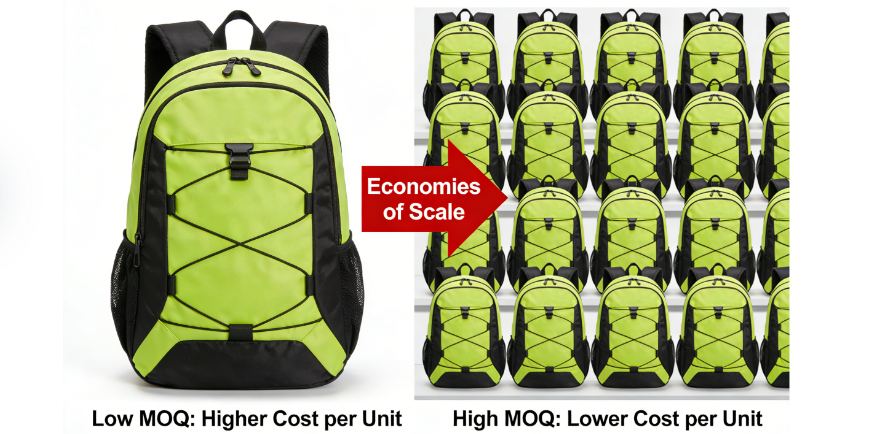
MOQ means Minimum Order Quantity. It’s the smallest number of units you must buy per style, design, or color mix. This number shapes your whole wholesale buying plan for sports backpacks.
The wholesale sports backpack industry has three main supplier types. Each has different MOQ rules:
Distributors and stock traders have the lowest MOQs. They buy big from factories and sell in smaller batches. You’ll see MOQs of 1-20 pieces per style. They stock ready-made items. You can add basic touches like logo printing.
Mid-sized manufacturers give you a middle ground. They ask for 50-200 pieces per design. This covers their fabric orders and line setup costs. You get more freedom here. Think custom colors, small design changes, and branded boxes.
Large-scale OEM factories want big orders. They start at 300-500 units per style per color. These factories source from material suppliers. Those suppliers have their own minimums too. Custom molds or special fabrics raise the bar higher. You might need 500-1,000 pieces for complex designs.
Price drops as you order more. Order 10-50 pieces? You pay 15-50% more than bulk rates. Hit 100-300 units and you get bag factory wholesale prices. Order 500+ pieces and most factories cut another 5-15% off. They spread their fixed costs across more units.
Calculating Your Initial Order Quantity Based on Business Size
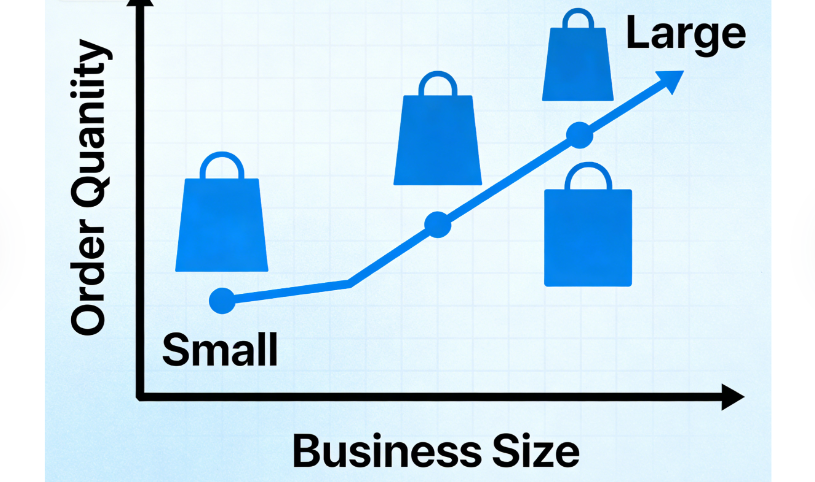
Your business stage sets your best order quantity. The Economic Order Quantity (EOQ) formula gives you a data-driven starting point. It balances costs across all company sizes.
The EOQ Formula: Your Starting Point
EOQ = √(2DS / H)
This breaks down into three parts:
– D = Annual demand (units/year)
– S = Order cost per shipment (admin, logistics, receiving/order)
– H = Annual holding cost per unit (storage, insurance, damage, capital tie-up/unit/year)
The result shows your ideal single-order quantity. It cuts down your combined ordering and storage costs.
Real Numbers for Sports Backpack Wholesale
A retailer selling 10,000 backpacks each year with $50 order costs and $5 holding costs per unit should order:
Q* = √(2 × 10,000 × 50 / 5) = √200,000 ≈ 447 units per order
This means 22 orders each year or one shipment every 16-17 days.
Lower the holding cost to $2 per unit? Your optimal batch jumps to 707 backpacks per order. Higher storage and insurance costs mean fewer, larger shipments work better.
A small gym selling 1,000 team backpacks each year faces different math. With $1.50 order costs and $3 holding costs:
Q* = √(2 × 1,000 × 1.5 / 3) ≈ 32 units per order
You’d reorder 31 times each year (about every 12 days). Small operations need frequent, tiny batches.
Adjusting EOQ to Supplier MOQs
Your calculated EOQ seldom matches supplier minimums. A 465-unit optimal order meets most mid-tier manufacturer MOQs (200-500 pieces). But a 32-unit ideal batch pushes you above optimal levels. This happens because suppliers demand 50-100 minimum.
Budget-tight startups should calculate EOQ first. Then find suppliers whose MOQs sit closest to that number. Ordering 433 pairs keeps your capital efficient. EOQ suggests this quantity. Forcing 1,000 units doubles your holding costs. Math says 433 is better.
Large operations ordering 5,774 units benefit from bag factory-direct pricing. They handle high annual demand (10,000+ units). Order processing costs run high ($5,000/shipment). This justifies bulk purchasing. Storage needs increase, but the savings work out.
Checking Supplier Production Power and MOQ Needs

Production power shows if a supplier can fill your sports backpack orders. Check their output numbers and track record before you agree to any MOQ.
Key Numbers to Ask For
Get these details from suppliers:
Monthly output data: How many units do they make per month for similar sports backpacks (20-35L polyester models)? A mid-sized bag factory runs 600-800 units per line each day for basic backpacks. Multi-pocket designs drop to 300-500 units per line.
Production line details: How many sewing lines do they use for bags? How many workers per line? How many shifts per day? How many working days per month? Calculate their max output: lines × pcs/hour × hours/shift × shifts/day × working days/month.
Load percentage: What’s their current order load? Good suppliers keep it at ≤85% during normal times. This gives them room for rush orders. It stops delays during your busy season.
Past results: Ask for their best month, normal month output, and peak season numbers. Get written proof: on-time delivery rate ≥95% and defect rate ≤1-2% for textile products.
Lead-Time vs Quantity Chart
Get a written promise showing delivery times:
– 500 pcs: 15 days
– 2,000 pcs: 25 days
– 10,000 pcs: 40 days
This chart shows if they can grow with you. Or if big orders will cause bad delays.
Analyzing Price Tiers and Volume Discounts
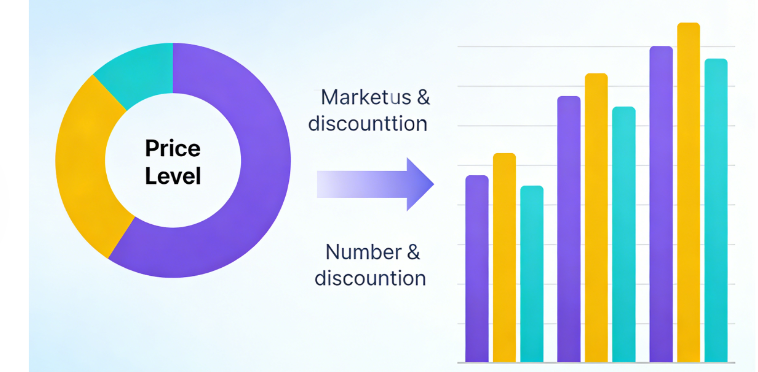
Sports backpack wholesale pricing follows clear discount patterns. These tiers show you when larger orders start making financial sense.
Standard Discount Tiers in Sports Backpack Wholesale
The wholesale market uses five main volume brackets:
Small-batch orders (50-100 units) get minimal discounts of 2-5%. You’re paying near-retail prices. Suppliers cover their admin costs and little else at this level.
Mid-range orders (100-499 units) unlock 5-10% discounts. Most suppliers start serious wholesale pricing at 100 pieces. The standard reduction is 5%. Seasonal retailers testing new designs fit this bracket.
Large orders (500-999 units) drop prices by 10-15%. You’re buying at true factory-direct rates now. Production runs get efficient at this scale.
Bulk wholesale (1,000-4,999 units) brings 15-25% discounts. Chain stores and distributor networks operate here. Backpack complexity and supplier margins determine the percentage.
Maximum volume (5,000+ units) achieves 20-35% off list prices. Premium technical backpacks with higher margins can hit 35%. Basic polyester models might cap at 25%.
Three Pricing Calculation Methods
Suppliers use different structures. Your total cost can change a lot based on which method they use:
All-units discount applies one price to your entire order once you hit the threshold. Order 120 backpacks at the 100-unit tier? You get $8 instead of $10 per unit. Your total is 120 × $8 = $960. Every single backpack gets the lower price.
Tiered pricing charges different rates for each bracket. That same 120-unit order costs more: 100 × $10 + 20 × $8 = $1,160. You pay $10 for the first 100. Then $8 for units 101-120. This method adds $200 to your bill compared to all-units pricing.
Threshold pricing works like tiered but with clearer break points. The formula is: (threshold quantity × original price) + (excess quantity × discount price).
Here’s a real comparison using backpack course packages:
|
Order Size |
All-Units Total |
Tiered Total |
Price Difference |
|---|---|---|---|
|
10 units |
$200 |
$190 |
Tiered saves $10 |
|
15 units |
$300 |
$265 |
Tiered saves $35 |
|
20 units |
$400 |
$340 |
Tiered saves $60 |
|
21 units |
$252 |
$352 |
All-units saves $100 |
Notice the big flip at 21 units. All-units pricing becomes far cheaper once you cross major thresholds.
Break-Even Analysis for Your Order Decision
Calculate whether volume discounts save money using this formula:
Break-even quantity = Fixed costs ÷ (Price – Variable cost per unit)
Fixed costs for sports backpacks include setup fees, custom molds, design work, and shipping. Say you face $2,000 in fixed costs. Backpacks sell for $25 each. Your variable cost (materials, labor) is $15 per unit.
Break-even = $2,000 ÷ ($25 – $15) = 200 units
Now add a 10% volume discount at 500 units. Your new price becomes $25 × 0.90 = $22.50. Run the calculation again:
New break-even = $2,000 ÷ ($22.50 – $15) = 267 units
The discount raised your break-even point by 67 units. You need to sell more backpacks to cover the same fixed costs. Why? Your per-unit profit margin dropped from $10 to $7.50.
Build a comparison table for typical order tiers:
-
100 units: 5% discount → Price $23.75 → Margin $8.75 → Break-even: 229 units
-
500 units: 10% discount → Price $22.50 → Margin $7.50 → Break-even: 267 units
-
1,000 units: 15% discount → Price $21.25 → Margin $6.25 → Break-even: 320 units
-
5,000 units: 25% discount → Price $18.75 → Margin $3.75 → Break-even: 533 units
Here’s the catch: bigger discounts mean you need to sell more units just to break even. Order at higher tiers if you’re confident about moving that inventory within your target timeframe.
Customization Requirements and MOQ Impact
Custom branding changes your order minimums. Plain stock backpacks start at 100-300 pieces per style per color from most Chinese suppliers on Alibaba and 1688. Add your logo. Those numbers shift fast.
Logo Application Methods and Their MOQ Thresholds
Single-color screen printing raises minimums to 200-500 pieces per design. Smaller factories sometimes take 100-piece runs for simple one-color prints. Multi-color printing or large coverage areas push MOQs to 300-1,000 units. Each extra color needs another screen plate. Suppliers need volume to cover setup costs.
Heat transfer printing for full-color graphics needs special transfer films. These films have their own minimums. Final backpack MOQs hit 300-500 pieces per design.
Embroidered logos cost more in setup and per-unit fees. Standard factories set MOQs at 300-500 pieces for small embroidery patches. Complex or large-area embroidery needs 500-1,000 units minimum. Machine setup takes longer for detailed designs.
Molded rubber, silicone, or leather labels create the highest barriers. The custom label itself needs 500-1,000 pieces per mold. Finished backpack orders start at 300-500 units just to use that label stock.
Special Materials Drive Higher Minimums
Technical fabrics and premium parts force bigger orders. Reflective materials, waterproof zippers, or recycled fabrics add $0.50-$2.00 per backpack in material costs. Plus, they raise MOQ floors.
Custom fabric printing across full panels needs 500-1,000 meters per colorway. Each backpack uses 0.8-1.2 meters of material. So you need 500-1,200 finished backpacks per color pattern for good production economics.
Special hardware works the same way. Custom zipper pulls, buckles, or rubber badges have supplier MOQs of 1,000-3,000 pieces per style. Backpack makers then need 500-1,000 unit orders to use their component stock.
Real Cost Breakdowns for Customization
Know the fee structure to budget right:
Development and tooling fees include:
– New structure/pattern development: $50-$200 per design (often waived or absorbed at high volumes)
– Logo screen plates or embroidery digitization: $20-$80 per setup (varies by color count)
– Rubber/metal badge molds: $80-$200 per mold
Per-unit cost increases break down as:
– Simple one-color screen print: +$0.10-$0.30 per backpack
– Multi-color print or heat transfer graphics: +$0.30-$0.80 per backpack
– Small embroidered logo: +$0.20-$0.60 per backpack
– Large or complex embroidery: +$0.80-$1.50 per backpack
Custom packaging adds another layer. Printed hang tags, color boxes, or branded cardboard need 1,000-3,000 piece minimums for printing. Most factories offer custom packaging on orders of 500-1,000+ backpacks. This adds $0.05-$0.40 per unit to your costs.
The trade-off is clear: no customization keeps MOQs low at 100-300 pieces. Full customization with special materials and detailed branding means 500-1,000+ unit commitments plus tooling fees of $150-$400 upfront.
Storage and Inventory Management Considerations

Your warehouse space and turnover rates control how many backpacks you can order. Order too many and holding costs eat your profits.
Physical Storage Space Requirements
Sports backpacks take up predictable space. A standard 30L backpack folded measures about 50×35×17cm. That equals 0.03 m³ per unit. Compress the packaging tighter and you drop that to 0.02 m³.
Standard warehouse pallets measure 1200×1000mm. Stack them to 1.3-1.5m high. Each pallet holds 1.56-1.8 m³ of usable volume.
Do the math:
– Regular packaging (0.03 m³/unit): 52-60 backpacks per pallet
– Compressed packaging (0.02 m³/unit): 78-90 backpacks per pallet
A typical 1000 m² warehouse with 60% storage efficiency gives you 600 m² of net space. Add 2.5m aisles and 6m-high racking. You fit 250-350 pallet positions depending on layout.
Total capacity:
– 250 positions × 60 units/pallet = 15,000 backpacks maximum
– 250 positions × 80 units/pallet (compressed) = 20,000 backpacks maximum
Work backwards from your order size. Planning to stock 10,000 units? Each takes 0.02 m³. Your space use rate is 0.6. You need 333 m³ total volume. With 6m ceiling height, that’s 55-60 m² of floor space excluding aisles.
Inventory Turnover Rate and Order Quantity Relationship
Turnover rate shows how fast you convert stock to sales. The formula is simple:
Turnover Rate = Annual Cost of Goods Sold ÷ Average Inventory Value
Sports equipment and backpack brands hit 3-8 turns per year. Fast-fashion retailers push 8-10 turns each year.
Here’s where EOQ connects to turnover. Using real numbers for a mid-sized operation:
Annual demand: 120,000 backpacks/year (10,000/month)
Order cost: ¥500 per shipment
Unit cost: ¥60/backpack
Holding cost: ¥6/unit/year (10% of product cost)
EOQ = √(2 × 120,000 × 500 ÷ 6) ≈ 4,472 units per order
This breaks down to:
– Orders per year: 120,000 ÷ 4,472 = 26.8 times (about every 14 days)
– Average inventory: 4,472 ÷ 2 = 2,236 units
– Annual sales value: 120,000 × ¥60 = ¥7,200,000
– Average inventory value: 2,236 × ¥60 = ¥134,160
– Turnover rate: ¥7,200,000 ÷ ¥134,160 ≈ 53.7 turns/year
See the trade-off here? Smaller EOQ batches mean higher turnover, especially for custom sports backpacks, but you’ll place orders more frequently. Larger batches reduce ordering frequency, yet they tie up more capital in slower-moving stock. Match your order size to warehouse capacity and cash-flow limits, especially if you’re planning gym bag wholesale. And remember one rule: don’t chase unit-price breaks at the cost of healthy inventory flow.