In OEM Sport Bag Manufacturing, the choice of materials has a direct impact on durability, long-term performance, and total cost. Selecting the wrong fabric may result in 15–25 percent extra cost, while smart material combinations can significantly improve product reliability and market competitiveness.
This guide compares the 6 most common textile options used in Sport Bag Material Selection – from classic polyester to recycled eco-friendly fabrics. You will discover why premium fitness brands prefer 420D DWR ripstop nylon instead of standard polyester, and how mixed-material strategies help keep unit costs within target.
Each material section includes MOQ references, lead-time expectations, and customization potential. Industry standards such as abrasion, tear, and waterproof testing are also explained, enabling buyers to evaluate suppliers with confidence. By the end of this guide, you will build a clear technical framework within 10 minutes and avoid costly selection mistakes.
We also highlight advanced comparisons such as Nylon 6 vs Nylon 6,6, helping you understand performance differences at a technical level that directly affects OEM decision-making.
Nylon for Custom Sport Bag
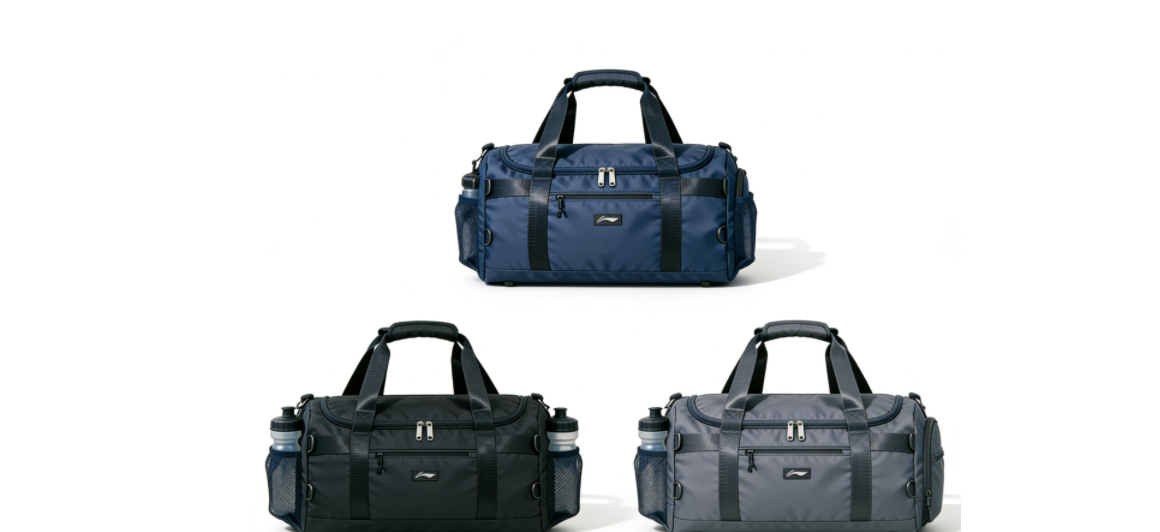
Nylon is the most widely used textile in sport bag manufacturing, accounting for about 59 percent of synthetic materials in 2025. Its high strength-to-weight ratio and excellent abrasion resistance make it a standard choice for backpacks, gym bags, outdoor packs, and tactical bags.
Why Nylon is so common in sport bags
Nylon offers strong durability without adding unnecessary weight, which is critical for load-bearing designs such as training backpacks or hiking packs. The global nylon market continues to grow and is projected to reach over 64 billion USD by 2035, indicating long-term supply chain stability for OEM Sport Bag Manufacturing.
Nylon 6 vs Nylon 6,6 (in practical bag use)
The two dominant types in Sport Bag Material Selection are Nylon 6 and Nylon 6,6.
From a practical perspective
-
Nylon 6 offers better cost efficiency for regular sport bags
-
Nylon 6,6 provides higher strength and temperature resistance, preferred for outdoor, hiking, and tactical applications
If your target segment includes technical outdoor or mountaineering bags, Nylon 6,6 becomes a more reliable material choice.
Reinforced nylon for stress zones
When nylon is combined with fiberglass reinforcement, tear and abrasion resistance increase significantly. This is why many outdoor and tactical packs apply reinforced nylon at high-wear areas such as the bottom panel or side pockets exposed to rock rubbing and ground contact.
Moisture absorption affects performance
Nylon absorbs more water compared to polyester, which can reduce stiffness after prolonged exposure to humidity. Sport bag fabrics typically receive additional treatment, including:
-
PU coating
-
DWR (durable water repellent)
-
TPU lamination
For OEM orders, always confirm coating type and washing durability (number of washing cycles).
OEM sourcing facts
-
MOQ commonly 500–1000 meters per color
-
Lead time 25–35 days including dyeing and finishing
-
Typical finishes: PU, TPU, DWR
-
Common deniers: 200D, 300D, 420D, 600D
In OEM sport bag production, 420D and 600D are widely used because they balance cost and durability.
Recommended applications
|
Bag Type |
Suggested Nylon |
|---|---|
|
Gym bag |
300D / 420D |
|
Basketball / football bag |
420D / 600D |
|
Outdoor / hiking |
Nylon 6,6 / ripstop |
|
Tactical bag |
High-density or reinforced |
Nylon delivers abrasion resistance, tear strength, lightweight construction, and cost efficiency – making it the essential material foundation for OEM Sport Bag Manufacturing and a core solution for high-performance outdoor bags.
Polyester for Custom Sport Bag

Polyester is one of the most widely used lightweight fabrics in OEM Sport Bag Manufacturing, commonly applied in gym bags, basketball bags, everyday backpacks, and functional outdoor packs. In 2024, global polyester production reached 78 million tons, accounting for 59% of total fiber output, nearly a 10% increase from 2023.
Market Position and Growth Trends
The Asia-Pacific region holds 65.32% of the global polyester market, a concentration that directly impacts supply chain planning and lead times for OEM sport bag production.
-
2024 global market size: $77.07 billion
-
2025 forecast: $82.07 billion
-
2032 forecast: over $129.97 billion
-
CAGR: 6.8%
Growth is driven by demand from apparel, home textiles, automotive interiors, and functional fabrics. Ultrafine polyester fabrics also show strong potential, with a 2025 market of $739.7 million and projected $1.033 billion by 2035 (3.4% annual growth).
Fossil-Based vs Recycled Polyester (rPET)
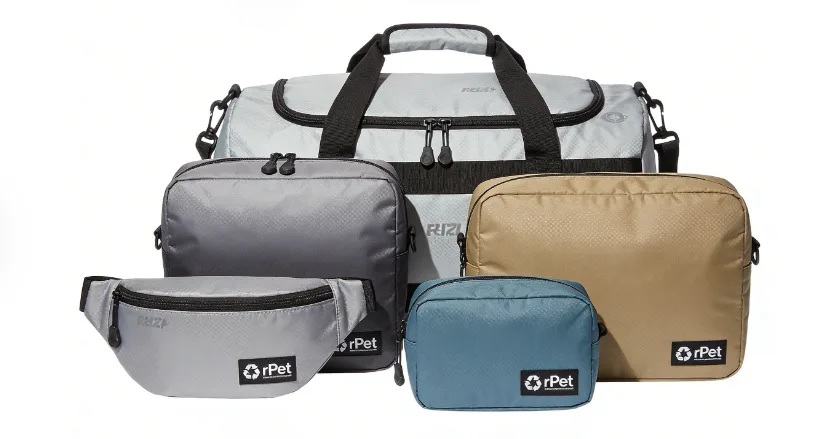
Currently, 88% of polyester comes from fossil-based sources. Recycled polyester (rPET) production is expected to reach 9.3 million tons in 2024, representing about 12% of total output, mostly from recycled plastic bottles. Textile-to-textile recycling remains very limited, at only 1%.
The industry target is to increase recycled content to 45–100%. For OEM sourcing, this requires balancing:
-
Cost efficiency
-
Environmental responsibility
-
Brand positioning
Applications and Material Selection for Sport Bags
-
Polyester is lightweight, abrasion-resistant, and cost-effective, making it ideal for most sport bags.
-
Can be enhanced with DWR Ripstop Fabric, TPU lamination, or other water-repellent finishes.
-
Ultrafine polyester is suitable for bag linings, internal dividers, and padding reinforcement.
-
Common deniers for sport bags: 210D–600D, balancing durability and weight.
OEM Sourcing Information
-
MOQ: 300–800 meters per color (lower than nylon)
-
Lead time: 18–28 days (mature dyeing and finishing processes enable faster turnaround)
-
Price: $1.2–$3.5 per meter (210D–600D)
-
Finishes: DWR, water-repellent, TPU laminated
-
Certification: verify GRS (Global Recycled Standard) for rPET use
Choosing the right polyester fabric in Sport Bag Material Selection not only affects durability and cost but also strengthens your brand’s sustainability story, helping access European and US markets.
Recommended Sport Bag Applications
|
Bag Type |
Suggested Polyester |
|---|---|
|
Gym bag |
210D / 300D / 420D |
|
420D / 600D |
|
|
Everyday casual bag |
210D / 300D |
|
Functional outdoor bag |
DWR / TPU laminated fabrics + 420D / 600D |
Polyester offers lightweight durability, mature processing, and cost efficiency, making it a core material in OEM Sport Bag Manufacturing. Using rPET enhances sustainability credentials, making it a material that balances performance and environmental responsibility.
Leather for Custom Sport Bag
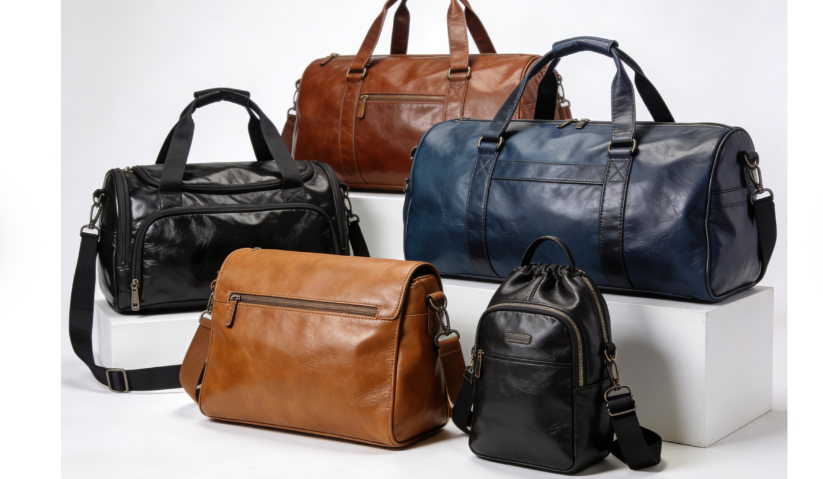
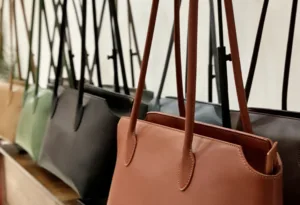
True leather sports bags hold a premium spot in the $531.07 billion global leather goods market (2025 valuation). Genuine leather claims 55% market share. Synthetic alternatives take 30%. This gap shows consumers prefer real materials for high-end products.
Supply Chain Geography and Cost Structure
North America controls over 40% of raw leather supply ($34.64 billion in 2025). Europe takes 30% ($27.15 billion). OEM manufacturers must meet the quality standards these regions set.
Asia-Pacific grows fastest at 7.5% CAGR through 2033. China’s leather market expands at 9.5% each year – the highest rate among major economies. Japan grows at 8.5%.
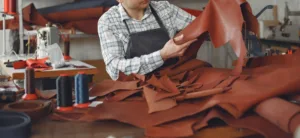
Raw material costs shape MOQ strategies. Premium full-grain leather for sport bags needs 200-500 square feet minimum orders. Lead times run 45-60 days. This covers tanning and quality checks.
Material Performance Trade-offs
Leather offers unmatched durability. It develops character as you use it. But it needs special care. Water resistance requires chemical treatment. Untreated leather soaks up moisture fast.
Weight matters here. Leather gym bags weigh 30-40% more than nylon versions. This makes them better for lifestyle products. They don’t suit performance gear as well.
The $855.36 billion market forecast for 2032 (7.05% CAGR) shows strong demand ahead. Buyers need to weigh premium appeal against what modern sport bag users actually need. Price positioning has to match function. That’s the real balance point for procurement teams making leather bag decisions today.
Ripstop Fabric for Custom Sport Bag

Ripstop fabric is widely used in OEM Sport Bag Manufacturing due to its reinforced grid structure. Coarser yarns are woven at 5–8 mm (0.2–0.3 in) intervals in both warp and weft directions to prevent tears from spreading. This self-reinforcing design allows the fabric to resist punctures and snags without complete failure, making it ideal for durable sport bags.
Fabric Specifications and Performance
Ultra-Lightweight
-
15D polyester mini-grid ripstop
-
Weight: 0.9 oz/yd² (~30 g/m²)
-
Width: 58 in (usable 56 in)
-
Applications: lightweight daily backpacks, travel pouches where every gram counts
-
Features: ultra-light, portable, easy to print logos
Mid-Range
-
70D polyester ripstop
-
Weight: 1.9 oz/yd² (~64.4 g/m²)
-
Width: 60 in
-
Surface finish: breathable DWR, no calendering, suitable for logo printing
-
Applications: gym bags, daily sport backpacks
Heavy-Duty
-
200D Ottertex DWR ripstop
-
Base weight: 120 g/m²
-
Thickness: 0.35 mm
-
Reinforcement: grid every 1/8 in
-
Weight: 6.6 oz/yd²
-
Tensile strength: warp 69 N, weft 52 N
-
Applications: high-strength outdoor backpacks, tactical bags, hiking packs
Grid Structure and Reinforced Options
-
Micro-grid spacing can be adjusted to performance requirements
-
20D × 20D polyester available in 1×1 mm (1.1 oz/yd²) or 3×3 mm (1.6 oz/yd²) grids
-
Denser grids increase tear resistance but also increase weight
-
Reinforced laminated ripstop enhances strength
-
Example: 200D face + 70D lining
-
Width: 56 in
-
Weight: 5.9 oz/yd² (~200 g/m²)
-
MOQ: 2000 meters+ (due to lamination cost)
-
OEM Sourcing Considerations
-
Shrinkage: printed ripstop fabrics shrink 2–3%, must account for cutting
-
Lead time: 30–40 days (including dyeing and DWR finishing)
-
Available deniers: 15D–200D, suitable for lightweight, mid-range, and heavy-duty bags
-
Surface finishes: DWR, water-repellent, breathable treatments
-
Applications: ultra-light daily bags, custom gym bags, basketball bags, outdoor and tactical backpacks
Recommended Sport Bag Applications
|
Bag Type |
Recommended Ripstop Fabric |
|---|---|
|
Lightweight daily bag |
15D mini-grid |
|
Gym bag |
70D DWR ripstop |
|
Basketball / football bag |
70D–200D DWR |
|
Outdoor / hiking / tactical bag |
200D Ottertex / laminated grid |
DWR Ripstop Fabric provides self-reinforcing durability and tear resistance, making it a critical choice in Sport Bag Material Selection for OEM sport bag production. Selecting the right grid density, fabric weight, and laminated options ensures strength, reduces weight, and controls costs, making it ideal for mid-to-high-end sport bags and outdoor backpacks.
Sport Bag’s Spacer Mesh / Mesh Panels

Spacer mesh gives you three-dimensional airflow. No flat fabric can match this. Two outer layers connect through vertical spacer yarns on double-needle-bar Raschel machines. These inner yarns work like springs. They hold a fixed air gap for cushioning. Heat escapes at the same time.
Construction and Material Specs
100% polyester makes up most spacer mesh for sport bags. You can find latex-free versions for medical or healthcare use.
Thickness options range from 3 mm (Air Mesh Spacer from Eastex) up to 6.35 mm (1/4 inch) for heavy-duty backpack padding. Weight changes with thickness: 240 g/m² for thin air mesh versus 597 g/m² for thicker cushioning rolls.
Standard widths run 53-59 inches. Roll lengths hit 30-46 yards depending on supplier. Colors stay limited—black and gray cover most OEM orders.
Performance Data for Sourcing Decisions
Monofilament spacer yarns create more space between face layers. This pushes thickness beyond the 4 mm limit. Multifilament yarns usually max out at that point.
Breaking strength reaches 129 lbf (warp) / 78 lbf (fill) in upholstery-grade spacer mesh. Abrasion resistance goes past 1,002,000 double rubs on Wyzenbeek testing with cotton duck abradant. This qualifies as Heavy Duty under ASTM D4157.
Some markets need flame-resistance. CAL 117 compliance lets you use the mesh in seating where fire codes exist.
Design Variables That Shape Application
Face construction splits into two paths:
Mesh face gives maximum ventilation. Back panels and shoulder straps work well with this open structure. High MVTR (moisture vapor transmission rate) moves sweat away fast.
Solid knit face takes coatings and finishes. Water-resistant treatments or moldable inserts attach here as needed.
You adjust elasticity through yarn selection and knit patterns. Inelastic builds work for rigid structures. Elastic versions flex for ergonomic contact zones.
Thickness choice changes how the mesh works. Thicker spacers (6+ mm) add cushioning but make sewing harder. Thinner builds (3-4 mm) stay flexible. They still give you better airflow than standard mesh panels.
Sport Bag’s Recycled Polyester (rPET)
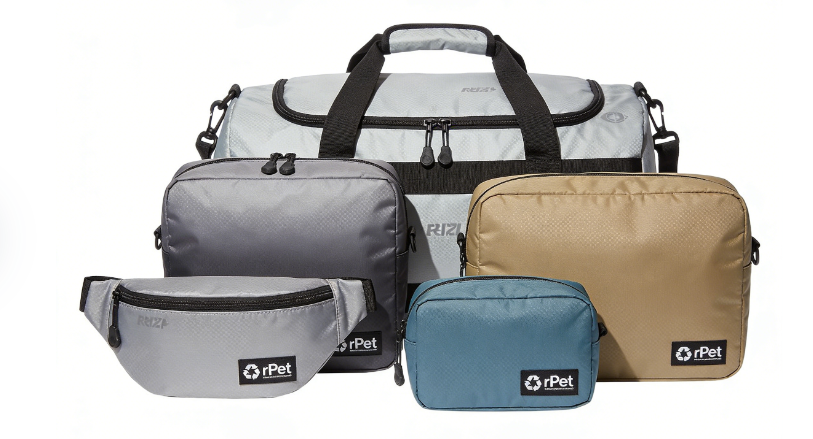
Recycled PET (rPET) transforms discarded PET bottles into functional sport bag fabrics through mechanical recycling. In 2024, the global rPET market reached $12.85 billion, projected to grow to $29.19 billion by 2034, with a CAGR of 8.55%. Regulatory policies and brand sustainability commitments are major drivers behind this growth. Increasingly, brands are prioritizing recycled materials in their products.
Market Trends and Regional Insights
-
Asia-Pacific led rPET production and usage in 2024
-
U.S. rPET market in 2025: $3.13 billion, expected to reach $7.16 billion by 2034
-
rPET accounts for roughly 15% of all polyester in textiles and packaging
-
Industry goal (Textile Exchange 2025 Challenge): member brands to use 45–100% rPET in products
These trends accelerate the shift from virgin polyester to recycled polyester in Sport Bag Material Selection.
Mechanical Performance and Coating Compatibility
-
rPET webbing holds 52.4% of the eco-webbing market (2025) due to strength and load-bearing capacity comparable to virgin polyester
-
Widely used in automotive seat belts and child safety harnesses, proving its reliability
-
Variability exists between batches of recycled fibers; coating systems may need adjustments
-
Adding adhesion promoters improves surface energy uniformity
-
PU or acrylic coatings require tighter crosslinking for durability
-
Some suppliers apply 20–30% thicker coatings than virgin PET to maintain abrasion resistance
Supply Chain and Quality Control
-
rPET sources: post-consumer bottles and industrial waste
-
Sorting: Near-infrared spectroscopy and AI-assisted separation reduce contamination
-
Cleaner material reduces fluctuations during coating processes
-
Food-grade rPET pellets produced in the U.S. and Europe ensure stable dyeing and coating adhesion
-
Long-term contracts with beverage brands maintain consistent raw material quality
OEM Sourcing Information
-
MOQ: 500–1000 meters per color (same as virgin polyester)
-
Lead time: 22–32 days
-
GRS (Global Recycled Standard) certification processing: additional 5–7 days
-
Price: 8–15% higher than equivalent virgin polyester due to sorting and reprocessing
-
Recommended for eco-conscious OEM Sport Bag Manufacturing, sustainable backpacks, gym bags, and outdoor packs
Recommended Applications
|
Bag Type |
Suggested rPET Application |
|---|---|
|
Gym bag |
210D–420D rPET with DWR or TPU coating |
|
Basketball / football bag |
420D–600D rPET, reinforced |
|
Outdoor / hiking bag |
Heavy-duty rPET, laminated DWR / TPU |
|
Eco-friendly casual bag |
210D–300D rPET with DWR finish |
rPET fabrics offer a sustainable alternative to virgin polyester while maintaining durability and performance. Proper coating selection and batch quality control are essential to meet standards in Sport Bag Material Selection. Using rPET enables OEM brands to balance performance, cost, and environmental responsibility, supporting market access in Europe and North America.
Making Your Material Decision Today
You’ve reviewed seven major material options, including important comparisons such as Polyester vs Recycled Polyester (rPET) and advanced waterproof solutions like DWR Ripstop Fabric. Now it’s time to turn these insights into practical sourcing decisions. Focus on three things: match density to stress points, align waterproof ratings with real usage, and verify certifications before confirming MOQ.
Your Next Steps
1. Download the material comparison sheet
Quickly filter by budget, MOQ, and required certifications.
2. Request physical samples
We can send 420D ripstop nylon, rPET DWR fabrics, and multiple EVA foam densities for hands-on testing.
3. Schedule a short technical call
Our engineering team will recommend the right fabric mix and provide accurate pricing based on your specs.
4. Start a small trial order
Begin with low MOQ to validate quality and production capability before scaling.
Ready to move forward
Contact us and we’ll help you make the right material choice with confidence.