
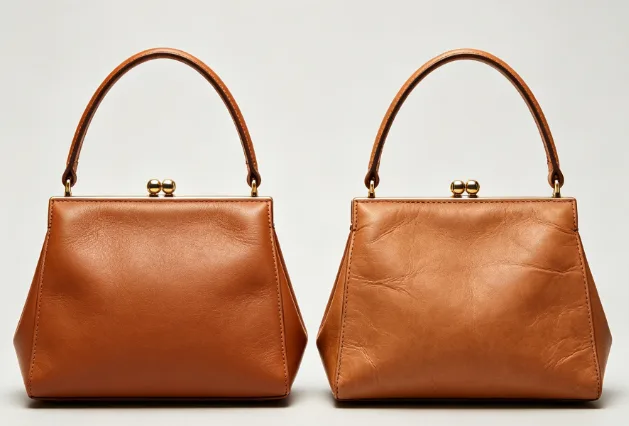
What Makes a Clutch Bag Manufacturer “Custom-Ready”
Not every factory that accepts custom orders is built for it. Some can tweak an existing silhouette. Others can execute your full technical vision from scratch. Those are two very different things.
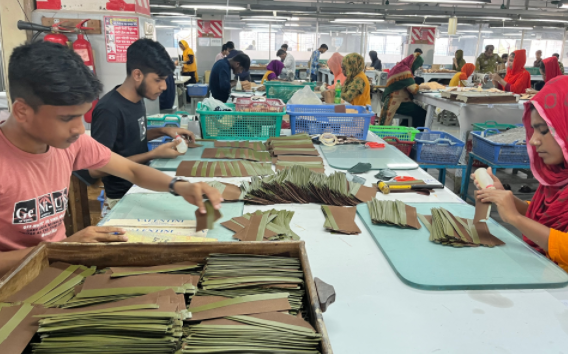
Here’s how to tell them apart.
Tech Pack Responsiveness Is the Fastest Litmus Test
Send a factory your tech pack and watch how they respond. A custom-ready manufacturer gives you line-by-line feedback. They check whether your hard-shell dimensions can fit a phone plus card slots. They recommend leather thickness — 1.2–1.4 mm full-grain works well for structured flap closures. They also catch hardware mismatches, like a #3 zipper where your spec calls for a #5.
A basic private label factory? They’ll ask which color you want.
Custom Hardware Capability Separates the Real from the Repackaged
Custom-ready factories can co-develop exclusive hardware — logo plates, twist locks, chain styles — through their hardware tooling partnerships. Here’s what to budget for tooling costs:
-
Simple logo plates: USD 150–300/mold
-
Functional lock bodies (twist locks, magnetic shells): USD 300–600/mold
-
Chain sets or multi-component hardware: USD 500–1,000/tooling set
Custom hardware needs a minimum of 1,000–3,000 pcs per SKU to spread out mold costs. Factories stuck with catalog hardware can’t give you a product that stands out. That’s just the reality.
Pattern-Making Independence Determines Your Development Timeline
Dedicated OEM/ODM factories keep pattern makers and sample teams in-house. First samples land in 7–15 days — or 20–30 days for complex structures or custom molds. You get 2–3 revision rounds before production sign-off. Each style carries its own pattern number, size spec sheet, and Bill of Materials. That structure is what lets you scale a product line without chaos.
Factories without this setup will hand you their existing blocks with minor cosmetic changes. That’s private label. It’s not true customization.
Step 1: Define Your Product Brief Before Contacting Any Manufacturer
Most sourcing problems don’t start at the factory — they start at your desk, before you’ve contacted anyone.
Go into manufacturer conversations without a clear product brief, and you’ll get inconsistent quotes all over the map. One factory prices your clutch at $3.50. Another comes in at $6.00. Same product description, 71% price gap. That’s not the factories being difficult. That’s what happens when “PU clutch bag” is all you give them to work with.
A solid product brief locks in the variables. That stops them from turning into expensive surprises later.
Here’s what your brief needs to cover:
-
Product type and end use — “Women’s evening clutch for weddings, hand-held with optional removable chain strap” gives a factory far more to work with than “ladies bag.”
-
Dimensions with tolerances — Outer size (e.g., 24 cm × 12 cm × 4 cm), internal structure, and whether ±0.5 cm variance is acceptable.
-
Material specs — Shell material, thickness, finish, and lining weight (e.g., PU leather 1.0 mm matte / polyester 190T lining at 80–90 g/m²).
-
Hardware details — Closure type, plating color, chain strap length, D-ring sizing.
-
Logo method — Hot stamping, emboss, woven label, or metal plate. Add Pantone references if color accuracy matters.
-
MOQ expectation and target price — Put your first-order quantity and FOB price range upfront (e.g., FOB Shenzhen $4.50–$5.50/pc).
What happens without it:
Vague briefs push sample rework rates up to 30–60% on first rounds. Every revision adds 7–14 days and up to 30% in extra sampling costs. A standard 45-day production timeline can stretch silently to 90 days. You won’t know what went wrong until it’s already too late.
You don’t need a full tech pack to start. A bare-minimum brief — dimensions, materials, hardware, logo preference, and target price — gives factories enough to quote with precision and sample with a clear direction.
Step 2: Build a Qualified Manufacturer Shortlist (Where to Find Them)
Start wide — 10 to 20 candidates — then cut down to 3 to 5 factories that move forward to sampling. Here’s where to find them and how to filter fast.
Start with Alibaba and Global Sources for volume, not decisions.
Alibaba gives you access to 150,000+ suppliers and lets you blast RFQs to dozens of factories at once. Expect a 20–40% useful reply rate from active suppliers. Global Sources leans toward larger, export-certified manufacturers. Fewer leads, but a better hit rate for serious contenders. Use both to build your initial pool.
Add ImportYeti to reverse-engineer your competitors’ supply chains.
Search a competing clutch bag brand on ImportYeti. Any supplier showing up 10+ times per year is a stable production partner — not a one-off. Check those names on Alibaba or LinkedIn to confirm their product range and certifications.
Use Google search operators to pull up factory websites direct:clutch bag manufacturer OEM China -alibaba -amazon -ebay
Factories that rank on their own domain tend to have more production depth than pure platform sellers. They’re running real operations, not just a storefront.
Narrow by MOQ fit before you send a single message.
Your first order is 500 pieces? Drop any factory with a minimum above 1,000. Mismatched MOQs waste time on both sides — yours and theirs.
By week two, aim for 10–20 leads. By week four, cut to 6–8 based on response speed and quote completeness. A factory that sends back a full quote — unit price, tooling fees, lead time, payment terms — within 48 hours is showing you they take your order seriously. That’s the shortlist you want.
Step 3: Screen for Clutch Bag Category Fit and Production Capability
Factory size tells you almost nothing useful. A manufacturer running 100,000 units per month can still be the wrong choice for your leather clutch line — if their entire operation is built around nylon travel bags.
Category fit matters more than capacity numbers.
Why a Mismatched Factory Creates Real Production Problems
A nylon travel bag factory runs thick-feed lockstitch machines, auto-cutting beds, and heavy-duty flatbeds. These are built for 600D–1680D nylon and Oxford cloth. Stitch density sits around 3–4 stitches/cm. Cutting tolerance runs ±2–3 mm.
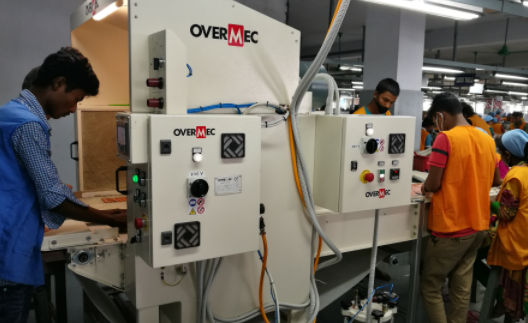
Leather evening bag production needs something different:
– Cutting precision: ±1 mm tolerance — three times tighter than nylon
– Stitch density: 6–8 stitches/cm for clean, tight seams
– Equipment: Walking-foot machines, post-bed cylinder arms, double-needle rigs, leather skiving tools
Run leather clutch bags on a nylon factory’s standard setup and you get oversized needle holes, uneven stitching, edge paint cracking, and delamination. Defect rates can hit 5–8% — the point where “major defects” start triggering returns and brand damage.
Pattern-making gaps make things worse. Nylon bag pattern makers design for load-bearing structure and functional compartments. They don’t work to the tight tolerances a clutch bag demands: body dimensions within ±2 mm, flap arc symmetry, edge thickness control, and the slim-yet-structured silhouette that holds up in a formal setting. Under-qualified factories often deliver finished bags running 3–5 mm thicker than spec. Flap arc asymmetry exceeding 2 mm is common — and that’s a disqualifying defect at mid-range and premium price points.
Hardware supply chains are another red flag. Nylon travel bag suppliers stock plastic buckles, standard zinc pulls, and nylon zippers rated for pull strength and abrasion. Clutch bag hardware requires electroplated finishes with color consistency (ΔE < 2), friction-tested coatings rated for 5,000+ cycles, and custom locks available at 500–2,000 pcs/style. That’s far from the 10,000+ MOQ minimums you’ll find in travel bag hardware supply chains.
Key Production Capability Questions to Ask
Don’t just ask “what’s your capacity per month?” Break it down by category and structure:
-
Standard leather clutch (no complex frames): What’s maximum output per line per month? A well-equipped line runs about ~3,000 pcs/month
-
Complex structures (hard shells, metal frames, hand embellishment): Expect 1,000–2,000 pcs/line/month — ask for actual numbers
-
Skilled worker ratio: Are at least 70% of sewers experienced with leather? Do they keep dedicated leather and evening bag specialists on staff?
For equipment, check for:
– Walking-foot machines and post-bed cylinder arms (leather-specific)
– CNC or laser cutting beds holding ±1 mm accuracy
– Dedicated edge paint stations with pass-rate tracking
– Sewing machines running at 1,800–2,700 stitches/minute
Ask straight out: “How many machines are equipped with leather needles and walking feet? Do you separate leather thread from standard yarn in your production lines?”
Use Past Client Portfolios to Confirm Brand-Tier Fit
Request case examples broken down by product type and price tier:
|
Retail Price Range |
Typical Standard |
What to Verify |
|---|---|---|
|
USD 20–60 (mass market) |
AQL 2.5–4.0 |
PU, synthetic materials |
|
USD 80–200 (mid-to-premium) |
Major defect rate < 2.5% |
Full-grain or premium PU |
|
USD 250–600+ (accessible luxury) |
AQL 1.5 or 0.65 |
Custom hardware, multi-round sampling |
A factory whose entire portfolio sits in fast fashion and mass e-commerce is a poor match for mid-premium or luxury positioning. Push harder: “Have you ever run production under AQL 1.5? Can you show inspection records?” No records means a category mismatch — no matter how big their operation is.
A smaller factory doing 10,000–20,000 pcs/month with a solid leather clutch portfolio and real brand-tier experience will beat a large-scale nylon operation on quality consistency, defect rates, and timeline reliability. Size doesn’t win here — category depth does.
Step 4: Evaluate Quality Control Systems — The Non-Negotiable Standard
Don’t wait until after production to check quality. By then, the damage is done.
The most important thing to understand is in-line QC vs. end-line QC. Factories that run final inspections alone are a structural risk to your order.
In-line QC (IPQC) catches defects at key production stages:
– After cutting
– Mid-sewing
– Before assembly
End-line QC checks finished goods once — right before packing.
The cost gap is real. Industry data shows defects caught during production cost 3x to fix. The same defect found at final inspection costs 10x or more. You’re now unpacking, unstitching, reworking, and re-inspecting. Worse, end-line AQL sampling at standard General Inspection Level II means over 90% of your batch was never checked during production.
The impact on lead times is direct:
-
A factory that catches sizing or stitch issues at 30–50% of production can fix problems mid-run with zero to two days’ delay.
-
A factory that finds a 5%+ critical defect rate three days before shipment? Expect 3–10 days of rework — or an airfreight bill.
Ask manufacturers this question straight: “At which production stages do you run IPQC checkpoints, and what’s your documented rework rate per style?” Factories with real in-line systems will give you specific answers. Factories without them won’t.
The second piece is a Golden Sample protocol. “Great sample, inconsistent bulk” is one of the most common complaints in clutch bag sourcing. It’s almost always a Golden Sample failure. A proper Golden Sample is:
-
Buyer-signed and version-numbered
-
Held by both the QC team and the production floor
Every in-line and end-line check runs against it. Any material swap or hardware change needs a new approved sample before production continues. Skip this step, and your approved sample and bulk production end up on different standards entirely.
Step 5: Request and Evaluate Pre-Production Samples
A great factory pitch means nothing if the sample falls apart in your hands.
Pre-production sampling is where manufacturer claims meet reality. This is the stage you confirm material quality, structural integrity, and production consistency — before a single dollar of bulk order money changes hands.
Start by requesting 2–5 samples per supplier. That quantity gives you enough units to run structural tests, compare across factories, and keep a reference piece on file. Before samples ship, lock in these commercial terms in writing:
-
Sample cost: USD 20–50/pc for standard clutch bags
-
Freight responsibility: Confirm upfront who pays shipping
-
Deduction policy: Most reputable factories will credit sample fees against your first bulk order (common threshold: orders ≥ USD 5,000 get full credit)
-
Revision rounds: Clarify how many free modification rounds are included — two structural revisions is standard, with extra rounds billed at USD 20–50/revision
-
Timeline: Standard sampling runs 7–20 days from the confirmed start date. Simple styles land in 7–10 days. Complex frames, custom hardware, or multi-technique evening bags push to 15–20 days
-
IP ownership: Get written confirmation that your design files, logo, and custom molds cannot be shown or sold to third parties
Samples arrive? Evaluate them across six clear dimensions. Drop the subjective impressions. Score each dimension on a 1–5 scale, apply category-specific weights, and let the numbers drive your decisions.
Sample Scoring Framework
|
Dimension |
Weight |
5-Point Benchmark |
|---|---|---|
|
Dimensions & structural stability |
25–30% |
Key measurements within ±1 mm; no deformation after 10–20 load cycles |
|
Material & texture consistency |
15–25% |
Weight, thickness, and grade match tech pack; hand-feel matches approved reference |
|
Hardware & functionality |
20–25% |
Zipper and closures pass 50-cycle open/close test with zero sticking or skipping |
|
Stitch quality & construction |
15–20% |
Even stitch density (~6–8 stitches/cm for leather); no skipped stitches, broken thread, or visible deviation |
|
Color & brand presentation |
10–15% |
Color delta ΔE ≤ 2 under neutral light; logo placement and clarity match spec |
|
Packaging & manufacturability |
5–10% |
Packaging survives basic drop and stacking tests; assembly complexity is production-viable |
Set hard veto rules before scoring starts. Any sample that scores ≤ 2 on a safety or functional dimension is disqualified — no matter what the total score looks like. This stops a “looks great overall” impression from covering up a real structural failure.
For each sample, pull together measurements, photographs, test repetitions, and defect classifications (minor / major / critical) into one consolidated feedback document. Skip the scattered messages. One clear report per revision round keeps communication unambiguous and traceable — useful if a dispute comes up later.
A sample clears your scoring threshold? Designate it as the Golden Sample right away. Both you and the manufacturer each keep one sealed, signed, and version-numbered unit. This sample becomes the binding quality benchmark for all bulk production inspections — and your reference point in any dispute.
Step 6: Verify Factory Credibility and Certifications
A certification doesn’t make a factory trustworthy on its own. But the right ones — checked the right way — cut out a real layer of sourcing risk.
Here’s what the key certifications tell you:
-
ISO 9001 confirms the factory runs documented, repeatable quality processes — batch consistency controls, internal audits, corrective action loops. Most European and North American buyers treat it as a baseline, not a standout feature.
-
BSCI / SMETA covers labor compliance: working hours, wages, fire safety, and forced labor screening. SMETA is an audit method, not a pass/fail certificate. The report logs non-conformances and observations — read the full report, not just the summary.
-
OEKO-TEX Standard 100 tests textile materials for harmful substances — formaldehyde, heavy metals, banned azo dyes. This matters for clutches with fabric shells or linings that touch skin.
-
LWG covers genuine leather supply chains. It looks at tannery-level water use, chemical handling, and wastewater management. For lines using full-grain or top-grain leather, this one counts.
Always verify every certificate. Never rely on a static PDF alone. Real certifications are searchable online:
-
ISO 9001: Cross-check the certificate number and legal entity name in the issuing body’s directory
-
OEKO-TEX: Search the OEKO-TEX certificate finder — confirm the status is active and the product category matches your order
-
SMETA: Legitimate reports come through the Sedex platform. A standalone emailed document is not valid
-
GRS: You need both a Scope Certificate (factory eligibility) and a Transaction Certificate tied to your specific order batch. A factory that sends only the Scope Certificate is a red flag
Go beyond certifications too. Ask for 2–3 reference contacts from clients who ordered within the past two years — European or North American brands work best. Contact them and ask four things: how long they’ve worked with the factory, their annual order volume, their quality consistency rating, and whether any compliance issues came up. Strong, consistent feedback across multiple references tells you more than any single audit document ever will.
Step 7: Calculate Total Production Cost — Beyond Unit Price
Unit price is the number factories lead with. It’s also the number that misleads buyers most often.
The real cost of a clutch bag order covers more than you think. It includes sampling fees, custom hardware tooling, packaging, freight, import duties, third-party inspection, and rework contingency. Miss any of these and your landed cost runs 20–35% higher than your quote showed.
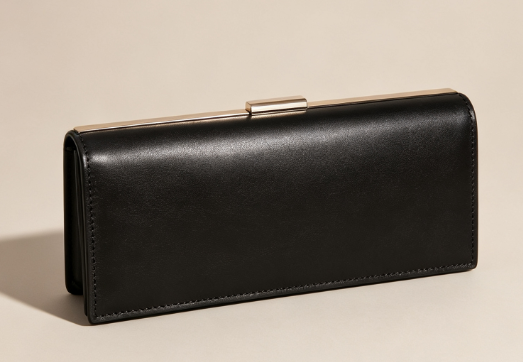
Use this formula as your baseline:
Total Production Cost = FOB Unit Price + Tooling + Sampling + Packaging + Freight + Duties + QC + Rework Reserve
Here’s what each line costs:
-
FOB unit price: USD 6–12 (basic PU), USD 18–40+ (genuine leather)
-
Custom hardware tooling: USD 300–600/mold. That cost spreads across your total order quantity.
-
Sampling: 1–3× unit price per sample
-
Packaging design + per-unit cost: USD 0.30–2.00/pc
-
Sea freight: ~USD 0.20/pc at scale; air freight runs USD 1.60–2.40/pc
-
Import duties: 10–25% of CIF value
-
Third-party QC: ~USD 0.10/pc on a 3,000-pc batch
-
Hidden rework costs: add 5–15% to total
A factory quoting USD 13.00/pc versus USD 15.00/pc looks like a clear win. But run the full numbers first. A cheaper factory with a 15% defect rate forces emergency airfreight and rework. That USD 2.00 gap disappears fast — and you end up paying more. Model total landed cost per unit. Don’t stop at the line on the quote sheet.
Step 8: Conduct a Factory Audit — On-Site or Virtual
A quote looks clean. The sample passes. Certifications check out. None of that tells you what’s happening on the production floor when your order runs.
A factory audit — on-site or virtual — closes that gap. This is where manufacturer claims hold up or fall apart.
What to Check On-Site
Four areas give you the most useful information in the least time.
Production line organization. Look at whether the line runs in process sequence, with short material movement between stations. Constant back-and-forth between workstations points to poor layout. Poor layout leads to delays and defects on your order. Every key process tied to your clutch bag should be active on the day you visit. Machines sitting idle, or “not scheduled today” — push back on that.
Sample-to-production consistency. Ask the factory to pull three items: a showroom sample, in-process units from an active order, and a retained piece from a recent shipment. Compare dimensions, materials, and batch labeling across all three. The SOP on the wall should match what workers are doing on the floor. Production records from the past three to six months should show stable parameters. Gaps between any of these are a real consistency problem — not a minor issue.
Worker skill visibility. Check each station for posted work instruction sheets (WIs) — they should be current and clearly visible. Watch how operators handle the hard steps: stitching leather edges, fitting closures, running final inspections. Ask workers about the key quality risks at their own station. A trained worker can answer that. A factory with weak skills training cannot — no matter what the training log shows.
Management response quality. A factory with solid quality systems can pull its quality manual, org chart, and original certificates before the opening meeting wraps up. Ask about a recent non-conformance. Good management walks you through the corrective action and explains how they stopped it from happening again. “We’ll look into it” tells you everything you need to know.
Can’t Visit? Virtual and Third-Party Options
Live video walkthrough. Ask for a real-time video call — pre-recorded footage tells you nothing useful. The call should cover the factory entrance and signage, original certificates with visible numbers and expiry dates, the full production floor in process order, warehouse storage conditions, and in-process units from a current order with the work order number on screen. Tell the guide to stop and zoom in at key points. A factory with nothing to hide will do this without hesitation.
Third-party audit firms. SGS, Bureau Veritas, and Intertek run factory capability and social responsibility audits. A standard capability audit costs USD 600–1,500 per auditor per day. Social responsibility audits (BSCI/SMETA) run USD 1,200–2,500 per audit. The report — findings, photo evidence, corrective action recommendations — lands within 24–72 hours. For a first-time order with a supplier you’ve never visited, that cost is worth every dollar.
Red Flags That End the Conversation
Two situations disqualify a factory on the spot:
-
Core processes outsourced without disclosure. A key step — stitching, edge painting, hardware assembly — appears on the process chart but has no matching equipment on the floor. Ask for the subcontractor management file. No file, or a vague answer, is a hard stop. Walk away.
-
No active orders to show. Any factory running real production can pull in-process units from a current or recent order on audit day. An empty floor with “nothing scheduled today” as the explanation means you’re not seeing the real operation.
Step 9: Negotiate and Sign a Contract That Protects Your Brand
A verbal agreement means nothing. Your shipment arrives three weeks late. 12% of the bags fail inspection. The factory shrugs. Without a written contract with real teeth, you have no recourse.
Most buyer-factory disputes trace back to one problem: the contract was too vague to enforce. Here’s how to write one that holds up.
Lock In Pricing and MOQ in Writing
Don’t just record a unit price. Build a tiered structure into the contract:
-
Base price: e.g., USD 8.50/pc FOB Guangzhou, MOQ 500 pcs (PU clutch)
-
Tiered pricing: 1,000–1,999 pcs at USD 8.20; 2,000–4,999 pcs at USD 7.90; ≥5,000 pcs at USD 7.50
-
Price lock period: Rates held for 12 months. Renegotiation triggers only if raw material costs rise more than 5%
List out what the quoted price covers — sampling fees, inner and outer packaging, export documentation. Any gap here turns into a surcharge later.
Delivery Terms With Real Consequences
The most common contract failure isn’t a missed deadline. It’s having zero consequence when the deadline gets missed.
Write the clock start date into the contract: “Lead time of 35 calendar days begins from the date deposit is received AND golden sample is approved.” Use calendar days, not business days. That one change kills most holiday-related disputes.
For penalties, this range works well in practice:
-
0.3–0.5% of total order value per day delayed, capped at 5–10% of contract value
-
Example: USD 50,000 order, 10 days late at 0.5%/day = USD 2,500 penalty
-
Add a hard exit: “Delays exceeding 15 days grant the buyer the right to cancel and recover all prepaid amounts plus direct losses”
For time-sensitive seasonal orders, consider flipping this structure. Offer a 2% bonus for delivery 7+ days ahead of schedule. It gives the factory a reason to move fast.
AQL Terms That Connect Quality to Payment
“AQL 2.5” is not a quality clause on its own. It’s a number with no context. An enforceable clause spells out the full formula:
-
Defect classification: Major defects AQL 1.0 / Minor defects AQL 2.5
-
Inspection level: General Inspection Level II (ANSI/ASQ Z1.4 or ISO 2859-1)
-
Sample size on paper: For a 2,000-pc order, sample code “L” = 200 pcs inspected; accept at ≤10 defects, reject at ≥11
Put this in the contract body or attach it as a signed QC appendix.
Then tie payment to inspection results: “No shipment authorization without a passed inspection report or written buyer release.” The payment structure that protects buyers: 30% deposit + 40% upon third-party inspection pass + 30% within 30 days of arrival with no major defect claims.
A batch fails? The contract must state that the supplier covers rework costs, re-inspection fees (USD 300–500/auditor/day is standard), and takes full responsibility for any delivery delay that follows.
Golden Sample and Material Specs as Legal Benchmarks
Every custom clutch bag contract needs a signed Golden Sample clause. Before bulk production starts, the factory signs a Golden Sample Confirmation. This document attaches photos, key dimensions (L × W × H), material specs, hardware grades, logo method, and Pantone color references.
Bulk production gets measured against that sample. Not against “something similar.”
Make material specs measurable, not just descriptive:
-
Fabric weight (e.g., 420D nylon, 600D Oxford)
-
Leather or PU grade with thickness tolerance
-
Hardware plating thickness (e.g., ≥0.15 μm electroplating)
-
Dimensional tolerance: ±5 mm standard; ±2–3 mm for premium clutch lines
Any substitution — lining fabric, zipper grade, hardware finish — needs new written approval before production moves forward.
Protect Your IP Before You Share a Single Design File
Sign an NNN Agreement (Non-disclosure, Non-use, Non-circumvention) before sending tech packs or design files. Then reference that agreement number in your supply contract so both documents link together.
Your contract’s IP section needs to lock in three things:
-
Ownership: All design files, patterns, molds, and samples belong to the buyer. The factory gets a limited license to produce the contracted goods — nothing more.
-
Exclusivity clause: “For the contract term and years after termination, the supplier may not produce or sell the same or similar products to any third party — including reskins that change only the logo or colorway while keeping the same structure.”
-
Breach penalty: Set at 3–5× contract value for IP violations. Actual damages are hard to quantify in cross-border disputes. The deterrent has to be high enough that no factory wants to test it.
Also nail down your enforcement clause. Specify dispute resolution in a jurisdiction where the factory holds assets. Make sure it ties back to your NNN agreement.
Why Small Brands Need Hard Contracts More Than Anyone
Large brands can absorb a bad shipment. A small clutch bag startup running one hero SKU for a seasonal launch cannot afford that hit.
Chat records from Alibaba messaging or WhatsApp carry no legal weight in cross-border disputes. That’s true for general delays — and even more so for technical disputes like an AQL threshold or a dimensional tolerance. No formal contract means you can’t prove the factory agreed to a specific defect rate. Full stop.
A solid contract does two things. It protects you after things go wrong. It also screens out bad factories before production starts. Any manufacturer who pushes back on written delivery penalties, refuses to sign a Golden Sample confirmation, or won’t accept AQL-linked payment terms is sending you a clear signal — before you’ve put a single dollar into bulk production.
Red Flags: 7 Warning Signs of the Wrong Clutch Bag Manufacturer
Sourcing mistakes don’t announce themselves. They show up three weeks before your launch — in a shipment full of delaminating edges, mismatched hardware, and bags that don’t match the sample you approved.
Most of these problems trace back to warning signs that were visible during vetting. Here are seven you can’t afford to miss.
🚩 Red Flag 1: Low Quotes With Vague Material Specs
A unit price 20–40% below the regional average isn’t a deal — it’s a question mark.
A quote that lists “PU leather” or “genuine leather” with no thickness, grade, coating process, or origin gives the factory room to substitute. Legitimate mid-range PU should be 0.8–1.2 mm thick. It needs abrasion resistance ≥15,000 Martindale and hydrolysis resistance of 2–3 years. Full-grain leather for clutch shells runs 1.0–1.4 mm. Raw material costs land at USD 20–30/m². Anything below that cost and still labeled top-grain is high-risk.
Hardware follows the same pattern. “Gold hardware” or “eco-plating” with no salt spray test hours is a red flag. Acceptable mid-range hardware should pass neutral salt spray testing for at least 24–48 hours (per ASTM B117 or GB/T 10125). No hours listed means no standard held.
What to do:
– Request a full BOM — leather grade and origin, hardware base material (zinc alloy / copper / iron), plating structure, salt spray hours, and lining weight (standard range: 120–200 g/m²)
– Ask for material test report copies
– Specs still vague after follow-up? Move on.
🚩 Red Flag 2: Premium Sample, Downgraded Bulk
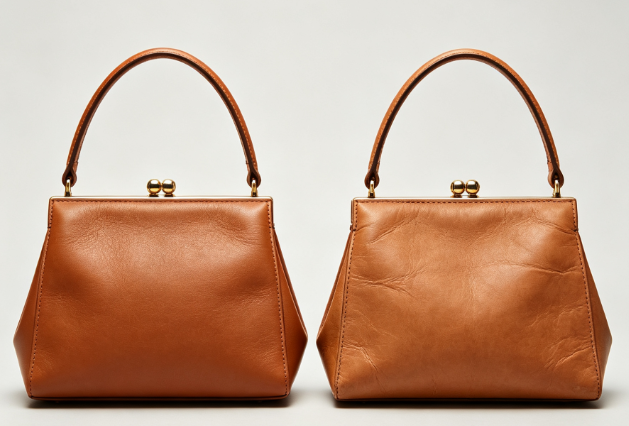
The sample feels substantial. The grain looks natural. You approve it. Then bulk production arrives and something’s off — the bags feel lighter, the surface is less structured, the finish cracks within weeks.
This is the most common quality switch in clutch bag sourcing. Factories use top-grain leather (1.5–2× the cost of split leather) for sampling, then substitute split or bonded leather for bulk. Same trick with PU: samples run at 1.0–1.2 mm on a dense base fabric. Bulk production drops to 0.6–0.8 mm on a lighter backing.
Here’s what to measure:
– A thickness difference of more than 0.1–0.2 mm between sample and bulk unit is a strong sign of material swap
– Color variation within a single batch exceeding ΔE > 1.0 points to inconsistent material sourcing
What to do:
– Write material specs into the contract — leather type (top-grain / split / bonded), thickness range, origin, and test parameters (tear strength, flex resistance)
– On your first bulk order, pull random units and measure thickness with a caliper against your sampling records
– Ask the factory for purchase invoices or warehouse release records for the batch material — date, item name, quantity
– Can’t produce these records? That’s your answer.
🚩 Red Flag 3: Hardware Plating That Fails in Three Months
“Anti-allergy gold plating” or “non-fading hardware” — these phrases mean nothing without supporting data. Plating thickness and salt spray hours are what actually matter.
Standard decorative hardware on mid-range clutch bags carries a total plating thickness of 2–5 μm. Below 1 μm, expect visible fading, base metal exposure, or rust spots within 3–6 months of regular use. After 50 open/close cycles, a substandard clasp will show coating wear at the friction points.
What to do:
– Request salt spray test reports during development — 24, 48, or 72 hours depending on your quality tier — with the test standard stated on the report
– Test 3–5 hardware samples on your own before bulk production starts
– Add a contract clause: end-consumer complaints about hardware discoloration exceeding 1% of shipped units within six months puts the rework or replacement cost on the factory
🚩 Red Flag 4: Samples Made Elsewhere, Bulk Produced In-House
A sample arrives in 24–48 hours. The stitching is immaculate. Edge paint is smooth and layered. You visit the factory and can’t find the equipment that made it.
This is the external sample room problem. New client samples get farmed out to a specialist workshop — better equipment, more skilled hands, tighter tolerances. Then production volume shifts back to the main factory. The leather sourcing, hardware vendor, edge paint system, and pattern dimensions are all different there.
The gap shows up in measurable ways:
– A sample with proper edge finishing can flex past 500 cycles without cracking
– Bulk production with one or two coats of machine-applied edge paint may crack at 100–200 cycles
– Weight differences of 5–10% between sample and bulk unit (at identical dimensions) mean lining, fill material, or leather has been substituted
What to do:
– Ask the factory to confirm in writing that the sample and bulk production use the same production line, the same workshop, and the same material suppliers
– Require pre-production samples (PP samples) made on the actual bulk production line before you authorize mass production
– During audits, look for the specific equipment used on your sample: edge paint applicators, embossing dies, punch molds. Not there? The sample wasn’t made there.
🚩 Red Flag 5: Unrealistic Lead Times With No Process Documentation
A complex structured clutch — multi-compartment interior, custom hardware, embellishment — doesn’t get sampled in five days or shipped in twenty.
Standard industry timelines for a new mid-range clutch style run 35–60 days at minimum:
– 7–14 days for sampling and revisions
– 15–25 days for hardware tooling and plating
– 10–20 days for bulk production
Factories that promise far less without showing a detailed process flow chart are either outsourcing key steps or cutting QC stages.
Compressed timelines produce specific defects. Too few hardware mold trials push assembly tolerances past 0.2–0.3 mm — closures stick, clasps rattle, frames don’t sit flush. No written process documentation means dimension variance between batches runs 3–5 mm. For structured clutch designs, that’s a disqualifying defect.
What to do:
– Request a full process flow document — each production stage, time allocation, staffing, and rework checkpoints
– For custom hardware, require at least two tooling trial rounds (T1/T2 confirmation) before bulk production begins
– Factory pushing a timeline well below industry standard? Ask them to increase inline inspection frequency to compensate — 5 units per 100, rather than 1–2
🚩 Red Flag 6: No Defect Rate Data — or Data That Looks Fabricated
A reliable clutch bag factory can show you real quality records:
– First-pass inspection rates at or above 95–97%
– Critical defect rates below 1–2%
– Records broken down by order, defect category (stitch issues, dimensional variance, hardware failures, edge paint), and corrective action taken
What you should never see: every inspection sheet reading “defect rate 0%” with no defect photos, no rework notes, and no batch numbering on materials. That’s not quality control — it’s paperwork theater. Factories with no batch or date codes on leather rolls and hardware components can’t trace a problem back to its source when something goes wrong on your order.
What to do:
– Ask for QC records from the past 3–6 months, organized by order and batch
– Rework rate exceeds 5% on any batch? Customer complaint rates exceed 2% of order volume in a single month? Both are serious risk signals
– In your contract, specify that batches exceeding your agreed defect threshold — for example, 3% — trigger the factory’s obligation to sort, rework, or discount
– Require documented inline inspection points at cutting, edge painting, and final assembly, with photo evidence kept on file
🚩 Red Flag 7: Shifting Answers on Price, Lead Time, or Specifications
Inconsistency in communication is a factory telling you something — whether they realize it or not.
The same question about leather grade, hardware testing, or packaging gets a different answer across two or three conversations within two weeks. That means the factory either lacks standardized processes or says whatever it thinks you want to hear. Watch for quotes that go through three or more revisions with unit price swings above 10% and no explanation. Watch for lead times that drift from “20 days” to “25 days” to “30 days” with no clear reason — no equipment downtime, no raw material delay, no upstream supplier issue given.
For clutch bags, this is a higher-stakes problem than with simpler products. A structured evening bag has tight connections between frame dimensions, hardware placement, and lining cut. Vague or shifting answers about any one of these create cumulative tolerance errors across the finished product.
What to do:
– Keep all communication on a traceable platform — email or a documented messaging thread — so you can flag contradictions with a clear record
– Catch three or more unexplained changes to specs or commitments within a short vetting window? Remove the factory from your shortlist.
– A supplier who can’t give you consistent answers before you’ve placed an order won’t give you consistent production after.
Quick-Reference Checklist: Questions to Ask Every Custom Clutch Bag Manufacturer
Run through these questions before you commit to any factory. A good manufacturer will give you specific answers — not vague reassurances.
MOQ & Order Structure
– What are your minimums for each category — style, colorway, fabric, hardware, and packaging? List each one out.
– Do you allow a low-quantity test order (100–150 pcs) before hitting standard MOQ?
– Can you mix colors or styles to reach fabric or hardware minimums?
Sampling & Development
– What’s your lead time for a first prototype? Does that stretch during peak season?
– Walk me through each step from first sample to Pre-Production Sample (PPS). Who approves at each stage?
– How many free revision rounds do you include? What’s the cost and extra time per round beyond that?
Quality Control
– Where are your inline inspection checkpoints? What sample rates and AQL thresholds (Major/Minor) do you apply?
– Can you share QC records from the past three months? Show defect rates, rework rates, and breakdowns by order batch.
Certifications & Compliance
– Which certifications do you hold? Share the certificate numbers and last audit dates.
– Do you have test reports for REACH or Prop 65? Which lab runs those tests?
Capacity & Lead Times
– How many clutch bags does each production line output per month? What’s your standard bulk lead time?
– Do you subcontract if raw materials are delayed or peak season creates a backlog? What’s the highest outsourcing rate you’ve hit?
After-Sales & Quality Responsibility
– What’s your written policy for bulk goods that arrive with major defects — zipper failures, edge paint cracking? Who pays return freight?
– Will you add a Golden Sample clause to the contract? The signed sample should act as the binding quality benchmark.
Communication & Change Control
– Who handles the project as a dedicated contact? What’s the guaranteed response time?
– Do you use formal change control — version-numbered tech pack updates, signed by both parties?
Pricing Transparency
– Can you break down costs line by line: materials, labor, hardware, packaging, tooling, and sampling?
– What does tiered pricing look like at 100 / 300 / 500 / 1,000 units per style?
Any factory that dodges these questions, gives vague answers, or can’t back things up with documents is already showing you a red flag — before you spend a dollar on bulk production.