
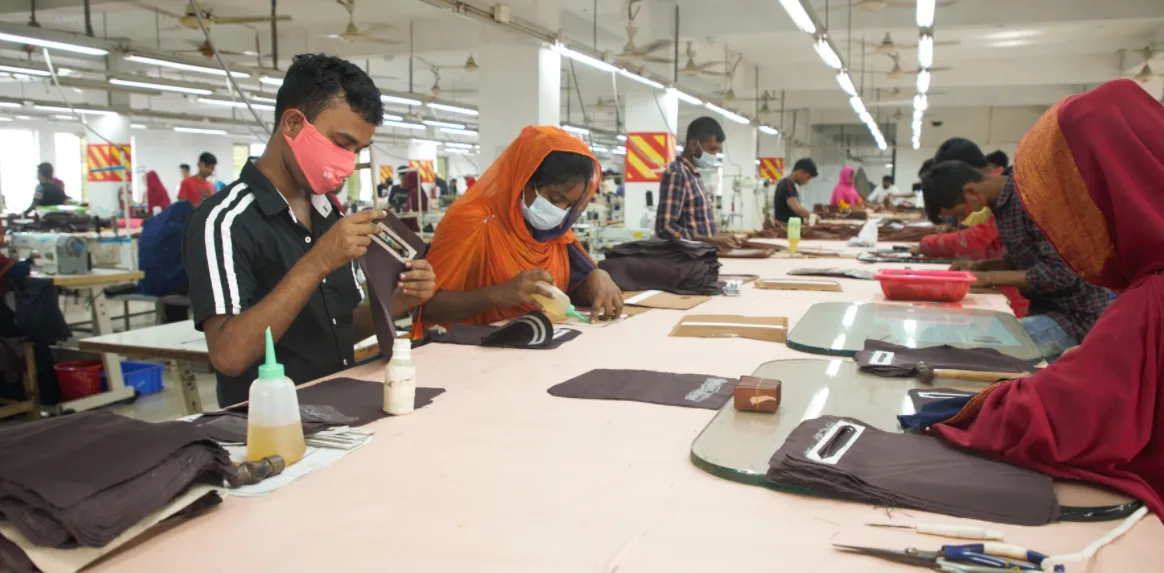
Pick the wrong fabric for your custom travel bag, and you are not just stuck with a bag that looks bad on day one. You are looking at failed hardware, waterlogged interiors, and customers filing complaints after three years of daily abuse from baggage handlers and monsoon weather.
For B2B buyers and brand owners, the real work is balancing nylon vs polyester trade-offs against cost targets, weight requirements, and whatever your end users will throw at the bag.
This guide compares ballistic nylon, waxed canvas, TPU-coated fabrics, and leather alternatives across durability, waterproofing, and price. You will also get a practical decision checklist matched to real use cases, so you can walk into your next sourcing conversation with a manufacturer already knowing what you need.
Key Factors to Consider When Choosing Custom Travel Bag Material
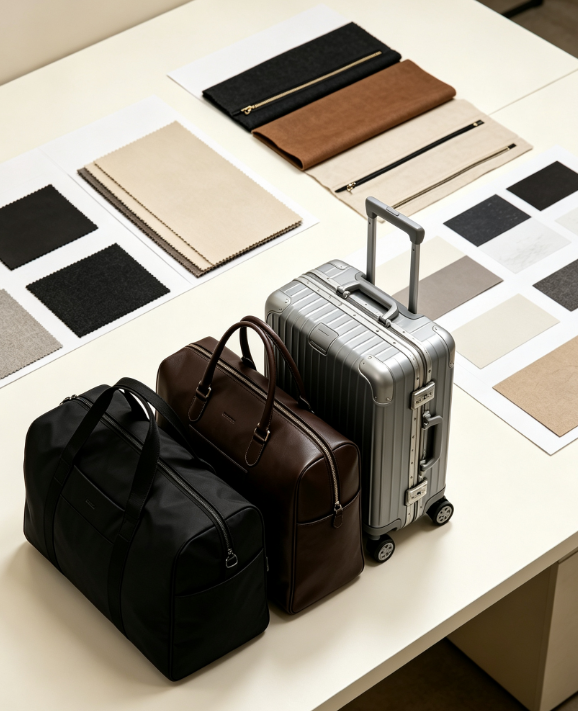
Six variables decide whether your custom travel bag survives the supply chain or ends up in a returns pile: abrasion resistance, waterproofing, weight, cost, appearance, and printing compatibility.
Abrasion Resistance & Tear Strength
Denier (D) tells you the story. General-purpose bags need 600D minimum. Heavy-duty backpacks and checked luggage push to 900D-1680D, where ballistic nylon lives. Fabric weight typically runs 180-300 gsm. Nylon beats polyester on tear strength; polyester wins on price.
Waterproofing & Coating Type
PU coating handles light rain for city and business travel. TPU coating or lamination on 600D+ fabric resists hydrolysis and cold, built for monsoon or alpine conditions. Ask suppliers for hydrostatic pressure test results. 1,000mm is baseline. 5,000mm+ is serious waterproofing.
Weight Targets
Carry-on bags should stay under 3 kg. High-denier fabric adds bulk, so reinforce stress points locally instead of upgrading the entire shell.
Cost Tiers
Nylon runs 10-30% pricier than equivalent-denier polyester. TPU coating costs more than PU. Budget accordingly: basic tier (600D polyester, PU) for sub-$30 retail; premium tier (1680D ballistic nylon, TPU lamination) for $150+ luggage.
Nylon & Technical Fabrics (Cordura, Ripstop, Nylon HD) — Best for Durability
500D Cordura nylon survives 40% more abrasion cycles than standard 500D nylon 6,6 before the first thread breaks (ASTM D3884 testing). That single data point explains why Cordura commands a premium in ballistic nylon luggage and why serious buyers won’t settle for generic “heavy nylon” on a spec sheet.
Cordura is a licensed brand. Mills need INVISTA approval to print the Cordura name, and the fabric must pass documented tear, abrasion, and colorfastness benchmarks. That licensing is your quality guarantee when negotiating with suppliers.
Denier drives everything. 1000D Cordura lasts 5x longer than 70D ripstop nylon in abrasive conditions. Ripstop nylon (40D–210D) uses a reinforcement grid that stops tears from spreading, ideal where puncture control matters more than raw abrasion resistance. The trade-off is that those raised grid threads fray faster under friction, so ripstop underperforms smooth nylon on Martindale cycles. Cordura and Oxford nylon (500D–1000D): 500D delivers over 50,000 Martindale cycles and 40–60N tear strength, the sweet spot for panels and base sections. Ballistic nylon (1680D) ranks above Cordura on contact abrasion resistance but adds weight, so it’s best reserved for corners and drag zones on checked luggage.
UV exposure matters too. Standard nylon 6,6 loses 40–60% of breaking strength after 1,000 hours of sun exposure. UV-stabilized grades retain over 80%. If your custom travel bag ships to sunny markets, specify UV-stabilized nylon on straps and handles.
Eco-friendly options exist. Recycled nylon (GRS-certified, 70D–1000D) now performs within 5–10% of virgin nylon on tenacity and abrasion. It’s a legitimate choice for brands positioning as sustainable without sacrificing structural integrity.
Polyester & RPET for Cost-Effective Bulk Production
Denier still drives the economics here, but the price gaps are smaller than most buyers expect. In China and Vietnam export markets, 300D polyester oxford runs 20–30% cheaper per square meter than 600D, and 600D sits 10–20% below 900D at similar finishing. FOB fabric bands (grey base plus basic PU coat, ≥1,000m) land around $0.70–0.90/m for 300D, $0.90–1.20/m for 600D, and $1.10–1.40/m for 900D.
Durability scales with denier too. 300D Martindale results exceed 15,000–20,000 rubs, fine for promo totes and day packs. 600D pushes past 25,000–30,000 rubs, the standard pick for mainstream backpacks and duffels. 900D clears 40,000+ rubs, suited to work bags and soft luggage where warranty claims matter more than unit cost.
RPET changes the sustainability math without wrecking your budget. Bottle-to-textile rPET costs about €1,140/tonne versus €950/tonne for virgin PET resin, a 5–15% premium at the manufacturing level. In exchange, you get 35–45% carbon savings and a legitimate “made from recycled bottles” claim. GRS certification adds another 3–8% but gives buyers traceable, auditable content percentages.
For bulk custom travel bags, pair 300D virgin polyester with light PU coating for entry-level promo runs, or specify 600D GRS-certified rPET with PU coating when brand positioning and ESG reporting matter more than shaving pennies off unit cost.
Canvas & Waxed Canvas — Best for Premium/Heritage Positioning
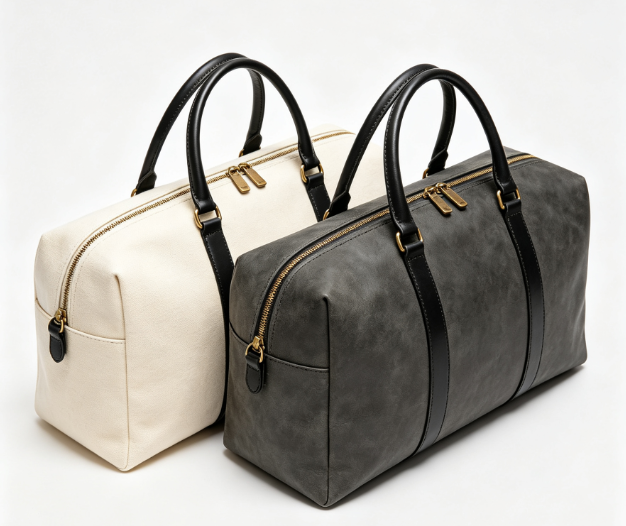
Weight in ounces tells the whole canvas story. Every 1 oz increase in fabric weight bumps material density by roughly 8–10%, which is why the 8–18 oz/yd² range covers everything from lightweight totes to hardcore expedition gear.
Matching Ounce Weight to Positioning
-
8 oz: Light totes and drawstring bags. Skip this for real travel bags—it won’t survive checked luggage handling.
-
10–12 oz (280–340 gsm): The sweet spot for city travel and weekend bags. When the stitching holds up, this weight lasts for years of daily use. It also gives you that structured, substantial feel buyers expect from mid-to-premium brands.
-
14–16 oz (400–454 gsm): Built for heritage and workwear. Tear strength hits ≥100–120N, and weather resistance is rated at 3–5 years outdoors.
-
16–18 oz (454–510 gsm): Reserved for tool bags and rugged photography cases where structure matters more than pack weight.
Waxed Canvas: Waterproofing Without Sacrificing Character
Waxed canvas starts with 12–18 oz base cotton, then absorbs wax at 10–20% of its own weight. Mid-wax treatments (10–15%) work well for commuter totes and business travel. Heavy-wax versions (15–20%) handle rain and mud for outdoor gear, and they develop that sought-after patina over time.
One trade-off: direct printing struggles on waxed surfaces. Most heritage brands get around this with leather patches, metal badges, or embroidery instead—which reinforces the premium positioning canvas buyers are after.
Cotton (Organic/Recycled) — Best for Eco-Friendly Lightweight Bags
Sustainability certifications are how you separate genuine eco-friendly travel bag material from greenwashed marketing. Look for three labels: OCS verifies organic fiber content, GOTS adds chemical restrictions plus social compliance, and GRS tracks recycled content through the supply chain. That last one matters for any recycled cotton or cotton+RPET blend.
Cost and Blend Options
-
Standard cotton canvas (5–8 oz/yd²): $1.0–1.5/meter, unbleached and uncertified
-
Organic cotton canvas (10 oz, OCS/GOTS): 15–30% premium, roughly $1.2–2.0/meter
-
Recycled cotton + RPET blends (65/35 or 70/30): 10–25% premium over standard cotton
A 65% organic cotton + 35% recycled PET blend, GOTS-certified, cuts water usage by up to 91% compared to conventional cotton. You also get moisture-wicking and wrinkle resistance from the PET fibers.
Weight and Real-World Limits
Lightweight totes run 5–8 oz/yd² (60–120g per bag). Recycled cotton-RPET drawstring gym bags hit 140 g/m², weighing just 69g each—good for daily gym runs. But cotton’s breathability cuts both ways: it manages moisture well but dries slowly, and you need a PU or wax treatment layer for waterproofing.
PVC & TPU Coated Fabrics — Best for High Water Resistance
Hydrostatic head numbers separate marketing claims from real waterproof travel bag fabric. PU double coating tops out around 300–1,000mm HH — fine for light rain, not for standing water. PVC coating jumps to ≥10,000mm HH, giving you a fully sealed, non-porous shell built for downpours and wet-area handling. TPU coated fabric luggage lands in a similar range, 5,000–20,000mm HH, but with better breathability (5,000–10,000 g/m²·24h vs PVC’s 3,000–5,000).
Where each material wins:
-
PVC: Rigid, heavy, wipe-clean surface. Runs 20–40% cheaper per square meter than TPU. Best for budget-tier luggage where cost outweighs flexibility.
-
TPU: Soft yet tough, stays flexible down to -40°C, and outperforms PVC on puncture, abrasion, and UV resistance. Costs more, but seams weld cleanly (RF/heat), enabling monolithic construction that survives repeated folding without cracking — critical for IPX5–IPX7-grade dry bags.
-
PU: Mid-cost compromise. Lighter and more drapey, but coatings can harden or delaminate under hydrolysis over time.
One caveat worth flagging to buyers: PVC carries environmental baggage — phthalate plasticizers, chlorinated emissions at end-of-life. If eco-positioning matters, specify phthalate-free PVC or default to TPU, and say so in your product specs.
Genuine Leather and PU Leather for Business and Premium Travel Bags
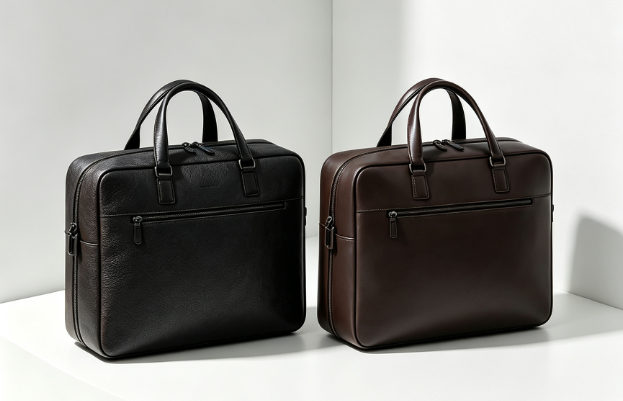
A $200 full-grain leather bag lasting ten years costs $20 a year. A $60 PU leather bag replaced every two years costs $300 over the same decade. Over ten years, the leather bag saves you $100.
Cost, Lifespan, and Maintenance Breakdown
Genuine leather (full-grain/top-grain): raw material runs $3.50–$8.00/sq ft, or $15–40/m² at B2B volumes. A bag lasts 10–20 years, sometimes 15–30+ with proper care. Maintenance means conditioning every 3–6 months and storing away from direct sun.
PU leather costs $1.20–$3.00/sq ft, about $3–8/m², one-third to one-fifth of genuine leather pricing. A bag lasts 2–5 years, often 6–24 months under heavy use. Daily care is a damp cloth, never leather conditioner; the conditioner accelerates coating breakdown.
Where Each Material Wins
Genuine leather develops patina over time. This supports premium brand stories and justifies a $100+ retail price. PU leather gives you consistent color and texture across production runs. This lowers MOQ friction and speeds up sampling. It works well for gifting programs and price-sensitive bulk orders.
Blended Construction for Mid-Tier Bags
Many mid-range business travel bags mix both materials. Leather goes on handles, edges, and corners where abrasion concentrates. PU covers the main body panels. This hybrid approach balances feel against cost, and it’s a common spec request for brands scaling custom production while keeping a premium feel.
Material Comparison Table: Durability, Waterproofing, Weight, Cost, Eco-Rating
Seven materials, five metrics that decide your choice. Here’s the side-by-side breakdown to speed up your sourcing conversation.
|
Material |
Durability |
Waterproofing |
Weight |
Cost |
Eco-Rating |
|---|---|---|---|---|---|
|
Nylon |
Medium (3–5 yr lifespan) |
High (coated) |
Light (150–300 gsm) |
Low ($2–4/m) |
Low |
|
Polyester/rPET |
Medium-High |
High (coated) |
Light (150–250 gsm) |
Low |
Medium |
|
Canvas |
Medium-High (5+ yr, heavy grades) |
Medium (wax/coating needed) |
Medium-Heavy (270–540 gsm) |
Low-Medium |
Medium |
|
Cotton |
Medium (2–3 yr) |
Low (untreated) |
Light-Medium |
Low-Medium |
Medium |
|
PVC-Coated |
Medium-High |
High |
Heavy |
Low |
Low |
|
TPU-Coated |
High |
High |
Medium |
High |
Medium-High |
|
Genuine Leather |
High (5–10+ yr) |
Low (needs treatment) |
Medium |
High |
Medium |
|
PU Leather |
Medium-High (10,000–20,000 Martindale cycles) |
High (5,000–10,000mm HH) |
Light-Medium (200–400 gsm) |
Low-Medium |
Low-Medium |
Genuine leather costs 2–2.5 times more than PU leather. PVC is the cheapest material on the chart, and it has the lowest eco-score.
Decision Checklist: How to Choose Fabric Based on Use Case
Start with the use case. Then let performance requirements guide your fabric choice. Do it in the wrong order and you’ll either overspec (wasted budget) or underspec (returns).
Business Travel (target: total bag weight under 1.2–1.5 kg)
– Shell: 300D–600D polyester or nylon, 180–260 gsm
– Lining: 150D–210D polyester taffeta, 80–120 gsm
– Waterproofing: 300–500mm HH DWR handles city rain, not monsoons
– If appearance matters, choose nylon for the finer texture. If cost is the priority, stick with 300D–600D polyester.
Outdoor/Expedition (15–25 kg load capacity)
– Body: Cordura or high-strength nylon 500D–1000D, or heavy canvas 300+ gsm
– Straps and handles: nylon webbing, 1.5–2.0mm thick, 1,000–1,500N breaking strength
– Waterproofing: at least 1,500–3,000mm HH, all seams taped or heat-welded
Sports/Fitness (breathability + washability)
– Shell: 300D–600D polyester with mesh ventilation panels
– Must be machine-washable at 40°C, shrinkage under 3–5%, colorfastness rating 3–4+
Promotional/E-commerce (cost + eco-image)
– Budget tier: nonwoven PP, 60–80 gsm
– Eco tier: rPET oxford 210D–300D with GRS certification, 120–180 gsm
Step-by-Step Process for Selecting the Right Travel Bag Material
Most material mismatches happen because someone skips one of these four steps. Follow this sequence before you sign off on a spec sheet.
Step 1: Define Use Case and Performance Targets
Start with how often you travel. Low-frequency travelers (≤2 trips per year) can use lighter fabric. High-frequency users (1+ trip per month) need at least one denier grade higher—think 420D moving to 600D+. Match denier to load: carry-on bags carrying 7–12 kg need 600D minimum, while checked luggage at 15–23 kg needs 900D–1680D, with strap breaking strength at 1.5x max load. A common mistake is picking fabric on looks alone. Corners and handles wear through in 6–12 months.
Step 2: Match Brand Positioning to Material Route
Entry-tier retail (under $50) uses 420D–600D polyester. Mid-to-premium ($100–300) works with 900D nylon, TPU coating, or leather blends. Lifetime-warranty claims require 1680D ballistic nylon or thick-wall PC shells. Don’t promise durability your fabric can’t back.
Step 3: Test Samples for Seams, Zippers, Abrasion, Waterproofing
Run 10–20 prototype units through load testing (10–15 kg), 1,000–5,000 abrasion cycles, and hydrostatic pressure checks at 10,000–20,000mm HH for water-exposed builds.
Step 4: Lock Budget and Supplier Terms
Material costs run 30–50% of unit cost. Standard MOQ sits at 100–300 units, with 5–7 day sampling and 30–45 day production windows.
Working with a Custom Bag Manufacturer for Material Sourcing (OEM/ODM Guide)
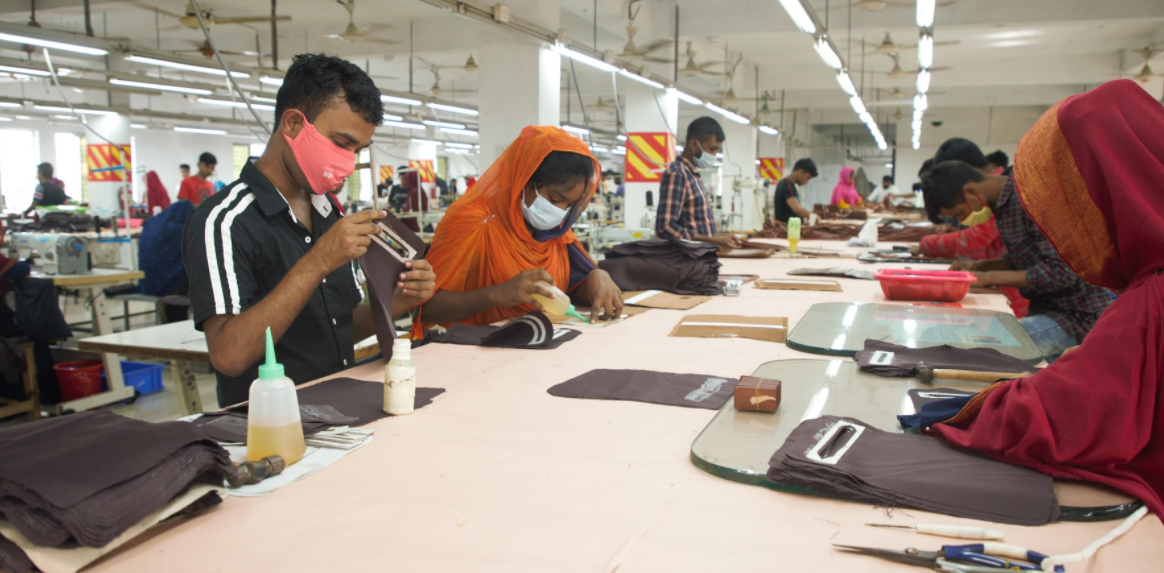
A well-stocked OEM factory manages a structured material library covering shell, lining, and reinforcement layers. Sunteambag-style suppliers carry 50–150 main fabric options (300D–900D polyester, nylon, canvas, PU, PVC, RPET) across 5–10 color variants each, with GSM, coating hydrostatic rating, and price bracket documented per SKU. Lining libraries run 10–30 fabric types (taffeta, TC, oxford), plus 5–10 reinforcement combos including 1–3mm PE board and 4–10mm EVA/PU foam for the base structure.
Write Your Sourcing Brief Around Five Elements
-
Use case and load target. Bag type, weight capacity, weather exposure, waterproof threshold (e.g., ≥1,500mm HH for “1–2 hours rain, no soak-through”).
-
Brand tier and FOB range. Target unit cost, MOQ (300–500 pcs), acceptable price flex (+10–15%).
-
Sustainability specs. RPET percentage, GRS certification, PFOA/PFOS-free DWR.
-
Sample budget and timeline. $50–150 per prototype round, 7–10 days per iteration, 25–35 days production after PP sample approval.
-
Tech pack detail. Exact material stack (e.g., “Shell: 600D RPET + PU 1,500mm; Lining: 210D taffeta; Base: 2mm PE”).
Structure samples go through material confirmation, construction sample, function sample, and PP sample. The BOM locks at PP approval, with no material swaps after that stage.