
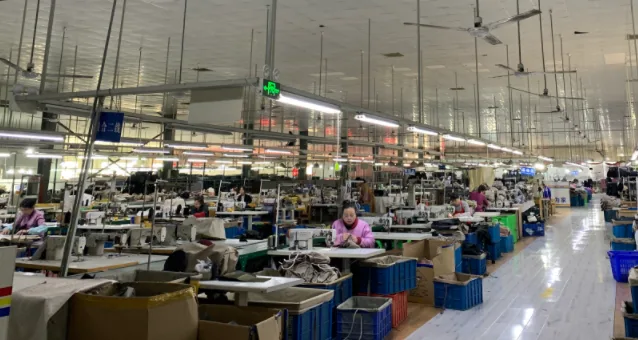
Every fashion entrepreneur knows that spark of inspiration: a Pinterest board filled with stunning clutches, a sketchbook full of concepts, and one urgent question — how do I turn these ideas into a viable product line? Most custom bag projects get stuck right at this stage, trapped between creative inspiration and a shelf-ready collection. While the ideas may be strong, few creators have a clear, actionable roadmap.
This guide delivers exactly that roadmap. Whether you are launching your first custom evening clutch collection, sourcing a reliable clutch bag manufacturer for the first time, or seeking concrete data on OEM lead times and MOQs, you will learn the proven workflow adopted by successful bag brands. We walk through niche positioning, material sourcing, sampling, pricing and go-to-market strategy. Free of vague theory and filler content, this is a practical framework to build a profitable clutch bag collection.
How To Build A Successful Custom Clutch Bag Collection From Scratch
Seven decisions turn a scattered idea board into a sellable collection. This framework maps them out in order. It starts with niche positioning and ends with your launch assortment. Every choice after that—materials, MOQ, pricing—builds on solid ground instead of guesswork.
The sequence successful brands follow:
-
Define niche & price band — Lock your retail range and target COGS (20–35% of retail) before designing anything.
-
Select 1–2 base silhouettes — Pick a hero style and a supporting style.
-
Build tech packs — Nail down exact dimensions, seam allowances, and hardware specs.
-
Source materials with small MOQs — Choose 3–5 outer fabrics. Go eco-friendly when you can.
-
Sample and stress-test — Refine the fit and durability.
-
Standardize construction — Set repeatable steps that keep quality consistent.
-
Finalize 3–10 SKUs — Round out your line with core colors plus statement variants.
Define Your Niche & Business Model for Your Custom Clutch Bag Collection
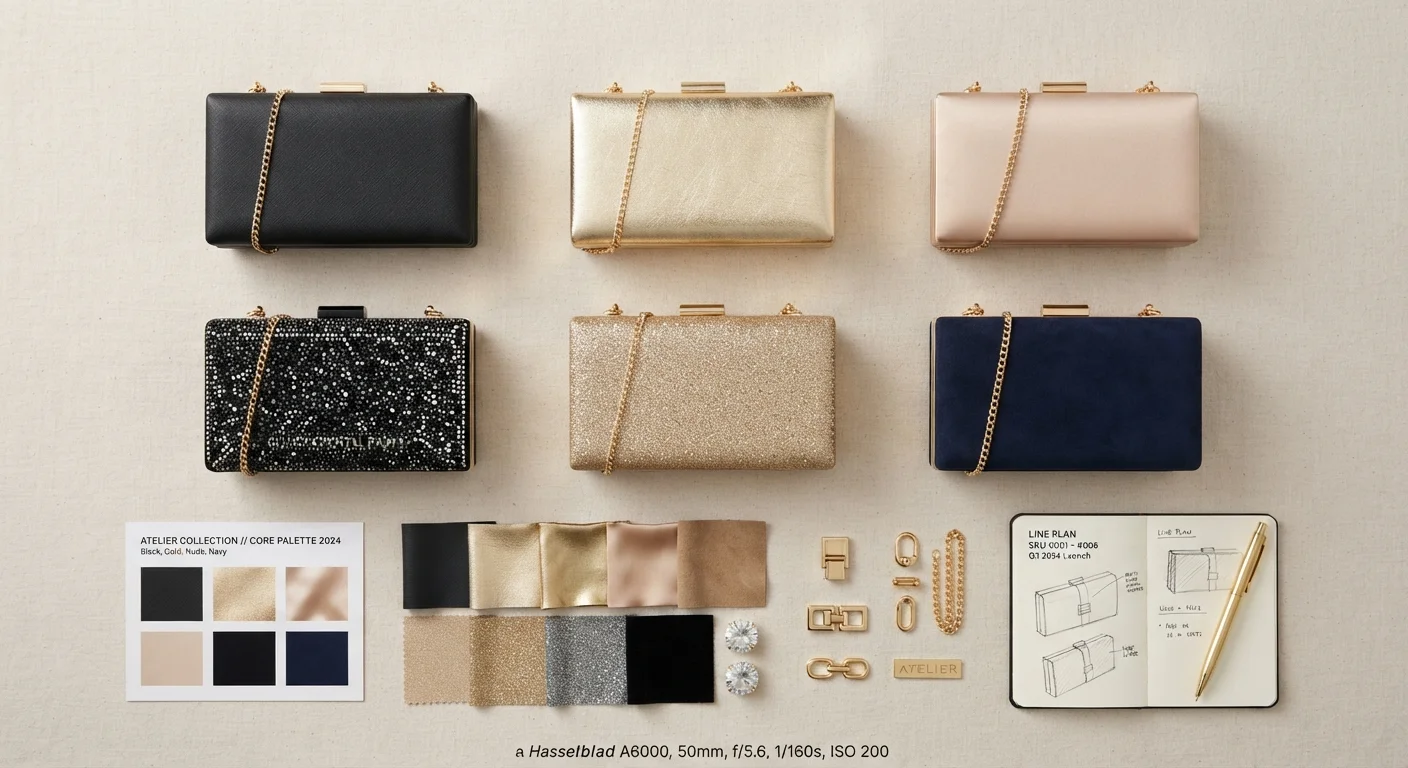
Three business models lead this space. Each one needs a different startup budget, MOQ threshold, and margin structure.
|
Model |
Startup Capital |
Typical MOQ |
Gross Margin |
|---|---|---|---|
|
D2C own brand |
$3,000–10,000 |
30–100/style |
50–70% |
|
Wholesale to boutiques |
$5,000–15,000 |
300–1,000 total |
20–40% |
|
Private label/OEM for influencers |
$2,000–20,000 |
100–300/style |
15–35% |
D2C works best for niche stories, like bridal, vegan, or minimalist styles. Wholesale suits steady, high-volume boutique partnerships. Private label fits manufacturers who have production capacity but don’t want to sell direct to retail.
You can layer three things to build a clear niche. First, pick your occasion: bridal, evening, or everyday. Second, set your price band: $20–60 for entry, $60–200 for contemporary, and $200–600+ for luxury. Third, choose your style: minimalist, crystal-embellished, or vegan-sustainable. This combination gives you a defensible niche. Skip the vague “clutch bag brand” approach.
Research the Market & Identify Gaps Before Designing a Single Bag
Skipping market research is the fastest way to burn your budget on a collection nobody wants. Pull real numbers before you touch a sketchbook. The global handbag market sits at $74.33B in 2025. It grows to $101.06B by 2031 (CAGR 5.25%). That growth splits into two clear zones. You need to price against both.
Price benchmarks to position against:
|
Segment |
Market Share/Growth |
Retail Range |
|---|---|---|
|
Mass segment |
63.57% of market |
$40–150 |
|
Premium segment |
5.91% CAGR |
$150–500 |
|
Mid-tier wedding clutches |
— |
$80–200 |
|
Designer/custom clutches |
— |
$180–450 |
Distribution matters too. Offline stores—department stores, boutiques—still hold 62.68% of the market. But online sales grow faster, at 6.07% CAGR. Your D2C site has real room to grow here.
Spot the Supply Gaps Competitors Leave Open
Two gaps stand out. Sustainable materials make up the first one. Recycled nylon, recycled leather, and vegan leather cover under 10–15% of the evening clutch niche. Compare that to totes and daypacks, where these materials are already standard. This gap gives you a clean way to stand out. It can support a 15–30% price premium.
Deep customization is the second gap. Most “custom” clutch bag brands only offer monogramming or 2–4 color choices. Few offer full combination customization—color, hardware, embroidery, material together. This gets even rarer at low MOQs. Brands that crack this problem see 20–50% higher order values.
Validate Demand Before You Commit
Check Google Trends for “custom clutch bag,” “personalized clutch bag,” and “clutch bag wholesale.” Look at the last five years. Wedding-season searches (April–September) spike 30–80% above baseline. Prom-related terms like “prom clutch bag custom” jump 1.5–2x during April–June. Your target keywords should show this seasonal pattern. Steady B2B search volume—1,000–3,000 per month—confirms real demand. That’s proof, not just personal enthusiasm.
Plan Your Collection Architecture: Styles, Shapes & Colorways
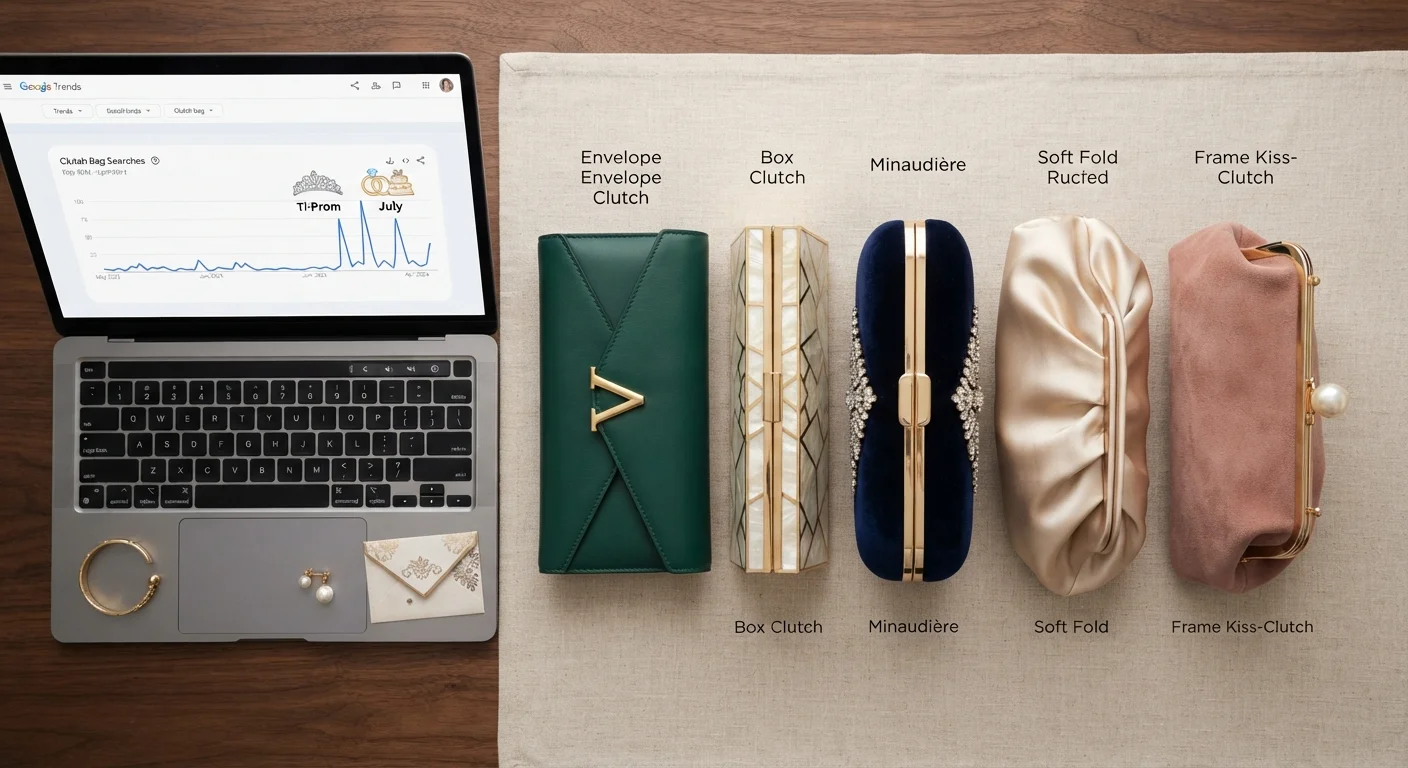
Five silhouettes cover 90% of customer occasions. You don’t need fifteen shapes to launch strong. You need the right five, done well.
Your first collection should land between 5–12 styles. This range controls sampling costs. It also keeps inventory risk low while still filling a shelf. Split them into two groups: 50–70% “Essential Basics” and 30–50% “Statement Pieces.” Three or four core silhouettes carry your sales. One or two showpieces build your brand identity.
Map shapes to occasions and customers:
|
Silhouette |
Size |
Best For |
Core Colors |
|---|---|---|---|
|
Envelope clutch |
25–30cm W |
Evening, weddings |
50–70% black/metallic/nude |
|
Box bag |
18–22cm W |
Everyday, commute |
60–80% neutral |
|
Minaudière |
15–20cm W |
Cocktail, red carpet |
Statement piece |
|
Soft fold |
Varies |
Casual, travel |
Mid-price versatility |
|
Frame/kiss-lock |
18–25cm frame |
Retro, niche style |
Brand signature look |
Give each SKU 2–4 colorways. Use one neutral base, then add 1–2 seasonal accents. Keep your total palette to 3–6 main colors across the whole line. This keeps production simple. It also keeps merchandising cohesive. That matters a lot when you’re managing custom clutch bag MOQ constraints across every colorway variant.
Design Development & Technical Specifications for Custom Clutch Bags
A tech pack turns your sketch into a manufacturable file. Skip this step. You’ll pay for it later in failed samples and wasted MOQ runs.
Every tech pack needs these pages, in order:
-
Flats (front, back, side, base, exploded view)
-
Measurements table with tolerances
-
Construction notes: seams, interlining, and reinforcement
-
Materials list (fabric, hardware, thread)
-
Branding & hardware specs
-
Quality checks and packaging
Use mm as your standard unit. Set your tolerance at ±5mm for outer dimensions. Set ±1mm for hardware and logo placement. This is tighter than the factory default of ±10mm.
Good sizing starts here: a standard evening clutch runs 230×120×40mm. Build in phone clearance too. An iPhone 15 Pro Max needs about 180×90×30mm of internal clearance to fit with a card holder.
Construction standards to lock in: seam allowance at 10mm on main seams, 5–7mm on binding. Stitch density (SPI) runs 6–8 for leather, 8–10 for PU/fabric.
Pattern tolerance matters a lot. A 3–4mm mismatch between shell and lining causes puckering. This mistake can wreck your custom clutch bag plans at the sampling stage.
Source Materials & Components for Your Clutch Bag Line
Material costs make or break your margin math before a single unit ships. Five outer materials dominate the custom clutch bag market. Each one has its own price point, durability, and MOQ threshold.
Outer material comparison:
|
Material |
Cost/Unit |
MOQ |
Best For |
|---|---|---|---|
|
Genuine leather (0.8–1.4mm) |
$5–12/piece |
50–100 ft²/color |
$150–600 luxury |
|
PU leather |
$0.6–1.5/piece |
30–1,000m/color |
$30–150 value |
|
Satin (polyester/silk) |
$0.4–6/piece |
50–150m/color |
Bridal, evening |
|
Canvas (12–16 oz) |
$0.6–1.6/piece |
20–100m/color |
$40–120 casual |
|
Sequin fabric |
$1.5–4/piece |
15–300m/color |
Party, limited runs |
Genuine leather lasts 1.5–2x longer than PU in fold tests. PU still holds up for 10,000+ flex cycles before it fails. That makes it a solid pick for entry-price lines.
Structural components matter just as much. Fusible interlining (50–70 g/m²) gives shape to satin and thin leather. EVA foam (2–3mm) rounds out box-style clutches. It also cushions phones inside the bag. Use both together for rigid minaudières. Skip the foam for soft envelope styles that need drape.
Hardware sourcing: Metal frames need 0.3–0.5μm plating to resist corrosion. This plating holds up for 10,000+ open-close cycles. Custom frame MOQs run 500–1,000 pieces. Stock options start at just 100.
Find & Evaluate Manufacturers for Custom Clutch Bags Wholesale
You pick between a domestic workshop and an overseas factory. This choice shapes your entire cost structure. Most founders don’t realize how much this decision matters.
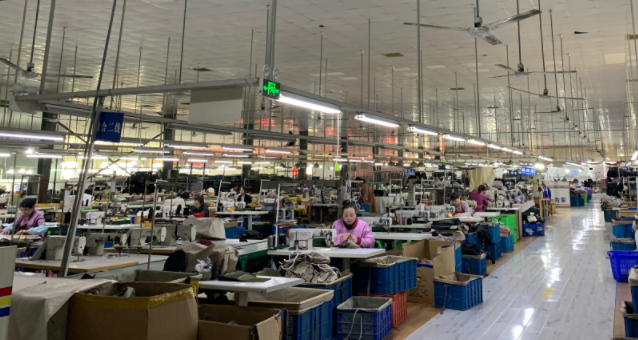
Quick comparison for your custom clutch bag MOQ decision:
|
Factor |
Domestic Small Workshop |
Overseas Large Factory |
|---|---|---|
|
MOQ |
30–100 pcs/style/color |
300–1,000 pcs, or 100–300/color |
|
Unit price (PU clutch) |
$4–8 |
$2.50–5.00 FOB |
|
Response time |
1–3 hours |
2–24 hours |
|
Lead time |
10–20 days |
30–45 days, +20–35 days shipping |
|
Custom freedom |
High, +$30–115/style for major changes |
Limited to existing templates |
Testing a new line? Stick with workshops under 100 MOQ. Scaling with proven demand? Go overseas. Factories at 500+ units cut your per-unit cost by a lot.
Before you request quotes, verify these five things:
-
Recent work samples — Ask for 3–5 clutch bags shipped in the last 12 months. Get close-up shots of stitching and hardware.
-
Real MOQ flexibility — Ask if 100 pcs can drop to 50.
-
Full cost breakdown — Check that materials, labor, hardware, and packaging show up as separate line items.
-
Logo application specs — Get the tooling fees, minimum line width, and durability testing standards.
-
Exclusivity terms — Find out if your design stays off other client catalogs for 1–3 years.
Build a Sampling & Quality Control Process That Protects Your Brand
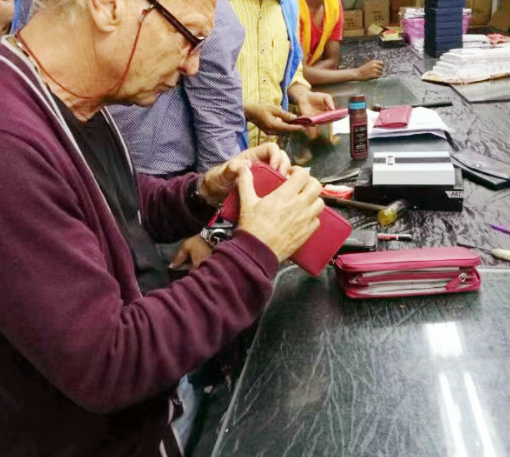
A rejected pre-production sample costs you time. A bad batch of clutches after mass production costs you money. It also costs you retailers and trust. Treat your PPS review as a hard gate, not a formality.
PPS acceptance checklist — measure every point, not spot checks:
|
Check |
Premium Tolerance |
Mid-Range Tolerance |
|---|---|---|
|
Body dimensions |
±3–5mm |
±5–8mm |
|
Corner stitch gap |
≤2mm |
≤3mm |
|
Zipper alignment |
≤2mm off-center |
≤2mm off-center |
|
Magnetic snap centering |
≤1.5mm offset |
≤1.5mm offset |
|
Lining vs. shell allowance |
0–0.5cm |
0–1cm |
Run zippers through 10 full open-close cycles by hand. Check for jams. Check for skipped teeth. Snaps need 3–8N closing force. They must survive a 50–100N pull without popping off. Order 2–3 PPS per color. Don’t rely on one golden sample. Logo placement and key measurements get zero tolerance at this stage.
Set AQL Standards for Mass Production
Use ANSI/ASQ Z1.4 sampling. Critical defects like wrong logos or safety issues fall under AQL 0.0–0.4. Major defects sit at AQL 1.0–1.5. Minor defects run AQL 2.5–4.0.
Here’s an example. Take a 1,200-piece lot at Inspection Level II. This pulls a 200-piece sample. At AQL 1.5, you can accept up to 7 major defects. Eight defects means rejection.
Check color consistency with a spectrophotometer. Premium lines need ΔE ≤1.0–1.2. Mid-range lines allow ≤1.5–2.0. Test crystal and bead attachments too. Apply a 50N+ pull on at least 10 pieces per lot.
Write everything down in a Quality Inspection Checklist. Tie it to your tech pack. This document gives you leverage when you dispute defective shipments.
Set Pricing & Wholesale Margins for a Profitable Custom Clutch Collection
Decide your margins at the quote stage. Don’t wait until after the invoice ships. Build your cost stack first: outer material ($4–12/piece), lining and trims ($0.8–2), hardware ($1.5–4), labor ($3–8), and packaging ($0.7–2). Add freight and duties. Leather bags often carry 15–20% landed duty in key markets. This gives you Landed COGS: FOB cost + freight + insurance + duty + agent fees, divided by sellable units.
Lock margin before you quote: Wholesale Price = Landed Cost ÷ (1 – Target Margin). At $12 landed cost and 50% target margin, that’s $24. The industry uses a simpler “keystone” rule too—just double your cost. You’ll land close to the same number.
Standard channel multiples for a clutch collection:
|
Channel |
Price Formula |
|---|---|
|
MSRP (retail) |
4.0–5.0x landed cost |
|
Wholesale (boutiques) |
2.0–2.5x landed cost |
|
Distributor |
1.5–1.8x landed cost |
|
DTC floor |
Landed cost + fees + $5 margin |
MOQ tiers should shift margin, not just unit price. Here’s how it plays out at $12 landed cost:
– 50–99 pcs holds 55% margin ($26.7 wholesale)
– 300–499 pcs drops to 50% ($24)
– 500+ pcs settles at 45–48% ($22–23)
Don’t let a volume discount push margin below your floor. Flag it in your quote sheet right away.
Customization stacks on top of base price. Color changes run $80–150 per color setup plus $0.5–1.5/piece at 100+ MOQ. Hardware upgrades add $150–400 in tooling plus 15–30% on part cost. Branding kits (logo + labor) usually bundle at $1–2/piece. This makes pricing easy for buyers to understand. It also protects your margin.
Build Brand Identity & Create a Compelling Collection Story
Buyers remember stories, not SKU numbers. A tech pack gets your bag made. A story gets it sold.
Lock your visual system first. Pick 1–3 main colors plus 2–4 accent colors. Record the exact HEX/RGB/CMYK values in a brand guide. Use two font roles: one for headers, one for body copy. Set logo rules too. Keep a minimum print width of 15–20mm and a digital width of 80–120px. Leave clear space at 0.25–0.5x logo height. Use this same system across your packaging, hangtags, and product pages. Three touchpoints of consistency build recognition fast.
Give your collection a real narrative. Build it around four elements. Start with a theme—season, city, or occasion. Add 3–5 mood keywords. Pick 3–5 material or color words. Then set 2–3 target scenes. Name each style with your collection tag plus a mood word. “TN-Commute 01” beats “Style #4482” every time. Add a one-line story summary to each style card. Include three benefit-driven bullet points too. This turns your custom clutch bag line into a story buyers want to stock. It’s no longer just a product they compare on price.
Launch Sales Channels & Execute Go-To-Market for Your Clutch Bag Business
A great collection means nothing without buyers. The custom clutch bag market runs on four channels: boutique wholesale, wedding and stylist partnerships, D2C direct sales, and B2B platforms. Run all four together, not one at a time. This gets you revenue faster.
Build Your Boutique Wholesale Pipeline
Independent boutiques spend $3,000–10,000 per season on each brand. They expect a 2.2–2.8x markup on wholesale cost. First orders run $800–2,000. That covers 2–4 pieces per style across 30–80 SKUs total. Think of this as your test order.
Cold outreach sequence:
1. Build a list of 50–100 concept stores, bridal boutiques, and eveningwear shops by city.
2. Touch 1: Send an email and IG DM with a 3–5 image lookbook. Show FOB pricing at $25–45 per piece.
3. Touch 2 (+3 days): Send a wholesale price sheet with MOQ of 10 pieces per style, 5 pieces per color.
4. Touch 3 (+7 days): Call or visit with 2–3 physical samples.
Reach 20 new stores each week. Follow up with 40–60 more. Expect a 10–20% reply rate and 3–5% conversion. That’s standard for fashion accessories.
Target Wedding & Stylist Channels for Higher AOV
Bridal gift stores respond well to bundled sets. Offer “Bridesmaid Clutch Sets” at 4–8 pieces/set. Give B2B buyers a 50–60% discount. Monogramming adds $5–10/bag. Wedding buyers will pay 20–30% more for personalization. Keep sampling to 7–10 days. Bulk production takes 15–30 days. Timing matters a lot in this segment.
For stylists, use two models. First: loan samples with a deposit at 50–80% of retail, plus a 10–15% rental fee. Second: wholesale at 40–50% off MSRP in exchange for credit and usage rights. Prioritize stylists who handle 50+ events/year. Their imagery fuels your D2C site and pitch decks.
Package a Wholesale Catalog That Closes Deals
Your digital catalog needs 8–16 pages. Keep the file under 5–10MB. Each product card should show dimensions (e.g., 20×12×5cm), material, wholesale price ($22), suggested retail ($55–65), 4–6 color options, and MOQ (5 pcs/color, 30 pcs/style). Include payment terms: 30% deposit, 70% before shipment, plus shipping method. Use consistent lighting and 1:1 or 4:5 image ratios. This lets files drop straight into Faire or Shopify listings.
Choose the Right B2B Platform for Your Volume
Faire suits small-batch, design-forward clutches priced $40–150 retail. You’ll need at least 30–50 SKUs to compete. Ship in-stock orders within 5 days. Ship samples within 10 days. Keep returns under 10–15%.
Alibaba fits bulk OEM/ODM buyers. List 50+ products. Respond to inquiries within 4 hours to boost your algorithm ranking. Run two product tiers: standard stock at MOQ 20–30, plus ODM custom lines at MOQ 50–100 with logo, lining, and hardware color options.
Optimize Your D2C Site for the “Custom Clutch Bag Collection” Keyword
Build one collection page that targets custom clutch bag collection. Support it with 3–5 blog posts (800–1,500 words each) covering wedding, prom, gifting, and brand collabs. This keyword faces less competition than the broader “custom clutch bag” term.
Baseline D2C conversion sits at 1–2% for unestablished brands. Strong imagery and social proof can push this to 2–3.5%. Personalization options like monogram initials and custom names get clicked by 15–30% of visitors. Buyers who customize convert at 1.3–1.8x the standard rate and spend 10–25% more per order.
Structure your personalization module in this order:
1. Color (6–8 options)
2. Metal finish (gold, silver, rose gold)
3. Monogram or custom name (8–10 characters max)
4. Font style (2–3 choices)
Price customization at 13–25% of base price. For example: $59 base plus $8–15 for personalization. This lifts your margin by 5–10 points. Show a mockup thumbnail next to each option. Add “Ships in 5–7 business days” to reduce hesitation.
On your collection page, include an H1 with your target keyword. Add a hero section with 3–5 bestsellers and a “Start Customizing” CTA. Show clear production and shipping timelines. List bulk order thresholds (e.g., “Bridal parties over 20 pieces, order 30 days ahead”). Add Product + Offer + AggregateRating schema markup.
Track these KPIs:
– Homepage to collection page click-through: 35–45%
– Average time on page: 1:30+ minutes
– Add-to-cart rate: 7–10%
Capture emails with a 10% off first order popup. Turn stylist and bridal client photos into a carousel lookbook for social proof.
Open a Private Label Track for Recurring Volume
Fashion influencers with 100k–1M followers in the wedding/evening niche make ideal private label partners. So do small brands with $0.5–5M revenue that lack their own supply chains. Win them over with three promises: 48–72 hour design turnaround, 7–10 day physical samples, and MOQ as low as 30–50 pcs/style (the industry standard runs 300–500). Bundle in full white-label service too: inner labels, hangtags, packaging, and 5 branded product photos per style.
Pitch with an 8–10 page deck. Start with a cover slide showing both logos. Add their audience data (e.g., “75% female, ages 18–34, 2–3% engagement on wedding content”). Highlight your low-MOQ advantage and sample pricing. One line closes it: “You provide the logo and audience—we handle everything else.”
Scale, Iterate & Optimize Your Custom Clutch Bag Collection Over Time
Your first drop is a test, not a verdict. Track sell-through rate by SKU, color, and channel. This is your main signal for reorders. Watch returns rate and review scores too.
Sort complaints into categories. Look at size and capacity. Check closure security. Note durability issues. Flag hardware failures. Track material feel complaints. These details go straight into your next tech pack.
Scale rules that keep risk low:
-
Prototype: 1–3 samples, 1–3 weeks per iteration
-
Pilot run: 100–500 units
-
Semi-custom lead time: 2–4 weeks design-to-delivery
Scale to full production once sell-through stays strong. Reviews should stay positive too. Negotiate MOQ and tooling costs from the start. Use volume forecasts to lower your unit price as reorders grow.