Every leather bag manufacturing facility faces the same challenge: protecting production while meeting increasingly strict environmental regulations.
ISO 14001 turns environmental management from a compliance burden into a risk reduction strategy. It embeds proactive risk identification, resource optimization, and incident prevention directly into daily operations—helping manufacturers detect disruptions before they impact production.
This guide explains how leading bag manufacturers use the ISO 14001 framework to eliminate operational weak points, prevent costly environmental incidents, reduce insurance exposure, and integrate environmental management with existing quality and safety systems. The result is stronger production stability and a clear competitive advantage.
What Is ISO 14001 for a Leather Bag Factory
ISO 14001 is an internationally recognized standard for Environmental Management Systems (EMS) developed by the International Organization for Standardization (ISO). It provides a structured framework for organizations to identify, manage, and reduce their environmental impact while ensuring compliance with applicable regulations and driving continuous improvement.
For companies engaged in the leather goods business, ISO 14001 plays a critical role across key operational stages, including material sourcing, leather processing, dyeing and finishing, manufacturing, waste management, and the use of energy and water resources. The standard focuses on how environmental responsibilities are integrated into daily operations rather than on the product itself.
Value of ISO 14001 for the Leather Goods Industry
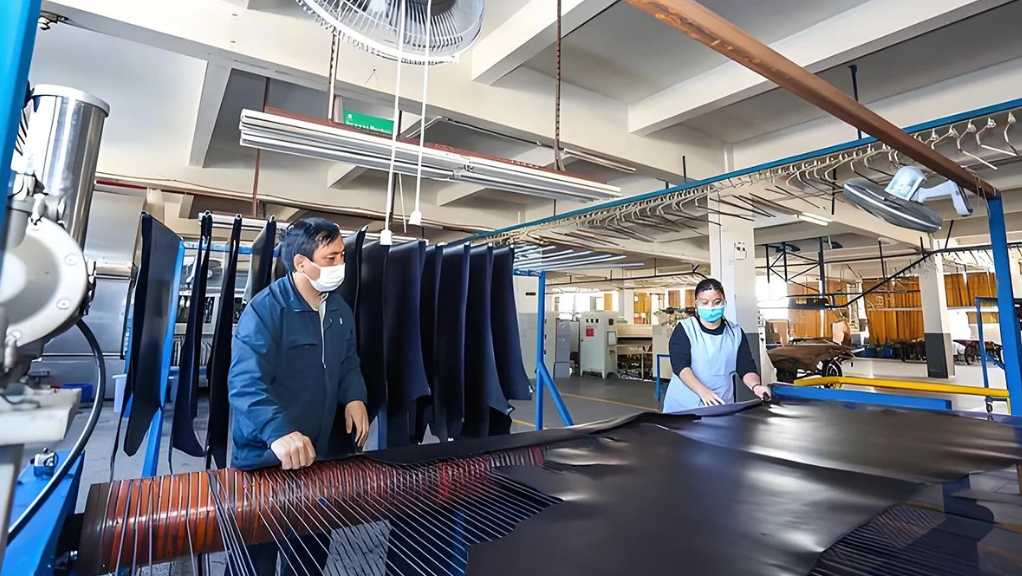
- Improves environmental control throughout leather goods production
- Reduces environmental risks related to chemicals, wastewater, and solid waste
- Enhances compliance with international environmental regulations
- Strengthens brand credibility with global B2B buyers and retailers
Why Leather Goods Companies Choose ISO 14001
By implementing ISO 14001, leather goods manufacturers and operators can optimize production processes, lower environmental risks, and demonstrate a strong commitment to sustainable and responsible manufacturing—an increasingly important requirement in international leather goods sourcing.
How ISO 14001 Reduces Leather Bag Production Risk
ISO 14001 reduces risk in leather bag production through three integrated layers: resource optimization, early risk detection, and performance tracking—all directly tied to factory operations.
Resource Optimization in Bag Manufacturing
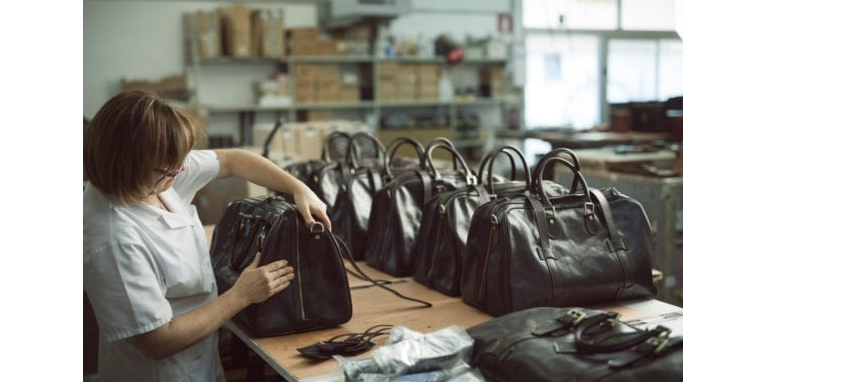
For leather bag manufacturers, ISO 14001 delivers measurable cost and risk reductions across energy, water, and material usage. Medium-sized factories typically reduce energy consumption by around 15% in the first year, lowering exposure to rising utility costs and production interruptions. Global manufacturers such as General Motors and General Mills have reported 20% energy reductions, while Intel saved 4 billion kWh between 2012 and 2020—demonstrating how structured environmental management stabilizes large-scale production.
Water efficiency is especially critical in leather cutting, surface treatment, and finishing processes. Food processors report up to 30% lower water usage, and similar controls in bag production help reduce wastewater discharge risks. Premier Foods achieved 100% recycling or reuse across all sites, while Japan’s UPCON reduced CO₂ emissions by 90% compared with conventional materials—showing how waste and emissions controls directly support operational resilience.
Risk Detection for Bag Production Processes
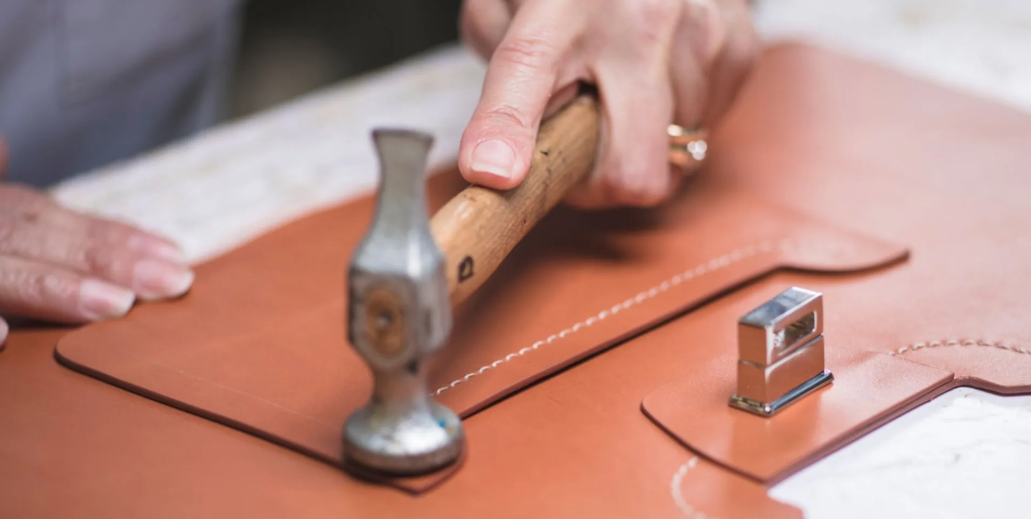
ISO 14001 establishes a structured risk detection system that targets three major risk categories in bag manufacturing: regulatory non-compliance, resource waste, and brand or reputational damage. Each risk is evaluated based on likelihood and impact, allowing manufacturers to prioritize process improvements in areas such as chemical handling, leather storage, and waste disposal.
A centralized compliance database helps leather bag factories identify legal risks early, preventing fines and production stoppages. When integrated with ISO 9001 and ISO 45001, the system further reduces workplace incidents and audit duplication—saving time, cost, and management effort across production lines.
Proven Global Adoption
ISO 14001 is widely adopted across manufacturing sectors. In 2020 alone, 417,478 ISO 14001 certificates were issued worldwide, representing a 34% year-on-year increase. High adoption rates in construction, metalworking, engineering, plastics, and rubber manufacturing highlight its effectiveness for complex, material-intensive production environments—conditions that closely mirror leather bag manufacturing.
Machine learning is transforming ISO 14001 risk management in bag manufacturing by shifting the focus from reactive control to early prevention. In leather bag production, this approach helps identify environmental and operational risks before they escalate into chemical incidents, equipment failures, or unplanned line shutdowns that affect delivery schedules and brand reliability.
Real-Time Issue Detection Process
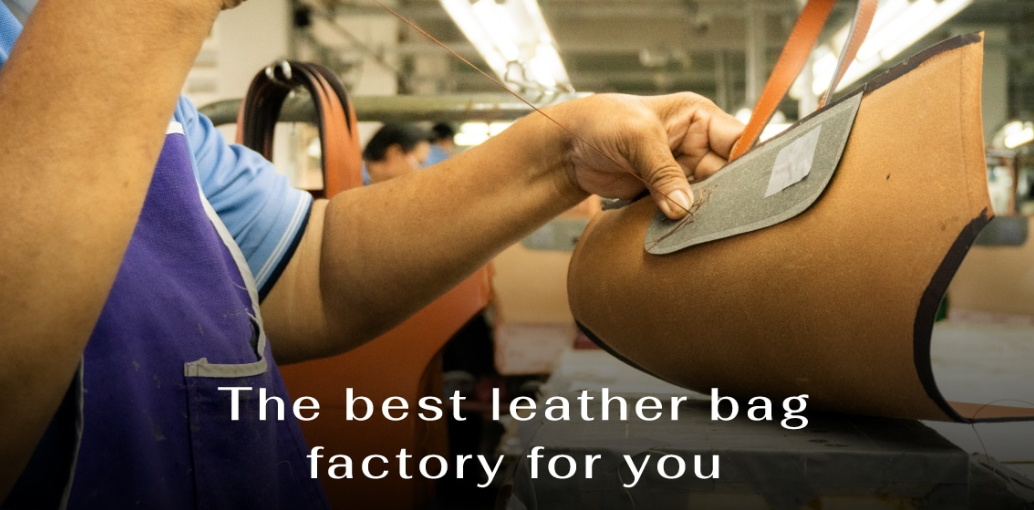
Risk prevention starts at the production floor. Data is collected from leather cutting machines, stitching lines, edge-finishing equipment, chemical storage areas, environmental sensors, and utility systems tracking energy and water usage. Raw data is cleaned, standardized, and integrated across systems before being fed into trained machine learning models.
Each data point is evaluated in real time. High-risk signals trigger automatic responses. Critical deviations—such as abnormal solvent readings or overheating machinery—initiate emergency shutdowns. Minor fluctuations lead to parameter adjustments, while early-stage anomalies generate preventive maintenance alerts. As new bag production cycles are completed, the models continuously improve by learning from actual bag manufacturing conditions.
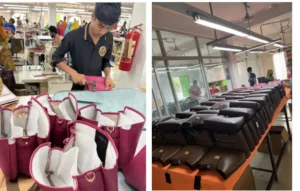
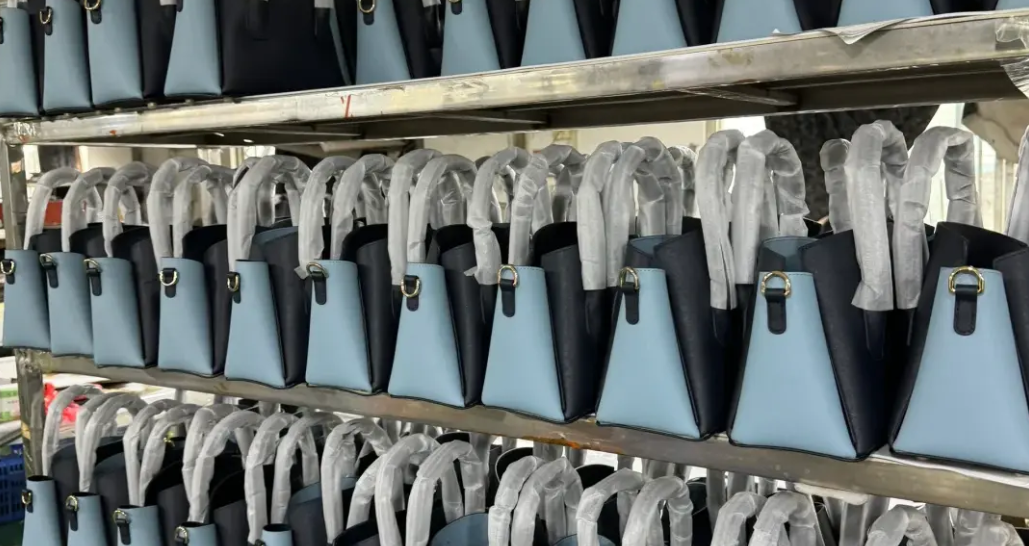
At Sunteam’s bag factory, these ISO 14001-driven processes are embedded into daily operations rather than treated as a separate compliance layer. Environmental and production data from stitching lines and finishing areas is reviewed alongside output and quality metrics, allowing potential risks to be identified early and resolved without interrupting customer orders.
Measurable Gains

Predictive maintenance reduces unplanned downtime on cutting, sewing, and finishing machines by forecasting failures weeks in advance. Pattern analysis improves leather utilization and material planning, helping bag manufacturers reduce scrap rates and workflow bottlenecks. Cost analysis reveals hidden inefficiencies, such as redundant energy use, excessive material loss, or blocked handoff points between production stages.
At Sunteam, material usage tracking has helped stabilize leather yield during peak seasons, while early maintenance alerts on key production equipment have prevented last-minute line stoppages. This ensures stable lead times and consistent output for OEM and private label bag customers.
Real-time energy monitoring also flags wasteful usage patterns across bag production lines. Similar systems have enabled global manufacturers to maintain uninterrupted production during supply chain disruptions by securing backup suppliers and rerouting shipments in advance—demonstrating how proactive risk control protects both operations and delivery commitments.
Four-Layer Risk Framework
Layer 1 – Identification
Continuous monitoring captures emerging risks across leather handling, assembly, finishing, and logistics.
Layer 2 – Assessment
Each risk is evaluated based on likelihood and its impact on bag quality, production continuity, and delivery timelines.
Layer 3 – Control
Targeted controls are applied, including process optimization, chemical handling procedures, preventive maintenance, and automated alerts.
Layer 4 – Improvement
Protocols are refined using fresh production and environmental performance data.
Scenario modeling allows bag manufacturing teams to test responses to leather bag supplier disruptions, equipment failures, workforce fluctuations, or regulatory changes before they occur. Data-driven KPIs then measure the effectiveness of each strategy, closing the gap between planning and execution.
Conclusion
ISO 14001 turns environmental management into a practical risk-control tool for bag manufacturing. It helps prevent production shutdowns, reduce operating and insurance costs, optimize leather, energy, and water use, and stabilize the supply chain—protecting both margins and delivery schedules.
At Sunteam, this approach is built into daily bag production. Environmental risks are identified early and managed alongside quality and safety systems, allowing us to maintain stable output, consistent lead times, and responsible manufacturing for OEM and private label clients.
If you want to protect your bag production, start by identifying your key environmental risks—and see how ISO 14001 addresses each one. In today’s sourcing environment, the real question is not whether ISO 14001 is necessary, but whether skipping it is worth the risk.