
A mismatched bag size can quietly drain your margins—too much material wasted on oversized packaging, or worse, products that won’t fit at all. If you’ve ever eyeballed a bag’s dimensions and guessed at its capacity, only to find your inventory doesn’t fit or your shipping costs balloon, you’re not alone. Getting bag capacity measurement right means applying the correct formula for the bag’s structure, whether it’s a flat pouch, a gusseted design, or a soft-sided backpack. This guide breaks down the exact calculations for gusset bag volume, flat bag capacity, and cylindrical approximations, with real measurement examples and conversion shortcuts. By the end, you’ll be able to calculate precise fill volumes, avoid costly sizing errors, and optimize every cubic inch of packaging space for your specific products.
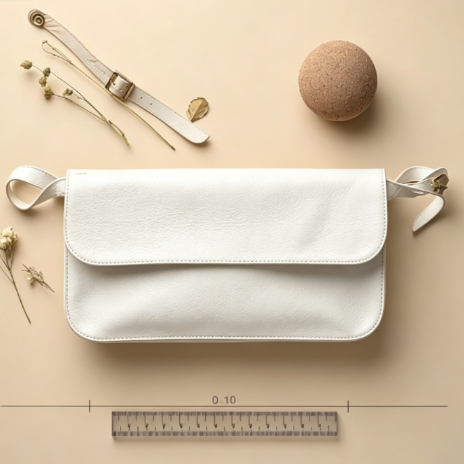
Basic Rectangular Bag Volume Formula (L × W × H)
For bags that hold a box-like shape – flat pouches, square-bottom bags, rigid paper bags, tote-style packs, or structured liner bags – the rectangular volume formula is your starting point. It’s the simplest way to measure bag capacity, and it works well as long as the bag actually holds its shape when filled.
The core formula:
– Volume (cm³) = Length × Width × Height
– Volume (L) = L × W × H ÷ 1000
– Volume (in³) = L × W × H
– Volume (L) = in³ ÷ 61.024 (equivalent to 1 in³ = 0.016387064 L)
Worked Examples
Metric example: A bag measuring 30 cm × 20 cm × 10 cm:
– Volume = 30 × 20 × 10 = 6,000 cm³
– Convert to liters: 6,000 ÷ 1,000 = 6.0 L
Imperial example: A bag measuring 12 in × 8 in × 4 in:
– Volume = 12 × 8 × 4 = 384 in³
– Converting cubic inches to liters: 384 ÷ 61.024 ≈ 6.29 L
As a quick reference, 1 L ≈ 61.024 in³ and 1 in³ ≈ 16.387 mL.
Common Calculation Mistakes
-
Mixing units. Combining cm, mm, and inches in one calculation without converting first will throw off every result.
-
Using outer dimensions instead of inner capacity. Seams, thick edges, and zipper heads reduce actual usable space, especially on soft-sided bags.
-
Ignoring shape factor. Flexible bags rarely fill to their full theoretical box shape. A rigid, square-bottom bag might hit close to 1.00 of calculated volume; a general soft-sided backpack often lands near 0.85; tapered or cone-shaped bags run lower still.
-
Confusing cm³ with liters directly. 30×20×10 gives you 6,000 cm³, not 6,000 L. Always divide by 1,000.
Standard Formula for Sourcing & Quotes
When specifying capacity in procurement documents, use:
-
Rectangular bag nominal capacity (L) = L × W × H ÷ 1,000 (dimensions in cm)
-
Rectangular bag nominal capacity (L) = L × W × H ÷ 61.024 (dimensions in inches)
If the bag isn’t a true rectangular prism, practical capacity will be roughly theoretical capacity times 0.75 to 1.00. Rigid square-bottom bags land closer to the upper end, while soft or tapered bags land closer to the lower end.
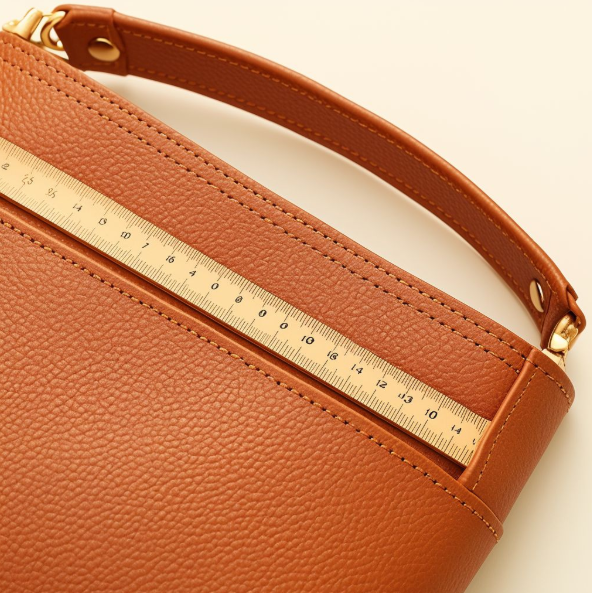
Flat Bag Volume Calculation (FBV Formula)
Packaging engineers use FBV = BL × BW × BH when quoting flat bag capacity. BL is bag length, BW is bag width, and BH is bag height. The formula is the same one you use for any rectangular box. The difference is how you measure an ungusseted, flat-lying bag.
How Flat Bags Are Measured
Flat bags without gussets are specified as Width × Length, not Length × Width × Height. Here is how you measure each dimension:
-
Width: the horizontal distance across the bag opening, measured at the outer edges while the bag lies flat.
-
Length: the vertical distance from the top opening down to the bottom sealed edge.
-
Gauge: film thickness expressed in mil or microns. It matters for load-bearing capacity but does not affect FBV.
Before measuring, smooth out all wrinkles and lay the bag completely flat. Creases add false bulk to your width reading and skew every downstream calculation.
Worked Calculation
If BL = 10 in, BW = 6 in, and BH = 2 in:
FBV = 10 × 6 × 2 = 120 in³
What to Include on a Quote Request
Three specs matter more than a single volume number when sourcing flat bags: bag width, bag length, and gauge. A spec sheet reading “8 in × 5 in, 2 mil” gives suppliers everything needed for sampling and production. That is far more actionable than a raw cubic-inch figure alone.
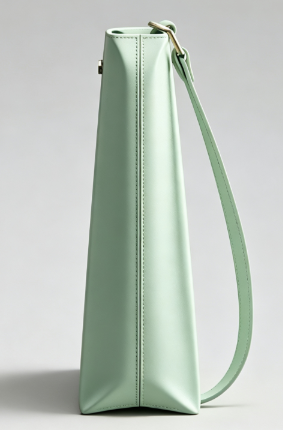
Gusseted / Side-Fold Bag Volume Calculation
Side-fold and stand-up bags fold flat but expand into a three-dimensional shape once filled. That expansion is what makes gusset bag volume trickier than a simple rectangular calculation.
The base formula: Volume (cm³) = Width × Height × Depth. W is the bag face width, H is the fillable height, and D is the total expanded depth. If you measure in cm, 1000 cm³ equals 1 liter.
Measuring the Gusset
Two rules get you an accurate measurement:
-
Fillable height goes to the seal line or zipper track, not the top edge of the film.
-
Depth must be measured with the gusset fully opened. If you can only measure one side of the gusset (G), industry convention doubles it: D = 2G.
Worked Example
Take a bag with W = 12 cm, H = 20 cm, D = 8 cm. The theoretical volume is 12 × 20 × 8 = 1,920 cm³, or 1.92 liters.
That’s the nominal capacity, not what actually fits. Soft-sided gusseted bags lose space to seals, creases, rounded corners, and headspace. To get a realistic capacity, use a fill factor between 0.75 and 0.8. Multiply the theoretical volume by that factor.
Actual fill volume ≈ 1,920 × 0.75 = 1,440 cm³ = 1.44 L
Single-Side Gusset Example
If you can measure only one gusset side and it’s 3 cm, double it: D = 6 cm. With W = 10 cm and H = 18 cm:
Theoretical: 10 × 18 × 6 = 1,080 cm³ = 1.08 L
After 0.8 correction: ≈ 0.86 L
Practical Guidance
Always reserve 10–15% headspace to prevent crowding at the seal line or bulging during transit. Low-density, fluffy fill like powders or baked goods needs a deeper discount. Start sampling at 70% of theoretical volume rather than 85%.
The sequence matters: measure W, H, and D first, then calculate theoretical volume, then apply your fill factor. The standard sampling baseline is 0.75.
Backpack & Soft Bag Volume Estimation (Cylinder Approximation)
Backpacks and soft-sided bags don’t fold flat, and they don’t hold a true rectangular shape either. Once filled, they puff out into something closer to an elliptical cylinder. Rectangular formulas underestimate real bag fill volume for this bag type, sometimes by a lot.
Why Flat Pattern Dimensions Fail
Don’t measure the flat cut pieces before assembly. A filled backpack expands well beyond its unassembled panel dimensions. You need the actual puffed-out measurement (width, depth, and girth) taken on the closed, loaded bag.
The Circumference Method
-
Load the bag to normal use condition and close all zippers and buckles.
-
Wrap a soft tape around the midsection and record circumference (C).
-
Measure height (h) from base to top along the main axis.
-
Calculate radius: r = C ÷ (2π)
-
Volume (L) = h × C² ÷ (4π × 1000)
Worked example: C = 40 in gives a radius of roughly 6.37 in and cross-sectional area ≈ 127.37 in². At h = 26 in, volume comes out to roughly 3,311.66 in³.
Elliptical Cylinder Method
For bags that are flatter front-to-back but wider side-to-side, use: V = π × W × D × h ÷ 4 (dimensions in cm, then divide by 1,000 for liters). This fits soft bag geometry better than a pure circle.
Measurement Notes
-
Count only the main compartment. External pockets are usually excluded from standard bag size chart specs.
-
Tapered bags need segmenting: measure 2–3 sections separately, then sum the volumes.
-
Rectangular estimates on rounded bags run low. Correct upward by roughly 1/6 to 1/4, or switch to the elliptical method for accuracy.
Step-by-Step Practical Measurement Guide
Every bag capacity measurement follows the same six-step sequence. Skip a step and your numbers won’t hold up during sampling or quality checks.
The Six-Step Process
-
Prep the bag. Soft-sided bags need light filling before measuring—not empty and not overstuffed. This stops the collapsed shape from throwing off your outer dimensions.
-
Measure three outer edges. Record length, width, and height at their largest points. For rigid or gusseted bags, take this with the gusset fully expanded.
-
Exclude non-capacity parts. Handles, wheels, and external pockets don’t count toward the main compartment. On framed products, use packing dimensions or just the usable main-body space.
-
Calculate cubic volume. Multiply L × W × H in either cm³ or in³, depending on your unit system.
-
Convert to liters or gallons. Cubic centimeters ÷ 1,000 = liters. Cubic inches × 0.0163871 = liters. Cubic inches ÷ 231 = US gallons.
-
Cross-check irregular shapes. For tapered, curved, or multi-compartment bags, break the body into separate geometric sections, calculate each, then sum them. That beats one maximum outer measurement.
Why Light Filling Matters for Soft Bags
Empty soft bags collapse inward, so raw outer measurements underestimate real fill volume. Fill lightly until the bag reaches its natural shape—not overstuffed. Measure the longest, widest, and deepest points at that stage. If you’re dealing with highly compressible materials, take two readings and average them, or check against actual filled capacity.
Unit Conversion Reference Table
|
Unit |
Equivalent |
|---|---|
|
1 cm³ |
0.001 L |
|
1 L |
1,000 cm³ |
|
1 in³ |
0.0163871 L (≈16.387 cm³) |
|
1 ft³ |
28.3168 L |
|
1 US gal |
231 in³ (≈3.785 L) |
|
1 ft³ |
1,728 in³ (≈7.4805 US gal) |
Quick formulas:
– Liters = (L × W × H in cm) ÷ 1,000
– Liters = (L × W × H in inches) × 0.0163871
– US gal = (L × W × H in inches) ÷ 231
When you’re sourcing large storage bags or bulk packaging, 1 ft³ ≈ 28.3168 L gives a fast cross-reference for comparing supplier specs quoted in different unit systems.
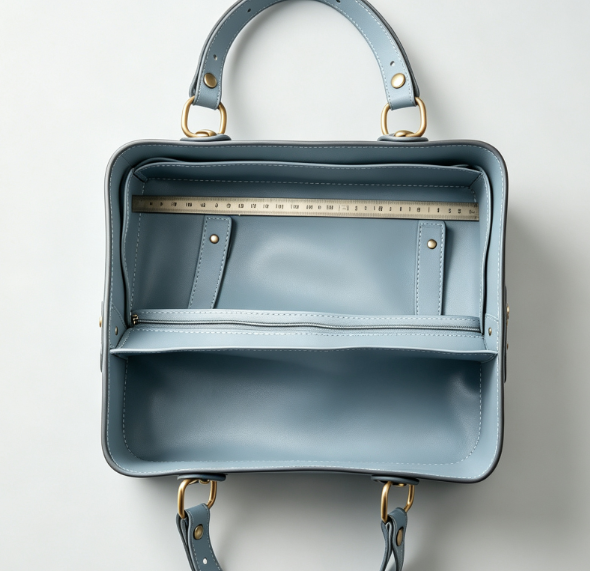
Choosing the Right Formula for Your Bag Type (Decision Framework)
Not every bag needs the same math. Picking the wrong formula is how sourcing teams end up with a bag size chart full of mismatched SKUs. Use these questions to land on the right calculation.
Ask these questions in order:
-
Is the bag rigid or structured (hard-sided cases, boxy totes)? Use interior L × W × H, then convert to liters.
-
Is it flat or gusseted? For flat bags, size as item width + 1 in and item length + item height + 2 in. For gusseted bags, use item width + item height + 1 in and item length + 0.5 × item height + 2 in.
-
Is it a backpack or curved pack? Report enclosed capacity in liters using loaded internal volume—rectangular for boxy packs, elliptic-cylinder (V = π × a × b × h) for rounded shells.
-
Does it have mesh, vented, or open pockets? Exclude those areas from your capacity math—non-enclosed space doesn’t count.
-
Is sizing driven by fill weight? Work backward from the target product weight to bulk density, then required volume, then dimensions.
Accuracy hierarchy for procurement: rigid interior L × W × H is most accurate; gusseted/soft-bag allowance formulas rank medium; quick external-dimension guesses on soft or curved bags rank lowest. For RFQs, pair interior-dimension formulas with sample fit tests before locking specs.
Bag Volume Calculator Tools & Conversion Resources
You can do the math by hand. But when you’re running dozens of SKUs through sourcing checks, a dedicated calculator saves time. Here are the tools that work for different bag types.
Which Calculator Fits Your Bag Type
To instantly estimate volume for pouches and soft-sided bags, enter length, width, and height into the Bag Volume Calculator. It gives you an approximate volume with unit switching. For backpacks, luggage, and containers, another version does the same thing: dimension in, volume out. The Bag Calculator goes further by adding fabric area estimates and airline carry-on compliance checks. That is handy when both volume and shipping restrictions matter.
Simple calculators return just the volume. Fuller-featured ones add fabric cutting area and usable-capacity discounts. Those matter more for sampling and production quotes than for a quick one-off estimate.
Quick Conversion Reference
|
From |
To |
Multiply By |
|---|---|---|
|
cm³ |
L |
0.001 |
|
cm³ |
in³ |
0.061024 |
|
L |
gal (US) |
0.264172 |
|
in³ |
L |
0.0163871 |
|
ft³ |
L |
28.3168 |
For fill volume, most calculators default to 80% of total capacity, keeping 20% headspace built into the estimate automatically.