
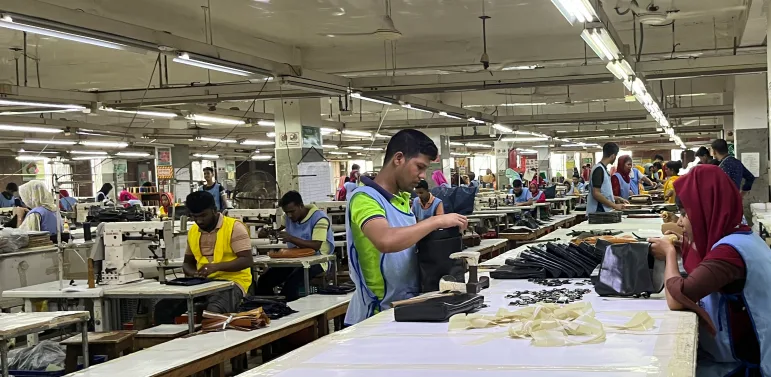
Pick the wrong fabric for a travel bag line and you’ll see it in warranty claims: cracked coatings, blown-out seams, straps that fray before the first overseas trip ends. For brand owners and sourcing managers vetting high-tensile fabrics for custom travel bag manufacturing, the real work is verifying denier count, tensile strength, and abrasion ratings that hold up under airport handling and monsoon rain. This guide breaks down how ballistic nylon fabric, ripstop weaves, and TPU-laminated waterproof options perform across high-wear zones like base panels and zipper tapes, so you can match material specs to your product line before committing to production. We’ll also walk through what separates a fabric mill that talks a good game from an OEM/ODM partner like SUNTEAMBAG that can deliver certified, test-verified rolls at scale.
Understanding High-Tensile Fabrics: Core Specs Buyers Must Know
Three numbers drive every fabric sourcing decision in travel bag manufacturing: denier, GSM, and tensile strength. Get familiar with how they interact, and you’ll spot a weak fabric before it’s ever cut into a panel.
Denier (D) measures fiber linear density — the weight in grams of 9,000 meters of yarn. Higher denier means thicker yarn, which gives you a heavier, more abrasion-resistant textile. GSM (grams per square meter) tells you the finished fabric’s weight and density, shaped by denier, weave tightness, and any coating or finishing applied. Tensile strength is the load the fabric can bear before it tears — always check this alongside denier and GSM, never in isolation.
Denier Gradients Buyers Actually Use
-
Light tier (210D–420D): soft, low-weight, suited for packable totes or lining
-
Standard tier (600D–900D): the workhorse range for everyday travel bags and utility packs
-
Heavy tier (1000D–1680D): built for abrasion and tear resistance in high-load luggage, tactical gear, and industrial covers
Industry benchmarks show 1680D can deliver roughly 6.5x the strength and 2.5x the weight of 210D — a meaningful jump when you’re comparing carry-on shells to expedition duffels.
Strength-to-Weight by Material
Ranked low to high: polyester < nylon < high-tenacity nylon < UHMWPE. UHMWPE tops the chart with strength-to-weight ratios cited around 15x that of steel, plus 100% wet-strength retention versus nylon’s 85–90%.
Purchasing shorthand: a 1680D ballistic nylon oxford in the 980N+ tensile range signals genuine heavy-duty grade — a figure worth requesting on any test report from your supplier.
High-Tensile Nylon vs Polyester vs UHMWPE: Which Fits Your Travel Bag Line
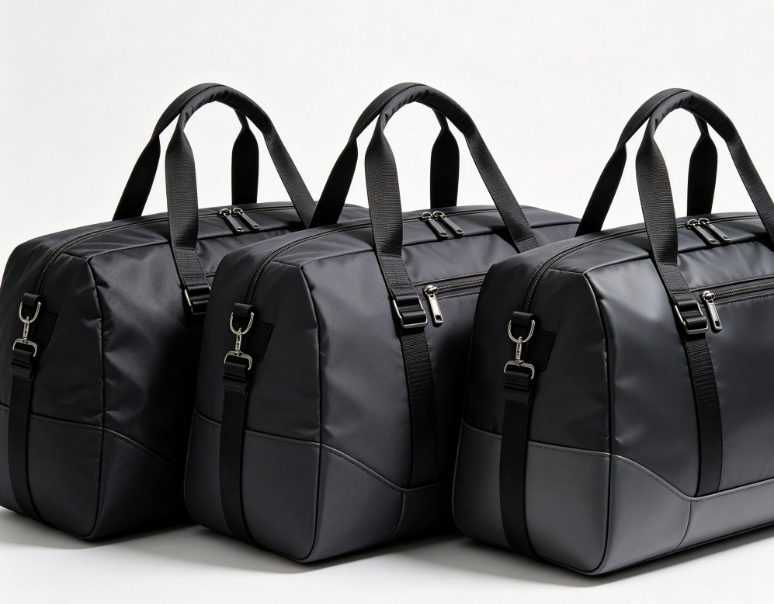
Three materials show up on quoting sheets from travel bag factories, and each solves a different problem. Ranked by abrasion resistance and tear strength, UHMWPE composites sit above high-tensile nylon (Cordura / nylon 6.6 class), which sits above polyester. Flip the ranking to cost and UV stability, and polyester wins every time.
The Cost-to-Toughness Trade-off
At the same denier, nylon typically beats polyester in mechanical strength and abrasion resistance. One comparison found 1680D nylon delivers 1.4x the strength of 1680D polyester. But that toughness costs more:
-
600D polyester: USD 1.60–2.80/m — cheapest mainstream option, ~42,000 Martindale cycles
-
500D nylon: USD 4.00–6.50/m — roughly 50,000 cycles
-
1000D Cordura nylon: USD 7.50–12.00/m — 90,000+ cycles, breaking force ≥3000N
-
1680D ballistic polyester: USD 2.40–3.00/m — 80,000+ cycles, a strong mainstream step-up
-
Nylon 6.6: breaking force ≥2500N, versus ≥1800N for thickened polyester
Polyester’s advantage is lower water absorption, better UV resistance, and lower cost. That makes it the safer default for UV-exposed, outdoor-heavy travel lines.
Matching Material to Your Product Line
-
Budget line: 600D or 1680D polyester for a tougher-feeling shell at modest cost
-
Lightweight premium line: 420D–500D high-tensile nylon for the best strength-to-weight balance
-
Heavy-duty / frequent-checked-bag line: 1000D Cordura or nylon 6.6, where wear resistance matters most
-
Ultra-premium / weight-critical line: UHMWPE composite when minimizing weight while maximizing strength is non-negotiable
-
UV-heavy outdoor line: polyester remains the default
A Fast Sourcing Rule
If price drives your KPI, go polyester. If handfeel and durability matter more, go high-tensile nylon. If weight-to-strength is the priority, go UHMWPE. And if abrasion complaints are already hitting your returns desk, move from 600D polyester to 500D/1000D nylon or 1680D ballistic polyester depending on budget — a fix SUNTEAMBAG applies routinely when reworking underperforming SKU matrices.
Ballistic Nylon & Cordura-Style Fabric: Performance Benchmarks for Premium Bags
Grab strength numbers separate marketing claims from lab-verified fabric. CORDURA® Ballistic Fabric is a densely woven nylon 6,6 construction engineered for enhanced tear and abrasion resistance, and ASTM D5034 is the grab-strength test most suppliers cite to prove it. Any quote sheet that skips this reference number is worth a second look.
Reading the Benchmark Numbers
Published benchmarks give buyers a concrete baseline:
-
1000D Cordura: ~1,245 N grab strength, ~200 N tear strength, ≥5,000 Taber abrasion cycles, ~330 gsm
-
1050D ballistic nylon: ~1,550 N grab strength, ~280 N tear strength, ~3,200 Taber cycles, ~400–500 gsm
-
Heavy ballistic-grade specs: some datasheets list ASTM D5034 tensile strength as high as 845 lb warp / 730 lb fill, while broader test summaries show grab strength ranging 352–631 lbf warp and Taber cycles from 460 to 1,505 depending on construction
The full testing stack — ASTM D5034 for breaking strength, ASTM D3884 for Taber abrasion, plus a trouser tear test — is what most credible datasheets run on.
Choosing Between Ballistic Nylon and Cordura-Style Fabric
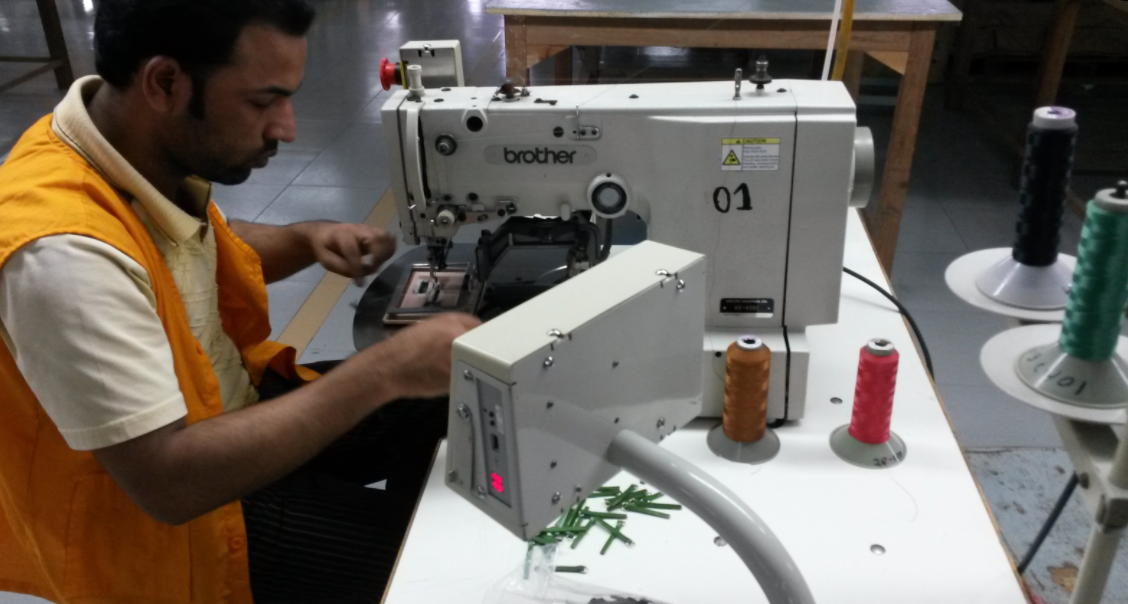
The two aren’t interchangeable. Ballistic nylon wins on tear resistance and structural rigidity, so it belongs on base panels, corners, and impact zones. Cordura-style nylon trades some rigidity for lighter weight and stronger abrasion resistance, making it the better pick for main shells and front panels that take repeated rubbing.
Pair fabric choice with construction: reinforced bottom panels, double-layer strap attachments, bar-tack stitching, and PU backing at load-bearing zones — base panel, strap interface, grab-handle anchors, zipper perimeter — are what keep a premium travel bag from failing where it matters most.
TPU-Laminated and Waterproof Fabric for Rain-Prone Travel Gear
Rain doesn’t ruin a travel bag through the face fabric. It gets in through unsealed seams and coatings that break down over time. TPU-laminated fabric handles this better than standard PU-coated polyester, especially for structured backpacks, roll-top travel bags, carry-on duffels, and luggage panels that need weldability, waterproofness, and shape retention all at once.
Laminate vs Coated: The Durability Gap
X-Pac VX21 is the benchmark composite most sourcing teams reference for waterproof travel bag material. It runs about 205–210 g/m², rated 13.8+ bar / 200+ psi waterproof, built from 210D face fabric, 0.25 mil polyester film, X-Ply reinforcement, and 50D backing.
Standard PU-coated polyester is different. The coatings are prone to hydrolysis, where heat and humidity trigger peeling and flaking. Typical PU-coated bags show notable coating failure risk within 2–3 years. Laminated systems like X-Pac last longer under the same wet-climate stress.
Why Weldability Matters
TPU laminates can be heat-welded or RF-welded, giving sealed pockets and panels that coated fabrics (stitched and taped) can’t match. Waterproof face fabric without welded seams still leaks.
Choosing the Right X-Pac Weight
-
VX03/VX07 (~140–150 g/m²): light packs, admin pouches
-
VX21 (~205–210 g/m²): best all-round pick for travel backpacks
-
VX42-class (~420 g/m²): premium structured, abrasion-heavy luggage
RFQ checklist: fabric weight, hydrostatic rating, seam method, laminate composition, hydrolysis/aging data. SUNTEAMBAG runs all five before quoting rain-prone travel gear.
High-Wear Zone Fabric Selection: Base Panels, Straps & Zipper Tapes
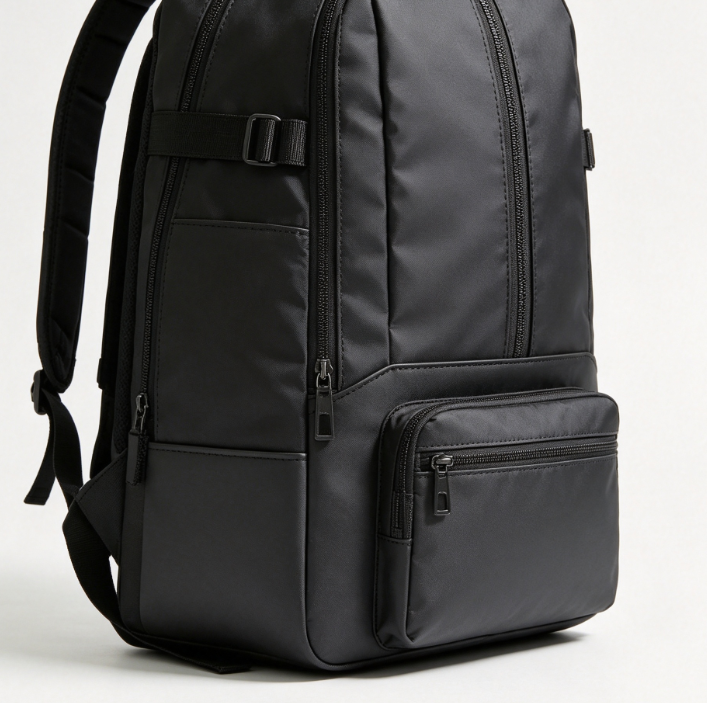
Not every panel on a travel bag takes the same beating. Base panels drag across curbs and conveyor belts. Straps carry load and friction at the same time. Zipper tapes flex thousands of times per trip. Seasoned OEM/ODM factories match fabric to each zone instead of using one material across the whole bag.
Base Panels: Where Abrasion Hits Hardest
For high-wear bottoms, 1000D Cordura or 1000D high-tenacity nylon is the standard choice. Specs run 330–430 gsm with ≥5,000 abrasion cycles, and 1000D Cordura delivers 2–10x the abrasion resistance of standard nylon and roughly 10x that of cotton canvas.
But full-panel 1000D isn’t always the most efficient build. A common production pattern uses a lighter 500D main body reinforced with a localized 1000D layer or patch at the base, balancing weight against durability. 500D Cordura runs lighter and works fine outside extreme-contact zones, but on high-friction bottoms it’s paired with local reinforcement rather than used alone.
Straps: Load-Bearing Meets Friction
Strap outer layers use polyester webbing, 20–38 mm wide. Strength benchmarks:
-
25 mm webbing: 600–900 N (~60–90 kgf) — light-to-medium load
-
38 mm webbing: 1000–1500 N (~100–150 kgf) — heavier load
-
50 mm webbing: 1500–2000 N (~150–200 kgf) — heavy-duty, long-haul use
For everyday travel bags, 25 mm covers most needs. Heavy-load or backpack-style carry benefits from 38–50 mm for better force distribution. High-contact points where straps rub against hardware should get reinforcement patches, binding, or double-layer webbing.
Zipper Tapes: Small Component, Frequent Failure
Zipper tapes are polyester-based, with tape widths around 12–13 mm. The priority is abrasion resistance, dimensional stability, and smooth stitching. Most failures come from repeated pulling, bending, and edge fraying, so factories add edge binding or topstitching, end reinforcement to prevent slider-impact concentration, and double-layer fabric or tape at high-cycle open/close points.
Sampling-Ready Spec Sheet
-
Base panel: 1000D Cordura, ~330 gsm, ≥5,000 abrasion cycles
-
Strap webbing: 25 mm/600–900 N standard; 38–50 mm/1000–2000 N for heavy load
-
Zipper tape: polyester, ~12–13 mm width, with local reinforcement
Compounding these choices with construction details like bar-tacking at strap roots, double-needle stitching at connection points, and reinforcement patches at corners extends bag life without excessive added weight. SUNTEAMBAG applies this zone-specific logic across production runs, matching denier fabric strength to actual wear patterns instead of defaulting to one heavy fabric across the entire bag.
Custom Travel Bag Manufacturing: OEM/ODM Fabric Procurement Checklist
A vague RFQ gets a vague quote. That vague quote turns into a production dispute three weeks before shipment. Lock down these fields before any PO gets signed.
Fabric Specs to Confirm Upfront
-
Denier tier: 600D+ for travel-grade shells. 700D–900D is standard industrial weight. 1000D–1500D for reinforced and heavy-duty lines.
-
GSM floor: 240+ GSM for main fabric on travel bags.
-
Coating thickness: 20–30 microns for PU/TPU coatings.
-
Get denier, weave type, coating (PU/TPU/PVC, spray or laminated), GSM, thickness, warp/weft density, Pantone match, and end-use (rolling luggage, duffel, toiletry bag, carry-on) in writing.
Test Reports and Inspection Checkpoints
Request tensile strength, tear strength, abrasion, colorfastness, hydrostatic pressure, and coating adhesion data as one package, not piece by piece. Industry benchmarks sit at 700N–1200N tensile strength with 15%–25% elongation at break for heavy-load travel bags. Incoming inspection should catch shade variation, uneven weave, oil stains, coating peel, and GSM or width deviation between batches.
Certifications to Verify
Confirm REACH and OEKO-TEX certificate numbers, the issuing body, validity dates, and that the scope matches the company quoting you. A screenshot isn’t enough. Add GRS if the bag uses recycled content.
Evaluating a Travel Bag Fabric Manufacturer: What to Verify Before Ordering
A real luggage-grade fabric manufacturer performs cutting, laminating, coating, sewing, welding, and QC in-house. That separates it from a trading company that resells someone else’s output. Top-tier factories build IQC, IPQC, FQC, and OQC into their workflow and back it with ISO 9001, BSCI, OEKO-TEX, and GRS certificates tied to actual batch numbers.
Before you sign a PO, confirm their cutting uses automated beds with tracked cutting-loss rates and documented patterns. Their coating should pass fold-crack testing at 5,000+ cycles with no visible cracking or whitening. For welding, they need high-frequency or ultrasonic capability for waterproof or TPU structures, not just sewing. QC sampling should cover 5–10% of the batch, checking GSM, surface defects, and shade variation.
Request a full TDS, batch traceability (roll number, dye lot, TC/GRS certificate numbers), and production capacity broken down by product line. Genuine references run around 3,000 leather bags per month, 5,000 PU/PVC bags per month, and 8,000 canvas bags per month.
SUNTEAMBAG discloses its Wuhan facility address publicly and runs ISO 9001, 5–10% incoming inspection, 5,000+ zipper cycles, 10–15kg strap load tests, and 5,000+ coating fold tests. These specs give you a verifiable baseline for any RFQ.
From Fabric Selection to Finished Bag: SUNTEAMBAG’s Custom Manufacturing Capability
We run three self-operated factories that handle our OEM/ODM pipeline from design to mass production. Travel bags, totes, backpacks, and leather accessories all get made under one roof.
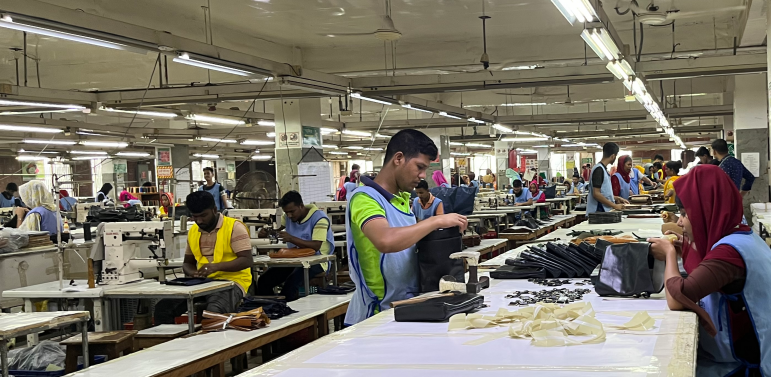
The Workflow, Step by Step
-
Inquiry: Send sketches, reference images, or a rough concept. We support both OEM and ODM.
-
Fabric shortlist: Choose from 420D ripstop nylon, rPET DWR, recycled nylon, or laminated technical fabric.
-
Sampling: 7–10 days for in-stock luggage-grade fabric; custom fabric runs 3–4 weeks.
-
Trial order: A small batch before scaling protects you against a full-container mistake.
-
Bulk production: 30–45 days depending on style.
MOQ Reality Check
-
420D ripstop nylon: 500–1000m/color, 25–35 days
-
rPET DWR: 500–1000m/color, 22–32 days
-
Recycled nylon: 300–800m/color, 18–28 days
-
Laminated fabric: 45–60 days
-
Quilted styles: MOQ from 100 pcs/style
One travel collection built this way drove 142% higher social engagement and 18% of total revenue within 18 months.