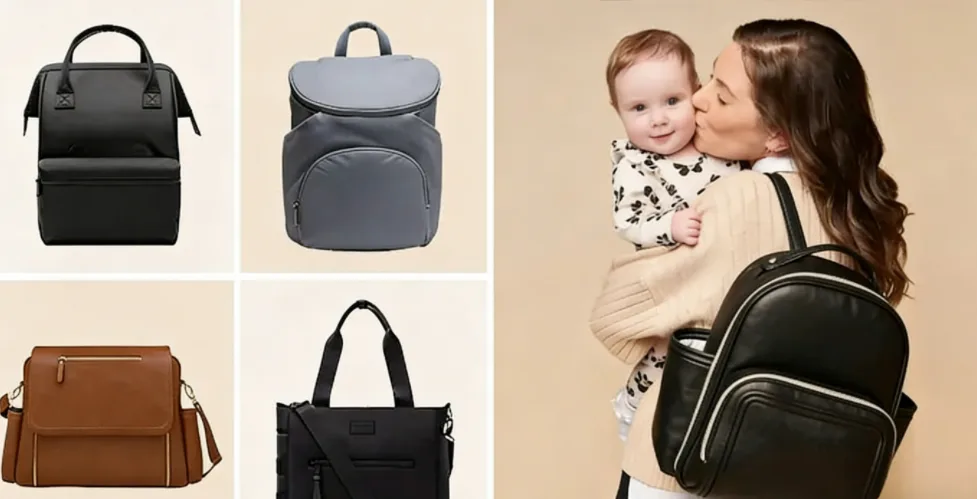
The sustainable parenting market is growing fast. Brands winning shelf space aren’t just selling bags — they’re selling a conscience.
Building a diaper bag line around vegan leather? You already see the opportunity. The harder part is execution. Which materials hold up to hard, everyday use? Which manufacturers can back up real sustainability credentials — not just marketing talk? And how do you position your product so eco-conscious parents pick you over the dozen competitors launching this season?
This guide covers it all:
-
Material selection
-
Supplier vetting
-
Design briefs
-
Pricing benchmarks
-
Market positioning
Use it to launch your custom vegan leather diaper bag line with clarity and confidence.
What “Vegan Leather” Actually Means for a Diaper Bag Brand
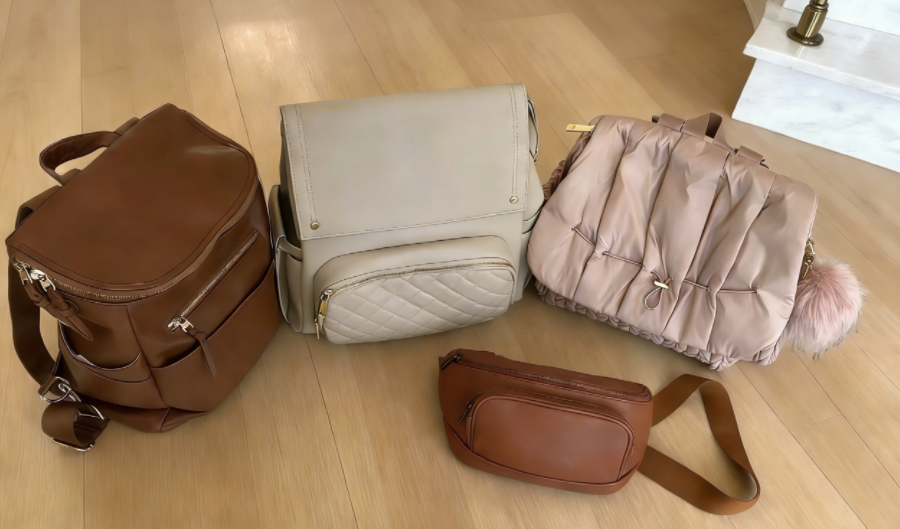
“Vegan leather” is not one material. It’s a broad category, and where your product falls on that spectrum determines how well your sustainability claims hold up.
Here’s the breakdown after reviewing the client’s inquiry — our factory recommends the following eco-friendly materials:
-
PU/PVC (petroleum-based): The most common type in custom diaper bags today. Easy to wipe clean, durable, and leather-like in finish. But it comes from fossil fuels — which creates a high greenwashing risk if you market it as “eco-friendly” without being upfront about that.
-
Microfiber: Used by brands like Mina Baie and Freshly Picked. Stylish and functional, but it lacks solid sustainability credentials too.
-
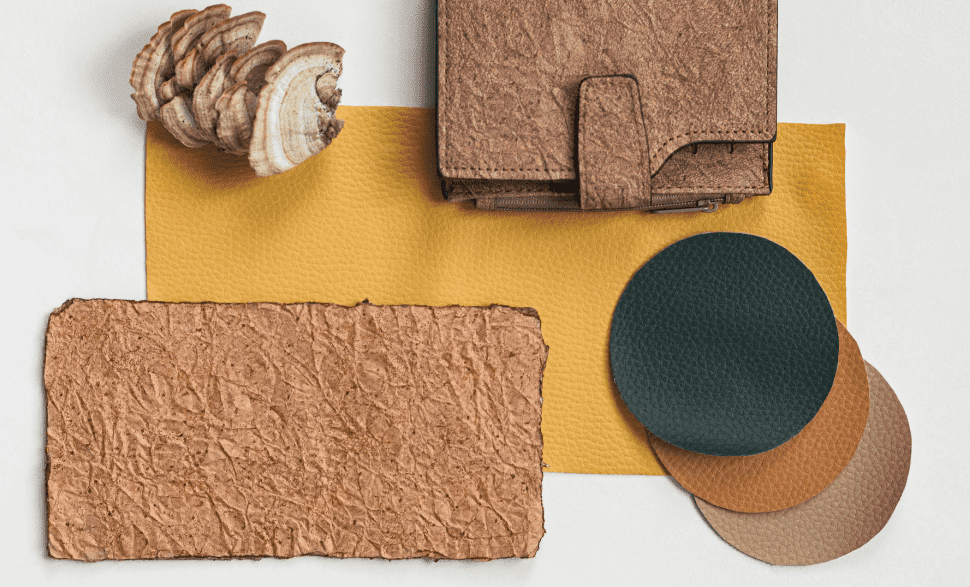
Plant-based materials: Piñatex (pineapple fiber), Desserto (cactus), banana leather — these are the real alternatives. Rashiki’s 2023 banana leather launch converts one ton of fruit waste into usable fiber.
Why this matters to your customers: Eco-conscious parents are getting sharper about greenwashing. They read labels. You’re using PU-coated polyester? Say so. You’re using cactus-derived leather? Prove it.
Honest communication builds trust — and trust converts.
State your exact material composition. Disclose the petroleum percentage in any hybrid construction. Never let “vegan” carry the weight that “sustainable” needs data to back up.
For baby-contact surfaces, add OEKO-TEX Standard 100 (Class I) certification to your requirements. It caps harmful azo dyes below 1% and formaldehyde under 16 ppm. Your customers will start looking for that on your product page — and they’ll notice if it’s missing.
The 4 Vegan Leather Material Options Sustainable Brands Should Evaluate
Master Li: We’ve just received a diaper bag order from the US client. They’re very focused on sustainability.
Material Supplier: Got it. For this type of product, performance and safety matter just as much as eco claims.
Master Li: Exactly. From a bag manufacturer’s perspective, we’ve shortlisted a few vegan leather options. Let’s review them together.
Material Supplier: Sure. First, microfiber leather.
Master Li: That’s usually a stable choice.
Material Supplier: Yes, its carbon footprint is around 15.8 kg CO2 per square meter, slightly lower than real leather. It can also meet OEKO-TEX standards — anti-allergenic, breathable, and antimicrobial.
Master Li: That works well for baby products. But we should be transparent — it’s still plastic-based.
Material Supplier: Next is PU leather.
Master Li: Cost-effective, but we’re concerned about durability.
Material Supplier: Right. It performs well on accent panels, but full-body construction may have long-term structural limitations.
Master Li: Any upgraded options?
Material Supplier: There are bio-based PU versions now. Some contain over 50% plant-derived polyols, with a softer, suede-like feel. There are also corn-based materials with up to 63% biodegradability.
Master Li: That could be positioned as a premium upgrade in our OEM bag manufacturing proposal.
Material Supplier: Third category — plant-based leathers like apple, cactus, and mushroom.
Master Li: Clients are asking about these more often.
Material Supplier: Materials like AppleSkin or Vegea can go as low as 2.76 kg CO2 per square meter. Cactus leather requires no irrigation, and mycelium-based leather uses low-energy processes.
Master Li: Sounds strong on sustainability. What about MOQ and cost?
Material Supplier: That’s the challenge. Most are sourced in small batches from specialized suppliers, often in Italy. Costs increase quickly.
Master Li: Then we need to align expectations with the client early.
Material Supplier: Lastly, I recommend hybrid materials.
Master Li: What combination?
Material Supplier: rPET with cork.
Master Li: Interesting.
Material Supplier: rPET comes from recycled plastic bottles — durable, lightweight, and ideal for linings. Cork is naturally waterproof, biodegradable, antimicrobial, and sustainably harvested.
Master Li: How should we apply them?
Material Supplier: Use cork for interior panels — it’s breathable and soft. Pair it with apple leather for the exterior.
Master Li: That gives a strong sustainability story inside and out.
Material Supplier: Exactly. It’s also a combination that holds up well under scrutiny.
Master Li: Great. Let’s consolidate these options and present a clear recommendation to the client.
Quick Comparison
|
Material |
CO2 (kg/m²) |
Key Strength |
Watch Out For |
|---|---|---|---|
|
PU / Microfiber |
15.8 |
Cost-effective, soft finish |
Plastic-based, non-biodegradable |
|
Plant-based (Piñatex, AppleSkin) |
2.76 |
Renewable byproducts, low waste |
High cost, scaling MOQ |
|
Cork |
Renewable, no plastic |
Waterproof, fully biodegradable |
Aesthetic fit, regional availability |
|
rPET |
Recycled content |
Durable, lightweight |
Still plastic-derived |
Before locking in your material spec, run three checks. First, scratch and water resistance — cork and Piñatex lead here without coatings; PU and microfiber rely on OEKO-TEX certification. Second, MOQ compatibility with your production volume. Third, unit cost against your retail price ceiling. The right material is the one that survives both the wash cycle and your margin sheet.
Pricing Benchmarks and MOQ Strategy for a New Sustainable Diaper Bag Line
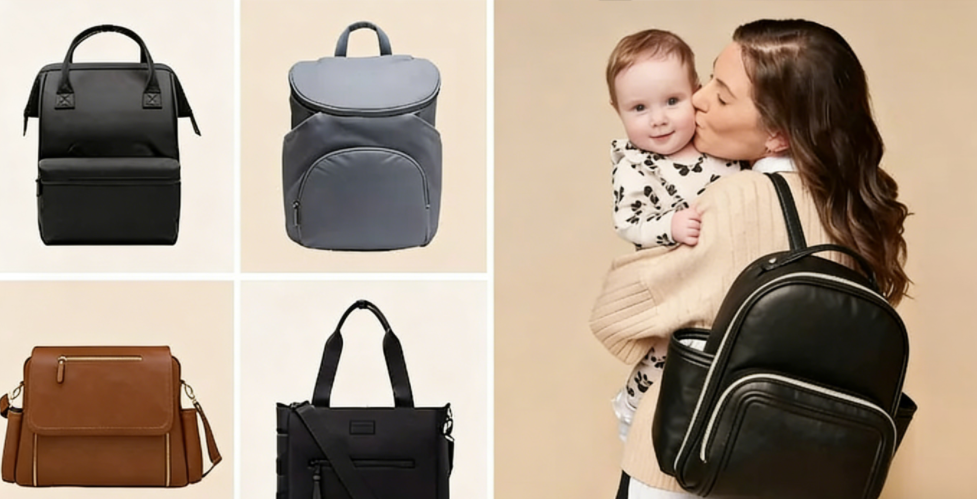
After confirming the material selection with the client, we provide a detailed quote for the diaper bag, ensuring every detail is aligned before finalizing the offer. For a sustainable fabric base, such as an rPET shell with recycled lining, at 300 units the total cost for materials, labor, overhead, and compliance testing is approximately $14.40 FOB per unit. Adding a 15% supplier margin brings the price to around $16.56/unit.
For a higher-tier option using microfiber or PU leather construction, at 200 units the FOB price is about $97/unit, which includes leather yield, YKK hardware, lining, roughly 95 minutes of labor per unit, overhead, and testing. The difference between these tiers is significant, highlighting that the choice of material directly determines the floor price and influences the retail ceiling. Confirming all specifications, unit quantities, and customization options before issuing the official quote ensures transparency and avoids any surprises later in the production process.
How MOQ Drives Unit Cost
MOQ isn’t just a supplier requirement. It’s a pricing lever.
-
100 units: Fixed costs spread thin. You’ll pay 20–40% more per unit than at 500 units.
-
300 units: The practical sweet spot. Fabric mills and zipper suppliers move into standard pricing. REACH testing cost drops from ~$4.20/unit to ~$1.40/unit.
-
500+ units: Price plateau. Variable costs take over, and hardware upgrades become affordable.
Hidden Costs That Compress Your Margin
Sunteam generally lists all cost items clearly. The following can be used as a reference:
|
Cost Item |
Estimated Range |
|---|---|
|
Prototype sampling |
$500–$1,000 per style |
|
REACH / Prop 65 testing |
$120–$250 per style |
|
Colorfastness / abrasion testing |
$25–$80 per test |
|
AQL pre-shipment inspection |
$150–$300/day |
|
Debossing plate (leather) |
$100–$400 one-time |
|
Premium retail packaging |
Add $1.50–$4.00/unit |
|
Sea freight (FOB China → US) |
$2–$5/unit at 300–500 units |
|
US import duty (HTS 4202.xx) |
5–20% of FOB value |
Include these cost items in your custom bag pricing model from day one. Skipping them can create margin issues after production has started — the worst time to discover unexpected costs.
Presale Strategy: Validate Before You Bulk Buy
Your retail price needs a 2.5× markup on landed cost to stay competitive. Below that on an unproven SKU? Don’t commit to a bulk run. Presell first.
A practical launch sequence:
-
Put $500–$1,000 into sampling and $400–$600 into compliance testing upfront. Treat it as your validation budget.
-
Run a presale with a target of 150–250 units minimum. That number justifies a 300-unit production run.
-
Lock your golden sample before the presale closes. Bulk production quality drifts without a reference point.
-
Start with 1–2 colorways maximum. Each extra colorway resets fabric and dye MOQs. That adds cost per unit fast.
-
Use an ODM chassis for your first run. Move to custom hardware at round two, once your volume supports the tooling cost.
What to Request in Your RFQ
Ask for line-item quotes, not package prices. A cost-transparent supplier breaks it down like this:
-
Full BOM with fabric denier, coating spec, and sustainability certification
-
Operation minutes split by step (cut, sew, edge-paint, QC)
-
Overhead percentage and scrap rate
-
Test plan with clear ownership of who pays
-
Price tiers at your MOQ, at 300 units, and at 500 units
-
Lead times for sample, materials booking, bulk bag production, and inspection
A supplier who refuses to break it down this way is hiding something in the number. Find that out before you place an order — not after.
How to Position Your Custom Vegan Leather Diaper Bag in a Crowded Market
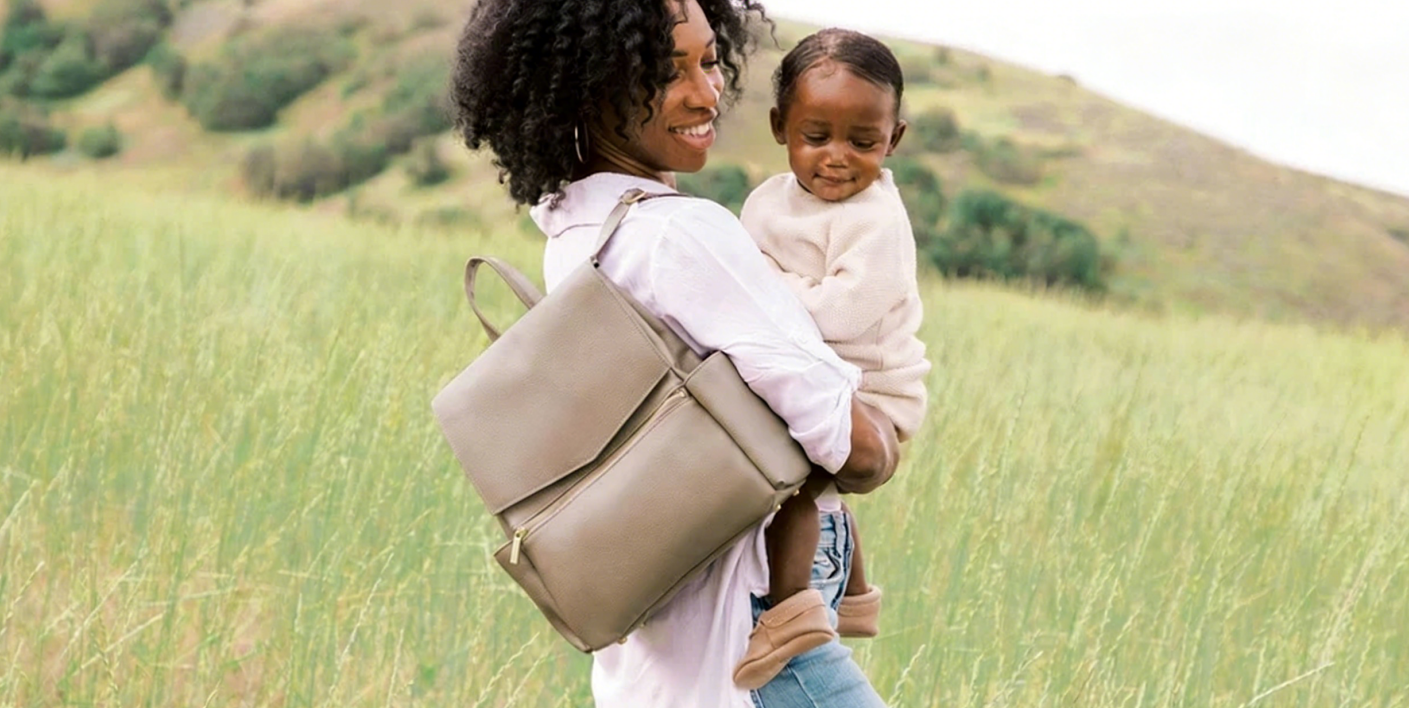
Nylon owns 42% of the diaper bag market. That’s your opening.
The major players — Carter’s, Disney, Graco — are locked into mass-market nylon at USD 50–100 price points. None of them are making a real move into vegan leather. That gap exists, and it’s yours to claim.
Here’s how to use the market structure to your advantage:
-
Lead with what nylon can’t say. Nylon is durable and cheap. It has zero sustainability story. Nylon buyers are starting to feel the pressure — eco-conscious parents want a better option, and your custom vegan leather diaper bag delivers exactly that.
-
Target Europe and North America first. Europe holds 34% of global demand. North America sits at 31–33%, with Canada growing fastest. These markets turn sustainability messaging into real sales. Start there.
-
Own the backpack format. Backpacks are the largest bag-type segment. Totes are the fastest-growing. Launch in both before expanding elsewhere.
-
Price the premium with purpose. USD 100–250 puts you above the nylon floor. It also signals the quality and values your buyer expects. That price point works in your favor.
The market is growing at 3–8% CAGR through 2033. Vegan leather doesn’t even show up in current material segment data. That’s not a warning — it’s a wide-open lane.
Conclusion
Building a custom vegan leather diaper bag line is more than a product decision. It’s a brand statement. And it speaks directly to a growing generation of parents who spend their money on brands that match their values.
You now have the full picture:
-
Which materials hold up beyond the marketing hype
-
How to audit suppliers before spending a single dollar
-
How to price and position your line so it competes for real
Some brands build loyal followings. Others fade out. The gap between them comes down to one thing — being intentional at every step.
Your next move is clear. Finalize your design brief. Shortlist two or three manufacturers using the audit framework. Then request samples before any MOQ conversation starts.
Custom vegan leather diaper bags for a sustainable bag brand are no longer a niche novelty. They’re the new standard. The brands shaping that standard today are the ones customers will keep coming back to.
Start building your custom bag pricing model with purpose — with Sunteam guiding you every step of the way.