
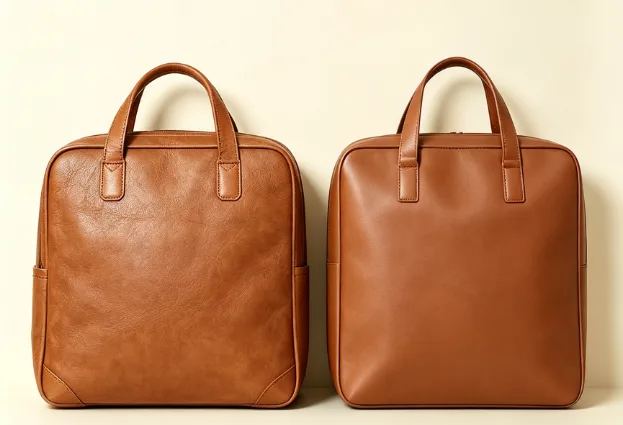
Picking the wrong fabric can quietly tank a product launch—customer returns from frayed seams, faded prints, or zippers that fail after three flights. If you’re building a travel bag line, the polyester vs nylon debate is only the start; you also have to weigh ripstop strength, waterproof coatings, and genuine leather’s cost against PU alternatives that mimic the look for less. This guide covers every major material brands actually use in production, from ballistic nylon’s abrasion resistance to RPET fabrics gaining traction with sustainability-focused buyers. Whether you’re sourcing for a budget retail line or a premium carry-on collection, you’ll know exactly which fabric fits your durability needs, price point, and brand positioning—no manufacturing background required.
Custom Travel Bag Materials: Core Types and Performance
Seven material families produce most travel bags today, and each one brings a different balance of weight, durability, and cost.
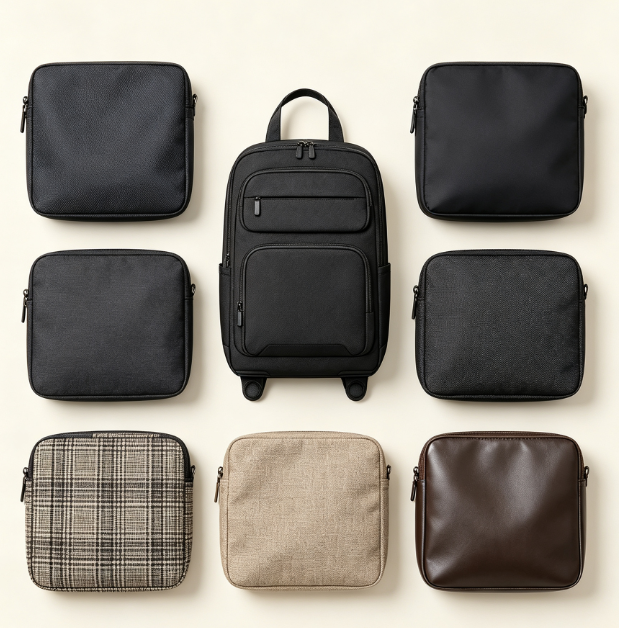
Nylon and Ballistic Nylon
Nylon comes in 210D, 420D, 500D, 840D, and 1680D deniers. At the same weight, nylon resists abrasion better than polyester and stays lighter—that’s why everyday backpacks and premium functional bags use it. Ballistic nylon goes further: it’s a high-denier, tightly woven fabric (most often 1680D) with heavy coating, built for maximum tear resistance and structure. Think high-end business travel bags, tactical gear, camera cases. Standard nylon suits general-purpose, lightweight builds; ballistic nylon answers when you need something premium that will survive years of frequent use.
Polyester
Travel bags mostly use 210D–600D, with 600D polyester as the standard mid-tier, cost-effective option. 900D+ moves into heavy-duty territory. Polyester wins on cost control, shape stability, and print quality—ideal for promotional bags, commuter totes, and organizers. Ripstop polyester adds reinforced crosshatch yarns that stop tears from spreading, common in outdoor and lightweight bag shells.
Oxford Fabric
Oxford isn’t a fiber—it’s a weave structure, built from either polyester or nylon yarns. It pairs with 600D, 900D, or 1680D deniers and gives you durability with a solid cost-performance ratio. Always check the base fiber, denier, and coating together; “Oxford” alone doesn’t guarantee consistent performance.
Canvas
Usually cotton or poly-cotton blends, canvas uses thicker yarns and heavier weight to build structure and a retro look—perfect for lifestyle and urban commuter bags. It’s not about keeping weight low; it’s about visual bulk and shape retention.
Leather and PU
PU leather dominates fashion travel bags—cost is controllable, cleaning is easy, and surface texture looks good. PVC leans harder into waterproofing and moldability but scores lower on eco-friendliness and feel. Genuine leather targets high-ticket, gift-oriented, business-positioned products; weight isn’t a priority here.
RPET, TPU/PVC Coatings, and PP Nonwoven
RPET recycled fabric drives eco-conscious lines—often paired with PU/TPU coating and recycled lining for a full sustainability story. TPU/PVC coatings add waterproof, chemical-resistant surfaces; TPU feels more flexible and eco-friendly, while PVC costs less and offers more transparency. PP nonwoven fits low-cost, short-cycle, light-load products like gift bags—not main bag bodies facing heavy wear.
Nylon vs Polyester: An In-Depth Comparison of the Two Mainstream Materials
The choice between polyester and nylon for travel bags comes down to one trade-off: nylon gives you strength and flexibility, polyester gives you shape retention and lower cost. Neither material wins outright—your production budget and how the bag gets used decide.
Head-to-Head Performance Data
|
Property |
Nylon |
Polyester |
|---|---|---|
|
Abrasion resistance |
~8,000 rubs before pilling |
~5,000 rubs before fiber breakage |
|
Moisture absorption |
3–4.5% (weakens ~10% when wet) |
0.4–0.8% (stays stable) |
|
Tensile strength |
4.5–5.5 GPa (70–100 MPa) |
2.5–3.5 GPa (55–80 MPa) |
|
Weight |
Lighter |
Slightly heavier |
|
Sheen/finish |
Softer, muted tone |
Crisper, glossier, better shape hold |
|
UV resistance (500hrs) |
~50% strength retained |
≥80% strength retained |
|
Cold flexibility |
Stays supple to -40°C |
Turns brittle around -20°C |
|
Base cost |
Higher |
Lower |
Nylon handles the hard-wear spots—shoulder straps, bag bases, zipper edges, any high-friction zone. Polyester resists sun better, dries faster, and holds its shape more tightly, which is why you see it in printed promotional items and structured totes.
Which One Fits Your Bag Program
-
Choose nylon for backpack straps, hiking gear, wet-climate products, or anything that needs long-term abrasion resistance.
-
Choose polyester for cost-sensitive runs, crisp visual finishes, sun-exposed products, or fast-drying requirements.
-
Combine both: a nylon shell with a polyester lining is the industry-standard formula. The outer layer handles wear and tear, the inner lining keeps cost down and dimensions stable. High-end hiking packs tend toward high-denier nylon for the main body, reserving polyester for linings and dividers.
Canvas Fabric: The Best Carrier for Brand Printing and Vintage Style
Weight determines how a canvas travel bag fabric performs. Most brands work within 8oz to 16oz, and each range delivers a different feel and use case.
-
8oz (~270g/m²): Lightest option, best for giveaway totes and low-cost campaigns.
-
10oz (~280–340g/m²): Soft yet structured, the go-to weight for everyday branded canvas bags.
-
12oz (~340–410g/m²): Firm enough to stand upright, fits A4 documents or a 13″ laptop, and holds 5–8kg reliably.
-
14–16oz (~400–540g/m²): Rigid, stands unsupported, ideal for premium totes and tool bags. 16oz weighs about 33% more than 12oz at the same size.
12oz surfaces hold sharp graphics cleanly, making it a top pick for branded merchandise. 14–16oz’s coarser weave suits bold badge-style logos and distressed prints, though fine text can blur.
10–12oz balances weight and price for commuter totes; 12–16oz suits limited-edition or collaboration pieces justifying higher unit cost.
Screen printing works best across all weights; embroidery needs 12oz+ for stitch support without distortion.
Raw canvas absorbs water. PU/resin coatings or wax finishes add water resistance while reinforcing the vintage look—heavier weights offer some natural water resistance even uncoated.
Leather & PU: Choosing the Right Material for Premium Custom Travel Bags
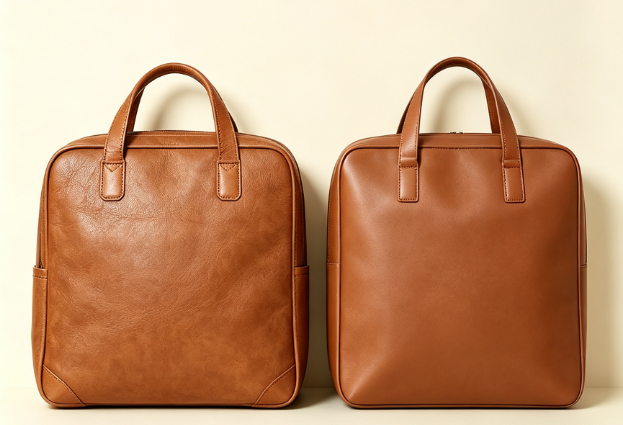
For premium travel bags, the choice between PU leather and genuine leather depends on how long you need the bag to last and how you use it day to day.
Full-grain leather offers tensile strength around 20–30 N/mm², tear resistance up to 40–60 N/mm², and a service life often exceeding 10 years. Raw material costs $28–70 per square foot, roughly 2–3x the cost of split leather.
Split leather trades longevity for price. Strength drops to 5–10 N/mm², lifespan sits around 3–5 years, and surfaces rely on PU coating or embossing to fake grain texture, which makes them prone to peeling and cracking.
PU leather suits budget-sensitive or uniform-look projects but ages faster under friction and temperature swings.
Durability Metrics That Matter for Travel
|
Factor |
Full-Grain |
Split/PU |
|---|---|---|
|
Breathability |
8–12 mg/cm²/h |
<2 mg/cm²/h |
|
Wear at corners/handles |
Slow |
Faster degradation |
|
Waterproofing |
Coating-dependent |
Coating-dependent |
For corporate gifting and business-class bags, go with full-grain. For bulk, cost-controlled orders, use split/PU on low-contact panels only.
Eco-Friendly Material Trends: RPET and Sustainable Fabric Analysis
Global rPET production hit 8.9 million tons in 2023, covering roughly 12.5% of total polyester fiber output worldwide. Recycled polyester is now a mainstream sourcing option, accounting for over 90% of all recycled chemical fiber volume globally.
Where RPET Actually Comes From
Two raw material streams feed this supply chain: production scraps (clean manufacturing waste, low contamination, ready for direct reuse) and post-consumer PET packaging (mostly beverage bottles, requiring sorting, decontamination, and processing before reuse).
Bottle-to-fiber remains the dominant route, though recycled textiles, industrial waste yarn, and film/sheet scraps also feed production. One 500ml bottle yields about 0.05m² of fabric; a single T-shirt typically needs 8–10 bottles worth of material.
Performance and Cost Reality
rPET matches virgin polyester on durability and functional performance. The fiber itself doesn’t change, only its origin does. The environmental impact is where the difference shows: rPET production can cut energy use by nearly 80% compared to virgin polyester manufacturing. That figure is widely cited in industry marketing, so treat it as a reference rather than a fixed standard.
Supply isn’t unlimited, though. Recycled PET fiber is considered a raw-material-constrained industry. When bottle-flake supply tightens, manufacturers blend in polyester production waste, typically 5–8% of total input, to fill gaps.
What Buyers Should Verify Before Sourcing RPET
Brands that adopt recycled polyester for eco-friendly bag material look for two things: traceability and verifiable certification. Suppliers offering stable batch records, low-risk supply chains, and proper documentation get into US/EU brand supply chains far faster than those without.
GRS (Global Recycled Standard) matters most here. It covers recycled content verification, supply chain tracking, chemical restrictions, and social responsibility requirements all at once. Testing bodies like TÜV Süd treat GRS certification as a baseline gate for brands adopting recycled materials at scale.
Before finalizing an RPET supplier, confirm:
-
Recycled content percentage: clearly stated and batch-traceable
-
Raw material origin: prioritize post-consumer PET bottles or closed-loop textile waste over unclear blends
-
Certification stack: GRS paired with OEKO-TEX Standard 100 is standard for EU/US-bound shipments, especially for skin-contact or children’s products
-
Processing method: physical recycling dominates current supply; chemical recycling suits high-purity, closed-loop applications
-
Price premium expectations: no universal industry benchmark exists, but premium sportswear, outdoor, and fast-fashion collaborations tolerate markup more easily than basic commodity lines
Price flexibility depends on certification strength, end category, and brand positioning, not a fixed percentage across the board.
Waterproof and Abrasion-Resistant Materials Deep Dive: TPU/PVC Coating and Ripstop Technology
Waterproof travel bag fabric performance comes down to two coating technologies, and the gap between them matters more than most sourcing teams realize.
TPU coating delivers hydrostatic pressure ratings of 10,000–20,000 mmH₂O, reaching IPX8 levels in premium applications. PVC coating sits lower, usually 8,000–15,000 mmH₂O, aligning more with IPX7 or short-term splash resistance. TPU film thickness runs as thin as 0.012–0.025mm while still hitting those high waterproof numbers, and it keeps its moisture vapor transmission rate advantage too at 5,000–10,000 g/m²·24h versus PVC’s 3,000–5,000 g/m²·24h.
Cold weather changes the calculation. TPU stays flexible down to -35°C; PVC turns brittle much sooner. TPU also ranks as the more mature eco-friendly bag material option—PVC coatings carry some risk of harmful additive leaching. Cost runs opposite: PVC costs less, TPU costs more. That’s why TPU dominates mid-to-premium waterproof functional bags and rain gear while PVC covers general-purpose, budget-conscious lines.
Ripstop Nylon Fabric: How the Grid Structure Stops Tears
Ripstop nylon fabric works by weaving thicker, reinforced yarns into the base fabric at set intervals, creating a visible grid pattern. When damage starts, that grid stops the tear from spreading—ripstop doesn’t prevent punctures, it contains them. This makes it the standard choice for:
-
Outdoor backpacks and hiking packs—constant friction, scraping, load-bearing stress
-
Military-style and tactical travel bags—heavy loads, external attachment systems, repeated dragging
-
Camping and climbing gear bags—resistance against branches, rocks, equipment edges
Most durable luggage material programs pair ripstop nylon with TPU or PVC coating: ripstop handles tear resistance, the coating handles waterproofing. That combination covers both failure modes brands worry about most.
MOQ and Sampling Timelines for TPU/PVC and Ripstop Sourcing
-
TPU/PVC coated fabric MOQ: standard stock specs start around 300–500 meters per color; custom weight, color, embossing, or special functions push minimums to 800–1,000 meters per style.
-
Ripstop nylon MOQ: standard colors and specs start at 500–1,000 meters; special water-repellent treatment or PU/TPU composite builds raise that threshold.
-
Sampling timelines: existing fabric cut-and-sew samples take 3–7 days; custom coating, color, or texture work takes 7–15 days; new structural development or tooling needs 2–4 weeks.
Three Metrics to Confirm Before You Send an Inquiry
-
Target hydrostatic pressure—confirm at least 10,000 mmH₂O for general rain gear; push for 15,000–20,000 mmH₂O on premium waterproof lines.
-
Tear strength and base fabric structure—ask whether it’s true ripstop grid construction, what denier the yarn is, and whether reinforced warp/weft threads are used.
-
Coating process type—clarify whether you’re getting TPU coating, PVC coating, or a ripstop-plus-coating composite, since this single decision drives waterproofing, abrasion resistance, eco-credentials, and unit cost all at once.
Material Performance Comparison Table: Durability, Water Resistance, Cost — A Full-Dimension Matrix
One table settles most sourcing debates faster than a dozen supplier calls. Durability here uses Martindale cycles, tested under ISO 12947-2, GB/T 21196.2, or ASTM D4966, loaded at 9 kPa or 12 kPa depending on end-use. Always ask suppliers which standard and load they used — numbers aren’t comparable across methods.
|
Material |
Typical Weight/Denier |
Martindale Cycles |
Water Resistance |
Print Fit |
Cost |
Best Use |
|---|---|---|---|---|---|---|
|
Cotton Canvas |
280–600 g/m² |
Mid-High |
Low |
High |
Low-Mid |
Totes, casual bags |
|
Polyester |
120–300 g/m² |
High |
Mid |
High |
Low |
Promo bags, linings |
|
Nylon (210D/420D/600D) |
210D–600D |
High |
Mid-High |
Mid |
Mid |
Backpacks, outdoor gear |
|
PU Leather |
300–800 g/m² |
Mid |
High |
Mid |
Mid |
Fashion bags, footwear |
|
PVC Coated |
350–900 g/m² |
High |
Very High |
Low-Mid |
Low-Mid |
Waterproof bags, tool bags |
|
Oxford (Poly/Nylon) |
210D–900D |
High |
Mid |
High |
Low-Mid |
Luggage, storage |
|
TPU-Laminated |
200–600 g/m² |
Mid-High |
Very High |
Mid |
Mid-High |
Waterproof functional bags |
|
Genuine Leather |
1.0–2.0 mm |
High |
Mid |
Low-Mid |
High |
Premium bags, footwear |
|
Waxed/Coated Canvas |
320–600 g/m² |
High |
Mid-High |
Mid |
Mid |
Vintage, workwear bags |
For budgeting, durability tiers break down like this: Low under 10,000 cycles, Mid 10,000–25,000, High 25,000–50,000, Ultra-high over 50,000. Treat these as screening ranges only — finalize purchasing decisions against the actual Martindale report your supplier provides, not marketing claims.
Matching the Best Material by Bag Type: Backpack, Duffel, Carry-on Differentiated Recommendations
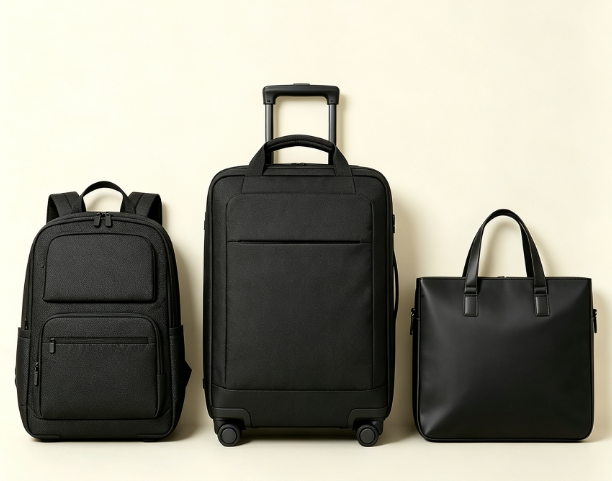
Bag type decides the material more than any spec sheet does. Backpacks need abrasion resistance, light weight, and splash protection. Duffels need flexible bulk capacity that survives repeated folding and dragging. Carry-ons need structural support and crush resistance. Match the material to the use case.
Backpack
High-density nylon, ballistic nylon, Cordura, or polyester cover commuter and short-trip backpacks. For business commuting, PU-coated nylon or coated canvas balances formality with durability. Full-grain leather works too, but adds weight and upkeep. Corporate gifting lines often turn to recycled nylon for its lightweight and waterproof qualities plus the sustainability angle. Raw canvas looks good but runs heavier with weaker water resistance.
Duffel
Nylon, polyester, and canvas dominate this category. Nylon suits frequent, long-haul use; polyester wins on cost; canvas wins on texture. For business travel duffels, pair abrasion-resistant nylon with partial PU/TPU coating on high-contact zones, like handles and base, for better waterproofing and easier cleaning. Most duffels target 2–3 day trips, so bigger sizes need reinforced handles and base panels or carrying gets uncomfortable fast.
Carry-on
Polycarbonate (PC), aluminum alloy, or frame-based hardshell structures lead here. PC delivers lightweight resilience; aluminum frames deliver maximum crush resistance and theft deterrence. Hardshell consistently outperforms softshell on structural stability under pressure. For budget-conscious corporate carry-ons, PC/ABS blends hit the sweet spot; for premium branding, go glossy or matte PC or aluminum-framed PC.
Key Factors in Brand Material Sourcing Decisions: A Full Evaluation from Performance to Production Feasibility
Suppliers get vetted on four dimensions: performance, cost, sustainability, and supply stability. Performance is the hard gate—fail abrasion resistance, tensile strength, tear strength, or colorfastness, and the material gets dropped, no matter the price.
Six Metrics That Actually Get Tested
-
Abrasion resistance — pilling, fiber shedding, visible wear after standardized rub testing
-
Water resistance — repellency performance under real-use conditions, not just lab claims
-
Weight — balanced against structural support needs per bag type
-
Shape retention — stiffness, recovery, resistance to deformation
-
Hand feel — brands increasingly demand feel and batch consistency beyond pass/fail testing
-
Print/embroidery compatibility — surface flatness and yarn stability under heat-press or needle penetration
Evaluation Sequence That Reduces Sampling Waste
-
Functional screening first, against real use-case requirements
-
Standardized testing second, comparing materials under one method—never judge by swatch appearance alone
-
Small-batch trial production last, confirming lab data holds under actual manufacturing conditions
A useful benchmark: substitute materials should hit 80–120% of the original material’s core performance. Below that risks failure; above it usually means overpaying for unused capability. Top-tier brands push further, targeting performance that exceeds minimum standards.
Production Feasibility Often Gets Overlooked
Complex fabrics—coated, laminated, or custom-finished—push MOQ higher and stretch sampling timelines through multiple iteration rounds. More functional layers and post-processing steps mean more risk points.
Hidden Risks Buyers Miss
-
Batch-to-batch color variation
-
Supply chain continuity
-
Process compatibility—materials that look fine as swatches but shift, shrink, or misalign during printing or sewing
-
Raw material processing consistency and supplier reputation
Build your sourcing sheet around three fields: core performance (abrasion grade, waterproof rating, weight, feel score), production metrics (MOQ, sampling rounds, yield risk), and hidden risk (color consistency, supply stability, process alignment).
Cost vs Quality: Promotional, Retail, and Premium Material Choices
Your material budget should match your product tier, not the other way around. Three pricing levels—promotional, retail, and premium—each call for a different approach to materials.
Match Material Tier to Program Goal
-
Promotional/gift-level: trade shows, giveaways, clearance runs. Focus on the lowest unit cost—standard colors, simple fabric, basic packaging. Discount bands run 5–10% for price-sensitive items and 20–50% when you need to clear inventory fast.
-
Retail-level: regular product lines, items customers buy again. Pick mid-weight durable luggage material that balances cost against perceived value. Set your price against comparable products on the market and what buyers are willing to pay, not just what the material costs.
-
Premium/luxury-level: VIP gifts, limited editions, brand collaborations. Material quality, scarcity, and craftsmanship justify the higher price. The brand story and unboxing experience matter here.
Set the Price Ceiling First, Then Work Backward on Material Cost
Lock in your retail price range before you choose a fabric. Material is usually the biggest single variable cost, but your total pricing also has to cover production, shipping, distribution, and holding inventory. When you shift from volume-driven sales to gifting-driven positioning, take budget away from cheap fabric and put it into tactile finish and packaging—not just a better fabric grade.
Scenario-Based Material Recommendations: Customization Tips from Corporate Gifts to Outdoor Settings
Five business scenarios drive most custom travel bag orders. Each demands a different material logic. Cost, image, durability, or sustainability rarely rank equally.
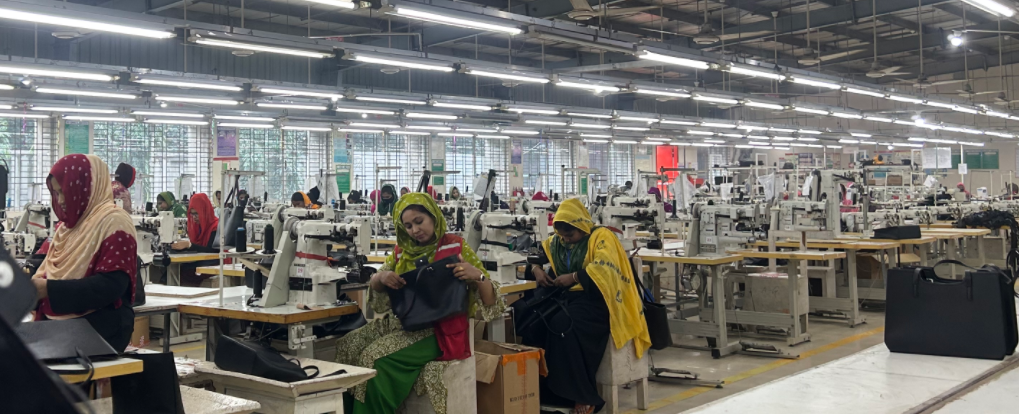
Corporate gifting and employee welfare runs on cost control. PP/ABS panels, polyester pouches, and basic 600D fabric keep unit price down for high-volume distribution like year-end parties, holiday bonuses, and tenure rewards.
Onboarding kits shift priority to brand presence. PU-coated exteriors paired with recycled plastic hardware deliver “office-ready” polish without inflating spend. Consistency matters more than luxury here.
Premium travel retail needs lightweight, durable luggage material that survives repeated handling. Oxford fabric or high-denier polyester shells, paired with PU passport covers and metal luggage tags, work well. Airport shops and hotel gift counters favor this combination for portability and tactile quality.
Eco-friendly collections prioritize traceable sustainability. Organic cotton, RPET, and recycled metal accents should ideally be documented with recycling data on packaging.
High-wear outdoor scenarios call for ripstop nylon fabric, TPU/PVC waterproof coating, and metal buckles. These are built for camping, sports events, and outdoor trade show giveaways where abrasion resistance and easy cleaning outrank aesthetics.
FAQ: Brand Questions About Custom Travel Bag Materials
These five questions come up in nearly every sourcing call.
What’s the best material for travel bags overall? Nylon or high-denier polyester. They’re lightweight, cost-controlled, and durable enough for daily use.
Is nylon better than polyester? Only for abrasion resistance and outdoor waterproofing. Polyester wins on cost and print flatness.
Is canvas good for travel bags? Canvas works well for brand feel and vintage style. It’s not the choice if lightweight waterproofing is the priority.
Which fabric is most waterproof? PU/PVC-backed nylon or polyester. Always get the waterproofing separately verified. Standard QC doesn’t confirm it.
Best fabric for logo customization? Polyester, canvas, or Oxford. Their flat surfaces print cleanest.
Does leather suit frequent travel? Not really. Full-grain leather is for high-end, low-frequency gifting, not airport-heavy rotation.
How to Communicate Material Requirements With Custom Bag Manufacturers: Sample Confirmation and Mass Production Pitfalls
Miscommunication on materials—not manufacturing skill—causes most quality disputes in bulk orders. Before quoting, factories need your sketch or reference image, target size, function, material direction, quantity, budget, lead time, packaging, and quality expectations.
Information to lock down before sampling:
-
Main fabric: name, denier or weight (600D vs 1680D changes load capacity), color, texture, abrasion and water needs
-
Coating: PU or PVC backing, glossy or matte finish—this changes hand-feel and cost
-
Reinforcement: X-stitching, heavy nylon thread, or reinforced panels at stress points
-
MOQ: ask whether material or color changes minimum order thresholds
Fabric swatch checks: Confirm fabric feel and stiffness before printing samples. Record fabric code, color number, coating type, thickness, and whether the swatch matches the final production batch. “Great sample, different bulk fabric” is a common failure point.
Required pre-production tests: waterproofing, tensile and load-bearing at handles and seams, colorfastness (rubbing, sweat, UV), and zipper and hardware function.
Six mass-production mistakes to avoid:
-
Verbal-only confirmations—put specs in writing
-
Assuming samples share the same fabric batch as bulk
-
Ignoring trims’ separate MOQs
-
Skipping agreed tolerances on size, weight, color
-
No tiered pricing (300, 500, 1,000, 3,000 units)
-
Failing to confirm reorder consistency