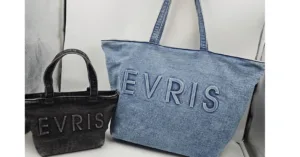
You pull a bag off the shelf, love the color, buy it — and six months later, it looks like it’s been through a decade of hard use. The dye has shifted, the finish looks tired, and you’re left wondering what went wrong. The answer almost always comes down to bag colorfastness testing — or to put it plainly, the lack of it.
Some bags fade faster than others. Knowing why isn’t just trivia. It’s the difference between sourcing materials that hold up and products that damage your brand’s reputation. This breakdown covers lab ratings, plus material-specific weak points in EVA, canvas, nylon, and leather. You’ll get what you need to make smarter sourcing decisions before a single bag leaves the factory.
What Colorfastness Bag Testing Measures
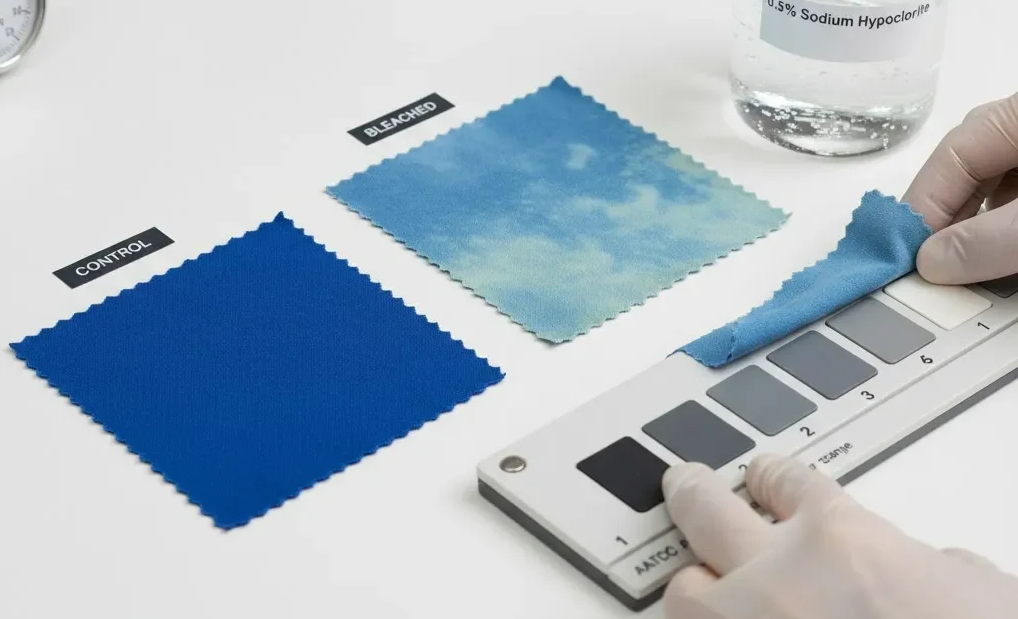
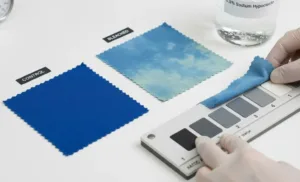
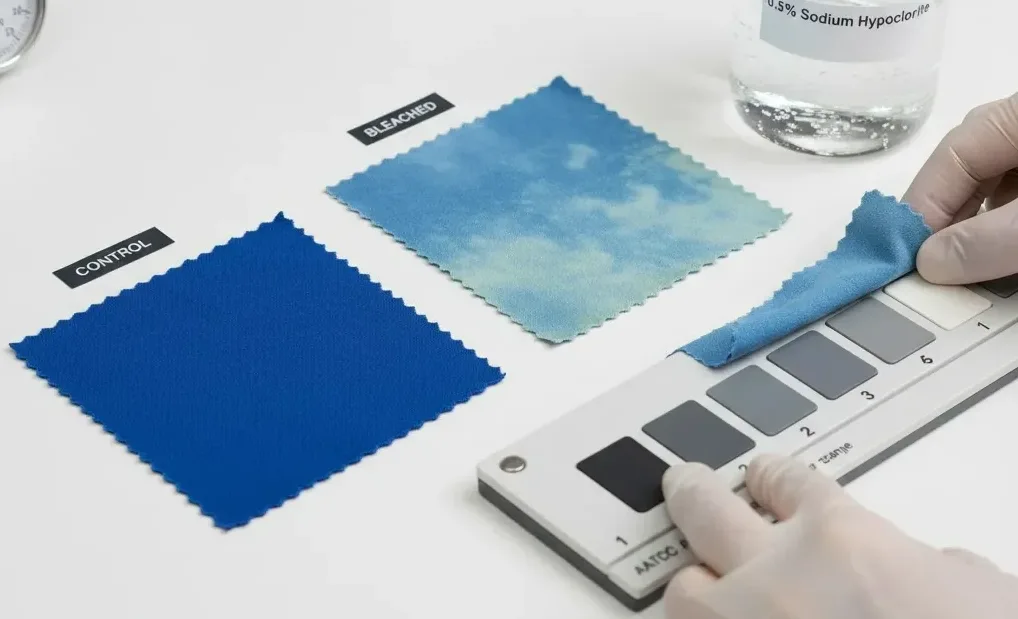
The rating scale tells you how much color held. What it doesn’t tell you — unless you know where to look — is what kind of failure you’re measuring.
This is where most sourcing decisions go wrong.
Colorfastness testing tracks two separate things. They are not the same:
-
Fading (color change): How much the tested material itself loses color. The grey scale for change measures this — Grade 4 corresponds to ΔE 1.7.
-
Staining (dye transfer): How much dye bleeds onto adjacent fabric. A stricter separate grey scale measures this — Grade 4 here requires ΔE 4.3 or better.
Over 70% of buyers mix up the two. The assumption is simple: if a bag isn’t fading, it isn’t transferring dye. That assumption is wrong. A material can hold its color under dry conditions and still bleed dye the moment moisture is introduced. Dry friction leaves loose dye particles untouched. Wet rubbing moves them.
Test scope adds another layer of misreading. A bag that scores Grade 5 on a single-wash test (ISO 105-C06, S-test) can drop to Grade 2 after five cycles (M-test). Dry rub Grade 5 and wet rub Grade 1 on the same sample is not a contradiction — it’s physics.
The grading environment matters too. Color assessed under ambient or warm-toned lighting produces inflated results. Reliable grey scale comparison needs a D65-calibrated light booth. You also need spectrophotometer confirmation to cut out visual bias.
One passing grade does not mean the bag passes. It means it passed that test, under those conditions, in that sequence.
The 5 Types of Colorfastness Tests That Matter Most for Bags
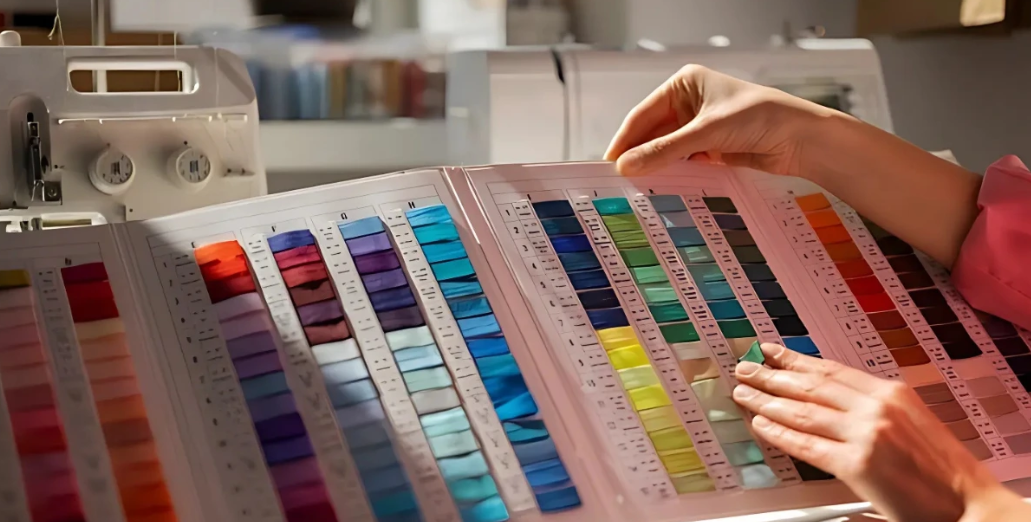
Five tests determine whether a bag’s color holds up in real-world use. Each one targets a different failure point. Here’s what each test measures, where it applies, and what grade you should require before sign-off.
1. Light Fastness (Xenon Arc Exposure)
Standard: ISO 105-B02 (A2 cycle, low humidity) / AATCC 16 Option 3
Rating scale: Blue Wool Scale 1–8 (higher = better)
Minimum acceptable: Grade 4
This test simulates UV and sunlight exposure using a xenon arc lamp. Outdoor bags take the hardest hit. Tote bags, backpacks, and sports bags left in direct sunlight break down faster than any other bag type. A supplier who can’t confirm Grade 4 here? That color has no place on an outdoor-facing product.
2. Rub Fastness (Dry vs. Wet Crocking)
Standard: ISO 105-X12 / AATCC 8 via crockmeter (10 rubs, standardized pressure)
Minimum: Grade 4 color change / Grade 3–4 staining
The crockmeter applies stronger, more consistent force than manual rubbing. That means it catches failures that casual handling tests miss. Dry rubbing targets handles and straps. Wet rubbing simulates seat contact and sweat exposure. The key risk here is dye transfer — to clothing, laptop surfaces, or items stored inside the bag. Test both dry and wet versions separately. These two scores can differ a lot on the same material, so don’t assume one result covers the other.
3. Perspiration Fastness
Standard: ISO 105-E04 / AATCC 15
Simulates: Acidic sweat (pH 5.6) and alkaline sweat (pH 7.2) with histidine
Minimum: Grade 4 on both color change and staining
This test matters most for backpack straps, shoulder handles, and any surface in direct skin contact. It uses a multifiber staining cloth — nylon, cotton, polyester, wool, acrylic — to track how far dye spreads once sweat chemistry enters the picture. Both acidic and alkaline variants must pass. Human sweat varies by person. The pH gap between individuals is wide enough to trigger different failure modes on the same material.
4. Wash Fastness
Standard: ISO 105-C06 (A/B at 40–50°C; single-cycle ‘S’ or multi-cycle ‘M’ ~5 washes; 2S adds peroxide bleach) / AATCC 61 (1A hand wash at 40°C; 2A machine at 49°C, mimicking 5 launderings)
Minimum: Grade 4 color change / Grade 3 staining
Heat breaks dye bonds. A bag that looks stable after one wash can show real degradation by cycle five. That’s the whole reason the multi-cycle M-test exists. Check supplier test reports carefully. Confirm whether they ran the S-test or the M-test. A single-cycle pass sounds solid, but it’s a much weaker result than most buyers realize.
5. Migration Fastness
Standard: ISO 105 (dye transfer to linings and contrast panels)
Minimum: Grade 4 on both change and staining
Migration is the test most suppliers skip. It’s also the one that generates the most costly customer complaints. This test measures dye transfer under storage conditions and heat — not during active use. It’s most critical for EVA-coated bags and structured bags with internal linings. In these designs, dye can bleed onto electronics, papers, or lighter-colored panels without any visible trigger. A bag stored in a warm car or a packed shipping container long enough will show permanent staining on whatever touched the lining. By then, the damage is done.
Quick Reference: Minimum Grade Benchmarks by Test
|
Test |
Standard |
Min. Grade (Change / Stain) |
Highest-Risk Zones |
|---|---|---|---|
|
Light Fastness |
ISO 105-B02 A2 |
4 / — |
Outdoor-facing surfaces |
|
Rub Fastness |
ISO X12 / AATCC 8 |
4 / 3–4 |
Handles, straps, seat panels |
|
Perspiration |
ISO E04 / AATCC 15 |
4 / 4 |
Straps, handles |
|
Wash Fastness |
ISO C06 / AATCC 61 |
4 / 3 |
Full bag surface |
|
Migration |
ISO 105 |
4 / 4 |
Linings, EVA interiors |
Each test targets a specific failure scenario. Run only one or two, and you get an incomplete picture. The gaps don’t stay hidden — they show up as returns and chargebacks.
The Real Reasons Some Bags Fade Faster Than Others
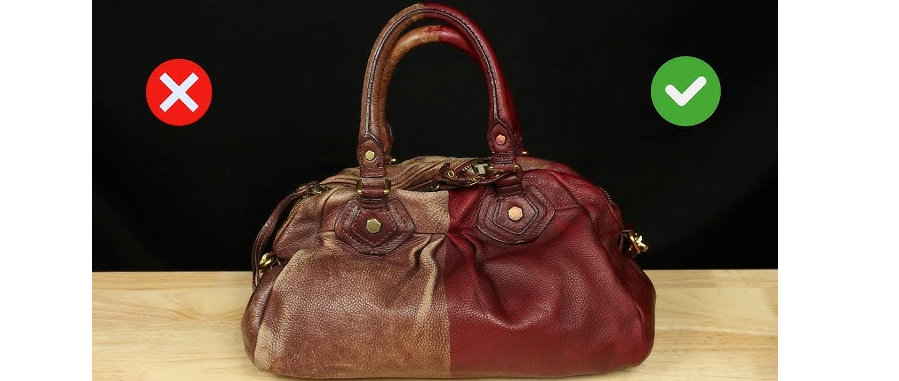
Fading isn’t random. It follows predictable patterns. Almost every case traces back to one of four root causes: poor dye fixation, wrong dye grade for the material, processing shortcuts, or a gap between how the bag was tested and how it’s used in real life.
Dye Fixation Failures
Fixation is the chemical process that bonds dye molecules to a material’s fiber structure. Incomplete fixation — rushed cure times, wrong bath temperature, skipped post-treatment — leaves dye sitting near the surface instead of bonding to it. The bag looks fine in the warehouse. Add friction, UV exposure, or moisture, and that surface dye lifts fast.
This is the most common cause of early-stage fading. It’s a manufacturing process failure, not a material problem.
Wrong Dye Class for the Material
Different materials need different dye chemistry. Reactive dyes bond well to cotton canvas but fall short on synthetic surfaces. Disperse dyes work on polyester and nylon, but they need high-temperature application. Some suppliers skip that step to cut costs. EVA foam brings its own issue — it’s non-porous, so dye adhesion depends on surface coatings rather than fiber penetration. Thin or low-grade coatings mean color breakdown starts sooner.
Using the wrong dye class is a testing failure built into the product before it ships.
Processing Shortcuts That Don’t Show Up Right Away
Three processing shortcuts lead to delayed fading complaints:
-
Insufficient washing after dyeing — leftover unfixed dye stays in the material and bleeds out later
-
Skipped or weak fixative treatments — common in budget canvas and coated nylon
-
Low-grade colorants swapped in mid-production — a supplier change that rarely appears in documentation
Usage-Test Mismatch
A bag tested under dry, indoor lab conditions will score well on colorfastness. Put it in direct sunlight, expose it to sweat, or pack it into a warm shipping container for six weeks — those scores stop meaning anything. The test didn’t reflect real use.
That’s not a materials failure. That’s a testing design failure. And it’s preventable.
Material-Specific Fading Risks: EVA, Canvas, Nylon, and Leather
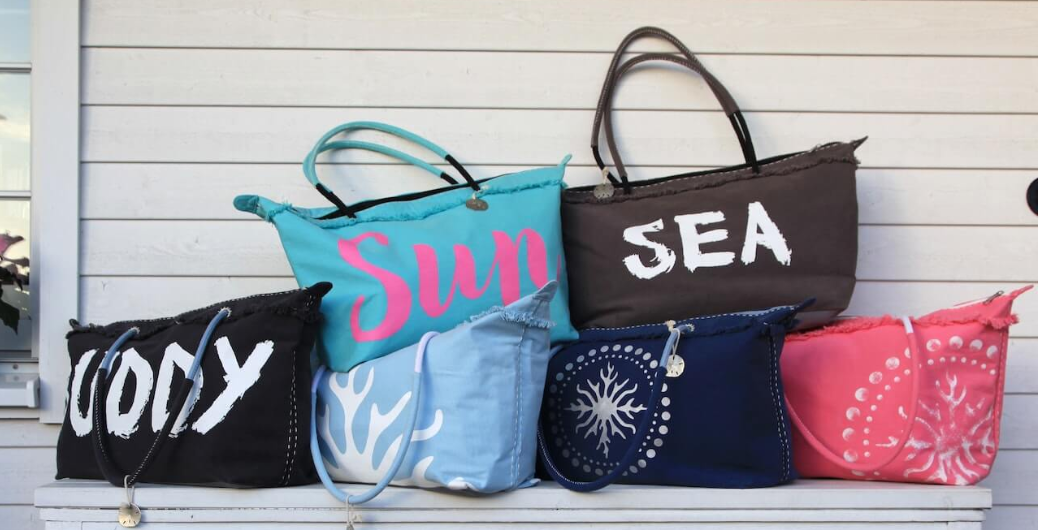
Not all materials fail the same way. What causes fading in an EVA tote has nothing to do with what degrades color in a canvas backpack or a coated leather handbag. Most sourcing specs go wrong by treating them as the same.
Here’s how each material behaves — and where its color is most vulnerable.
|
Material |
Color Fastness Characteristics |
Failure Modes |
UV & Environmental Impact |
Other Notes |
|---|---|---|---|---|
|
EVA (Ethylene-Vinyl Acetate) |
|
|
|
– |
|
Canvas |
|
|
|
– |
|
Nylon |
|
|
|
Decoration fading is typically patchy, not uniform |
|
Leather (Genuine & PU-Coated) |
|
|
|
|
Preventing Bag Fading: What Brands and Manufacturers Should Control
Fading is a preventable manufacturing outcome — not an inevitable product limitation. A bag that holds its color for three years and one that looks washed out after six months? The difference comes down to decisions made before production starts.
Start with dye selection criteria, not price.
Specify the dye class required for each material in your tech pack. Don’t leave this to supplier discretion. Lock these down before sampling begins:
– Reactive dyes for canvas
– Disperse dyes for nylon and polyester
– Surface-coating specs for EVA
Suppliers who switch to cheaper colorants mid-production don’t document the change. You won’t know until the fading starts.
Build colorfastness minimums into your approval process.
Grade 4 across rubbing, washing, perspiration, and migration fastness is a hard requirement — not a post-production hope. A material that can’t hit those minimums at sampling stage doesn’t move forward. Simple as that. Approving a borderline sample and hoping production improves is exactly how fading complaints start.
Control the fixation process, not just the output.
Test reports show outcomes. They don’t tell you whether the factory rushed cure times or skipped post-fixation washing. For high-volume or high-risk SKUs, add process audits at the dyeing stage. Check the work, not just the results.
Require multi-cycle test results, not single-cycle passes.
A single-wash Grade 4 tells you very little. It doesn’t show how the bag holds up after five cycles. For everyday bags, M-test results under ISO 105-C06 are the minimum credible baseline — start there.
Conclusion
Bag fading isn’t bad luck. It’s a predictable outcome of skipped steps, wrong materials, and untested assumptions.
Colorfastness testing measures specific performance thresholds — not guesswork. Once you know which ratings to demand by material type, and where the manufacturing process breaks down, you make decisions backed by data. No more guessing.
Tired of customer complaints about washed-out colors? The standards exist for a reason. Brands winning on durability are the ones enforcing them. It’s that straightforward.
Your next move: audit your supplier’s colorfastness documentation. Ask for ISO 105 or AATCC test reports tied to your bag’s material — EVA, canvas, nylon, or leather. No reports? That silence tells you everything you need to know.
Color is the first thing a customer notices. Make sure it’s not the first thing they lose faith in.