
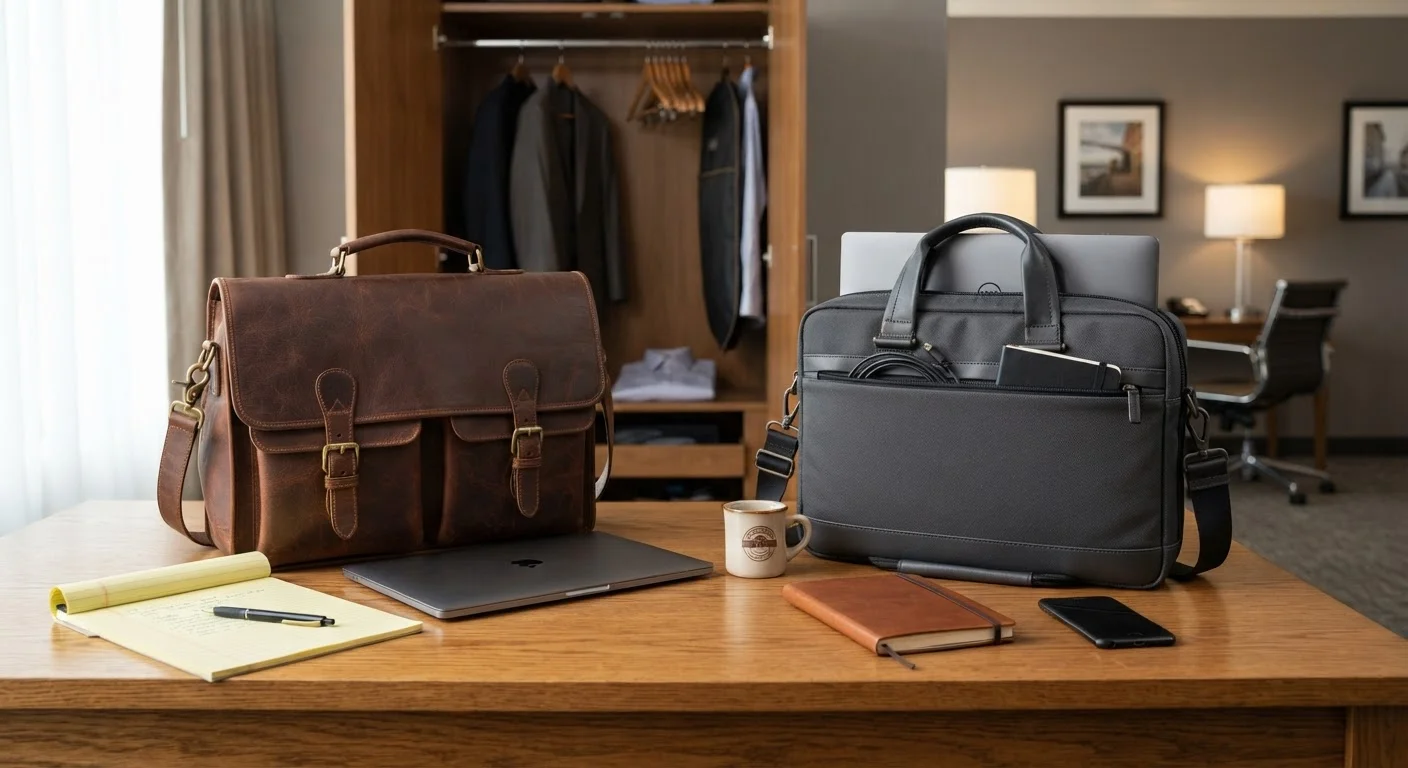
You’re standing in front of your closet (or a browser tab full of open reviews), staring down the same dilemma thousands of professionals face before a big meeting or a business trip: grab the classic leather briefcase, or go with the sleeker, more functional laptop bag? It’s about whether your bag can survive a red-eye flight, fit your 15-inch MacBook alongside your legal pads, and still make you look like you belong in the boardroom. Briefcase vs. laptop bag isn’t a one-size-fits-all answer. Your profession, your commute, and even your industry’s dress code all play a role. Below, we break down the real differences—capacity, durability, style, price—so you can match the right bag to your actual work life, not just a trend.
What Is a Briefcase: Definition, Style & Best Use Cases
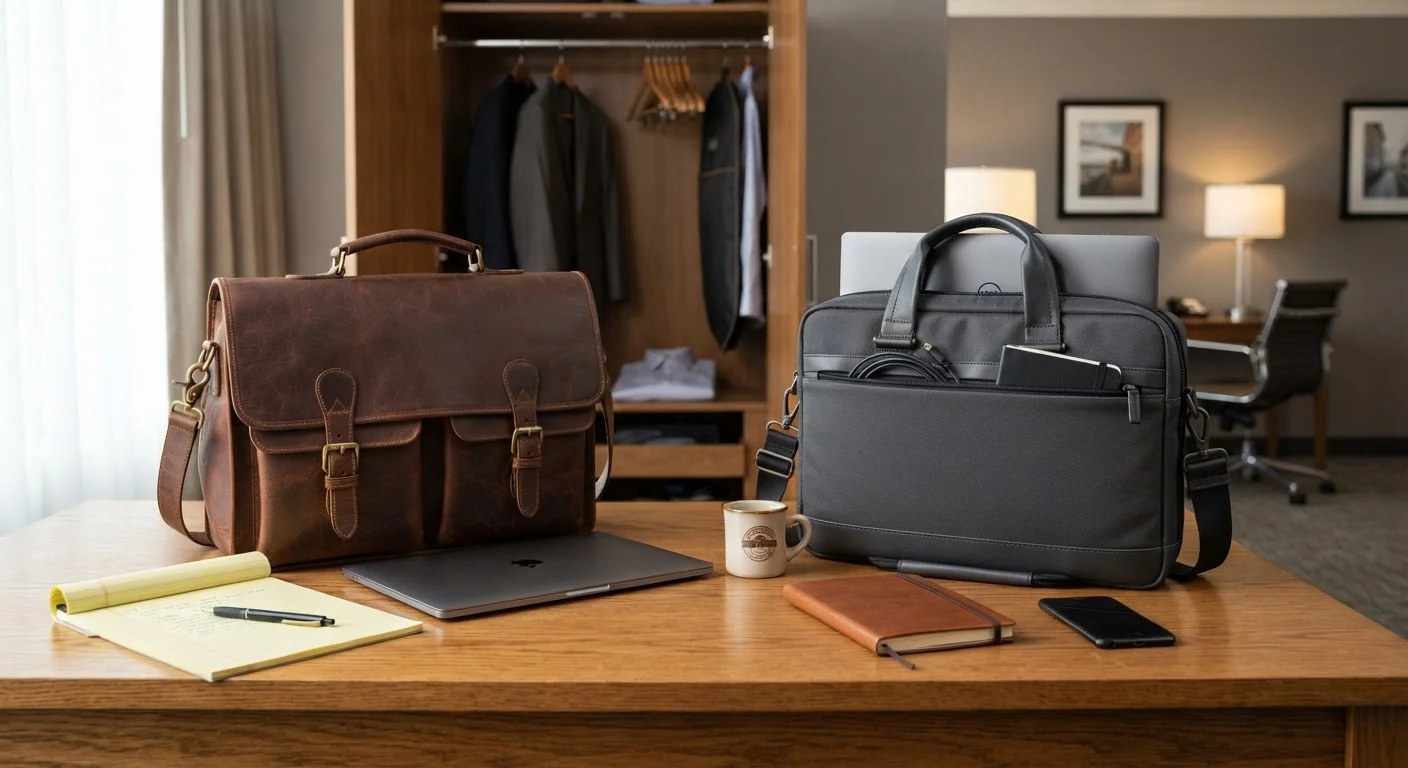
A briefcase is a flat, rectangular, box-shaped bag built to carry documents, files, and laptops. You get a top handle, a rigid or semi-rigid structure, and on modern versions, a removable shoulder strap.
Structure & Sizing
Most briefcases run 15–18 in wide, 11–13 in tall, and 3–6 in deep. Hard-shell versions stay closer to 3–4 in deep; soft-sided styles expand to 5–6 in. Weight ranges from 2.5–4 lb for leather, down to 1.5–3 lb for nylon. Inside you’ll find a padded laptop sleeve (13–15.6 in), 1–2 document sections with gusseted expansion, and organizer pockets for pens, cards, and phones.
Hard-Shell vs. Soft-Shell
|
Feature |
Hard-Shell |
Soft-Shell |
|---|---|---|
|
Structure |
Rigid, box-shaped |
Flexible, compressible |
|
Protection |
Superior document/laptop protection |
Good, but bends under load |
|
Security |
Combination/key locks |
Zippers, optional small locks |
|
Best for |
Lawyers, executives |
Consultants, frequent travelers |
Who Uses Briefcases—and Why
-
Lawyers: Hard-shell leather briefcases with locks to protect confidential briefs and court documents.
-
Executives: Slim, full-grain leather briefcases under 3 lb for board meetings and air travel within carry-on limits.
-
Consultants: Soft-sided nylon briefcases with cable pockets for multi-site client work.
Materials & Price
-
Full-grain leather: $350–$600+, built for 10+ years.
-
Top-grain leather: $150–$350.
-
Nylon business briefcases: $40–$300.
-
Faux leather (PU): $30–$150, 2–4 year lifespan.
What Is a Laptop Bag/Backpack: Definition, Style & Best Use Cases
A laptop bag trades a rigid briefcase for something more versatile. The key feature is a padded compartment sized for 13–16 in laptops, built into either a backpack or a slim briefcase-style shell. Everything else—capacity, carry system, materials—works around that.
Two Main Formats
-
Backpack form: Two adjustable shoulder straps, worn on the back. The laptop sleeve sits suspended 1–3 cm above the bottom panel, so drops don’t hit the laptop directly. Capacity runs 20–35 L, enough for chargers, tablets, and a change of clothes.
-
Briefcase-style laptop bag: One top handle and an optional shoulder strap. Slim profile (often under 10 cm thick), 15–25 L capacity, designed for quick laptop access through airport security or into a client meeting.
Who Uses Laptop Bags—and Why
-
IT professionals: 21–35 L backpacks with multiple tech pockets for mice, cables, and external drives.
-
Designers: Premium backpacks or tech totes with separate padded bays for laptop and tablet.
-
Entrepreneurs: Sleek laptop briefcases for investor pitches; 20–30 L backpacks for days mixing travel and coworking.
-
Daily commuters: Standard 20–30 L dual-strap backpacks that balance comfort and storage.
Materials & Price
-
Canvas: $20–80, casual but less abrasion-resistant.
-
Nylon/polyester (ballistic, CORDURA-type): $30–150 for mainstream, $150–300+ for premium.
-
Leather/PU: $80–300+, common in business laptop bags for women and executive-style options.
Briefcase Vs. Laptop Bag: Core Comparison Table (7 Key Dimensions)
Numbers settle arguments faster than opinions. Here’s how a briefcase vs. laptop bag stacks up when you run the data side by side.
|
Dimension |
Briefcase |
Laptop Bag/Backpack |
|---|---|---|
|
Formality Score (1–10) |
8–10 |
5–7 |
|
Carry Method |
Top handle, single-shoulder strap |
Dual-shoulder, ergonomic backload |
|
Comfort at 30–60 min commute (1–10) |
4–6 |
7–9 |
|
Comfortable Load Capacity |
5–6 kg before fatigue |
7–9 kg with even distribution |
|
Volume |
8–14 L |
18–28 L |
|
Care Difficulty (leather, 1–10) |
7–9 |
3–4 (nylon) |
|
Lifespan (with basic care) |
5–10 years (leather) |
3–5 years |
What the Table Reveals
A briefcase wins on formal image—60–70% of professionals reach for one specifically for client meetings and boardroom appearances. But that formality has a physical cost. Single-strap or handle carry concentrates weight on one shoulder or wrist. Cross 5–6 kg (a laptop, charger, two files, a water bottle) and fatigue sets in fast on longer walks or multiple subway transfers.
Laptop backpacks flip that equation. Dual-strap design spreads load across both shoulders, so 7–9 kg feels manageable over 5–10 km commutes. That’s why 70–80% of daily commuters default to backpacks—comfort compounds over a 45-minute trip in ways formality can’t offset.
Padding & Protection
Both categories converge on device safety. Quality laptop compartments—whether in a leather briefcase for men or a technical business travel bag—should hit 8–10mm of shock-absorbing padding. Anything thinner leaves your 15.6″ laptop exposed to bumps during transit. This is one spec worth checking regardless of which style you choose.
Pros & Cons: Briefcase for Business Professionals
A leather executive briefcase carries your files and your authority. That trade-off is worth understanding before you buy.
Where Briefcases Win
-
Professional credibility: Full-grain leather briefcases build patina over time, almost like heirloom pieces. In finance, law, and consulting, that quiet authority still beats a backpack for client meetings and board presentations.
-
Document protection: The rigid, boxy structure keeps contracts and legal briefs from creasing—something soft bags can’t match. Look for a dedicated file compartment, a 15.5–16 in laptop sleeve, at least two small pockets, and an external slip pocket for cards or tickets.
-
Fast access: Structured compartments mean grabbing a pen or business card mid-meeting doesn’t become a dig-through-the-bag moment.
Where Briefcases Fall Short
-
Commute fatigue: Single-strap or handle carry loads one shoulder. Past 6–7 kg, it gets uncomfortable on long walks or transit.
-
Limited capacity: Briefcases hold about half what a comparable backpack does—fine for a laptop and files, tight if you’re carrying gym clothes or lunch.
-
Upkeep: Leather needs conditioning and rain protection. Nylon versions trade formality for lower maintenance.
Real-World Fit
Lawyers who drive to court tolerate the discomfort for the authority payoff. Executives flying 30+ segments a year often switch to lighter, more tech-friendly modern briefcases. Managers juggling 3+ dress codes weekly lean on hybrid styles instead.
Pros & Cons: Laptop Bag/Backpack for Modern Work Life
Backpacks solve the problems briefcases create—then introduce a few of their own.
Where Laptop Bags/Backpacks Win
-
Comfort at scale: Dual straps distribute weight across both shoulders. Load 3–4 kg (a 15–17″ laptop, charger, cables, and water bottle, the standard IT professional’s daily carry) and your back barely notices, even over a 30+ minute commute or subway transfer.
-
Capacity that flexes: A 20–35 L backpack swallows a laptop, tablet, charger, mouse, lunch, and a change of clothes, room a briefcase simply doesn’t have. Designers stash sketchbooks and drawing tablets alongside a 12–13″ screen; remote workers pack a portable monitor and two days of clothes for a work-and-travel combo.
-
Device protection: Thick padded sleeves, RFID pockets, and water-resistant zippers often outperform traditional laptop briefcase combo builds.
-
Price advantage: Entry-level backpacks deliver more capacity and protection per dollar than comparably priced leather bags, a real factor for budget-conscious founders and early-stage teams.
Where They Fall Short
-
Formality gap: In law, finance, and consulting, a backpack can read as junior or casual, wrong signal for investor pitches or client meetings.
-
Slower access: Deep, layered compartments mean digging for a business card instead of a quick top-open grab.
-
Bulk on the move: Taller profiles sit awkwardly on rolling luggage and can look oversized with a simple 13″ laptop setup.
Decision Rule: Load over 3 kg or commute past 30 minutes, choose backpack. Client-facing 3+ times weekly, pair it with a slim laptop tote bag for those days.
Which One Fits Your Profession: Lawyer, Sales, IT, or Entrepreneur
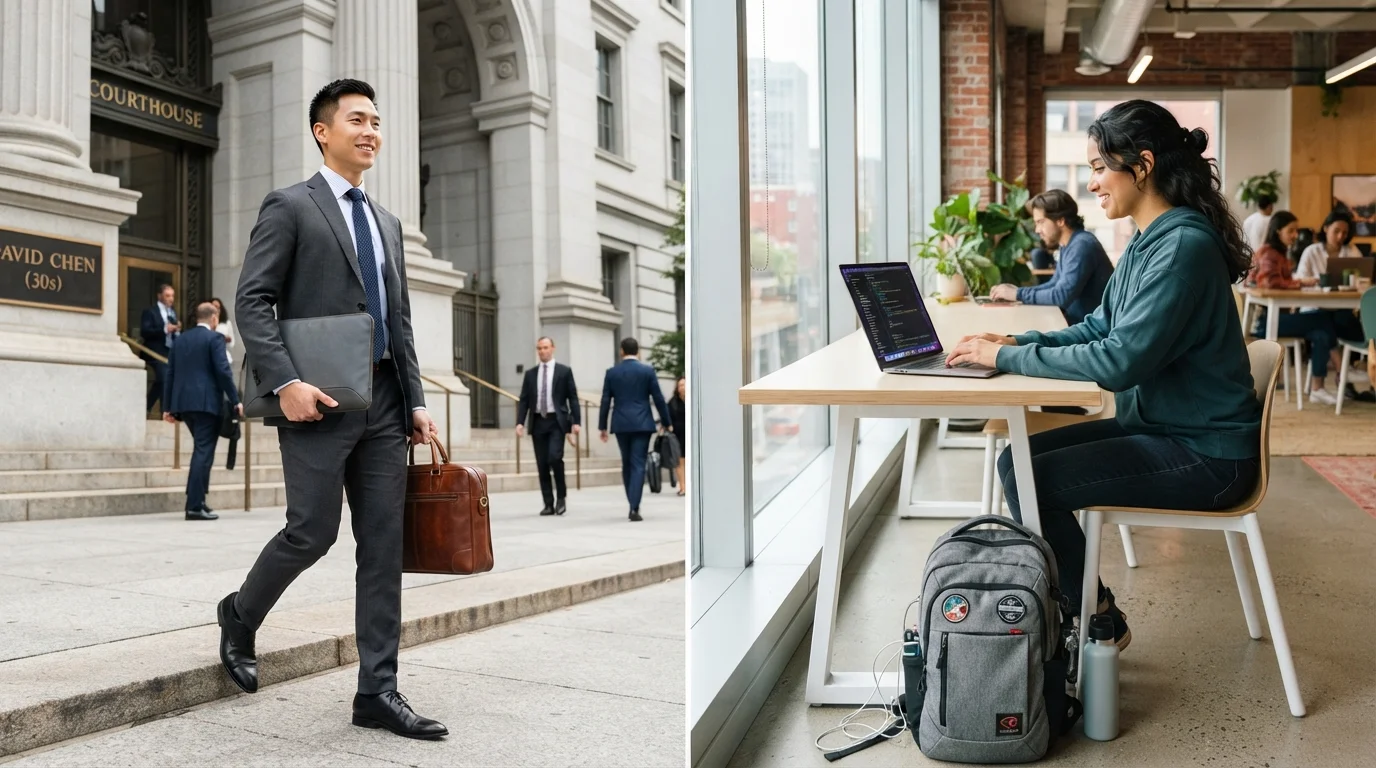
Job title changes the math entirely. A litigator flying to court and a backend developer coding from a co-working space have completely different bag needs, even if they’re both carrying a 15″ laptop.
Lawyers, Executives & Consultants: Briefcase First, Backpack for Travel
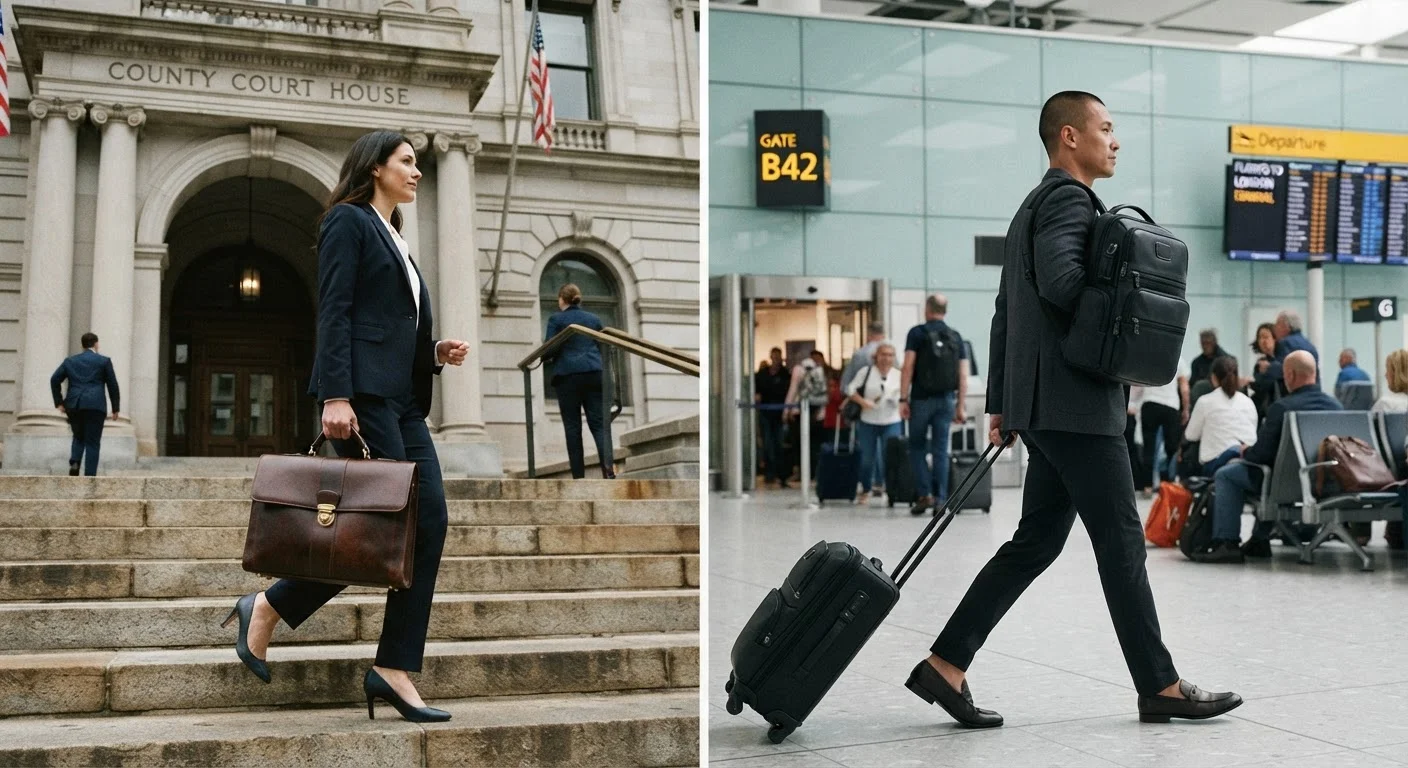
Client meetings, courtrooms, and board rooms eat up 40–60% of the workweek for this group—and that’s where a leather briefcase for men or women does its job. At firms billing $300+ per hour, 70%+ of partners and senior consultants carry a hard-shell leather briefcase for exactly this reason: visual authority matters. But travel days (10–20% of the workweek) tell a different story. Over 50% of professionals in this category now switch to a laptop backpack for airport transfers and multi-city trips, reserving the briefcase as a “desk bag” once they land. The sensible combo: briefcase for local meetings, backpack with a luggage-strap pass-through for anything requiring a flight.
Sales & Account Managers: Briefcase for Signing, Backpack for Multi-Stop Days
Client-facing time runs 50–70% for B2B sales roles. Contract signings and formal pitches (15–30% of that time) call for a briefcase—it reads as “trustworthy,” especially alongside high-ticket software or financial products. But hitting 3–5 clients across town in one day? A backpack carries brochures, samples, and demo gear without wrecking your shoulder. Many reps keep both: backpack as the main carrier, briefcase pulled out only for the signing moment.
IT, Design & Engineering: Backpack, Almost Always
With 15–17″ laptops (1.5–2.5 kg) plus chargers, monitors, or drawing tablets, total load easily tops 5 kg. A dual-strap laptop backpack with 4–6 cable pockets and wide, padded straps handles daily commutes far better than any office bag with a single handle. Dress up with a blazer for client demos—the bag stays functional.
Entrepreneurs: Backpack Daily, Briefcase for Investors
Founders juggle product work, BD, and fundraising. Daily grind favors a work bag with laptop compartment and room for prototypes. Investor pitches or seed-round meetings? Swap in a slim leather briefcase—it signals reliability when it counts most.
Which One Fits Your Use Case: Commute, Travel, or Client Meetings
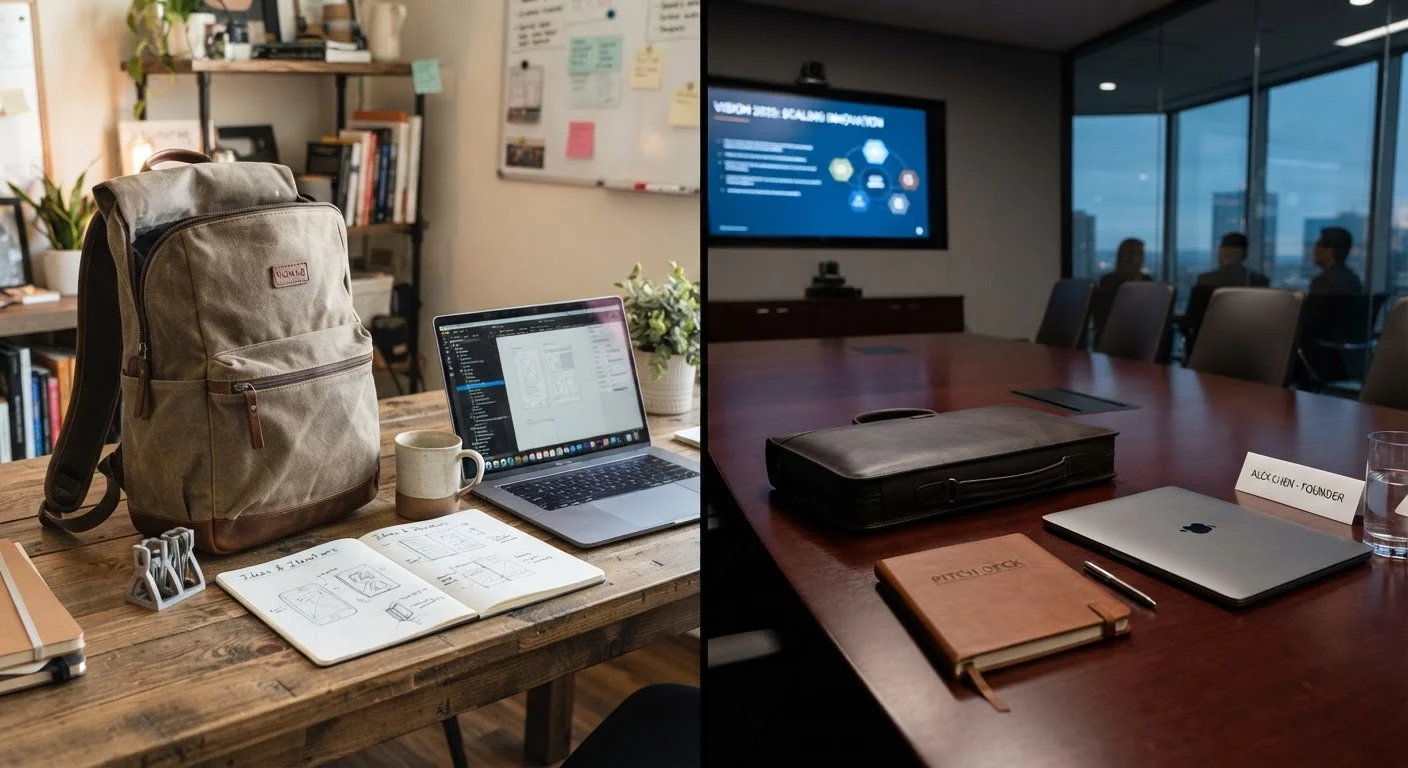
Start with weight and distance. Style comes later. Run your commute through these numbers, and the right bag is obvious.
Short Car or Taxi Commute (Light Load)
Driving to work changes the bag choice. If you’re carrying a 13–15″ laptop plus documents under 12 lb, and walking less than 0.5 mile from car to office lobby, a briefcase or leather laptop bag wins outright. Under 8 lb, comfort differences between backpack and briefcase barely register. Appearance and quick access dominate the decision instead. Pick a 15–16″ briefcase to fit most office laptops while staying slim enough for a formal corporate, finance, or legal environment.
Public Transit, Walking, or Cycling
Distance changes everything here. Carry 8–15 lb for more than 10 minutes of walking, and single-strap bags start causing real shoulder strain. Push past 15 lb, or walk 1+ mile as part of your commute, and a backpack becomes non-negotiable. Dual straps distribute weight evenly, cutting long-term neck and shoulder issues. Cycling commuters should skip single-strap bags; they swing forward and destabilize your ride. Look for padded straps, breathable back panels, and a 25–35 L capacity, enough for a 15″ laptop, light jacket, and snacks without bulking up on a crowded train.
Multi-Day Business Travel
Pair a 25–35 L laptop backpack with your rolling suitcase, and you get a genuine mobile office. A trolley strap lets it slide over your suitcase handle, saving your shoulders during long airport walks. Checkpoint-friendly compartments that lay flat speed up security screening—a real time-saver on frequent trips. Keep documents, chargers, and passport in separate organized pockets so nothing gets buried mid-transit.
High-Stakes Client Meetings
For C-level pitches or boardroom sessions in traditional industries, a briefcase still signals professionalism that backpacks can’t match. Keep the load slim—laptop, key documents, small accessories—and arrive by car when possible.
Buying Checklist: How to Choose Between Briefcase or Laptop Backpack
Numbers beat gut feelings. Run through this checklist before swiping your card, and the briefcase vs. laptop bag decision nearly makes itself.
Step 1: Score Your Commute
– Under 20 min, driving or short indoor walk → briefcase works fine
– 20–40 min, transit or walking → lean backpack
– Cycling or e-bike commute → backpack only; look for straps at least 5 cm wide with at least 1.3 cm padding
Step 2: Weigh Your Daily Load
Weigh it once—most people underestimate.
– Under 3 kg (laptop + slim files) → briefcase handles it
– 3–6 kg (laptop, charger, cables, water bottle) → backpack, 15–25 L range
– Over 6 kg → backpack, or a wheeled briefcase to spare your shoulder
Step 3: Match Dress Code
– Formal business (finance, law, consulting) → leather briefcase
– Smart casual or tech → fabric backpack
– Mixed schedule → slim laptop bag that pairs briefcase looks with backpack function
Step 4: Inspect Laptop Protection
Measure your laptop’s actual width, depth, and thickness—not just screen size. Press into the padded compartment; you want at least 1.27 cm of dense foam that resists compression, plus a suspended sleeve so drops don’t hit the bottom.
Step 5: Set Your Budget
Quality backpacks cluster around $120–280. Leather briefcases with full-grain hides and reinforced hardware often cost more, though decent entry options start near $100–200.
The Hybrid Strategy: Why Many Professionals Own Both
68–72% of urban professionals attend at least 1–2 formal client meetings weekly, while 80–85% commute five days a week and travel short-term at least once per quarter. That split explains why many desks hold both a briefcase and a backpack.
The Math Behind Owning Both
A mid-range nylon/PU briefcase costs $40–80. A comparable laptop backpack costs $50–100. Together that’s $90–180, often $120–130 if you buy a matching set, saving 7–14%.
Compare that to the hidden cost of skipping one. A backpack-only approach in high-stakes negotiations can shave 3–5% off closing probability—on a $100,000 deal, that’s $5,000 on the line. A briefcase-only routine correlates with the 30–40% of professionals reporting shoulder and neck strain, plus $200–500 in annual related costs. The $40–80 premium for owning both pays for itself many times over.
How to Split Usage
Use the briefcase on client meetings, signings, and board presentations. Carry laptop, files, cards, and a pen—no bulk. On commuting and travel days, use the backpack. It handles chargers, power banks, umbrellas, and a light layer.
Match capacity to your laptop: 14″ users pair a 10–12L briefcase with a 20–25L backpack; 15.6–16″ users need a 25–30L backpack for bulkier gear. Some sunteambag business series offer matching briefcase-and-backpack sets in shared materials and colorways. That’s useful if you want consistent branding across both formal and travel days without buying two unrelated bags.