You buy a Bottega Veneta bag. You get more than luxury leather goods. You get a piece of Italian craft heritage with a clear geographical identity.
Many owners can’t answer a basic question: where are Bottega Veneta bags made? The answer shows a network of specialized workshops in Northern Italy’s Veneto region. Skilled artisans work here. They turn premium materials into the brand’s iconic intrecciato designs.
Bottega Veneta bag origins span from the flagship Montebello Vicentino facility to smaller production sites. This explains why these leather bags cost so much. It also shows how the brand keeps its “Made in Italy” commitment strong.
Authenticating a purchase? Curious about the craft behind your bag? Tracing the journey from raw leather to finished product reveals quality standards few luxury brands can match.
Bottega Veneta’s Vicenza Heritage: The Heart of Italian Craftsmanship
Vicenza is the center of Bottega Veneta’s identity. Both geographically and spiritually. The brand set up here in 1966. What started then grew into a leather craft empire. It’s built on Northern Italy’s artisan traditions.
The Montebello Production Nerve Center
Milan has the corporate headquarters. But the real magic? That happens at the main atelier in Montebello — a town near Vicenza. This flagship facility leads a network of leather-making sites across the Veneto region. Each location has a specific role in leather bag production.
The expansion timeline shows the growth story:
-
2011: Altavilla Vicentina facility opens
-
2012: Malo production site starts
-
2019: Dueville workshop joins the network
-
2023: LEED Platinum-certified Shoe Atelier opens in Vigonza (has solar panels and recycled materials)
All these sites work under Manifattura Veneta Pelletterie. This unified system keeps Veneto’s leather-making traditions alive.
A Growing Workforce of Master Artisans
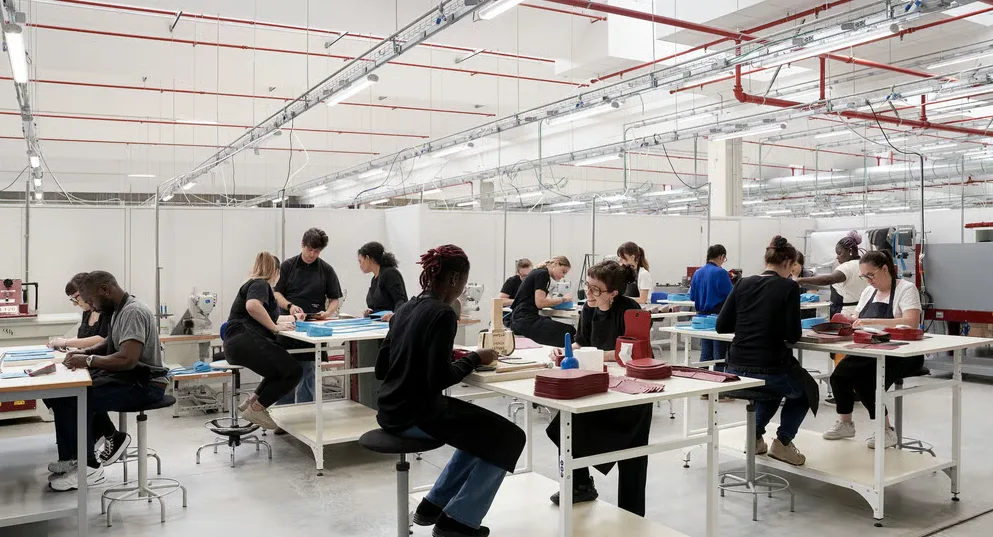
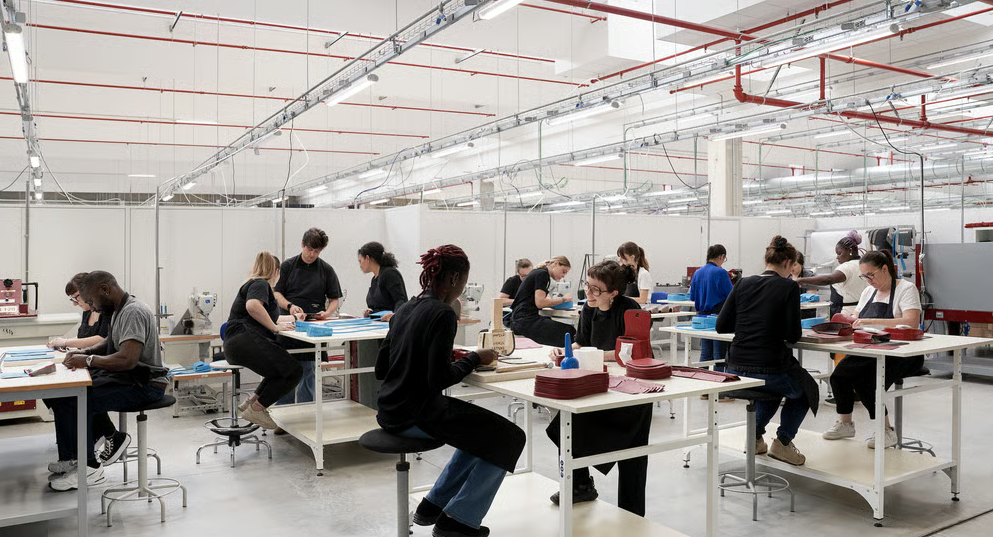
1,800 artisans work across Veneto’s Bottega Veneta workshops. These aren’t assembly-line workers. They’re skilled craftspeople trained in old techniques, embodying true Italian leather craftsmanship. Many spend years mastering the brand’s signature intrecciato weave, ensuring every piece reflects the artistry of handmade luxury bags.
The financial results show this Vicenza-centered production model works. Revenue jumped from €35 million in 2001 (the year Kering bought the brand) to €1.713 billion in 2024, a 4% year-over-year increase. Leather goods, especially those produced in the Veneto region of Italy, make up 86% of sales. Iconic pieces lead the way: Intrecciato bags (€1,800+), Cabat totes (€4,500), and Knot clutches (€800+).
This focused Veneto region, Italy, bag production approach shapes Bottega Veneta’s retail presence. The brand runs 221 stores at 140 m² each on average. Compare that to Gucci’s 474 or Louis Vuitton’s 480 locations. Quality over quantity. That’s the Vicenza-born philosophy behind handmade luxury bags.
Primary Manufacturing Hub: Montebello Vicentino Atelier

An 18th-century villa in Montebello Vicentino houses Bottega Veneta’s key production facility. This isn’t just another factory. The brand’s sample prototypes, quality checks, and artisan training all happen here under one historic roof.
The Transformed Villa: Where History Meets Modern Craft
Tomas Maier led a careful renovation starting in 2011. The project took 1.5 years to finish. The goal? Keep the villa’s historic character while building a green, low-impact manufacturing system.
Here’s what changed:
-
Doubled floor area through careful restoration and new construction
-
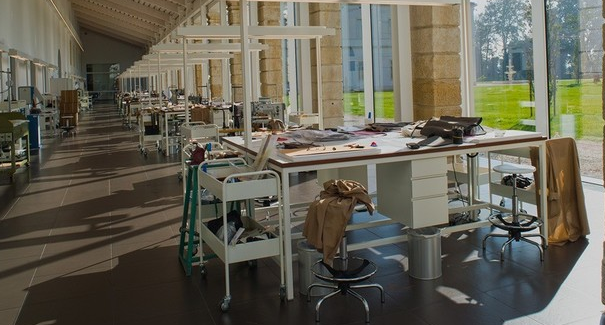
Main workshop runs along a glass-enclosed corridor — converted from old colonnades — that feels “more like a lab than a factory.”
-
Lighting mixes antique Murano glass chandeliers with modern sensor lights for energy savings
-
New wings house material labs, testing rooms, storage, offices, and training classrooms
The campus-like setup gives artisans free employee dining, on-site gym, and laundry services. These aren’t perks. Craftspeople spend long hours perfecting each piece. They need these amenities.
Beyond Assembly: Four Core Functions
This atelier does much more than simple production:
-
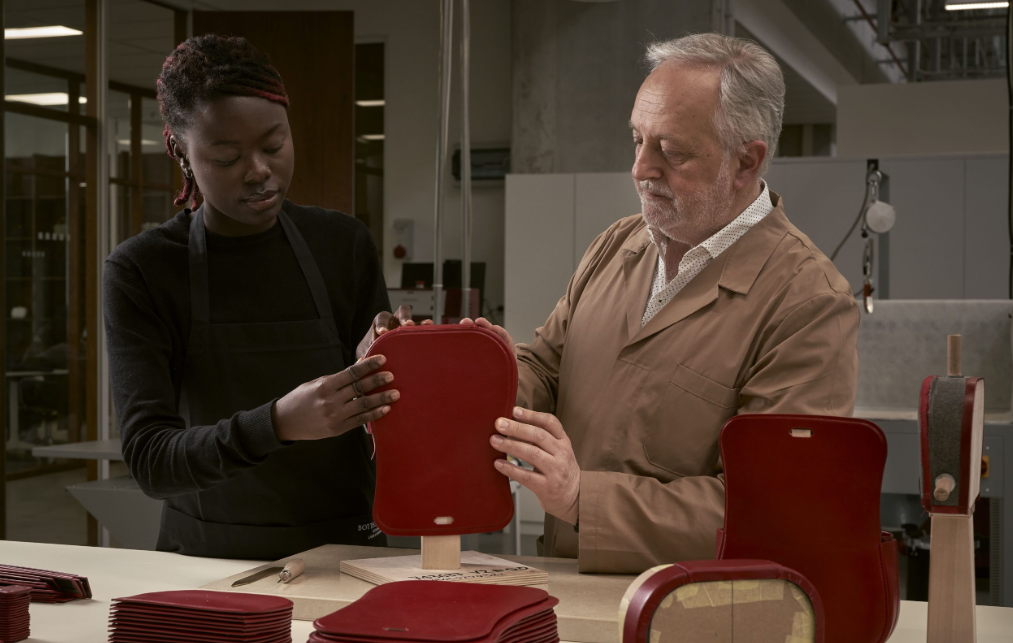
Prototype development — Every leather goods design starts here as a sample
-
Final quality control — Products go through tough mechanical, chemical, and wear testing in the on-site research lab
-
Material testing center — Leathers and parts face strict checks before production approval
-
Training headquarters — The Scuola della Pelletteria, started in 2006, teaches new artisans traditional techniques
The Intrecciato Challenge: A 48-Hour Masterpiece
Walk through the glass corridor. You’ll see artisans standing at workbenches. They’re creating the brand’s signature intrecciato weave — a technique refined since the 1970s.
Take one of Maier’s woven bags as an example. The technical work shows why these bags cost so much:
-
Unlined structure — Both outside and inside must show perfect finish
-
~100 double-sided leather strips, each over 1.5 meters long
-
Every strip needs matching color, texture, and polish on both faces
-
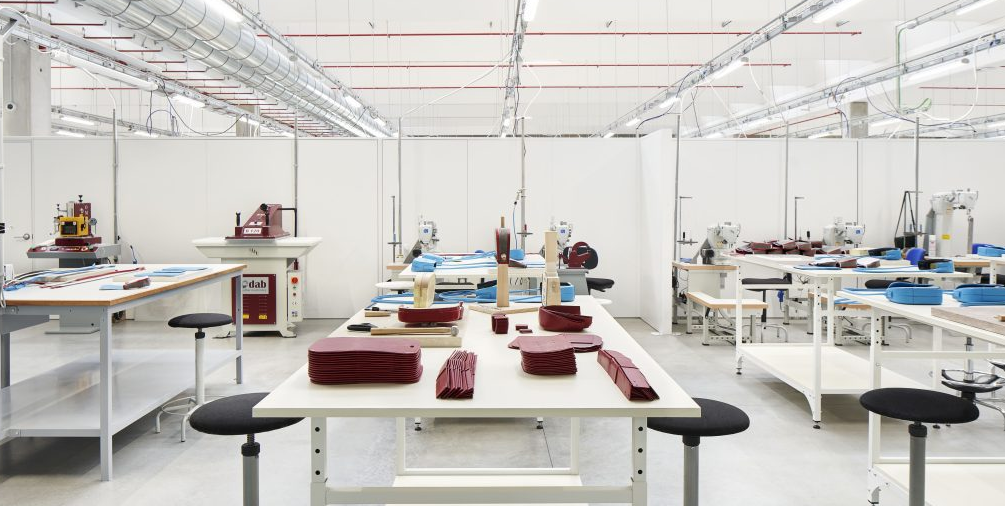
Artisans hand-weave strips into triangular panels. Then they shape them over three-dimensional molds
-
The process requires standing work throughout. You need real physical strength
-
Total production time: about 48 working hours per bag
This Montebello facility doesn’t chase volume. It sets the quality standard that all other Bottega Veneta production sites must match.
Veneto Region Production Network: Three Major Facilities
Bottega Veneta makes bags beyond Montebello Vicentino. The brand runs three more specialized facilities across the Veneto region. Each site handles specific parts of bag production. This spread-out network turns Vicenza province into a leather goods hub.
Altavilla Vicentina: The First Expansion
The Altavilla Vicentina facility opened in 2011. This was Bottega Veneta’s first big production growth past the historic Montebello atelier. The site sits just kilometers from the main workshop. Geography plays a key role here. Artisans can move between facilities without hassle. Quality stays the same at all locations.
Altavilla Vicentina fits into Vicenza’s larger manufacturing scene. The province hosts over 6,000 mechanical companies that employ 55,000 operators. That’s 15% of regional employment. Skilled workers are available because of this industrial density. Bottega Veneta uses a labor pool already trained in precision work.
Malo: Specialized Production Capacity
The Malo bag production site joined the network in 2012. This facility scales up output while keeping the handcrafted method. Malo follows the same quality rules as Montebello. Every bag goes through the same testing before it leaves the workshop.
Metal processing around Malo helps Bottega Veneta get the hardware it needs. Vicenza province has 12,367 metal processing companies. Many make custom buckles, clasps, and zipper pulls for luxury leather goods. Close distance cuts wait times. Hardware suppliers deliver parts within hours, not days.
Dueville: Completing the Triangle
Dueville became the third site in 2019. Located in Povolaro di Dueville, this workshop completes the Veneto production triangle. The facility covers about 6,000 square meters and employs around 200 staff members.
Dueville benefits from Vicenza’s goldsmith skills. The province has 1,421 goldsmith companies with 10,621 operators — that’s 28% of Italy’s total goldsmith workforce. These artisans make 84% of their output for export markets. Bottega Veneta uses this metalwork skill for bag hardware and decorative parts.
These three facilities form a 20-kilometer production radius around Vicenza. Raw materials come to one site. Components move to another for building. Final products go back to Montebello for quality checks. This tight network keeps Bottega Veneta bag origins rooted in Veneto’s craft history while serving global demand.
Italian Artisan Network: Beyond Veneto
Bottega Veneta’s production starts in Veneto. But the network spreads across Italy’s craft regions. Over 99% of suppliers work within Italian borders. This domestic focus targets specialized skills you can’t find elsewhere.
Tuscany’s Leather Tanning Legacy
Tuscan tanneries provide raw materials. Veneto artisans transform them into bags. The region around Santa Croce sull’Arno processes some of Europe’s finest leather. These facilities handle chemical-intensive work: vegetable tanning, chrome tanning, and combination methods. The process takes weeks to complete.
Each tanning method creates different leather traits:
-
Vegetable tanning uses natural plant extracts (chestnut, mimosa bark). You get firm texture. The leather ages well and develops patina over time.
-
Chrome tanning uses chromium salts. This creates supple, water-resistant leather. The process is faster (24-48 hours vs. weeks).
-
Combination tanning balances strength with softness. Different bag designs need different blends.
After initial tanning, leather goes through dyeing, buffing, and polishing in specialized labs. Leather bag artisans at Bottega Veneta collaborate with about 20 leather processing laboratories across Tuscany and Lombardy. Each lab masters specific finishing methods. One excels at high-gloss surfaces, another specializes in suede treatments, and a third handles exotic skins. Every process is carefully monitored to uphold the Made in Italy certification, ensuring that each piece meets the highest standards of craftsmanship and authenticity.
The Specialized Workforce Behind Materials

The network employs around 680 technical specialists across partner facilities. 380 focus on leather preparation — selecting hides, monitoring tanning baths, calibrating dye formulas, inspecting finished sheets for defects.
These aren’t generic factory workers. A master tanner needs 5-7 years to understand how temperature, humidity, and chemical ratios affect leather quality. One misread pH level ruins an entire batch. That batch could be worth thousands of euros.
This Italian artisan network shows why Bottega Veneta bag origins go beyond simple “Made in Italy” labels. The final product carries expertise from multiple regions. Veneto’s hub coordinates it all.
Sustainability Through Local Production

Bottega Veneta’s Veneto-centered network cuts carbon emissions at the source. Production stays within a 20-kilometer radius. This wipes out the transportation waste global chains create.
Distance Equals Emissions: The Math Behind Local Manufacturing
Transportation creates 6% of global food system emissions. Luxury goods work the same way. Raw materials moving across continents burn fuel. Bottega Veneta’s Italian network—over 99% domestic sourcing—slashes these transport miles.
Here are two scenarios:
Global chain: Chinese hardware ships to Italian plants. Leather comes from South American tanneries. Components travel 15,000+ km before reaching Veneto workshops. Each trip across continents adds carbon.
Bottega Veneta model: Tuscan tanneries sit 250 km from Vicenza facilities. Lombardy leather labs operate within 150 km. Metal workshops cluster in the same province. Total transport distance drops 98% versus spread-out sourcing.
Short-distance trucking within Northern Italy produces 60-120 g CO₂ per ton-kilometer. Air freight from Asia? That jumps to 500-1,500 g CO₂/ton-km. The environmental gap grows with every kilometer saved.
Waste Reduction Through Proximity

Local networks tighten the chain, reducing packaging waste. Leather deliveries from Tuscany to Veneto use reusable crates and minimal wrapping. Cross-border shipments still require moisture barriers, protective layering, and customs-compliant boxing, but these materials often end up in landfills in traditional systems.
Short-chain systems cut material loss. Tanneries are hours away instead of weeks. Quality issues get flagged fast. Defective batches don’t cross oceans before rejection. This closeness prevents the 20% material waste typical in global luxury bag manufacturing.
At the Bottega Veneta bag factory, 680 technical specialists across partner facilities work in real-time. A Montebello artisan spots a dyeing problem? The Tuscan lab adjusts formulas the same day. No wasted inventory. No disposal of bad materials that traveled thousands of kilometers. Every piece benefits from the brand’s signature intrecciato weaving technique, ensuring precision, quality, and minimal material loss.
Environmental Standards: Italy’s Regulatory Advantage
Italian leather production follows EU Water Framework Directive and Industrial Emissions Directive. These rules force infrastructure investments global competitors often skip.
Santa Croce sull’Arno and Arzignano tanning districts run centralized wastewater treatment plants. They process tens of thousands of cubic meters each day. These facilities remove:
-
COD (Chemical Oxygen Demand) through biological treatment
-
Chromium via precipitation and filtration (hitting >95% removal rates)
-
Sulfides through oxidation systems
Modern Italian tanneries use low-float chrome tanning. This method cuts chromium salt use by 30-50% versus old processes. Chromium recovery systems push use rates above 95%. Almost no chromium enters waste streams.
Some facilities switched to metal-free tanning bag options:
-
Vegetable tanning using chestnut and mimosa bark extracts removes heavy metal risks
-
Certain Tuscan tanneries hit >80% vegetable-tanned output for traditional leather goods
-
The trade-off: longer processing time (weeks vs. days) and different leather traits
Material Lifecycle Optimization
Bottega Veneta’s partner network turns production waste into value. Leather scraps don’t get dumped. They become:
-
Collagen extraction for cosmetic and drug industries
-
Hydrolyzed protein for farm fertilizers
-
Gelatin production for food and technical uses
This circular approach keeps waste rates low. The 60-75% leather use at cutting stage seems modest. But rejected sections feed secondary markets. Almost nothing reaches landfills.
The concentrated Veneto geography makes this work. A scrap leather processor operates within 30 km of Bottega Veneta facilities. Pickup routes collect trimmings each day. Compare this to scattered global production. Shipping leather waste for recycling becomes too expensive. Most ends up burned or buried.
The Production-Over-Transport Principle
Research shows 83% of product emissions come from making goods, just 11-15% from transportation. Bottega Veneta’s gains target both stages:
Manufacturing efficiency: Skilled artisans waste less material through precise cutting. Quality control at every stage stops defective products from eating resources. The 48-hour intrecciato weaving process needs expertise. But it wipes out the rework waste that hits mass production.
Reduced bag transport burden: Transport creates smaller overall emissions. But cutting unnecessary distance still counts. Local sourcing stops the 50%+ transport emissions seen in long-haul luxury goods chains.
The “Made in Italy” promise delivers real environmental benefits. Bottega Veneta bag origins trace to workshops that follow Europe’s toughest environmental standards. Not to places where regulations exist just on paper.
Conclusion
Where are Bottega Veneta bags made? This question explains why they cost so much in luxury fashion. The answer is simple: authentic Bottega Veneta pieces come from Italy’s Veneto region. The flagship Montebello Vicentino atelier acts as the brand’s creative and production center. The brand keeps production focused—three major facilities and selected Italian artisan partners. This setup ensures quality control and keeps centuries-old leatherworking traditions alive.
A Bottega Veneta bag is more than an accessory. You’re getting a piece of Vicenza’s artisan heritage. Skilled craftspeople spend years mastering the iconic intrecciato weave. The brand keeps production local. This cuts down on transportation. Plus, it allows direct oversight of ethical manufacturing practices. All of this supports the brand’s sustainability goals.
Before your next purchase, check the “Made in Italy” label. Ask for authenticity documentation. Shopping for pre-owned options? Knowing Bottega Veneta bag origins helps you spot genuine craftsmanship. You can avoid counterfeits—protecting your investment and the artisans behind each carefully made piece.