
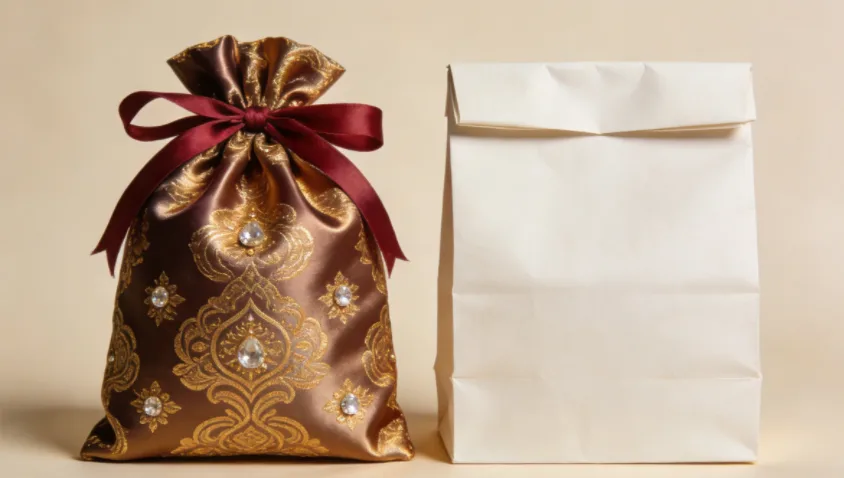
Ramadan in the Gulf isn’t just a season — it’s a statement. For luxury bag retailers across the Middle East, how you present a product during this sacred month matters just as much as the product itself.
A well-designed custom Ramadan gift bag turns a purchase into a memory. It moves a simple transaction into a moment of real cultural connection. But getting there takes far more than stamping a crescent moon on standard packaging.
Luxury Ramadan Gift Bags vs. Gift Bags: What’s the Real Difference?
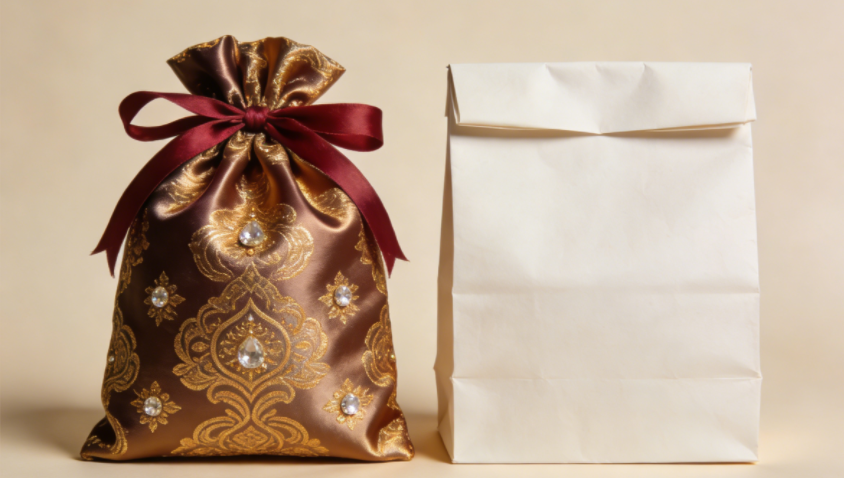
December 2025 started with an unexpected phone call from Saudi Arabia. The exhibition organizer invited our team to participate in a Middle East bag exhibition. At first, our sales representative Belinda was puzzled — we had not applied, nor were we actively promoting ourselves as a Middle East bag supplier.
The answer came the very next day.
We received an email from our Middle Eastern client, who had previously worked with us on Middle East bag customization projects. Impressed by the quality, craftsmanship, and consistency of the bags we delivered, he had personally recommended Sunteam to the exhibition organizer.
That moment made one thing clear: for any Middle East bag supplier, real product quality travels faster than any marketing — and strong customization capability is what earns long-term trust.
Luxury in the Middle East carries a price tag — and a cultural expectation alongside it.
The Middle East luxury gifting market sits at USD 1.2 billion. The personalized gifts segment alone is projected to reach $1.6 billion. UAE households average ~$78,000 in annual income. Buyers here know quality. They spot shortcuts fast.
So what separates a real luxury Ramadan gift bag from one that just looks expensive?
It’s About Materials, Craftsmanship, and Meaning
Luxury Ramadan packaging in this market pulls together several key elements:
-
Premium, handcrafted construction — not mass-produced finishes
-
Design rooted in regional culture — think geometric Islamic patterns, rich jewel tones, gold foiling
-
Exclusive sensory details — local niche perfume houses rank as a major purchase driver among high-value buyers
-
Sustainable materials — UAE regulations now require all luxury gift packaging to meet eco-friendly standards by 2025. This is no longer optional.
The Numbers Confirm the Shift
The difference is simple.
“Expensive-looking” Ramadan gift bags focus on surface — bold colors, gold elements, and heavy materials that create a quick impression but lack depth. The materials may be average, the finishing inconsistent, and the design often copies regional styles without truly understanding them.
Luxury Ramadan gift bags, on the other hand, focus on substance. They use high-quality or sustainable materials, precise craftsmanship, and culturally meaningful design. Every detail — from stitching to structure to user experience — is intentional. They are not just packaging, but part of the gifting value itself.
Now, let’s take this one step further.
Let’s look at how Sunteam approached a real Middle East client — and how we turned these principles into an actual Ramadan gift bag project.
Step 1: Cultural Design Elements That Resonate With Gulf Luxury Buyers
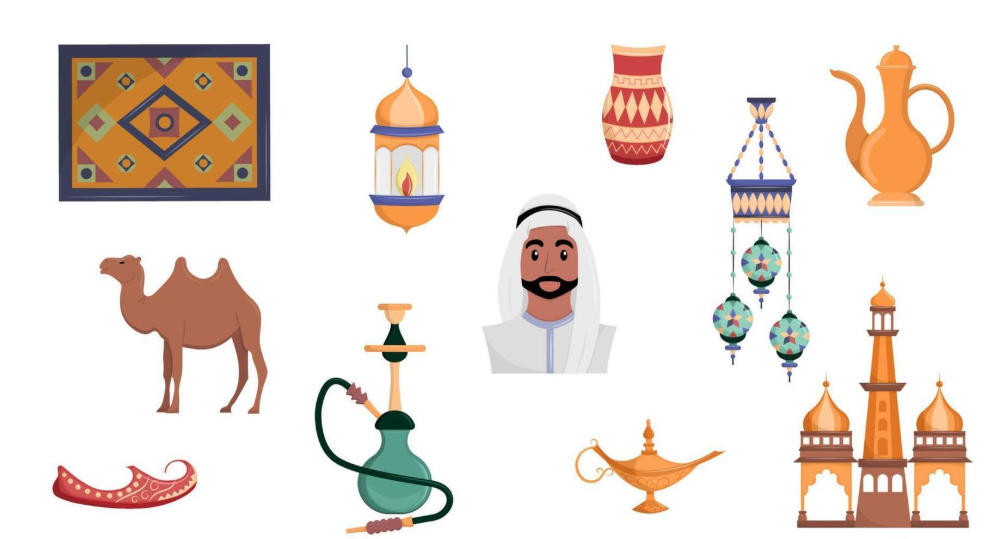
Gulf luxury buyers don’t just purchase a product — they evaluate whether it belongs in their world. In the Middle East luxury bag market, especially in countries like Saudi Arabia and the UAE, design is not decoration — it’s a pricing signal that directly impacts how B2B buyers position their products.
We understood this clearly when working with our Middle East Ramadan gift bag customization client.
Although the client had already provided a design draft for their custom Ramadan gift bags, our sales representative Belinda didn’t treat it as final. Instead, she went deeper. She conducted extensive research into Middle East bag design trends, studying Islamic geometric patterns, Najdi motifs लोकप्रिय in Saudi Arabia, and luxury packaging references commonly used by Middle East bag retailers.
Rather than simply producing what was given, we approached the project as a B2B Middle East bag supplier. Belinda shared curated references, discussed cultural alignment, and worked closely with the client to refine every visual element — from pattern selection to color tone and overall structure.
The communication process was smooth and highly collaborative, ensuring that the final Middle East custom gift bag design was not only visually appealing but also culturally accurate and commercially effective for the client’s target market.
Because in the Middle East, especially for luxury Ramadan packaging, a bag is more than a product — it’s a signal of brand positioning. And for any serious Middle East bag manufacturer like Sunteam, getting that right starts with understanding the culture behind the design.
Step 2: Premium Materials and Finishes for Custom Ramadan Gift Bags
Material choice builds or destroys perceived value. In the Gulf luxury market, buyers feel the difference before the bag is even open.
Rigid Boxes: The Dominant Format
Rigid luxury boxes make up 40% of all Ramadan gift box orders in Dubai. That number tells you exactly what the market expects. Built on 2–3mm thick chipboard wrapped in premium paper or fabric, these boxes don’t flex or fold. They hold their shape. They hold their weight. Supplier data shows they raise perceived value by 45% compared to standard alternatives.
Rigid box finishes are where customization turns into real brand differentiation:
-
Gold foil stamping — the go-to for Arabic pattern detailing on high-end packaging
-
Soft-touch lamination — gives a velvet-like tactile finish, popular for premium dates boxes
-
Spot UV coating — creates contrast between matte and gloss surfaces, preferred by modern brand identities
-
Fabric wrapping — the top tier of the format, reserved for royal gifting and ultra-premium retail
Magnetic Closure and Eco-Friendly Formats
Magnetic closure boxes saw a 32% demand increase across GCC markets in Ramadan 2024. That satisfying snap of a magnetic seal is a small detail. High-value buyers notice it straight away.
Eco-friendly kraft formats are growing faster than most retailers expect. UAE demand has surged 67% since 2022. FSC-certified, 100% recyclable, and biodegradable within 90 days — these are no longer compromise materials. 45% of new Dubai businesses now list kraft as their first-choice format.
The material has also moved upmarket. Kraft with gold foil stamping, recycled rigid board with embossing, bamboo fiber with minimalist design — these combinations close the gap between sustainability and premium positioning. You get the eco credentials without giving up the luxury feel.
Pricing Benchmarks by Format
|
Budget Range (AED/unit) |
Format |
|---|---|
|
3–5 |
Kraft paper bags |
|
5–10 |
Magnetic closure / window boxes |
|
10–20 |
Rigid luxury / drawer boxes |
|
20+ |
Fabric-wrapped / multi-tier gift sets |
For volume orders of 500+ units, rigid and magnetic boxes land at AED 8–12 per unit. That’s a practical price point for retailers running seasonal campaigns at scale. You keep the finish quality. You don’t blow the budget.
Step 3: From Design Approval to Sampling and Bag Production
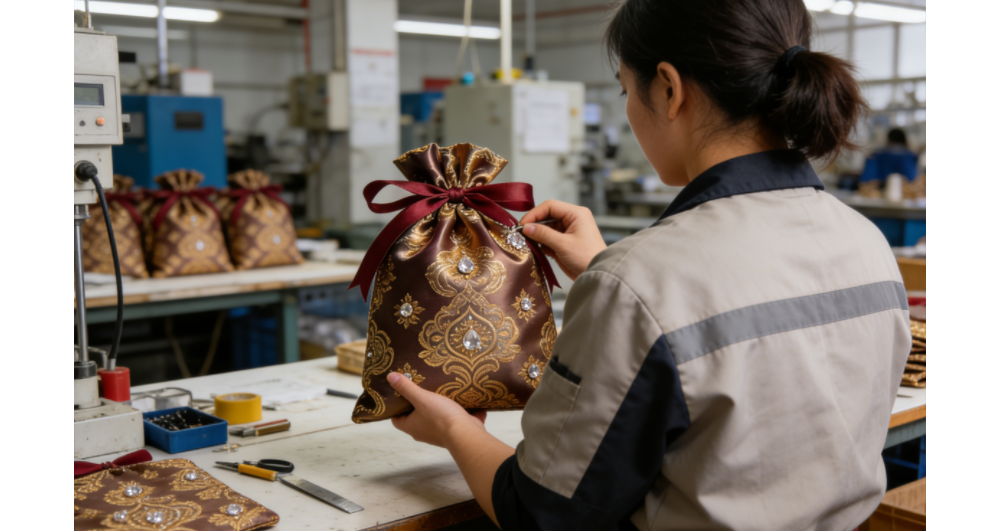
Handbags and shoes captured 27% of Net-a-Porter’s Ramadan revenue last year. That’s a significant slice — and it shows where packaging structure needs to step up. A luxury bag retailer’s Ramadan line isn’t one product. It’s a tiered ecosystem. The structural format of each custom Ramadan gift bag should reflect where each product sits within it.
Once we finalized the design and materials with our Middle East client, the project moved into the next critical phase: sampling and bulk production. This step is where ideas become tangible — and where a luxury Ramadan gift bag truly proves its quality.
We began by creating prototypes that reflected the agreed-upon cultural motifs, premium fabrics, and structural formats tailored for Middle East luxury bag retailers. Each custom gift bag was carefully assembled to meet tiered product requirements — from limited-edition premium pieces to core leather totes and accessible entry-level mini bags. The team ensured every detail, from stitching to magnetic closures, mirrored the design intent.
After reviewing the samples, the client expressed strong approval. They highlighted the craftsmanship, material quality, and the cultural authenticity of the designs. This positive feedback confirmed that our approach — blending research, communication, and precise execution — resonated perfectly with Middle East B2B luxury buyers.
Following the successful sampling, we moved into bulk bag production. Each gift bag maintained the same high standards, ensuring that the final shipment delivered both the visual and tactile luxury that the client expected. For us, this reinforced a simple truth: in the Middle East bag market, attention to detail from design to delivery is what turns a gift bag into a premium experience.
MOQ, Pricing Benchmarks, and Supplier Selection for Gulf Luxury Retailers
Getting the numbers wrong at this stage costs more than a bad design decision. For Gulf luxury bag retailers sourcing custom Ramadan gift bags, MOQ isn’t just a supplier requirement. It’s a capital risk calculation.
What MOQ Looks Like Across Supplier Types
Not all suppliers are built for boutique-scale luxury retail. The table below shows where each supplier type fits best:
|
Supplier Type |
Total MOQ |
Per Style |
Price Point |
Fit for Gulf Boutiques |
|---|---|---|---|---|
|
Large-Scale Manufacturers |
500–2,000 units |
N/A |
Lowest |
Too restrictive |
|
Mid-Size Manufacturers |
100–500 units |
50–100 units |
Moderate |
Manageable |
|
Small-Batch Ateliers |
20–100 units |
10–50 units |
Higher |
High flexibility |
|
Wholesalers/Distributors |
10–50 units |
5–20 units |
Moderate-High |
Lowest barrier |
Smaller Gulf boutiques working with $10,000–$50,000 inventory budgets get the best value from mid-size manufacturers and ateliers. Large-scale factories offer the lowest unit price, yes — but a 500-unit minimum locks up capital fast. Your backstock fills up before the season even starts.
Calculating Your Minimum Order Floor
MOQ isn’t arbitrary. It connects to your margin math.
Here’s a simple approach: divide your fixed seasonal costs by your contribution margin per unit. Say your fixed costs are $10,000 and you clear $12 per bag. Your breakeven MOQ lands at 834 units. That’s your floor, not your target.
For Gulf-specific sourcing, account for longer lead times and higher international reorder minimums. Cross-border orders push MOQs up — suppliers need to offset shipping logistics. Build that buffer into your seasonal plan from the start, not as an afterthought.
Supplier Selection Priorities for Ramadan Packaging
Three criteria matter most for shortlisting Ramadan gift bag suppliers:
-
Production cost alignment — Can the supplier hit your per-unit target at your required volume without cutting finish quality?
-
Storage reality — Most boutique operations cap backstock at 50–150 units. A 500-unit MOQ per style blows past that ceiling fast. It also cuts the range variety Gulf buyers expect.
-
Demand forecast accuracy — Gulf luxury market growth runs at 10.03% CAGR through 2031. The market is projected to reach $26.66 billion. Ramadan demand spikes are predictable. Use historical sales data and regional trend signals to set quantities that sell — not quantities that sit in storage.
Over-ordering in this category carries real risk. Luxury packaging trends shift every season. Excess stock from one Ramadan almost never carries over to the next.
Conclusion
A Ramadan gift bag is never just packaging. For a Middle East luxury bag retailer, it carries taste, cultural respect, and brand prestige — all without saying a word.
The right custom Ramadan gift bags for a Middle East luxury bag retailer bring together authentic Gulf design with premium materials, solid structural engineering, and a branding approach that feels true to the occasion. Every detail matters. From the crescent-embossed foil stamp to the hand-tied ribbon, each element should speak the same luxury language as the product inside. That’s how the unboxing moment becomes part of the gift itself.
2025–2026 trends are moving toward sustainable luxury and deeper personalization. The gap to stand out is open — but not forever.
Your next step: Take these three actions now:
-
Request samples from your shortlisted suppliers
-
Brief your design team on cultural alignment priorities
-
Lock in production timelines before Ramadan demand peaks
Brands that prepare ahead don’t just deliver beautiful bags — they deliver unforgettable moments.