
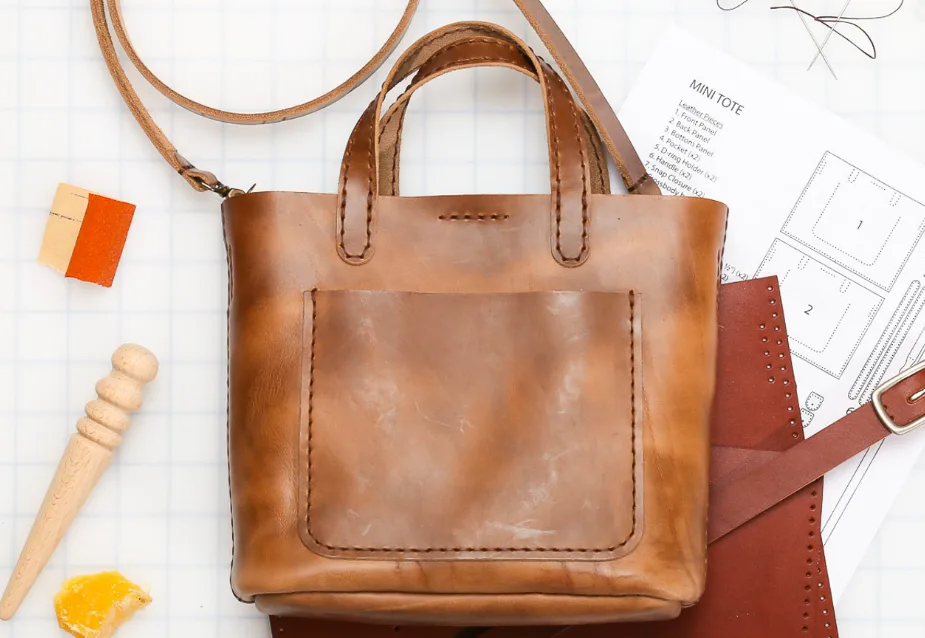
Japanese minimalism has taken over the premium lifestyle market — and for good reason. It’s not just a look. It’s a feeling buyers notice the moment they touch a product.
In our last article, we talked about Taylor’s preference for simple leather bags, and how Western minimalist bags and Japanese minimalist bags share a similar clean aesthetic. But Japanese minimalism goes one step further. It removes everything unnecessary until only the most essential design remains.
Think of it like two plain white T-shirts. From far away they look the same. One costs ten dollars, the other one hundred. The difference appears the moment you touch the fabric. Minimalist bags work the same way.
That’s why custom minimalist leather tote bags for Japanese lifestyle brands are becoming such a strong product opportunity today. But making them correctly requires more than simple shapes and neutral colors.
This guide will show how to approach the design, materials, and manufacturing behind true minimalist bags.
Custom Minimalist Leather Tote Bags For A Japanese Lifestyle Brand
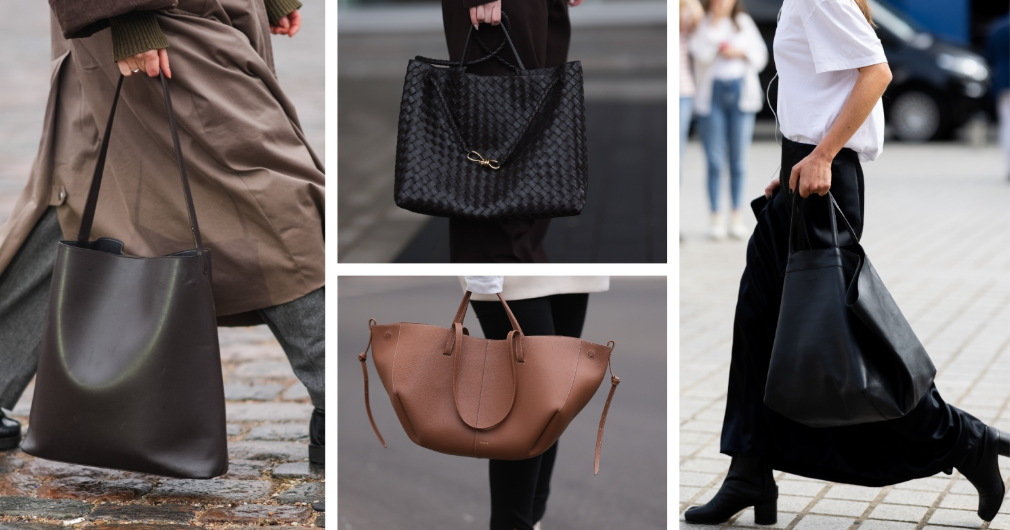
The numbers behind the Japanese leather bag market are impressive. Industry reports show the market growing from USD 1,356.8 million in 2022 to around USD 2,377.1 million by 2030, and tote bags already account for about 26% of the category. But data alone never tells the full story.
At our factory, we wanted to understand what Japanese customers actually buy. So our team spent time reviewing several years of product listings and sales patterns on Rakuten, one of Japan’s largest online marketplaces, while researching the demand for custom minimalist leather tote bags.
What we noticed was surprisingly simple.
“Look at this one,” one of our designers said during the review meeting, pointing to a plain leather tote with almost no decoration.
No logo pattern. No flashy hardware. Just clean leather, balanced proportions, and careful stitching.
“It’s the most ordinary design,” someone else replied.
“Exactly,” the product manager said. “That’s why it keeps selling.”
The more we looked, the clearer the pattern became. Minimalist leather totes appear again and again in the best-selling lists. They may look simple, but they are also the most timeless designs. Customers buy them because they work with everything and last for years.
That observation led to a small project inside our factory. Instead of chasing complicated trends, we selected five classic minimalist tote designs and started preparing a small custom minimalist leather tote bag collection for prototype sampling. The plan is to present these designs at the Tokyo exhibition later this year.
In other words, the idea didn’t come from a trend report. It came from watching what customers in Japan actually choose to carry every day.
How We Chose Materials for Our Minimalist Leather Tote Series

After deciding to develop five classic tote designs for the Tokyo exhibition, the next question inside our factory was simple.
“What leather should we use?”
Minimalist bags leave very little room to hide mistakes. When a design has almost no decoration, the material becomes the design itself. That is why selecting the right leather is one of the most critical steps when developing custom minimalist leather tote bags.
During our internal meeting, the discussion quickly turned practical.
“Should we use corrected leather? It looks very clean,” one team member suggested.
Our sample technician shook his head.
“For minimalist bags, that surface looks too artificial. It loses character after a few months.”
So we began comparing several materials commonly used in minimalist leather tote bag manufacturing.
Materials We Tested
Our factory tested three main leather types before making the final decision.
|
Material Type |
Advantages |
Disadvantages |
Estimated Material Cost (per sq.ft) |
|---|---|---|---|
|
Corrected Grain Leather |
Very smooth surface, stable color |
Looks artificial over time |
$2.8 – $3.5 |
|
Split Leather with Coating |
Low cost, easy to process |
Poor durability, weak structure |
$1.8 – $2.3 |
|
Full-Grain Cow Leather |
Natural texture, ages beautifully |
Higher cost, requires skilled cutting |
$4.5 – $6.0 |
After reviewing samples and stress tests, we chose full-grain cow leather for all five designs.
The reason was simple. Minimalist bags rely on material quality to create visual depth. Full-grain leather keeps its natural fiber structure, which allows the bag to develop a soft patina after months of use.
One of our designers explained it best during the meeting.
“When the bag is new, it looks calm and simple. After a year, the leather becomes the decoration.”
Why This Material Works for Japanese Minimalism
Full-grain leather supports several design goals that align with Japanese minimalist aesthetics.
First, it develops a natural patina through use, which gives each bag a slightly different character over time.
Second, the leather surface already contains subtle natural grain patterns. This allows the design to stay simple without looking flat.
Third, the material holds structure well, which is important for tote silhouettes that need to keep a clean shape.
Where Our Factory Sources the Leather
For this collection, our bag factory sourced leather from two suppliers.
-
Italian vegetable-tanned leather bag supplier in Tuscany for premium samples
-
Partner tannery in Bangladesh for stable production supply
The Italian leather provides rich natural dye variation, which works well for exhibition prototypes. The Bangladesh tannery helps maintain production stability and competitive pricing if the collection moves to mass production.
Final Color Direction
For the Tokyo exhibition samples, we selected three core colors:
-
Deep black
-
Dark coffee brown
-
Natural vegetable-tan leather
These tones match the quiet visual language that many Japanese lifestyle brands prefer. Instead of competing for attention, the bag simply supports everyday use.
And that is exactly the point of minimalist design. When everything unnecessary is removed, material quality becomes the story the bag tells.
Design Essentials for Japanese Minimalist Bags
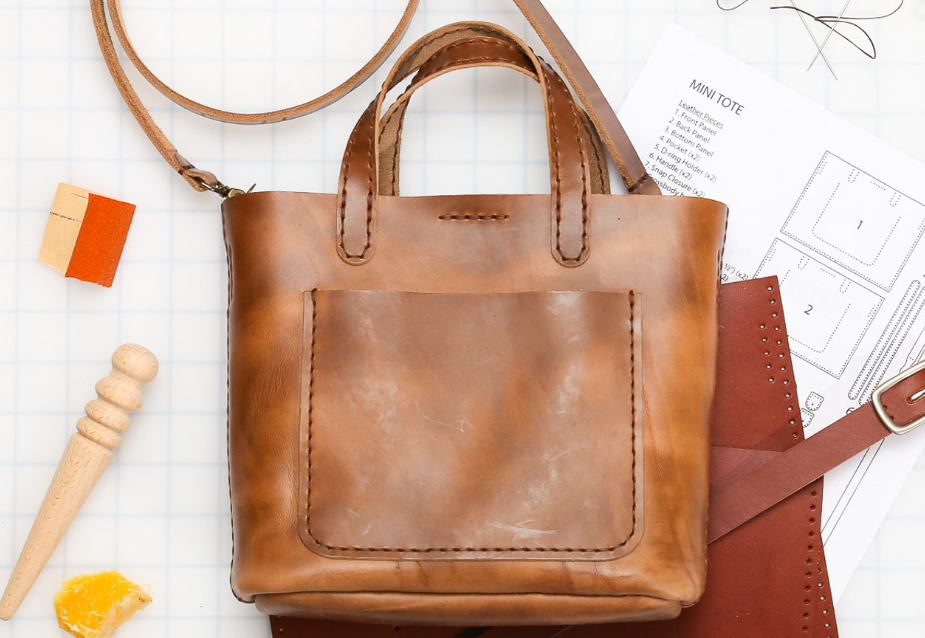
A bad brief kills most customization projects. For custom minimalist leather tote bags for a Japanese lifestyle brand, the details you nail down upfront decide whether the final product hits the shelf — or gets sent back.
Proportions and Silhouette
Japanese minimalism treats negative space as an active design tool. The golden ratio (1:1.618) paired with deliberate ma means 30–50% of the bag’s surface stays unoccupied. That open space isn’t wasted — it’s doing real work.
Size specs matter just as much. The functional standard for commuter totes is 35–40cm height × 28–32cm width × 12–15cm depth, with an empty weight under 0.8kg. Internal dimensions need to reach at least 21.5cm × 30cm to fit A4 documents, with 2cm of folding allowance built in.
Capacity lands best in the 15–18L range. MUJI and Uniqlo sales data backs this up — that zone captures 75% of market acceptance and accounts for 40% of total bag category volume.
Straps, Closures, and Openings
Keep strap width between 2–3cm. That range covers both hand-carry and shoulder use without bloating the silhouette. Set the shoulder strap angle at 15–20°. This matches MUJI and Uniqlo’s functional geometry and delivers a clear boost in carry comfort over longer use.
For closures, you have three solid options:
-
Magnetic snap: Sub-1 second access. Best for grab-and-go daily use
-
Hidden zipper: YKK invisible tooth at 5mm height, rated for 10,000+ open/close cycles
-
Open top: 25–30cm mouth width for clean, fuss-free A4 access
Interior and Branding Specs
Cap pockets at 1–3 maximum. MUJI’s layout — one main compartment plus one hidden interior pocket — is the right model to follow. For lining, cotton-linen breathes 20% better than synthetics. Polyester lining runs 4x more abrasion-resistant at 30% lower cost. Pick based on your price point and use case.
For branding, blind emboss logos (0.5–1mm depth, no color fill) are the cleanest and most credible choice for this aesthetic. A 1mm aluminum alloy nameplate with laser engraving gives 5-year oxidation resistance. Edge paint color consistency needs to meet Delta E < 2.0 under CIE standards — color deviation against the main leather should stay under 1%.
One last number worth keeping: 57% of millennial and Gen Z buyers will pay a 20% premium for products with sustainable customization. Solid spec alignment also cuts return rates by 15%. Getting these details right at the brief stage isn’t just a design call — it’s a margin call.
Why Many Japanese Brands Work With Sunteam for Tote Bag Production
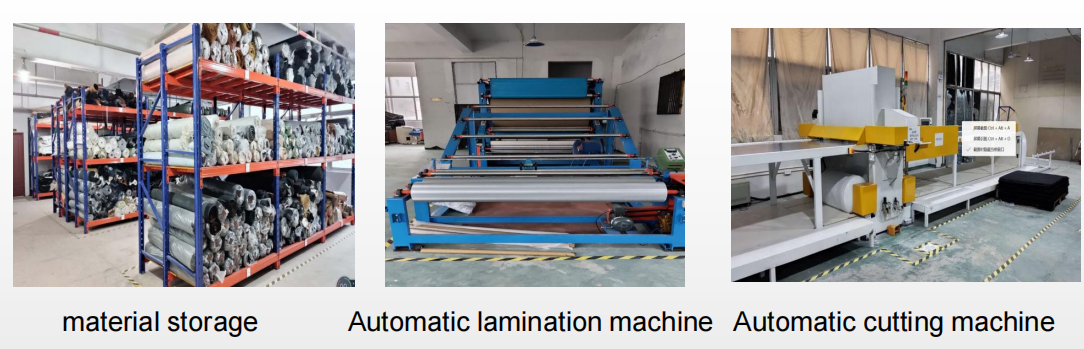
For Japanese lifestyle brands developing new collections, choosing the right manufacturing partner often comes down to one question.
“Can this factory actually deliver what we design?”
Minimalist products leave little room for mistakes. When a bag has clean lines and almost no decoration, materials, stitching, and structure must be extremely consistent. That is where experience and production control make the difference.
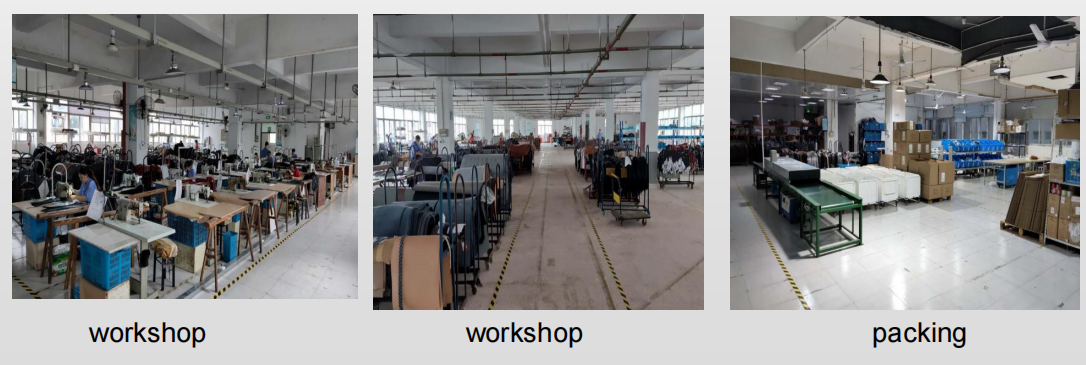
Over the past years, many brands have approached Sunteam when developing custom minimalist leather tote bags, because our factory combines flexible production with international manufacturing experience.
Fast Sampling With High Accuracy
Sampling speed matters, but accuracy matters even more.
At Sunteam, most prototype development follows a very simple internal rule.
“Make the first sample as close to the final product as possible.”
Our sample department works with experienced pattern makers and technicians, and around 99% of samples are approved in the first round. This helps brands shorten development time and avoid the costly cycle of repeated revisions.
For brands preparing seasonal launches or exhibitions, that time advantage is critical.
Flexible Production From Small Runs to Large Orders
Different brands require different production scales.
Some Japanese lifestyle brands begin with small trial runs, while others need larger production volumes once the product proves successful.
Sunteam supports both:
-
Small batch development for new product testing
-
Mid-scale runs for growing brands
-
Large production volumes for established retailers
This flexibility allows partners to scale gradually without changing factories.
Global Material Sourcing With Stable Costs
Material sourcing is another key advantage.
Through long-term bag supplier relationships across multiple countries, our factory sources leather from Italy, Bangladesh, and other international tanneries. This gives brands several benefits:
-
Consistent material quality
-
More competitive leather pricing
-
Greater flexibility in texture and color selection
For minimalist designs, where the leather itself becomes the visual focus, material consistency is especially important.
Italian Technical Guidance in Production
Many of Sunteam’s leather production techniques are developed under the guidance of Italian technicians with over 30 years of experience in leather manufacturing.
This support helps our production team maintain high standards in:
-
Pattern construction
-
Edge finishing
-
Stitching consistency
-
Structural durability
As one of our technicians often says during training:
“Minimalist design looks simple, but the craftsmanship behind it must be precise.”
Offices in Italy and Japan
Sunteam also maintains international coordination offices, including Italy and Japan, which help support communication with global partners.
These offices assist with:
-
Material sourcing and technical supervision
-
Market trend observation
-
Faster coordination with international clients
Combined with our manufacturing base in Bangladesh and China operations team, this structure helps ensure smooth collaboration across different markets.
Production Consistency Through Worker Evaluation Systems
One of the biggest concerns for brands is consistency between samples and mass production.
To maintain that stability, Sunteam uses internal production evaluation systems for employees. Workers are trained and regularly assessed on craftsmanship standards, ensuring that:
-
Mass production follows the same process used in sampling
-
Stitching and finishing remain consistent across large runs
-
Quality control checks happen at multiple production stages
The goal is simple. The bag you approve during sampling should be the same bag you receive during full production.
A Manufacturing Partner, Not Just a Supplier
For brands developing custom minimalist leather tote bags, production is not just about assembling materials. It is about translating design ideas into reliable products.
With international material sourcing, experienced technicians, flexible production capacity, and strong quality control, Sunteam aims to give brands something very simple.
Confidence that what they design can actually be made — and made consistently.
Japanese bag manufacturers treat contractual clarity as a baseline expectation. Put brand protection terms in writing upfront. It builds trust rather than friction — and signals you’re a long-term partner, not a one-run buyer.
Conclusion
As Leonardo da Vinci once said, “Simplicity is the ultimate sophistication.” Building custom minimalist leather tote bags for Japanese lifestyle brands is about precision, quality, and intentional design. For B2B brands, choosing the right partner ensures your vision translates perfectly from sample to full production.
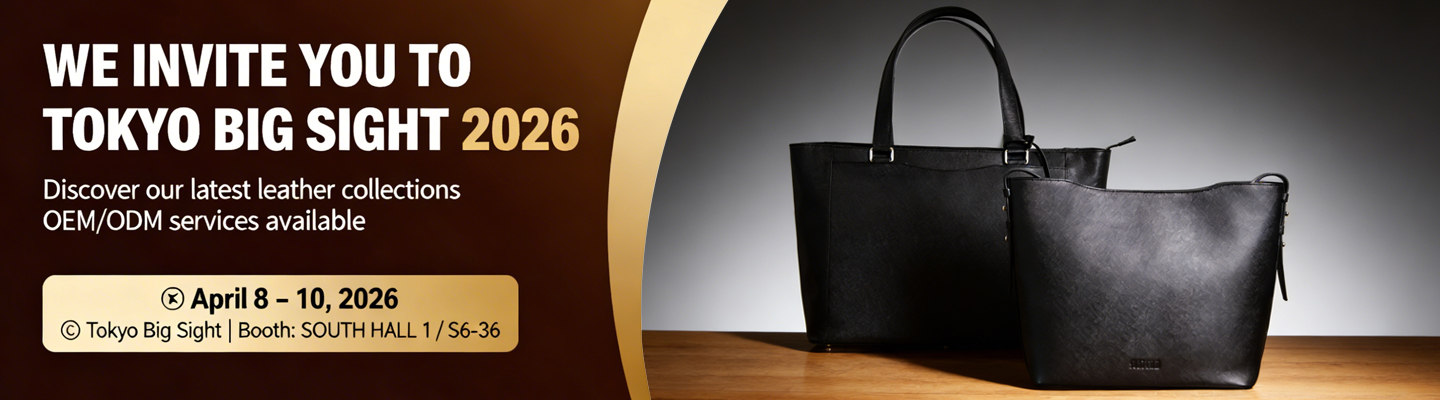
Join us at the Tokyo exhibition to see these timeless designs in person and explore how we can bring your minimalist leather concepts to life.