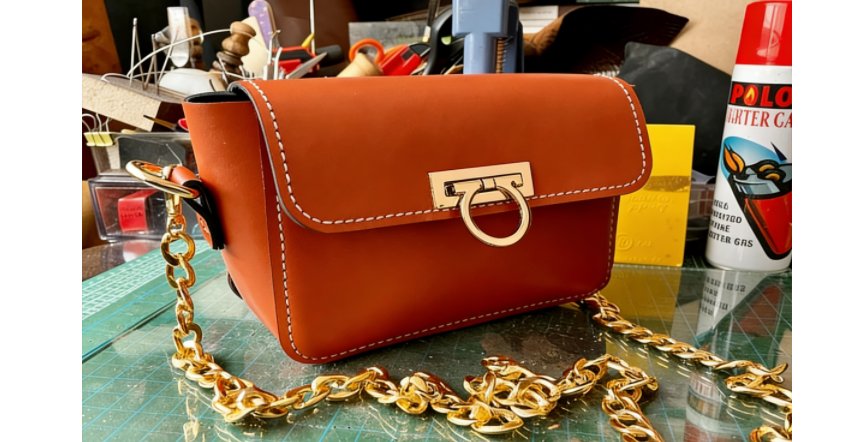
“Look at this sample — the leather feels off, the stitching is puckering at the corners, and the magnetic closure feels cheap,” said Li Ming, frowning as he unpacked the first custom leather crossbody bag from the box.
“I noticed that too,” Cara replied, examining the bag closely. “I think the issue starts with our material confirmation. The bag manufacturer sent leather that doesn’t fully match the thickness and texture specified in our design brief.”
“And the stitching here,” Wang Gang pointed to a corner, “it seems the bag manufacturer didn’t follow the corner finishing process we outlined. The pressure lines and stitch direction in the design weren’t implemented correctly, which caused puckering.”
“What about the magnetic closure?” Xiao Zhao asked.
“That’s likely a component issue,” Li Ming explained. “Either the hardware supplier sent a substandard batch, or we didn’t run the final quality checks before approving the sample.”
“So overall,” Li Ming summarized, “this sample rejection isn’t just about craftsmanship. It highlights gaps in communication, specification, and production process — all areas we can improve to make the next round of custom leather bag samples closer to our vision.”
“Got it,” Cara nodded. “If we address each of these issues systematically, our next sample from the bag manufacturer will meet both design expectations and quality standards.”
Why The First Leather Crossbody Bag Sample Was Rejected
From our experience in custom bag manufacturing, several situations tend to appear more often when a first sample is reviewed. These issues usually fall into a few common categories: critical defects that lead to immediate sample rejection, major workmanship problems that require further discussion, and material inconsistencies that originate from the leather hide itself.
Understanding these common scenarios helps brands and bag manufacturers identify problems faster and improve the next round of custom leather bag samples.
Here’s how each category breaks down:
-
Critical (automatic rejection): broken zippers, splitting seams, detaching hardware
-
Major (negotiable): puckering, off-center zippers, weak strap connections
-
Material: uneven dyeing, brittle leather, surface scratches, lining failures
Take a sample with a 40% defect rate — 2 critical, 3 major, 5 minor. That gets rejected outright. Fix those defects, and the rate drops to 4%. It clears approval.
The Moment of Rejection: What Happened When the Sample Arrived
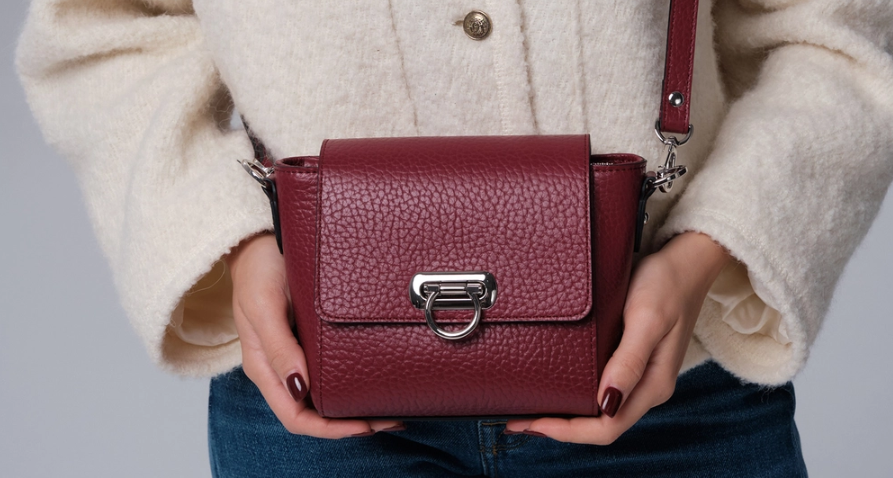
When the team checked the sample, they quickly saw something was wrong. In custom bag manufacturing, the first sample often shows problems that were not noticed before. Instead of hiding the issue, Cara decided to tell the client honestly.
Her idea was simple. First, say sorry. Second, take responsibility. She knew a rejected leather crossbody bag sample could make the client feel disappointed, because the brand had already spent time and effort on the project. So Cara contacted the client with a clear plan: apologize, offer to make a new custom bag sample for free, and share a few design improvements the team discovered during their review.
Dear Joe,
I hope you are doing well.
After carefully reviewing the first custom leather crossbody bag sample, our team noticed several details that do not fully meet the quality standards we aim to deliver. I sincerely apologize for this situation and appreciate your patience during the development process.
To ensure the final product meets your expectations, we would like to produce a new sample for you at no additional cost. Our goal is to refine the design and make sure the next version better represents your concept while also ensuring stable mass production quality.
During our internal review, we also identified a few design details that could be improved. For example, certain construction areas could be slightly adjusted to improve durability and maintain cleaner stitching lines. These adjustments can help the custom leather bag achieve a better appearance and ensure stronger consistency when moving into bulk production.
Please let us know if you would like us to incorporate these improvements into the next sample development round. We are committed to delivering a result that supports both your brand vision and long-term production quality.
Best regards,
Cara
Sunteam
Sending that message did more than solve a short-term issue. It turned a rejected bag sample into an opportunity to refine the product before it reached the production stage. By addressing the problem early, the bag manufacturer could improve both the design and the manufacturing process, increasing the chances that the next sample would meet expectations.
But situations like this rarely happen for a single reason. In most custom leather bag development projects, similar problems tend to trace back to a few common causes — factors that often appear during the first prototype sample stage.
Defect #1 — The Leather Surface Told a Different Story Than the Spec Sheet
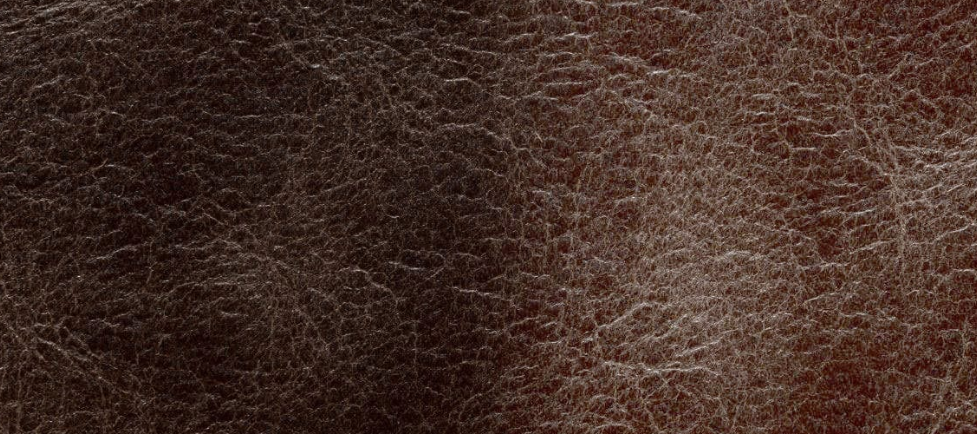
The factory manager didn’t argue. He started checking the problem step by step. In custom leather bag manufacturing, the first thing to check is always the leather.
“The spec sheet says full-grain leather,” he said while holding the leather crossbody bag sample under the light.
At first the leather looked okay. But when he looked closer and touched the surface, problems appeared. He pointed out three common issues:
-
Grain inconsistency — scratches, scars, or insect marks mean the leather may be lower quality than the spec.
-
Color deviation — the dye is uneven, so the color changes under different lights.
-
Finish mismatch — the coating looks rough or streaky and doesn’t match the approved sample.
The manager explained that this often happens when the leather material is changed during sourcing without clear confirmation.
“That’s why we must check the leather before cutting,” he said.
Factories usually inspect the hide’s color, texture, and dye first. Some also use color-checking tools to compare it with the approved sample. They also test rubbing fastness to make sure the color will not fade easily.
“Material is the first step,” the manager said. “If the leather is wrong, the custom bag sample will never look right.”
After checking the leather, the team moved to the next part — stitching and construction.
Defect #2 — Stitching That Looked Fine Until It Didn’t
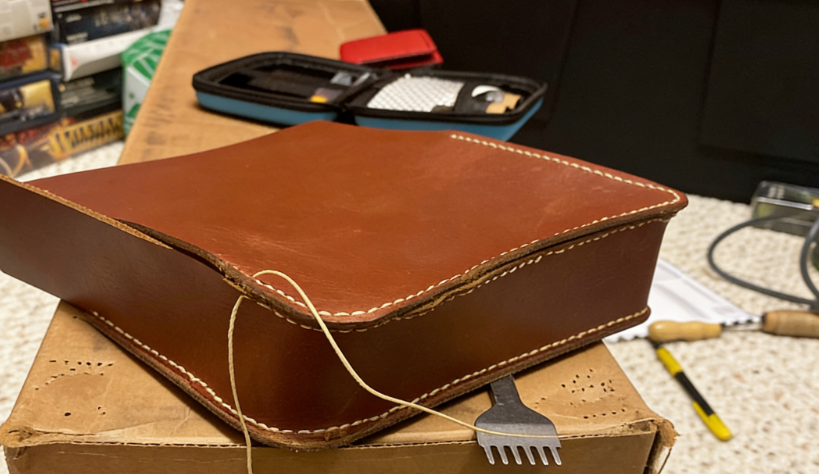
The factory manager then checked the stitching. At first the seams looked neat, like a straight line drawn with a ruler. But when he gently pulled the bag panels, small gaps appeared. Some stitches were skipped, and some seams started to open.
He explained it with a simple example: stitching is like buttons on a shirt. If one button is loose, the whole shirt can open. In custom bag manufacturing, even a small stitch problem can make the whole sample bag fail.
Defect #3 — Hardware and Closure Failures That Broke the Design Intent
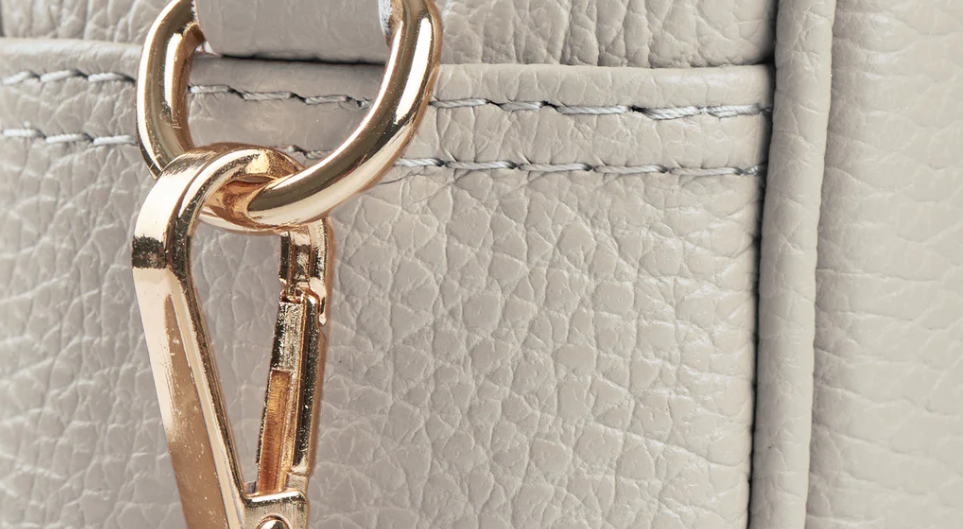
The factory manager then checked the hardware and closures. The zipper opened and closed. The magnetic snap clicked shut. Everything seemed fine at first.
But he shook his head. “Hardware problems are tricky,” he said. “They work now, but they may fail later.”
He explained it with a simple example: hardware is like the door lock on a house. If the lock is weak, the door may close today but break tomorrow. In custom bag manufacturing, if the zipper, snap, or metal parts don’t match the spec, the sample bag may pass today but fail after real use.
Defect #4 — Shape Collapse and Structure Problems
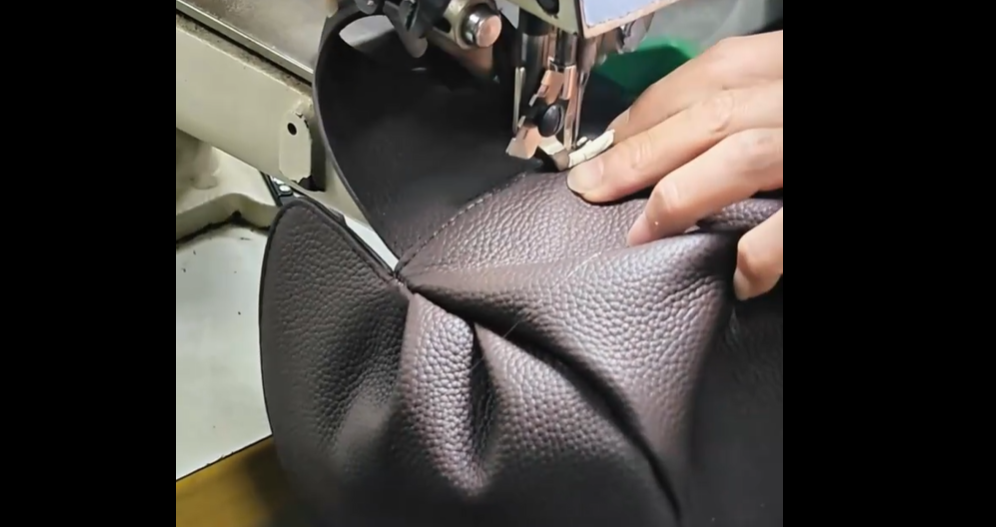
The factory manager then checked the bag shape. The leather crossbody bag sample looked nice on the table. But when he put some weight inside and lifted it by the strap, the bottom started to sag a little.
He explained it simply. “A bag is like a small tent,” he said. “If the inside support is weak, the tent will fall down.”
In custom bag manufacturing, this usually happens when the interlining or padding inside the bag is not strong enough or doesn’t bond well with the leather. The bag may look perfect at first, but after some real use, the shape slowly collapses. That’s why factories need to test the structure before approving the final sample bag.
The Hidden Cost of a Rejected Sample (And How to Recover It)
Cara closed her notebook and summarized the situation for the client. A rejected sample bag is never just about one prototype. It also means time lost, extra shipping, and pressure on the schedule. In custom bag manufacturing, every extra sampling round can delay the whole project.
But she didn’t want the problem to repeat. So she spoke with the factory manager right away.
Together, they agreed on a clear plan. First, review which defect caused the rejection. Second, check the related materials, stitching, hardware, or structure again. Third, fix the root cause before making the next custom leather bag sample.
The manager nodded. “If we solve the main problem now,” he said, “the next sample will be much closer to the final product.”
Cara agreed. A rejected sample costs time, but a repeated mistake costs even more. The goal now was simple: learn from the problem, improve the process, and make the next leather crossbody bag sample right.
Conclusion
A rejected sample isn’t a failure — it’s a lesson. Every defect shows what the brief missed: unclear leather standards, stitching that unravels, hardware that fails, or a bag that loses its shape. The factory built what it thought you wanted, not what you specified.
The fix is simple: use a rejection checklist before the sample ships. Provide clear materials, measurements, and visual references. Round two isn’t about luck — it’s about building the right result on purpose.
The real cost isn’t the reshipping fee; it’s the weeks lost while competitors are already selling. Know why it failed, brief smarter, and make sure the next custom leather crossbody bag sample gets it right.
We’d love to show you our latest designs in person. Join us at the Sunteam Tokyo Exhibition this April to see our new custom bag collections and discover how our factory turns design visions into high-quality products.