
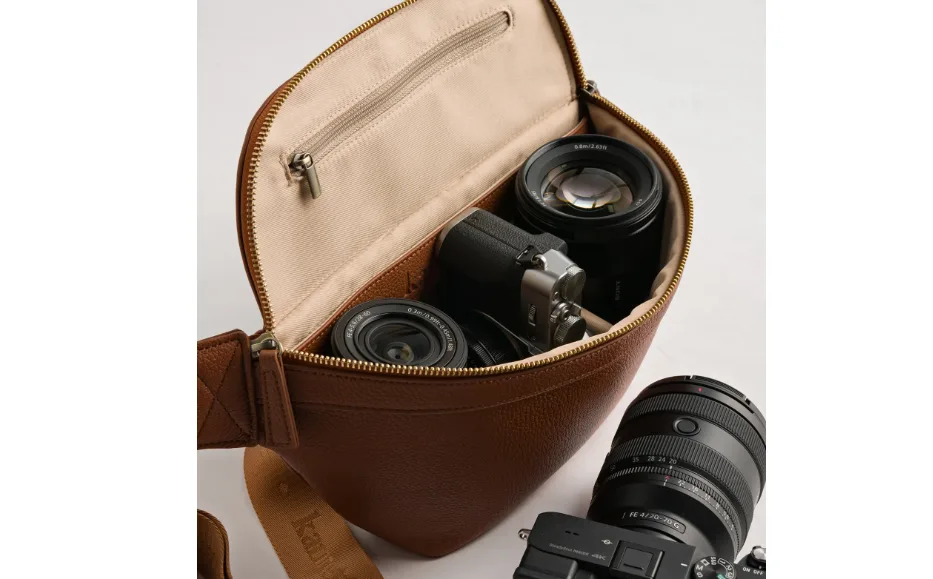
You’ve seen it on a street photographer’s shoulder. You’ve spotted it on a traveler cutting through a busy market. Maybe you’ve noticed it on a content creator grabbing a quick shot — that compact, structured bag that looks stylish and purposeful at the same time.
So, what is a camera crossbody bag? And is it the right fit for how you shoot and move?
Not every camera bag works the same way. The crossbody style has its own design logic, clear trade-offs, and a specific type of user it suits best. This guide covers it all — from its origins and key features to materials, comparisons with other bag styles, and how to choose the one that fits your life.
What Is a Camera Crossbody Bag?
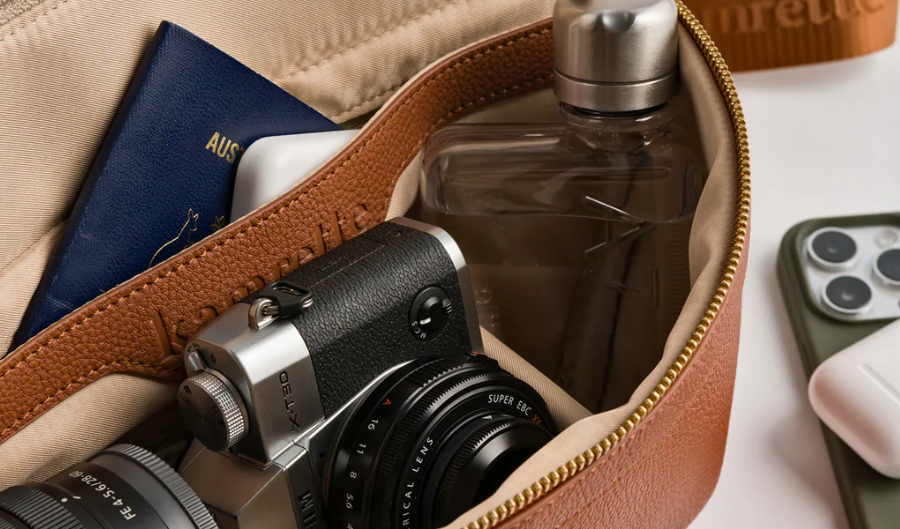
A camera crossbody bag is what its name says — but there’s far more engineering packed into it than most people expect.
At its core, it’s a single-strap bag worn at a diagonal across the body. The strap runs from one shoulder down to the opposite hip. But what sets it apart from a regular crossbody bag isn’t the strap — it’s everything on the inside.
The structure is built around camera geometry. The rectangular or square body (think dimensions like 12.25″ × 5.4″ × 8.5″) isn’t a random choice. It’s sized to hold a mirrorless or DSLR body plus one to two lenses. You get padded walls, rigid internal framing, and adjustable dividers that stop gear from shifting while you move. A standard fashion crossbody has none of that — it’s soft, flexible, and built for wallets and lip balm, not a 24-70mm f/2.8.
Where It Came From
The design grew out of camera sling and holster bags — gear built for street photographers and travelers who needed both hands free. Those first versions focused on pure function: weather-resistant exteriors, rigid frames, and solid protection for compact camera kits.
Two things shifted that over time:
-
The vlogging and action cam boom pushed demand for lighter, easier-to-reach carry options
-
Hybrid users — people mixing photography gear with daily essentials like cables and power packs — needed bags that handled both
The result is the modern camera crossbody supplier: structured enough to protect a mirrorless body and two lenses, yet easy enough to wear through a city without looking like you’re heading to a press event.
Key Design Features That Define a Camera Crossbody Bag
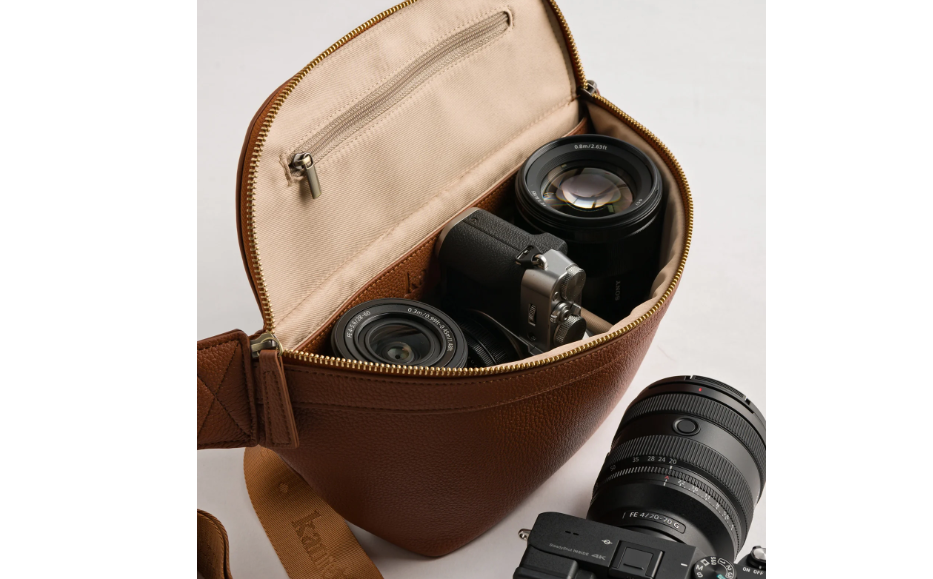
Strip away the branding and price tags from any camera crossbody bag. You’ll find the same core design decisions repeated across almost every model. None of these are random — each feature solves a real problem that regular bags don’t address.
The Body: Sized Around Your Gear, Not Around Fashion
Camera crossbody bags stick to a tight size range that has become a de facto industry standard. Most fall between 7.5–9.25″ wide, 5–6.5″ tall, and 2–3.75″ deep. That’s no coincidence. It’s the footprint that fits a compact mirrorless body plus a lens or two — without extra bulk.
A few real-world examples show how consistent this is:
– Portland Leather Small: 7.5W × 5H × 2D” / 10.8 oz
– Portland Leather Large: 9.25W × 6H × 2.5D” / 13.7 oz
– Shinola: 8.75W × 6.5H × 2.75D” / 1.17 lbs
– Wild Fable: 8.25W × 5.5H × 3.75D”
– Vera Bradley: 6.75W × 4.75H × 3D” / 0.19 lb
The lighter, smaller options work well for casual shooters carrying a compact camera and a few everyday items. The bigger, heavier builds suit anyone who needs solid gear capacity — without jumping to a full backpack.
The Strap: Built for All-Day Carry
A good strap needs to adjust far enough to fit different body types and outfit layers. Most camera crossbody straps run 41.5–61.5″ in length and 0.65–0.75″ in width. That width spreads the load across your shoulder. That length range lets you place the bag right where you want it.
-
Portland Small strap: 41.5–51.5″ length, 0.65″ wide
-
Portland Large strap: 50.5–61.5″ length, 0.75″ wide
-
Wild Fable: max 50″
-
Shinola: drop adjusts from 15.5–22″
That range matters in real use. A shorter drop positions the bag near your chest for quick access. A longer drop shifts it to your hip for a looser, more casual carry.
Interior Protection: Where Camera Bags Pull Ahead of Regular Crossbodies
The interior is what turns a crossbody bag into a camera bag. Padded dividers split the space into separate zones for your camera body, lenses, and accessories. Each zone keeps your gear from knocking into each other. The Portland Small, for example, includes a dedicated pocket measuring 3.25H × 7W” — enough for cards, cables, or a phone, kept separate from your glass.
Need more room? Sling-style hybrids like the Peak Design Everyday Sling scale from 3L to 10L in interior volume. Internal dimensions can reach up to 13.78 × 9.06 × 12.5″, depending on how you configure it.
Shell Materials and Closure Systems
Outer materials fall into two main categories:
-
Leather (Portland Leather): handmade, durable, develops patina over time — built to last
-
Recycled polyester/woven fabric (Wild Fable): lightweight, easy to spot-clean, budget-friendly
-
Nylon/canvas hybrids (Peak Design): weather-resistant, technical-grade construction for tougher conditions
Closures follow a clear pattern. Most bags lead with a zipper-primary system, often paired with a fold-over flap for extra security. The Wild Fable layers a main zip with an interior zip pocket and a front exterior pocket. You get organized access to your gear without digging through one big open compartment.
Some designs go further with camera safety straps — like the Kindly’s dual-strap system. These straps anchor the camera body inside the bag. It’s a small detail, but it makes a real difference for anyone shooting fast and repacking on the go.
Camera Crossbody Bag vs. Other Camera Bag Types
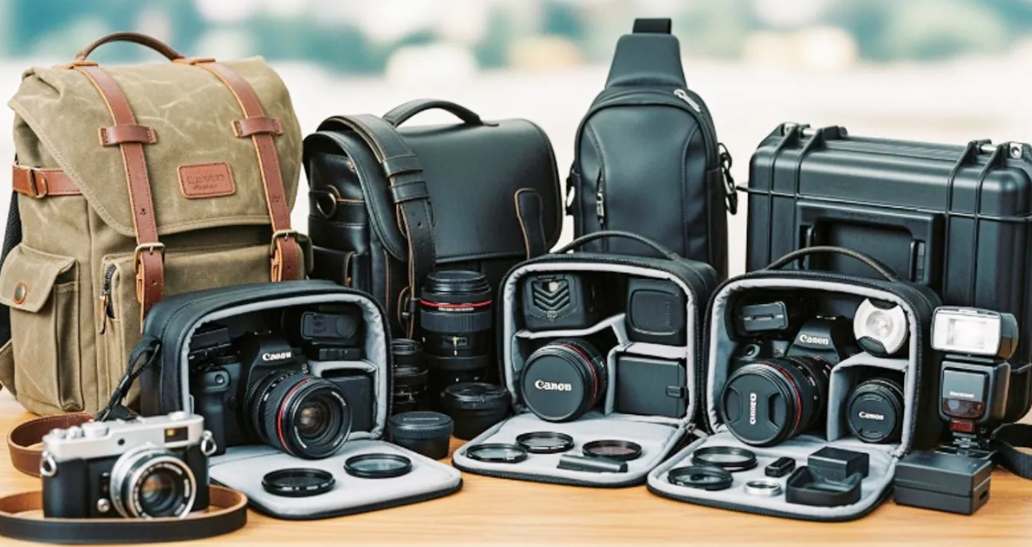
The bag type you choose changes how you shoot — not just how you carry.
Camera crossbody bags, backpacks, and slings each solve the same core problem in different ways. You need to protect your gear, grab it fast, and stay comfortable. Here’s how the three stack up.
Capacity and Gear Fit
Each bag style has a real limit on what it can hold:
|
Bag Type |
Typical Capacity |
Gear Example |
|---|---|---|
|
Crossbody/Shoulder |
10–16L |
DSLR + 2–3 lenses |
|
Backpack |
16–32L |
DSLR + battery grip + 3 lenses + flashgun |
|
Sling |
5.5–10L |
Mirrorless + 1–2 lenses |
|
Camera Insert/Cube |
~10L |
Small-medium kit (modular use) |
A crossbody bag handles a medium kit well. Go past two or three lenses, and it gets cramped fast. A backpack like the Shimoda Urban Explore 20L carries much more. It fits a DSLR with battery grip, three lenses, a flashgun, and an infrared trigger — all without feeling overloaded.
Access Speed
This is where crossbody bags earn their reputation on the street. Rotate the bag to your front and you’re in. No removing it. No setting it down. Backpacks are the slowest of the three. Most need full removal, or at least unslinging, before you can reach your gear. Slings beat both. The bag sits close to your body and swings forward in one move. That makes them great for a one-camera, one-lens setup.
Weight and Comfort
Backpacks spread load across both shoulders. That makes them the top pick for long days or heavy kits. Padded back panels with airmesh cut pressure points during hours of wear. Crossbody and sling bags put all the weight on one shoulder. For a medium load, that works fine. Add a DSLR and multiple lenses, and shoulder fatigue sets in. Strap padding and curved back panels reduce the strain — but they don’t remove it completely.
Which One Fits Your Shooting Style
-
Street photography and daily carry → crossbody bag for quick access and a low profile; go with a sling for a single-body setup
-
Multi-day travel → backpack (20–32L), or a modular insert like the Tenba BYOB 10 that fits inside luggage and works on its own
-
Hiking and adventure → backpack only; slings and crossbody bags aren’t built for long carries with heavy loads
-
Urban and everyday use → crossbody bags pull double duty; they carry your camera gear and your daily essentials without looking out of place
The crossbody format hits a clear sweet spot: medium kit, fast access, urban environment. Outside that range, a backpack or sling tends to serve you better.
Who Should Use a Camera Crossbody Bag? (Primary Use Cases)
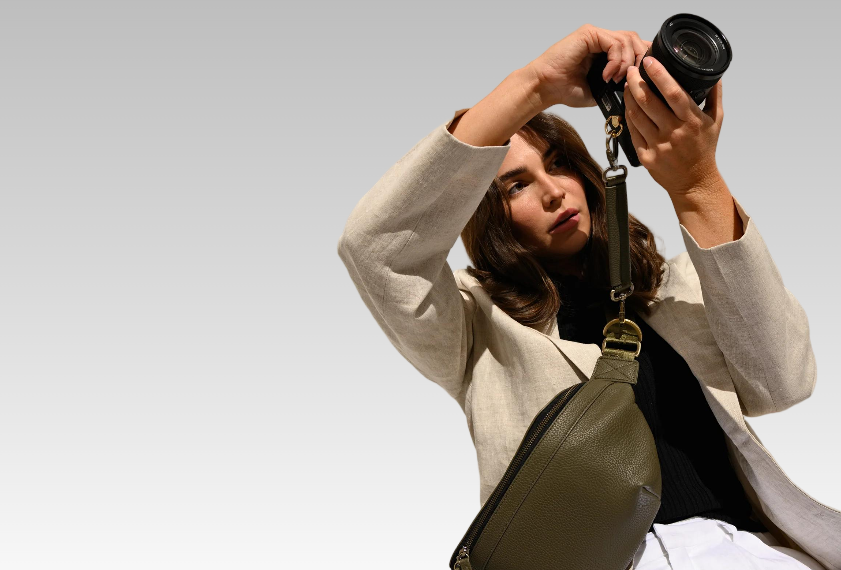
The camera crossbody bag market has clear numbers behind it. Organizers make up 35.4% of users. Travelers account for another 25.91%. That’s no coincidence — the data points straight to who this bag was built for.
Everyday Photographers and Hobbyists
Professional photographers want solid protection, multi-compartment organization, and gear that holds up through heavy use and travel. But pros are the smaller slice of this market.
The bigger driver? Hobbyists and non-professional shooters.
The Professional Photographers of America counted over 34,000 members in 2022 — a 12% increase. But the broader hobbyist segment dwarfs that figure by a wide margin. Over 1.4 trillion photos were taken across the world in 2023. Most people carrying a camera are doing it for fun, content creation, or personal documentation — not paid work.
For that group, a camera crossbody bag hits the sweet spot:
– Real gear protection
– None of the bulk of a backpack
– Easy to carry all day
Urban Photographers, Bloggers, and Content Creators
Urban shooters and bloggers are a strong match. They move fast. They switch between shooting and walking non-stop. They need gear that keeps up — and doesn’t look out of place on a city street.
The crossbody format covers all of that:
– Quick-access design so you’re never fumbling
– A manageable size that doesn’t weigh you down
– Enough style to pass as an everyday bag
Younger users aged 18–44 are driving adoption here. This group uses the bag as both a functional tool and a fashion statement. Social media “what’s in my bag” content plays a big role in shaping what they buy. Compact exteriors with maximized internal space — a format sometimes called Compact-Max design — are pulling strong interest from Gen Z buyers in particular.
Travelers
Travelers make up close to a quarter of all camera crossbody bag users. This segment is growing fast. Asia-Pacific markets — China, India, and Japan — are leading that growth, as more middle-class buyers invest in travel photography gear.
What travelers care about most:
– Weather resistance that holds up in varied conditions
– Enough room for personal items alongside camera gear
– A low-key profile that doesn’t signal “expensive gear inside”
You shoot on the move. You carry a compact-to-medium kit. You spend your time in cities or on the road. This bag was built around that exact setup.
Camera Crossbody Bag Materials & Build Quality: What to Look For
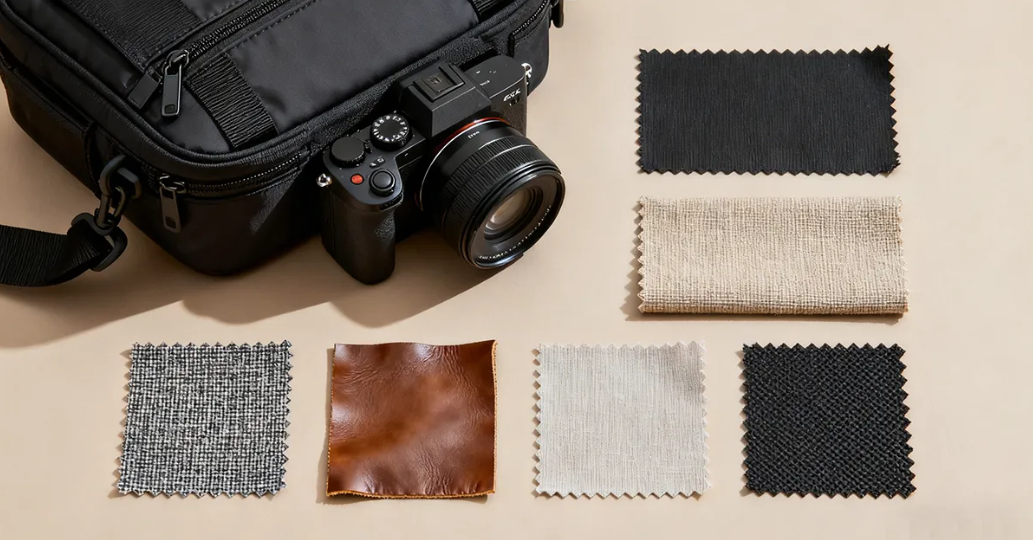
The material your camera crossbody bag is made from determines everything — how long it lasts, how well it protects your gear, and whether it holds up in rough conditions. The data across four common materials tells a clear story.
Shell Material: Four Options, Four Very Different Trade-offs
Genuine leather leads the pack for longevity. Independent testing under the ASTM D3884 standard shows abrasion resistance beyond 5,000 cycles. That means years of real-world use before you see meaningful wear. Plan on 5–10 years of heavy use. The trade-off is price: genuine leather runs $50–150 per square meter at 2025 market pricing. It’s the most expensive option on this list.
Nylon (420D and above) is the performance pick. Tear resistance sits at 200–400N — about 80% stronger than canvas. It’s also the lightest material here, weighing just 200–400g per square meter. That’s close to half the weight of leather. Water pressure resistance reaches 1,000mm H2O, which gives it an effective IPX6 rating — three times better than untreated canvas. Budget: $10–30/m².
Canvas (1000D) falls in the middle on most metrics. Weight runs 400–600g/m², tensile strength sits at 150–300N, and you get a lifespan of 2–5 years with outdoor exposure. Untreated canvas absorbs 20–30% water by volume. A DWR or wax treatment pushes it up to IPX4, but it still falls short of nylon by a wide margin. Price: $8–25/m².
Vegan leather (PU) looks close to genuine leather and costs less ($15–40/m²). But the durability gap is real. After 2,000 wear cycles, PU coatings start peeling. Lifespan drops to 1–3 years under regular use — about 40% shorter than genuine leather. Heat speeds up the breakdown even more.
Zippers and Hardware: The Details That Determine Longevity
Most people skip past zipper specs. They shouldn’t.
YKK zippers set the standard. They hold up through more than 5,000 open-close cycles without failure (ASTM D2061), with pull strength above 50kg. Non-YKK alternatives fail 30% more often and can cut your bag’s total lifespan by 20–50%.
Metal buckles matter just as much. Look for zinc alloy or aluminum construction with a corrosion resistance rating above 8 on the ASTM B117 salt-spray test (96 hours, no rust). Buckle thickness should be at least 2mm, with a rated pull strength over 100kg. Substandard rings deform at a 40% higher rate. Buckle failures cause 60% of all hardware problems on cheaper bags.
Here’s a quick look at what hardware quality means for your bag’s lifespan:
|
Hardware Type |
Spec Standard |
Lifespan Added |
Failure Rate Reduction |
|---|---|---|---|
|
YKK zipper |
>5,000 cycles |
+3–5 years |
70% |
|
Metal buckle |
>100kg pull |
+2–4 years |
50% |
|
Standard plastic |
<2,000 cycles |
−1–2 years |
+40% failure rate |
Interior Padding: Where Camera Protection Really Happens
Padding thickness has a direct, measurable impact on how well your gear survives a drop.
-
5mm padding absorbs up to 10G of impact force (MIL-STD-810G, 1-meter drop). It covers basic protection, but lens shift risk inside the bag sits at around 15%.
-
10mm padding handles 15–20G across a 2-meter drop, with IP54-level dust and moisture resistance. That’s a 50% improvement over the 5mm baseline.
-
15–20mm padding reaches professional-grade territory. It absorbs more than 25G and cuts equipment damage rates by 70% compared to 5mm builds.
Foam density matters too. Closed-cell foam rated 40–60 kg/m³ gives you the best balance of shock absorption and weight. Anything below 30 kg/m³ compresses too fast and loses its protective function well before it should.
Pros and Cons of Camera Crossbody Bags (Honest Assessment)
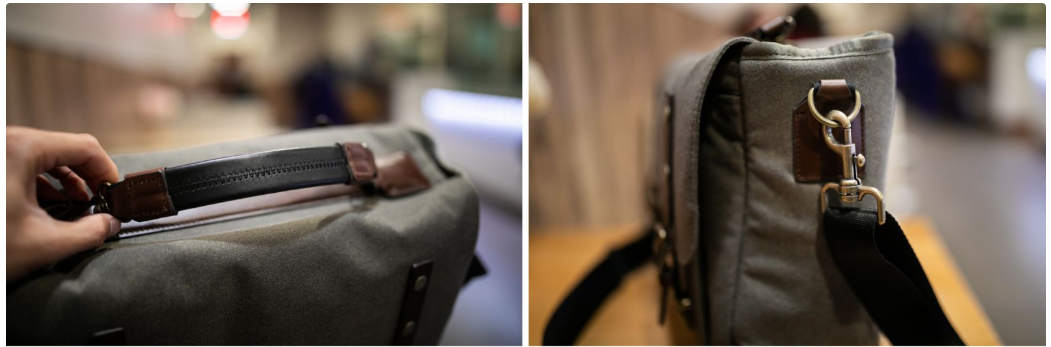
Camera crossbody bags do a lot of things well — but they’re not the right tool for every situation. Here’s a straight look at what you get.
What Works in Your Favor
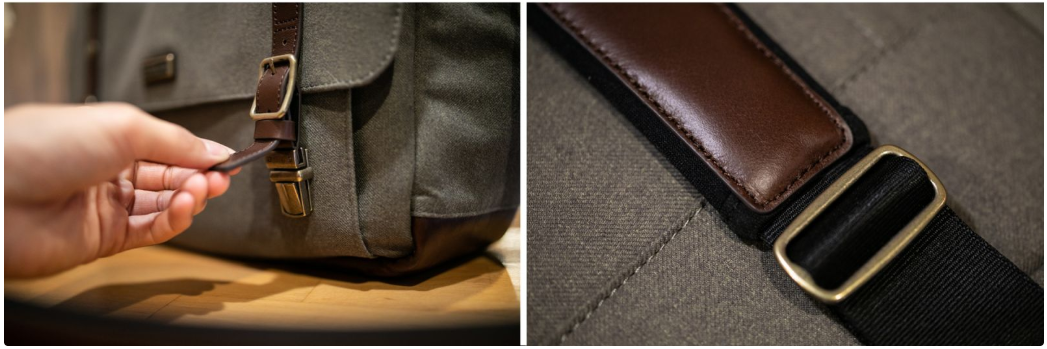
Quick access is the standout advantage. Swing the bag from your back to your front and you’re shooting. No removing it. No setting it down. No fumbling. Street photographers and urban shooters — that speed is everything.
The single-strap format gives you real freedom in tight, crowded spaces. A backpack can’t match that. You can even swap lenses while the bag stays on your shoulder.
Size works in your favor too. Crossbody bags are lighter and less bulky than backpacks. They blend into city environments without signaling “expensive gear inside.”
A padded, well-fitted strap keeps comfort solid for short to medium sessions. Think under five hours of continuous wear. Past that, the single strap starts to work against you.
Where It Falls Short
The single strap is also the biggest liability. Most wearers report noticeable shoulder discomfort after five to seven hours. Add a heavy DSLR kit, and that timeline shortens fast.
Capacity has a hard ceiling. Smaller models can’t handle professional telephoto lenses like a 150–600mm. Even larger 9-liter variants max out at a camera body, a couple of lenses, and a tablet. There’s no room for a full multi-lens professional setup.
Build quality varies a lot across different bags. Flimsy dividers let lenses shift during movement. Single-zipper designs make it awkward to reach items at the bottom. Generic non-camera crossbody bags skip the specialized pockets that keep memory cards, filters, and batteries organized. That matters more than most buyers expect.
Quick Reference: Is It Right for You?
Good fit:
– Street and urban photographers who need fast access
– Short-to-medium shooting sessions (under 5 hours)
– Single camera body with one to two lenses
– Photographers who value a low-profile look
Not the right call:
– All-day shoots running six hours or more
– Heavy professional gear setups or multiple bodies
– Anyone with existing shoulder or back issues
– Travel requiring a tripod and full accessory kit
Bottom line: a camera crossbody bag is excellent within its range — and clearly limited outside of it. Match the bag to your actual shooting habits, not an idealized version of them.
How to Choose the Right Camera Crossbody Bag
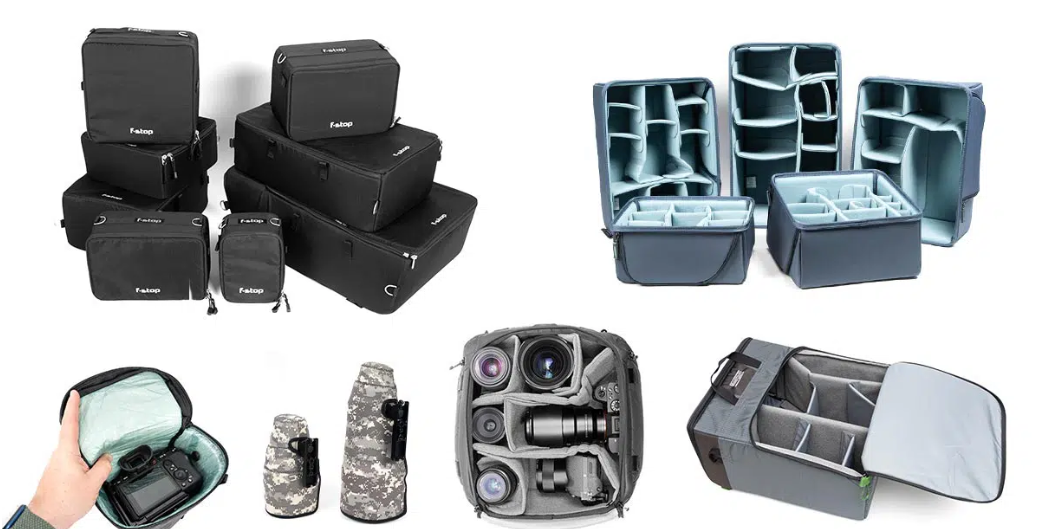
Three decisions drive most of the choice: what gear you’re carrying, how much you want to spend, and how long you’ll wear it. Get those three right, and everything else falls into place.
Match the Size to Your Actual Kit
Interior dimensions are the most important spec most buyers skip. Here’s the breakdown by kit size:
-
Mirrorless + 1–2 lenses: Look for 7.5–9″ L × 4.5–6″ W × 6–7″ H. The Altura Photo Great Explorer (7.5″ × 6″ × 6.25″ interior) is a solid reference point for this category.
-
DSLR + 2–3 lenses: You need at least 10–14″ L × 5–6.5″ W × 8–10″ H. Go smaller and you’re forcing gear to fit.
-
Travel or hybrid use with a laptop: Dimensions jump to 14–16″ L × 9–10″ W × 10–15″ H. The Tenba DNA 16 PRO (14.75″ × 11.5″ × 6″) covers this range well. Laptop integration adds 2–3″ of depth too — factor that in before you buy.
Set a Budget That Matches Your Priorities
Price tiers in this market are well defined:
|
Budget |
What You Get |
|---|---|
|
$16–$55 |
Basic water-repellent coating, standard padding, lightweight builds (0.58–1.87 lbs). Brands like Ruggard and CADeN sit here. |
|
$120–$160 |
EVA or memory foam padding, weather-resistant materials, recycled construction. Peak Design Everyday Sling V2, Moment Rugged, WANDRD Rogue 9L. |
|
$200+ |
TPU-coated waterproof shells, 1680D ballistic nylon, YKK zippers throughout. Tenba DNA 16 PRO leads this tier. |
Shooting a few times a week for fun? The mid-range tier covers most needs. Spend $200+ for wet-condition shooting or professional gear loads.
Factor in Bag Weight Before You Commit
A heavy bag on a single strap adds up fast — more so on longer days. Lighter options like the Moment Rugged (1 lb 12 oz) or the Fosoto (0.58 lbs) keep fatigue low for sessions under five hours. Move up to standard builds like the Manfrotto Advanced M III (2.4 lbs) or the Tenba DNA 16 PRO (2.9 lbs), and you’re trading mobility for capacity. Decide which matters more before you buy.
Conclusion
A camera crossbody bag isn’t just a carrying solution — it’s the difference between missing a shot and capturing it.
This guide covered design features, materials, and real trade-offs. So now the answer to what is a custom camera crossbody bag is clear: it sits at the sweet spot between quick access, daily wearability, and solid gear protection. You might be a weekend street photographer or a traveler who never slows down. Either way, this bag style is built around how you shoot — not how you wish you could.
The right bag won’t make you a better photographer. But it keeps your camera ready before the moment passes.
Ready to find yours? Browse our selection of custom camera crossbody bags. Filter by size, material, and compatibility — so your next bag fits the way you work.