
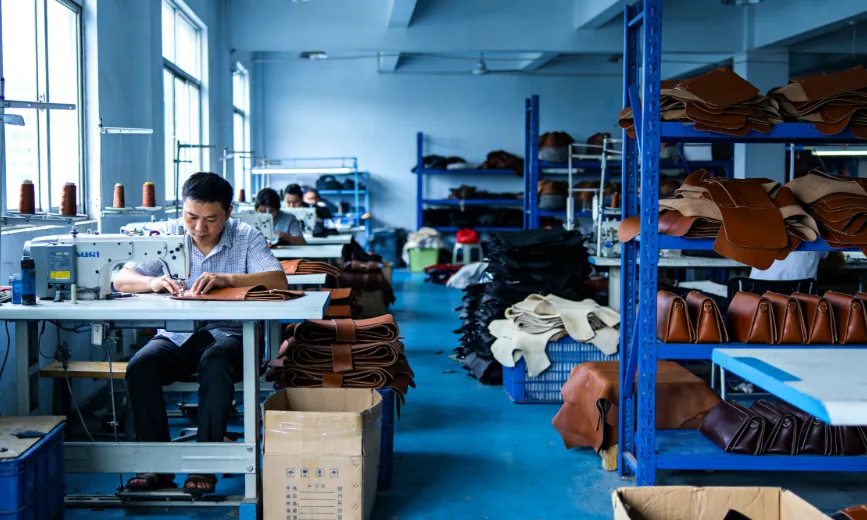
The global leather goods industry is changing — not through disruption, but through deliberate strategic choice. Brand after brand, from fast-growing DTC labels to established European houses, is deepening its ties with Asian leather bag manufacturers. The reasons go far beyond cheaper labor.
There’s a bigger story here. It involves advanced production infrastructure, strong compliance capabilities, and a geographic advantage that also works as a market entry strategy.
Evaluating your supply chain? Or just trying to understand why more brands are choosing Asian leather bag manufacturers? The sections below give you a clearer, more honest picture of what’s driving this shift.
Why More Brands Work With Asian Leather Bag Manufacturers
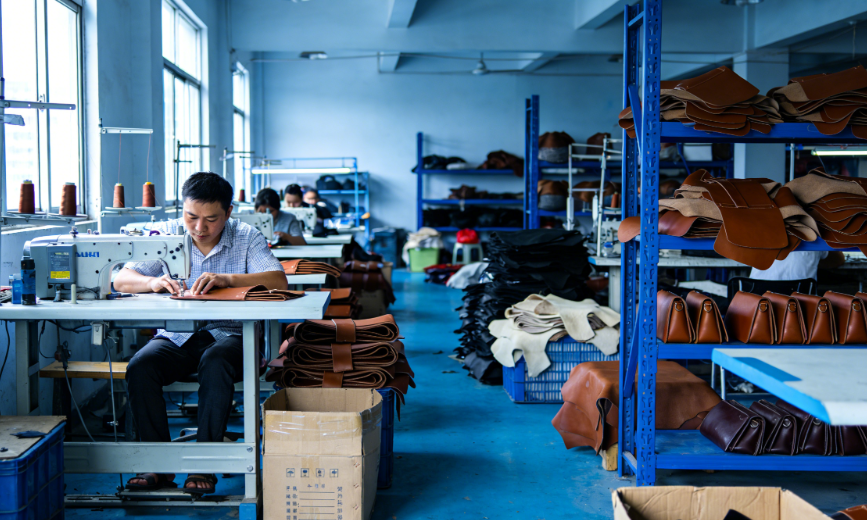
The numbers make a strong case on their own.
Asia-Pacific’s handbag market stands at $13.12 billion today. It’s on track to hit $24.49 billion by 2032 — an 8.11% CAGR that most other regions can’t touch. This isn’t slow, steady growth. It’s a real shift in where brands source, produce, and sell.
China is at the center of it all. Factories there produce 3.3 billion units per year — that’s 70% of Asia-Pacific’s total output. Export value sits at $7.7 billion. The scale is hard to beat. And that’s just one country in the region.
Other markets are rising fast. India’s export market share jumped by +12 percentage points between 2013 and 2024. Vietnam and Cambodia pull in brands that need lower costs without giving up production capacity. Each country brings something different to the table.
So why are brands across price points and product categories locking in Asian leather bag manufacturers as long-term partners? This article breaks it down.
The Cost Structure Advantage That Moves Margins
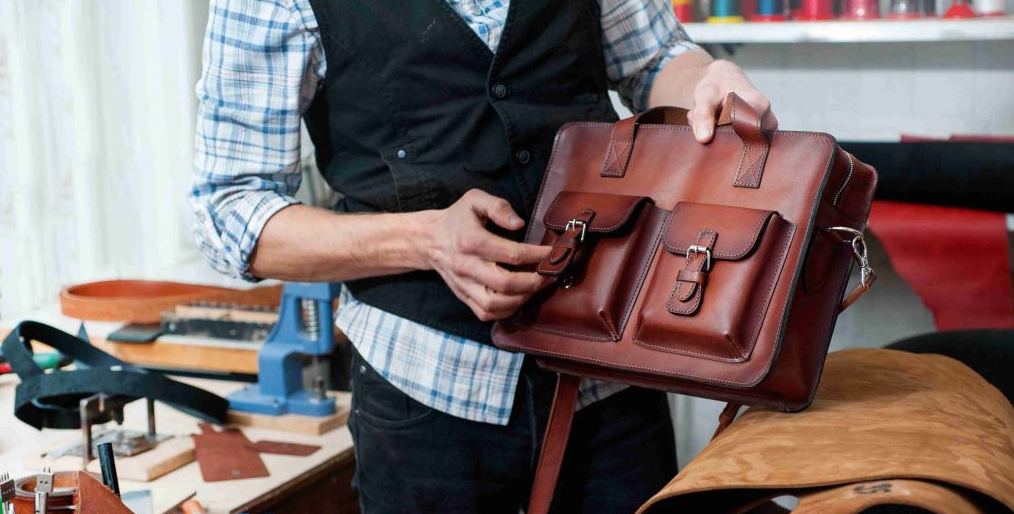
Margin pressure is constant. Materials cost more. Freight rates shift. Customers push back on price increases. So where you manufacture isn’t just a logistics call — it’s a margin call.
Asian leather bag supplier change your cost structure in ways that show up across your entire P&L. Here’s how the numbers work.
Three Levers That Move Your Margin
Gross margin, operating margin, and net margin each respond to different inputs. To move all three in the right direction, you need control over three things: pricing, production costs, and volume. Asian bag manufacturing partnerships hit all three at once.
-
Direct costs — materials, cutting, stitching, hardware, finishing — come in lower without giving up quality
-
Indirect costs — factory overhead, utilities, shared services — spread across much higher production volumes
-
Per-unit costs drop as order quantities grow
That last point matters more than most brands think. Here’s a clear example: ordering 1,000 units at $50 each costs $50,000. Scale to 2,000 units, and the per-unit cost can fall to $37.50. That’s a 25% reduction that goes straight into margin. Your selling price stays the same. The margin just gets better.
Fixed Costs, Variable Costs, and Why the Mix Matters
Asian bag manufacturers — especially those running at scale in China, Vietnam, and India — carry heavy fixed-cost infrastructure. Large facilities. Specialized equipment. Trained workforces. For your brand, that’s an asset, not their problem.
Tap into that existing fixed-cost base, and your variable costs per unit shrink. You’re not paying to build capacity. You’re paying to use capacity that already exists.
|
Cost Structure |
Impact on Your Brand |
|---|---|
|
High fixed costs absorbed by manufacturer |
Lower per-unit pricing for buyers |
|
Economies of scale across multiple clients |
Better input pricing passed downstream |
|
Optimized production scheduling |
Shorter lead times, fewer expensive delays |
What This Looks Like in Real Margin Terms
Industry benchmarks show average gross profit margins at 36.56% and net margins at 8.54% across manufacturing sectors. For leather goods brands, the gap between those two numbers is where overhead, logistics, and sourcing waste eat into profit.
Brands working with established Asian leather bag manufacturers close that gap. Lower per-unit costs and tighter production schedules have pushed net margins to 12% and beyond — with no increase in retail prices. The math works because the cost base is built to support it.
The cost structure advantage isn’t a theory. It shows up in your numbers every season.
Production Scale and Technical Expertise That European Factories Can’t Match
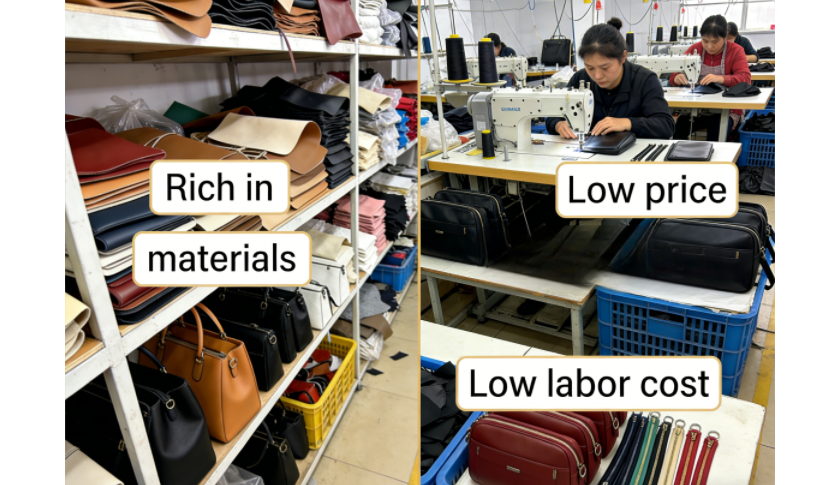
China alone makes up one-third of global manufacturing output. That single fact changes every conversation about where to source leather bags.
In 2025, China’s manufacturing GDP reached RMB 34.67 trillion (approximately US$4.85 trillion) — a 6.1% year-on-year increase. It has held the top spot as the world’s largest manufacturer for 16 consecutive years. No European factory network, no matter how skilled, comes close to operating at that scale.
Scale Isn’t Just About Volume — It’s About What Scale Unlocks
European bag factories can produce excellent leather goods. That’s not in question. What they can’t replicate is the deep, connected supply chain that surrounds Asian manufacturers — especially those based in China.
Working with an Asian leather bag maker means more than buying production capacity. You get access to:
-
A dense domestic supplier network — hardware, linings, specialty leathers, threads, and finishing materials, all sourced nearby and turned around fast
-
Advanced port infrastructure — shorter export lead times and more reliable logistics windows
-
A well-trained technical workforce backed by strong higher education programs in engineering and manufacturing
Brands that need complex, multi-component bags — structured totes, convertible backpacks, hardware-heavy designs — keep coming back to Asian factories. The reason is simple: they’re built to execute at speed and scale.
The Ecosystem Competitors Can’t Copy
The “China+1” sourcing strategy — where brands add Vietnam or Cambodia as a secondary option — actually makes this point stronger. Companies reshaping their supply chains aren’t walking away from Asian manufacturing. They’re building around it. China’s integrated ecosystem is so hard to copy that it stays the anchor.
China ranked 1st in the Asia Manufacturing Index 2025 across economy, infrastructure, and innovation categories. That’s not just a national win — it pays off for every brand placing orders with Chinese leather bag manufacturers.
Government policy backs this up too. Subsidies, production incentives, and updated regulations all push manufacturing to stay competitive and keep improving. Foreign brands with strong factory ties in China have committed to medium-to-long-term partnerships as a result. The opportunity keeps growing — it’s not standing still.
What This Means for Your Production
For brands comparing Asian leather bag manufacturers, technical expertise isn’t a secondary perk. It’s often what tips the decision. The ability to handle difficult constructions, hit tight tolerances, and grow volume without losing finish quality — that combination is built into the system itself.
European craftsmanship has its place. But production scale, supply chain depth, and technical infrastructure at this level? That’s a completely different league.
How Major Luxury Brands Are Voting With Their Supply Chains
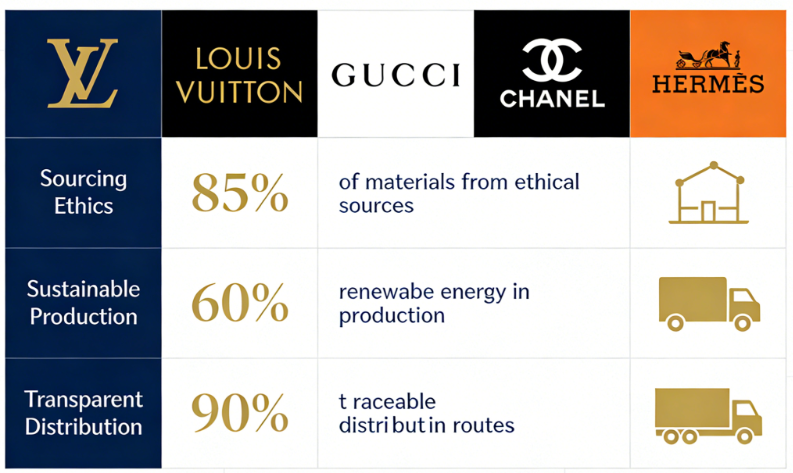
Talk is cheap. Supply chain decisions are not.
Luxury powerhouses are restructuring where they source and manufacture. That signals something real. Right now, brand after brand is moving in the same direction — deeper ties with Asian leather bag manufacturers.
This isn’t a quiet shift. It’s happening at scale, at the top levels of the market.
The Brands Setting the Direction
Kering — the group behind Gucci, Balenciaga, and Saint Laurent — has locked in long-term manufacturing commitments at the core of its operations. These aren’t seasonal sourcing calls. They’re structural decisions built to last.
Coach took a similar route. Through its Coachtopia sub-brand, the brand built a full product line around rescued leather scraps. Asian supply chain partners handled the bulk material recovery — they had the infrastructure to do it at volume. You can’t pull that off without the right manufacturing network behind you.
Adidas and H&M have both committed to EU Sustainable and Circular Textiles standards. They’re carrying out those commitments through supply chains that run through Asia. The compliance capability is there. The traceability infrastructure is being built there now.
Why This Matters for Brands Evaluating Asian Manufacturers
These companies aren’t just chasing lower costs. They’re chasing capability — the ability to meet tighter material standards, hit emissions targets, and keep supply chain transparency across every production tier.
Asian custom leather bags — especially those running at scale in China and Vietnam — are building this capability now. Look at what’s already in place:
-
Blockchain traceability for end-to-end material tracking
-
Digital product passports to meet compliance documentation needs
-
AI-driven sampling to speed up development and cut waste
This technical infrastructure lines up with where global compliance requirements are heading. It’s not a future promise — it’s already in motion.
Luxury brands have done the evaluation. Their supply chain choices show the answer.
Asia-Pacific Market Access as a Strategic Manufacturing Reason (Beyond Cost)
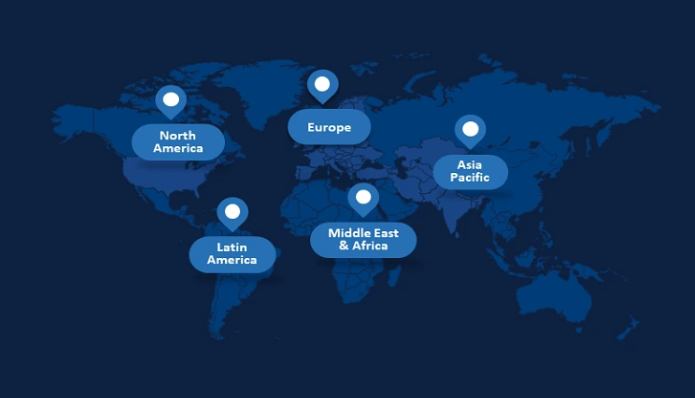
Bag Manufacturing in Asia does more than cut costs. It puts your brand inside the world’s fastest-growing consumer market.
That difference is real. A bag factory in Vietnam or China is not just a production site. It’s a foothold in the same region where the leather goods market is set to reach $24.49 billion by 2032 — that’s close to double its current size. Brands that manufacture there aren’t shipping into that growth from the outside. They’re already part of it.
The Infrastructure Behind Regional Access
The Asia Manufacturing Index 2026 scored 11 economies on cost, scale, capacity, and innovation. China held the top spot for the third year in a row. Malaysia climbed to #2, passing Vietnam on competitiveness. Vietnam held #3 on strong core metrics. Singapore, Thailand, India, and Indonesia round out a region building deep, multi-country production capacity.
This is not a single-country story. It’s a network. Brands that tap into it gain sourcing flexibility that no single-region strategy can match.
Smart Manufacturing Is Speeding Up Market Integration
APAC’s smart manufacturing market is growing fast. Projections range from USD 92.56 billion by 2031 to USD 321.1 billion by 2030, depending on the model. CAGRs sit between 7.96% and 15.4%. Government digital incentives alone could add +1.80% to regional manufacturing CAGR over the next two to four years. China, India, Singapore, and Malaysia are leading that push.
For leather bag brands, this matters in practical terms:
-
Factories using AI-driven scheduling reduce production delays
-
5G production networks allow faster data sharing across the floor
-
Cloud-connected quality control catches errors before they scale
These aren’t just efficiency gains. They make your manufacturing partner more reliable across high-volume seasons.
The result: Asia-Pacific bag manufacturing is no longer just about low costs. It’s about where your brand can grow fastest.
Conclusion
The brands winning today didn’t stumble into Asian manufacturing partnerships. They made a clear, strategic choice. Cost efficiency opened the door — but what keeps serious brands there is something bigger. It’s the combination of unmatched production scale, rising quality standards, and direct access to the world’s fastest-growing luxury consumer base.
That’s why more brands work with Asian leather bag manufacturers. It stopped being a cost-cutting move. It became a competitive advantage.
Evaluating your supply chain? The real question isn’t whether to explore Asian manufacturing. It’s how fast you can start the right conversations. Start by identifying two or three manufacturers that match your quality tier and volume needs. Then request samples before you commit to anything.
The brands that moved first built leverage. The ones still hesitating are watching their margins shrink.
Your supply chain is a strategy. Treat it like one.