
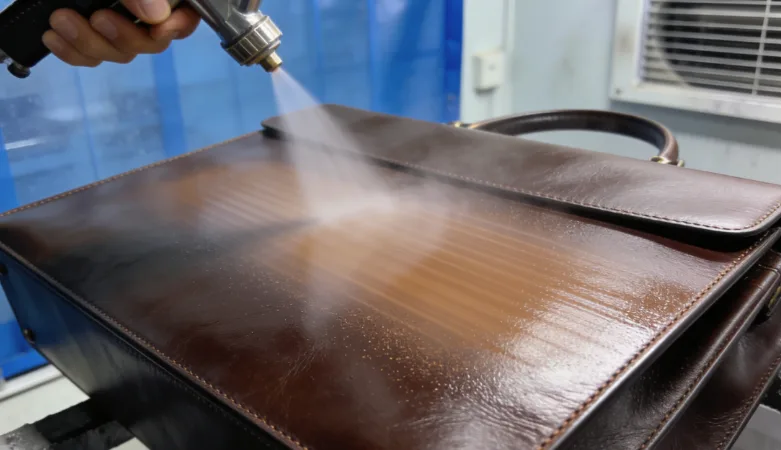
That mirror-like shine you see on designer handbags? It’s patent leather. This material turns ordinary hides into glossy statement pieces through a special coating process.
Whether you’re a bag manufacturer, a designer, or just curious, this guide shows you how patent leather is made China—from choosing the right base leather to applying multi-layer coatings. You’ll learn how to prevent cracking, select the best coating system for each bag style, and create durable, eye-catching pieces your customers will love.
What is Patent Leather: Definition and Core Characteristics
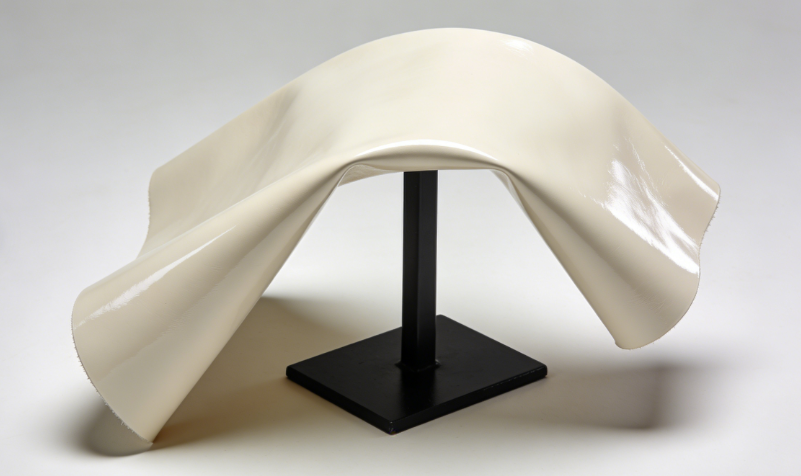
Patent leather is a coated leather material with a high-gloss finish. The finish sits on top of smooth grain leather. The coating creates that mirror-like surface you recognize right away.
The Structure Behind the Shine
The material has three key layers:
Base layer: Fine-grain or calfskin leather with minimal texture. Makers use these smooth hides to create an even base. This helps the coating stick properly.
Middle layers: Primer and colored coatings go on in several rounds. This builds up thickness and evenness. Each layer dries before the next one goes on.
Top layer: A clear or colored finish coat—usually polyurethane (PU) or acrylic resin. Heat treatment turns this final layer into that glass-like glossy surface. The surface shows almost no pores or natural grain patterns.
Modern Coating Technology
Most patent leather today skips traditional materials. The industry moved from linseed oil-based varnishes (popular in the 19th century) to synthetic polymers. Seth Boyden made the process commercial back then.
Current coating systems include:
-
Polyurethane (PU) coatings – give great flexibility for bags that bend and fold
-
Acrylic resin finishes – bring exceptional clarity and gloss that lasts
-
Combined plastic-lacquer systems for specific needs
These modern mixes cure faster than oil-based ones. They create more even mirror finishes. Plus, they flex better without cracking. This matters for handbags where materials bend at corners and handles all the time.
The coating layer makes patent leather almost non-breathable. Traditional full-grain leather lets some air and moisture pass through. Patent leather doesn’t.
Patent Leather Coating Materials: PU vs Acrylic Systems
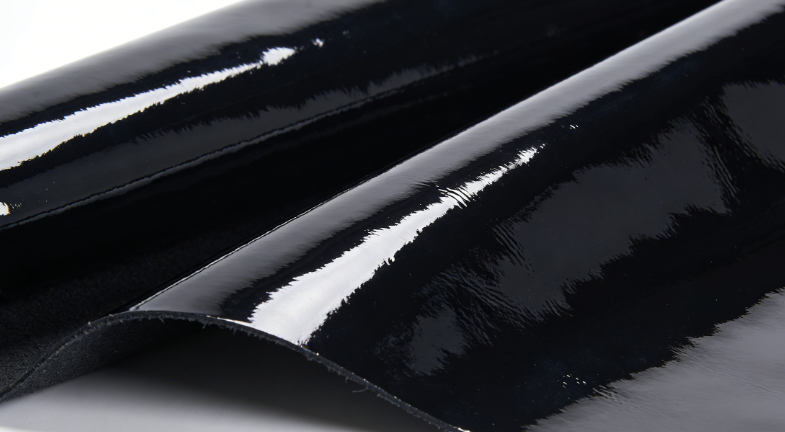
Modern patent leather bags are mainly made with PU (polyurethane), acrylic resin, or a mix of both. PU patent leather offers a mirror-like shine, high hardness, and excellent scratch and water resistance, making it perfect for structured, luxury handbags. Acrylic patent leather is softer and more flexible, with vibrant colors that won’t crack even after repeated bending, ideal for shoe uppers or thin leather. A PU-acrylic blend balances shine and flexibility, allowing manufacturers to adjust the mix for different bag styles, creating bags that are both durable and visually stunning. With these materials and multiple coating layers, patent leather bags look glossy and luxurious while remaining comfortable and long-lasting.
Three-Layer Coating Process: Step-by-Step Manufacturing

The industrial three-layer coating system comes from pipeline protection technology. Engineers adapted it for patent leather. 3LPE (three-layer polyethylene) coating protects steel pipes. The same idea works here—just scaled down for flexible leather instead of rigid tubes.
Each layer has a specific job:
Layer 1 (Primer/Base coat): Gets into the leather fibers. Holds all upper layers in place. Thickness is 100–250 μm. This layer controls how well everything sticks.
Layer 2 (Adhesive/Color coat): Connects primer to the final finish. Carries the color pigments. Builders put 150–300 μm here. You control color depth and even coverage at this step.
Layer 3 (Top finish coat): Gives you the mirror gloss. Protects against wear. Premium patent leather hits 1.8–3.0 mm total thickness with all layers combined.
Final thickness checks confirm quality. Use ultrasonic gauges or cut cross-sections for analysis. Total coating thickness should match spec ±10%. Gloss readings at 60° angle should beat 90 GU for premium patent leather grades.
Best Bag Types for Patent Leather
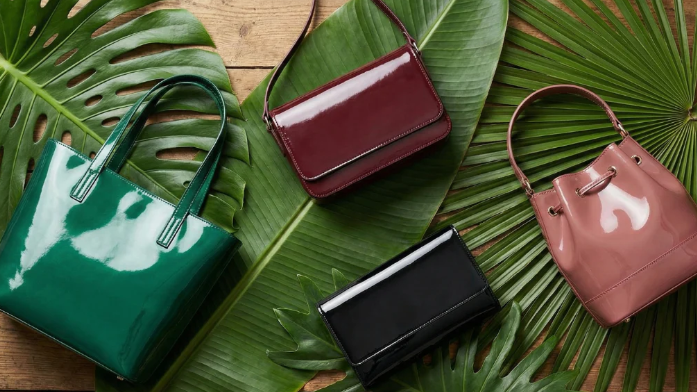
Patent leather has a stiff coating. This means you need specific bag styles. Soft, flexible designs break down fast. The coating cracks where the material bends often. Good makers pair this shiny material with structured designs. These keep surfaces smooth and free from stress.
Evening Bags and Clutches: Perfect Small Styles
Clutches work great for patent leather. These small bags keep flat panels without bending stress. Standard sizes run 18–26 cm wide × 10–15 cm tall × 3–6 cm deep. Hard-shell or semi-stiff build stops the bag from losing shape. The small area gives a mirror-like shine without wasting material.
Evening events pair well with patent clutches. The high shine looks good with formal clothes and steady lighting. You carry them for short times—2 to 4 hours usually. This limits bending wear. Storage space stays small by design. You can’t overload them. This protects seams and coating layers.
Structured Handbags: Daily Bags with Built-In Support
Top-handle bags China, satchels, and small totes work with the right build. These styles need clear shapes with inner frames. Stiff bases and sidewall supports spread the weight. They stop sagging that makes fold lines.
Best sizing for daily use: 22–30 cm width × 16–24 cm height × 8–12 cm base depth. This size range gives you useful storage with strong structure. Load these with light items—wallet, phone, makeup, keys. Skip designs made for laptops, files, or heavy shopping.
Box shapes work best with patent finishes. Straight edges and flat sides show clean light bounce. Trapezoid and rectangle forms keep coating tight and even. Stay away from barrel shapes or droopy styles. These need constant surface bending.
Mini Crossbody and Special Small Bags
Camera bags China, phone pouches Japan, and small crossbodies use patent leather’s stiff nature well. Stiff box build protects what’s inside while showing off the glossy outside. These bags carry little weight—usually under 500g filled. Stress stays low across all bend points.
The small size turns weak points into strong ones. Less surface area means less coating material. Production costs go down. Quality checks get easier. Flaw rates drop with smaller panels.
Closures and Hardware Match
Magnetic snaps, metal frame locks, and flip latches work better than zippers for patent leather bags. These closures fit stiff builds without making constant flex lines. Zippers need flexible fabric edges. Patent coating along zipper tape cracks from opening and closing cycles.
Frame purses with metal kiss-lock closures show the best design. The stiff frame holds patent panels. Opening and closing happens at the metal hinge—not through leather flex. This build stops the cracking problems that hurt bad patent bag designs.
Smart Partial Uses: High-Impact Accent Spots
Handles and straps grab attention with patent leather wrapping. A full-patent handle takes up about 3–8% of the custom total bag surface on standard structured bags. This small amount creates big visual punch. The glossy tube catches light from all angles.
Design handles with flexible cores wrapped in patent coating. Keep bending curve above 15 mm. Shorter handles beat long shoulder straps. Long straps that fold often need regular leather or webbing build. Add patent accent strips instead of full coverage.
Flap closures give controlled patent display zones. Small flaps under 18 cm width handle full patent build well. Bigger flaps covering 70–100% of bag front should mix materials. Patent leather works for 30–60% of visible flap area. Fill other space with softer leather or fabric. This stops cracks from forming where large flaps bend during opening.
Piping, edge binding, and corner reinforcement make good use of patent leather. Thin strips of 0.3–1.0 cm width outline bag edges. Box corners and bottom feet get small patent panels—each covering 1–2 cm². These accents create subtle light-catching touches. Material use stays low. Flex stress sits in small, replaceable sections instead of across whole panels.
Logo plates and decorative panels give focused shine. Small rectangles sized 2×4 cm to 3×6 cm take just 1–5% of front surface. Put these panels on flat, low-stress zones. Back them with metal logos or raised lettering. The patent finish boosts metallic hardware through contrast and bounce.
Patent Leather vs Regular Finished Leather for Bags
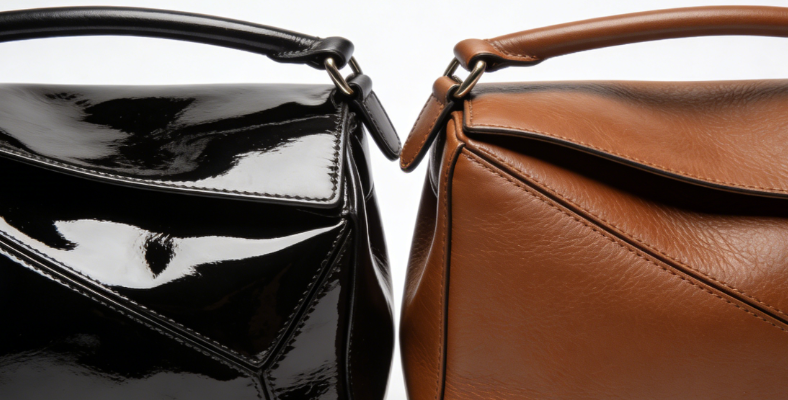
Patent leather and regular finished leather create totally different bags. The coating structure changes everything—performance, look, and market position. Both might start from similar base hides, but the results differ completely.
|
Aspect |
Patent Leather |
Regular Finished Leather |
|---|---|---|
|
Material Architecture and Layer Count |
|
|
|
Cost Structure: Processing and Materials |
|
|
|
Pricing Position in Bag Markets |
|
|
|
Functional Performance Differences |
|
|
|
Intended Use Scenarios |
|
|
Conclusion
Patent leather has that mirror-like shine everyone recognizes. This finish comes from a multi-layer coating process. It turns regular leather into a water-resistant material that makes a statement.
The patent China leather manufacturing process starts with picking the right base leather. Then comes the PU or acrylic coating. Final steps include curing and polishing. Each step affects how durable your bags will be and how they look.
Designing structured handbags, evening clutches, or accent pieces? Know these China bag production basics. You’ll make smarter sourcing choices. Plus, you’ll avoid problems like cracking or finish damage.
The right patent leather application matches the material to your bag style. Patent leather is rigid. It holds its shine well. But it doesn’t breathe much. Choose bag designs that work with these traits, not against them.
Want to improve your bag collection? Ask your suppliers for coating details and flexibility test results. A patent China custom leather bag can last one season or become timeless. The difference? Manufacturing quality. You can now check this yourself.