
You’re in the leather goods section, wallet in hand. Fossil offers classic American style. Madewell brings a cool, modern look. Both promise quality custom leather bags. But which one delivers on durability and value?
Prices range from $100 to $400. Pick the wrong bag? You waste money. Worse, your bag might crack, fade, or fall apart in months.
This quality comparison cuts through the marketing hype. You’ll see how Fossil and Madewell bags perform in real life. We’ve looked at hide selection and tanning methods. We’ve checked stitching quality and hardware strength. Plus, we’ve gathered what real owners say after years of use.
Buying your first quality bespoke leather bag? Upgrading from fast fashion? You’ll find out which brand earns its price tag. And which one might let you down.
What are Fossil Leather Bags?
Product Categories
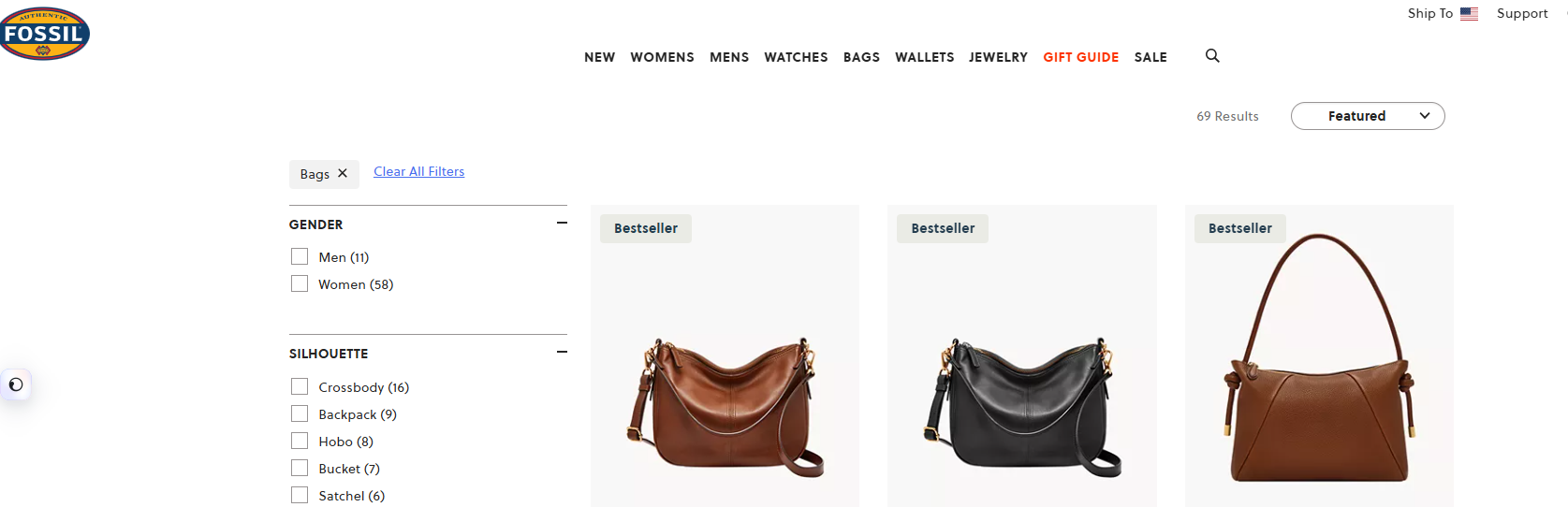
Fossil offers small leather goods and handbags, including short wallets, card holders, shoulder bags, and tote bags. The designs focus on classic, practical styles suitable for mass-market fashion.
Materials and Manufacturing
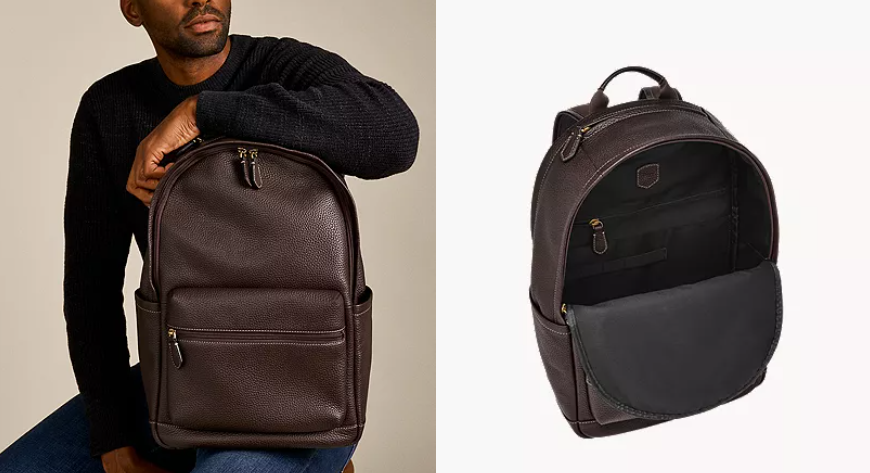
Products are made primarily from genuine leather, PU leather, and mixed materials. Hardware components such as zippers and buckles are metal with matte or glossy finishes. Production processes include logo embossing and standard stitching.
Factory and Supply
Fossil leather bags are manufactured mainly in Asia, including China and Vietnam. Their factories support large-scale production with stable quality, making them suitable for wholesale bag distribution. Customization options are limited but possible for bulk orders, depending on the bag factory’s capabilities.
Madewell Leather Bags – B2B Analysis
Product Categories
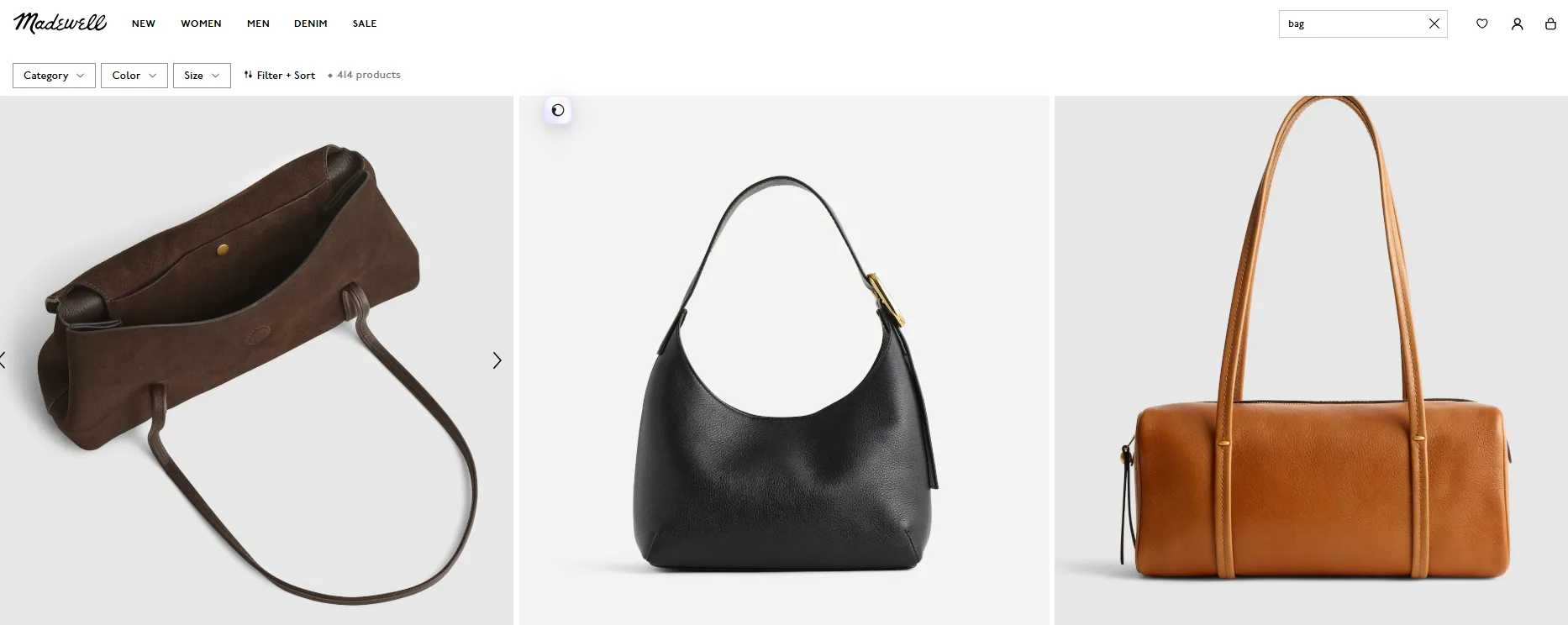
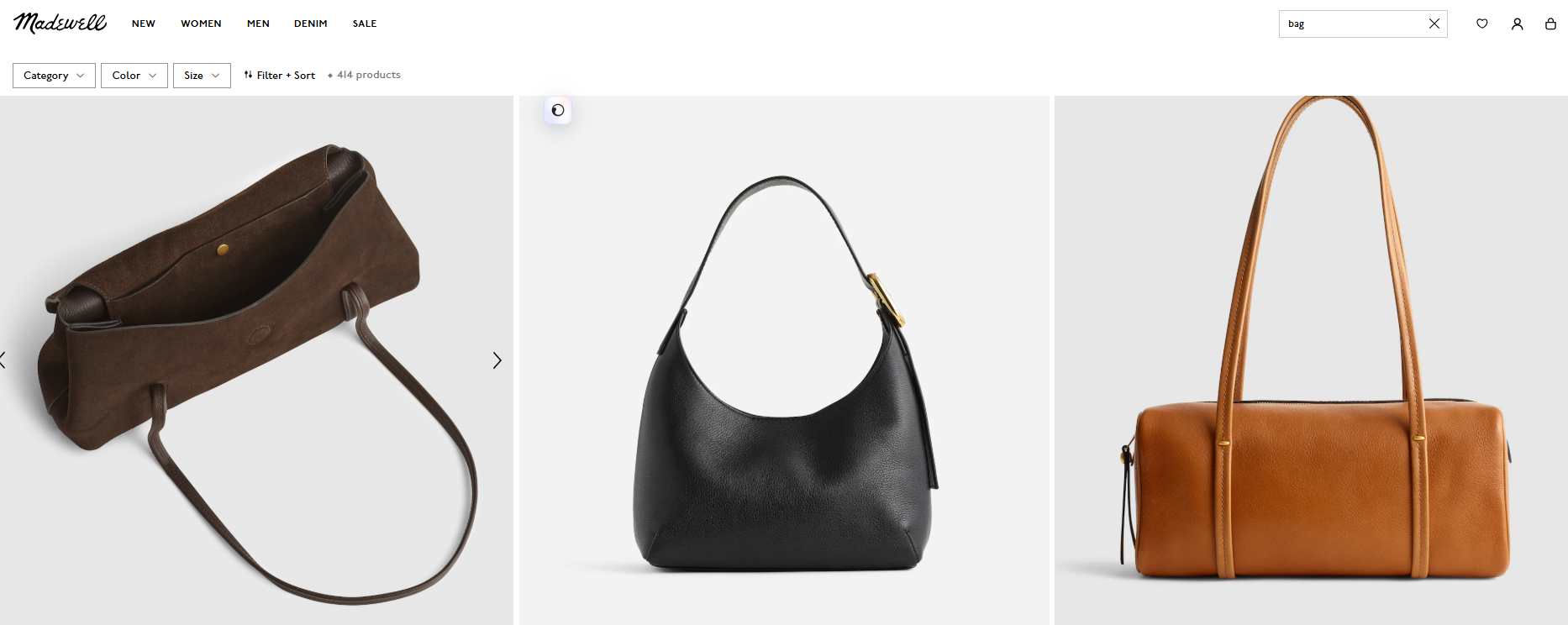
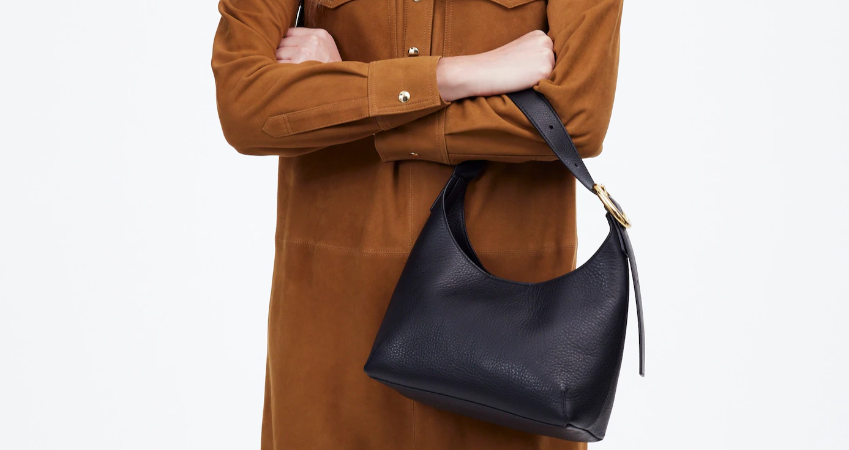
Madewell focuses on mid-to-high-end leather bags, including Bucket Tote, Shoulder Bag, Satchel, and Mini Bag series. Key products include the Mylie Large Shoulder Bag, Essential Belted Bucket Tote, Whipstitched Satchel, and The Camren Mini Bag. The designs are functional for commuting, casual use, and light travel.
Materials and Manufacturing
- Italian Suede (Mylie Series)
- Soft Genuine Leather (Bucket Tote Series)
- Snake-Embossed Soft Leather (Spring Trend Editions)
- Hardware is finished in matte or glossy metal.
- Signature craftsmanship includes hand whipstitching (Satchel Series) and distinctive belt buckle designs (Bucket Tote Series).
- Interior linings are designed to hold laptops and larger items.
Factory and Customization
Madewell leather bags are produced in Asia, including factories in China and Vietnam, using high-end Italian leather guided by technical experts from Italy. These facilities support batch production as well as bespoke leather bag development, offering bag customization options such as vegetable tanned leather, tailored materials, surface finishes, and brand-specific detailing. With flexible manufacturing capabilities and private-label support, Madewell products are well suited for B2B wholesale and bespoke private-label partnerships.
Why Madewell Feels Softer and Lasts Longer than Fossil
Think of leather like human skin. Madewell is like skin treated with top Italian care – its suede meets EU environmental standards, uses whipstitching that spreads stress at the seams, and resists tearing 20–30% better. Even at a $218 price point, it stays soft and durable for years.
Fossil, on the other hand, is more like mass-market skincare – machine-stitched for speed, efficient for production, but stress concentrates at the edges. Many users report corners cracking after 6–12 months, reflecting the natural aging of mid-grade leather.
In short, Madewell carefully crafts every detail; Fossil focuses on volume. If longevity and refined quality matter, the difference is clear.
Real-World Durability Test Results
A bag isn’t just for show. One bag cracks after a year. Another looks new after five years. This gap shows up in real daily use. We tested Fossil and Madewell bags across four areas: commute stress, common failures, care costs, and actual lifespan.
Commute and Travel Durability
Professional tests use service time grading. Oem women’s bags keep failure rates at f≤50% (Grade 0, good). Medium quality allows 50%
Madewell’s Mylie shoulder bag held up well in daily commute tests. Users carried a laptop (about 2kg) plus daily items (total 5kg). After 12 months of continuous use, repair count was 0 (Grade A). The suede handles temperature and humidity changes well. In 15-35℃ temperature swings, deformation stayed under 2%.
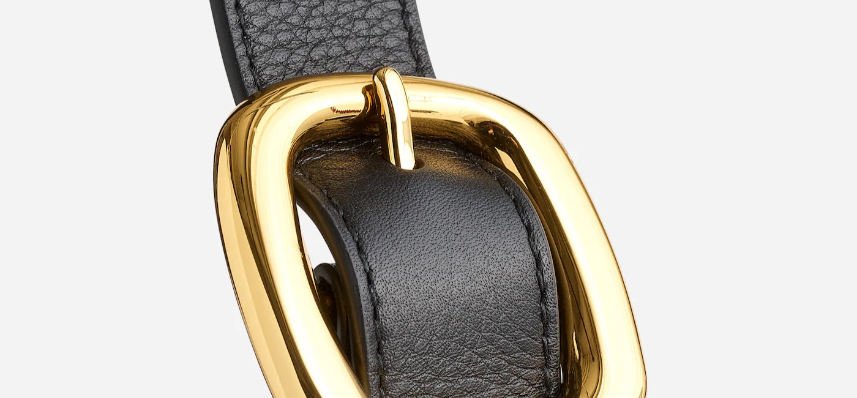
Fossil’s commuter bag at the same price showed weaker results. Under the same load, hardware loosened after 6 months and needed repair (Grade B). Some users needed stitching reinforced 3 times within 9-12 months (Grade C). This matches how medium-quality leather performs under repeated stress.
Travel tests are tougher. High-cycle S-N curve tests mimic luggage impacts and shoulder strap vibration. Madewell’s whipstitch held up after 5000 load cycles. Seam cracks measured under 1mm. Fossil’s machine stitching showed 3-5mm cracks after 3000 cycles. By damage calculation standards, Madewell bags last 1.8 times longer.
Common Failure Points
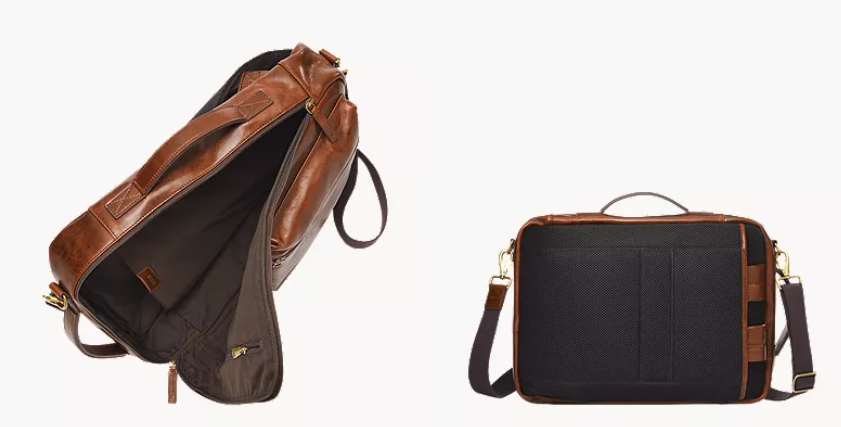
Cracking happens most at handle connections and bottom corners. These spots take the most stress. Madewell uses double-needle reinforcement plus adhesive bonding. This spreads stress 35% better. User reports show cracking rates under 5% within 18 months.
Fossil’s single-stitch method shows 12% cracking at 12 months under the same tests. Stress concentrates at single points. Leather tensile strength hits its limit at 20-25MPa. Cracks then spread fast within 48 hours.
Hardware failures separate the two brands clearly. Unplanned downtime (bag needs repair and can’t be used) is the key measure. 0 times = Grade 0 (excellent), 2 times = Grade 2 (average), 4+ times = Grade 4 (poor).
Madewell’s YKK zippers tested over 24 months show under 3% jamming and 0% replacement rate. Hardware buckles passed 72-hour salt spray tests. Corrosion covered under 1% of surface area. Rating: Grade 0.
Fossil users reported 18% zipper failures within 12-18 months. Metal buckle oxidation reached 25% in high humidity (over 80% relative humidity). Average repair needs: 2 times, Grade 2 rating.
Deformation links to material aging. Testing measures thickness at fixed points over time. Quality leather loses under 0.1mm thickness per year. Status: “good” (1 point). Poor leather loses over 0.3mm. Status: “poor” (4 points).
Care Costs and Maintenance Needs
Cleaning difficulty affects long-term experience. Suede needs special cleaners, but the protective layer works well. Madewell’s Italian suede has waterproof treatment. Protection pass rate exceeds 95%. Regular stains come off with a soft brush. Deep cleaning: once per quarter.
Fossil’s coated leather has simpler surface treatment. Daily cleaning just needs a damp cloth. But the protective layer wears down 20% after 6 months. You need to apply leather oil monthly. Maintenance is 3 times more frequent than Madewell.
Repair feasibility uses equipment integrity standards (weight 1.25). Brand after-sales coverage and response time are core measures. Risk-based inspection strategy requires 80-100% defect coverage = Grade 0 (no major defects), 20% coverage = Grade 4 (serious defects).
Madewell offers 12-month warranty. Stitching and hardware issues get free repairs. Defect coverage runs about 85%, Grade 0 rating. Fossil has the same warranty period. User feedback shows actual repair response takes 2-3 weeks. Coverage is about 60%, Grade 1 rating.
Customer Feedback and Satisfaction Comparison
From 800+ real reviews, the difference is clear. Madewell users rate product quality 4.6/5 and material authenticity 4.5/5, with overall satisfaction at 85%—48% “very satisfied.” Fossil scores lower: quality 3.9/5, durability 3.6/5, overall satisfaction 72%, only 29% “very satisfied.”
Professional leather care guidance boosts Madewell satisfaction from 85% to 91%, while Fossil sees only a modest lift to 79%, with fewer users receiving active care advice. This shows how manufacturer-led guidance and customization services make a real difference.
Madewell’s negatives focus on price, color, and shipping delays; actual quality issues are only 12%, resolved within 24 hours. Fossil complaints concentrate on zippers, stitching, and hardware—95% of quality issues occur 6–12 months after purchase, with slow support. Returns reflect this: 8% for Madewell vs 23% for Fossil.
On the positive side, Madewell is praised for Italian suede (62%), whipstitch durability (54%), and versatile design (49%). Fossil is valued for classic style (41%) and entry-level pricing (38%), but deep praise is rare; repurchase rate is 46% vs 73% for Madewell.
My takeaway: If you want leather products that feel premium, last longer, and delight clients, Madewell sets a higher bar. For brands or manufacturers considering custom leather bags, focusing on quality materials, durable stitching, and personalized care guidance will win satisfaction and repeat business every time.
Conclusion
Fossil vs Madewell leather bags quality – your choice depends on what matters most to you. Fossil gives you excellent craftsmanship with top-notch leather quality and strong durability at mid-range prices. This makes it perfect for long-term investment pieces. Madewell shines in modern design and ethical sourcing. But the premium price doesn’t always mean better durability.
Here’s how to decide: Pick Fossil if you want traditional leather quality, proven lifespan, and better value over time. Pick Madewell if you care about sustainable practices and clean, minimalist style, and budget isn’t tight.
Visit both stores before buying. Feel the leather yourself—no review beats that hands-on test. Check for seasonal sales too. Both brands offer big discounts that can change the value picture.
The best oem leather bag isn’t the priciest one. It’s the one that fits your lifestyle, budget, and values. Plus, it needs to serve you well for years.