
That bulky shopping bag can shrink smaller than your wallet. How? Smart engineering makes it happen. The design combines the right fabrics, careful folding patterns, and clever geometry.
You’re looking at a reusable tote for groceries or a packable backpack for trips. Understanding how a foldable bag works changes everything. These aren’t just mystery products. They’re smart storage tools you’ll use daily.
This guide breaks down the engineering behind foldable bags. You’ll see the folding techniques that save space. You’ll learn about materials that stay strong but pack light. Plus, you’ll understand how these bags carry heavy loads—up to 40 pounds—while staying lightweight.
Different custom bag styles need different folding methods. Your green tote handles 40 pounds, then folds flat in seconds. We’ll show you how. You’ll also get storage tips for your car trunk, kitchen drawers, and more. These strategies will change how you organize your space.
How Custom Foldable Bags Achieve Compact Storage

The secret? Three key parts: ultra-light materials, smart construction, and good folding mechanics. Most custom foldable bags weigh 300–500 grams. Traditional bags weigh 2–5 kilograms. The Samsonite foldable duffel hits just 1.1 pounds (about 500g). This weight drop starts with the right materials.
Makers use ripstop nylon and similar light fabrics. These materials last without adding bulk. The fabric stays thin but resists tears. Pre-stitched seams create natural fold lines. These seams guide how the bag compresses. They stop random bunching.
Size-to-Fold Ratio Across Different Capacities
The volume-to-packed-size ratio varies by bag type:
| Size Category | Volume Range | Folded Characteristics | Maximum Load Capacity |
|---|---|---|---|
| Small | 5–20L | Super compact, fits in purse | Varies |
| Medium | 12–30L | Balanced fold, everyday carry size | Up to 20–25kg |
| Large | 24–45L | Folds small despite large capacity | 40 lbs (~18kg) |
| Duffel | 20–60L+ | Collapsible to pocket-sized | 20–25kg maximum |
A large 45-liter bag can fold down to palm size. That same bag holds 40 pounds of groceries or travel gear. The compression keeps the bag strong after you reload it.
The Mechanical Folding Process
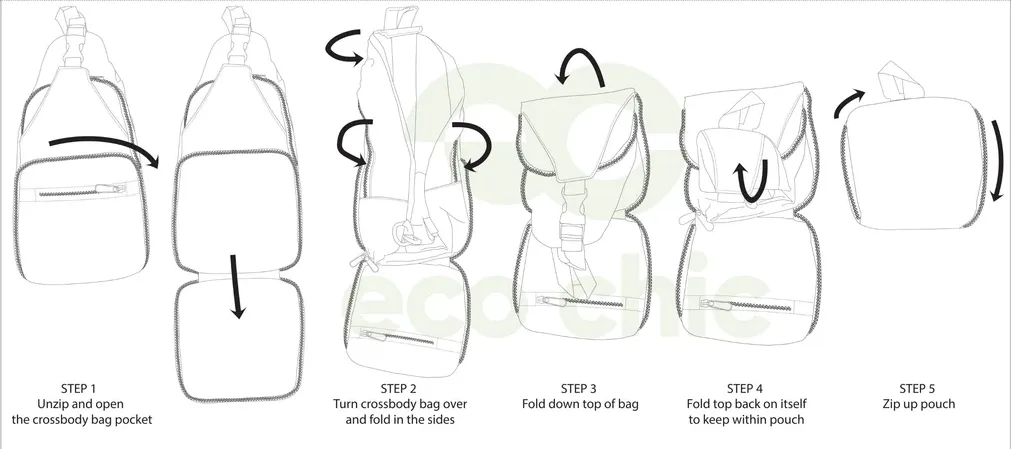
Built-in pouches make the system work. Here’s the standard procedure:
- Flatten the bag – Remove air pockets and smooth out wrinkles
- Fold along pre-stitched seam lines – These marks show the best fold points
- Tuck into the built-in pouch or zipper pocket – The bag stores inside itself
Some designs include 9-inch gussets in 16×16-inch totes. These panels expand to full capacity when open. They flatten when empty. The design works because every part serves two purposes.
Storage space comparison:
| Foldable Bag | Traditional Bag |
|---|---|
| Collapsible with minimal storage footprint | Bulky with high space requirements |
| 300–500g weight | 2–5kg weight |
| Fits in drawer or glove compartment | Requires dedicated closet space |
The 20–25kg load capacity stays strong across multiple uses. The bag keeps its shape. Don’t overstuff past the stated limits. The bags expand to full volume when you need them. Then they disappear after you’re done.
Step-by-Step Folding Methods for Different Bag Types
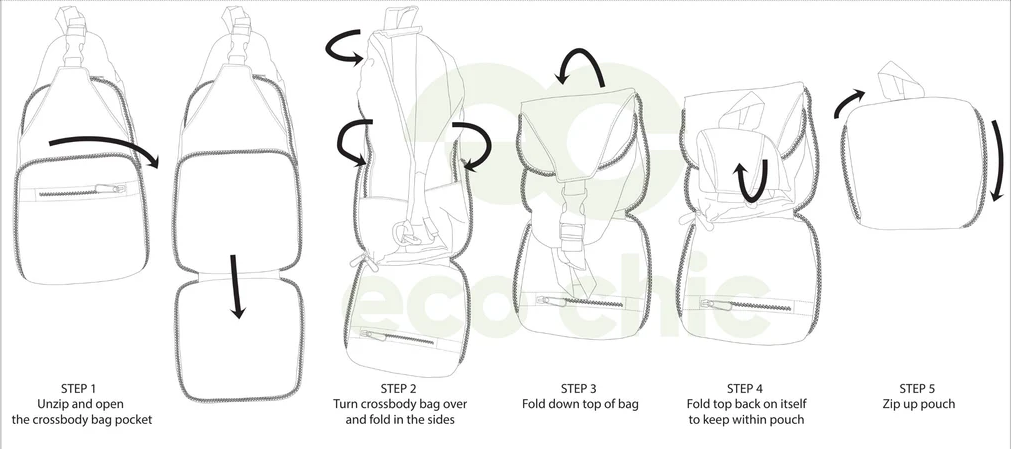
Each foldable bag type needs its own folding method. Tote bags fold one way. Backpacks need a different approach. Duffel bags and shopping bags each have their own technique. Master these methods and you’ll pack faster with better results.
Standard Tote Bag Folding (Flat Pouch Method)
Most reusable shopping totes use the built-in pouch system. This method works for 16×16-inch bags with 9-inch gussets:
- Empty and flatten – Shake out debris. Lay the bag face-down on a clean surface.
- Fold the sides inward – Bring each side edge toward the center. Create two vertical folds that divide the bag into thirds.
- Fold bottom to top – Take the bottom edge and fold upward about one-third of the bag height.
- Complete the rectangle – Fold the top portion down. You now have a compact rectangle.
- Tuck into attached pouch – Most totes have a small pocket sewn to one side. Stuff the folded rectangle into this pouch. The bag disappears inside itself.
The whole process takes 15-20 seconds with practice. The folded tote fits in your purse, glove compartment, or coat pocket.
Foldable Backpack Technique (Roll and Compress)
Packable backpacks work best with the rolling method. Their shape and strap systems make this necessary:
- Remove all items and turn inside-out – This protects the exterior fabric during storage.
- Tuck the straps inside – Fold shoulder straps flat against the main compartment. Push waist straps (if present) into the interior space.
- Flatten the empty pack – Press out air pockets. Smooth the fabric to remove wrinkles.
- Fold into thirds lengthwise – Create a long rectangular shape. The width should match your built-in storage pouch.
- Roll from bottom to top – Start rolling tight from the bottom edge. Keep tension consistent as you roll toward the top opening.
- Secure in the dedicated pocket – Most packable backpacks include a zippered pocket at the base. Stuff your rolled pack inside and zip closed.
This compression method works for 20-30L backpacks. The final size measures 6×6 inches—small enough for a jacket pocket. The Samsonite foldable backpack compresses to this size. Plus, it keeps its 1.1-pound weight advantage.
Duffel Bag Folding (Large Capacity Storage)
Larger duffel bags (40-60L capacity) need a modified approach:
- Collapse the structure – Remove any internal support frames if present. Flatten the empty duffel all the way.
- Fold lengthwise in half – Bring one long side to meet the other. You create a narrow, elongated shape.
- Accordion fold in sections – Start from one end and fold the bag into 8-10 inch segments. Think of folding a paper fan. Each fold stacks on the previous one.
- Compress and secure – Most duffels include elastic straps or a compression strap. Wrap these around your folded stack. Or tuck the entire bundle into the bag’s own end pocket.
These duffels handle 20-25kg loads when full. But they compress to about 10×12 inches when empty—smaller than a hardcover book.
The Army Roll Method for Ultra-Compact Results
Military packing strategies inspired this technique. It works for any soft-sided foldable bag:
- Fold the bottom edge up 3 inches – Create a cuff or flap at the base.
- Fold the bag lengthwise – Bring sides to center, creating a long rectangle about 6-8 inches wide.
- Roll tight from the opposite end – Start rolling from the top (away from your 3-inch flap). Keep the roll drum-tight.
- Flip the flap over the roll – Take that initial 3-inch cuff and stretch it over the entire rolled bundle. The fabric tension holds everything in place. No zippers or pouches needed.
This method gives you maximum compression. Your bag stays compact without built-in storage pockets. Professional travelers use this for emergency backup bags that live in their main luggage.
Specialized Folding for Messenger Bags
Foldable messenger bags have odd shapes. They need a custom folding approach:
- Fold the flap back against the main body
- Collapse any rigid elements. Laptop sleeves often have removable stiffeners.
- Roll the shoulder strap around the folded body like wrapping thread on a spool
- Tuck the wrapped bundle into the exterior zip pocket most messenger styles include
The odd design means these bags don’t compress as much as symmetrical totes or backpacks. But they still fold to half their original volume.
Practice each method three to five times. Your muscle memory develops. The folding becomes automatic. You’ll compress any foldable bag design in under 30 seconds. This maximizes your storage efficiency across all bag types.
Load Capacity vs. Folded Bag Size Engineering
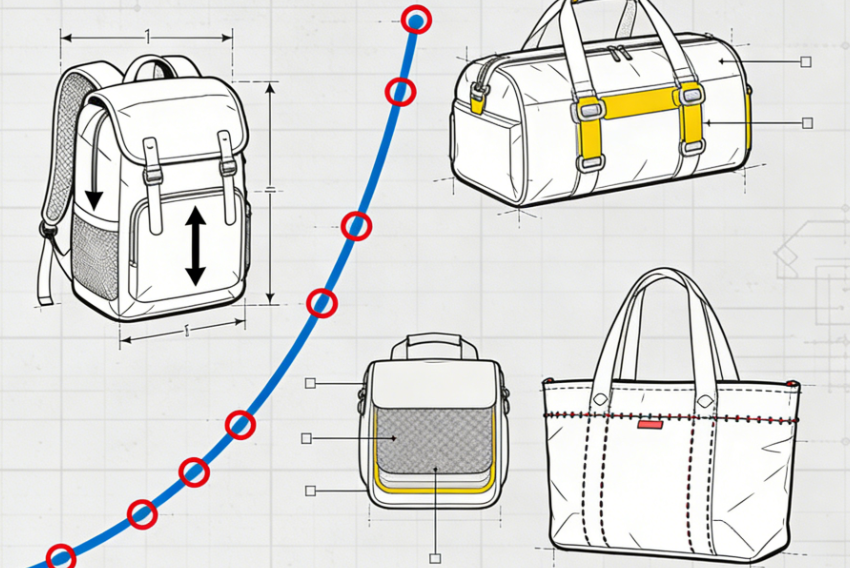
Engineers balance two goals: maximum carrying strength and minimum storage space. Foldable bags solve this with three design principles—structural geometry, material strength, and how they spread weight.
The Engineering Triangle: Strength, Weight, Compression
Take a standard 45-liter foldable duffel. Expanded, it carries 40 pounds (18kg) of gear. Folded, it shrinks to 10×12 inches—about the size of a folded newspaper. That’s a 95% volume reduction. The bag keeps its strength intact.
The secret? Strategic reinforcement zones. High-stress areas get extra protection. Handle attachment points, bottom corners, and seam intersections receive double or triple stitching. These reinforced zones cover just 15-20% of the surface. But they handle 70-80% of the load stress. The rest of the fabric stays ultra-thin (0.3-0.5mm thick). This thin fabric enables compact folding.
Material strength sets the capacity limits. Ripstop nylon rated at 400-600 denier hits the sweet spot:
- Below 300 denier: Too weak. Tears develop under 15-20kg loads.
- 400-600 denier range: Best choice. Supports 18-25kg and stays flexible.
- Above 800 denier: Too stiff. Resists folding and creates bulk.
Geometric Compression Ratios
The expansion-to-storage ratio shows engineering quality. Professional-grade foldable bags achieve ratios between 8:1 and 12:1:
| Bag Type | Expanded Volume | Folded Dimensions | Compression Ratio |
|---|---|---|---|
| 20L Daypack | 20L (1,220 cu in) | 6x6x3 inches | 11:1 |
| 30L Tote | 30L (1,831 cu in) | 8x6x4 inches | 9.5:1 |
| 45L Duffel | 45L (2,746 cu in) | 10x8x5 inches | 6.9:1 |
Larger bags show lower ratios. Structural support needs grow faster than volume. A 60-liter duffel needs thicker base panels and stronger frame parts. This limits how much you can compress it.
Load Distribution Architecture
How foldable bags work under heavy loads depends on how they spread weight. Quality designs use bottom gussets—rectangular panels that expand the base. A standard 16×16-inch tote adds a 9-inch gusset. This creates a stable platform. It distributes 40 pounds across 256 square inches of surface area. That equals about 2.5 psi of ground pressure—well below fabric stress limits.
The physics shift during folding. Internal seam construction creates natural fold lines. This prevents stress buildup in one spot. Pre-planned seam placement divides the fabric into 6-8 folding sections per bag. Each panel folds on its own. It doesn’t pull against nearby sections.
Conclusion
Custom Leather Foldable bags change how you see portable storage. Three smart features make this happen: seams placed to fold tight, ripstop fabric that’s strong but light, and clever design that shrinks a 20-liter bag to fit your palm. You can use these compact designs for your commute, outdoor trips, or cleaning up at home. They work well without giving up space.
Got a bulky bag? Foldable ones hold just as much—sometimes more. They vanish when you’re done using them. Try this: fold your current bags in different ways. See what works. Then buy a quality foldable bag that fits how you live. You’ll be glad you did. Shopping trips pop up out of nowhere. Beach days happen fast. An extra bag that packs easy saves the day.
Smart storage comes from smart design. Pick a foldable bag next time.