
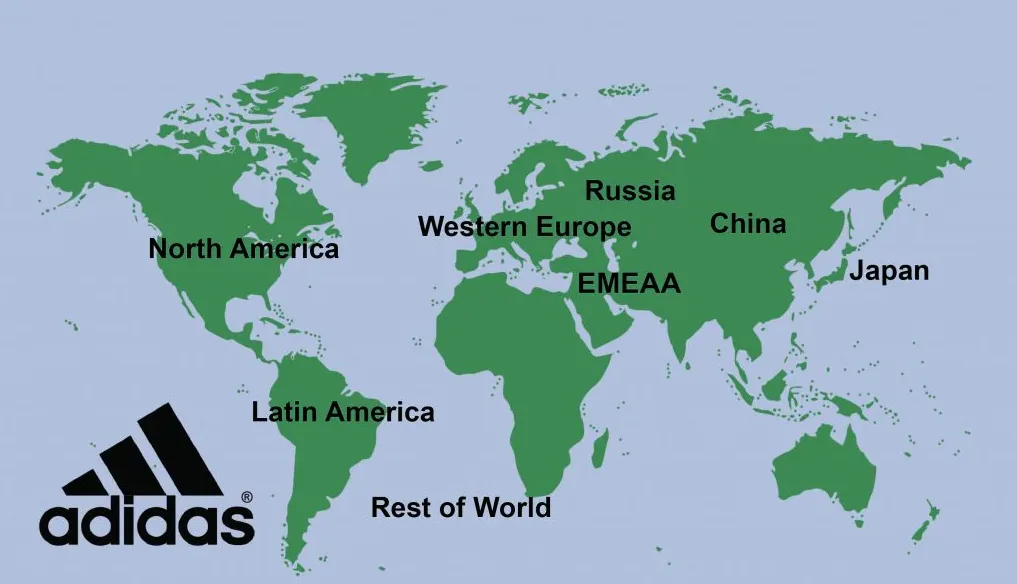
We all recognize those iconic three stripes. But take a second to check the tag inside your gear. You might ask, “Where was this made?”
Many fans wonder about this. The brand started in Germany. Yet, finding where Adidas sports backpacks are manufactured leads us around the world. Maybe you are a curious buyer. Or you need a reliable sports bag manufacturer for business. Understanding the origin explains the quality you get.
Let’s skip the extra talk and go to the source. We will check the countries and skills behind your favorite gear.
Global Sports Backpack Manufacturing Hubs
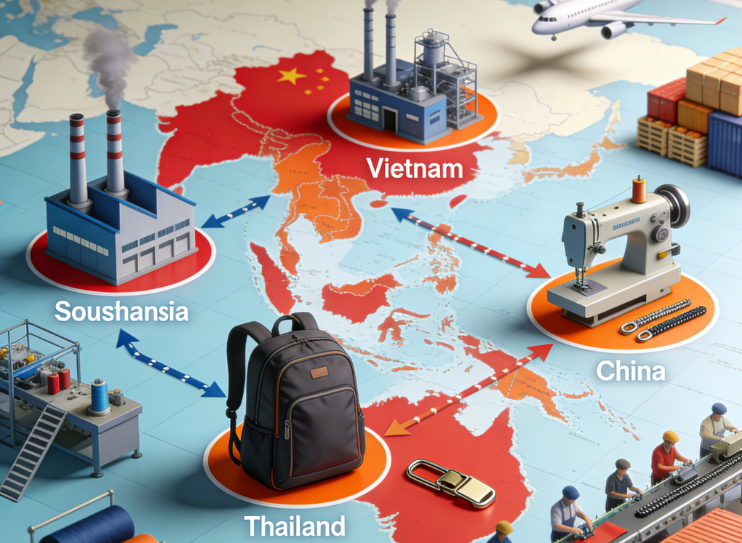
While the design concepts might still be born in Herzogenaurach, Germany, the actual stitching and assembly happen thousands of miles away. It’s no secret that Asia is the engine room here. If you were to empty a shelf of Adidas backpacks, you’d notice a distinct pattern in the “Made in” labels.
Vietnam – The Leader
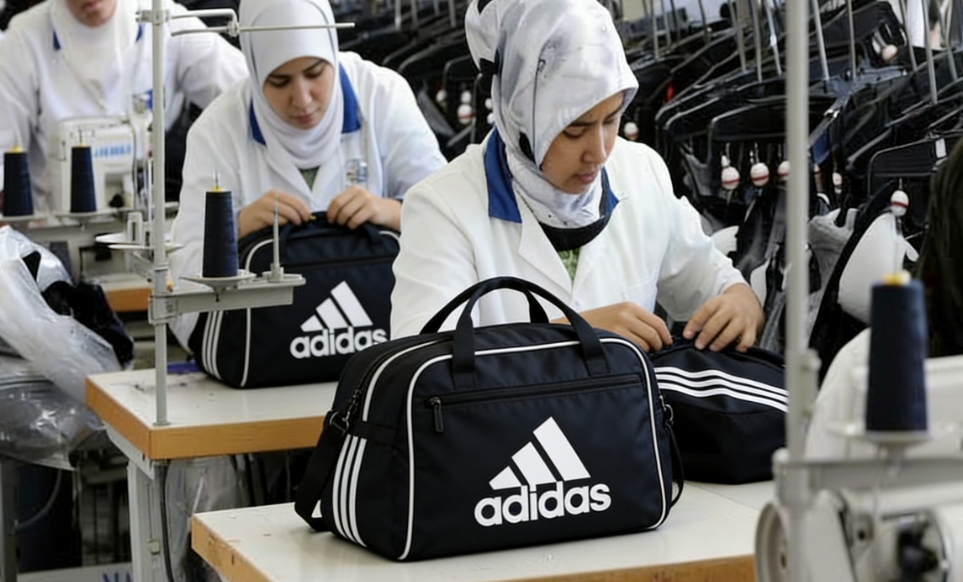
Vietnam produces around 40% of Adidas’ wearable gear, including custom sports backpacks. Factories are large, high-tech, and highly efficient.
-
Cooperation Model: Adidas works closely with local OEM/ODM bag factories, providing design specifications, quality standards, and production schedules.
It’s easy to see why Adidas relies so heavily on Vietnam. The country’s factories are capable of handling massive production volumes while maintaining consistent quality. By partnering closely with these local manufacturers, Adidas can ensure even the most complex sports backpack designs are executed flawlessly and delivered on schedule. Vietnam’s combination of skilled labor, advanced machinery, and cost-effective operations makes it the natural choice for the bulk of Adidas’ global supply, supporting both high-volume output and the brand’s strict quality standards.
Indonesia – A Close Runner-Up
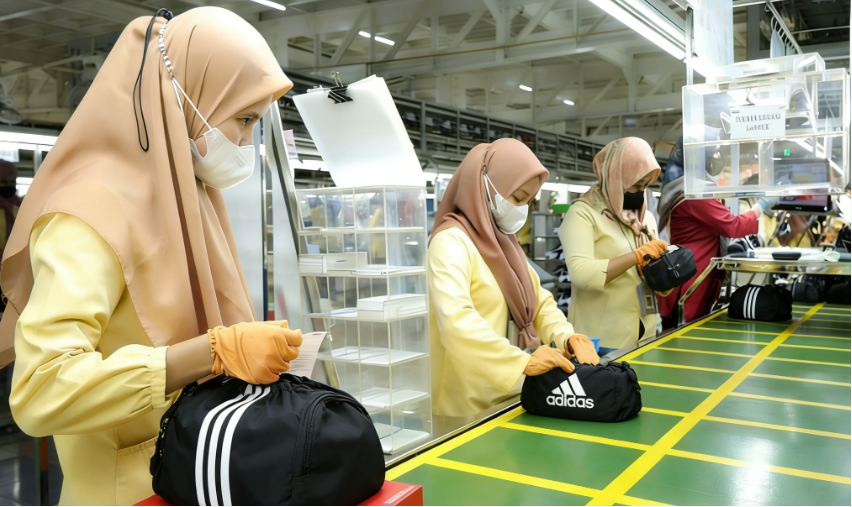
Indonesia contributes nearly 30% of Adidas’ production, focusing on sports backpacks and other wearable gear. Factories here are known for their textile expertise and ability to manage medium to large-scale production runs.
-
Cooperation Model: Adidas partners with Indonesian OEM/ODM manufacturers to ensure design flexibility, consistent quality, and timely delivery.
Adidas chooses Indonesia for its reliable workforce and strong textile craftsmanship. The country’s factories provide the flexibility needed to adapt production schedules or designs, which is particularly valuable for medium-sized orders. Additionally, Indonesia’s strategic location in Southeast Asia allows Adidas to efficiently serve the Asia-Pacific market, making it an essential complement to the higher-volume facilities in Vietnam.
China – Specialized High-Tech Production
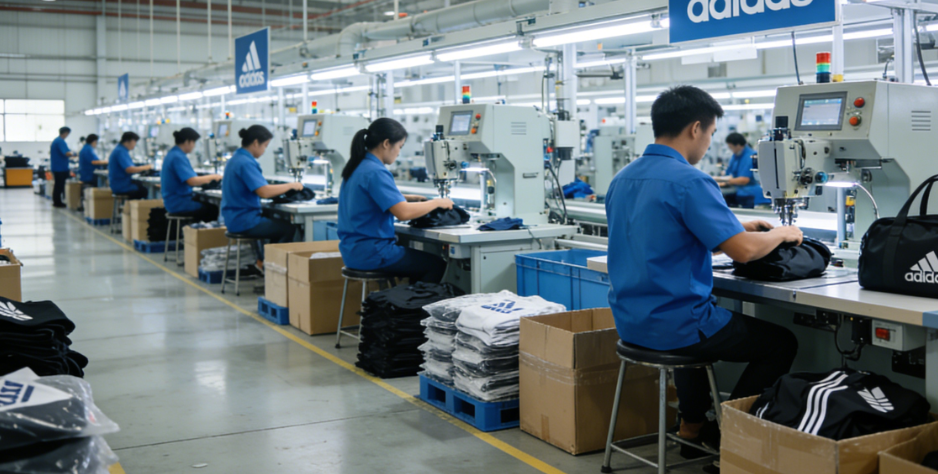
China now accounts for roughly 15–20% of Adidas manufacturing, primarily handling complex or technical sports backpacks. Factories here excel in precision assembly, advanced stitching, and integration of high-end features.
-
Cooperation Model: Adidas collaborates with specialized Chinese bag factories to produce backpacks with intricate compartments, reinforced stitching, and advanced materials.
For Adidas, China represents technical expertise and innovation. By leveraging Chinese factories’ high-tech capabilities, the brand can produce premium backpacks with sophisticated designs or functional enhancements that would be difficult elsewhere. This allows Adidas to maintain a high standard for feature-rich backpacks, ensuring products meet both aesthetic and durability expectations.
Cambodia & Other Countries
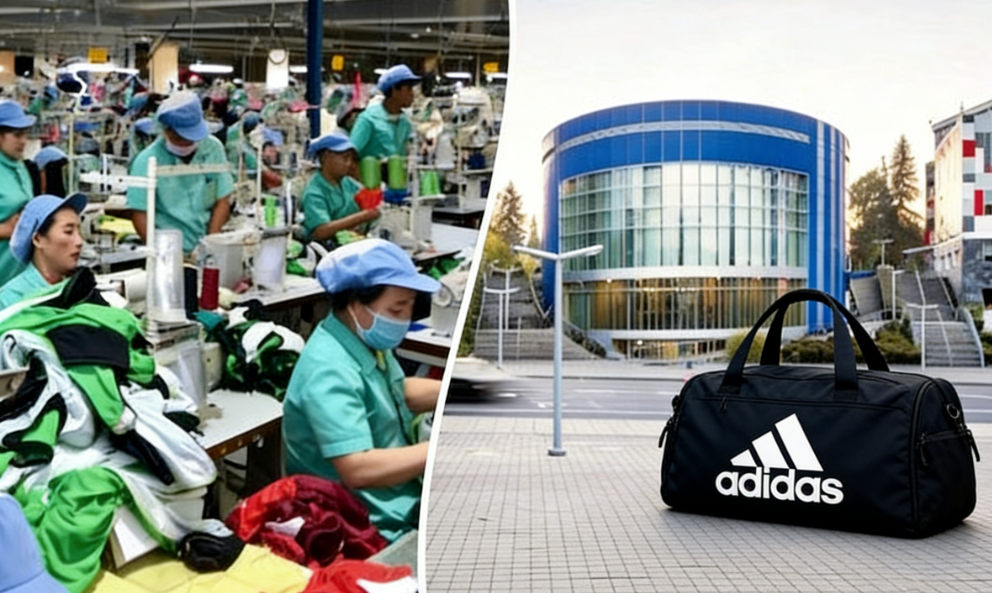
The remaining production is distributed across Cambodia, Turkey, Pakistan, and a few other countries, usually for specialized or small-batch sports backpacks. Factories in these regions often handle unique fabrics, stitching techniques, or niche designs.
-
Cooperation Model: Adidas engages with local OEM/ODM partners for specialized production, ensuring quality while managing smaller or more experimental runs.
By diversifying into these countries, Adidas gains flexibility and cost efficiency. These regions allow the brand to experiment with new materials or small-batch designs without disrupting large-scale operations elsewhere. This strategy helps Adidas respond quickly to market trends while accessing skills and techniques that are not widely available in larger factories.
How Does Adidas Pick a Partner?

You might think, “They just go where it’s cheapest, right?” well, not exactly. It’s a rookie move to look only at the price tag. To earn the right to produce those three stripes, a factory has to meet some pretty strict standards.
First involves Technical Capability. Adidas designs often involve complex materials—like their Primegreen recycled polyester. You can’t make that in just any old workshop; you need advanced machinery. Second, and arguably more critical these days, is Compliance. The brand aggressively audits its supply chain for labor rights and environmental impact. If a manufacturer can’t pass the “Workplace Standards” or handle waste responsibly, they don’t get the contract. Period.
Adidas Backpack’s Materials and Manufacturing Standards
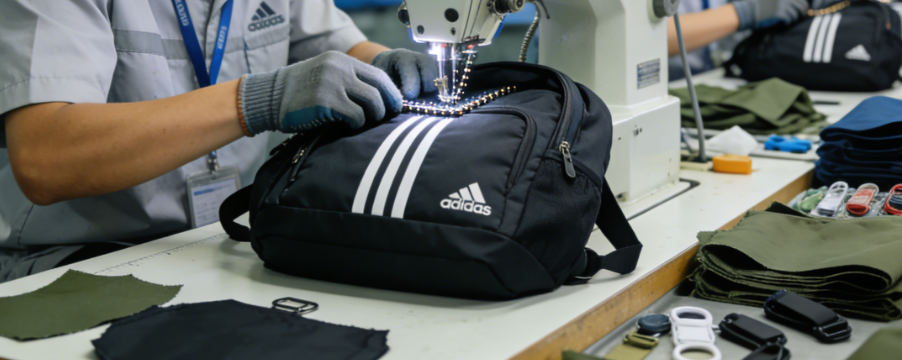
Adidas sports backpacks are crafted using high-quality materials to ensure durability and performance. Commonly used fabrics include polyester, nylon, and recycled PET, chosen for their strength, water resistance, and eco-friendly properties. Each backpack is designed to be a durable backpack that withstands daily wear, travel, and sports activities.
Adidas also maintains strict manufacturing standards across all its facilities. Factories comply with international certifications like ISO, ensuring consistent quality and precision. Moreover, Adidas emphasizes sustainable bag manufacturing and ethical practices, including Fair Labor Practices, minimizing environmental impact, and responsibly sourcing materials. By combining premium Adidas materials with rigorous standards, every backpack delivers both performance and peace of mind for customers.
Flexible Supply Chain and Global Delivery Advantage

Adidas doesn’t just make backpacks—it makes sure they get to you, wherever you are, on time. Thanks to a flexible supply chain, the brand can quickly adjust production volumes, switch factories if needed, and respond to changing demand without missing a beat.
With manufacturing spread across countries like Vietnam, Indonesia, and China, Adidas enjoys a global delivery advantage. This means bags sport enthusiasts and fans of basketball sports bags can find their favorite products in stores worldwide quickly. Even specialty items—like limited-edition designs featured on a bags sports pub menu—reach customers efficiently. In simple terms: Adidas’ smart supply chain is like a world-class relay team—each factory and shipping hub plays its part perfectly, so you get your favorite durable backpack without unnecessary delays.
Conclusion
Adidas sports backpacks are the result of a well-orchestrated global manufacturing network, combining advanced production in Vietnam, specialized expertise in China, and cost-efficient operations in Indonesia and other countries. By using high-quality Adidas materials, adhering to sustainable manufacturing practices, and maintaining a flexible supply chain, Adidas ensures that every backpack—whether it’s a ladies’ sports bag, a basketball sports bag, or gear for a boxing bag academy sports session—is durable, functional, and delivered efficiently to customers worldwide.
No matter your sport or style, Adidas backpacks represent a perfect blend of quality, performance, and thoughtful design.
FAQ
Q1: Are all Adidas sports backpacks made in Asia?
Most production is concentrated in Vietnam, Indonesia, and China, but some specialized items may be produced in other regions depending on materials and design complexity.
Q2: Does the manufacturing location affect the quality of Adidas backpacks?
Not significantly. Adidas ensures all factories follow strict ISO standards and Fair Labor Practices, so backpacks—whether for a ladies sports bag or a boxing bag academy sports kit—maintain high quality and durability.
Q3: Can I find Adidas backpacks for specific sports like basketball or boxing?
Yes! Adidas offers specialized basketball sports bags, boxing bag academy sports gear, and many versatile bags sport designs suitable for various activities.
Q4: Are Adidas backpacks eco-friendly?
Many backpacks are made from recycled PET and other sustainable materials, reflecting Adidas’ commitment to environmentally conscious production.