
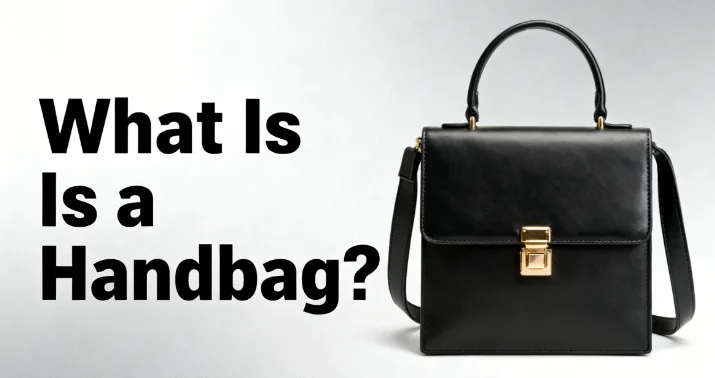
A handbag is more than a fashion accessory; it is a functional product shaped by material selection, structural design, and consumer needs. For brands, retailers, and bag manufacturers, understanding the definition, origin, evolution, and key style categories of handbags is essential for building the right leather product lines and communicating effectively with OEM/ODM partners. In today’s competitive fashion market, having a clear grasp of handbag definitions, market trends, and design requirements supports smarter sourcing, efficient product development, and stronger market positioning.
What Is a Handbag?

From practical use to personal style expression, the definition of a handbag has continued to evolve as lifestyles and fashion trends change. In the modern market, a handbag is generally understood as a portable bag designed to carry daily essentials while also serving as a key fashion element in a consumer’s wardrobe.
A handbag’s primary functions include:
- Storage and organization of personal items such as phones, wallets, keys, cosmetics
- Enhancing outfit styling through color, silhouette and material
- Providing convenience for work, travel and everyday mobility
Handbags are produced using a wide range of materials. The four most common categories include:
- Leather — durable, premium, ideal for luxury positioning
- Vegan leather (PU) — cost-effective, versatile, suitable for mass market or sustainable lines
- Nylon — lightweight, water-resistant, widely used for travel and sport bags
- Canvas — sturdy, casual, often seen in lifestyle and fashion-forward designs
In terms of key characteristics, handbags vary by size, structure, handle type, closures, and internal compartments, all of which influence both usability and brand positioning.
It is also important to note that the understanding of a “handbag” differs across regions. In the United States, the term usually refers to any women’s everyday carry bag, while in Europe, “handbag” may indicate a more structured, elegant style, with other categories (tote, shoulder bag, crossbody) clearly separated. These distinctions help brands communicate more accurately with manufacturers and ensure better alignment on design expectations.
The Evolution of Handbags

The history of the handbag spans centuries, moving from functional storage pouches to highly designed fashion and luxury items. Understanding this evolution helps brands and manufacturers align product development with long-term market shifts.
Ancient Times
Early handbags appeared as waist pouches or small carrying bags, mainly used to store coins, tools and personal items. These were simple in construction but served essential daily functions.
17th–18th Centuries
During the 17th and 18th centuries, handbags evolved into ornamental accessories for aristocrats. Fine embroidery, silk fabrics and decorative craftsmanship turned them into indicators of wealth and social position.
19th Century
With the rise of railway travel, consumers needed more durable, structured bags. This era sparked the development of early travel bags and more practical handbag designs, bridging functionality and style.
20th Century
The 20th century marked the rise of luxury brands, improved craftsmanship, and clearly defined handbag categories such as shoulder bags, clutches and top-handle bags. Standardized materials and hardware supported large-scale manufacturing and global retail expansion.
21st Century
Today’s handbag evolution focuses on material innovation, sustainable bag alternatives (e.g., vegan leather, recycled textiles), and smart bag manufacturing technologies. Automation, digital sampling and eco-friendly production now shape the global handbag industry, offering brands greater flexibility and efficiency.
What are the key components of a handbag?

The creation of a refined handbag begins with thoughtful structural design and skilled craftsmanship. Every element—from exterior construction to internal layout and finishing techniques—shapes the bag’s durability, functionality, and overall aesthetic appeal.
Exterior Components
The exterior structure includes key elements such as handles, shoulder straps, the main body, closure systems (zippers, magnetic snaps, flaps, turn locks), and decorative hardware. These components define the bag’s silhouette and usability. High-quality handles require precise curvature, reinforced stitching, and comfortable grip, while the bag body depends on pattern accuracy, material thickness, and supportive internal layers.
Interior Components
The interior determines the user experience, featuring lining, pockets, dividers, card slots, compartments, and zipper sections. A durable lining enhances the tactile feel and strengthens the bag’s structure. Thoughtfully planned compartments improve organization, especially in business totes, travel bags, and multifunctional designs.
Common Craftsmanship Techniques
Handbag manufacturing involves several essential techniques
· Stitching – uniform, strong, and visually clean
· Edge painting – multiple layers of coating and sanding for smooth, crack-resistant edges
· Hardware installation – precise placement ensuring durability and secure functionality
· Skiving – thinning leather edges for smooth folding
· Embossing/printing – for logos, textures, and decorative effects
These techniques contribute to the bag’s refinement and long-term performance.
How OEM/ODM Manufacturers Execute Different Levels of Complexity
To execute designs ranging from minimalistic to highly complex, manufacturers must combine skilled bag pattern making, material compatibility expertise, advanced machinery, and strict quality systems. Complex structures involve multilayer construction, customized molds, irregular silhouettes, specialty hardware, and multi-color edge finishes—requiring close collaboration between sampling, material testing, and production teams to maintain consistency at scale.
Sunteam’s Manufacturing Advantages
As a professional OEM/ODM handbag manufacturer, Sunteam delivers high-complexity designs through intelligent production systems and rigorous material control.
· Intelligent manufacturing improves stitching accuracy, edge-painting consistency, and hardware alignment.
· Leather quality control is strengthened by Sunteam’s own tannery, allowing precise management of color, texture, thickness, and finish from raw material to final product.
· Flexible customization includes structural options, personalized colors, custom hardware, logo techniques, and sustainable material alternatives.
Supported by a highly experienced Italian technical management team, Sunteam ensures that even intricate designs meet high standards of beauty, durability, and market competitiveness.
Every structural detail and craftsmanship technique contributes to a handbag’s value and identity. Partnering with a professional OEM/ODM manufacturer like Sunteam offers brands the advantage of high-quality production, advanced material control, and flexible customization—ensuring products that truly resonate with the target market.
What Are the Most Popular Handbag Styles?

From timeless classics to modern trends, different handbag styles cater to a variety of occasions and needs. Whether for daily commuting, travel, social events, or formal gatherings, there is a perfect handbag for every situation.
Tote Bag
- Usage: Daily commute, shopping, travel
- Features: Large capacity, simple design, multiple compartments for organization
- Ideal for: Professionals, students, or anyone who needs a spacious handbag
Shoulder Bag
- Usage: Everyday outings, social events
- Features: Comfortable shoulder strap, easy to style with outfits
- Ideal for: Working women or those who prefer a light, versatile bag
Crossbody Bag
- Usage: Travel, street style, everyday outings
- Features: Hands-free design, convenient for carrying essentials, secure
- Ideal for: Casual, on-the-go users who value convenience and safety
Satchel
- Usage: Work, meetings, business occasions
- Features: Structured body, medium capacity, classic and elegant
- Ideal for: Business professionals and office-goers
Clutch
- Usage: Evening events, parties, formal occasions
- Features: Small and elegant, handheld, decorative focus
- Ideal for: Women attending parties or formal gatherings
Hobo Bag
- Usage: Casual daily use, shopping
- Features: Soft, slouchy shape, comfortable shoulder carry, moderate capacity
- Ideal for: Those who prefer a relaxed, casual style
Bucket Bag
- Usage: Everyday use, casual outings, shopping
- Features: Wide opening, adjustable strap, distinctive silhouette
- Ideal for: Fashion-forward individuals who like unique and casual styles
Mini Bag
- Usage: Short trips, casual outings, dates
- Features: Small and lightweight, holds essentials only, highly decorative
- Ideal for: Fashion enthusiasts and those who prefer compact, stylish bags
Top-handle Bag
- Usage: Work, formal occasions, daily styling
- Features: Hand-carried or wrist-carried, structured, elegant
- Ideal for: Office professionals or fans of classic and vintage styles
No matter the style, each handbag is designed to combine functionality with fashion, making it easier to find the perfect bag for every occasion.
Which Handbag Trends Are Popular Today?

Handbag trends are constantly evolving, driven by changing consumer demands, innovative designs, and advances in manufacturing technology. Today’s market reflects a shift toward versatility, sustainability, personalization, and smart production solutions.
Mini Bag Trend
- Description: Compact and stylish, mini bags have become a fashion statement for city life and casual outings.
- Reason for popularity: Consumers increasingly prefer lightweight, convenient options that carry only essentials without compromising style.
- Target audience: Fashion-forward individuals and trend-conscious urban consumers.
Sustainable Materials
- Description: Eco-friendly and vegan leather, recycled fabrics, and biodegradable components are gaining prominence.
- Impact: Sustainability is no longer just a niche—it influences brand perception, customer loyalty, and purchasing decisions.
- Consumer appeal: Environmentally conscious buyers seeking ethical and stylish products.
Gender-neutral Styles
- Description: Bags designed to be functional and stylish for all genders are becoming more mainstream.
- Trend drivers: Rising awareness of inclusivity and the popularity of minimalist, versatile designs.
- Market impact: Brands expand reach by offering unisex collections that combine aesthetics and practicality.
Rising Demand for Customization
- Description: Personalized designs, from colors and materials to hardware and monograms, are in high demand.
- Reason: Consumers increasingly seek individuality and exclusivity in their accessories.
- Opportunity for brands: Customization allows differentiation in competitive markets and strengthens customer engagement.
Smart Manufacturing Trends
- Description: Advanced manufacturing technologies, including automation, intelligent sewing, and precise quality control, are transforming handbag production.
- Sunteam Highlight: Sunteam’s smart factory leverages intelligent production systems to maintain consistent quality, reduce errors, and speed up production. Their in-house leather control, advanced machinery, and experienced Italian technical team ensure that even complex or customized designs can be efficiently realized.
- Benefit: Brands gain high-quality, scalable production without compromising on craftsmanship or flexibility.
Today’s handbag trends reflect a balance of style, sustainability, personalization, and innovation. Forward-thinking brands and manufacturers, like Sunteam, are uniquely positioned to meet these evolving demands through smart production, eco-conscious materials, and flexible customization options.
Conclusion
Understanding the definition, history, and design of handbags helps brands and retailers plan their product lines more effectively.
Key Takeaways
- Definition & Evolution: Handbags have evolved from functional accessories in ancient times to essential fashion statements today.
- Popular Styles: From tote bags and crossbody bags to mini and top-handle bags, each style serves different purposes and target audiences.
- Value for Manufacturers, Buyers, and Brands: Insight into materials, construction, and trends enables brands to create desirable products, helps buyers make informed decisions, and allows manufacturers to produce high-quality, market-ready handbags efficiently.
Sunteam Highlight
As a professional OEM/ODM handbag manufacturer, Sunteam combines smart manufacturing, strict leather quality control, and flexible customization options to help brands bring their ideas to life. We welcome inquiries for custom projects, ensuring products that meet both design vision and market demand.
FAQ
- What are the most popular handbag styles today?
Tote bags, crossbody bags, mini bags, top-handle bags, satchels, hobo bags, bucket bags, clutches, and shoulder bags are among the most popular. Each serves specific occasions and user needs. - Why is understanding handbag history important for brands?
Studying the evolution of handbags helps brands anticipate trends, make informed design choices, and align products with consumer expectations. - How can OEM/ODM manufacturers like Sunteam help my brand?
Sunteam provides complete OEM/ODM services, including material sourcing, smart production, custom hardware, leather quality control, and tailored design support. This ensures consistent quality, scalability, and market-ready handbags. - What materials are currently trending in handbag production?
Sustainable and eco-friendly materials, vegan leather, recycled fabrics, and high-quality natural leather are increasingly in demand. - Can I request custom designs for my brand through Sunteam?
Yes. Sunteam offers a wide range of customization options, from size, color, and materials to hardware, branding, and finishes, helping brands create unique collections.