
Why does that crisp, structured silhouette you fell in love with in the store start caving in after a few weeks of daily use? It comes down to structure design. Most people never notice the difference until their favorite tote is already sagging on one side. Every bag that holds its form relies on a deliberate system of a bag stiffener insert, an engineered bag bottom board, layered interfacing, and construction techniques that distribute weight to prevent the frame from collapsing. Whether you’re trying to figure out why your bag went limp, planning your first handmade design, or vetting a manufacturing partner who understands structured handbag construction, this breakdown walks through what separates a bag that lasts from one that doesn’t.
Why Some Bags Keep Their Shape: The Structural Science Behind It
A bag keeps its shape through three things working together: internal reinforcement, material stiffness, and panel geometry control. Reinforcements add rigidity and spread weight evenly. Geometry acts like a skeleton, keeping walls from bowing and the base from sinking.
The Geometry Framework
Most structured bags follow a W × G × H sizing model: width, gusset depth, and height. These three numbers determine how each panel carries load and resists collapse. Get the ratio wrong, and even the best materials won’t save the shape.
Base and Side Reinforcement
A base insert made from 400 to 800 gsm chipboard keeps the bottom flat. Side stiffeners use 200 to 400 gsm paperboard to control the wall angle. Thickness in millimeters, areal density in grams per square meter, material family, and lamination method all affect firmness. A small Leather-goods panel might be around 0.4 mm, while a Luggage base can reach 2.0 mm.
Layering Logic
A typical stack runs: outer shell, adhesive or glue film, interlining, support layer, foam or padding, and lining, with Seam allowances and hidden supports built in. This zone-by-zone approach produces the shape retention.
Memory and Stress Points
Base materials like Texon or Salpa give the bag “memory,” letting it bounce back after being squashed. High-stress zones like corners, strap anchors, and gussets rely on bar-tack Stitching, reinforcement patches, webbing overlays, and bound seams to survive repeated load.
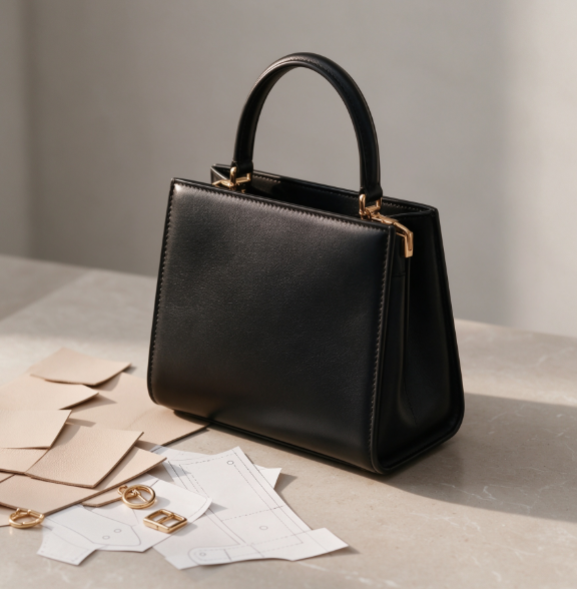
Why Bags Lose Their Shape: Common Causes Behind Sagging & Deformation
Most bags lose their shape for one of six reasons. None of them are hard to spot once you know what to check.
Overstuffing and Underfilling
Overstuffing stretches leather fibers past their limit. Load a bag beyond capacity for weeks, and the material gets pulled out of shape permanently. Bulging seams, sagging panels, and edges that flare outward are the result. Underfilling causes the opposite problem. Without an internal skeleton, the walls cave inward, and the bag develops a “collapsed waist” look after sitting empty too long. One stretches, the other crushes. Either way, the bag loses its shape permanently.
Weight Distribution and Stacking Pressure
Uneven loading, like a heavy phone always on one side or a single strap point bearing all the weight, twists the frame and skews the handles. Stacking pressure is as damaging. Bags stored under heavy items get flattened, creased, and their edge boards bent. In warehouse conditions, this combines with impact damage and hardware dents during transit.
Missing Reinforcement
Without a bag stiffener insert, foam padding, or firm bag base, soft-structure bags like totes and PU handbags collapse far faster under normal handling.
Humidity and Heat Damage
Leather absorbs moisture above 65% RH, risking mold and softened structure. Below 40% RH, it dries out and cracks. The sweet spot is 45%–55% RH. PU materials face a different threat. High heat plus high humidity accelerates hydrolysis, breaking down the coating and causing peeling or “sweating” surfaces. This is a common issue in poorly ventilated storage or car interiors.
Structure Design Principles: How Professional Bags Are Engineered to Hold Form
Every well-built bag follows a hidden blueprint. Engineers don’t reinforce randomly; they map stress zones first, then build handbag construction techniques around that map.
Zone-Based Reinforcement Priorities
Not every part of a bag needs the same strength. Professional builders divide the structure into risk tiers:
-
handle roots and strap anchors are the highest-stress zone. Double stitching, bar tacks, X-stitching, and reinforcement patches at attachment points stop pull-through and seam failure before it starts.
-
Bottom panels and corners get corner patches, corner guards, stiff interfacing, or protective feet to absorb abrasion and impact where the load-bearing base takes the hit.
-
Top opening uses stiff interfacing, facings, or edge binding to keep the mouth from collapsing, often paired with a firmer top band for perimeter stability.
-
Side panels are deliberately left more flexible. This lets the bag body flex slightly without dumping stress into one weak seam.
Following the Load Path
Weight doesn’t stay still inside a bag. It travels from packed contents, through the base panel, across side seams and body panels, up into the handle or strap anchor. Solid bag reinforcement material follows that exact route, carrying force continuously instead of letting it pile up at a single seam.
Weak designs fail where this path “jumps” over an underbuilt junction. That’s when you see seam slippage, stitch pull-through, webbing movement, or reinforcement tear-out. The fix is placing the strongest bag frame support at direction-change points, anywhere force turns upward from the body into the strap attachment.
Concrete Build Methods
Professional workshops rely on specific techniques, not guesswork:
-
Handles: double stitching, bar tacks, internal reinforcement strips, and a square-plus-X stitch pattern at the ends for maximum pull resistance.
-
Corners and base: heavy fabric patches or corner guards, backed by stiff bag lining and interfacing for heavy-carry designs.
-
Stress points: X-stitching or bar tacking spreads concentrated pull force across a wider surface area instead of one thread line.
-
Panel stiffness: interfacing or foam behind critical panels holds form without turning the whole bag rigid.
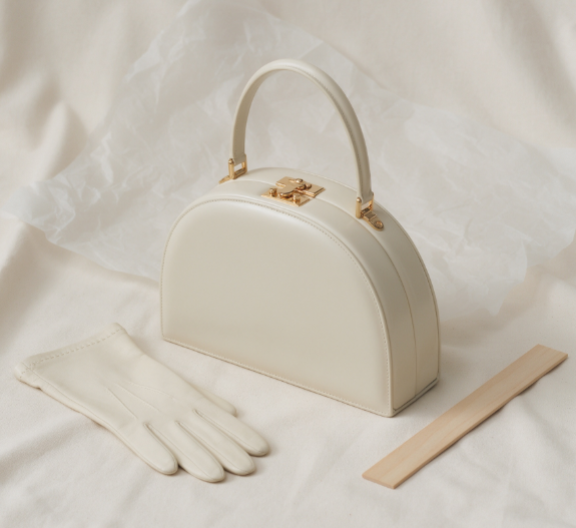
Best Materials for Shape Retention: What Makes a Bag Structured vs. Slouchy
Material choice decides the outcome before construction even begins. PE/PP plastic sheet inserts, cellulose board (Texon or Bontex-type), bonded leather like Salpa, EVA foam, and thicker outer leathers sit at the top of the shape-retention list. Soft PU, knit-like fabrics, lightweight woven textiles, and thin unreinforced walls sit at the bottom. The difference comes down to whether a firm structural interlining or rigid insert backs the panel.
Highest-Retention Material Families
PE/PP plastic sheet works best for defined bases, dividers, or panels needing rigidity. It’s lightweight, washable, and adds structure without piling on weight. Cellulose board gives a paper-like hand for leather goods and bag panels where pronounced shape is the goal. Bottom boards, rigid or semi-rigid, sit under or inside the lining to distribute load and stop sagging, especially in totes. Thick, Full-Grain Leather naturally resists deformation because greater thickness increases panel stiffness on its own, often needing minimal internal reinforcement.
Where Interfacing, Stabilizers, and Interlining Fit
Interfacing offers light reinforcement to control drape without adding hardness. Stabilizers like EVA foam add loft or prevent stretching, producing a “plush” feel rather than a hard-board one. Structural interlining, usually Salpa bonded leather or Texon board, does the heavy lifting for the bag body. Insert boards handle the base when heavier contents demand extra support.
Lining Density Matters More Than People Think
High-density lining raises panel resistance and helps the silhouette hold under load. 420D lining (105–125 GSM) reads as stiff and rugged. 230D twill (70–85 GSM) sits in the middle. 210D plain (55–65 GSM) stays flat and standard. Pairing 420D lining with a bottom board noticeably reduces internal collapse compared to lightweight lining alone.
Sourcing Spec by Bag Type
-
Structured tote: outer shell + 420D lining + PP/PE bottom board + optional cellulose board side panels
-
Semi-structured leather bag: thick leather + Salpa or Texon interlining + targeted board at base/flaps only
-
Soft/slouchy bag: soft PU or knit-like fabric + minimal board + light interfacing at seams only
When specifying a bag stiffener insert, never just write “plastic.” Define polymer type, thickness, stiffness target, moisture behavior, edge finish, and color. PP or PE sheet fits moisture-exposed bags since it’s water-resistant and chemically inert. Protected fiberboard or cellulose board suits dry-use structured leather bags for a denser, firmer feel.
Structure Design by Bag Type: Totes, Handbags & Backpacks Compared
No single blueprint fits every bag category. A tote, a handbag, and a Backpack each fight different physics, so their construction priorities diverge sharply.
Totes: Base, Sides, and Rim Work Together
Totes lean hardest on base stiffness, side panel stability, and rim control. The full stack often runs outer shell, backing fabric, interlining, base reinforcement, piping, lining, edge binding, protective feet, and bottom seam allowance. A common benchmark is a removable corrugated plastic (Coroplast) insert at 1.2 mm thickness, which boosts compression resistance without altering seams. Sides get interfacing or sewable foam, since lighter fabrics need sturdier backing. Gusseted corners redirect downward force into the side walls instead of letting it pile up at the base-to-side seam. The opening gets edge binding or piping so the mouth doesn’t spread under a full load.
Handbags: Internal Stiffening Plus Handle Roots
Handbags depend on internal stiffening paired with handle-root reinforcement. Handle bases, gusset joins, zipper ends, and pocket corners are the stress points. Reinforcement extends from the handle base into the body using a backing patch, dense stitching, or load-spreading interlining, so force never concentrates on one needle line. Box-X stitching is the standard benchmark for repeated pull at attachment points.
Backpacks: Anchors, Seams, and Panel Support
Backpacks face dynamic, repeated loading. Strap anchors get bar tacks or double stitching, with repair guides recommending 5-6 passes for durability. Seam strength gets validated through ASTM D1683-style tensile testing. Bottom panels often carry a Cordura reinforcement patch against abrasion, while structural lining or webbing bridges stop the back panel from collapsing inward.
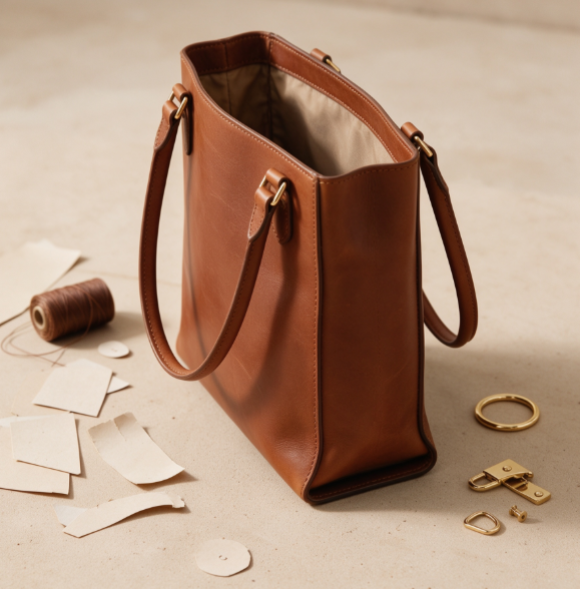
How to Keep a Bag in Shape: Practical Care & Storage Tips
Good structure design only lasts as long as you treat the bag right. Even the best bag stiffener insert or bag bottom board can’t survive years of bad habits.
Daily Habits That Preserve Structure
-
Store upright on a shelf so the base carries the weight, not the handles or side seams.
-
Fill lightly with acid-free tissue paper or a fitted insert. Enough to hold the form, not enough to stretch seams. Newspaper causes ink transfer; plastic or bubble wrap traps moisture.
-
Never hang by handles or straps. Constant tension stretches the straps and warps the bag’s body over time.
-
Don’t overload the bag during use. Excess weight causes sagging and bottom distortion.
Removable Base Inserts for Wide-Bottom Bags
A removable base stiffener adds rigidity right where wide-bottom bags need it. Common sizes are 6 in × 14.75 in × 0.1 in or 7.75 in × 20.5 in × 0.1 in. Measure the interior base width, length, and depth first. The insert should sit slightly smaller than the base, flush and flat without curling.
Storage Environment
Keep bags in a cool, dry, dark closet with a dust bag. Sunlight dries out and cracks leather. If humidity is high, add a rechargeable silica-gel canister, but keep it away from the bag itself.
FAQ: Common Questions About Bag Shape Retention
QC teams don’t guess when a bag will fail. They run numbers. Here’s what those numbers mean when you’re buying, making, or sourcing a structured handbag.
Why does a bag lose shape so fast?
Overload is the top cause. The standard QC benchmark is 2× rated weight held for 24 hours. If handles or seams deform, the stiffener insert or frame support underneath wasn’t strong enough for the load.
How do you fix a sagging bag?
Add reinforcement at handle bases, side seams, and the bottom corners first. A base insert or bag bottom board restores the outline fastest.
What handle pull-off force should hold?
Factories typically target 15 kg per handle, with static-load acceptance around 20–25 kg depending on bag category.
What seam strength counts as reliable?
Suppliers use benchmarks of 200 N minimum for standard totes, 280 N for heavier loads, and reject anything under 180 N. They test per ISO 13935-2 or ASTM D1683, and report the maximum force at failure and the failure mode: thread rupture, stitch pull-out, slippage, or fabric tear.
What should a factory verify before bulk production?Before bulk production, a factory should test loaded samples, check seam strength and handle pull-off force, and inspect reinforcement materials zone by zone across the base, sides, top edge, and gussets. Testing the bag as one piece isn’t enough.
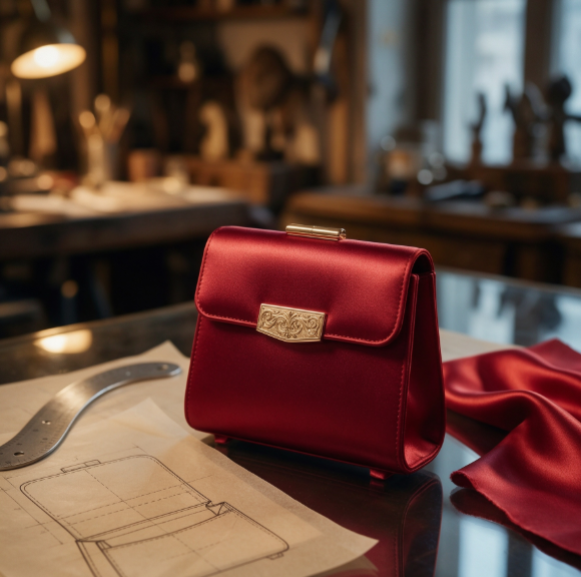
From Design to Production: How Manufacturers Keep Shapes Consistent
A tech pack turns a design theory into a product you can make again and again. It’s the blueprint Manufacturers use to move a concept into structured handbag production at scale. The pack covers front, back, side, and interior views; finished measurements with tolerances; the bill of materials; sewing instructions; reinforcement placement; hardware specs; and packaging requirements.
Tolerances Are in Millimeters
Professional factories quantify everything. Body width tolerance typically runs ±5 mm. Logo placement holds to ±2–3 mm. Totes stay within ±3–5 mm, while backpacks and travel bags allow ±5–8 mm. At the structure stage, manufacturers already recommend the bag reinforcement material and mark seam type, edge finishing, and lining layering directly on the drawing, based on load path.
Sample Grading Before Bulk Production
Real capability shows in prototype testing. The sequence runs prototype sample, fit and construction sample, pre-production sample, and golden sample. Each validates something different—proportions, stitching and reinforcement, final branding, then production benchmark. Testing covers handle drop, strap length, gusset width, opening size, hardware scale, and anchor points at the base and top.
Locking Consistency Across the Batch
The golden sample becomes the single reference for shape, proportion, and stitching once signed off. Inspection runs in three stages, where cutting checks the fabric lot and pattern layout, in-line checks stitch SPI and edge-paint thickness, and pre-pack checks labels and carton drop tests. Bag batches commonly use AQL 2.5 for major defects and AQL 4.0 for minor ones, with zero tolerance for critical defects. For a 10,001–35,000 unit batch, sample code L pulls 200 pieces, allowing up to 10 major and 14 minor defects before rejection. Strap pull tests target 15 kg static, and zippers are validated for 5,000 open cycles.