
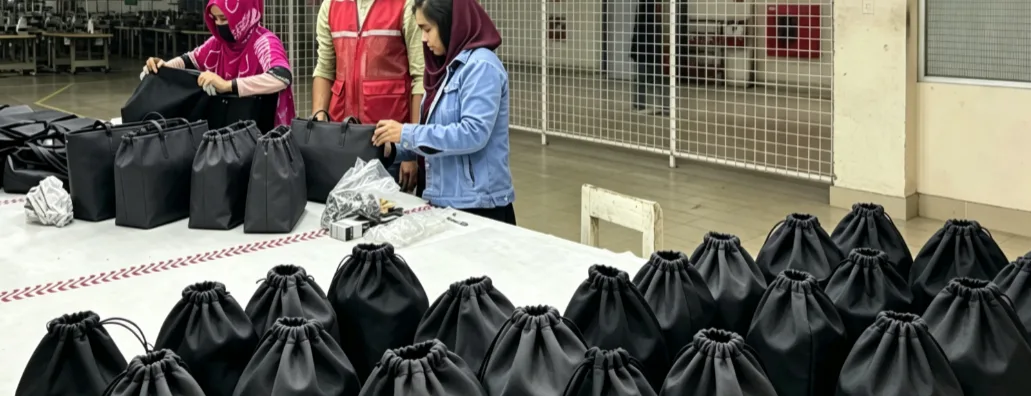
A bad shoe bag design nibbles at your margins—or worse, it hands a customer a flimsy pouch when they expected premium packaging. For sourcing managers and footwear brands looking at custom shoe packaging, the choice between drawstring and zipper bags affects dust protection, unit cost, and the feel of your product in someone’s hands. A budget sneaker line and a luxury dress shoe brand don’t need the same solution, but many buyers pick one style without weighing the trade-offs.
Drawstring Shoe Bags: Structure, Cost & Best-Fit Scenarios
A drawstring shoe bag is a single-panel pouch with a top opening cinched by a pull cord. No zipper track, no sliders, and no moving parts to fail. A typical travel-sized version runs 12 x 16 inches, roomy enough for sneakers or dress shoes and compact enough to tuck into a suitcase corner. That simplicity is why this format dominates budget-conscious and high-volume orders.
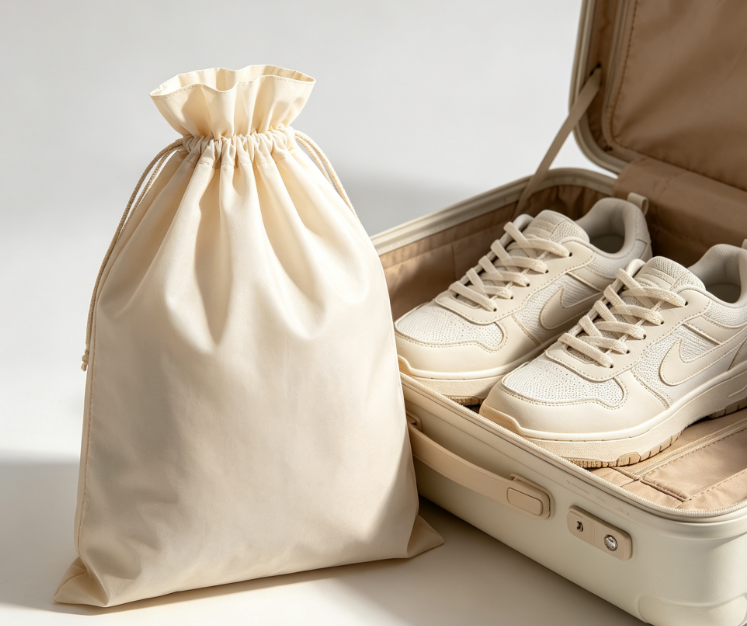
Material Choices Drive Both Feel and Price
The fabric you pick changes the bag’s weight, durability, and how premium it feels in hand.
-
Non-woven fabric: The most budget-friendly option, often used for shoe bag with logo giveaways and promotional runs. Pricing lands between US$0.20–0.51/pc, dropping to the low end at 10,000+ pcs.
-
190T ripstop polyester: Lightweight and smooth-surfaced, ideal for travel shoe bag design projects. Bulk retail pricing runs about US$1.21/pc at the 100-unit level, sliding to US$1.09/pc at higher case counts.
-
210D/420D/600D polyester or nylon: Built for repeated use. These heavier-denier fabrics cost more but hold up through multiple wash-and-reuse cycles.
-
Cotton or velvet: Reserved for gift-tier packaging, often retailing above US$1.99/pc once you factor in retail-ready presentation.
Printing method matters too. Screen printing keeps costs down, while full-color digital printing can push per-unit pricing into the US$0.35–0.60/pc range at 500-piece MOQs.
Where Drawstring Bags Perform Best
The open-top, cinch-close design gives fast access, so there’s no fumbling with a zipper pull mid-workout or mid-packing. That speed makes drawstring bags a strong match for:
-
Sports and fitness brands needing quick-access storage for training shoes
-
Retail promotions and giveaways where non-woven materials keep unit costs low across 500–10,000+ piece orders
-
Travel and luggage organization, where dust-proof, foldable pouches separate shoes from clothing
If your product line leans toward everyday practicality over showroom polish, drawstring is usually the smarter build.
Zipper Shoe Bags: Structure, Cost & Premium Positioning
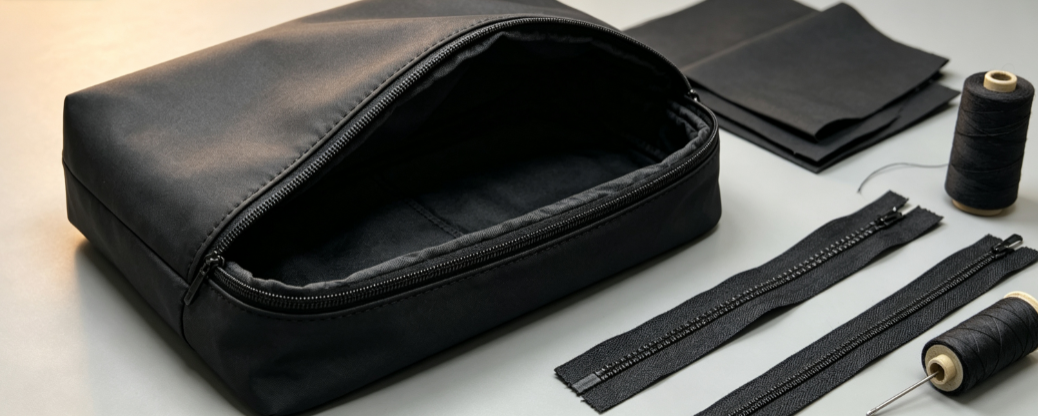
Swap the pull cord for a zipper track and the entire production process changes. A custom zipper pouch needs four parts: outer fabric, inner lining, zipper, and edge-sealed stitching. Manufacturers first sew the zipper between the outer and inner layers, then add topstitching, bottom seams, turn the bag right-side out, and finish with a final seam correction pass. That’s several extra steps compared to a drawstring build, and each one adds labor time and rework risk.
Cost Breakdown: What You’re Paying For
Basic shoe bags in either style can start around US$0.10/pc, but zipper versions with premium materials or added hardware can run up to US$2.31/pc at volume. Expect zippers to add US$0.30–$0.60 per unit over an equivalent drawstring bag. That premium covers the zipper itself (nylon, metal, or plastic track), pull tabs and end-stop hardware, and extra sewing labor for alignment and reinforcement.
On the sourcing side, zipper hardware alone can carry MOQs as low as 500pcs, but finished zipper shoe bags require 3,000–5,000pcs MOQ, higher than most drawstring runs, and a bigger first-order commitment.
Why Buyers Choose Zipper for Premium Lines
Zippers close tighter and stay closed. That makes them better at blocking dust, odor transfer, and moisture, exactly what hotel amenity kits and travel shoe bag design projects need. The seam is also cleaner, so you get sharper lines for printed logos, woven labels, and coated or padded fabrics. Footwear brands bundling zipper pouches with retail shoes, and hospitality brands building slipper or toiletry sets, lean zipper almost every time. It reads as a finished retail accessory.
When evaluating a shoe bag with logo or OEM shoe bags supplier, ask about zipper material (nylon vs. metal), fabric weight, and whether they support waterproof coating, dual-shoe compartments, or mesh ventilation windows. These details are what make a bag premium.
Core Comparison Dimensions: Dust Resistance, Cost, Convenience, and Visual Appeal
Four variables decide whether a shoe bag order performs on the shelf or ends up as a customer complaint: dust protection, unit cost, how fast it opens, and how it looks in someone’s hand. Fabric choice moves all four at once, so a real shoe bag material comparison has to start there, not with the closure style alone.
Dustproof Performance by Fabric
Oxford/nylon: Tighter weave, often finished with PU or PVC coating. This is the closest thing to a true dustproof-and-water-resistant build, which is why most serious shoe dust bag manufacturer quotes default to it.
Canvas: Breathable and thick, but the open weave lets more dust and moisture through than coated Oxford. Fine for light storage, weaker for long-haul travel.
Microfiber: Soft and scratch-resistant, built for a premium look rather than heavy protection. Dust resistance covers everyday use but trails coated Oxford in demanding conditions.
Cost Ranges Across the Market
Mass-market shoe bags run US$0.47–US$2.41/pc at low-to-mid spec, while finished retail sets climb to US$5.68–US$19.99. Oxford sits in a functional mid-price tier because of added coating labor. Canvas is closer to base-level pricing unless thickness or a handmade feel pushes it past basic Oxford. Microfiber almost always carries a premium, since buyers are paying for surface finish, not just protection.
Convenience: Speed vs. Seal
Drawstring wins on speed, zipper wins on seal. If your priority is fast turnover, wholesale drawstring bags fit high-volume, quick-access use like hotel amenity kits. If the priority is a tight, protected close, a custom zipper pouch holds its shape better over repeated handling.
Visual Positioning
|
Fabric |
Feel |
Best Use Case |
|---|---|---|
|
Oxford |
Modern, functional, industrial |
Casual, travel, sport |
|
Canvas |
Natural, textured, casual |
Eco/lifestyle brands |
|
Microfiber |
Soft, clean, refined |
Premium/gift lines |
What US$0.30–0.60 More Buys You
Upgrading from a basic drawstring bag to zipper-plus-tighter-weave fabric buys tighter dust sealing and a cleaner brand presentation. Moving from plain canvas to coated Oxford buys stronger moisture resistance and a more travel-ready structure. Two combinations dominate real orders: drawstring + Oxford for bulk, promotional, or non-woven shoe bag runs, and zipper + microfiber for retail-ready, gift-tier packaging where visual polish outweighs unit cost.
Matching Bag Style to Brand Positioning: Sportswear vs. Fashion/Premium
Your brand positioning should decide this, not your personal taste. A gym-shoe brand and a designer footwear label are solving different problems, and the closure you pick either supports that positioning or works against it.
When Drawstring Fits Your Brand
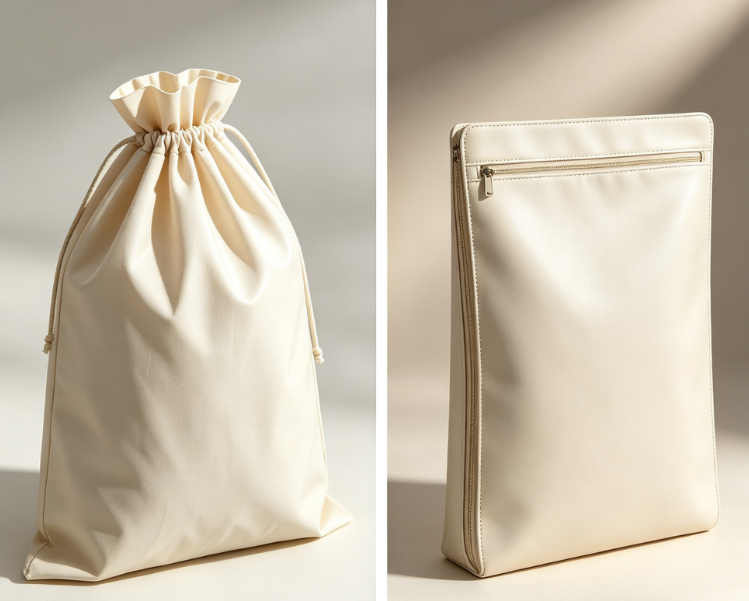
Athleisure, fitness, and everyday casual brands lean drawstring for good reason. These bags are light, foldable, and cheap to produce at scale – exactly what activewear labels, gym-bag inserts, event giveaways, and campus marketing runs need. If your customer cares more about price and fast reorders than unboxing drama, drawstring keeps unit costs down without cutting function.
When Zipper Fits Your Brand
Fashion-forward and high-end lines get more from zipper closures. Women’s and men’s boutique collections, intimates, accessories, gift sets, and DTC brands selling higher-ticket items all benefit from the tighter seal, cleaner presentation, and reusable structure zipper bags deliver. The payoff reaches beyond shoes too: standing zipper pouches can cut packaging weight by up to 80% versus rigid alternatives, trimming shipping costs by roughly 15–20%. Lifecycle assessments on similar zipper-style packaging show reductions of about 81% in plastic weight, 82% in fossil fuel use, 82% in greenhouse gas emissions, 64% in water consumption, and 78% in landfill waste compared to traditional packaging.
Quick Self-Check
-
Price-sensitive customer? Go drawstring.
-
High-ticket product? Go zipper.
-
Brand feel is athletic and everyday? Drawstring.
-
Brand feel is premium and gift-worthy? Zipper.
-
Need dust, moisture, or scratch protection? Zipper.
-
Need fast turnover and bulk cost control? Drawstring.
Sportswear and mass-market brands do best with drawstring; fashion, premium, and gift-line brands do best with zipper.
Customization Details: Materials, Sizing, Branding, and MOQ
Every quote request boils down to four variables: fabric, size, logo method, and order volume. Nail these down before you contact a shoe storage bag manufacturer, and you’ll cut weeks off the sampling process.
Material Options by Closure Type
Not every fabric pairs equally well with every closure. Manufacturers typically default to these combinations:
-
Non-woven (80g/100g/120g/150g, with 100g the most common weight): built for drawstring closures, especially lightweight promotional runs
-
Polyester (190T/210D/600D): works for both drawstring and zipper builds, common on logo-printed sneaker bags
-
Nylon: splash-resistant and abrasion-resistant, suited to both closures, common in travel and sport lines
-
Cotton canvas: pairs almost exclusively with drawstring, good surface for single-color or graphic printing
-
Microfibre: soft, scratch-resistant, fits either closure, generally reserved for higher-end custom runs
-
Oxford: durable and water-resistant, works with zipper or drawstring, a frequent OEM/ODM choice for travel bags
Sizing Ranges
The standard benchmark is 35×25 cm. Common alternatives include 35×40 cm, 44×32 cm, 18×25 cm, 18×37 cm, and 27×37 cm. For kids’ shoes, 18×25 cm-class sizing works best. Regular adult sneakers and casual shoes fit 35×25 cm or 35×40 cm. Boots and oversized footwear need custom-length patterns—most factories build these to shoe length plus margin on request.
Branding Methods, Ranked by Cost
-
Screen printing: lowest cost, best for single-color logos at 500+ pieces
-
Heat transfer: better for multi-color or gradient graphics, higher per-unit cost, suited to smaller runs
-
Embroidery: premium texture, works best on canvas, polyester, or Oxford, priced above both screen and heat transfer
MOQ Thresholds
Some platforms allow orders as low as 50 pieces, but most factories set MOQ at 100–500 pieces. Orders hitting 2,000 pieces typically unlock the next pricing tier. Worth targeting if you’re planning a full OEM shoe bags program rather than a one-off sample run.
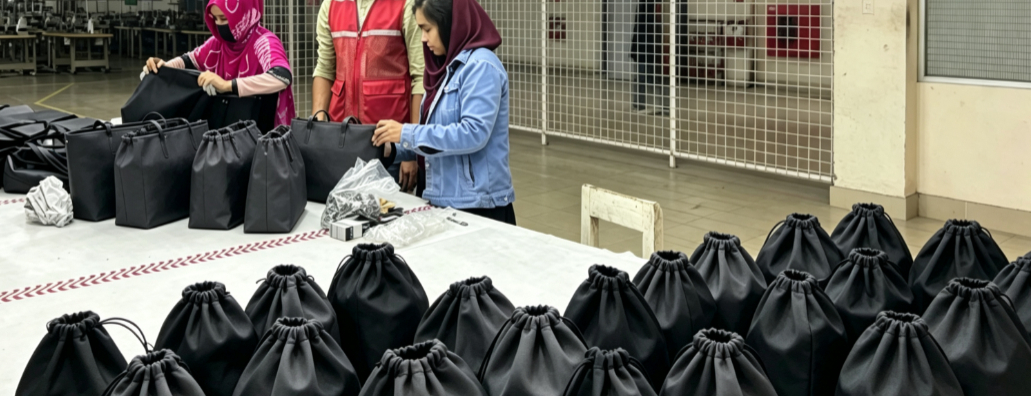
Supplier Capability Self-Check: How to Tell If a Factory Can Actually Meet Your Custom Needs
Not every factory that lists “custom shoe bags” on their site can actually deliver on structure, timeline, or logo work. Before you commit budget, run this checklist.
Closure and Structure Range
A capable shoe storage bag manufacturer should support at least five closure types: drawstring, zipper, Velcro, snap buttons, and elastic bands. Some factories go further with flap, hook-and-loop, or magnetic button options. Structural flexibility matters too—ask if they build dual compartments (keeps shoe uppers from rubbing), ventilation or mesh panels (reduces odor and moisture), wipe-clean liners, and reinforced zipper ends.
Sampling and Production Timelines
Sample turnaround tells you a lot right away. Industry benchmarks run 3–7 days for fast shops, 5–7 days is common, and 7–14 days for complex hardware builds. Bulk production lands at 15–25 days on the fast end, 20–30 days as standard, and stretches to 30–45 days for multi-structure textile orders once materials arrive.
Eight Questions to Ask Before Quoting
-
Which closures do you support, and what’s the MOQ for each?
-
Can you build custom sizes, dual compartments, or ventilation windows?
-
Do you offer structures matched to shoe type—sneakers, formal, boots?
-
How many days for a sample? Is a free or low-cost sample available?
-
What’s your bulk production timeline, separate from sample confirmation?
-
Do you provide OEM/ODM, logo printing, and packaging customization?
-
Is there a golden sample approval step before mass production?
-
What’s your closest existing case to our spec—can you share specs and a quote?
MOQ and Sample Approval
MOQ varies widely. Sample-focused suppliers may go as low as 6 pieces, while bulk-capable factories set higher tiers by product line—always ask for a breakdown. A serious OEM shoe bags partner will insist on sample or golden-sample approval before production runs. That filters out factories that only work off verbal orders.