
Not all durable travel bags are created equal. The difference often comes down to fabric, a factor most buyers overlook. A bag stitched from premium ballistic nylon can shrug off years of airport chaos, while the wrong polyester blend might fray after a few rough handling incidents at baggage claim. Fabric affects both a travel bag’s appearance and its resistance to water, scratches, tears, and everyday wear on the road.
If you’re a frequent flyer choosing between canvas and nylon luggage, or a brand sourcing materials for a new product line, knowing the real performance differences between nylon, polyester, canvas, leather, and technical coated fabrics will save you from costly mistakes.
Key Factors to Consider When Choosing Fabric for Business Travel Bags
Six practical factors separate a fabric that performs from one that fails under real travel conditions.
1. End Use and Load Capacity
Most business bags carry a 14–17″ laptop (1.2–2.0 kg), files, chargers, and clothing—typically 5–10 kg total. That load calls for 600D–1680D Oxford fabric or ballistic nylon as the main material, with enough structure to hold shape during meetings.
2. Wear Level and Denier Rating
Denier (D) measures fiber thickness and strength. 600D is the industry’s entry-level travel standard, suitable for daily commuting. 900D–1680D ballistic nylon bags handle heavier, more frequent use—ideal for checked luggage or rough handling.
3. Weight vs. Cost
Nylon costs 10–30% more than polyester at the same denier. 1680D ballistic nylon can run 2–3 times the price of 600D polyester, often used in bags retailing $150–$500. For lighter carry-ons under 3 kg, 600–900D fabric with efficient coating works best.
4. Water Resistance
A water resistant travel bag material should protect electronics from rain and spills. Look for PU/TPU coatings or DWR finishing rated 1000–3000mm hydrostatic pressure. 3000mm+ coverage handles most business travel environments.
5. Branding and Finish
Smooth-surface polyester or Oxford fabrics (600D/1680D) print and embroider cleanly, keeping logos sharp and colors consistent across bulk orders.
6. Compliance and MOQ
For US/EU/Japan markets, confirm REACH, Prop 65, or OEKO-TEX® certification. Functional coatings typically require MOQs of 1000–3000m per color. Factor this into early sourcing decisions.
Ballistic Nylon vs Polyester vs Canvas: Full Material Comparison
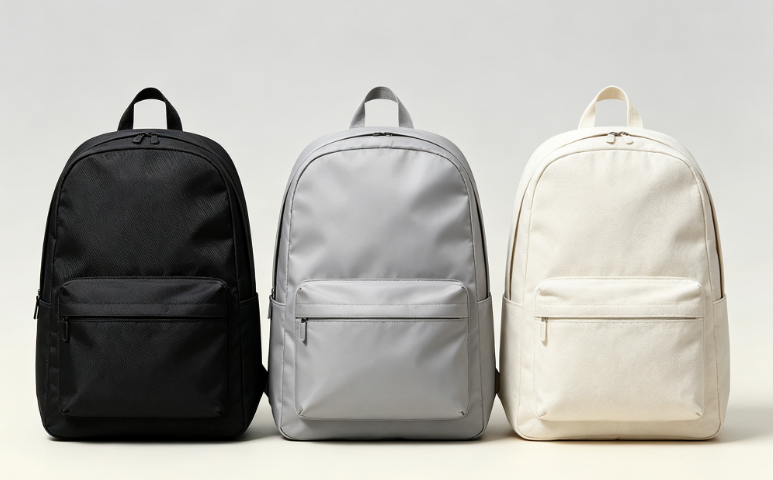
Lab data tells a clearer story than marketing copy ever could. At the same 600D oxford weave, nylon hits 80–90 MPa tensile strength. Polyester gets 65–75 MPa. Canvas tops out at 50–60 MPa. Abrasion resistance follows the same pattern: nylon survives roughly 18,200 Martindale cycles, polyester around 14,000, and canvas stops at 12,000. Go up to 1680D ballistic nylon, and you get about 1.4× the strength of same-denier polyester. That’s why ballistic nylon bags dominate military-grade and heavy-duty travel gear.
Water and UV Performance Differ From Strength Rankings
Strength doesn’t translate directly to weather protection. Polyester is naturally hydrophobic. It absorbs only 0.4–0.8% moisture, which is why coated 600D polyester is the industry standard for water-resistant travel bags at a reasonable price. Nylon soaks up more water at the fiber level and needs PU, PVC, or TPU coating to reach waterproof performance. Raw canvas performs worst here. It soaks through, gains weight, and dries slowly unless waxed. Even waxed canvas needs periodic re-treatment.
UV resistance flips the durability ranking entirely. Polyester holds color and structural integrity best under sun exposure. Canvas comes second. Nylon and ballistic nylon rank lowest. They yellow and weaken over prolonged UV exposure unless solution-dyed or UV-stabilized.
Weight, Cost, and Real-World Positioning
A ballistic nylon business trolley weighs 0.5–1.0 lb more than a comparable polyester model. You’ll notice it on a 24–28″ suitcase, less so on a slim laptop briefcase. On cost, upgrading from 600D polyester to 1680D ballistic nylon raises FOB fabric cost by 30–60%. That matters when you’re scoping bulk orders with a business briefcase material guide in hand.
For canvas, the appeal is aesthetic rather than technical. You get a heritage, artisanal look that synthetics can’t replicate. But it demands more maintenance. Stains show easily. Uncoated canvas can mildew in humid climates. It’s a poor fit for low-maintenance corporate fleets ordering at scale.
Premium Options: Leather, PU Leather & High-Density Oxford Cloth
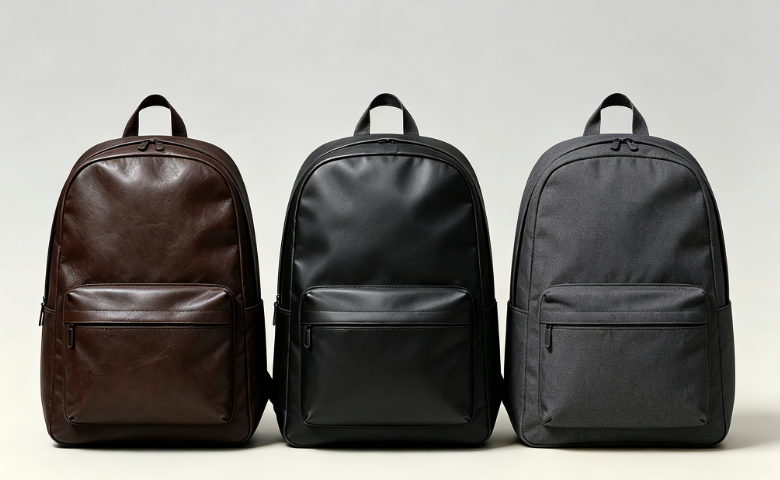
Full-grain leather is still the standard for an executive briefcase. A top-tier leather business briefcase retails for $200–$800, and luxury brands push past $1,000. Quality full-grain hide runs $15–40/m², roughly 3–6 times more than microfiber PU and 2–4 times more than 1680D Oxford at similar grades.
Patina and feel justify the premium. Natural leather develops character over years of use, something no synthetic can replicate. With proper care it lasts 5–10+ years, and unlike coated fabrics it’s repairable. Scuffs and dry patches respond to conditioning oil and polish. Recommend clients recondition every 3–6 months and avoid harsh solvents or prolonged sun exposure to prevent cracking.
PU Leather: The Practical Middle Ground
Microfiber PU is the closest thing to leather without the maintenance burden. It handles Martindale abrasion ratings above 50,000 cycles, resists water without absorption, and wipes clean with a damp cloth. For brands running bulk corporate gift programs, PU cuts material costs by 30–60% versus full-grain leather while keeping that executive silhouette intact.
Expect a 3–5 year functional lifespan. In hot, humid storage or with repeated folding, PU can hydrolyze, turn tacky, or start peeling at seams. It’s a fair tradeoff for the cost savings, and worth stating clearly in any business briefcase material guide you hand to clients.
High-Density Oxford: The B2B Default
Oxford cloth is what most serious manufacturers default to. 600D with PU coating balances flexibility, breathability, and abrasion resistance for daily commuting bags. Push to 1680D, and you get thicker, stronger yarn built for reinforced panels, straps, and high-wear zones. It’s commonly paired with PU, PVC, or TPU coatings to hit water columns of 1,000–3,000mm+ and abrasion ratings of 10,000–30,000+ Martindale.
Oxford also wins on customization. It takes heat transfer and screen printing cleanly, runs Denier options from 300D to 1680D, and lets brands dial in GSM, coating type, and cold-crack resistance to spec. This makes it the most flexible fabric for OEM programs at scale.
Waterproof & Technical Fabrics: TPU Coating, Ripstop & Coated Nylon
Coating type decides whether a “water resistant” claim holds up after year two of hard travel. Two coatings dominate this space: TPU and PVC. Both create a barrier layer over polyester or nylon, but their performance diverges sharply once you look at test data.
TPU vs PVC: What the Lab Numbers Actually Show
In comparative fabric testing, TPU-coated fabric beat PVC-coated fabric in tear strength by 38.9% in warp direction and 50.8% in weft direction. That’s a real gap, not a rounding error. It’s the difference between a bag that survives snagging on a luggage cart and one that rips. TPU also holds up better in low-temperature flexibility, so it won’t crack when folded and stored in cold cargo holds or checked luggage.
PVC isn’t obsolete. It’s simply positioned differently. PVC-coated fabric is the budget waterproofing route—heavier, stiffer, cheaper. TPU-coated nylon or polyester is the premium waterproofing route—lighter feel, better abrasion resistance, and critically, weldable seams via HF welding or heat sealing. Welded seams matter because stitched seams are the weak point in any waterproof build; needle holes let water through no matter how good the coating is.
A market example: Nylon 400D with TPU coating commonly lists ~300N tensile strength and 10,000+ hydrostatic head water resistance—well above the 3,000mm threshold that covers most business travel conditions. TPU-based surface treatments have also hit water contact angles of 142°, confirming genuinely high hydrophobicity, though this typically trades off against air and water vapor permeability.
Where Ripstop Fits
Ripstop fabric reinforces the weave with thicker threads at intervals, so a small cut or puncture doesn’t spread into a larger tear. It’s built for abrasion, snagging, and repeated folding—exactly what happens to a bag thrown into overhead compartments weekly.
For sourcing decisions, three combinations cover most needs:
-
Premium waterproof: nylon or polyester base + TPU coating, welded seams
-
Budget waterproof: coated polyester/nylon + PU/PVC coating, stitched construction
-
Technical/outdoor hybrid: ripstop base + TPU coating for tear and weather resistance together
When comparing suppliers, ask for base denier (400D is common for technical builds), hydrostatic head rating, and whether seams are welded or stitched. These three data points separate genuine technical fabric from marketing language.
How to Match Fabric to Your Use Case
Fabric selection gets simpler once you pick one top priority. Trying to optimize for everything at once is how sourcing teams end up with mediocre compromises.
Match your priority to the fabric:
|
Priority |
Fabric Choice |
Why |
|---|---|---|
|
Maximum abrasion resistance |
Ballistic or high-denier nylon (1680D benchmark) |
Originally developed for military flak protection, built for repeated hard contact |
|
Lowest cost-to-performance |
Polyester |
Cheaper than nylon at scale, with stable color and finish consistency |
|
Rain protection first |
PU-coated polyester/nylon |
Coating drives water repellency more than the base fiber does |
|
Premium business image |
Leather or premium nylon |
Leather signals higher-end status; premium nylon adds an executive look at lower weight |
|
Sustainability sourcing |
RPET recycled fabric |
Lower virgin-plastic content while keeping polyester-like durability and printability |
A Quick Self-Check Before You Commit
-
Trip frequency: Heavy monthly travel pushes you toward ballistic or high-denier nylon.
-
Rain exposure: If yes, coating matters more than surface finish.
-
Price sensitivity: Default to polyester as your benchmark fabric.
-
Meeting-room appearance: Leather or premium nylon wins here.
-
Brand ESG requirements: Shortlist RPET first.
Best-Fit Combinations by Company Size
-
Startups: Use polyester for core SKUs, coated polyester for waterproof lines, and RPET for sustainability collections. This gives the lowest sourcing risk and simplest inventory.
-
Mid-size brands: Use high-denier nylon for premium travel lines and polyester for entry-level. This gives a better durability-to-margin balance.
-
Large procurement teams: Split by line: ballistic nylon for rugged SKUs, PU-coated fabric for weather-protection SKUs, leather or premium nylon for executive collections, and RPET for ESG-led assortments.
Before approving any fabric, request denier, coating type, water resistance spec, abrasion rating, colorfastness data, and a physical swatch. Compare hand-feel and drape side by side. Specs on paper don’t always match what arrives in the box.
B2B Sourcing Guide: What to Ask Fabric & Bag Suppliers
Choosing a fabric on paper is one thing. Getting a factory to deliver it consistently at scale is another problem entirely. Before you sign off on any custom bag fabric factory, run through these questions.
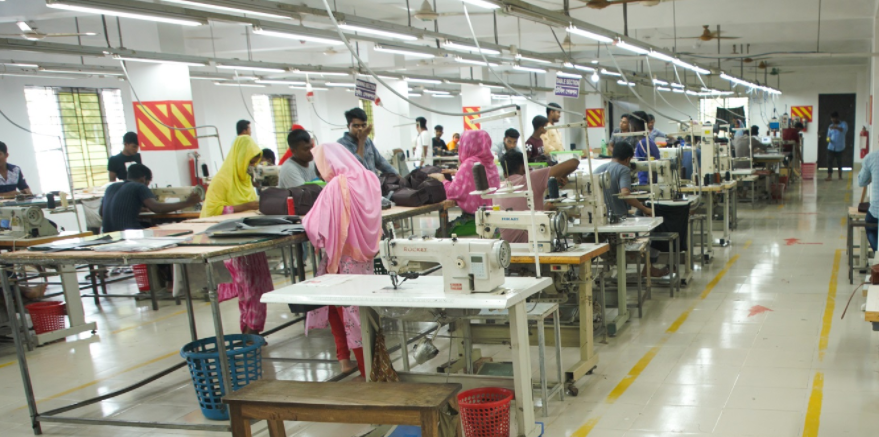
Sourcing Basics
– Stock inventory or made-to-order? Ask directly whether they’re a mill, converter, or jobber. That determines real customization flexibility and base cost.
– Request MOQ, MCQ (minimum color quantity), and EXW/FOB pricing. Some specialty prints go as low as 50 meters MOQ; bulk mills often quote by container-sized monthly capacity.
– Sample policy: turnaround time, cost, and whether you get swatches before lab-dip approval on full production runs.
Quality Verification
– Require test data: GSM, colorfastness, shrinkage, tensile strength, abrasion/pilling, hand-feel. AATCC TM135 (dimensional stability) and AATCC Test Method 8 (crocking) are standard benchmarks.
– Confirm dye lot consistency across batches, plus retained samples for future reorders.
Documentation and Compliance
– Ask for business license, factory tenure, comparable product photos, and recent OEKO-TEX, GOTS, ISO 9001, or WRAP certifications. Request at least 3 verifiable references from similar-tier clients.
– For pre-shipment checks, third-party inspection (SGS, Bureau Veritas, TÜV) protects against surprises before large orders ship.
Lead Time and Terms
– Get sampling lead time, bulk lead time, monthly and peak capacity, and reorder flexibility separately.
– Clarify Incoterms (FOB/CIF/DDP) and payment terms upfront. Unit price alone hides the real landed cost.
Brand Customization: Key Acceptance Criteria
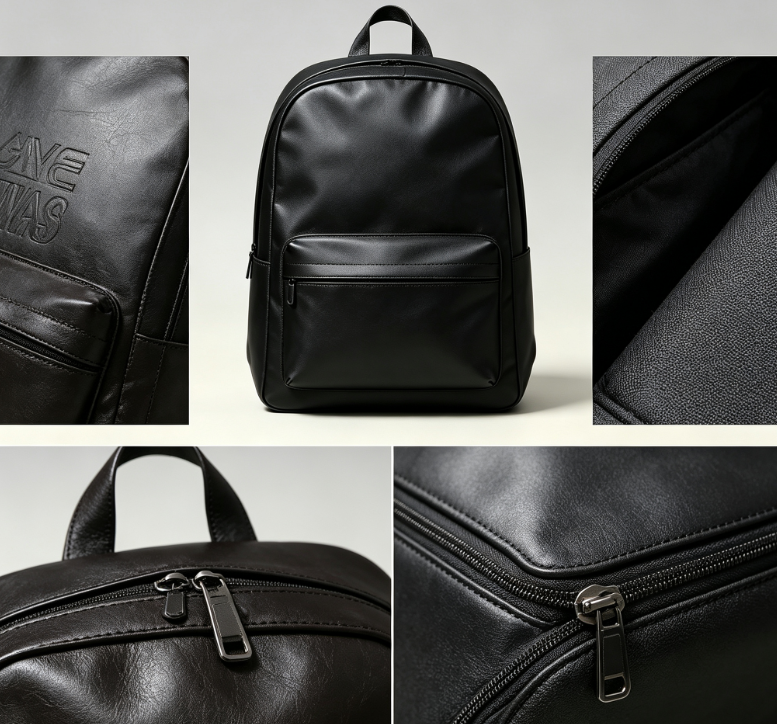
For custom business bags, inspect print edge sharpness, color registration, and wash/rub fastness before approving bulk production. Confirm logo compatibility across screen printing, heat transfer, embroidery, or embossing on your chosen fabric. Check lining GSM, filler thickness, and hardware durability (zippers, buckles, handle attachments) since these drive return rates. Test load capacity, handle strength, stitch density, and stress-point reinforcement, especially for bags carrying laptops daily.
Template Questions to Send Suppliers
-
Stock or custom? Can you modify fabric, color, logo, lining, and hardware?
-
Provide MOQ, MCQ, EXW/FOB pricing, sampling cost, sample lead time, bulk lead time, monthly capacity.
-
Share business license, factory photos, comparable finished products, current certifications, audit reports.
-
For fabric specs: composition, weave, GSM, width, surface treatment, colorfastness, shrinkage rate, test standards.
-
How do you control dye lot variance, and what’s your retained-sample process?
-
Can you integrate printing, logo work, lining, filler, and hardware to our brand spec, with past case examples?
A factory that answers all six categories without hesitation is usually one worth building a long-term relationship with.