
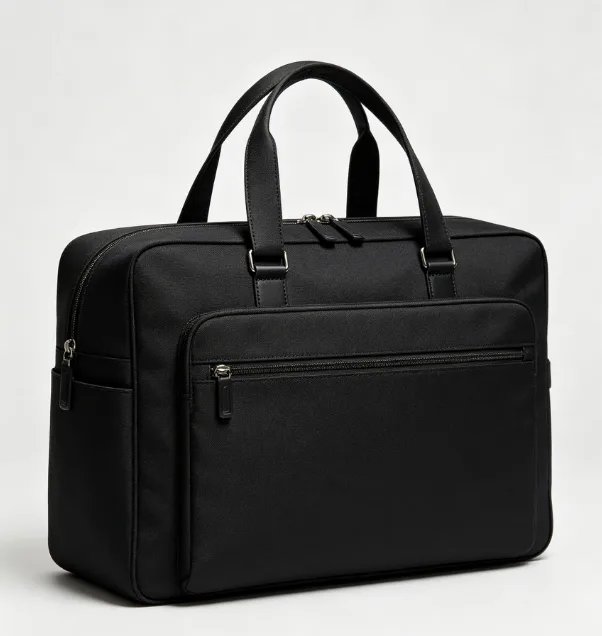
Choosing the wrong fabric for your foldable travel bag order can mean the difference between a product line that sells itself and one that comes back full of complaints: torn seams, water-soaked contents, or bags too bulky to “fold.” For B2B buyers and brand teams sourcing custom travel bags, knowing which materials deliver on durability, packability, and water resistance at the price point your customers expect is the challenge. Factories that say yes to any spec are easy to find. From ripstop nylon and 600D polyester to TPU-coated fabrics and eco-friendly alternatives, each option carries distinct trade-offs in weight, cost, and lifespan. This guide breaks down the best materials for foldable custom travel bags, with side-by-side performance comparisons, sourcing insights from real production cases, and practical answers to the material questions that most often stall procurement decisions.
Polyester & RPET Fabric for Foldable Travel Bags
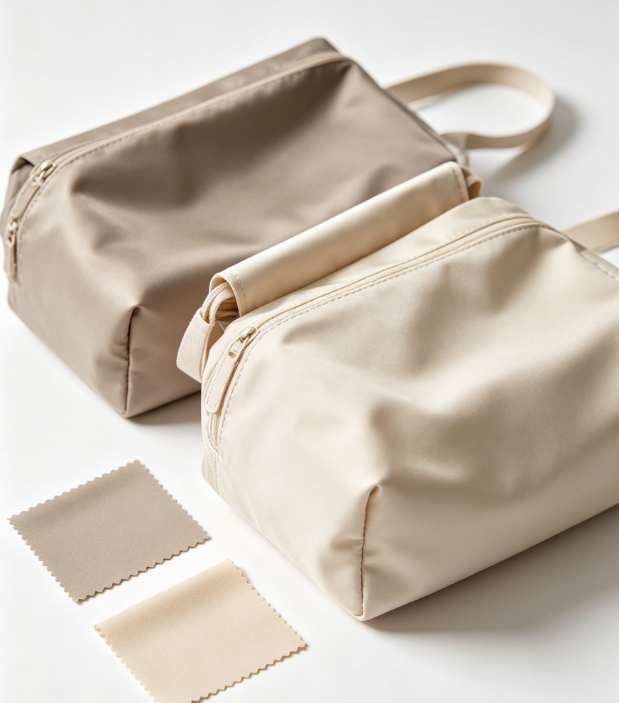
Polyester and RPET (recycled PET) dominate the foldable travel bag market because they balance cost, weight, and performance better than most alternatives. Before locking in specs, understand denier count.
Denier & Weight Reference
|
Application |
Denier |
Weight (gsm) |
Fold Volume |
|---|---|---|---|
|
Ultra-packable pouches |
210D–300D |
120–180 gsm |
Fits in palm (~8–10 cm cube) |
|
Standard travel bags/backpacks |
420D–600D |
200–300 gsm |
~12–15 cm cube |
Going from 210D to 600D thickens the fabric from roughly 0.25mm to 0.50mm. Fold volume grows 30–60%, but tear and abrasion resistance improves 2–3x (Martindale ratings jump from ~20,000 to 50,000 cycles). A 600D polyester bag or 600D RPET+PU construction gives you 230–252 gsm and 0.48mm thickness. Durable enough for retail travel lines, still foldable.
RPET & Sustainability Premium
GRS-certified RPET costs 8–20% more than virgin polyester, which works out to a $0.2–0.5/meter premium on bulk orders. Retail pricing can go 10–30% higher when you market it as eco-friendly travel bag fabric, though most OEM programs cap the premium at 15–20% to stay competitive.
MOQ Reality Check
Fabric suppliers usually require 500–1,000m/color for RPET/polyester Oxford, dropping to 100–300m for stock colors. Finished foldable bag orders start at 500–1,000 pcs/style, and scale to 3,000–10,000 pcs for promotional runs.
Nylon & Ripstop Nylon for Lightweight Packable Bags
Strength-to-weight ratio separates nylon from every other fabric on this list. A nylon foldable travel bag outperforms polyester in tear and abrasion resistance at the same denier count. Nylon’s crystalline structure delivers roughly 10–20% higher tear strength under identical weave conditions, plus about 30% stretch recovery that helps the fabric bounce back from sudden pulls instead of ripping.
Denier Selection by Application
|
Denier |
Weight |
Best For |
|---|---|---|
|
20D–40D |
20–70 g/m² |
Foldable totes, ultra-light daypacks (10–20L) |
|
70D–100D |
55–120 g/m² |
Travel bag liners, packable jackets, mid-load backpacks |
|
210D |
150–200 g/m² |
Main bag bodies, lightweight hiking packs |
Most packable bags use 30D–70D nylon. Light enough to compress to palm-size, strong enough to survive repeat packing.
Ripstop Grid Matters More Than Weight
The reinforcing yarn in ripstop nylon runs 2–4x thicker than the base weave, spaced every 5–10mm (usually 5–8mm). This grid stops tears from spreading past a single cell. A 70D–210D ripstop nylon bag holds up under stress a plain-weave fabric of the same weight wouldn’t survive.
Cordura vs Standard Ripstop
Cordura nylon (500D–1000D, with 210D–420D lightweight variants) costs 30–80% more than standard ripstop but gives you better abrasion resistance for bag bottoms and high-friction zones. For premium lines, Cordura is reserved for structural panels only. Standard 30D–210D ripstop is used everywhere else to control cost.
UV and Nylon
Nylon fades and loses strength under prolonged UV exposure faster than polyester. That’s a problem for travel bags that sit in direct sun. Suppliers address this three ways: UV-absorbing coatings (pushing UPF from 15–30 up to 30–50+), high-fastness dye systems rated ISO 4–5 for light fastness, and polyester-nylon ripstop blends that trade a bit of tear strength for better fade resistance.
Waterproofing Options for Ripstop
-
PU coating delivers 800–1500mm hydrostatic pressure. It has a soft hand-feel and keeps the bag foldable.
-
Silicone coating (Silnylon) boosts tear strength at the same denier and lowers weight. Ideal for a waterproof foldable duffel bag built for weight-conscious travelers.
-
DWR finish creates a water-repellent surface only. It handles light rain but isn’t a substitute for coating.
Recycled Nylon for Premium Lines
Recycled nylon (Re-Nylon) content runs 20–100%, with 30–50% balancing sustainability claims against cost. It costs 10–30% above standard nylon pricing. Premium builds often pair 210D–420D recycled ripstop main bodies with PU or C0 DWR coating, then use 40D–70D recycled ripstop for packable sub-pouches to keep weight down while reinforcing the eco-friendly story buyers are asking for.
Oxford Fabric for Business & Corporate Travel Bags
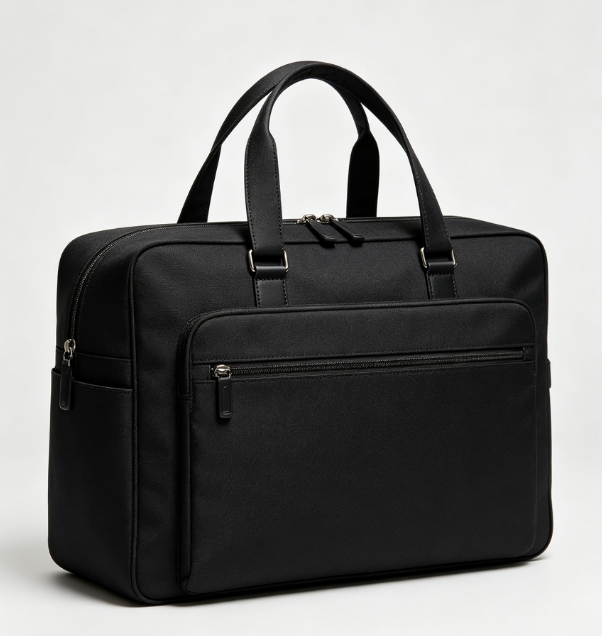
Corporate buyers think about different things than consumers. Brand consistency. Logo durability. A boardroom-ready look that still works after airport handling. Oxford weave delivers that.
Denier-to-Product Fit
|
Denier |
GSM |
Best For |
|---|---|---|
|
300D |
150–230 g/m² |
Foldable travel totes, packing cubes, document pouches, promotional giveaways |
|
420D |
180–220 g/m² |
Commuter backpacks, business daypacks, light luggage shells |
|
600D |
220–300 g/m² |
Laptop bags, structured travel backpacks, branded corporate duffels |
300D keeps promotional bags light and cost-controlled. 420D is the business-casual sweet spot — enough hand-feel without excess weight. 600D is the workhorse: better abrasion resistance and shape retention for bags that get thrown into overhead bins weekly.
Logo Application Matters
Printing works best on smoother 300D/420D surfaces or finished 600D. Embroidery and woven patches need the extra body 600D provides. Thinner fabric distorts under stitching tension.
Polyester vs Nylon Oxford
600D polyester Oxford with PU coating is the typical backpack spec. Nylon Oxford (420D–600D) costs more but feels more premium, so it’s a better match for upscale corporate travel lines. PVC coating gives you a firmer hand-feel and heavier waterproofing when that’s what you need.
TPU/PU/PVC Coating Technology for Waterproof Foldable Bags
Coating chemistry decides whether a TPU coated fabric bag survives a monsoon or just looks water-resistant on a spec sheet. TPU, PU, and PVC coatings each behave differently under welding, folding, and long-term wear. Getting this wrong means either overpaying for waterproofing you don’t need or shipping a “waterproof” bag that leaks after three uses.
Seam Welding Performance
-
TPU welds cleanly via RF, hot-air, or hot-plate methods, with seam strength matching the base fabric tensile strength. RF-welded TPU+420D nylon systems hit IPX8 (fully submersible) with hydrostatic ratings up to 100,000mm in ISO 811 testing, the theoretical ceiling for seamed construction.
-
PVC also welds well via high-frequency (HF) methods, common in drybags and rafting gear. 0.4–0.7mm PVC coatings reach IPX6–IPX7, but the thicker coating adds bulk and rigidity.
-
PU doesn’t weld structurally. Most PU-coated seams rely on stitching plus tape, capping hydrostatic head at 3,000–5,000mm for double coats, fine for rain but not for submersion.
Fold Performance & Cost
TPU stays flexible and recovers from creasing better than PVC, which develops visible white fold lines and cracks in cold weather. PU sits in between: soft-handed and foldable, but prone to coating hydrolysis in humid climates.
The prices match this order. PU-coated nylon runs $0.8–2.5/meter, PVC-coated polyester $1.0–2.0/meter, and TPU-laminated nylon $1.6–5.5/meter. Switching PU to TPU typically adds $0.3–0.6 per bag, roughly 3–7% on a $8–12 FOB unit, often justified for a durable foldable bag material claim on premium lines.
Eco-Friendly Options: Recycled Cotton, Canvas & Organic Fabrics
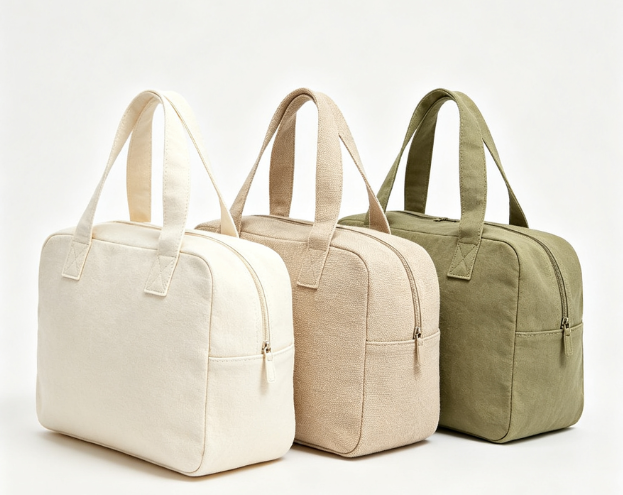
Sustainability now sways procurement decisions as much as price does. Recycled cotton, organic cotton, and canvas are the go-to eco-friendly travel bag fabric choices for brands chasing certifications and consumer trust, but they come with real trade-offs in bulk and cost that synthetic materials don’t have.
Price Premiums You Should Budget For
-
Recycled cotton yarn: 8–12% premium over virgin cotton once production scales
-
Organic cotton yarn: up to 40% premium, the highest of any eco option
-
GOTS/OCS-certified fabrics: 5–20% raw-material premium tied to auditing and traceability
-
Retail pricing: brands typically pass through 15–25% higher shelf prices, and Millennial/Gen Z buyers accept it for verified sustainable sourcing
Recycled cotton SKUs in US apparel doubled from ~100 to ~200 between 2022–2024. It’s still a small slice of the market, but the trend points toward recycled fibers becoming a market-access requirement.
Canvas Bulk Problem
Standard 280–360 gsm canvas folds poorly. A 12–16 oz/yd² cotton canvas tote packs 2–3x thicker than an equivalent 200D nylon bag. Manufacturers solve this by substituting panels: keep heavy canvas (280–320 gsm) on the base and handles, drop to 150–200 gsm organic cotton on side panels and fold zones. Segmented seams at bend lines cut folded volume by 15–25% versus single-panel builds.
Certification Strategy
Use GOTS when the eco story runs through the entire supply chain. OCS works when only fiber content needs verification—it has a lower audit cost and still unlocks a 5–15% premium. Pair GRS with chain-of-custody documentation for recycled-content claims to hit the 15–25% pricing tier brands target.
Non-Woven PP: Budget Option for Mass Promotional Bags
Price wins the argument for trade show giveaways every time. Non-woven PP totes run $0.50–$2.00/unit at volume, sitting 40–70% cheaper than canvas ($2.50–$8.00), cotton ($2.00–$5.00), jute ($1.80–$4.50), or recycled PET ($1.50–$4.00). At 5,000+ units, UK suppliers report prices dropping from £1.30 to £0.55/bag — a 58% reduction from scale alone. Production also needs 40% less energy than woven plastic alternatives.
The Trade-Off
Fibers are thermally or ultrasonically bonded. That means no woven yarn structure, weaker seam strength, and lower fatigue resistance under dynamic loads. These bags handle 5–8 kg safely (brochures, samples, light retail goods) and are good for 40–100 uses. They’re not built for 10–15 kg travel loads over hours of airport handling.
When to Choose It
Pick non-woven PP for conference kits, retail giveaways, and campaigns needing 1,000–10,000+ units under $1/bag. For actual travel bag duty cycles, woven PP, canvas, or polyester remains the better call.
Material Comparison Table: Weight, Durability & Cost Analysis
Fabric gets the attention in every custom travel bag conversation, but hardware and structural components decide whether a bag survives its first drop test. Buckles, frame stays, zipper sliders, and logo hardware all come from a different material pool than the shell fabric. Getting these specs wrong adds weight buyers didn’t ask for or strength they didn’t need.
Component Material Scorecard
|
Material |
Density |
Tensile Strength |
Cost/kg |
Best Use |
|---|---|---|---|---|
|
UHMWPE |
0.935 g/cm³ |
90–100 MPa |
Premium |
Ultra-light frame stays, low-friction zip pulls |
|
ABS |
1.03 g/cm³ |
96 MPa |
~$1.40 |
Molded buckles, clip housings |
|
PA (Nylon) |
1.15 g/cm³ |
50–80 MPa |
$1.40–2.80 |
Cost-driven buckles, webbing loops |
|
PC |
1.23 g/cm³ |
118 MPa |
~$1.80 |
Clear logo panels, tough clips |
|
PEEK |
1.3–1.45 g/cm³ |
97 MPa, 0.4% water absorption |
$42–56 |
Sealed hardware for waterproof foldable duffel bags |
|
Magnesium alloy |
1.8 g/cm³ |
150–250 MPa |
$5.60–7.00 |
Lightweight collapsible frames |
|
Aluminum alloy |
2.7 g/cm³ |
200–450 MPa |
$7.70–8.40 |
High-strength frame joints |
On a quick 1–5 scoring, PA and ABS win on cost (5) but score low on strength (2). Aluminum tops strength (5) but adds the most weight (2). PEEK leads waterproofing (5) at the highest price point (1). Match hardware to fabric grade — a 600D polyester bag doesn’t need aluminum hinges, but a premium ripstop nylon travel line often does.
How to Choose the Right Material for Your Custom Travel Bag Order
Match the fabric to the use case first, then dial in denier, GSM, and coating. Skip that order and you’ll overspec a promotional giveaway or underspec a business traveler’s daily carry.
Match Material to Use Case
|
Use Case |
Recommended Material |
Key Specs |
|---|---|---|
|
Outdoor/one-bag travel |
600D–1680D polyester, Cordura, Oxford + waterproof coating |
180–300 gsm, PU coating, seams reinforced for load +20% |
|
Business/laptop bags |
Full-grain leather, 1680D nylon |
Leather for 100–500pc premium runs; nylon for large corporate orders |
|
Promotional giveaways |
Non-woven PP, 210D–420D polyester |
80–120 gsm PP, allows logo coverage 40–60% of face |
|
Eco-friendly brands |
GRS-certified RPET, organic cotton canvas |
30–100% recycled content, verified by certificate |
Under repeated abrasion, a 1680D nylon Oxford bag with DWR finish lasts 1.5–2x longer than standard 600D polyester. That’s a real difference for one-bag travel lines built for daily gate-to-gate use.
Order Scale Changes the Calculation
Small batches (50–500 pcs) justify premium materials like leather or 1680D nylon, since the higher unit price absorbs the fabric cost. Mid-to-large OEM runs (1,000–50,000 pcs) should default to standardized stock: 600D or 210D polyester, 80–100 gsm non-woven PP. Lock the target FOB price first, then reverse-engineer the material choice from that number.
Waterproof and Logo Printing Fit
For “needs to survive rain” inquiries, ask for hydrostatic pressure data, not just coating names. 500–1,000mm covers light drizzle; 1,500–3,000mm handles most travel exposure. For logo work, smooth polyester or nylon surfaces suit screen printing and heat transfer; textured canvas favors embroidery.
Case Study: Custom Foldable Travel Bag Production Examples
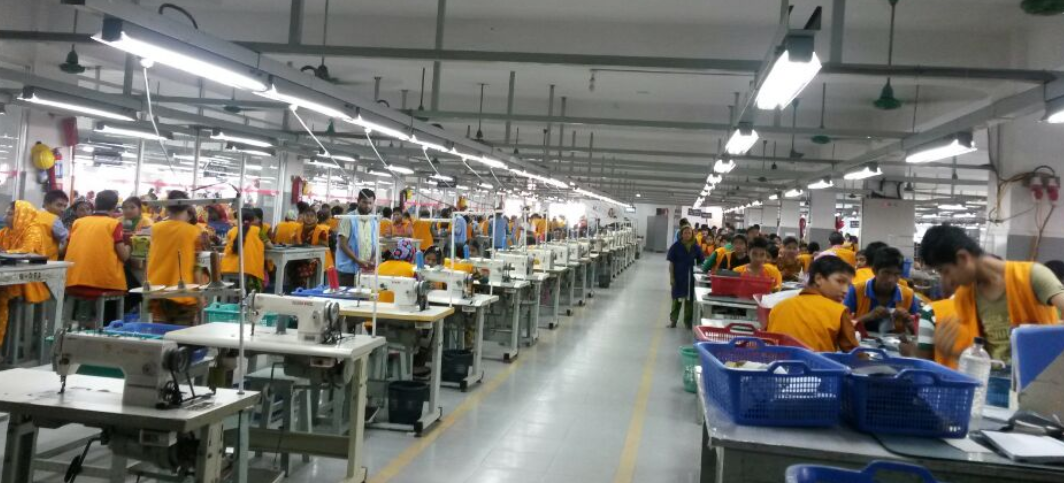
Real production timelines tell you more than any spec sheet. Standard custom travel bag orders run 20–25 working days from sample confirmation to delivery. More complex projects—concept, material selection, sample development, then bulk production—need 30–45 days.
One retail accessories distributor built a croc-embossed leather handbag line that way: design refinement, material sourcing, sample development, then scaled production, all inside that 30–45 day window.
Foldable Bag Production Steps
-
Cutting heavyweight Oxford or eco-friendly non-woven fabric with folding allowance built in
-
Sewing handles, edge binding, and inner compartments
-
Testing load capacity, stitch integrity, zipper action
-
Folding into final packable shape
MOQ Benchmarks: Standard runs cap at 1,000 pcs. Trial orders should target factories that accept 500 pcs or fewer, ideally running 1,000㎡+ facilities with documented QC records.
FAQ: Common Questions About Foldable Travel Bag Materials
Procurement teams keep asking the same eight questions before they sign off on a material spec. Here are direct answers, with the numbers to back them.
How long should a foldable travel bag actually last? Ripstop nylon and polyester builds run 3–5 years under normal travel use. Premium Cordura or ballistic nylon construction stretches that to 5–10 years in daily commuter or travel duty. Lightweight 6–10 oz canvas folds down fast, but wears out in 6–12 months.
What role does structure play versus fabric strength? Material only accounts for roughly 50% of durability. The rest comes from stitching and hardware. Require double-line stitching plus bartack reinforcement at handles and corners. Specify YKK or equivalent metal zippers; plastic sliders fail first under load.
What certifications should suppliers provide? Ask for OEKO-TEX Standard 100 on fabric, coatings, and thread to confirm no harmful chemical residue. For sustainability claims, request GRS certification showing recycled content of 20–50%+ with traceable chain-of-custody. ASTM D5034 tensile data backs up any “durable foldable bag material” claim.
What’s the realistic MOQ and lead time? Standard 300D–600D polyester/nylon orders run 300–500 pcs; branded fabrics like Cordura push MOQ to 500–1,000 pcs. Stock-fabric samples take 7–10 days, bulk delivery 25–35 days. Custom-dyed fabric with logo work extends the full cycle to 45–60 days.