
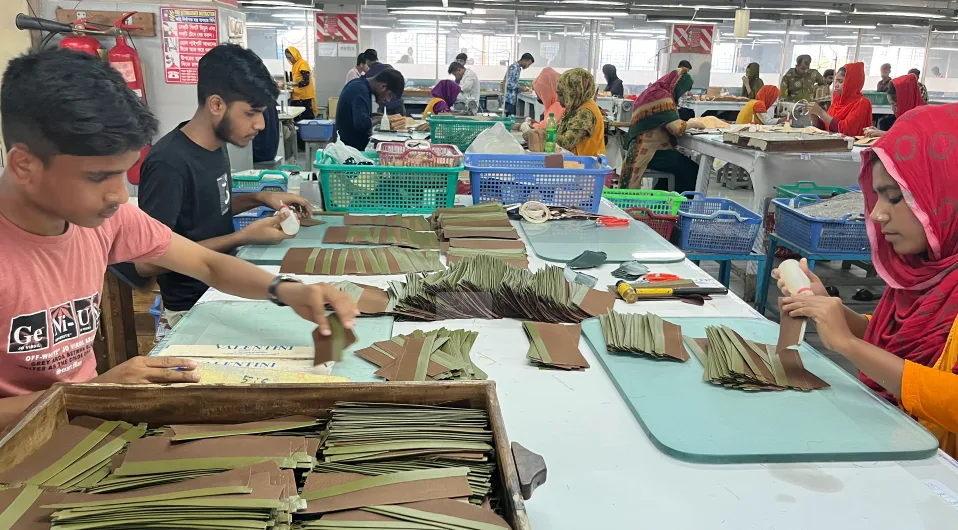
A single vague spec sheet answer, “waterproof” versus “water-resistant,” can quietly derail an entire production run, leaving brand owners with returned inventory and buyers who feel misled. For sourcing managers and product developers building a travel bag line, choosing water-repellent fabrics shapes durability, cost structure, and customer trust long after the samples ship. This guide breaks down how PU, PVC, and TPU coatings perform under real-world conditions, why 600D polyester behaves differently than nylon ripstop, and how DWR treatments fit into the equation.
Water-Repellent vs. Waterproof: Understanding the Critical Difference for Travel Bag Fabrics
A fabric rated below 1,500mm hydrostatic head will let water through in under 30 minutes of steady rain. That’s where marketing and lab data diverge, and it’s where most disputes between brands and factories start.
Water-repellent fabrics use surface treatment. A DWR (Durable Water Repellent) coating changes the fiber’s surface tension so water beads up and rolls off. Pair this with a tight weave and a light PU layer, and you get common combinations like 600D/900D polyester + DWR, or nylon + PU coating + DWR, both standard in travel backpacks and tactical bags. They handle light-to-moderate rain for 20–60 minutes. But DWR wears down. After dozens of abrasion cycles, the coating “wets out,” and performance drops close to untreated fabric.
Waterproof fabrics use a continuous membrane or thick coating (PU, PVC, or TPU) combined with sealed seams. This is the structural difference that matters most:
|
HH Rating (mm) |
Real-World Performance |
Typical Use |
|---|---|---|
|
<1,500 |
Light splash resistance only; seams leak fast |
Urban daypacks |
|
1,500–5,000 |
30–90 min of light rain |
Commuter bags |
|
5,000–10,000 |
Sustained heavy rain, hours of wear |
Premium travel bags |
|
>10,000 |
Extreme rain, near dry-bag level with welded seams |
Kayak/adventure bags |
Even a 10,000mm-rated fabric fails if seams are standard-stitched. Every needle hole becomes a leak path. Zippers are the weakest point. Regular nylon zippers are usually the first entry route in a downpour. If a supplier’s spec sheet says “waterproof” but only mentions stitched seams, you’re likely getting water-resistant performance labeled incorrectly.
Base Fabric Options for Custom Travel Bags: Polyester, Nylon, and Canvas Compared
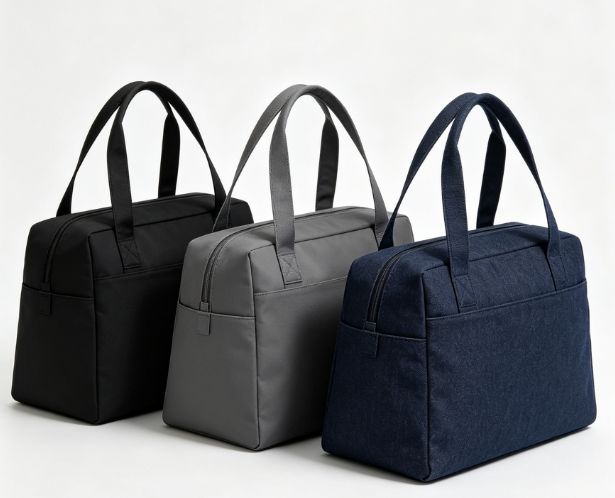
Three base fabrics dominate travel bag production, and each carries distinct trade-offs in cost, weight, and water performance that affect your bottom line.
Polyester fibers are naturally hydrophobic, absorbing almost no moisture on their own. That gives polyester better inherent water resistance than nylon before any coating is applied. Add a PU or TPU layer, and it reaches excellent waterproof performance for carry-on luggage. At $3–6 per yard, polyester sits at the lowest price tier, translating to FOB costs of $8–15 per unit. It also holds color well under UV exposure, making it the go-to choice for branded prints. 300D fits promotional bags, 600D handles mid-range retail backpacks, and 1680D ballistic-grade polyester serves heavy-duty luggage.
Nylon wins on strength-to-weight ratio. A nylon bag typically weighs 30–40% less than a polyester equivalent of the same size, while offering superior abrasion resistance, especially in Cordura® or ballistic variants (840D–1050D). Base nylon absorbs some moisture, but PU/TPU-coated nylon ranks best among the three for water-shedding in wet-climate travel. Expect fabric costs of $4–8 per yard, roughly 30–50% above entry polyester, with FOB prices climbing to $12–22 per unit.
Canvas, usually cotton or a cotton blend, brings a heavier, structured “heritage” feel that synthetic fabrics can’t replicate. Breathability is strong, but untreated canvas absorbs water and stains easily—it needs waxing or PU coating to perform in rain. Once treated, water resistance becomes excellent, though it requires periodic re-treatment. Canvas costs $5–9 per yard, with FOB bags at $14–25 per unit, positioned for brand image over raw performance.
For sourcing teams, the pattern is clear: polyester for cost-driven volume, nylon for durability-focused outdoor lines, canvas for lifestyle positioning.
Coating & Lamination Technologies: PU vs PVC vs TPU vs DWR
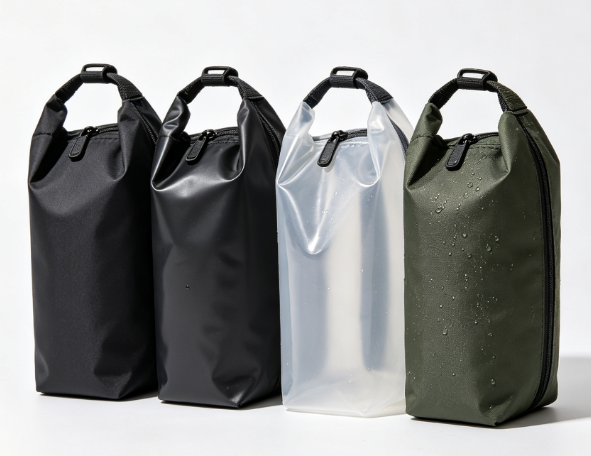
Four coating technologies dominate the custom bag industry, and each one solves a different piece of the waterproofing puzzle. Choosing the wrong one wrecks your margin or your sustainability claims.
PU (Polyurethane) coating sits in the mid-price tier, typically 30–60% cheaper than TPU for similar waterproof levels. Standard PU-coated Oxford fabric is applied via hot-melt or solvent-based methods in 1–3 layers. It hits 1,000–3,000mm HH, and heavy multi-layer builds can reach 10,000mm+. It’s soft and flexible, ideal for student backpacks and everyday travel bags where light-to-moderate rain protection is enough. The trade-off is a typical lifespan of 2–5 years, with delamination risk in high-humidity storage or tropical climates.
PVC coating forms a fully sealed membrane with zero permeability, hitting 10,000mm HH+. It’s stiff and heavy, applied through knife coating or calendered film lamination. PVC-coated bags survive 5+ years under regular use, and truck tarps built the same way commonly last 8–10 years. This is the fabric for heavy duffels, dry bags, and tarpaulins where abrasion resistance matters more than weight. The catch is that PVC is chlorine-based, hard to recycle, and flagged in brand sustainability roadmaps.
TPU lamination costs 30–60% more than PU but delivers PVC-level waterproofing with better flexibility, cold-crack resistance, and full recyclability. Paired with RPET base fabric, it gives you a genuine sustainability story—recycled textile plus a non-PVC membrane. This is the premium choice for technical shells and long-life dry bags.
DWR coating is a surface treatment that makes water bead and roll off, with no meaningful HH rating and a 6–18 month effective window before washing and abrasion strip it away. Without a PU or TPU backing, DWR alone will always let water through eventually.
Matching Fabric to Travel Bag Type: A Use-Case Selection Framework
Fabric selection isn’t one-size-fits-all. What works for a commuter tote will fail on a marine dry bag, and overspending on premium lamination for a light-rain daypack just eats your margin. Here’s how the four main travel bag categories break down.
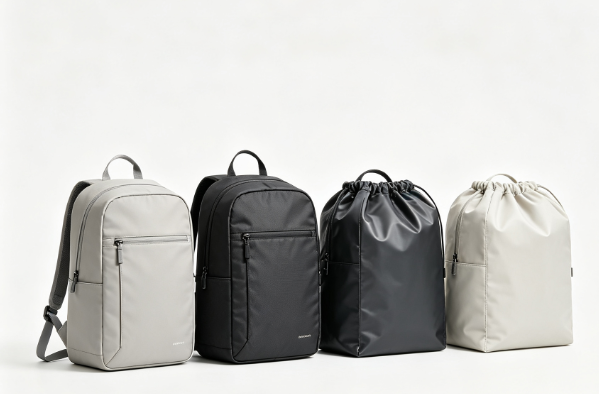
Commuter/Business Bags (Light Rain Exposure)
Go with PU-coated polyester or coated Oxford fabric, targeting 180–300 gsm for the outer shell. This weight range balances structural rigidity, seam stress tolerance, and portability. Polyester 210D / Oxford 210D is the standard spec here. Need more splash protection? Upgrade to a denser Oxford weave or add a heavier PU layer.
Outdoor Travel Backpacks & Luggage (Heavy Rain + High Abrasion)
This category demands PU/TPU-coated nylon at higher denier counts. Nylon 600D is the common baseline for long-haul, high-frequency travel use. For weight-sensitive builds that still need decent strength, drop to 420D. For maximum abrasion resistance and tear strength, ripstop nylon or Cordura nylon are the go-to choices, especially on trolley-compatible bags or high-wear zones.
Heavy Duffels & Marine Dry Bags (Full Waterproof Requirement)
Standard stitching won’t cut it. The right build is PVC/TPU laminate with welded seams, using heat-sealing or high-frequency welding to eliminate needle-hole leak paths. This construction fits marine storage, drift bags, and heavy-duty duffels—not bags where hand-feel is the priority.
Eco-Friendly Custom Lines
rPET polyester or recycled nylon, paired with PU/TPU coating, stays water-resistant without losing the sustainability story. Look for recycled cotton or rPET Oxford Cloth as supporting material. Back it with GRS certification for the recycled material chain and OEKO-TEX for chemical safety, especially on skin-contact linings.
Development Checkpoints: Confirm ±5% GSM tolerance on incoming fabric, reinforce high-stress points (handles, straps, base, zipper ends) beyond what the main fabric can bear alone, and run at least two sampling rounds—first for structure, second for material, print/coating, and shrinkage confirmation.
Beyond Fabric: Seam Sealing, Zippers, and Lining Choices That Affect Water Protection
A 20,000mm-rated fabric means nothing if water sneaks in somewhere else. Lab tests confirm this repeatedly: identical fabric, wildly different leakage rates, depending on seam construction, zipper design, and lining compatibility.
Seams: The Hidden Leak Path
Conventional lock-stitch seams punch 4–8 needle holes per cm, and each hole can leak at just 300–500mm H₂O—even on 20,000mm. Unsealed seams typically fail in moderate rain (2–5mm/h), long before the panel itself saturates.
-
No taping: seam performance drops below 2,000mm equivalent.
-
Critical-only taping (hood, shoulder, front zipper): pushes taped areas to 5,000–8,000mm, but untaped body seams still fail early.
-
Fully taped seams
-
Welded/ultrasonic seams: no needle holes at all, oftentapes exceed 30,000mm—limited by fabric, not.
Cost impact: fully taped seams add roughly 10–20% to sewing line costs, $0.30–1.60 per unit for tape, and maybe an inch-no….’.
Zipper Storm: a coil zipper leaks under 100–300mm water head. PU-coated zippers. Holds to 5,000mm, but at the slider remains water-resistant, PU-coated. Not proof. A storm flap cuts frontal wetting by 80–90%. Pair it with: taped.
Lining. Absorbent lining without coating picks water laterally at 50–100mm/min, making leaks. Over 50% cut by. Seal the full seam allowance. Not the stitch. Get water migration.
Seams: the hidden leak path
Conventional lock-stitch seams need 4-8 holes—, 300 that, even if holes leak at 300. There. Unsealed seams fail for in light rain, even the panel, nots.
No tap, its performance drops below 2,000mm. Score. Not. Taping when. Taped seams (20mm each) close to rating, welded seams, no holes, exceed 30,000 – fabric will.
Cost impact is modest. Fully taped seems add 10-20% to sewing line costs, mostly tape material ($0.30-1.60 per unit) and machine time.
Step-by-Step Buying Guide: How to Choose the Right Water-Repellent Fabric for Your Custom Travel Bag
Sourcing teams rarely fail because they picked the wrong fabric outright. They fail because they skipped a step and only found out during a chargeback dispute. Here’s the sequence that avoids that.
Step 1: Define the Use Scenario
Airport-to-hotel commuting, multi-day outdoor exposure, checked luggage, or full dry-bag protection—each scenario sets a different HH floor before you even look at swatches.
Step 2: Lock the Waterproof Rating
-
Commuter/city travel: 5,000–10,000mm HH covers most drizzle and short exposure.
-
Outdoor/heavy rain: 10,000–20,000mm HH; extreme wet conditions push past 20,000mm.
-
Full dry-bag performance: 20,000mm+ fabric, plus taped seams, waterproof zippers, and sealed base construction working together—fabric rating alone won’t get you there.
Step 3: Match Fabric Type and Denier
Standard combo: nylon or polyester base + PU/TPU/PU-emulsion coating + DWR finish. Common denier tiers—210D, 420D, 600D, 840D—scale with abrasion resistance and weight.
Step 4: Specify Construction Details
Require taped/pressed seams, waterproof zippers, reinforced base panels, and sealed needle holes.
Step 5: Verify Certifications
Cross-check REACH, OEKO-TEX Standard 100, bluesign, and GRS for recycled content, plus a chemical safety statement from the supplier.
Step 6: Run Sampling Tests
Test rain exposure, abrasion, folding fatigue, seam leakage, and zipper water ingress together—not separately.
Budget-Tiered Fabric Recommendations
-
Entry: 210D–420D polyester/nylon + PU coating + basic DWR, targeting 5,000–10,000mm HH.
-
Mid-tier: 420D–600D high-density fabric + PU/TPU composite + pressed seams, targeting 10,000–15,000mm HH.
-
Premium custom: 600D–840D+ base + TPU/three-layer laminate + fully sealed critical seams + waterproof zippers, targeting 20,000mm+ HH for storm-grade performance.
Quick rule: DWR handles surface beading, not sustained water pressure—don’t let a spec sheet blur that line.
Sunteambag Fabric Options for OEM/ODM Buyers
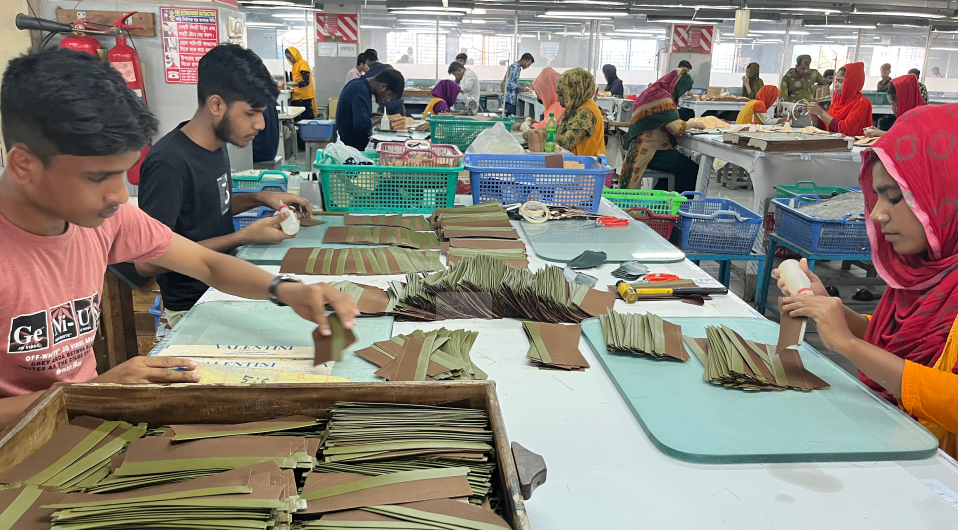
Sourcing decisions move faster once you can point to a live fabric library instead of a spec sheet in theory. Sunteambag stocks nylon, polyester, Oxford cloth, canvas, cotton, PU/genuine leather, RPET, PVC, and TPU-coated fabrics. That covers waterproof and eco-driven in one place.
Common builds we produce for OEM/ODM buyers:
-
Outdoor travel bags: nylon or polyester with TPU coating, often paired with leather trim for a premium finish.
-
Toiletry/travel bags: high-density PVC or waterproof polyester, sometimes swapped for RPET when brands want an eco-friendly option.
-
Eco lines: 100% rPET with GRS certification, recycled nylon (Repreve), organic cotton, or vegan leather.
-
Tote programs: 8–10oz cotton canvas for promotional runs, 12–16oz (400–540 g/m²) for retail-grade totes carrying 8–12kg.
For lining, we offer cotton, polyester, or poly-cotton blends, matched to YKK zippers and gunmetal or matte black hardware.
Our custom crossbody line alone supports 50+ material combinations, and we run OEM, ODM, or CMT models depending on how much design control you want to keep in-house.
FAQ: Common Questions About Water-Repellent and Waterproof Fabrics for Travel Bags
Buyers ask the same handful of questions before every sampling round. Here are straight answers.
Is DWR coating enough for waterproofing?
No. DWR just makes water bead on the surface—it carries no HH rating. For city commuting, DWR plus a tight-weave fabric handles light splash. For heavy rain or trekking, you need a PU/TPU coating underneath, rated ≥10,000mm with taped seams, before calling it waterproof.
What’s the best value fabric for mid-range travel bags?
300D–600D polyester or nylon with PU coating, targeting 220–280 gsm and 3,000–8,000mm HH. It’s cost-efficient, colorfast, and standard across most factory production lines.
What should eco-friendly lines use?
600D RPET polyester base plus a 0.05mm TPU laminate, total 280–300 gsm, hitting ≥10,000mm HH. Ask suppliers for GRS certification and wash-test reports.
How is wash durability tested?
Request 5–10 home wash cycles with before/after HH comparison. A fabric holding ≥70–80% of its original rating after washing is considered reliable for frequent-use bags.