
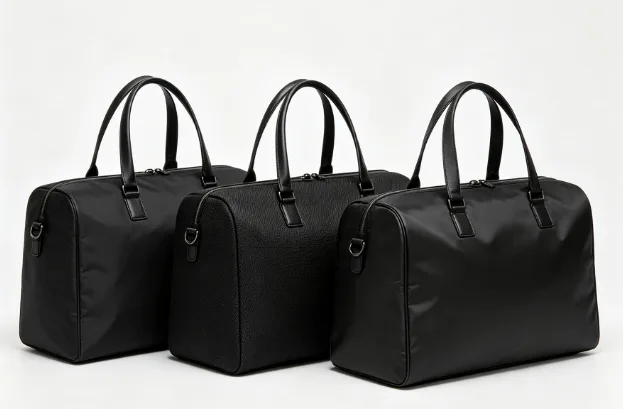
Choosing the wrong fabric for your custom travel bag line can quietly drain your margins through extra shipping weight, premature wear-and-tear claims, or a waterproof lightweight fabric that fails after three trips through baggage handling. For brands sourcing OEM travel bag fabric at scale, these missteps are costly—they erode buyer trust and slow down retail approval cycles. Ripstop nylon, polyester blends, and premium TPU laminates each have different weight-to-durability ratios and price points. You’ll learn the technical differences that actually matter for production decisions, from denier ratings to coating types, and get a practical framework for matching fabric performance to your target price tier, use case, and supply chain realities.
Lightweight Fabric Categories for Travel Bags
Six fabric families cover most travel bags today, each with its own denier range and performance profile.
Ripstop nylon fabric runs 210D–450D. Its grid-reinforced weave gives it much higher tear resistance than flat nylon of the same weight: 420D ripstop delivers about 25–40N tear strength, compared with 15–25N for 210D. That makes 300D–450D ripstop a good choice for lightweight main panels without jumping to heavier 600D+ Oxford or Cordura.
Polyester travel bag material spans 300D–1800D, sorted by density grades (64T low, 74T mid, 82T high-density for stress points). 600D Oxford polyester weighs 220–260 g/m² and is the workhorse for mid-tier bags because it balances cost and performance.
High denier fabric bags use 600D–1000D Cordura or nylon (300–380 g/m² at 1000D) for reinforced bottoms and long-haul checked luggage.
Technical laminates like X-Pac VX21 (210D nylon face, PET waterproof film, ~200–210 g/m², 10,000mm+ hydrostatic rating) and UHMWPE/Dyneema fabrics push strength-to-weight ratios further, sometimes at only 100–150 g/m² for ultralight backpacking bags.
TPU coated fabric for bags has tunable waterproofing: 3,000–5,000mm for city-ready lightweight bags, 10,000–20,000mm for true dry bags. Untreated DWR nylon sits below 1,000mm splash resistance.
Cotton canvas (10–16 oz/yd²) rounds out the lineup for brands that care more about looks than weight.
Nylon vs Polyester vs Oxford Cloth: Technical Performance Comparison
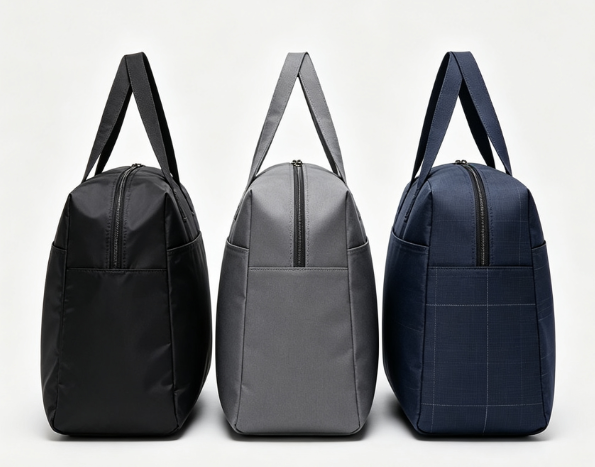
Nylon and polyester get compared constantly, but the real question in bag production is different: which one, and which weave, holds up on your target price and use case? Here’s the breakdown for sourcing decisions.
Nylon wins on abrasion resistance and tear strength per unit weight. That’s why it dominates outdoor gear and load-bearing packs. Polyester loses slightly on raw durability but makes up for it with better UV stability and far more consistent bulk production. That’s why it’s the default for cost-sensitive external panels.
Oxford cloth is a weave structure, not a fiber. It’s usually built from either nylon or polyester yarns. In bag manufacturing, 600D and 1680D Oxford are the two specs that come up again and again because they hit a practical middle ground between strength, cost, and weight.
Comparison Table
|
Dimension |
Nylon |
Polyester |
Oxford Cloth (600D/1680D) |
|---|---|---|---|
|
Abrasion resistance |
Highest strength-to-weight |
Lower, but sufficient for standard bags |
10,000–15,000 Martindale cycles (polyester base); Oxford weave can exceed 20,000 cycles |
|
Waterproofing |
Low absorbency, pairs well with PU/DWR |
Good base for stable PU/PVC coating |
Coating performance depends on weave density before treatment |
|
Weight |
Lighter at equal strength |
Comparable, cost-driven choice |
Varies by yarn count—customizable to target GSM |
|
Price range |
$$$–$$$$$ |
$–$$$ |
$–$$$$ |
Which to Choose for Your Bag Line
-
Outdoor performance, high-abrasion, heavy loads → nylon, full stop.
-
Budget control, bulk stability, exterior panels → polyester.
-
Performance without blowing budget → polyester Oxford for the body, nylon Oxford reinforcing the base, corners, and straps.
-
General-purpose travel bags → 600D Oxford. It’s the industry’s go-to for backpacks, duffels, and heavy-duty totes.
-
Rolling luggage, tactical bags, high-friction use → 1680D Oxford, valued for its stiffer hand-feel and superior wear life.
If waterproofing is your priority, focus on the coating spec, not the fiber name. If longevity is the priority, check the denier and Martindale rating instead.
Premium Technical Laminates: When Ultralight Justifies Higher Cost
A 400g weight difference doesn’t sound like much—until a buyer carries a 30L one-bag through three airports in a single trip. That’s where X-Pac and Dyneema laminates earn their premium. Most mass-market travel bags shouldn’t bother.
X-Pac VX07 vs. Dyneema/UHMWPE: The Numbers
X-Pac VX07 uses a 70D polyester or nylon face, a 45° cross-ply polyester scrim, and a 0.25–0.5 mil PET film underneath. That construction lands at 140–160 g/m², with tensile strength around 450–620N and waterproofing exceeding 10,000mm. Compared to standard 400D nylon, brands see a 30–40% weight reduction with better structural rigidity.
Dyneema/UHMWPE composites push further. UHMWPE fiber has a tensile strength of 2.4–3.0 GPa at just 0.97 g/cm³ density, roughly 10–15 times steel’s strength-to-weight ratio. DCF hybrid fabric (2.92 oz/yd²) weighs about 99 g/m² yet breaks at over 200–250 lbs in tensile tests, less than half the weight of comparable 210D nylon. Waterproofing exceeds 20,000mm.
|
Metric |
600D Polyester |
X-Pac VX07 |
Dyneema Hybrid |
|---|---|---|---|
|
Weight (g/m²) |
220–260 |
140–160 |
90–110 |
|
Tensile strength (N) |
300–400 |
450–620 |
600–900 |
|
Waterproofing (mm) |
1,500–3,000 |
>10,000 |
>20,000 |
|
Material cost (USD/m²) |
$2–4 |
$12–20 |
$30–60 |
Where the Premium Pays Off
These fabrics belong in 20–55L one-bag travel packs and ultralight hiking gear, not general luggage. A 30L VX07 bag runs 0.9–1.2kg versus 1.3–1.6kg in standard 500D nylon, saving 400–500g that frequent flyers genuinely feel. Retail prices for VX07 bags typically hit $200–350, with fabric costing 30–40% of total materials. Dyneema-built 40–55L hiking packs retail at $350–700, fabric alone eating 40–50% of material budget.
For mass-market 30–100 USD bags facing baggage-handling abrasion and price-sensitive buyers, this premium doesn’t translate—material costs alone would erase margins entirely.
Step-by-Step Fabric Selection Framework for Brand Owners
Most fabric mistakes happen before anyone touches a swatch. Brands skip straight to material specs without defining the product first. The right sequence is: lock in your end-use scenario, rank your performance priorities, then match fabric structure, weight, and finishing. Here’s the six-step process OEM travel bag fabric buyers actually use.
The 6-Step Process
-
Define product and use scenario. Business travel, outdoor, digital nomad, or promotional giveaway. Each demands different must-have performance: waterproofing, tear resistance, lightweight build, structured shape, or low cost.
-
Set material target parameters. Document fiber composition, GSM, hand-feel, surface texture, coating requirements, and abrasion or water resistance targets. Higher GSM usually means heavier and stiffer—weigh that against drape and wrinkle behavior.
-
Sample before scaling. Order small swatches and larger yardage, then run wash, stretch, friction, wrinkle, and heat-press tests. Building 1–3 sample bags before committing to production catches problems cheap.
-
Verify fiber labels and blend ratios. Confirm the exact composition—100% nylon, 95/5 cotton-spandex, 50/50 cotton-poly. Blend ratio directly determines strength, recovery, and print compatibility.
-
Check certification scope and risk. Confirm whether certificates cover the fiber alone or the full supply chain, and whether they apply to your target market. Log every result as approved, parked, or rejected.
-
Build a fabric whitelist. Track supplier, fiber type, certification, test results, target category, price tier, and status in one database. Future sourcing decisions only draw from this list.
Fabric-to-Product Matching by Category
|
Bag Category |
Recommended Fabric |
FOB Cost Range (USD/pc) |
|---|---|---|
|
Promotional bags |
Low-cost polyester or canvas |
$0.8–2.5 |
|
Ultralight one-bag |
Thin nylon or lightweight polyester |
$2.0–5.0 |
|
Daily travel bags |
Polyester Oxford or nylon |
$3.5–8.0 |
|
Business carry-on |
Structured polyester, PU-coated |
$5.0–12.0 |
|
Outdoor backpacks |
High-denier nylon, Cordura |
$6.0–15.0 |
Printing method matters too. Polyester and canvas suit screen printing best for bulk consistency; nylon typically pairs with heat transfer or woven labels. Decide your decoration method before locking the fabric—it narrows your usable material list significantly.
Balancing Weight, Durability, and Cost
Every fabric decision comes down to cost per unit of strength. The formula is material and processing cost (USD/kg) divided by tensile strength (MPa) times density. Lower is better. Filter candidates against your minimum abrasion cycles, tear strength, and weight cap first, then rank survivors by this cost-per-strength number before sampling.
Where the value sits in nylon vs. polyester
210D nylon ripstop (110–140 g/m², 300–400N tensile, 15–20N tear, 15,000+ Martindale) costs 20–30% less than 420D nylon but trades away some durability. Reinforce the base and strap junctions with 420D+ denier, and you cut overall weight 10–20% while losing only 5–10% durability. This is smart for bags under 5kg loads.
420D nylon ripstop (180–220 g/m², 600–800N tensile, 25–35N tear, 25,000+ Martindale) delivers 80–120% more strength for just 40–60% added weight versus 210D. It’s the industry’s sweet spot for USD 50–120 retail bags.
600D polyester with PVC backing (220–300 g/m²) hits 30,000–40,000 Martindale cycles, outlasting economy nylon by 20–30%, at 25–40% lower material cost. It is heavier, stiffer, and prone to cold-weather cracking.
Performance gap and premium cost of sustainable fabrics
RPET matches virgin polyester within 5–10% on tensile strength and stays under 3% heavier, but costs 15–40% more depending on recycled content and GRS certification. Recycled cotton canvas loses 10–25% tensile strength versus virgin canvas, needing wider seam reinforcement, and typically runs heavier (300+ g/m²) to compensate.
Structural engineering beats heavier fabric
For load-bearing bags, skip the fabric upgrade. Add 1–2mm HDPE side panels and 2–3mm base boards with EVA foam cushioning. This cuts overall weight 10–20% versus all-heavy-canvas construction while improving impact resistance. Structural cost per unit strength beats fabric weight almost every time.
MOQ, Lead Time and Supply Chain Considerations for Fabric Sourcing
Fabric choice doesn’t end at the spec sheet. MOQ and lead time decide whether your fabric plan actually survives contact with a real supply chain.
Typical MOQs by Fabric Type
-
Commodity polyester wovens: 100–300 m per color for stock-dyed programs; many mills set entry MOQs at 300–500 m per fabric type.
-
Cordura® nylon (branded, authorized mills): 500–1,000 m per color for bulk runs; small-lot orders below 500 m usually carry a surcharge.
-
UHMWPE/Dyneema laminates: 500–2,000 m per laminate spec. Each lamination batch needs volume to justify running the line.
Sample yardage sits far lower. Most mills accept 5+ yards per color for lab-dip and prototype testing.
Lead Time by Fabric Category
|
Fabric |
MOQ |
Lead Time |
|---|---|---|
|
Stock polyester |
100–300 m |
3–4 weeks |
|
Cordura® nylon |
500–1,000 m |
6–8+ weeks |
|
UHMWPE laminates |
500–2,000 m |
8–12+ weeks |
Weaving runs 2–4 weeks, dyeing 2–4 weeks, finishing 1–2 weeks—custom constructions stack all three toward the long end.
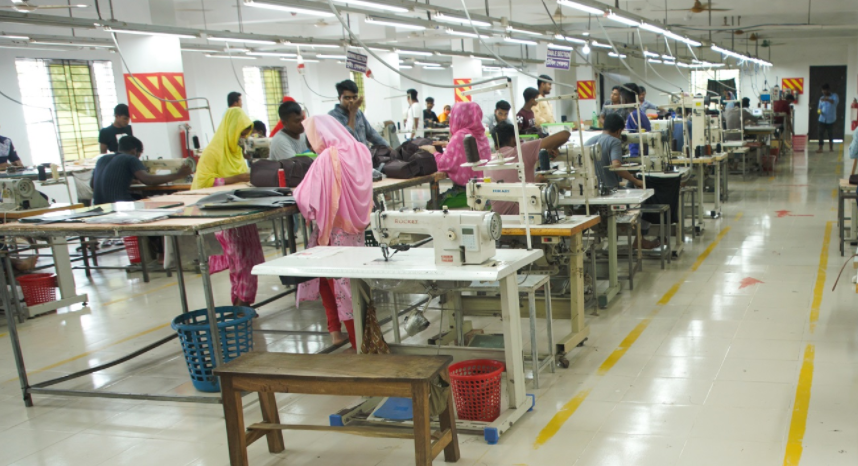
Negotiation Levers That Actually Work
-
Consolidate colors/styles to hit one dye-lot MOQ instead of splitting small orders.
-
Accept a 5–15% price premium to run 300m instead of 500m during pilot phases.
-
Book yarn/greige 2–4 weeks before final sample sign-off to shave time off total lead.
-
Always buffer 1–2 weeks for rework and logistics.
Sunteambag maintains pre-negotiated fabric agreements across polyester, nylon, and laminate suppliers, letting brands skip the MOQ bottleneck during early production runs.
Questions About Lightweight Bag Fabric Materials
Brands sourcing fabric almost always hit the same six questions before signing off on production.
How light is too light? Ultralight ripstop at 40–70 gsm works for foldable or one-time promo bags, but it needs lining and reinforcement to carry daily loads. Structured city backpacks need 100–160 gsm (150–210D) and handle 5–8kg daily. Travel totes should stay at 180–220 g/m² or 300D+. Every 20–30% jump in GSM adds 10–30% more tear and abrasion life.
What fabric fits an under-seat carry-on? 300D–600D nylon or polyester at 180–260 g/m² handles 5–10kg loads with decent abrasion resistance. Cordura 500D/1000D pushes Martindale cycles far higher for daily commuting use.
Is laminate worth the premium? Coated technical fabrics run 30–150% higher in material cost, but they can justify 10–30% higher retail pricing when waterproofing (5,000–20,000mm) and abrasion life (10,000+ cycles) matter. This is typically for outdoor or wet-climate use, not indoor carry.
Care and colorfastness? Wash under 40°C, avoid high-heat drying above 60°C to protect PU/TPU bonding. Target colorfastness grades of 3–4 for washing, 4–6 for light exposure on outdoor bags.
Martindale targets? Commuter backpacks need 10,000–20,000 cycles. Promotional totes need 5,000–10,000. High-performance outdoor gear needs 20,000+.
What to Look for in a Professional Custom Travel Bag Manufacturer
A factory’s fabric list tells you almost everything before the first sample arrives. Ask for a breakdown by nylon (210D–1680D), polyester (600D–1200D, including GRS-certified recycled), Oxford (210D–600D with PU/PVC/TPU coating options), and laminates. If they can’t quantify GSM ranges by panel section, they’re not ready for OEM travel bag fabric production.
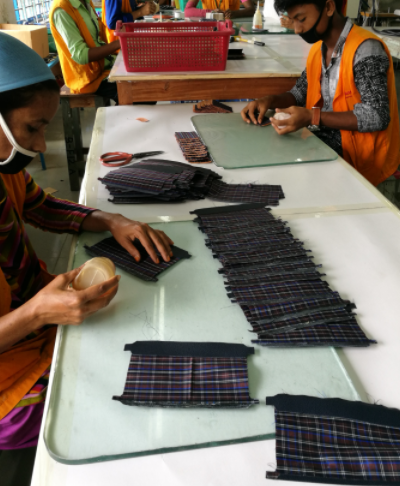
Consultation quality separates real manufacturers from order-takers. Send the same brief to three to five factories with your target retail price, use case, and load weight. Serious suppliers respond with two to three fabric options, cost deltas (often $0.80 to $1.50 per bag between tiers), and expected lifespan. You don’t just get a single quote.
Check these hard numbers:
-
Sample lead time: 7–15 days for standard designs, 30–45 days for complex structures.
-
Martindale ratings: 15,000–25,000+ cycles documented with lab reports, not verbal claims.
-
MOQ flexibility: 300–500 pieces per color standard, with pilot runs of 100–200 pieces available.
-
Certifications: OEKO-TEX, GRS, BSCI, ISO 9001 at the factory level, not just fabric-supplier certificates.
Sunteambag runs this exact process—fabric consultation, documented testing, and pilot-order flexibility—for brands validating OEM travel bag fabric suppliers before committing to bulk production.