
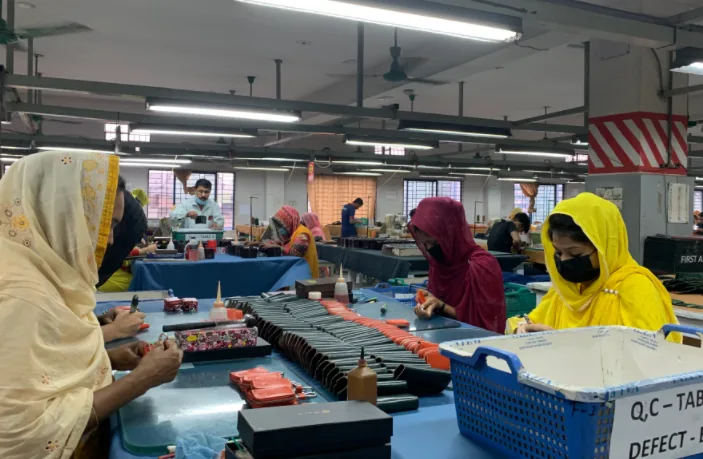
“Your product launch date is set. Your marketing plan is ready. But there’s one question that could derail everything: how long does it take to manufacture a custom briefcase, really?
If you’ve already gotten quotes from a few factories, you’ve probably noticed the numbers don’t quite match up—6 weeks here, 10 weeks there, with little explanation for the gap. That inconsistency isn’t just confusing; it’s risky when your retail calendar or investor deadline is on the line.
This guide breaks down the actual custom bag manufacturing timeline stage by stage—from design confirmation and material sourcing to sampling, bulk production, and shipping—so you know exactly what’s driving your lead time and where you can realistically save weeks. We’ll also cover what separates a fast, reliable OEM briefcase manufacturer from one that’s just telling you what you want to hear.”
Quick Answer: Custom Briefcase Manufacturing Timeline at a Glance
A standard custom briefcase order, sampling plus bulk production, takes 4–8 weeks. Complex builds with full leather construction, new hardware tooling, or multiple sample revisions run 8–12 weeks or more. First-time deep customization projects need 9–16 weeks.
The exact figure depends on which tier your project falls into:
|
Tier |
Example Project |
Typical Timeline |
Key Drivers |
|---|---|---|---|
|
Simple |
Existing mold + logo printing, minor size/color tweaks |
3–5 weeks |
No new structure; stock materials; simplified sampling |
|
Standard |
Custom materials/colors on proven briefcase structure |
4–8 weeks |
One sampling round; some material sourcing; standard B2B batch sizes (300–2,000 pcs) |
|
High-End/Complex |
New leather structure, custom hardware, multi-round sampling |
8–12+ weeks |
New pattern development; long-lead materials; dedicated tooling; multiple sample iterations |
Keep in mind that this quote excludes shipping. Sea freight to the US or Europe adds another 2–5 weeks on top of production. Always confirm with your OEM briefcase manufacturer whether their stated lead time starts from order confirmation or from sample approval plus deposit. The gap between those two starting points is often where the “6 weeks vs. 10 weeks” confusion comes from.
The Complete Custom Briefcase Production Process, Step by Step
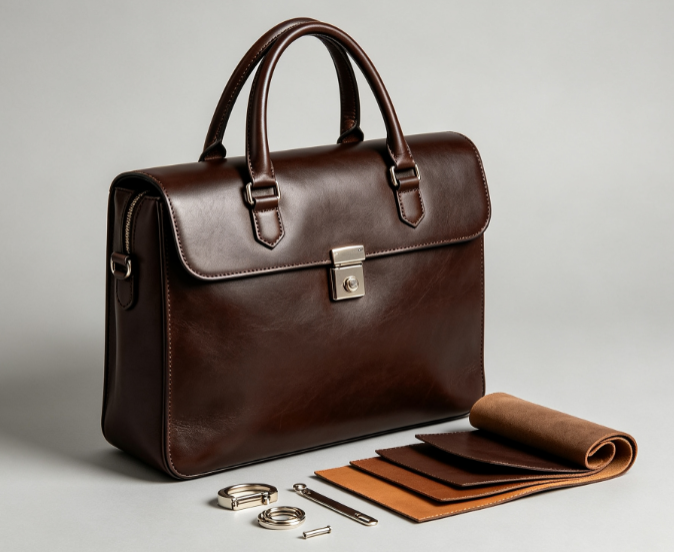
Six distinct stages stand between your approved design and a container full of finished briefcases. Each has its own timeline, client obligations, and failure points that can quietly add days or weeks to your delivery date.
Stage 1: Requirement Confirmation (2–5 Days)
The factory goes through your tech pack: structure (single or double compartment, laptop sleeve or not), target unit price, and order quantity. For custom leather briefcases, the MOQ is usually 100–300 pieces per color. A good tech pack includes dimensions (like 40×30×10 cm), material specs (outer leather 1.6–2.0mm, lining 210D/420D), and hardware details.
You need to provide:
– Exact use case (e.g., a 15.6-inch laptop needs interior width ≥37cm, height ≥26cm)
– Weight capacity requirements (standard business briefcases handle 5–8kg, straps tested to 80–120kgf)
– Logo files in AI/EPS/PDF vector format, with placement and technique specified (embossing, debossing, embroidery)
– Packaging preferences
Common delays: Repeated size changes add 0.5–2 days each, low-resolution logo files add 1–3 days, and unconfirmed quantities or colors can delay material pricing by 1–2 days.
Stage 2: Sample Making (7–21 Days)
This is where sample making happens, with full pattern development covering main panels, sides, base, flap, handles, and interior pockets. The first sample uses leather close to bulk-grade thickness (1.4–1.8mm), with structural verification for every compartment. Dimensional tolerance should stay within ±5mm.
Complex embossing or hand-carved details require a separate craft sample before the full bag sample. A second or PP sample follows client feedback and becomes the reference standard for quality inspection.
Common delays: Major structural revisions add 3–7 days per round, unconfirmed special leather colors cause delays, and slow client approval chains can stretch each round of feedback to 3–5 days or more.
Stage 3: Material Sourcing (5–15 Days)
Standard black or brown leather ships in 5–7 days. Custom-dyed leather requiring new tanning batches can take 10–20 days. Standard hardware (locks, zipper pullers) ships in 3–7 days; custom-tooled hardware needs 10–25 days.
Incoming inspection checks leather defect rate (typically capped at 3–5% of surface area) and color deviation (ΔE tolerance). This is also where you decide whether alternate materials are acceptable if your first-choice leather supplier runs late.
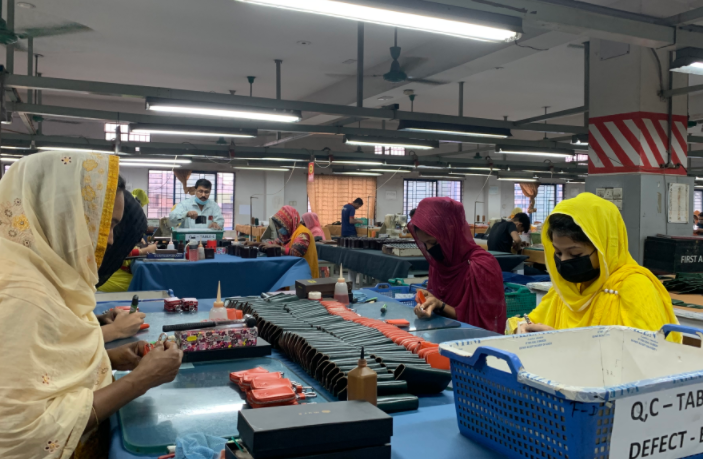
Stage 4: Bulk Production (15–35 Days)
Cutting, skiving (leather edges thinned to 0.8–1.2mm), reinforcement with backing boards, then assembly. A typical leather briefcase passes through 20–30 sewing operations. Mid-sized factories produce 80–200 units per line per day, depending on complexity.
Edge painting requires 1–3 coats with 20–40 minutes of drying between each. Hardware installation tolerance for lock alignment is ≤2mm.
Common delays: Frequent production instruction changes, heavy hand-craft work reducing daily output, and rework from early-batch defects.
Stage 5: Quality Inspection and Packaging (3–7 Days)
Final QC checks stitch pitch (3.5–4.5mm per stitch), surface finish, and hardware function, with locks tested through 20–50 open/close cycles. Dimensional tolerance for premium brands tightens to ±3mm. Standard export cartons hold 5–10 pieces, keeping total carton weight under 20kg.
Lead Time by Briefcase Type: Simple vs Standard vs Bespoke
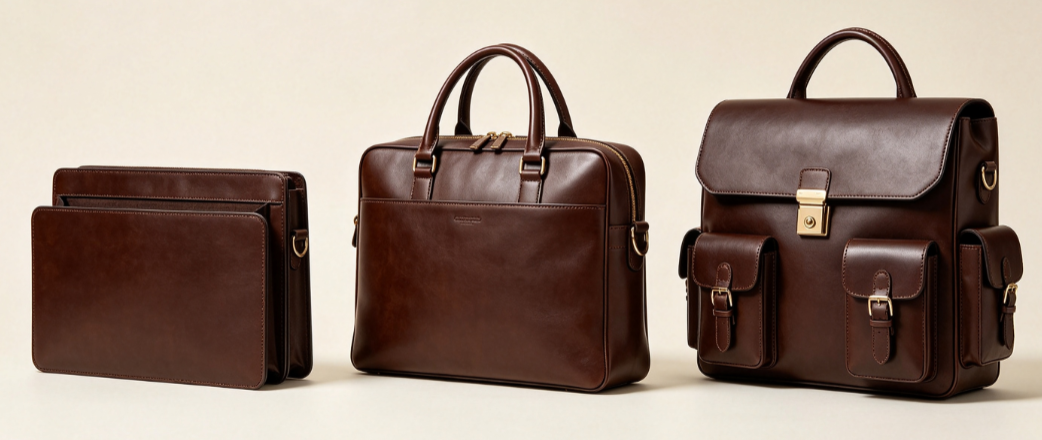
Not every custom briefcase order runs through the same production reality. A corporate gift order and a limited-edition designer commission share the same six stages on paper, but the actual weeks on the calendar look nothing alike. Know which tier your project belongs to before you request a quote.
Simple: Existing Structure, Fast Turnaround (3–6 Weeks)
Simple briefcases use a proven structure with light customization — logo printing, color swap, minor size tweaks. This tier fits companies that need corporate gifts, event giveaways, or fast e-commerce launches. Speed, low risk, and minimal revisions matter more than unique design here.
Design confirmation takes about 1 week or less. Sampling wraps in roughly 1 week. Bulk production runs 2–4 weeks. Fast-turnaround factories that specialize in this tier often quote 3–7 days for sampling and 2–4 weeks for production. Good for quick reorders.
Standard: Custom Materials on Proven Frameworks (4–8 Weeks)
Most B2B buyers land in this tier — corporate procurement, channel distribution, branded merchandise programs. You need stable quality, controllable cost, and room for light customization without full structural redevelopment.
Typical OEM/ODM leather goods factories quote 7–21 days for sampling and 4–8 weeks for bulk production, stretching to 10–12 weeks if hardware or logo application adds complexity. Across the industry, standard B2B leather briefcase projects settle into a 7–11 week total window once you count requirement confirmation, material sourcing, and QC.
Bespoke: Full Custom Development (8–12+ Weeks, Up to 16+)
Bespoke briefcases involve new leather structures, exclusive hardware tooling, and multiple sampling rounds. This tier serves high-net-worth clients, executive gifting programs, boutique retailers, and limited-edition collaborations that demand unique patterns, dedicated material and hardware development, and iterative sampling.
High-end workshops quote 12–16 weeks for bespoke production, plus an additional 2 weeks just for design finalization before sampling even starts. Design confirmation and sampling alone can run 2–6 weeks. Collector-grade projects have been quoted timelines stretching to 18 months — though that’s the extreme edge, not the norm.
|
Tier |
Sampling |
Production |
Total Range |
|---|---|---|---|
|
Simple |
3–7 days |
2–4 weeks |
3–6 weeks |
|
Standard |
7–21 days |
4–8 weeks |
4–8 weeks (up to 11) |
|
Bespoke |
2–6 weeks |
12–16+ weeks |
8–16+ weeks |
Key Factors That Determine Your Custom Briefcase Lead Time
Seven variables decide whether your project lands at the fast end of the timeline or the slow one. None of them work in isolation—stack two or three together and weeks add up fast.
Order quantity. A 200-piece order moves noticeably faster than a 5,000-piece run. Scaling from mid-volume to bulk typically adds 1–3 weeks to production. Oddly, very small runs (1–3 pieces) can drag too. Machine setup and prep eat a disproportionate share of the timeline, sometimes taking longer than a 10–50 piece batch.
Material complexity. This is one of the single biggest drivers. In-stock standard leather barely registers, a few days to a week. Custom-dyed color matching adds 1–2 weeks for dye batches, swatches, and approval. Full-grain leather with special texture, imported linings, or functional coatings (waterproof, flame-retardant) can add 2–4 weeks for sourcing and testing alone. Sourcing custom hardware metal from overseas suppliers stretches average raw material lead time from roughly 65 days to 81 days, pushing your overall project back 2–3 weeks or more.
Hardware customization. Off-the-shelf locks and zippers barely move the needle, just days. New tooling for a patented lock or custom-shaped handle adds 2–4 weeks for mold development and trial fitting. Complex 3D metal logos or embossed hardware plates typically add 1–3 weeks.
Design and structural complexity. Simple, single-compartment builds can hit 4–6 weeks. Multiple hidden pockets, mixed-material paneling, or non-rectangular shapes add 2–4 weeks to production, plus 3–7 days of trial-run time per new structural feature for worker training.
Sample revision rounds. Approval speed is a top-tier bottleneck. First-round sampling and confirmation normally takes 1–3 weeks. But every major revision (pattern change, material swap, hardware repositioning) adds 5–10 working days. A physical prototype re-confirmation round adds another 1–2 weeks.
Seasonal factory capacity. Q3–Q4, holiday season, and trade show periods strain factory bandwidth industry-wide, typically adding 1–3 weeks. Orders placed without a booked production window during peak season can slip 2–4 weeks as the factory pushes you into the next available cycle.
Shipping and production origin. Local production and delivery closes in roughly 5–10 working days. Overseas manufacturing (China to North America or Europe) adds 2–5 weeks for sea freight and customs, plus another 1–3 weeks of unpredictable customs risk that’s completely outside the factory’s control.
How to Shorten Your Custom Briefcase Production Time
Six proven moves can trim real days off your custom briefcase manufacturing timeline. Factories confirm these work because they eliminate the back-and-forth that quietly eats weeks.
Lock down a complete tech pack before quoting. Missing specs cause 3–5 days of delay per revision round. Two extra rounds means 6–10 lost days. Include exact dimensions, laptop compartment size, material thickness range, hardware color, logo placement in mm, and target quantity in one PDF. Buyers who submit a “decision-ready” brief consistently get faster sampling starts.
Use existing hardware and stock materials. Skipping custom material sourcing saves 5–15 days. Ask for the factory’s in-stock color cards and standard zipper types. Confirming structure first with stock leather, then adjusting color before bulk production, compresses sampling from 15–20 days to 7–10 days.
Submit sketches, measurements, and 3–4 reference photos together. This cuts revision rounds significantly. Each avoided round saves 3–7 days. A precise one-time revision list beats multiple vague feedback loops.
Confirm packaging specs during sampling, not after production finishes. Unconfirmed carton sizes or labeling delay shipment by 3–5 days even when bags are ready.
Avoid peak-season order placement. Q4 typically adds 2–3 weeks. Booking production slots 1–2 months ahead keeps timelines closer to off-season speed.
Choose proven ODM structures over new OEM development. This alone can shorten sampling from 4–6 weeks to 2–3 weeks.
Ask Your Manufacturer This
Ask “Does this timeline start from deposit or from sample approval?” Request a milestone schedule—sampling completion, material arrival, production start, QC date, shipping date. That single question resolves most quote discrepancies before they cost you a week.
Custom Briefcase Manufacturing FAQ
Buyers ask about the fine print: payment timing, MOQ math, rush fees.
Does shipping count toward the production lead time?
No. Quoted lead times cover sample approval to bulk completion only. A standard order runs 30–45 days production, plus air freight (7–12 days door-to-door) or sea freight (25–35 days). Always request “production days + shipping days” as separate line items.
When does the clock start?
Lead time starts when sample approval, deposit payment, and material readiness are all complete. Example: 30-day sampling + same-day 30% deposit + 3–5 days material prep, then 30–45 days bulk production begins.
Can production be rushed?
Only with simple structures, standard materials (1680D nylon, stock hardware), and open production slots. Factories can compress 30–45 days to 20–30 days, but rush orders typically cost 5–15% more and leave little room for design changes.
Does the sample fee affect the timeline?
Paying the sample fee late can delay the timeline. Sampling runs 30–45 days from when payment and design files are complete. Fees are often credited against bulk orders. Every extra revision round adds 7–10 days.
How does MOQ affect delivery?
Standard MOQ is 250–500 pieces per color. Near-MOQ orders run 30–45 days (up to 60 for complex builds). Scaling from 500 to 3,000 units can add 7–15 days, more during peak season.
Sample Timeline Reference (Nylon/PU Briefcase, Standard Structure)
A typical timeline: design/tech pack takes 3–7 days; sampling (including mold, cutting, and 1–2 revisions) takes 30–45 days; sample confirmation and price lock takes 3–5 days; bulk production for 250–1,000 pieces takes 30–45 days; QC and packaging takes 3–7 days; shipping by air takes 7–12 days door-to-door, by sea 25–35 days.
Sample fees typically run $80–200 per style and are often credited on bulk orders. Most factories include 1–2 free revision rounds, then charge $50–100 plus 7–10 extra days per additional version. Standard payment terms are 30% deposit, 70% balance before shipment. For QC, specify Inspection Level II, AQL 2.5/4.0, with hardware and strap strength as priority checkpoints.
Sunteambag offers a free sampling and production timeline assessment based on your actual specs.