
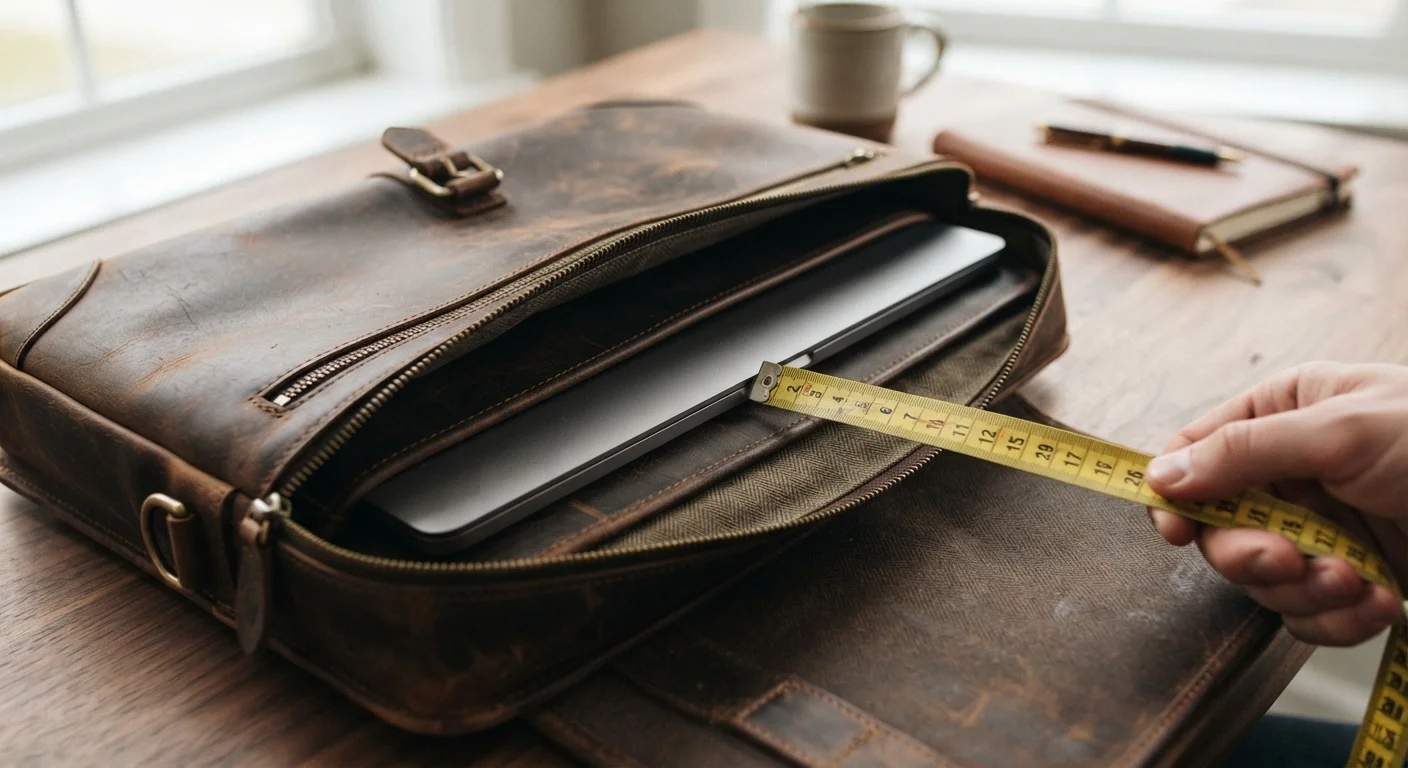
You’ve measured wrong before. You zipped up a brand-new briefcase and realized your 15-inch laptop barely squeezed in, or worse, slid around in a bag built for something twice its size. Briefcase dimensions are the difference between a bag that fits your life and one that fights it every morning. Whether you’re sizing up your next leather briefcase for daily commutes, packing A4 documents for client meetings, or sourcing custom bag manufacturing for your brand’s next collection, guessing leads to returns, complaints, and wasted budget. This guide breaks down exactly how to match your gear, your body, and your use case to the right dimensions. No more “close enough.” By the end, you’ll have a repeatable system and a checklist for getting it right the first time, every time.
Why Briefcase Size Matters
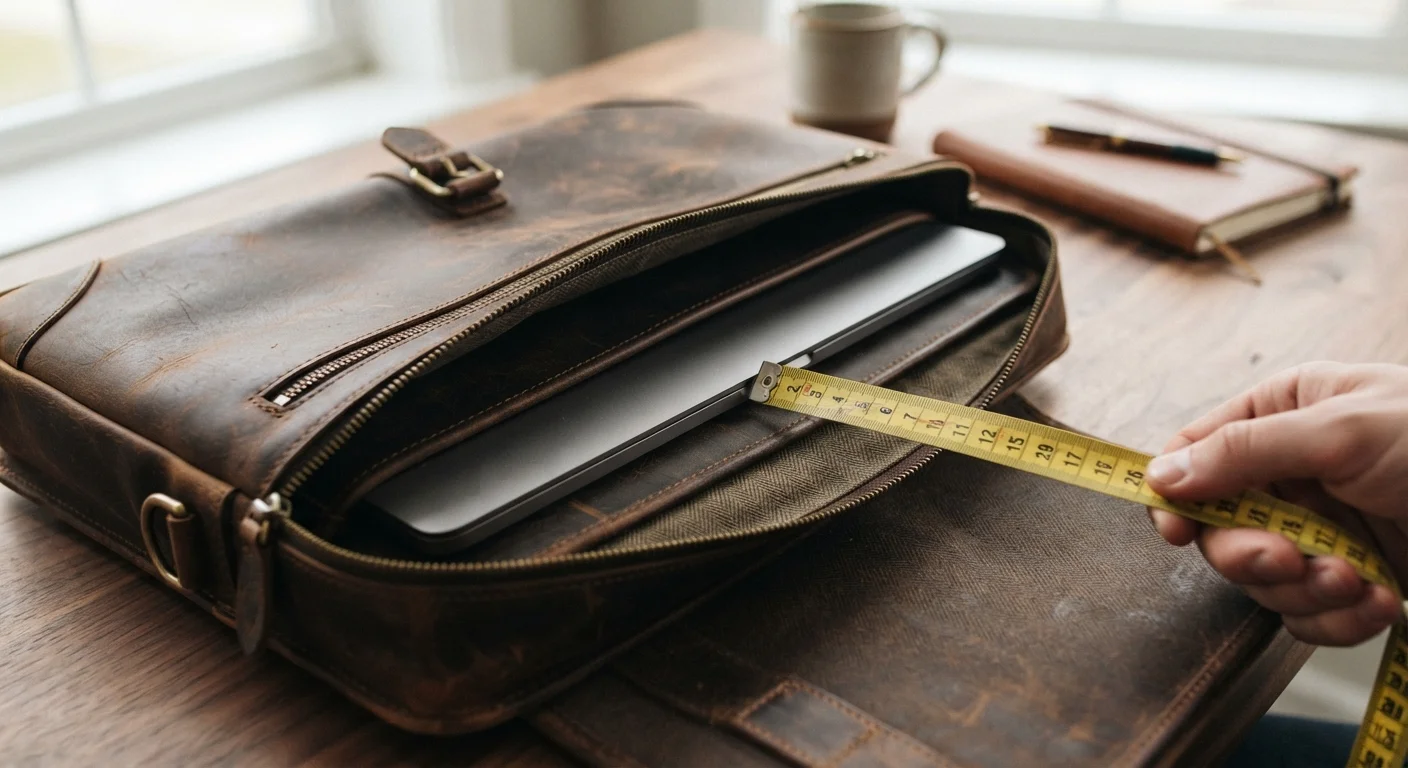
Most sizing mistakes happen before you even open the bag. Product listings market “15-inch compatible” using screen size labels, not actual device measurements — yet the same 15.6″ laptop can vary by up to 15mm in body width depending on the bezel. Brands emphasize leather quality, brand name, and style, while burying internal dimensions in the fine print. Many listings publish only external measurements, which can overstate usable space by 5–10% once you factor in padding, lining, and leather thickness that eat 0.5–1.5cm per side.
This isn’t a minor detail. In bag categories, “doesn’t fit my laptop” ranks among the top return reasons on major e-commerce platforms. For structured leather briefcases, that mismatch gets expensive fast: return shipping alone can eat 8–15% of retail price, while corner wear from trial use often forces sellers to discount returned units 20–40%.
Understanding Briefcase Dimensions: Width, Height & Depth Explained
Three numbers control everything about how a briefcase performs: Width, Height, and Depth. Industry listings order them as L × H × D (or W × H × D), with depth also called “gusset” — the side panel that gives a bag its expansion capacity. Get the notation wrong and you’ll misjudge fit before you even measure.
External vs. Internal: The Numbers That Actually Matter
Most brands quote external dimensions. Airlines and shipping carriers do the same, measuring from the outermost points including handles, wheels, and gusset bulge. But that’s not what holds your laptop.
A briefcase listed at 42cm (W) × 30cm (H) × 12cm (D) often has padding and structural lining eating 0.5–1.0cm per side. Your actual usable laptop sleeve might be 38–39cm × 26–27cm × 3–4cm. That’s a 10–30% drop in real internal volume compared to what the external number suggests.
How to Measure Depth (Gusset) Correctly
-
Lay the briefcase flat, straighten seams
-
Measure front width seam-to-seam
-
Fully expand the side gusset
-
Measure fold-to-fold depth at the widest point
-
Measure height from base to opening (inner edge, not the hem)
A 2–3cm difference in gusset depth can swing total capacity by 30–50%, since volume scales as W × H × D. That’s why a “35 × 27 × 8” listing means 8cm total depth, not 8cm per side — a common misread that leads buyers to overestimate how much a bag actually holds.
Custom Briefcase Size Chart: Small vs Medium vs Large
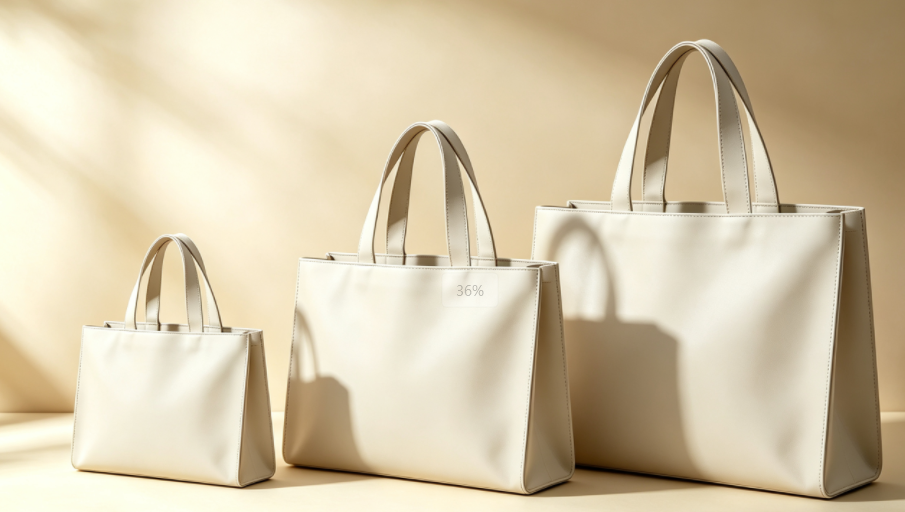
Three size categories cover nearly every use case in briefcase dimensions. Sourcing teams working with sunteambag rely on this exact framework when developing custom bag manufacturing specs for private-label clients.
|
Category |
Inches (W×H×D) |
CM (W×H×D) |
Laptop Fit |
File Fit |
Capacity |
|---|---|---|---|---|---|
|
Small |
12–14 × 9–10 × 2.5–4 |
30–35 × 23–25 × 6–10 |
11″, some slim 13″ |
Letter: yes; A4: mixed |
4–8 L |
|
Medium |
14–16 × 10–11.5 × 4–5.5 |
35–41 × 25–29 × 10–14 |
13–14″, most slim 15″ |
A4 & Letter: yes |
9–13 L |
|
Large |
16–18 × 11.5–13 × 5.5–7 |
41–46 × 29–33 × 14–18 |
15–16″ |
A4 & Letter: roomy fit |
14–20 L |
For reference, a well-known leather briefcase benchmark sits around 16″ × 14″ × 4″, squarely in the medium-to-large capacity band. If you’re stocking a briefcase for a 15 inch laptop, large is the safer choice once you factor in a charger, mouse, and document sleeves.
Step 1: Inventory What You Carry Daily
Skip the guesswork. Empty your current bag onto a table before you touch a size chart. Sort everything into three piles: devices, documents, and personal items. This catches sizing mistakes before they happen.
Devices typically include a phone (170–220g), a 13–15″ laptop (1–1.7kg), chargers and cables (3–5 pieces), a power bank (10,000–20,000mAh), and sometimes a wireless mouse or external drive. Each item adds bulk your briefcase dimensions need to absorb.
Documents matter just as much. A typical business trip means 20–50 business cards, 10–50 pages of meeting materials, a passport, boarding passes, and a notebook. If you carry a briefcase for A4 documents daily, that footprint is fixed and can’t be compressed.
Personal items — wallet, tissues, a foldable umbrella, a small medicine pouch, a water bottle — round out the load. None of these are optional on a real workday.
Once you’ve listed everything, measure each item’s length, width, and height. Add them up. That total, not the marketing label, tells you the actual capacity your custom leather goods factory needs to build around.
Step 2: Measure Your Laptop, Tablet & Documents
Grab a soft tape measure, a flat surface, and your closed laptop. Measure the actual device, not the “inch class” on the box.
The Three-Point Measurement Method
-
Width: Zero the tape at the leftmost edge, measure straight to the rightmost edge.
-
Depth: Front edge to back hinge, device closed.
-
Height/thickness: Measure from the table surface to the highest point. Include rubber feet and camera bumps.
-
Screen diagonal (cross-check only): Open the device and measure the visible display corner-to-corner. Body width is usually 2–4cm larger than the diagonal, which is why “15-inch compatible” listings mislead buyers.
Real Device Data
|
Device |
Body (W×D×H mm) |
Recommended Internal Compartment |
|---|---|---|
|
MacBook Air 13″ |
304×215×11 |
≥320×230×25mm |
|
MacBook Pro 14″ |
313×221×16 |
≥330×240×30mm |
|
MacBook Pro 16″ |
356×248×17 |
≥375×265×35mm |
|
ThinkPad T14 |
329×227×18 |
≥345×245×38mm |
|
Typical 15.6″ Windows |
360–365×240–250×18–23 |
≥380×260×35mm |
Document Sizes
-
A4: 210×297mm
-
US Letter: 216×279mm
-
Legal: 216×356mm
Add 5–10mm for a sleeve, 10–15mm for a folder pocket.
The Clearance Formula
Target 10–20mm extra width/depth, 7–15mm extra height. Under 5mm risks binding zippers, and over 30mm means your gear slides. Solve this with a padded divider or retaining strap. Sunteambag builds this into every custom leather goods factory spec.
Step 3: Calculate Your Ideal Capacity With the 10-15% Margin Rule
Engineers solved this problem decades before briefcase brands did. The formula Ideal Capacity = Peak Demand × (1 + Margin) is used across power grids, warehouses, and logistics networks. A 10% margin gives you 1.10× your peak load; 15% gives 1.15×. Reserve-margin literature, including World Bank engineering benchmarks, shows accepted ranges cluster between 10–25%, with 10–15% sitting at the conservative, low-risk end.
-
Total your Step 1 inventory measurements. That’s your peak demand.
-
Multiply by 1.10 to 1.15.
-
Round up to the nearest size tier from your custom bag manufacturing spec sheet.
-
If your daily load varies (some days light, some days packed with files), lean toward 15% rather than 10%.
For example, if your gear totals 100 cubic units of volume, target 110–115 units of usable internal capacity, not 150. Oversizing wastes leather, adds unnecessary weight, and leaves your briefcase looking half-empty and unstructured.
Step 4: Match Your Measurements to the Size Chart
Boundary cases trip up more buyers than anyone admits. Your Step 3 total lands at 112 units — right between the Medium tier’s upper limit and Large’s lower threshold. Which one wins?
The rule borrowed from ring sizing and shoe fitting applies directly to briefcase dimensions: when in doubt, size up for daily use, size down only for structured or occasional use. A ring that’s too small cuts circulation; a briefcase that’s too small binds zippers and stresses seams. Both problems outweigh the minor inconvenience of a slightly loose fit.
|
Use Case |
At the Boundary |
Reasoning |
|---|---|---|
|
Daily commute (laptop briefcase size, heavy load) |
Size up |
Reduces zipper strain, corner wear |
|
Formal/occasional (client meetings, light load) |
Size matches or slightly smaller |
Cleaner silhouette, less bulk |
|
Travel with variable loads |
Size up |
Accommodates packing variance |
If your women’s briefcase size or men’s briefcase size calculation sits between Medium and Large, and you carry a 15-inch laptop plus files most days, go Large. Sunteambag’s custom bag manufacturing process lets B2B buyers adjust gusset depth by 1–2cm increments — solving boundary cases without jumping a full tier and inflating leather costs.
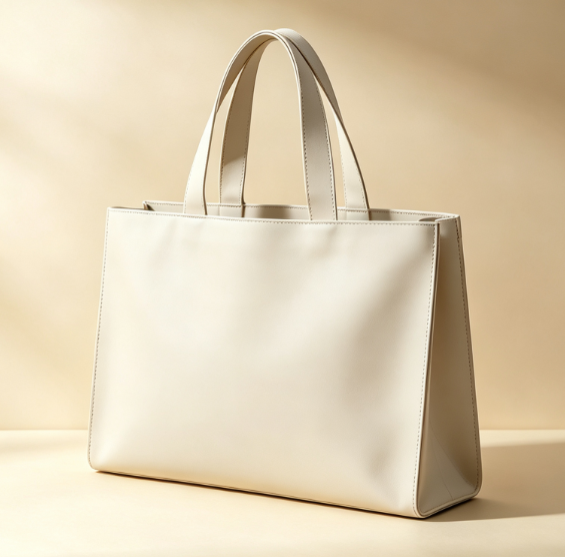
Step 5: Factor In Usage Scenario (Commute, Travel, Formal Meetings)
Airport security lines expose sizing mistakes fast. A briefcase that felt fine at home suddenly won’t slide under an economy seat, or it clashes with your carry-on’s dimensions at the gate. The right capacity depends on where you actually use the bag.
Commute (Subway, Bus, Walking)
Target 36–40cm (L) × 26–30cm (H) × 7–10cm (D). Thickness above 10cm gets you bumped in crowded transit; height above 30cm hits shoulders in packed carriages. Keep empty weight under 1.2kg, loaded weight under 3–3.5kg — anything heavier drags on a standing commute.
Travel (Carry-On Compatible)
Most airlines cap carry-ons at 55×40×20cm, three-side total ≤115cm. Your briefcase, as the “personal item,” should stay smaller — outer dimensions ≤40cm long, ≤30cm high, ≤10–14cm thick keep you under most airline small-item allowances (Hainan Airlines specifies 30×30×20cm). Economy seat-back clearance runs 22–25cm high, 28–30cm deep — exceed that and your bag competes with the overhead bin instead of tucking under your seat.
Formal Meetings (Slim Profile)
Client-facing bags favor 38×28×7–8cm — thin enough to avoid the bulging look past 10–12cm, deep enough for a 13–14″ laptop (1.5–1.8cm thick) plus 10–20 pages, a pen, and a card case. Total loaded weight target: ≤3kg.
Sunteambag’s custom bag manufacturing process adjusts gusset depth per scenario, so brands can offer the same shell across commute, travel, and formal SKUs without re-tooling molds.
Step 6: Consider Body Height & Proportion for Visual Balance
A briefcase that fits your laptop can still look wrong on your frame. Stylists recommend that bag height sit at 15–20% of body height for structured work bags, and width track 30–40% of shoulder width. Skip this, and even a perfectly functional briefcase reads as too bulky or too small in photos and meetings.
Sizing By Height Bracket
|
Body Height |
Men’s Briefcase Size |
Women’s Briefcase Size |
|---|---|---|
|
Under 160cm |
30–36cm W, 23–28cm H |
30–36cm W, 23–28cm H |
|
160–170cm |
35–38cm W, 25–28cm H |
33–38cm W, 25–30cm H |
|
170–180cm |
38–43cm W, 28–33cm H |
34–40cm W, 26–32cm H |
Torso-to-leg ratio matters too. Long-torso builds should size down slightly and go wider; long-leg builds can carry a taller structured bag without looking overwhelmed. Sunteambag’s custom leather goods factory adjusts width and height independently, so brands can offer proportion-matched SKUs across height brackets from a single leather cut plan.
Common Sizing Mistakes to Avoid (And How to Fix Them)
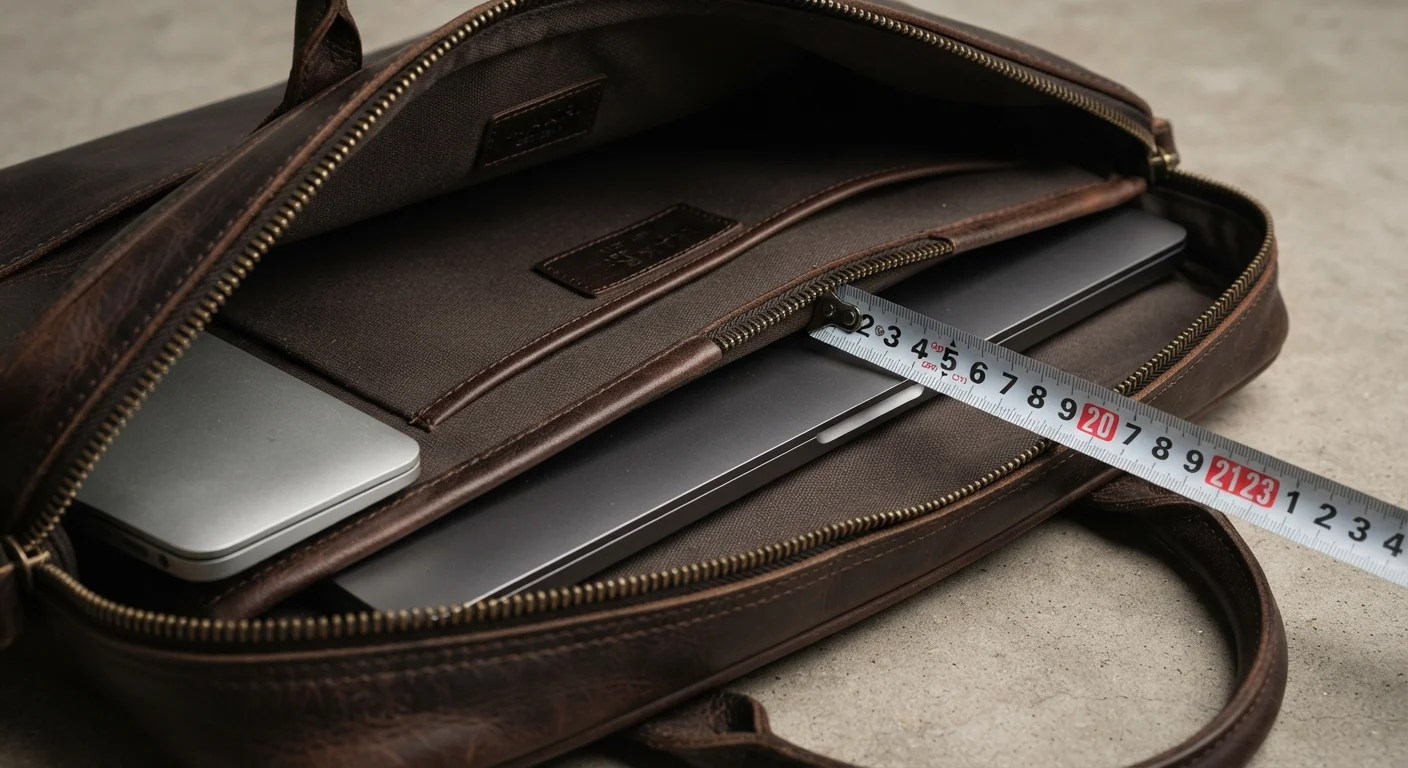
Screen-size labels lie more often than buyers realize. A bag marketed “fits 15.6″ laptops” might list an internal compartment of 380×260×25mm — but a 15.6″ gaming laptop often measures 365×260×30mm. Length and width match, depth doesn’t. The zipper strains, corners bulge, and the bag “feels too small” even though the label was correct.
Mistake: Ignoring case/sleeve thickness. Add a hard case or sleeve, and you need 6–10mm more depth clearance beyond the laptop’s raw depth. Skip that calculation and a well-measured briefcase for a 15 inch laptop will feel cramped.
Mistake: Overloading narrow straps. A 15.6″ laptop (1.8–2.5kg) plus adapter, mouse, and files hits 3–4.5kg. Straps under 30mm wide with thin padding transfer that weight straight into your shoulder. Once the loaded weight crosses 3kg, a business briefcase needs straps at least 40mm wide with 8mm thick foam padding.
Mistake: Trusting “usual size” across brands. Clothing sizing varies 2–3 sizes between labels. The same happens with briefcases labeled “medium” — dimensions differ by manufacturer. Always cross-check actual cm measurements, not the size name. When sourcing through custom bag manufacturing partners like sunteambag, spec sheets replace guesswork.
Custom Sizing for B2B Buyers: What to Prepare Before Contacting a Manufacturer
Vague briefs cost B2B buyers weeks of back-and-forth before a single sample gets cut. Custom bag manufacturing runs faster and cheaper when buyers arrive with technical specs ready instead of just a Pinterest board.
Quantity & Structure Data
Break your target volume by style, color, and size. For example, 3 colors × 2 sizes × 200 units per color = 1,200 units total. Factories price in tiers at 100, 300, 500, and 1,000+ units, so stating your bracket upfront speeds up MOQ negotiations. If you need samples, note quantity per style (typically 1–3 per size). Most factories refund sample fees once bulk orders hit 100+ units.
Dimensional Specs to Lock Down
Lock down overall dimensions: L×H×W in mm, and state whether hardware and handles are included. For internal usable volume, a 15.6-inch laptop compartment needs ≥380×260×30mm of net space. External dimensions usually run 10–25mm larger per side for leather, lining, and padding. Tolerances on high-end leather briefcases are typically ±2–3mm on length and width, and ±2mm on thickness.
Load & Compliance Requirements
Specify loaded weight targets, such as “7–10kg loaded, no deformation,” since this dictates panel thickness and stitch density. Also include compliance requirements: REACH, CA Prop 65, zipper pull tests (≥1,000 cycles), and handle tensile strength (≥15kg).
A complete brief like this turns a custom leather goods factory quote from a guess into a fixed-scope proposal — and cuts sampling rounds from three to one.
Your Final Size Checklist Before You Buy or Order
Print this list. Check every box before you click “buy” or send a PO.
Consumer Checklist
-
Laptop lies flat with 10–15% clearance. A 14–15.6″ laptop needs ≥370×270×50mm internal space.
-
A4 folder fits flat, no bent corners. You need ≥320×230×40mm net.
-
Measured volume matches listed capacity within ±10%. Calculate L×W×H in cm ÷ 1000 = liters.
-
Strap adjusts to your height. 80–120cm total length covers 155–185cm users.
-
Loaded weight stays under 80–90% of what the strap or handle is rated for.
B2B Buyer Checklist
-
Sampled 3–5 units. Logged the average, minimum, and maximum. Tolerance should be within ±2–3mm.
-
PO states external and internal dimensions, tolerance, logo size (min 5–8mm height), and carton dimensions.
-
Pre-production sample approved against the spec sheet and signed off as the production baseline.
-
AQL inspection plan set at ≤2.5% defect rate before bulk shipment.
Sunteambag runs every custom order through this exact checklist before cutting a single panel.