
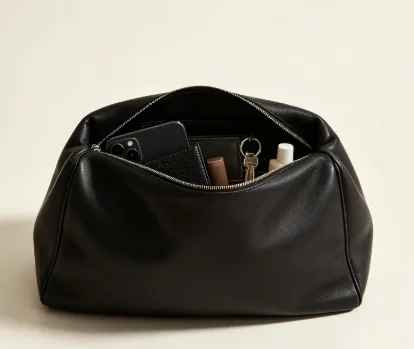
Clutch bags are small, but their strategic value is huge. Brands that get this right keep winning at retail — season after season.
Building a new accessories line? Expanding an existing collection? Sourcing styles that actually sell? The clutch bag category runs deeper than most buyers expect.
Each silhouette tells its own story. The envelope clutch bag brings classic elegance that never goes out of style. A novelty piece can anchor a whole campaign. Every shape connects to a different shopper mindset, price point, and selling window.
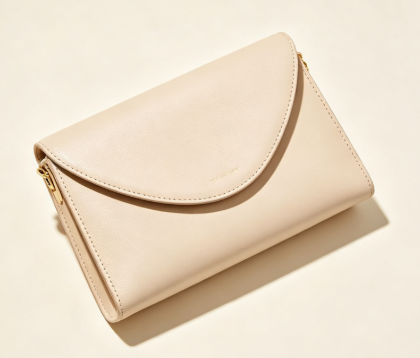
This guide covers the 7 clutch bag styles worth adding to your brand’s sourcing list. You’ll get more than product descriptions — each style comes with real merchandising insight you can use to make smarter buying decisions.
“7 Clutch Bag Styles Every Fashion Brand Should Know”
Seven styles. Seven distinct selling stories. Here’s what this guide covers:
-
Envelope clutch bag — flat, flap-closure classic. Works from desk to dinner with ease.
-
Box clutch bag — hard-case evening bag built for high glamour, low bulk
-
Wristlet clutch bag — hands-free carry with a wrist strap loop, perfect for nights out
-
Foldover clutch bag — soft, expandable shape that moves from day bag to travel bag
-
Minaudière clutch — a jewellery-like micro bag in hard case. Made for black-tie and big occasions.
-
Frame clutch bag — kiss-lock structured style with strong ties to 1950s–60s vintage glamour
-
Oversized clutch bag — the rule-breaker with real capacity. It holds a tablet and still looks like a fashion piece.
What Makes a Clutch Bag Style “Brand-Worthy” in Today’s Market
The global clutch bag market is growing at ~5.8% CAGR through 2033. E-commerce drives 38.4% of clutch sales and that number keeps climbing. Getting your silhouette right has never mattered more.
So what separates a clutch that sells from one that sits?
In 2026, “brand-worthy” means clearing four bars at once:
-
Proportion that photographs well. Your silhouette needs a clear, distinct shape — a curved crescent fold, a tapered cylinder, or a modular panel with interchangeable flaps. It must read sharp in a social media thumbnail. A shape that blurs into the background won’t convert online.
-
Function built into the structure. Buyers expect magnetic docking zones for phone and cards. They want a fast-access side slit and a molded base that holds its shape after 500+ open-close cycles. These aren’t extras. They’re baseline specs.
-
Materials with a verifiable story. Full-grain or top-grain leather, LWG-rated tanneries, certified recycled synthetics — material transparency closes the gap between your target retail price and what a buyer believes the sample is worth. No story, no justification for the price tag.
-
Versatility across occasions. The strongest clutch styles in 2026 move from polished daywear to evening events with no styling effort. Bloomingdale’s accessories team calls out compatibility with tailoring, dresses, and casual day outfits as a non-negotiable for mainstream retail placement.
Here’s one more thing worth knowing: the market has split into two clear poles — soft, tactile clutches on one side; hard, structured, embellished styles on the other. A strong assortment covers both. That’s not trend-chasing. That’s basic range architecture.
Style 1: Classic Envelope Clutch — The Brand Staple That Never Misses
The envelope clutch bag has been in production for decades — and buyers keep reordering it. That staying power isn’t luck. It’s structure.
The silhouette is easy to recognize: a flat rectangular body, a triangular fold-over flap, a single clean closure point. No handles, no hardware clutter. Just a shape that works well under a blazer sleeve or paired with a floor-length gown.
Dimensions That Fit Modern Life
The sweet spot for a medium envelope clutch sits at 8.5–9.5 in wide × 4.5–5.5 in tall when folded. That range has a purpose. You get enough room for a 6.7-inch smartphone, a compact wallet, keys, and one small cosmetic item. The flap stays flat. Nothing buckles outward.
The flap dimensions matter just as much as the body size. A triangular apex with a 40–60° angle gives that sharp, letter-envelope silhouette. Place the closure snap ~1 inch above the flap tip, centered. Off-center placement is the fastest way to make a solid sample look off-spec.
Construction Standards Worth Specifying
For brands sourcing this style, three details separate a reliable staple from a return risk:
-
Fusible interfacing across the full flap and body lining — this stops the “sag” that makes a clutch look cheap after three uses
-
2.5–3 mm topstitch length, held at the same rate around the full perimeter
-
Snap or button stud closure tested to 500+ open-close cycles — skip Velcro on any style you plan to reorder at volume
Use PU leather at 0.8–1.2 mm thickness for the outer material, or structured canvas with full-area interfacing. A medium PU version should finish at ≤300–400 g. That weight is light enough for all-evening carry without fatigue.
This is the style you build your accessories range around. Source it right once, and it earns its slot in every seasonal assortment.
Style 2: Box Clutch & Minaudière — Your Brand’s Statement Piece Generator
Hard geometry. Jewel-like finish. Zero apologies for being the most eye-catching thing in the room.
The box clutch bag and the minaudière clutch sit in the same product category — but they aren’t the same. A minaudière is always rigid and structured. It’s built from metal or a hard-shell material. A box clutch can go either way — hard or soft construction. The minaudière lives at the formal end of the spectrum. It’s a hard case clutch that looks more like wearable sculpture than a daily-use accessory.
This category carries real heritage. Van Cleef & Arpels coined the term minaudière in 1933. That history gives any capsule collection built around this silhouette a ready-made story to tell.
Size, Price, and the 2026 Design Direction
For practical carry — phone, lipstick, cards — the proven size range is 18–22 cm wide × 10–14 cm high. Micro formats at 12–14 cm are also gaining ground fast, especially in fashion-led limited drops.
On pricing: evening clutch bags in this category run from €350 to €25,000+, depending on materials and positioning. For accessible luxury private label, €350–€800 is a solid entry range.
Three material directions are pulling buyers’ attention heading into 2026:
-
Sculpted metal frames — clean, architectural, and premium at first glance
-
Organic surfaces — mother-of-pearl, polished horn, and nacre finishes
-
Micro crystal or lacquer wraps — high visual impact at a lower production cost than full metal
What Makes This Style a Brand-Builder
The minaudière clutch isn’t your volume driver — it’s your campaign anchor. One distinctive frame piece can pull in more social content, press coverage, and brand equity than ten basics put together. Source it as a limited-run statement piece, not a core replenishment SKU.
For sourcing briefs, spell out four non-negotiables:
-
Rigid shell or metal frame construction
-
Fusible fleece stabilizer for structure retention
-
Full cure time of 24–72 hours after assembly
-
Fabric panels seated flush inside the frame channel — zero glue bleed on visible surfaces
These four points separate a premium finish from a prototype that just looks close enough.
Style 3: Soft Fold-Over Clutch — Capturing the Minimal-Luxury Consumer
Quiet luxury isn’t a trend. It’s a buying philosophy — and the soft foldover clutch bag is the silhouette that delivers it best.
The minimal-luxury consumer isn’t looking for a logo. She wants full-grain leather she can feel the quality of the moment she picks it up. Clean lines. A shape that works from a work dinner to a weekend brunch with no effort. She’s 25–44, household income above $100K, and she’s done with overt branding.
That shift has real numbers behind it. The luxury clutch segment is tracking from $5.5B (2024) to $8.5B by 2032. The mid-range price band — $800–$1,500 — already holds 25.4% market share, worth $1.83B in 2025. That’s the sweet spot where a well-executed soft foldover lands.
Specs That Hit the Brief
Get these dimensions right:
-
Width: 24–28 cm | Height (folded): 12–16 cm | Depth: 2–4 cm
-
Weight: under 0.45 kg — light enough for all-evening carry
-
Leather: full-grain or top-grain, minimum 1.2–1.6 mm thickness for a soft fold that still holds its shape
-
Stitch density: 5–7 stitches/cm on exposed seams
-
Edge painting: minimum 2–3 coats, flex-tested
Inside, you get one main compartment sized for a large smartphone. There’s also one internal zip pocket (14–16 cm wide), plus 3–6 card slots with optional RFID lining. A detachable thin wristlet strap adds flexibility. It keeps the exterior clean.
Branding — Less Is More (and More Expensive)
Silent-branding bags pull higher average retail prices than logo-heavy equivalents at the same brand tier. The rule here: no large exterior logos. A small debossed wordmark — ≤6–8 mm height — placed at the side or back is the maximum. Keep brand presence to hardware engraving and interior labels only.
Colorway and Pricing Strategy
Launch with a core neutral palette: black, dark navy, warm beige, taupe, stone. Keep seasonal fashion colors to 20–30% of your assortment. This protects the timeless, investment-piece positioning.
Target retail: $600–$1,200 for the core tier — where Saint Laurent, Prada, and Fendi all play. Entry price points at $300–$600 work well for younger buyers or new brand extensions testing the format.
The foldover clutch bag keeps selling even as trend cycles slow down. Source it with the right materials and zero logo clutter. It earns its place as a steady, season-after-season assortment anchor.
Style 4: Wristlet Clutch — The Entry-Level Volume Driver for Any Brand Line
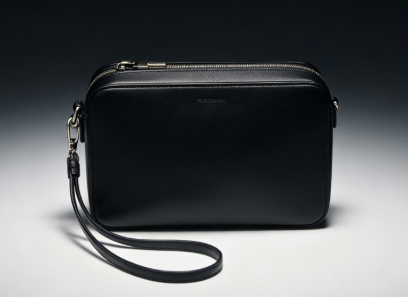
No other clutch style turns new customers into repeat buyers like the wristlet. It’s practical, giftable, and priced to move — that’s what a volume driver needs to be.
The wristlet clutch has a simple build: a compact rectangular body, a full-width top zipper, and a short strap that loops around the wrist for hands-free carry. That strap is the functional detail that sets it apart. A standard clutch needs constant handling. A wristlet stays secure while your customer dances, moves through a crowd, or jumps between venues. For nights out — concerts, clubs, urban evenings — it beats every other clutch format on practicality.
Dimensions and Construction Specs
Target these dimensions for an entry-level SKU that punches above its size:
-
Exterior footprint: 7–8″ wide × 4–4.5″ tall × ~1″ depth
-
Internal capacity: large smartphone (6.5″+), card case, keys, 1–2 small makeup items
-
Wrist strap length: 5.5–7″ end-to-end, inner circumference 9–11″ to fit most wrists
-
Strap fold-over to hardware: ~0.75″ for secure riveting or stitching
-
Closure: full-width top zipper with back-stitched reinforcement at strap and zipper tape junctions
-
Interior: 1 main compartment + 1–2 card slots. Keep it simple — a complex multi-gusset interior slows production and adds no real value at this price point
One note on sizing: push your dimensions toward the 8″ × 5″ end of the range, not the smaller standard. You get near-clutch capacity while keeping the wrist strap. That extra interior room is a real conversion driver.
Price Band and Volume Strategy
The wristlet clutch earns its “volume driver” label through price positioning, not prestige.
-
Core bags above USD 1,000: price the wristlet at USD 800–1,000 — the accessible mid-range entry point where the luxury clutch segment is growing at 7.2% CAGR
-
Brand in the premium-accessible space: target USD 250–500, the price band with the strongest unit sales growth from 2021–2024, while higher price tiers ran into volume resistance
Plan higher production runs for this SKU than for your flagship shoulder bags. Low unit price + broad gifting appeal + strong repeat purchase potential on seasonal colorways — that’s the profile of a solid, reliable volume generator.
Use Cases That Drive the Buy
This style sells well because it fits how younger consumers move through their evenings:
-
Dancing or standing events (festivals, concerts, clubs)
-
Solo outings where hands-free security matters
-
Minimalist carry — phone, ID, two cards, done
-
Urban transit between venues
These are high-frequency, lower-ticket purchase occasions. That’s your gifting window and your impulse-buy window, rolled into one.
Feature Set and Colorway Recommendations
Keep the build cost-efficient without looking cheap. Two upgrades do the most work:
-
Detachable wrist strap via lobster clasp — add an optional detachable crossbody chain. This blurs the line between wristlet and mini-bag, and pushes both versatility and perceived value higher
-
2–4 colorways per season: black, neutral nude or tan, one brand-signature color, one metallic for occasion wear
For materials, top-grain leather or quality vegan leather both work well here. The entry price point doesn’t call for exotic skins — it calls for clean construction and a consistent finish.
The wristlet clutch isn’t your campaign hero. It’s the style that builds your customer base, season after season, without making any noise about it.
Style 5: Convertible Chain Clutch — The Multi-Wear Merchandising Powerhouse
Three wear modes. One bag. That’s the entire pitch — and it works.
No other style in this guide solves the “wrong bag for the occasion” problem. This one does. Use it as a handheld clutch at dinner. Clip on the shoulder chain at a cocktail party. Switch to crossbody for the after-party. One bag. The whole evening. No styling compromise needed.
That versatility isn’t just a consumer benefit. It’s a merchandising argument. Buyers stocking this style sell 3–4 occasion clusters from a single SKU.
Dimensions and Weight That Work
Get the proportions wrong, and the multi-wear format falls apart. Too heavy, and shoulder carry becomes a problem. Too slim, and the capacity claim doesn’t hold up.
Target these specs:
-
Body dimensions: 20–26 cm wide × 10–14 cm tall × 3–6 cm deep
-
Empty weight: ≤ 0.45 kg — the under-1-lb threshold that keeps all-evening carry comfortable
-
Chain drop: 45–55 cm for shoulder, 52–60 cm for crossbody, 14–18 cm wrist loop circumference
-
Chain link thickness: 2.0–3.0 mm — visible enough to read as a style detail, light enough to keep total weight down
At these dimensions, the bag fits a 6.7-inch smartphone, 6 cards, keys, and a lipstick. That’s a concrete capacity claim you can put straight on your PDP.
Hardware Specs That Protect Your Return Rate
Vague specs and weak hardware push buyers toward cart abandonment. They also drive up returns. Nail both from the start:
-
Side D-rings: internal diameter 10–12 mm, soldered or riveted, pull strength ≥ 10 kgf
-
Detachable chain: 2 swivel clasps, opening width >4 mm for easy clip-on/off
-
Closure: magnetic snap or metal clasp rated to ≥ 5,000 open/close cycles
-
Hardware finishes: gold-tone, silver, or gunmetal with anti-tarnish coating (24–48 hour salt-spray tested)
-
Stitch density at chain anchor zones: 4–6 stitches/cm on all stress seams
Colorway and SKU Planning
Neutrals drive the volume here. Black, nude, and metallic make up 60–70% of event clutch purchases. Black and rose-gold alone coordinate with 90% of party wardrobes. Those three are your core.
Add one or two fashion colors per season. Keep two metal tone options — gold and silver. That setup covers the full range without complicating your production brief. You get maximum sell-through with minimal SKU sprawl.
The convertible chain clutch holds the strongest position in your range. It’s your most flexible SKU and the one with the clearest feature story to tell at point of sale.
Style 6: Oversized Day Clutch — The Fashion-Forward Office Carry
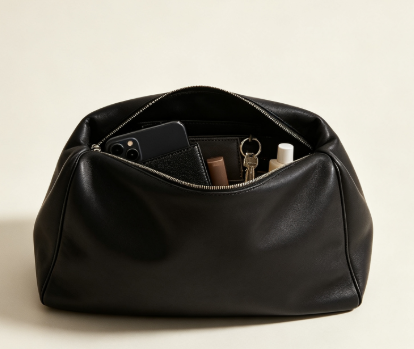
This is the only style in this guide that holds its own against a small work bag — and still looks like a fashion piece.
Dimensions define this category. Target 10–12+ inches wide × 6–7.5 inches tall × 3–4 inches deep. A solid retail benchmark sits at 12 in W × 7.25 in H × 3.5 in D. That size fits your phone, wallet, keys, and makeup — with about ½ inch of buffer space to spare. That buffer matters. Stuff it too full and the closure starts to fail. It shows right away on the shop floor.
Structure and Materials for the Office Context
Slouchy shapes don’t belong here. You need a structured or semi-structured silhouette to keep this style office-ready instead of weekend-casual. Pair that with:
-
Neutral colorways — black, navy, beige, tan, or brown cover 90% of professional wardrobe pairings
-
Refined closures — magnetic snap, zipper, or flap over bulky turn-locks
-
Lightweight materials — polyurethane or top-grain leather in a sleek, low-profile finish
-
Lined interior with clear organization — slip pockets, a zippered compartment, and a dedicated phone slot for scratch protection and fast access
Styling and Sourcing Logic
For brands, the sell is simple: day-to-evening versatility with no bag change needed. Carry it under the arm or in front — both work at this size. Add a detachable wristlet or shoulder strap and you stretch its use from the boardroom to after-work events without adding a new SKU.
Quick buyer filter:
– ✅ Clean lines, neutral finish, secure closure, structured shape
– ❌ Bulky proportions, casual hardware, or undersized capacity
Stock this as your polished daywear statement piece — the one carry that pulls the whole outfit together.
Style 7: Novelty & Statement Clutch — Engineered for Virality and Campaign Impact
One statement clutch, seeded to the right 30–50 influencers, can generate 60–150 posts in a single launch week. That’s not marketing theory — it’s a measurable campaign structure.
The novelty clutch has one job: spike awareness at launch, anchor a capsule drop, make your brand impossible to scroll past. It won’t drive your volume. It’s your campaign ignition switch.
Design Specs Built for the Feed
Physical dimensions matter more here than in any other style. The product has to perform on camera before it performs at retail.
-
Width: 20–28 cm — readable in vertical video and handheld selfies
-
Height: 10–16 cm — clear silhouette against a torso in a Reel
-
Depth: 4–7 cm — enough volume for 3D novelty elements while staying clutch-sized
-
Weight: ≤500 g including hardware — light enough for influencer shoots and event carry
-
Front surface rule: Reserve at least 60–70% of the front panel for one strong focal element — a graphic, a text statement, or a sculpted 3D object. Busy layouts split attention. One focal point wins.
-
Reflective materials: Include at least 1–2 high-reflectance surfaces — mirror acrylic, sequins, or metallic foil — to catch light on camera with no extra staging needed.
Engineer the Interaction, Not Just the Object
The novelty clutch needs to do something you can show in under three seconds. That’s the TikTok and Reels constraint. Design to it.
Build in one primary interactive element — a flip panel, a sliding message reveal, a light-up compartment. A customer needs to demo it in a single swipe motion. No clean demo means no short-form video traction. Three strong photogenic angles (front graphic, edge detail, interior surprise) give content creators instant material to shoot. That pushes UGC output up fast.
Ship each influencer unit with a physical campaign card. List three hashtag challenges and three scene ideas — doorway entrance shot, mirror selfie with clutch covering face, flatlay in campaign colors. Cut every friction point between receiving the bag and posting about it.
The Virality Math — and the Risk
Research on viral fashion campaigns points to one uncomfortable stat: 50% of viral events fail to generate sustained engagement beyond 7 days. Build your campaign timeline around that reality.
-
Wave 1: Launch week — influencer seeding, unboxing content, styling reels
-
Wave 2: Day 7–10 — re-ignite with a UGC contest or new narrative angle before momentum drops
On content design: novelty, humour, and controversy are proven drivers of fast spread. But controversy has a risk ceiling. Campaigns built on negative stereotypes can explode in reach — and cause serious long-term brand damage. The safer and smarter formula is controversy about situations or behaviors, never about people or groups. Bold, polarizing, identity-expressive. Not discriminatory.
Aim for engagement rates of ≥6–8% per post (versus the 2–3% fashion content baseline), a share-to-like ratio ≥0.25, and a save rate ≥2% of viewers. Those numbers signal real virality potential — not just passive impressions scrolling by.
The bottom line for buyers: Source the novelty clutch as a limited-run campaign tool — for launches, collaborations, and seasonal drops. Pair it with high-credibility micro-influencers (10k–100k followers). Their attitude transfers to your brand attitude at a high rate. One well-executed statement piece builds more brand equity than a full season of basics. That’s the outsized return this style is built to deliver.
How Fashion Brands Should Choose & Develop Clutch Bag Styles: A Practical Sourcing Checklist
No clear process means lost time, wasted money, and missed seasons. This checklist gives buyers and product developers a step-by-step framework to evaluate, develop, and approve clutch bag styles with real confidence.
Define the Use Case First
Lock down the bag’s primary function before you brief any supplier. Is it a formal evening clutch, a daily-carry soft pouch, a seasonal promotional gift, or a fashion-drop statement piece? That one decision shapes everything else — size, material weight, hardware grade, and packaging standard.
Build a Proper Tech Pack
One-line briefs lead to prototype surprises. A solid tech pack covers:
-
Bag category and silhouette (envelope, box, wristlet, frame, etc.)
-
Material type and hardware level
-
Exact dimensions (H × W × D) and structure (rigid vs. slouchy)
-
Logo application method, lining, zipper brand, buckle finish
-
Dust bag, retail packaging, and export carton standard
Run a Sample Ladder — Not One Sample
Most sourcing processes break down because teams skip sample stages. Follow this sequence: swatches → prototype → revision sample → golden sample → pilot production sample — then bulk approval. Each stage catches a different type of error. Skipping even one stage means problems show up later, when they cost more to fix.
Set Your Economics Before Supplier Outreach
Set your target retail price, target FOB, MOQ, annual volume, and target landed cost before you contact any factory. Ask for line-item RFQ pricing — materials, labor, packaging, tooling, and setup all billed as separate line items. Lump-sum quotes hide margin risk. You need to see the breakdown to spot where costs can shift.
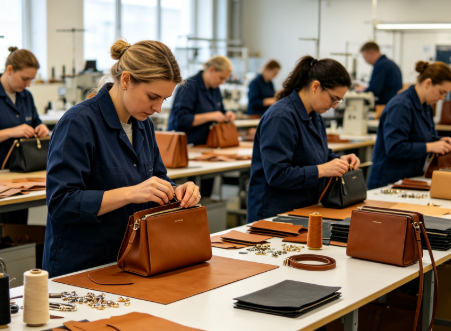
Screen and Shortlist Factories
Shortlist 3–5 factories per region. Score each one across product fit, capacity, compliance, communication, and lead-time reliability. Drop any supplier that refuses an NDA, won’t review a tech pack, or can’t provide REACH, CPSIA, or LWG certificates for your target market. Do this screening up front — it saves months of back-and-forth later.
A dual-sourcing structure works best here. Use one primary Asia supplier plus one secondary EU or Turkey supplier. This setup cuts your exposure to political shifts, logistics disruptions, and regulatory changes across your clutch bag line.