
7 Evening Clutch Bag Styles Every Fashion Brand Should Know
Seven styles. Each one serves a different customer, occasion, and price point. Together, they cover every gap a formal accessories line needs to fill.
Here’s the breakdown:
-
Classic Envelope Clutch — the workhorse of any evening assortment
-
Soft Pouch / Mini Pouch Clutch — unstructured, texture-forward, high social appeal
-
Chainmail & Metal Disc Clutch — bold statement piece for fashion-forward events
-
Crystal / Beaded Box Clutch (Minaudière) — the collectible hero with the highest artisan value
-
Satin Frame Clutch — a solid entry-level evening essential. It anchors bridal and occasion segments well
-
Wristlet Clutch — functional and embellished. Built for real event wear
-
Convertible Chain Clutch — works as both an evening bag and a mini shoulder bag
Each section ahead covers the silhouette’s key specs, a real market reference, and its role in a balanced assortment. You get a clear, practical framework for selection, product development, or supplier briefing.
Opening Hook: Why Evening Clutch Bag Styles Define a Fashion Brand’s Formal Accessories Line
The global evening bag market is worth USD 3.99 billion in 2025. By 2034, it’s projected to reach USD 6.65 billion. This is not a niche. It’s a category with real commercial weight.
Yet evening clutch bag styles make up just 8–12% of total SKUs in a full handbag assortment. Here’s what’s striking: they can drive 15–25% of margin contribution in formal and occasion sub-lines. Plus, they dominate campaign imagery, lookbooks, and red-carpet coverage — well beyond their share of shelf space.
Just 5–10 flagship formal clutch bag designs often shape how customers see an entire brand’s formal identity. The styles a label picks signal taste, positioning, and price authority. This happens before a single word of copy is read.
So getting the style mix right isn’t a styling decision. It’s a brand strategy decision.
Style 1: The Envelope Clutch — The Versatile Foundation of Any Evening Bag Collection
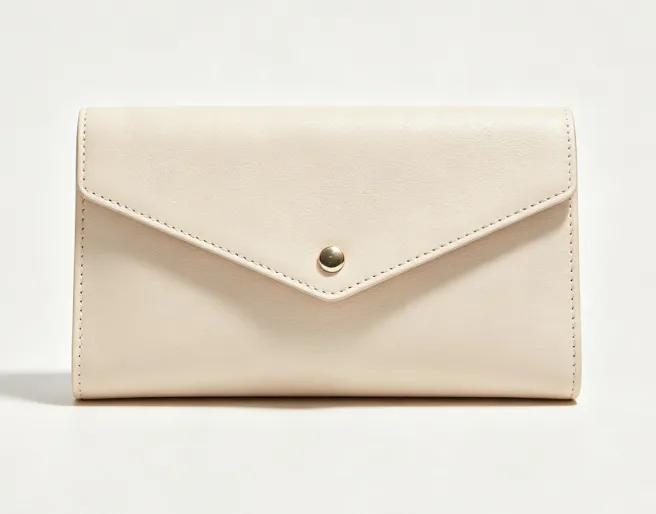
Flat. Slim. Rectangular. The envelope clutch is named for what it looks like. That simple shape is why it sells well across seasons, channels, and customer segments.
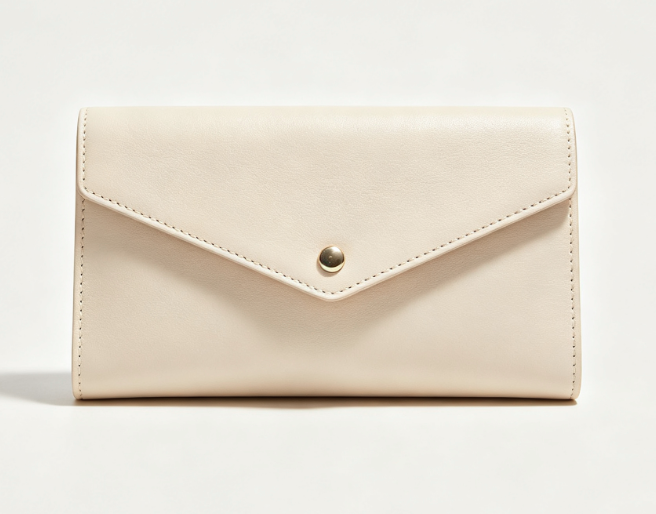
The silhouette features a fold-over front flap on a slim, structured body. Standard sizing runs around 12 × 8 inches. That’s big enough for a phone, cards, and keys. It’s also compact enough to tuck under an arm without breaking the line of a formal outfit. That balance is the whole point.
Why Buyers Keep Coming Back to This Style
Retail data tells a consistent story:
-
Minimalist leather envelope clutches are the most reliable year-round performers in boutique and premium e-commerce channels
-
Velvet versions in jewel tones spike hard in Q4 — evening events, gifting, holiday dressing
-
Embroidered envelope clutches are growing fastest in ethnic boho and resort assortments
The style works across price tiers without changing its core shape. Entry-level runs on satin and polyester. Mid-tier steps up to leather, calfskin, or suede. Premium builds in velvet, embroidery, or metallic embellishment. Same silhouette. Different customer. Different margin.
The OEM Advantage
For brands sourcing at volume, the envelope clutch offers something most styles can’t match: high branding real estate per unit. The broad, flat front flap gives you a clean canvas for logos, monograms, embossing, or seasonal print treatments. It’s all visible the moment a customer picks it up and carries it.
The rectangular panel construction keeps color matching, small-batch drops, and material swaps simple to manage. You can run the same block pattern across four fabrications and serve four distinct retail channels with ease.
One practical note for buyers: keep the format small-to-medium for formal use. Oversized envelope clutches hurt the refined look this silhouette is built to deliver.
Style 2: The Box Clutch — The High-Impact Statement Piece for Premium Collections
Hard edges. A rigid shell. Perfect geometry. The box clutch bag style — also known as the minaudière evening bag — earns its place in premium collections by doing what no soft clutch can: it holds its shape in-store, on the shoot, and in the customer’s hand. No exceptions.
Standard dimensions run 16–20 cm long × 9–12 cm tall × 4–6 cm deep. That’s small enough to carry with ease. The interior still fits a 6.7″ smartphone, lipstick, cards, and keys — no bulk required.
Why the Hard Case Clutch Bag Photographs Better
The hard case clutch bag is a visual asset before it’s a product. Its flat, symmetrical front face — at a 1.5–1.8:1 length-to-height ratio — reads sharp at thumbnail scale on e-commerce grids. Polished metal frames catch studio light and throw clean highlight lines along every edge. No slouching. No creasing. You get a crisp, architectural silhouette that anchors campaign imagery with zero styling effort.
This shapes real brand-level decisions. In premium capsule drops, brands place 1 box clutch against 4–6 softer styles — yet the box clutch takes the hero shot every time.
Embellishment Options and Where They Sell
|
Surface Finish |
Best Retail Context |
Price Signal |
|---|---|---|
|
Crystal pavé (1,000–3,000 stones) |
Gala, red carpet, black-tie |
2–4× base price |
|
Mirrored / high-gloss acrylic |
Holiday gifting, party season |
Premium mid-tier |
|
Rhinestone / sequin |
Prom, occasionwear (USD 80–150) |
Volume seasonal |
|
Marbled / fabric-wrapped |
Capsule collections, editorial drops |
Limited edition |
Full crystal embellished evening bags sell at 2–4× the retail price of plain satin versions. That gap is real — hand-application time and material cost back it up. For brands targeting the USD 200+ tier, crystal pavé box clutches make the natural anchor SKU.
Strategic Value Across Product Lines
The box clutch punches well above its SKU weight in three specific contexts:
-
Bridal collections: Ivory or crystal box clutches hit 25–35% attach rates alongside gown purchases in boutique retail settings
-
Holiday Q4 drops: The compact size fits premium gift packaging at low logistics cost — a natural “gift edit” homepage anchor
-
Visual merchandising: Line multiple box clutches upright and you get color-blocked window displays with a strong architectural brand signature that reads from a distance
For sourcing teams, the flat face construction brings practical cost benefits too. Tiled embellishment on a boxy surface produces less pattern waste than curved or draped styles. Per-unit costs stay controlled even at high embellishment density.
One sourcing note: specify gusseted lining construction. Trapezoid side gussets and a bottom panel add real interior capacity. That’s the difference between a clutch you can actually use at an event and one that just sits on a shelf looking pretty.
Style 3: The Frame Clutch — Tapping into Heritage Aesthetics and the Vintage Revival Trend
Frame bags were all over New York Fashion Week — on the runway and in street style shots. Hinged metal closures, protruding kiss-lock clasps, soft fabric bodies held against rigid metal edges. This isn’t a vague throwback. It’s a trend with real commercial legs.
The frame clutch runs on a simple contrast: a soft textile body mounted into a rigid metal frame along the top opening. That frame — standard evening clutch width runs 18–22 cm — handles the structure. The fabric carries the story.
What Makes the Silhouette Work
The kiss-lock clasp is the defining detail. Two hinged metal “lips” meet at a protruding clasp — ball, bar, or a custom decorative shape — and close with a satisfying snap. That hardware reads as vintage at a glance. It also fits clean into modern production without any friction.
Material choices reinforce that heritage signal:
-
Brocade and needlepoint reference couture and historical upholstery textiles
-
Satin and silk-like fabrics pull from 1930s–1950s old Hollywood formalwear
-
Pearl beading or crystal trim concentrated around the frame edge lifts the craftsmanship feel — no heavy embellishment needed across the full body
For Brands Sourcing at Scale
Frame hardware has a lot of room for customization at the OEM level. Standard production widths run 18 cm, 20 cm, 22 cm, and 25 cm. An iron base with gold-tone or antiqued silver plating keeps unit costs controlled. You still get the vintage-finish look. Clasp shapes — balls, geometric forms, branded monograms — can be tooled to carry your brand signature right in the hardware. That’s permanent brand placement built into the most-touched point on the product.
One spec detail worth flagging: frame channel depth runs around 3/8 inch. Match your interfacing weight carefully. Body fabric that’s too thick won’t seat into the channel. Too thin, and the soft body collapses against the rigid frame — and you lose the structural contrast that makes the style work.
Style 4: The Wristlet Clutch — Function as a Fashion Brand’s Selling Point
Most evening clutches ask something of the wearer: hold me, tuck me, grip me all night. The wristlet clutch flips that dynamic.
One short strap — often detachable — loops around the wrist and frees both hands. That’s the whole shift. For brands, this opens a different selling conversation.
Function as the Core Differentiator
A standard clutch holds 3–5 essentials. The wristlet goes further. You get card slots, zip pockets, and sometimes a dedicated external phone pocket built right in. It replaces a wallet. It cuts snatch risk in crowded venues. Customers holding drinks or phones at events don’t need to keep a tight grip on their bag.
That’s a product you can market around mobility and security — not just aesthetics.
A Single SKU, Multiple Retail Contexts
Material choice places the wristlet in different parts of your assortment:
-
Full-grain leather → premium everyday + semi-formal, year-round turnover
-
Satin or embellished fabric → party capsules, Q4 event season
-
Quilted PU or metallic finishes → mid-price, cross-seasonal urban collections
This range matters. Most formal clutch styles move in occasion seasons and stop there. A solid wristlet program sells across urban, travel, and event contexts at the same time. You lower SKU risk and reach a broader audience.
Minimum assortment recommendation: one leather wristlet and one embellished party wristlet per collection. Put detachable straps on both.
Style 5: The Soft Pouch Clutch — Riding the Trend Wave with Maximum Product Flexibility
The soft pouch clutch is the evening bag category’s answer to the cloud bag and dumpling bag trend. Same tactile, gathered look. Scaled down to formal occasion sizing.
The silhouette skips the structure on purpose. No rigid frame, no molded shell. Body panels run 26–30 cm wide × 12–18 cm tall. A ruched or gathered top edge adds volume without bulk. Bottom darts or shallow side gussets (3–6 cm) build depth while keeping the whole bag soft to the touch. A top zipper closes it off neatly.
Material is where this style does its real work:
-
Velvet and satin — the evening-natural choices, strong drape and sheen
-
Nappa leather (1.0–1.4 mm) — structured handfeel, premium positioning
-
Canvas or upholstery-weight fabric (280–320 gsm) — texture-forward, trend-reactive
Why This Style Matters for B2B Buyers
The production economics are hard to ignore. No molds. No metal frames. Tooling cost runs under US$300 — compare that to US$2,000–10,000+ for hard-shell box clutch tooling. Sampling compresses to 3–7 days once fabric is in-house. MOQs drop to 30–100 pieces per color. That makes seasonal capsules a real option for emerging brands, not just an aspiration.
Color drops are simple to execute. Same master pattern. Same zipper hardware. You just swap the shell fabric and lining color. A three-to-five color seasonal capsule — core neutrals plus two trend tones — totals 120–500 units across the run. That’s a manageable, margin-positive program.
Per-unit EXW cost for a fabric soft pouch lands in the US$6–15 range. That’s well below the US$15–40 typical for structured or hard-shell styles. That price gap makes the soft pouch clutch a strong fit for influencer gifting programs. Unit weight stays under 300 g, so airfreight costs stay in check too.
Brands that need to move fast on trends get a real edge here. No new molds means a 4–6 week reaction window — from trend identification to in-market product. In occasion and party accessory categories, where trend cycles move fast, that kind of speed matters.
Spec baseline for RFQ: 28 cm W × 15 cm H × 5 cm D, Nappa 1.2 mm or canvas/velvet 280–320 gsm shell, 120 gsm polyester lining, 25–27 cm YKK top zipper, ruched top edge with gathering seam.
Style 6: The Mini Chain Shoulder Clutch — The Dual-Purpose Evening Bag Driving Premium Positioning
Gucci, Saint Laurent, Jimmy Choo — all three build their evening mini bag lines around the same format: a compact structured body, a polished metal chain, and product copy that says “wear as a clutch or carry on the shoulder.” That’s not a coincidence. It’s a clear market signal.
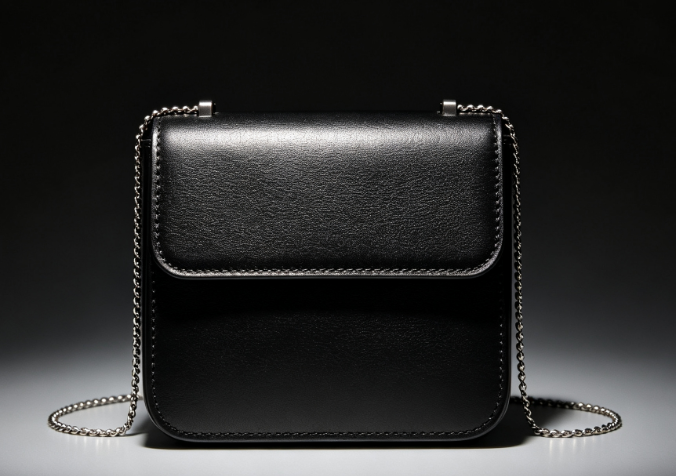
The mini chain shoulder clutch runs on one core idea: one bag, two occasions. Remove the chain and you get a sleek hand clutch for weddings and galas. Clip it back on and it becomes a hands-free shoulder bag for dinners and late nights out. That flexibility supports premium pricing. Customers aren’t paying for a single-use evening piece — they’re getting coverage across multiple event types.
Body sizing stays compact: W 16–22 cm × H 9–14 cm × D 3–6 cm. The interior fits a 6.5″ smartphone, cardholder, lipstick, and keys. Standard chain drop runs 50–55 cm for shoulder wear. Longer 105–120 cm options handle crossbody conversion. Brands offering both lengths can market a true three-way wear proposition — clutch, shoulder, crossbody — from a single SKU.
Material Tiers and What They Signal
|
Finish |
Retail Price Range |
Positioning |
|---|---|---|
|
Crystal mesh / embellished |
US$250–US$600+ |
High-end accessible luxury |
|
Satin + metal chain |
US$80–US$250 |
Formal occasion, bridal-adjacent |
|
Genuine leather + chain |
US$159–US$289 |
Accessible luxury, year-round |
|
PU leather + chain |
US$49–US$99 |
Premium high-street |
These tiers have strong luxury anchors. Jimmy Choo’s crystal satin detachable-chain clutches sell at US$800–US$1,600. YSL’s leather chain styles hit US$1,500–US$2,200. For accessible luxury brands at OEM scale, a leather mini chain clutch priced at US$159–US$289 retail pulls from that same visual language — compact body, high-shine hardware, structured silhouette — at a fraction of the cost.
The OEM Upside: Detachable Hardware as a Value Multiplier
The part that makes dual-use possible — a lobster clasp or spring hook on a side D-ring — adds little to unit cost but delivers real commercial leverage. Detachable strap construction pulls a 10–25% higher FOB compared to fixed-strap versions. Plus, it doubles your campaign output: one SKU produces both a daytime shoulder bag shot and an evening clutch shot, with no second style needed in the lineup.
Spec baseline for RFQ: W 19 cm × H 11 cm × D 4.5 cm body; smooth cow leather or microfibre PU shell; 110 cm polished gold or silver detachable chain; single main compartment with card pocket; polyester twill lining. FOB target: US$10–15 (PU) / US$25–40 (leather).
Style 7: The Statement Novelty Clutch — The Social Media-Driven Limited Edition That Builds Brand Identity
Judith Leiber built a legacy on crystal-encrusted cupcakes, animals, and hamburgers. That’s no accident. It’s a deliberate brand strategy that no standard satin clutch can copy.
The statement novelty clutch is a three-dimensional evening bag shaped like a real object — milk cartons, fruit slices, vintage telephones, cocktail glasses, sculpted animals. Brands like Staud and Cult Gaia have used this format to stand out in a crowded market. The shape itself does the marketing.
Why This Style Outperforms on Social Media
Novelty clutches don’t just photograph well — they stop scrolls. Unconventional silhouettes and all-over crystal surfaces create high-contrast thumbnails that perform in Reels and TikTok hooks. The numbers back this up: fashion posts featuring novel accessories hit engagement rates of 3–7%, compared to 1–2% for standard product flat lays. Saves and shares outpace comments — a clear sign of wishlist and aspirational behavior.
One standout novelty clutch in a red-carpet or editorial photo can own the entire image in a viewer’s memory. That’s strong brand exposure from a single low-volume SKU.
The Right Commercial Model: Low Volume, High Margin
This style is not a volume driver. It’s a margin and identity driver. Build it around these pillars:
-
Limited drops with numbered pieces or seasonal themes to create scarcity
-
1–3 hero figurative motifs tied to your brand codes — a mascot, signature food, or local cultural icon
-
3–5 colorway or crystal variants built from the same custom mold to spread out tooling costs
Custom 3D tooling is the main capital investment here. Once that mold exists, you can vary surface treatments — crystal artwork, mixed stone colors, applied graphics — to grow your SKU range without spending on new tooling.
OEM Production Notes
Crystal coverage on complex figurative shapes needs hand-set stones. Machine application works on flat or slightly curved surfaces. For sculpted animals, faces, or logo motifs, manual placement is the right approach to keep detail quality and stone durability intact. That craftsmanship story is also what justifies luxury pricing.
Packaging should match the concept. Use rigid presentation boxes, custom foam inserts shaped to the motif, and printed storytelling cards. This reframes the clutch as a collectible object. Plus, that packaging drives unboxing content — free social media fuel built straight into the product experience.
Deployment priority: seed red carpet and high-visibility events first. Measure success by engagement rate, press hits, and saves — not sell-through volume. That’s the right KPI framework for a style built to grow brand identity, not fill inventory.
How to Build a Balanced Evening Clutch Bag Line: A Style Mix Strategy for Fashion Brands
Seven styles. Three tiers. One clean assortment. That’s the target — and the framework below gives you a direct path to get there.
The Three-Bucket Portfolio Model
Think of your evening clutch line in three buckets. Each one has a clear commercial role:
Core Staples — 55–65% of your line
Envelope and soft pouch clutches. These are your volume workhorses. Stick to 3–4 colors — black, champagne, navy, blush. You’ll cover over 70% of evening occasions without spreading yourself too thin.
Premium Anchors — 20–25% of your line
Box clutches and chain clutches. These are your margin drivers and in-store upsell options. Premium buyers and wholesale partners expect detachable chains on 90–100% of styles in this tier. No exceptions.
Statement Drivers — 15–20% of your line
Novelty pieces and bold embellished styles. Keep this to 1–2 SKUs per key fashion season. Enough to fuel social media and visual merchandising. Not enough to create overstock exposure.
What a 50-SKU Line Looks Like in Practice
|
Category |
Styles |
SKU Count |
|---|---|---|
|
Core Staples |
Envelope (satin, metallic, patent) + Soft Pouch |
30–32 SKUs |
|
Premium Anchors |
Box clutch + Chain clutch |
10–12 SKUs |
|
Statement Drivers |
Novelty / embellished / sculptural |
8 SKUs |
Price Laddering: Map Each Style to a Tier
Don’t treat pricing as an afterthought. Each silhouette fits into specific retail brackets:
-
Envelope: Accessible (US$25–45) through Contemporary (US$70–130). Cap premium placements at 5–10% of the style’s total SKUs.
-
Soft Pouch: Contemporary (US$90–180) is the sweet spot. Lambskin versions reach US$250–400.
-
Box Clutch: Ranges from Contemporary through entry Luxury — US$50 for acrylic frames up to US$700 for mother-of-pearl finishes.
-
Chain Clutch: US$40–90 at Contemporary; US$180–380 at Premium; designer hardware versions hit US$450–1,200.
Keep a clear 2×–3× price gap between your accessible and premium options within each silhouette. That gap makes the upgrade feel justified. It also makes your line easy for buyers to read at a glance.
Six Steps to Execute the Mix
-
Define occasion split first. Target 40–50% of SKUs for black-tie and weddings, 35–45% for cocktail and date-night, 10–20% for party and novelty.
-
Lock your two core silhouettes. Envelope and soft pouch need to cover at least 60% of projected units. Build from there.
-
Build a color-material matrix. Every core silhouette needs black, metallic, and nude variants. Combined, those three should make up at least 60% of that style’s units. Save trend colors for statement drivers.
-
Set a good/better/best price ladder per style. For envelopes: US$29–39 (good), US$79–99 (better), US$199 (best).
-
Place premium anchors at focal points — online banners, store entry displays. Back them with black and metallic core envelopes to ground the visual and push cross-sell.
-
Pre-build your wholesale assortments. Buyers sourcing evening bag styles wholesale want curated bundles. Open-ended SKU lists slow decisions and kill conversions.
A balanced evening clutch line isn’t about carrying every style. It’s about building the right ratio — so each style earns its place on the shelf, in the catalog, and on the sales floor.
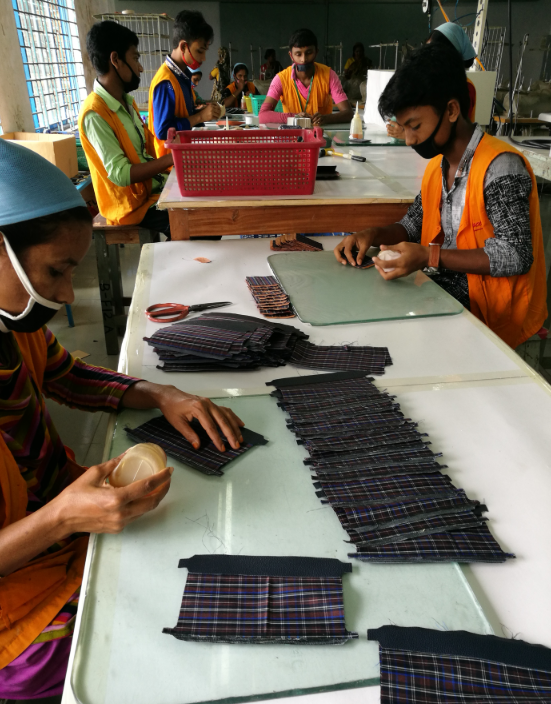
Why Sourcing These 7 Evening Clutch Styles from One Manufacturer Matters
Splitting a 7-style evening clutch collection across three factories looks efficient on paper. In reality, it creates a compounding set of problems. These problems eat into margin, delay launches, and break shelf consistency.
Here’s what multi-supplier sourcing looks like in real life:
-
Defect rate variance from 1–2% to 8–10% across factories in the same collection
-
Hardware plating tone differences up to 5–10% — visible side-by-side on shelf or in a flat lay
-
Color shade gaps of ΔE > 2–3 between lots — your satin envelope and box clutch in “champagne” won’t match
-
Staggered deliveries spanning 3–5 weeks — each supplier quotes 45–75 day lead times on their own schedule
-
6,300+ pcs minimum — three suppliers each enforce their own 300 pcs/style/color MOQs across 7 styles and 3 colors
The communication load adds up fast. Managing five suppliers instead of one multiplies PO volume, QC bookings, and sample approval rounds by 4–5×. Brands chasing a 3–5% FOB saving through cheaper secondary suppliers end up losing 10–15% of margin to rework, urgent airfreight, and markdowns.
What a Single OEM Changes
Put all 7 evening clutch styles under one manufacturer. Every one of those friction points goes away:
|
Metric |
Multi-supplier (3 factories) |
Single OEM |
|---|---|---|
|
Total MOQ |
~6,300 pcs |
~1,500–2,000 pcs |
|
MOQ per style |
300 pcs per supplier |
150–200 pcs per style |
|
Lead time |
45–75 days, staggered |
35–55 days, unified |
|
Defect rate variance |
1–10% by factory |
Under 2–3% overall |
|
Email threads per collection |
60–100+ |
15–25 |
|
Compliance testing cost |
3× material sets |
1 unified set (20–40% savings) |
You get one AQL standard — 2.5 for major defects, 4.0 for minor — applied across all 7 clutch silhouettes. One set of payment terms, Incoterms, and packaging specs. One material library covering poly satin, velvet, acrylic, PU, beaded panels, and chainmail mesh. All tested once against REACH, CPSIA, and CA Prop 65 requirements.
Ready to See All 7 Styles in a Single Sample Shipment?
Request samples across all 7 evening clutch styles from one OEM partner. You can check hardware consistency, cross-style color matching, and construction quality — all in a single delivery, before committing to a full run.
-
[Send me the 7-style clutch sample pack]
-
[Get MOQ & lead time matrix for all 7 styles]
-
[Download spec sheet: materials, hardware, and packaging options]