
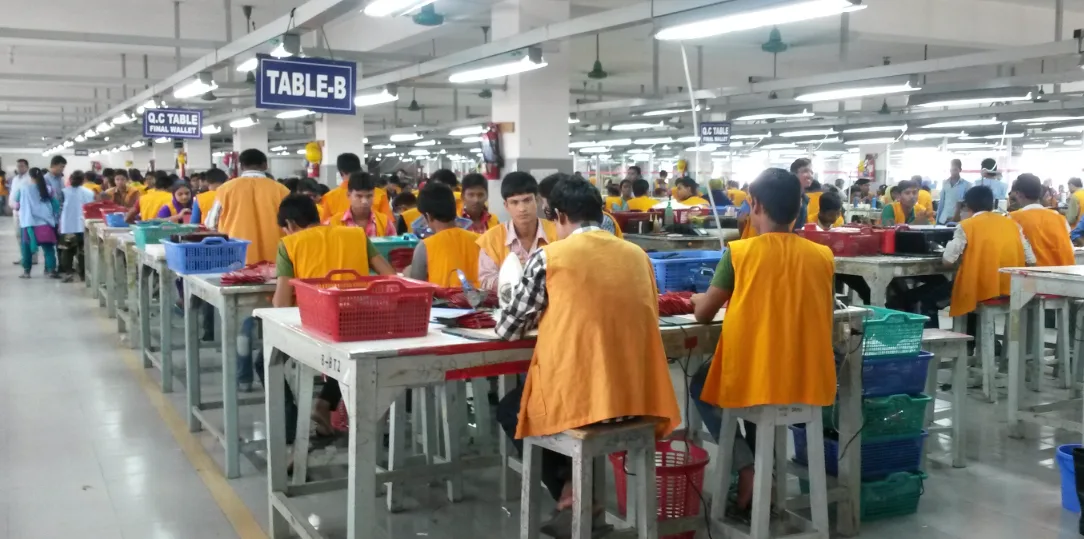
What Makes Indonesia a Smart Sourcing Hub for Custom Handbags
Indonesia holds 60–70% of the world’s rattan supply. That one fact alone explains why so many fashion brands are shifting their sourcing talks toward Jakarta, Bali, and Cirebon.
But rattan is just the starting point. The real sourcing edge builds across three areas:
Cost structure. Indonesian factory workers earn US$220–280/month — 30–50% less than Chinese labor at the same level, and 10–20% below Vietnam. Handbags that need heavy hands-on work (hand-stitching, weaving, dyeing) feel that wage gap in the numbers. A mid-complexity leather bag often comes in US$2–4 cheaper per unit than Chinese OEM at the same quality.
Material access. Full-grain and top-grain bovine leather, plant-tanned hides, local rattan, and industrial canvas — factories source all of it within the country. Mid-grade finished leather runs US$2.5–4.0/sq ft, with a 5–10% landed cost edge over imported options.
Cluster specialization. Indonesia isn’t one big factory scene. It’s three separate manufacturing zones, each with its own strengths:
– Bali → handcrafted leather, artisan detailing, MOQ from 50 units
– Cirebon/West Java → rattan and natural fiber bags, MOQ 200–300 units, well-suited for seasonal resort collections
– Solo/Surabaya → industrial-scale OEM leather goods and canvas bags, 45–60 day lead times after sample approval
Brands cutting their China dependency are adding Indonesia as the second leg of a Vietnam + Indonesia dual-sourcing setup. Structured leather goods go through Vietnam. Handcraft and mixed-material pieces come from Indonesia.
How We Evaluated These Custom Handbag Manufacturers
We scored every manufacturer on this list against three weighted criteria — craftsmanship (40%), production capacity (30%), and commercial flexibility (30%).
Craftsmanship came down to measurable specifics. We looked at stitch density (SPI), hardware durability, edge finishing, and lining construction. Mid-range factories hit 8–10 SPI. Premium-tier work starts at 10–12 SPI with zero skipped stitches.
Production capacity focused on two things: maximum monthly output and schedule reliability. Small factories run 5,000–10,000 units/month. Large-scale OEM operations clear 30,000+ units.
Commercial flexibility covered three key areas:
– MOQ thresholds
– Sampling fees (US$80–300/style)
– OEM/ODM support depth
For data, we pulled from factory floor documentation, customs export records, B2B platform ratings (≥4.5/5 counted as a positive signal), and third-party audit reports (BSCI, Sedex). Where figures conflicted across sources, we used the most recent 12–24 months of data as the deciding reference.
1. Sitoy Group — Best for Large-Scale OEM Leather Handbag Orders
Sitoy Group has been building leather goods since 1968. That’s over five decades of OEM experience — and it shows in every metric that matters for large-scale buyers.
The factory runs on serious scale. With 7,000–10,000 employees across multiple production bases, output reaches 300,000–800,000 units per month. During peak season, that climbs above 1,000,000 units. Your annual volume exceeds 50,000 pieces? This is the scale match you need.
Craftsmanship sits at the premium end of OEM. Core materials include full-grain and top-grain bovine leather for structured totes and commuter bags. Plus lambskin for softer fashion styles. Edge finishing uses 2–3 layers of edge paint baked at 180–220°C. Color deviation stays within ΔE < 1.0. Hardware plating runs 0.2–0.5μm thick, with 24–72 hour salt spray resistance. Stitch density holds at 5–7 SPI — in line with luxury-tier OEM standards.
Key commercial terms:
– MOQ: 500–1,000 pcs/style; 100–300 pcs/color
– Sampling: 7–14 days (standard); 21–30 days for complex hardware
– Production lead time: 45–75 days; repeat orders compress to 35–50 days
– Certifications: ISO 9001, BSCI, SA8000 — audit-ready for international brands
Private label support covers woven labels, leather patches, hang tags, embossed logos, and metal logo plates. Metal logo tooling takes 15–25 days. Minimum order for tooling runs 1,000–3,000 pcs.
Best fit: International fashion groups, North American department store house brands, and corporate gifting clients. Works best for buyers placing 100,000–500,000 pcs per year across multiple seasonal collections.
2. Cirebon Rattan Craft Co. — Best for Rattan & Natural Fiber Handbag Customization
Indonesia controls 60–70% of the world’s rattan supply. Cirebon is where that raw material advantage turns into finished product. Factories here sit minutes from rattan processing hubs. No import-dependent manufacturer can match that supply chain position.
Cirebon rattan specialists carry 8–20 years of weaving experience. Master craftspeople average 10+ years on the floor. Mid-tier operations produce 100,000–300,000 units per year. 60–70% of that output goes to European and American resort retail — French beach boutiques, Spanish summer collections, US coastal lifestyle brands.
Craftsmanship starts at the raw material level. Rattan arrives graded by diameter — 2–4 mm for body weaving, 4–6 mm for frame support. Moisture content stays controlled at 12–18% to prevent mold and cracking during transit. Pre-treatment covers surface cleaning, low-temperature drying at 40–60°C for 12–48 hours, and anti-mold treatment using water-based fungicide solutions. These meet REACH and Prop 65 standards.
Weave structures available for customization:
-
Plain weave — 3–5 mm single-layer thickness, ideal for lightweight summer totes
-
Twill weave — tighter structure, 15–25% higher abrasion resistance, used for structured bases
-
3D/shaped construction — round, half-moon, and box silhouettes with 5–8 mm wall thickness, supported by metal or rattan frames
Most factories offer 3–5 standard textures (plain, twill, grid, open-lattice, herringbone). You can also request custom patterns developed directly from your design files.
Surface finishing meets export-grade standards. Natural finishes use transparent water-based coatings at 20–40 μm thickness. That adds water and stain resistance while keeping the organic texture intact. Dyed options achieve dry rub fastness of Grade 4–5, wet rub Grade 3–4. All dyes are AZO-free with heavy metal levels within EU and California limits.
Durability testing follows retail-ready benchmarks:
-
Handle pull test: 5–8 kg static load for 4 hours, plus 2,000–5,000 dynamic cycles without fracture
-
Surface abrasion: 5,000–10,000 cycles with light surface fuzzing allowed, no structural exposure
-
Mold resistance: 48–96 hours at RH 90–95%, 28–32°C, no visible mold growth
-
UV color stability: 24–72 hour exposure with ΔE ≤ 3–5
Production capacity scales with the season. Standard monthly output runs 3–8 × 20FT containers. During peak booking windows (March–June, September–November), that rises to 5–10 × 20FT (or 2–5 × 40FT). Each 20FT container holds around 6,000–12,000 units, depending on bag dimensions and folding method. Long-term partners get 10–20% capacity reserves held back for reorder flexibility.
Sampling and customization process:
|
Stage |
Timeline |
|---|---|
|
Design review & material selection |
2–3 days |
|
Sample production (standard styles) |
7–15 days |
|
Sample production (complex/multi-material) |
18–25 days |
|
Sample revision rounds |
1–3 rounds |
|
Bulk production lead time |
45–75 days |
Sampling fees run US$30–100/style and get credited in full against bulk orders. Pre-production documentation includes weave spec cards and dimensional control sheets for each confirmed style.
Private label support covers the full package: woven labels, leather or metal logo patches embedded into the body or interior pocket, custom hangtags with sustainability story copy, and gift box sets (standard size 30×25×15 cm for tote formats). Branding options include heat stamping, screen printing, and heat transfer — all compatible with leather, cotton, and paper tag substrates.
Key commercial terms:
– MOQ: 200–300 pcs/style for standard weave; 500+ pcs for custom texture development
– Export markets served: EU (~60–70%), Australia/NZ (~20–25%), other markets (~5–10%)
– Certifications: Factories supplying EU and Australian retailers carry BSCI or Sedex audit coverage
One risk to plan around: seasonal capacity compression. Rattan and natural fiber materials follow seasonal harvest and drying cycles. Peak-season orders — especially spring/summer collections shipping March through June — can push lead times from the standard 45–60 days out to 60–90 days. Running more than 10 styles at once? Lock in quantities 3–4 months ahead of your target ship date. Rainy season disruptions in East Java and Lombok can also affect raw material drying schedules, adding 1–2 weeks of upstream variability.
Best fit: Resort wear brands, lifestyle retailers, and eco-conscious labels sourcing handwoven summer totes, beach bags, and natural fiber clutches for EU, US, and Australian seasonal collections. Works well for buyers placing 5,000–50,000 units/season across 3–8 styles.
3. Bali Artisan Bag Studio — Best for Small-Batch Custom Handbags & Capsule Collections
Small-batch handbag production is a niche most Indonesian factories skip. Standard MOQ floors sit at 300+ units. That’s a hard wall for startup brands and independent designers building capsule collections of 3–8 styles per season.
Bali Artisan Bag Studio runs on a different model. The core team is 3–10 experienced craftspeople. Monthly output sits at 400–1,500 units. This workshop isn’t chasing volume — it’s focused on precision for small runs.
MOQ starts at 30–50 pcs per style/colorway. Drop below 30 pcs and unit price rises 10–25%. That’s a fair trade for the setup cost involved. Repeat orders with confirmed patterns can go as low as 20–30 pcs per colorway, as long as original materials stay in use.
Mixed-material construction is the core strength:
– Vegetable-tanned leather + cotton canvas — structured beach totes, fisherman bags
– Suede + linen — resort crossbodies, bohemian bucket bags
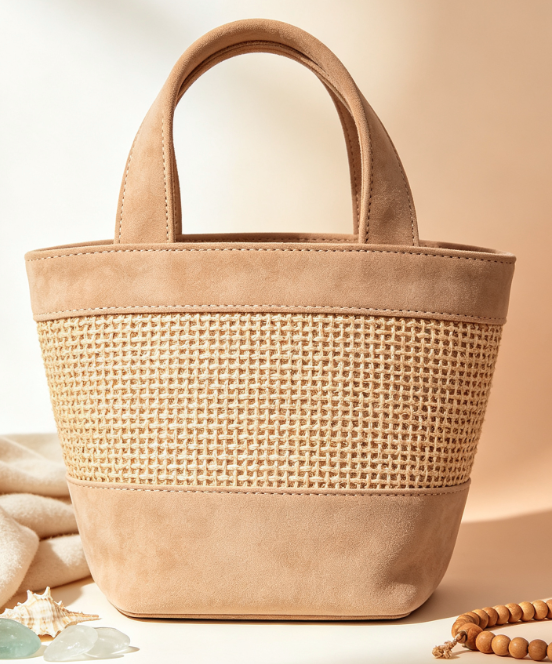
Key quality benchmarks to verify on any sample:
– Symmetry deviation on structural seams: ≤1–2 mm
– Finished dimensions vs. design spec: ≤3 mm variance
– Topstitch-to-edge consistency: ±1 mm
– Shoulder strap pull strength: ≥5–8 kg without seam separation
You can submit 2D sketches, 3D renders, or physical reference bags for pattern development. Standard sampling takes 7–21 days across 2–3 revision rounds. Budget extra time for bohemian styles with dense fringe — 20–80 tassels per bag adds to the timeline.
Sampling fees and credit structure:
– Leather styles: US$80–250/style (complex boho: US$300+)
– Canvas/mixed material: US$60–180/style
– Fee credited at 50–100% on bulk orders reaching ≥80–150 pcs; credit drops to 30–50% on orders staying at 20–50 pcs
Payment terms are structured for small brands: pay the full sample fee upfront via PayPal or TT, then put down a 30–50% deposit to kick off production. You pay the balance at completion, confirmed by photo or video. Brands with 3+ seasons of order history can negotiate net-30 settlement terms.
Design protection runs through bilateral NDAs — standard for startup clients here. The agreement covers unpublished styles. It also blocks the factory from reproducing your designs with >70% structural overlap for other buyers. File sharing uses cloud storage with access controls, not WeChat.
Where this factory hits its ceiling:
|
Scenario |
Risk |
|---|---|
|
Single style >300–500 pcs |
Unit cost runs 10–30% above mid-size factory pricing |
|
>6 styles running at the same time |
Lead time slippage becomes a real risk |
|
Fast-fashion turnaround <30 days |
Not compatible |
|
Viral SKU scaling from 100 → 3,000+ pcs |
Quality consistency breaks down with temporary workers |
Annual output runs 5,000–20,000 units — a fraction of what automated OEM factories push out. For brands that need handcraft integrity across small runs, that’s a strength, not a weakness. Capsule launches shipping 30–60 days from final sample approval? This model fits. E-commerce volume plays? It doesn’t.
Best fit: Independent designers and startup fashion brands launching capsule collections of 3–8 mixed-material or bohemian-style bags, with per-style quantities between 20–150 pcs and full design confidentiality requirements.
4. EcoWeave Bag Co. — Best for Canvas & Vegan Material Custom Bag Manufacturing
Canvas totes and vegan-PU handbags are no longer niche products. Retail plastic bag bans across the EU and US have pushed large retailers to order 10,000–100,000 reusable canvas bags per season. The global vegan leather market grows at 10%+ per year. EcoWeave Bag Co. is built directly for this demand.
This mid-size OEM/ODM factory runs 3–6 production lines. Each month, output hits 30,000–100,000 pcs across mixed styles. Canvas tote lines push 800–1,500 pcs/day. Structured vegan-PU handbags run at 400–800 pcs/day. That split shows where their real expertise sits: 70%+ of output is vegan leather and canvas. It’s not a side offering added onto a leather operation.
Materials are the foundation of their positioning:
-
0.6–1.2 mm PU vegan leather — waterborne formulation that cuts VOC emissions 30–60% vs. traditional DMF-solvent PU. PVC-free across all “vegan” SKUs.
-
12–24 oz cotton canvas (400–800 g/m²) — available in organic cotton, recycled polyester canvas, or conventional cotton. Eco-certified options add +10–25% to unit cost.
-
GRS-certified RPET lining — 150–210D recycled polyester. Works as standard lining across tote and crossbody formats.
Quality benchmarks hold up under export-grade checks:
Vegan leather processing:
– CNC auto-cutting precision: ±0.5–1.0 mm on PU panels. Nesting software cuts material waste by 3–8% vs. manual cutting.
– Embossing runs at 3–8 bar, 80–130°C, 5–15 seconds — heat-debossed logo tolerance ±0.3 mm
– Edge finishing: water-based edge paint in 2–3 coats. Adhesion holds through 180° bend over 20–30 cycles without cracking.
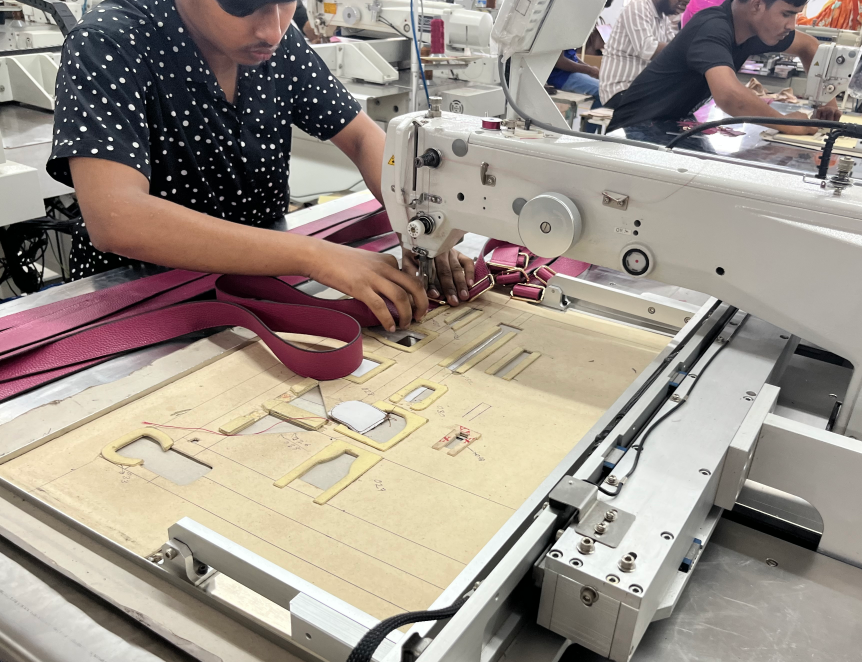
Canvas printing and embroidery:
– Silk-screen up to 4–8 spot colors per side. Registration tolerance: ±1–2 mm on A3 panels. Water-based, AZO-free, heavy-metal-free inks come standard.
– Digital printing available for small runs at MOQ 50–100 pcs/design
– Multi-head embroidery (6–12 heads) runs at 400–800 stitches/min. Typical logo stitch count: 3,000–8,000. Washing colorfastness: Grade 4+ (ISO 105).
Structural reinforcement:
– Handle joints: double-stitch or bar-tack at 18–24 stitches per 3 cm
– Load test for shopping totes: 10–15 kg static load for 24 hours without seam failure. That’s the standard large retailers use in their own testing.
Hardware sourcing follows EU compliance rules by default. All metal is nickel-free or low-nickel (≤ 0.5 µg/cm²/week per EN 1811). Plating is lead-free and cadmium-free. Buckles and D-rings pass 48–72h neutral salt spray without red rust. Components use zinc alloy or recycled brass. PVD coating is available as a lower-chemical option vs. traditional electroplating.
Key commercial terms:
|
Parameter |
Canvas Totes |
Vegan-PU Handbags |
|---|---|---|
|
MOQ |
500–3,000 pcs/style |
300–1,000 pcs/style |
|
Sample lead time |
7–14 days |
10–20 days |
|
Production lead time |
30–45 days (≤10,000 pcs) |
45–60 days (multi-material) |
|
Ex-factory cost (FOB) |
USD 1.0–2.5 (printed tote) |
USD 8–20 (structured PU bag) |
Customization covers the full pipeline:
– Custom Pantone canvas dyeing: 500–1,000 m per color minimum (about 800–1,600 standard totes)
– Vegan PU custom color + grain: 300–500 m per color
– Screen print logo: 100–300 pcs MOQ
– Embossed PU patch: mold cost USD 50–150 one-time; unit MOQ follows PU color minimums
– Plant-based PU (bio-content 20–60%) sourced from select bio-materials suppliers for brands that need the most advanced vegan credentials
Certifications that matter at the sourcing stage:
– OEKO-TEX Standard 100 — fabrics, linings, threads
– GRS (Global Recycled Standard) — RPET lining and recycled canvas
– REACH-compliant chemical management; PFC-free C0 water-repellent finishes for EU private labels
These aren’t decorative certificates. EU and US sustainable-brand RFQs often filter out uncertified factories before requesting any samples. Holding all three puts EcoWeave on the shortlist from the start.
Cost structure supports DTC brand economics. Western sustainable handbag brands retail at USD 80–300. An ex-factory cost of USD 8–20 on a structured vegan bag keeps a 3–5× retail markup intact while meeting ethical sourcing requirements. DTC brands testing 100–500 pcs per SKU before scaling to 1,000+ on winning styles will find the MOQ thresholds and 30–45 day lead times built for that exact workflow.
Defect rate expectation: ≤ 1–2% on arrival across stitching, print registration, and hardware. That’s the baseline most EU/US buyers require for repeat business.
Best fit: DTC sustainable fashion brands, EU/US private-label retailers, and eco-conscious corporate merchandise buyers sourcing printed canvas totes, vegan-PU crossbodies, and mixed-material shoppers. Works best for buyers placing 5,000–80,000 pcs/season who need certified materials, clean branding execution, and lead times short enough for DTC reorder cycles.
5. PT Nusantara Prima Bag — Best for Private Label Handbag Supplier with Full Packaging Service
Most Indonesian handbag factories stop at the bag. PT Nusantara Prima Bag doesn’t. This 200–300 person factory runs the full private label chain — design development, pattern making, raw material sourcing, production, custom packaging, export documentation, and FBA warehouse coordination. All under one roof.
That matters more than it sounds.
Monthly output: 50,000–100,000 units on standard PU and canvas styles. Complex multi-process styles hit 20,000–40,000 units/month. About 30–50% of that capacity goes to flexible small-batch lines. So e-commerce sellers placing 300–3,000 pcs per SKU can get in here without issues.
Logo and branding execution covers three methods:
– Debossing/foil stamping (hot gold/silver, embossed relief) — standard on leather patches and main labels
– Heat transfer printing — available on PU and canvas, used for custom graphic patterns
– Embroidery — 6–12 head machines at 400–800 stitches/min, handling logo placement and positioned artwork
Packaging customization is where this factory stands apart from standard OEM suppliers:
|
Packaging Component |
Spec |
MOQ |
|---|---|---|
|
Custom hangtags |
350–450 g/m² specialty paper, CMYK 4-color print, 3×7 cm or 4×8 cm |
1,000–3,000 pcs |
|
Dust bags |
Non-woven 70–90 g/m², single-color screen print at USD 0.03–0.06/pc |
1,000 pcs |
|
Gift boxes |
1.5–2.5 mm greyboard, foil stamping/spot UV/embossing available, USD 0.60–1.50/set |
500–1,000 sets |
FBA direct shipment support is built into the workflow. The factory handles FNSKU barcode labeling per unit, carton labels (10×15 cm), and box weight control at ≤15–20 kg per carton. All of it lines up with Amazon inbound standards. The model is straightforward: you provide the Ship-To address, FBA warehouse code, and ASN. The factory manages packing and labeling. The freight forwarder takes care of booking and customs clearance.
The cost math for e-commerce sellers:
Sourcing your own packaging across 3–5 vendors adds up fast. On a 1,000-unit order of a USD 8.00 handbag:
-
Self-sourced packaging (hangtag + dust bag + gift box + 3PL labeling): USD 1.30–2.20/unit
-
Factory all-in packaging: USD 0.60–1.80/unit depending on gift box inclusion
-
Net saving: USD 0.30–0.70/unit — plus 5–10 days faster project coordination and 50%+ fewer packaging-spec mismatch errors
For sellers dealing with FBA compliance, this factory knows Amazon’s labeling rules well. Inbound error rates stay at 1–3%, which means you avoid re-label fees at the warehouse.
Lead time structure (design through finished goods):
-
Tech pack confirmation from sketch/reference: 3–7 days
-
First sample (standard PU/canvas): 7–10 days; complex hardware styles: 10–15 days
-
Sampling fee: USD 80–150/style, credited in part or in full on bulk order
-
Bulk production (300–500 pcs/style): 25–35 days
-
Bulk production (1,000–3,000 pcs/style): 30–45 days
-
With custom packaging included: packaging production runs at the same time as bag production. Total design-to-finished-goods timeline stays at 35–50 days. Peak season (August–November) adds 5–10 days.
Final inspection pass rate holds at 95–98%. The factory samples 10–20% of finished goods for zipper, hardware, and strap load testing.
Certifications: ISO 9001, BSCI/Sedex audit coverage, independent export license for direct buyer and freight forwarder coordination.
Best fit: Amazon private label sellers, DTC handbag brands, and e-commerce buyers placing 1,000–30,000 pcs/season. You get one factory contact to handle bags, branding, packaging, and FBA-ready shipment — no need to manage 4 separate vendors.
6. GNN International — Best for Luxury-Finish Custom Leather Goods Manufacturer
Luxury-finish leather work isn’t about scale — it’s about restraint. GNN International runs at 500–2,000 pcs/month. That’s a set ceiling. It keeps handwork quality solid across every single piece.
What separates luxury-finish from standard OEM:
-
Saddle stitching with even pitch and clean backstitches — ask for a close-up demo video before you commit
-
Hand-painted or skived edges — no heat-sealing, no folded-over shortcuts
-
Full-grain or calfskin leather, vegetable-tanned — you should get documented hide grade and tannage origin
-
Lining alignment tolerance: ≤1 mm — visible wrinkles or misalignment fail the sample, full stop
Hardware holds to a higher spec here. You get brass and gold-plated brass parts with nickel-free plating and anti-tarnish treatment. Salt spray testing runs a minimum of 48–72 hours for corrosion resistance.
How to qualify this factory fast:
Ask for three finished samples — one wallet, one structured bag corner, one mixed-hardware piece. Also request a full process video from cutting to final inspection. Get at least three named premium or luxury client references.
Key commercial terms:
– MOQ: based on order value and material complexity, not unit count alone
– Sample lead time: confirm per style at the inquiry stage
– Defect policy: get a written remake commitment before you pay the production deposit
Best fit: Private label brands and independent designers targeting the USD 150–500+ retail price tier. You need proof of luxury construction quality and the option to order low volumes.
7. Bandung FastCraft Bags — Best for Fast-Fashion Handbag Factory with Quick Turnaround
Speed drives everything here. Bandung FastCraft runs on a fast-fashion rhythm — small batches, quick reorders, short development cycles. A style sells well? You restock it before the trend fades.
Lead times that fit fast-fashion schedules:
– Stock-based restyle: 7–14 days from sample approval to shipment
– New development (new structure + materials): 25–35 days
That 7–14 day window works because the factory holds 2–4 weeks of safety stock on standard PU, lining fabric, zippers, and hardware. Restyling an existing silhouette — adjusted dimensions, new flap, repositioned hardware — takes 1–3 days in the pattern room. The usual wait is 7–10 days. Here, it’s not.
MOQ fits the test-and-scale model: 300–1,000 pcs per style for restock runs. Small enough to trial a trend. Fast enough to chase it.
QC holds up under deadline pressure. The factory runs IPQC checks every 2–3 hours on the line. Each round covers stitch density, edge finish coverage, and hardware pull strength. The end-of-line defect target stays below 2–3%. Pre-shipment inspection follows AQL 1.5–2.5.
Best fit: Fast-fashion handbag brands, e-commerce sellers, and trend-driven private label buyers placing 300–5,000 pcs per style. You need a reliable 7–14 day turnaround on repeat styles. This factory delivers that without dropping baseline quality.
8. Green Loom Artisan Co. — Best for Sustainable & Ethical Handbag Manufacturing in Indonesia
Greenwashing is everywhere in fashion sourcing. Green Loom Artisan Co. stands out as one of the few Indonesian handbag factories where sustainability claims hold up to real scrutiny.
The factory runs 100–300 workers. Output is capped at 5,000–20,000 units per month — kept low on purpose to protect handcraft quality and ethical oversight on every production line.
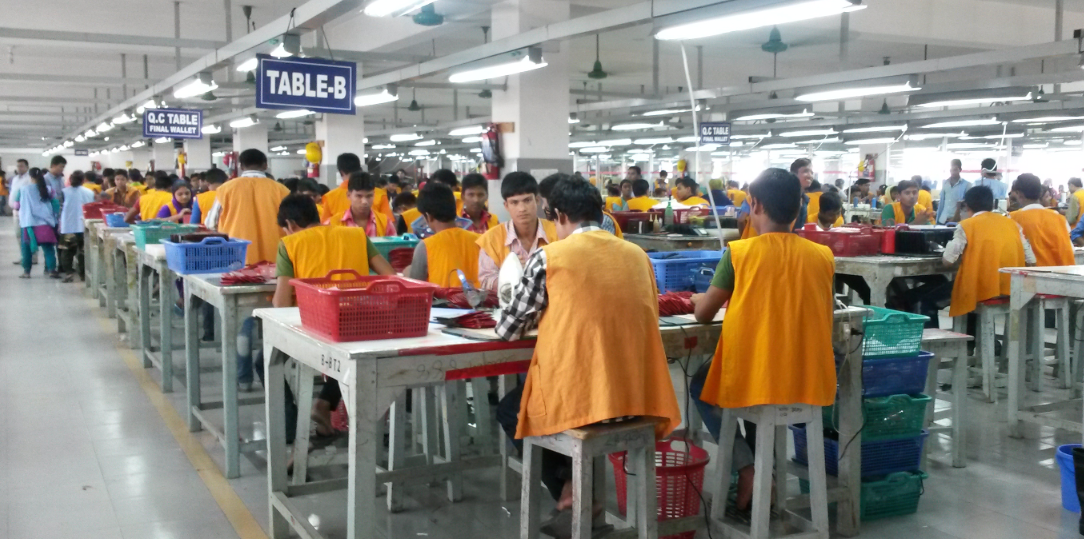
Social compliance is documented, not just claimed:
– BSCI and SA8000 certified — audits cover wages, working hours, no child labor, and formal grievance mechanisms
– Artisan wages sit 15–20% above regional minimums. Overtime is capped at ≤12 hours/week, paid at 125–150% base rate
– >95% of full-time workers are enrolled in social security and health insurance
– Grievance cases get resolved within 30 days for ≥80% of submissions
Materials come with measurable sustainable content:
– Outer leather: LWG Gold/Silver-rated tanneries — >90% of leather volume traces back to certified suppliers
– Recycled leather content: 20–60% depending on collection
– Lining: GRS-certified recycled polyester at ≥50% recycled content
– Vegan lines use Piñatex, cork, or DMF-free PU — vegan SKUs cover 30–70% of each collection
Waste management runs on hard targets, not intentions:
– Pattern nesting software holds material use at 80–85% on leather hides
– 50–70% of leather offcuts get upcycled into cardholders and small accessories
– Total material sent to landfill: <5% of input volume
– Chemical sourcing aligns with REACH and ZDHC MRSL. The factory tests wastewater every 6–12 months
This factory is built for ESG brand storytelling. Each bag ships with a hangtag that lists the artisan region (Yogyakarta or Bali), the craft technique used, and hours of handwork — 4–12 hours per piece for hand-stitched or hand-woven styles. Your product pages can show exact material percentages and carry co-branded impact data. That includes CO₂ savings of 30–50% vs. conventional leather bags, worker wage levels, and annual training hours per artisan (20–40 hours/year).
Key commercial terms:
– MOQ: 300–1,500 pcs/style — sized for non-mass-produced brand positioning
– Annual volume per brand: 5,000–20,000 units
– Certifications: BSCI, SA8000, LWG (tannery-level), GOTS/GRS (textiles)
How to verify claims before committing:
Don’t take the certificates at face value. Cross-check BSCI and SA8000 status through the Amfori and SAAS databases yourself. Ask for transaction certificates (TCs) that match specific purchase orders for any recycled or organic material claim. Also, commission an independent Sedex/SMETA audit covering 10–30 workers across departments before your first bulk order.
Best fit: EU and US sustainable fashion brands — those in the O My Bag or BEEN London tier — sourcing 300–1,500 pcs per style with full material traceability, co-branded impact reporting, and verified fair-wage credentials baked into the product story.
9. Solo Tenun Craft — Best for Woven & Fabric Handbag OEM Manufacturer
Batik and ikat aren’t decorative add-ons here. They’re the core structure of every bag that ships from this factory.
Solo Tenun Craft sits inside Surakarta’s textile belt. You’re minutes away from the suppliers that matter most — batik mills, ikat weavers, and industrial canvas converters. That closeness shortens material lead times and keeps fabric costs stable.
Core fabric capabilities:
-
Batik (40–60s cotton/rayon base, 120–180 g/m²) — choose industrial screen print or hand-wax; works well for outer panels and flap detailing
-
Ikat tenun (180–250 g/m²) — pre-dyed warp/weft build; firm enough for tote shells and base panels
Construction meets export standards. Print registration stays within ±2–3 mm across front and back panels. Colorfastness clears ISO/AATCC minimums: dry rub ≥ Grade 4, wet rub ≥ Grade 3, wash fastness ≥ Grade 3–4. Natural-dye batik goes through post-fixation treatment before cutting starts.
MOQ depends on your fabric sourcing path:
|
Fabric Option |
Bag MOQ |
|---|---|
|
Existing stock batik/ikat patterns |
200–500 pcs/style |
|
Custom exclusive print development |
500–1,000 pcs/style |
Best fit: Cultural lifestyle brands, DTC cross-border sellers, and museum or travel retail buyers ordering 200–1,000 pcs/style — especially those who want traditional Indonesian textile identity built into every product.
10. Inwa Bags Group — Best Verified Indonesia Bag Factory for International Buyers
Semarang gives Inwa Bags Group a real logistics edge. The factory connects directly to Tanjung Emas port. Your containers ship out fast — no inland detours, no delays from being stuck deep in Java.
Three product categories sit under one roof: canvas and fabric bags, PU leather handbags, and natural fiber pieces sourced through regional partners. So you can build a mixed container — canvas totes, PU crossbodies, and rattan bags — all through one contact. That’s a big plus for first-time Indonesia buyers who want to keep things simple.
FOB price benchmarks:
– Canvas tote (12–14 oz, printed): USD 1.10–1.80/pc at MOQ 1,000 pcs
– PU leather handbag: USD 6–12/pc at MOQ 200–300 pcs/style
– Handwoven rattan bag (18–20 cm, lined): USD 7–11/pc at MOQ 100–150 pcs
Lead times are easy to plan around for trial orders. Canvas and PU bags ship within 35–45 days after deposit and sample approval. Rattan styles take 45–60 days — hand-weaving adds time. Sample development runs 10–15 days for fabric and PU, and 25–30 days for new rattan designs.
Payment is straightforward: 30% T/T deposit on order confirmation, then 70% balance against the B/L copy. For samples and trial orders under USD 5,000, PayPal is accepted.
Best fit: Small-to-medium brands from the EU, US, or Japan. Ideal for a first Indonesia order in the USD 10,000–40,000 range, spread across 1–3 bag categories. Works best if mixed-style container consolidation is your main goal.
Craftsmanship Deep-Dive: What Separates Good from Great Indonesian Handbag Factories
You won’t see the difference between a good Indonesian handbag factory and a great one in a brochure. It shows up in samples.
Five measurable areas separate them:
-
Stitch density consistency
-
Edge-finishing quality
-
Lining material
-
Hardware sourcing
-
Defect control at the sample stage
Stitch density is your fastest read. Body seams should hit 8–10 SPI. Handle and strap attachment points need 8–10 SPI or higher. That’s where load stress builds up. Luxury-tier work runs 12–16 SPI on visible seams. Anything below 6 SPI is a rejection signal.
Edge finishing shows how much a factory cares about the details. Bend the edge several times on any sample. Premium finishing holds its shape. Weak finishing develops micro-cracks or starts peeling right away. Look for uniform thickness across handles, flap borders, and strap ends. No brush marks. No exposed substrate.
Lining construction gets overlooked more than it should. Better factories use high-density canvas or twill. Thin, loose weaves suggest corners are being cut in other areas too. Turn the sample inside out and press the lining by hand. A limp result points to weak overall build quality.
Hardware is where sourcing discipline becomes visible. YKK zippers signal tighter procurement standards. For plated parts, check for even color, centered pullers, and aligned rivets. Mismatched gloss across the same batch often points to mixed plating lots — a sign of inconsistent supply control.
Great factories hold all five standards across every panel — stress points, edges, hardware, and internal finishing — with low batch variation. Good factories clear the basics. Great ones hold the line everywhere, not just where it’s easy.
Capacity & Scalability: Matching Your Order Volume to the Right Factory Type
Order volume determines everything — which factory tier fits, what MOQ you’ll face, and whether you’ll get a realistic lead time or an optimistic one.
Indonesian handbag factories fall into three tiers:
Workshop (under 500 pcs/month): 10–30 workers, handcraft-focused. MOQ starts at 50–100 pcs/style. Best for trial orders of 50–300 pcs. Lead time runs 3–8 weeks, depending on complexity.
Mid-size factory (500–5,000 pcs/month): 50–150 workers, 2–5 production lines. MOQ 200–500 pcs/style. This tier suits brands placing 1,000–5,000 pcs per PO with steady reorders each month.
Large export factory (5,000+ pcs/month): 300–1,000+ workers, full pre- and post-production support. MOQ 1,000–3,000 pcs/style. Commit to 50,000+ pcs per year and you get reserved capacity plus better scheduling priority.
One seasonal factor most buyers underestimate: Ramadan and Lebaran. Workshop-type factories can see 50%+ worker absence around the holiday. Mid-size factories lose 20–40% of line staff during that stretch. Large export factories are not immune either — expect 10–30% staff turnover, with lead times running 1–3 weeks longer than normal. Your shipment window overlaps with Lebaran? Place orders 6–8 weeks earlier than usual. Also, negotiate a contract clause that requires 70–80% of production to finish before the holiday starts.
Scale up in steps. Your first bulk order should be 3–5× your trial quantity. Each reorder increase should stay within 2–3× the previous batch. Push beyond that, and you risk quality drops and scheduling failures — at any factory tier.
OEM vs ODM vs Private Label: Choosing the Right Custom Model with Indonesian Factories
Three models. Each has a very different cost structure, MOQ, and IP impact.
|
Model |
Design Ownership |
MOQ |
Speed to Market |
Upfront Cost |
|---|---|---|---|---|
|
OEM |
You own everything |
500+ pcs/SKU |
Slowest |
Highest |
|
ODM |
Factory base + your modifications |
~300 pcs/SKU |
Medium |
Medium |
|
Private Label |
Factory’s existing design |
Lowest |
Fastest |
Lowest |
Match the model to where your brand is right now:
-
Starting out or testing demand? Go Private Label or ODM. Development costs are lower. You launch faster. Inventory risk stays small.
-
Running e-commerce and chasing trends? ODM fits best. You can test multiple SKUs without hitting high MOQs.
-
Building a defensible brand with exclusive designs? OEM is the move. You control the spec, the IP, and your long-term margin.
One decision rule: Budget tight + need speed → Private Label. Want differentiation without full development → ODM. Want exclusive design + brand moat → OEM.
Protect your IP no matter which model you pick. Your contract with an Indonesian factory needs to cover several key points. Include clear clauses on design ownership. Add NDA restrictions. Spell out exclusive production rights for your colorways and packaging. Also define what happens to molds and patterns when the order ends — return or destroy.
Buyer’s Guide: 7 Critical Factors for Choosing a Custom Handbag Manufacturer in Indonesia
The wrong factory costs more than the order itself — it costs your entire season. Here are seven factors that separate reliable Indonesian handbag manufacturers from risky ones.
1. Legal credentials.
Check the factory’s NIB (Business Identification Number) in Indonesia’s OSS system. Also confirm their NPWP tax ID and customs registration (NIK). A factory ready to export will have all three. Ask for a recent export declaration sample — look for HS codes and the destination country.
2. Sampling clarity.
Standard PU bags take 10–15 working days. Complex leather or hardware-heavy styles take 15–25 days. Get the fee structure in writing. Sampling fees run USD 50–300 per style. Confirm whether that fee credits toward bulk orders.
3. Pre-production consistency controls.
Before production starts, lock down three things: the pattern version, the approved material list, and acceptable tolerances (dimensions ±3 mm, color ΔE within spec). Require a PP sample sign-off before full production runs begin.
4. QC system depth.
Ask for IQC, IPQC, and FQC records. AQL 2.5 is the right standard for mid-to-premium handbags. For first orders, budget for 100% third-party pre-shipment inspection. SGS or Bureau Veritas Indonesia are solid choices.
5. Payment structure.
Standard first-order terms: 30% deposit, 70% against B/L copy. Orders above USD 50,000 — consider L/C for added security.
6. Communication responsiveness.
Test their response speed before you commit. Email or WhatsApp replies should arrive within 24 hours. During sampling, expect replies within 12. No full spec sheet or BOM in English? That gap will cost you later. Walk away early.
7. Realistic lead time planning.
Factory to US West Coast runs 23–30 days port-to-port. Add booking, customs, and inland transit. Budget 45–60 days total to North America or Europe. Shipping near the Lebaran holiday? Build in 6–8 extra weeks. That overlap catches a lot of buyers off guard.
Indonesia vs China vs Vietnam: Which Country Wins for Custom Handbag Sourcing?
The honest answer: no single country wins across the board. The right sourcing base depends on what you’re making, how many units you’re moving, and where you’re selling.
Here’s how the three countries stack up on the metrics that move the needle for handbag buyers.
Labor cost isn’t the whole story. Vietnam’s minimum wage runs USD $140–202/month — the lowest of the three. Indonesia sits in the middle at USD $180–250/month. China’s average manufacturing wage reaches USD $1,100/month. But for handcrafted leather and rattan bags, Indonesia’s hand-labor advantage matters more than wage rates. A structured rattan bag takes 2–5 hours of weaving per piece in Bali. A PU tote on a Chinese or Vietnamese semi-automated line takes under 30 minutes. Lower wages don’t make up for that skill gap.
Tariffs reshape the landed cost equation. China carries US Section 301 tariffs of 7.5–25% on top of standard MFN duties. That pushes total US import duty on synthetic handbags to 16–20%. Vietnam’s new-generation FTAs cut EU duties to near zero. Buyers save 7.5–15 percentage points versus China on US-bound shipments. Indonesia sits between the two. No Section 301 exposure like China, but no FTA zero-rate benefit like Vietnam either.
Country-by-country fit, by product type:
|
Product Type |
Best Fit |
Why |
|---|---|---|
|
Artisanal rattan / boho leather |
Indonesia |
Craft heritage, raw material control, “Made in Bali” retail premium of 20–50% |
|
Complex multi-pocket leather / PU fashion bags |
China |
1–2 week sampling, integrated supply chain, reliable MOQ 200–3,000 pcs |
|
High-volume synthetic / fabric totes |
Vietnam ≥ China |
FTA tariff savings + labor cost yield 5–15% lower net landed cost |
The “Made in” premium is real — but only in Indonesia. Western resort and boho brands see 20–50% retail price premiums on bags marketed as handmade in Bali or Indonesia. China origin is standard at mid-market price points, but it adds no emotional premium. Vietnam signals compliance and modern manufacturing. It does not carry consumer-facing story value.
Lead times favor China for development speed. New handbag samples out of China take 7–14 days. Vietnam runs 2–4 weeks because core materials ship in from China first. Indonesia’s artisanal workshops need 3–6 weeks for new style development. Pattern making plus hand-weave trials add time that factory lines simply don’t require.
The practical sourcing logic: Brands building craft-story products at USD $80–300+ retail belong in Indonesia. Brands scaling standardized PU or textile styles into mass retail belong in Vietnam or China. The strongest setups use both. Run structured leather goods through Vietnam or China, and keep handcraft and mixed-material pieces in Indonesia.
How to Find and Verify Custom Handbag Manufacturers in Indonesia (Step-by-Step)
Most sourcing mistakes happen before the first sample is ordered. The factory looks fine on paper. Communication feels smooth. Then the bulk shipment arrives — and the problems show up fast.
A structured process cuts that risk.
Step 1: Define Your Requirements Before You Search
Lock down your specs before contacting any factory. Know your bag type, target materials, and order volume. Use these benchmarks to filter candidates fast:
-
MOQ: 300–500 pcs/style for PU and leather; 100–300 pcs for rattan; 500–1,000 pcs for canvas totes
-
Sample lead time: 10–20 days from tech pack confirmation
-
Production lead time: 45–70 days after deposit
In your first outreach, ask for these details:
-
Factory address with Google Maps pin
-
Worker count and monthly capacity
-
Main export markets
-
Existing certifications (ISO 9001, BSCI, SMETA)
-
Standard payment terms
Getting these upfront tells you a lot about how organized a factory is.
Step 2: Use the Right Online Channels
Indonetwork is the strongest local B2B starting point. Search “tas wanita custom” or “pabrik tas.” Filter by Jakarta, Bandung, or Semarang. Prioritize suppliers registered for 3+ years with 20+ factory photos — not model shots.
Alibaba and Global Sources both offer Indonesia-specific filters. On Alibaba, check “Verified Supplier.” Confirm monthly capacity ≥10,000 pcs and employee count ≥50. On Global Sources, “Exhibitor” status means the factory passed basic trade show vetting already.
LinkedIn works well for direct factory outreach. Search “Bag Manufacturer Indonesia.” Target Production Manager or Owner profiles at companies with 51–200 employees. Send a brief tech pack with your target quantity. Ask straight out whether they manufacture in-house or outsource production.
Step 3: Attend Industry Trade Shows
Inacraft Jakarta is the top show for leather handbags, batik fabric bags, and rattan styles. At the booth, ask for MOQ, FOB price range, and OEM capability. Rattan bags benchmark at US$6–12/pc FOB.
IFEX Jakarta covers rattan and natural fiber accessories alongside furniture. Focus on exhibitors from Cirebon, Bali, and Yogyakarta — Indonesia’s core handcraft zones. Rattan factory capacity runs 2,000–10,000 pcs/month at most mid-size operations.
Trade shows also give you a chance to compare multiple suppliers face-to-face in a single day — something online research can’t replicate.
Step 4: Run a Structured Factory Verification
Remote video audit (30–60 minutes minimum). Walk through in this order:
-
Business license and NIB on display
-
Sewing line machine count — mid-size factories run ≥40 machines
-
Dedicated QC inspection area
-
Finished goods warehouse with labeled cartons
Ask the factory to show recent export packing lists. Destination country and quantity should be visible. Client name redacted is fine.
On-site audit. Best timing: after sample approval, 20–30 days before your first production order. Visit during peak production hours — 10:00 to 15:00. Cross-check machine count against what you saw in the video audit. Spot-check in-process goods against your contracted material spec.
Talk to the production or QC supervisor face-to-face. Ask about their standard rework rates. Target: below 5–8%.
Before signing any agreement, confirm the factory accepts third-party inspections from SGS or Bureau Veritas Indonesia. This one step protects you across every future order.