
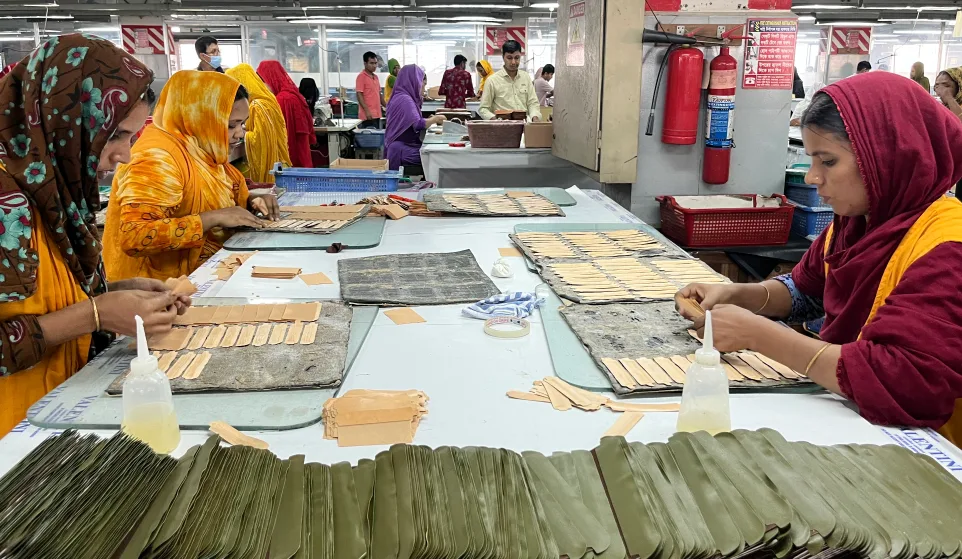
What Makes a Custom Handbag Factory “Sustainable”? (Buyer’s Qualification Checklist)
“Eco-friendly” is one of the most overused — and least regulated — claims in the handbag supply chain. A factory that uses one recycled zipper pull can call itself green. This checklist exists to close that gap.
Real sustainability needs verification across five dimensions: material traceability, third-party certification, environmental production practices, labor compliance, and transparency.
Material Traceability
Acceptable materials include vegetable-tanned leather, rPET, organic cotton, cork, Piñatex, and cactus-based alternatives. For each material, ask for the origin country, batch number, supplier name, and sourcing invoice. A factory that can’t trace its inputs back to the source? That’s a hard stop.
Certifications — What to Check
– GOTS: Covers organic textiles. Verify the certificate number and confirm your specific factory location falls within scope.
– GRS: For recycled content. Ask for a Transaction Certificate (TC) that states the recycled percentage.
– OEKO-TEX: Sets harmful substance limits. Check that it covers finished goods — not just raw fabric.
– B Corp: Shows company-wide ESG performance. It does not replace material-level certification, so don’t treat it as a substitute.
Labor Standards
Ask for the factory’s latest social responsibility audit report, corrective action records, anonymized payroll samples, and overtime logs. A factory that says “we follow local labor law” but can’t hand over audit documentation is a red flag. Words without documents mean nothing.
Production-Level Environmental Measures
Ask for hard numbers. You want the monthly material waste rate, scrap recycling rate, water and energy consumption data, and written confirmation of low-toxicity adhesives and dyes. Vague answers don’t count.
Quick Supplier Qualification Threshold
A factory must meet all four of these before it enters your sampling pipeline:
– ✅ At least 1 materials certification (GOTS / GRS / OEKO-TEX)
– ✅ At least 1 social responsibility audit report
– ✅ Material traceability documentation at the batch level
– ✅ Written factory environmental practices backed by measurable data
Some factories will hand you a polished marketing brochure with no certificate numbers, no audit, and no traceability records. Cut them from your shortlist. A brochure is not evidence.
How to Evaluate Custom Handbag Factories Before Committing (5 Key Sourcing Criteria)
Most sourcing mistakes happen before the first sample is ordered — not after.
The five criteria below cut through factory marketing claims. They give you a practical framework to compare custom handbag manufacturers on what counts.
1. MOQ: Know What You’re Committing To
A factory advertising “MOQ 50 pieces” sounds great for startups — until you dig into the details. That number means 50 units of the same style, same color, same hardware, using in-stock materials. Add any customization and the real MOQ goes up:
-
Basic logo/single-color print: 200–500 pcs/style
-
Complex custom fabric or multi-color print: 500–1,000+ pcs
-
Specialty eco materials (organic cotton, rPET): 1,000+ pcs
Before shortlisting any OEM handbag supplier, get four numbers in writing:
-
Sample cost — and whether it’s deductible from your first order
-
MOQ broken down by style, color, and hardware
-
Tiered unit pricing at 100, 300, and 1,000 pcs
-
Total lead time, from order confirmation to delivery
2. Sampling Speed and Pattern-Making Depth
A factory’s sampling process tells you more about its quality than any brochure.
Small-batch focused factories deliver first samples in 3–7 business days after receiving a complete tech pack. Larger, high-volume factories run 2–4 weeks — and that stretches further with custom leather or specialty hardware.
Ask for a real development timeline from a past project. Get the full sequence: sketch → first sample → PP sample → bulk shipment, with actual day counts for each step. Also check whether the factory runs an in-house pattern room. It needs to handle complex builds — multi-compartment interiors, concealed magnetic closures, rigid box constructions.
3. OEM vs. ODM vs. Private Label — Match the Model to Your Stage
These three are not interchangeable. Picking the wrong model wastes time and money.
|
Model |
Best For |
Typical MOQ |
Sample Speed |
|---|---|---|---|
|
OEM |
Brands with full design assets |
200–500 pcs |
2–4 weeks |
|
ODM |
Brands selecting from existing patterns |
50–200 pcs |
3–7 days |
|
Private Label |
Speed-to-market, trend-chasing |
50–200 pcs |
Fastest |
For private label handbag manufacturing, confirm the factory handles parallel multi-brand production with strict design confidentiality. Check both the contract terms and the physical workshop setup — are different brands kept separate on the floor?
4. Production Location vs. Your Business Priorities
Where a factory sits affects your cost, lead time, and quality control. Here’s how the main regions compare:
-
China (Guangzhou, Dongguan, Quanzhou): Deep ODM capabilities, mature accessory supply chains, and sample turnaround of 3–7 days. Sea freight to North America adds 20–40 days. For most brands focused on handbag production in China, this region offers the best mix of customization depth and unit cost.
-
U.S. domestic studios: Sample-to-delivery in 15–30 days with no import friction. Unit costs run 2–4× higher than Chinese factories — worth it for high-margin, fast-replenishment models.
-
Vietnam/India: Lower labor costs work well for high-volume reorders (500–2,000+ pcs). Development pace is slower. Plan for 2–4 week sampling and 30–60 day production cycles.
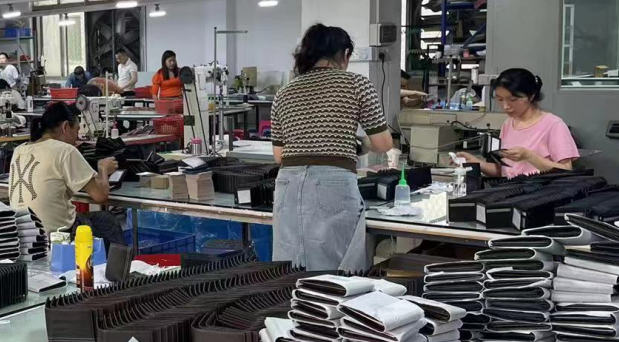
5. Certifications and Traceability — Verified, Not Claimed
This links straight to ethical handbag sourcing and sustainable fashion supply chain standards. Ask for the factory’s most recent social audit report and corrective action records. For material certifications, request the actual certificate number and transaction certificates — not a logo printed on a brochure.
A factory that clears all five criteria is worth sampling. One that stalls on documentation at this stage will stall on quality problems later.
1. Portchester USA — Best for Early-Stage Brands Needing U.S.-Based Development
Kulwant Chouhan, a CAD/CAM design graduate, started Portchester USA in 1984. That’s 40+ years of helping emerging designers take sketches and turn them into products ready to sell — all within the U.S.
The studio runs out of Long Island City, New York. It covers the full development process from start to finish:
-
Custom pattern making
-
Sample production
-
Leather and hardware sourcing (zippers, chains, metal fittings)
-
Small-batch manufacturing
Sample costs run USD 150–500+ per style, depending on material complexity. MOQs start at 30–100 units per style — a low bar for a domestic manufacturer, and rare to find at this scale in the U.S.
Trade-off to know: U.S.-based production costs 2–4× more per unit than overseas factories. For early-stage luxury brands, that higher price gets you faster iteration cycles, easier on-site audits, and a legitimate Made-in-USA claim. So the cost gap often makes sense at this stage.
Portchester doesn’t publish formal sustainability certifications. But you can request vegetable-tanned leather or recycled hardware through their sourcing network. Domestic production also gives you a shorter, more visible supply chain — easier to track and verify.
2. Guangzhou Herder Leather Products Co., Ltd. — Best Overseas Factory for Cost-Capacity Balance
18-plus years of OEM leather goods production. 5,000+ documented styles. A workforce of 100–500. Herder sits in the mid-to-large factory tier that most scaling brands need.
Based in Liwan District, Guangzhou, Herder makes genuine leather handbags, wallets, backpacks, and accessories for B2B export clients. Annual revenue runs USD 2–5 million. Port access across Huangpu, Yantian, and Nansha keeps export logistics flexible.
Cost Advantage vs. U.S. Domestic Production
|
Herder (China FOB) |
U.S. Domestic Factory |
|
|---|---|---|
|
Mid-range leather wallet |
USD 4–8/pc |
USD 12–20/pc |
|
Mid-range leather handbag |
USD 12–25/pc |
USD 35–70/pc |
|
Standard MOQ |
100–300 pcs/style |
50–100 pcs (higher unit cost) |
At 300+ pcs per style, your landed cost to the U.S. — sea freight and duties included — still comes in 30–50% below comparable domestic production.
MOQ Sweet Spot: 100–500 pcs/style
Orders under 100 pcs? Domestic studios offer more flexibility at that range. At 100–500 pcs, Herder’s cost-to-capacity ratio becomes a clear edge. Push to 1,000+ pcs and you can expect an extra 5–15% unit price reduction.
Production Timeline
– Sampling and pattern confirmation: 7–15 days
– Bulk production: 30–45 days (45–60 days peak season)
– Sea freight to U.S. West Coast: 15–25 days
Sustainability Note: No LWG, GRS, or ISO 14001 certifications are listed. Treat this as a standard export leather factory. Your brand needs certified sustainable inputs? Request LWG-certified leather or REACH-compliant synthetics during development. Lock those specs into the contract before sampling starts.
3. Cut and Stitch — Best Sustainability-First U.S. Manufacturing Partner
U.S. cut-and-sew studios built around sustainability from day one sit in a different category. These aren’t just “made in America.” Every material is traceable from raw fiber to finished seam.
Studios like The Evans Group and Good Clothing Company set the standard here. Their core material mix includes GOTS-certified organic cotton, TENCEL™ lyocell, hemp, rPET, and deadstock fabric. You can start sampling from a single unit. First production runs launch at 25–100 pcs/style — a realistic starting point for DTC brands testing the market.
What separates a genuine sustainability-first partner:
-
Certified inputs: GOTS or GRS documentation with traceable batch-level sourcing
-
Fair wages: Worker pay targeting ≥110–130% of local minimum wage, with clear cost breakdowns
-
Low-waste production: Small-batch and on-demand runs keep scrap rates below 10–15%
-
Full development support: Pattern making, material sourcing coordination, and sampling — not just bulk cut-and-sew
Unit costs run higher than overseas production. That’s the trade-off. What you gain: a shorter, auditable supply chain, zero import lead time, and a Made-in-USA sustainability story that holds up to scrutiny.
4. Softline Brand Partners — Best Full-Service Partner from Prototype to Volume
Softline Brand Partners is based in Minneapolis. They run one of the most complete soft-goods workflows in North America — from concept to delivery, all under one roof.
Their process covers every step:
-
Client brief
-
Sketching
-
Material selection
-
Sampling
-
Tech pack
-
Tooling
-
Manufacturing
-
Packaging
-
Logistics
No handoffs between vendors. No coordination gaps.
That structure pays off most as you move from prototype into volume. Softline serves the full brand range — from pre-revenue startups to Fortune 500 accounts. Their intake form reflects this. It sorts leads by revenue tier and asks upfront whether a sample or tech pack already exists.
For private label handbag manufacturing, their prototype stage is the key leverage point. That’s where eco-material choices get locked in — organic textiles, recycled inputs, sustainable leather — before production specs are set.
Contact: [email protected] | (844) 468-4260
5. BAIKAL (New York) — Best for Private Label Handbag Programs
Baikal sits in Manhattan’s Garment District — 7 West 36th Street, Midtown. Their whole model focuses on one thing: moving your brand from sample to finished production run, all under one roof. No third-party handoffs.
Their private label scope covers the full stack:
– Leather and mixed-material construction
– Custom branded hardware — logo plaques, zipper pulls, buckles
– Interior linings and labels
– Trim sourcing and packaging coordination
Emerging designers can start small. MOQs begin at 25–100 units/style for domestic runs. Need more volume? Larger reorders move to overseas partners — same design, lower unit cost.
Retail price benchmarks for Baikal-style programs:
– NYC “Made in USA” luxury leather handbags: USD 250–800/unit
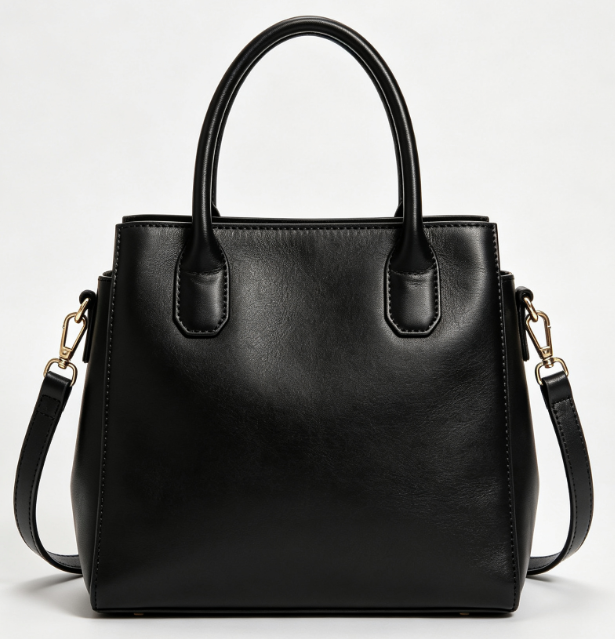
– Same design moved offshore: USD 150–400/unit
Timelines are straightforward. Sample development takes 4–8 weeks. Domestic production runs of 50–200 units run 6–10 weeks. Overseas fulfillment adds 8–16 weeks total, shipping included.
Here’s a solid strategy for growing brands: produce your capsule collection in NYC first. You get the “Made in NYC” brand story. Then shift volume overseas once demand picks up — you cut unit costs without changing the design.
Contact: [email protected] | 212-239-4650 | Appointment required
6. Veggance — Best for Design-Driven Customization + Sustainable Positioning
Veggance turns the traditional sampling timeline upside down. Most custom handbag factories spend 2–4 weeks just to produce a tech pack. Veggance’s AI cuts that digital phase to under 24 hours. Physical samples can follow in as few as 5–10 days.
The workflow is simple. Upload your 2D sketch and set your style parameters — dimensions, structure, hardware, logo placement. The AI then produces a full tech pack, including:
-
Pattern pieces
-
Spec sheet
-
Material quantities
-
BOM (bill of materials)
All of it comes out ready for production.
Sustainable materials are part of the selection process from the start — not added on later. You pick from vegetable-tanned leather, vegan PU, bio-based alternatives, or cork right in the configuration stage. From there, the system auto-adjusts material estimates and pricing. Plus, where LCA data is available, it also calculates the carbon footprint per unit.
Best fit for: Brand founders with a clear design vision who need a faster, more transparent path from concept to sample — without giving up sustainable material options.
7. Billykirk — Best for Heritage-Style Small-Batch Sustainable Leather Goods
Billykirk has been making leather goods by hand in America for 25 years. That track record says a lot about how they think about quality — and sustainability.
Founded in 1999, Billykirk makes bags, wallets, satchels, and belts from vegetable-tanned leather and waxed canvas. Both materials are worth understanding before you place a sourcing order.
Vegetable-tanned leather uses plant-based tannins, not chromium salts. That swap matters. Conventional tanneries produce chromium discharge at 100–200 mg/L. Vegetable tanning brings that down to near zero. Plus, this leather breaks down naturally within 10–50 years. Chrome-tanned leather does not.
Durability adds another layer. Customers report using Billykirk pieces for 20+ years. A longer product lifespan means a lower environmental load per year of use. That argument holds up under life cycle assessment (LCA) review.
Best fit for: Brands or buyers sourcing small-batch, heritage-positioned leather goods. The vegetable-tanned leather credentials and Made-in-USA origin support retail pricing of USD $250–$695 per piece.
-
Small-batch B2B orders: MOQ 20–50 units
-
Production lead time: 6–12 weeks, based on customization complexity
-
Customization scope: hardware finish, handle length, interior layout, and leather colorway — structural changes require a 20+ unit minimum
8. GFG Bag Manufacturer, HBI Textiles & Giggle Handbag — U.S. Contract Manufacturing Options Compared
Three factories. Three different use cases. You need to understand what separates them before grouping them together.
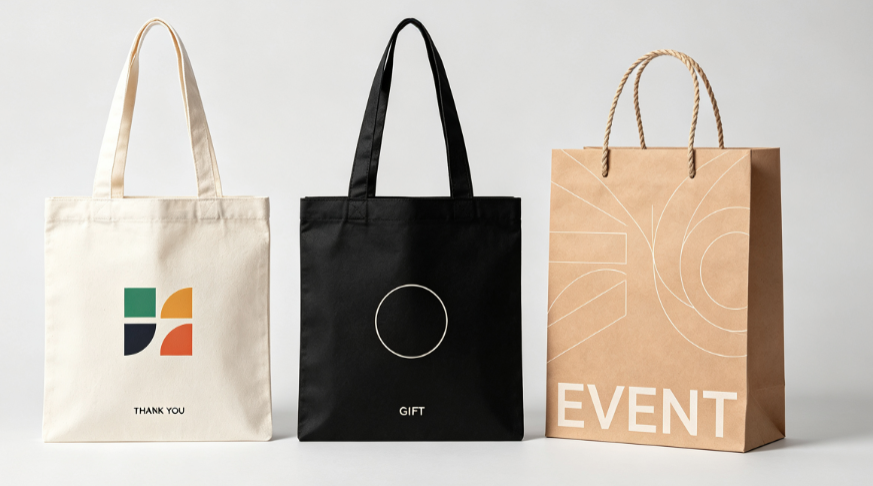
GFG Bag Manufacturer runs production out of Shishi, China, with a U.S. office in Tennessee. Its strength is volume — promotional totes, branded giveaway bags, event packaging. MOQs start at 500–3,000+ pcs/style. Large campaign orders push past 10,000 units. Common promotional bags run $0.80–$3.00/pc ex-factory — unit costs that reflect that scale. Total lead time from confirmed sample to U.S. warehouse sits at 9–14 weeks (production + sea freight + customs). Need “Made in USA” or a short, transparent chain from factory to shelf? GFG isn’t the right fit.
HBI Textiles is based in Kettle River, Minnesota. They run full-service cut-and-sew for heavy-duty technical bags. Think PPE storage bags, outdoor gear packs, industrial tool carriers. MOQs run 100–300 pcs for development and 500–5,000 pcs for steady-state production. Domestic manufacturing cuts total lead time to 5–8 weeks — about 30–40% faster than cross-border sourcing. U.S. production also brings compliance with 16 CFR Part 303 labeling requirements. Plus, you get a shorter, auditable chain from cut to delivery.
Giggle Handbag sits at the opposite end. They focus on small-batch premium leather goods for independent designers and boutique retailers. First runs start at 30–100 pcs/style. Total turnaround runs 6–10 weeks. Retail pricing lands at $200–$800+ per piece. That price point is backed by American craftsmanship, traceable leather sourcing, and low-waste small-batch production.
|
GFG |
HBI Textiles |
Giggle Handbag |
|
|---|---|---|---|
|
Production Location |
China (+ U.S. office) |
Minnesota, USA |
USA |
|
Best For |
Promotional/volume bags |
Technical & heavy-duty bags |
Premium small-batch leather |
|
MOQ |
500–3,000+ pcs |
100–5,000 pcs |
30–500 pcs |
|
Total Lead Time |
9–14 weeks |
5–8 weeks |
6–10 weeks |
|
Sustainability Profile |
Client-specified (rPET, ISO) |
Local production, durable goods |
Traceable leather, low inventory waste |
Decision rule: Running under 50,000 units per year with frequent style changes? Contract manufacturing beats building in-house capacity. The fixed costs of equipment, industrial engineering, and compliance setup are steep. These three factories give you flexibility at each scale — without that overhead dragging you down.
9. Lefty Production Co. & Jack Georges — West Coast Development + Classic Leather OEM
Two factories. Two distinct roles. Together, they cover a sourcing model that fits West Coast lifestyle brands building both an apparel line and a classic leather accessories range.
Lefty Production Co. is based in Los Angeles (318 W 9th St, Suite 1010) and operates as a development-first manufacturer. Their strength is speed — you get a sketch-to-first-sample turnaround in 1–2 weeks, plus 2–3 rounds of fit revisions before any bulk commitment. First runs start at 50–200 pcs/style. That keeps your inventory risk low while you test the market. Plus, their domestic small-batch model cuts material waste compared to offshore volume production — a real sustainability signal, even without formal certifications.
Jack Georges handles the classic leather OEM side. You’re looking at full-grain cowhide (1.6–2.2mm), hand-stitched construction, and solid quality benchmarks:
– ΔE<1.5 color consistency
– ≥15–20 kgf strap pull strength
Private label MOQs start at 50–150 pcs/style — a good fit for corporate gifting or boutique channel programs.
The combined play: Run your apparel through Lefty for fast West Coast iteration. Use a Jack Georges-style OEM for classic leather SKUs — these are stable, long-lifecycle products that don’t need constant refresh cycles. High-durability leather goods also back a “slow consumption” sustainability story. Fewer replacements mean less long-term waste, and that’s a message your customers will connect with.
China vs. USA vs. Global: Choosing the Right Production Geography for Your Handbag Brand
Production geography is three decisions at once — cost, tariffs, and brand positioning.
Here’s what the numbers look like for a mid-range women’s leather tote:
|
Cost Component |
USA |
China |
|---|---|---|
|
Leather material |
$15–20/pc |
$7–10/pc |
|
Hardware |
$4–6/pc |
$1–3/pc |
|
Labor |
$35–45/pc |
$6–10/pc |
|
Packaging |
$2–4/pc |
$1–2/pc |
|
Total ex-factory |
$56–75/pc |
$15–25/pc |
At 300–500+ units, moving production to China cuts total costs by 30–60%. China also produces about 50% of the world’s bags. The Guangzhou region alone accounts for 55% of Chinese bag exports. Hardware, zippers, lining, and packaging suppliers all sit within a few miles of each other — that’s a hard supply chain advantage to match.
But tariffs have reshaped the leather handbag equation. Since April 2025, U.S. import duties on Chinese leather handbags (HS 4202.21) sit at 125%. At that rate, China’s cost edge on leather goods disappears once you model the full landed cost. India — at $15–25/pc production cost and $0.80–1.50/hour labor — is now a real competitor for leather lines going to the U.S. market.
The practical framework most scaling brands use:
-
Synthetic and fashion bags → China or Vietnam (cost efficiency, fast ODM turnaround)
-
Premium leather handbags for USA → India, Italy, or domestic U.S. studios (tariff mitigation + ESG traceability)
-
ESG-sensitive lines → USA/EU production (stronger labor regulations, simpler certification documentation)
A hybrid approach works well in practice. Start with a prototype run in the U.S. at 50–100 units. Transfer the approved tech pack to a Chinese factory for a 200–500 pc pilot. Then scale — or shift leather SKUs to lower-tariff geographies once volume justifies it. Keep modeling your landed cost. The right geography shifts as your volume, product mix, and tariff environment change.
Sustainable Materials Guide: What to Request from Your Custom Handbag Factory
Material specs are what separate a real sustainable handbag from a greenwashed one. Lock these into your brief before sampling starts.
Vegetable-Tanned Leather
Ask for: 100% vegetable-tanned hide, thickness 1.6–1.8mm, Grade A/B, colorfastness ≥4, tear strength ≥20N, zero chrome (Cr VI). Plan to spend 110–130% of standard chrome-tanned leather cost. Longer tanning cycles push up rejection rates, so the price bump is real.
rPET Fabric
This is the most practical eco-swap for totes and backpacks. Ask for ≥80% recycled content. Get a GRS Transaction Certificate for each batch. Target 400–600 gsm for load-bearing styles. Cost runs 10–30% more than virgin polyester.
Organic Cotton Canvas
Look for GOTS-certified fabric, 280–350 gsm, shrinkage ≤3%, colorfastness ≥4. This works well for lightweight totes. Skip it for heavy-duty backpacks — it’s not built for that.
Piñatex / Cork
Both run 2–3× the cost of standard PU. Ask the manufacturer for batch certificates so you can trace the material back to its source. For cork, specify ≥0.2mm cork layer and ≥0.9mm total thickness.
One contract clause that matters most: Put this in writing — batch number + supplier name + origin country documentation for every material. You should also hold the right to stop production if any certification documents are missing or don’t match up.
Red Flags & Green Flags: How to Verify a Factory’s Sustainability Claims
53% of green claims across EU markets are false or misleading. In the UK, 62% of products with green claims failed at least two Green Claims Code criteria. These aren’t edge cases — they’re the norm in sustainable fashion supply chains.
So how do you tell a factory that’s truly sustainable from one that just looks the part? Here’s what to watch for.
Red flags — cut these fast:
– Generic language with no numbers — “eco-friendly process,” “natural materials,” “green production”
– Self-created “eco” seals with no traceable certification body
– ESG reports where data can’t be linked back to source systems (meter IDs, lab reports, payroll records)
– “Net-zero by 2050” commitments with no interim targets, no Scope 3 coverage, no actual plan
Green flags worth trusting:
– Specific, measurable claims — “Reduced wastewater COD from 1,200 mg/L to 600 mg/L, verified by SGS report #XXXX”
– Certificates that show the body name, standard, factory address, validity dates, and a verifiable certificate ID
– Annual progress reports with year-on-year % changes across GHG, water, waste, and injury rates
Four verification steps before you commit:
-
Pre-visit document screening — Collect the last two years of ESG reports plus environmental permits. Cross-check every certificate on its scheme’s public database. Can’t verify it online? Reject it.
-
On-site environmental audit — Check electricity and water meters against reported figures. Ask for 12 months of wastewater lab results (COD, BOD, heavy metals). Watch for physical red flags too: smoky stacks, mixed hazardous waste streams, no PPE in chemical areas.
-
Labor verification — Match timecard records against “no excessive overtime” claims. Talk to 5–10 workers per department about overtime freedom and disciplinary practices. Compare payroll to local minimum wage. Bonuses can mask non-compliance — look closely.
-
Post-visit data reconciliation — Recalculate key KPIs using raw data samples. A deviation above 5–10% with no explanation is a data integrity red flag.
Supplier questionnaire: ask for numbers, not narratives. Request energy use (kWh/GJ), GHG emissions (tCO₂e), water withdrawal (m³), and waste generation (kg/ton product) for each of the last three years. Require evidence uploads — not checkboxes. A factory that marks basic environmental data as “confidential” has already told you what you need to know.
One final check: look at where the money is actually going. A factory announcing “net-zero commitments” while expanding conventional chrome-tanning capacity is running the same playbook as fossil fuel firms declaring 2050 net-zero targets while drilling new wells. Real commitment shows up in capital allocation — not just in press releases. Claimed direction and actual investment should point the same way.
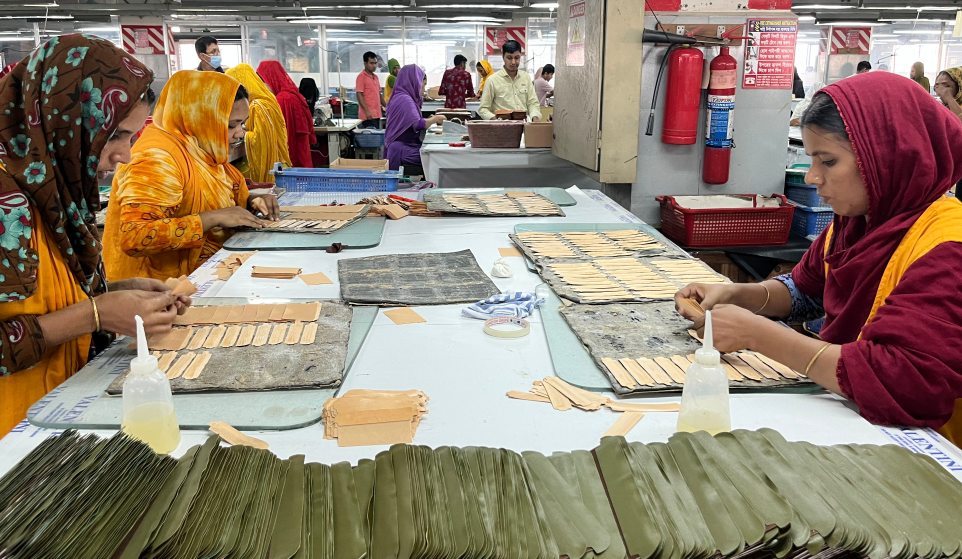
Final Supplier Matching Matrix: Which Factory Fits Your Brand Stage?
Not every factory on this list works for every brand. Your best match comes down to three things: budget, order volume, and sustainability requirements. Each one pulls in a different direction.
|
Brand Stage |
Annual Budget |
Recommended Factory Type |
Typical MOQ |
Key Certifications |
|---|---|---|---|---|
|
Early-stage |
<$50K |
Studio / small OEM (Portchester, Giggle, Baikal) |
50–200 pcs/style |
ISO 9001 + basic audit |
|
Scaling |
$0.5M–$5M |
Mid-size OEM/ODM (Herder, Softline) |
500–5,000 pcs |
BSCI / SEDEX / ISO 14001 |
|
Mature/ESG-led |
>$5M |
Multi-site strategic supplier |
3,000–20,000 pcs |
GOTS + GRS + SA8000 + SMETA |
Price is your primary driver? Weight unit cost at 40–50% of your decision. Factories in Bangladesh, Pakistan, and inland China run 10–30% below other regions. That works for growth-stage brands under margin pressure. It’s the wrong frame for ESG-positioned lines.
Sustainability certification is non-negotiable? Flip the weighting. Put certified material traceability at 35–40%. Set quality and reliability at 25–30%. Drop price down to 15–20%. Budget for 8–20% more than a standard factory. The exact gap depends on material specs and audit frequency.
“Made in USA” is part of your brand story? Production costs run 30–100% higher than Asia. That’s a real premium. But a legitimate domestic origin claim can support retail pricing 10–50% above comparable imported goods. U.S. studios like Portchester, Baikal, and Lefty run MOQs of 50–300 pcs/style. That fits high-margin, small-batch programs well.
Low MOQ and fast iteration matter most? Put flexibility ahead of unit cost. Studios handling 10–50 pcs/style charge 20–50% more per unit. That extra cost buys you speed and style range — not efficiency. Weight MOQ flexibility at 40% of your decision. Give sampling speed 25%.